
Cart
0
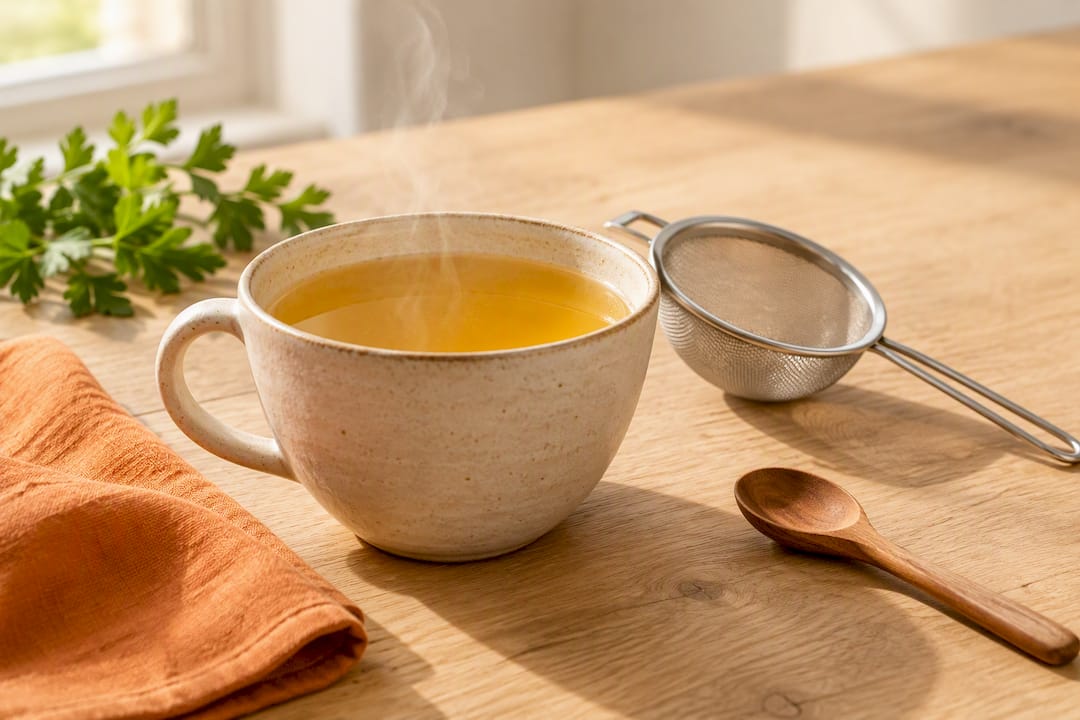
Bone broth is an appropriate supportive drink during a clinician-advised clear-liquid or early low-fibre phase for uncomplicated diverticulitis. It is not a cure or a replacement for medical assessment: severe pain, fever or vomiting need urgent review. Within that liquid phase, broth offers hydration, gentle protein and amino acids such as glycine and proline, which is why it appears on so many diet sheets during a flare.
TL;DR:
- Bone broth provides hydration, electrolytes, and easily absorbed protein during the clear-liquid phase, but does not cure or shorten diverticulitis.
- It must be strained free of fat, sediment, seeds, and vegetable pieces to serve as a proper residue-free liquid.
- Large-scale human studies proving bone broth’s effectiveness in treating diverticulitis are lacking; it is primarily a nutritional support tool.
- During recovery, gradually reintroduce low-fibre soft foods before advancing to higher-fibre diets, monitoring symptoms and stool consistency.
- Always consult a healthcare professional before altering your diet, especially if symptoms worsen or if you experience fever, severe pain, or persistent vomiting.
Table of Contents
- When to use bone broth during a flare: clear-liquid and low-fibre phases
- What bone broth provides: nutrients, plausible benefits and evidence limits
- How to prepare and use bone broth safely during a flare-up
- Transitioning back to solids: staged reintroduction and using broth-based soups
- Risks, limitations and when to seek medical advice
- Ossa Organic’s approach to broth for gut recovery
- What the guidance often gets wrong
- Where to find Ossa Organic bone broth for recovery
- Authoritative clinical leaflets and further reading
- FAQ
When to use bone broth during a flare: clear-liquid and low-fibre phases
Clinicians commonly advise a clear-liquid diet for a short period during an acute flare, giving the bowel a rest while symptoms settle. Bone broth fits this window because it carries protein and electrolytes without fibre or residue, provided it is strained clear of fat and sediment.
Uncomplicated cases in people who are otherwise systemically well are often managed at home with paracetamol, clear fluids and a clinical review after a short interval, rather than automatic antibiotics. Severe episodes may call for a fluid-only diet lasting a few days before any solid food returns.
- Clear-liquid phase (1 to 3 days): strained bone broth, water and diluted juice, with no bits or fat visible.
- Home management: suitable when pain is mild, there is no fever and you can keep fluids down.
- Hospital review: needed when pain worsens, fever develops or you cannot tolerate liquids at all.
Once symptoms ease, a clinician will usually guide you towards low-fibre soft foods before fibre returns in stages.
What bone broth provides: nutrients, plausible benefits and evidence limits
Bone broth is simmered from bones, connective tissue and sometimes vegetables, which releases collagen-derived gelatin, amino acids and minerals into the liquid. During a flare, the appeal is nutritional rather than curative: it delivers calories, sodium and fluid at a point when solid food is off the table.
- Collagen and gelatin: break down into amino acids that support gut lining structure.
- Glycine and proline: amino acids studied for mucosal support in mechanistic and animal research.
- Electrolytes: sodium and other minerals help replace what is lost through reduced intake.
- Easily absorbed protein: useful when solid protein sources are temporarily off-limits.
Bone broth’s nutrients show mechanistic promise for gut mucosa, but large-scale human trials proving it treats diverticulitis do not exist. That gap matters: the amino acids in broth show anti-inflammatory or barrier-supporting effects in animal and laboratory studies, yet no broad randomised trial has confirmed the same effect in people recovering from diverticulitis. The honest position is that bone broth is a helpful short-term nutrition and hydration tool during a clinician-guided liquid phase, not a treatment that changes the course of the disease.
How to prepare and use bone broth safely during a flare-up
The clinical requirement during a strict clear-liquid stage is simple: no sediment, no fat globules, no visible particles. Anything that could sit in the bowel as residue defeats the purpose of the phase.
- Choose or make a plain broth with no added seeds, whole spices or vegetable pieces left in.
- Simmer gently rather than boil hard, which keeps the liquid clearer and easier to strain.
- Cool slightly, then strain twice: once through a coarse sieve, then again through muslin or a fine cheesecloth.
- Skim any fat from the surface once cooled, since fat globules count as residue.
- Serve warm, not hot, in small portions of around 200 to 250ml, several times a day rather than one large bowl.
- Dilute with hot water if the broth is very concentrated or gelatinous when chilled.
Pro tip: Store strained broth in small portions in the fridge for a few days or freeze it, and reheat gently until it is fully liquid again, checking there is no separated fat left floating on top.
Shop-bought broths vary in sodium and additive content, so during recovery it is worth checking the label or preparing your own to keep sodium moderate while you are also managing fluid balance.

Transitioning back to solids: staged reintroduction and using broth-based soups
Once the clear-liquid phase settles symptoms, the next step is low-fibre soft foods, not a jump straight back to a normal diet. This stage typically lasts a few days and is guided by how your stool and pain respond.
- Stage one, clear liquids: strained broth, water, weak diluted juice.
- Stage two, low-fibre soft foods: well-strained broth with smooth mashed potato, plain white rice, soft white bread if advised.
- Stage three, moderate fibre: cooked vegetables without skins, tender meat, well-cooked pasta.
- Stage four, higher fibre: wholegrains, raw vegetables and fruit with skins, reintroduced gradually once fully recovered.
Broth-based purees, such as strained bone broth stirred through mashed potato, give texture and calories while staying low-residue, which makes them a practical bridge food. Move through the stages slowly and watch how your stool and symptoms respond before advancing, rather than following a fixed calendar.
Risks, limitations and when to seek medical advice
There is no large clinical trial confirming that bone broth prevents diverticulitis complications or shortens recovery. Its role is nutritional support during a phase your clinician has already chosen, not a self-directed treatment.
- Seek urgent assessment for a fever, severe or worsening abdominal pain, persistent vomiting or signs of a rigid, tender abdomen.
- Get medical advice sooner if you are immunosuppressed, since infections can progress faster and need earlier review.
- Avoid NSAIDs such as ibuprofen during a flare, since standard clinical guidance links them to a higher risk of complications; paracetamol is generally preferred for mild pain.
- Check with a clinician about antibiotics, since uncomplicated cases do not always need them, while others do depending on severity.
Ossa Organic’s approach to broth for gut recovery
Ossa Organic was set up after discovering how much difference bone broth made during pregnancy, and the range is still built on organic ingredients and slow cooking rather than shortcuts. That matters during recovery, where the priority is a clear, well-strained broth free of additives and unnecessary sodium.
Our broths are simmered slowly from organic, ethically sourced bones, without preservatives or artificial ingredients, which fits the low-additive, low-sediment criteria a clear-liquid or low-fibre phase calls for. During recovery, a plain chicken bone broth is often the gentlest starting point before moving to richer beef broth as low-fibre solids return. Once poured, strain it again at home if you want the clarity a strict clear-liquid stage requires, and reheat gently rather than boiling it hard, which keeps it smooth for sipping.
What the guidance often gets wrong
Most advice on bone broth for diverticulitis either oversells it as a cure or dismisses it because the trial evidence is thin. Both miss the point. Broth is not medicine, but it is one of the few foods that satisfies the clinical requirement for a clear, residue-free liquid while still delivering protein and sodium when a flare has taken solid food off the menu.

The bigger failure in most guidance is pacing. Readers fixate on which broth to buy and skip the harder part: straining it properly, moving through food stages slowly, and watching stool and pain rather than the calendar. A broth that still has fat globules or sediment in it defeats the purpose of the clear-liquid stage, no matter how good the ingredients are.
Prioritise clarity and staging over brand or flavour. Get those two right, and the choice of broth becomes a minor detail rather than the main decision.
— Ossa Organic
Where to find Ossa Organic bone broth for recovery
Ossa Organic sells organic bone broths, collagen and gelatin powders, and grass-fed fats made without preservatives or artificial additives, which suits the plain, low-sediment liquids a flare-up calls for. For recovery use, a single strained broth is easier to manage than a mixed bundle until your clinician has cleared you for more variety.
- 1 x Organic Chicken Bone Broth 500ml: a light, plain starting point for the clear-liquid stage.
- Organic Free Range Chicken Bone Broth 500ml: a larger free-range option for ongoing use through recovery.
- Organic Grass Fed Beef Bone Broth 500ml: a richer broth better suited once low-fibre soft foods are underway.
- Gut Health Bundles, Honey, Healthy Snacks: worth exploring once you have moved past the strict liquid phase.
Always confirm with your clinician before changing your diet during a flare, since the right stage and pace depend on your own symptoms.
Authoritative clinical leaflets and further reading
NHS-style diet sheets on diverticular disease and clinical guidance on acute diverticulitis management informed this article’s staging and safety points.
This article is general information, not a substitute for advice from a qualified doctor. Consult a qualified healthcare professional about your own circumstances before acting on anything here.
FAQ
Is bone broth good when you have diverticulitis?
Bone broth is generally considered suitable during a clinician-advised clear-liquid or early low-fibre phase because it provides hydration and gentle protein without fibre. It supports nutrition during recovery rather than treating the underlying inflammation, so it works alongside medical care, not instead of it.
What is the best drink for diverticulitis?
During the clear-liquid stage, water, diluted juice and well-strained bone broth are the standard choices, since they leave no residue in the bowel. Bone broth is often favoured because it also supplies protein and electrolytes that plain water and juice do not.
What soup is best for diverticulitis flare up?
A strained bone broth, or a broth blended smoothly with mashed potato and no skins or vegetable pieces, fits the low-residue requirement of early recovery. Any soup used during a flare should be free of visible bits, seeds or fibrous vegetable matter until your clinician advises otherwise.
What’s the worst thing you can eat with diverticulitis?
During an acute flare, high-fibre foods such as raw vegetables, wholegrains and skins on fruit are avoided until symptoms settle, since they add residue the bowel is trying to rest from. Long-standing advice to permanently avoid nuts, seeds and popcorn has been challenged, and current guidance focuses more on staged fibre reintroduction once you have recovered.