
Cart
0
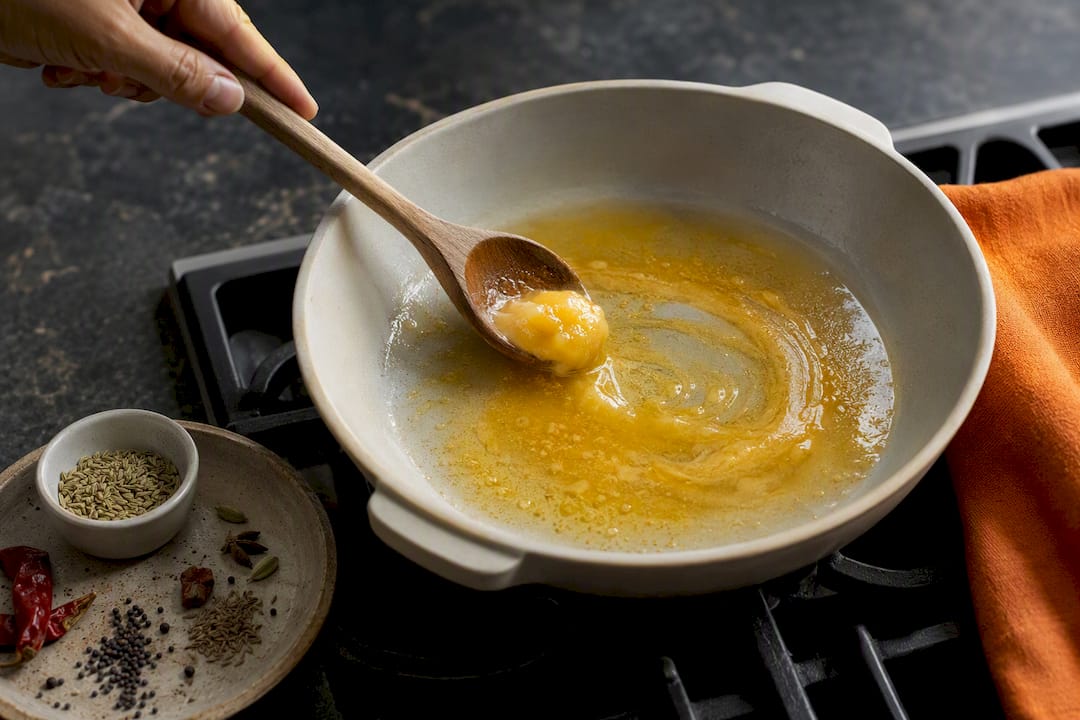
Yes, ghee handles high-heat cooking well. Its smoke point sits around 250°C, comfortably above searing, frying, and even most deep-frying temperatures. The upside is heat stability and a nutty depth of flavour that plain oils can’t match. The trade-off is saturated fat content and a higher price than refined vegetable oil. Keep it below visible smoke, strain it after cooking, and reuse it no more than two or three times.
TL;DR:
- Ghee’s high smoke point of about 250°C makes it suitable for searing, frying, and deep-frying, especially when cooked below visible smoke.
- Proper clarification removes water and milk solids, allowing ghee to tolerate higher heat than butter and resist oxidation better than seed oils.
- Its saturated fat content and batch variability mean it should be reserved for flavor-intensive uses and not relied on for large-volume deep frying.
- Using a thermometer and observing smoke cues are essential to prevent flavor and nutritional loss during high-heat cooking.
- Choose pure, ingredient-only ghee and avoid leftover milk solids for better heat stability and consistent performance.
Table of Contents
- Ghee smoke point compared with other cooking fats
- Why ghee handles heat better than butter or many oils
- Practical rules for frying, searing and tempering with ghee
- How to choose ghee that performs at high heat
- Our take on cooking with ghee
- Cooking with Ossa Organic ghee
- Further reading
- FAQ
Ghee smoke point compared with other cooking fats
Ghee’s smoke point of roughly 250°C puts it well ahead of butter, which starts smoking at around 175°C because of the milk solids and water still trapped inside it. Extra virgin olive oil sits close behind butter at about 190°C, fine for gentle sautéing but marginal for a hard sear. Refined vegetable oils and refined avocado oil can push higher still, often into the 200–230°C range, which is why professional kitchens often keep both on hand.
Matching the fat to the technique matters more than chasing the highest number on a chart:
- Simmering and gentle sauces: almost any fat works, including butter, since temperatures rarely climb past 100°C.
- Sautéing vegetables or aromatics: 140–170°C, well within range for ghee, butter or olive oil.
- Searing meat or fish: 200–230°C, where ghee’s stability starts to earn its keep.
- Deep frying: 175–190°C, comfortably inside ghee’s working range.
- Tempering spices for tadka: short, intense bursts, often approaching 200°C for seconds at a time.
Smoke point isn’t a fixed constant. How the ghee was clarified, how much moisture remains, and even the batch itself can shift the figure by ten or twenty degrees either way. Treat the visible smoke, not the number on a label, as your actual safety signal. If it’s shimmering and rippling, you’re fine. If it’s smoking, you’ve already lost some flavour and nutritional quality.
Why ghee handles heat better than butter or many oils
The clarifying process is what separates ghee from butter, and it’s the whole reason ghee tolerates higher heat. Butter is roughly 80% fat, with the rest made up of water and milk solids, and those components scorch at low temperatures, which is why butter blackens and smokes so quickly in a hot pan. Ghee is simmered until the water evaporates and the milk solids are strained out, leaving close to pure butterfat behind. Without water flashing off and proteins burning, the visible smoking point climbs sharply.
Fatty acid composition plays a supporting role. Ghee is predominantly saturated fat with a meaningful share of monounsaturated fat and only a small proportion of polyunsaturated fat. Polyunsaturated fats, the dominant type in many seed oils, are more prone to oxidation under heat because of their chemical structure. Ghee’s fatty acid profile means it resists that oxidative breakdown better than PUFA-heavy oils, though it comes with a higher saturated fat load in the diet.
A closer look at the science: a peer-reviewed review of ghee’s cooking performance found it holds up well as a frying medium, but oxidation and degradation begin accelerating once temperatures pass roughly 200–220°C in laboratory testing. That’s a useful reminder that “high smoke point” doesn’t mean “no limit.”
When any fat is pushed past its threshold, the same chemistry unfolds: triglycerides break down into aldehydes and other polar compounds, some of which are linked to inflammation when consumed repeatedly. Visible smoke is your practical cue that this breakdown has already started, which is why chasing “just below smoking” beats trying to work right at the edge.
Practical rules for frying, searing and tempering with ghee
Numbers matter less than habits in a working kitchen. These are the ranges worth memorising:
- Searing meat or fish: aim for temperatures well below the typical 250°C smoke point.
- Deep frying: aim for moderate frying temperatures comfortably below ghee’s smoke point.
- Tempering spices (tadka): use lower heat but expect quick, intense bursts, often just seconds long, so watch the pan constantly.
Start on medium heat and build up rather than blasting straight to maximum. A cheap probe thermometer removes the guesswork, but if you’re working by eye, watch for thin wisps rising off the surface rather than a steady stream of smoke; the former means you’re close, the latter means you’ve overshot. Pat food dry before it goes in, since excess moisture causes spitting and drags the temperature down unpredictably.
Reuse comes with limits. Strain ghee through a fine muslin cloth after each frying session, store it in an airtight jar, and reuse it a few times only. Lab studies tracking peroxide values and polar compounds in repeatedly heated ghee show these markers climb with each cycle, so treat visible foaming, a rancid smell, or noticeable darkening as your cue to discard it.
Cost is the other practical factor. Chefs often reserve pure ghee for finishing dishes, tempering spices, or small-batch frying where its flavour actually shows through, and switch to refined oil for large-volume deep frying where the price difference adds up fast.
Pro Tip: Keep a small jar of ghee just for tadka and finishing, separate from your everyday cooking fat. It stays cleaner for longer because it’s never subjected to bulk frying temperatures.
How to choose ghee that performs at high heat
Not every jar on the shelf behaves the same way once it hits a hot pan, so the checklist starts before you cook.
- Check the ingredients list. It should read “butter” and nothing else; no added oils, preservatives, or flavourings.
- Look for traditional clarification methods, sometimes labelled bilona or made from A2 milk, which tend to leave less residual moisture and behave more predictably at high temperatures.
- Warm a small spoonful before you commit a whole batch. Properly clarified ghee smells nutty rather than sour, melts into a clear liquid, and leaves no waxy film behind.
- Check colour and clarity once melted. Cloudiness or visible sediment usually points to leftover milk solids, which will scorch faster than the fat around them.
- Reserve pure ghee for flavour-critical work such as finishing a dish or tempering spices, and lean on refined oil for high-volume frying where cost outweighs taste.
Jar-to-jar variation is real. Traditionally made ghee tends to be more consistent because the clarification process removes moisture thoroughly, while mass-produced versions can vary more depending on how tightly the milk solids were filtered out.
Our take on cooking with ghee
We built Ossa Organic on the idea that traditional food-making methods still beat modern shortcuts, and ghee is a textbook case. Long before smoke points were measured in laboratories, cooks in dairy-farming cultures were clarifying butter specifically to make it last longer over open flame. That’s not folklore; it’s the same clarification chemistry a modern review confirms still holds up today.
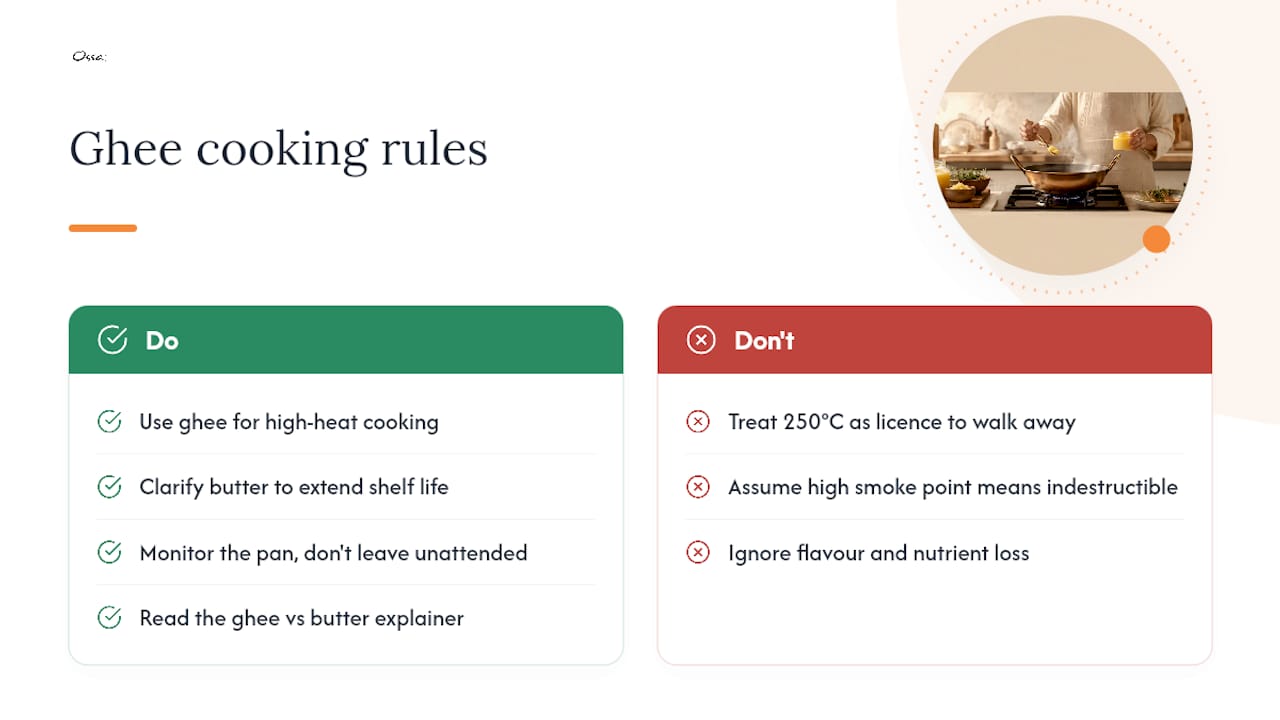
What we’d push back on is the idea that a high smoke point makes any fat bulletproof. Ghee is stable, not indestructible, and treating “250°C” as licence to walk away from the pan is how flavour and nutritional quality get lost. If you want to go deeper on how clarification changes ghee’s composition, our piece on ghee versus butter breaks down the nutritional side, and our gut-health explainer covers why clarification matters beyond just heat tolerance.
— Ossa Organic
Cooking with Ossa Organic ghee
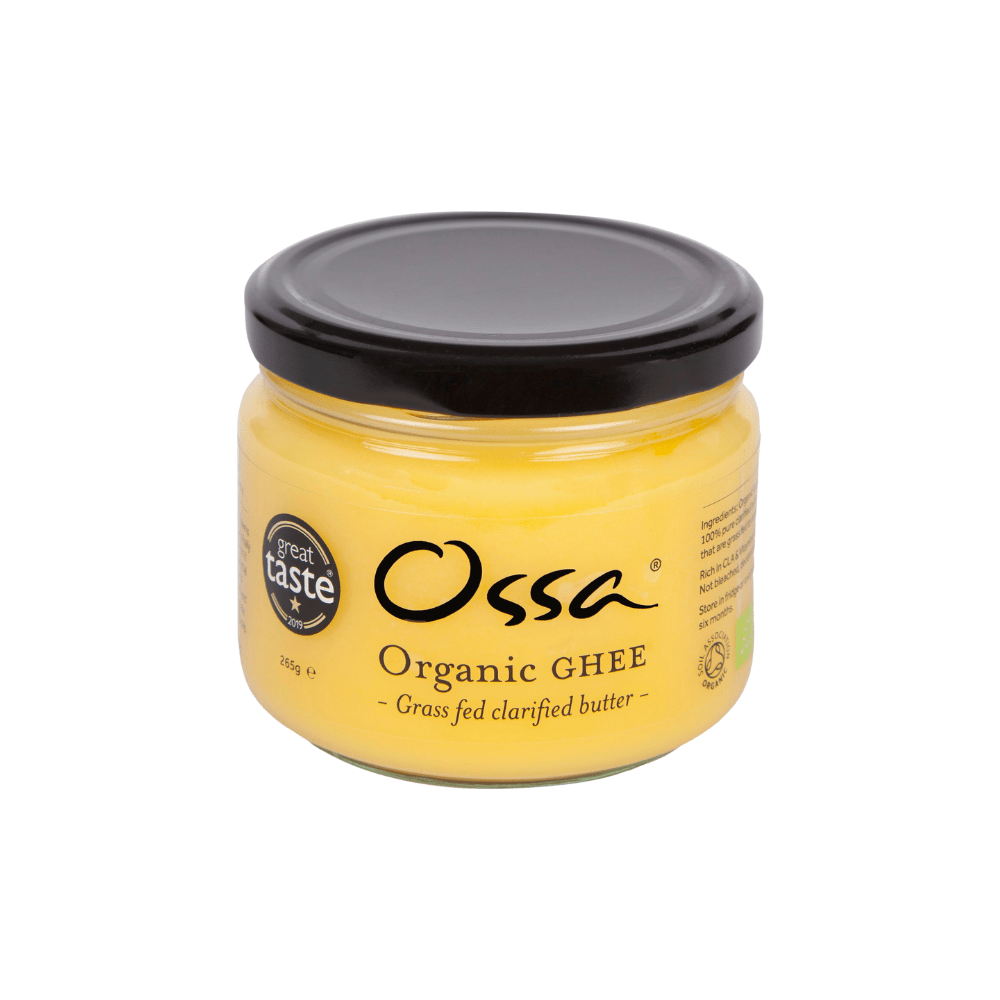
Ossa Organic’s Organic Ghee, Grass Fed Clarified Butter is made from grass-fed, organic milk and clarified using traditional methods, ticking every box on the checklist above: single ingredient, clear melt, nutty aroma, no waxy residue. It’s suited to searing, tempering and finishing where flavour and heat stability both matter.
For everyday high-heat cooking, a smaller jar tends to get used before it’s exposed to air too many times, keeping quality consistent from first spoonful to last. If you’re deep-frying in volume, blend it with a refined oil to manage cost, then bring out the pure ghee for finishing touches or a quick tadka. Whichever way you use it, remember it’s still a saturated fat, so portion it the way you would any concentrated cooking fat rather than treating it as unlimited.
FAQ
Can I use ghee for high-heat cooking?
Yes. Ghee’s smoke point of around 250°C sits well above typical searing, sautéing and deep-frying temperatures, making it one of the more heat-stable options in a home kitchen.
Does ghee reduce heat?
No, ghee doesn’t reduce heat; it simply tolerates higher temperatures before breaking down compared with butter or extra virgin olive oil, so food cooks at the same pace but with less risk of the fat scorching.
What oil is best for high-heat cooking?
Fats with high smoke points, such as ghee, refined avocado oil and refined vegetable oils, all perform well above 200°C, with ghee offering the added benefit of a nutty, rounder flavour that neutral oils lack.
Is ghee inflammatory like dairy?
Clarification removes most of the lactose and casein found in butter, which is why many people who react to dairy tolerate ghee without issue, though anyone with a severe dairy allergy should still check with a doctor before adding it to their diet.