
Cart
0
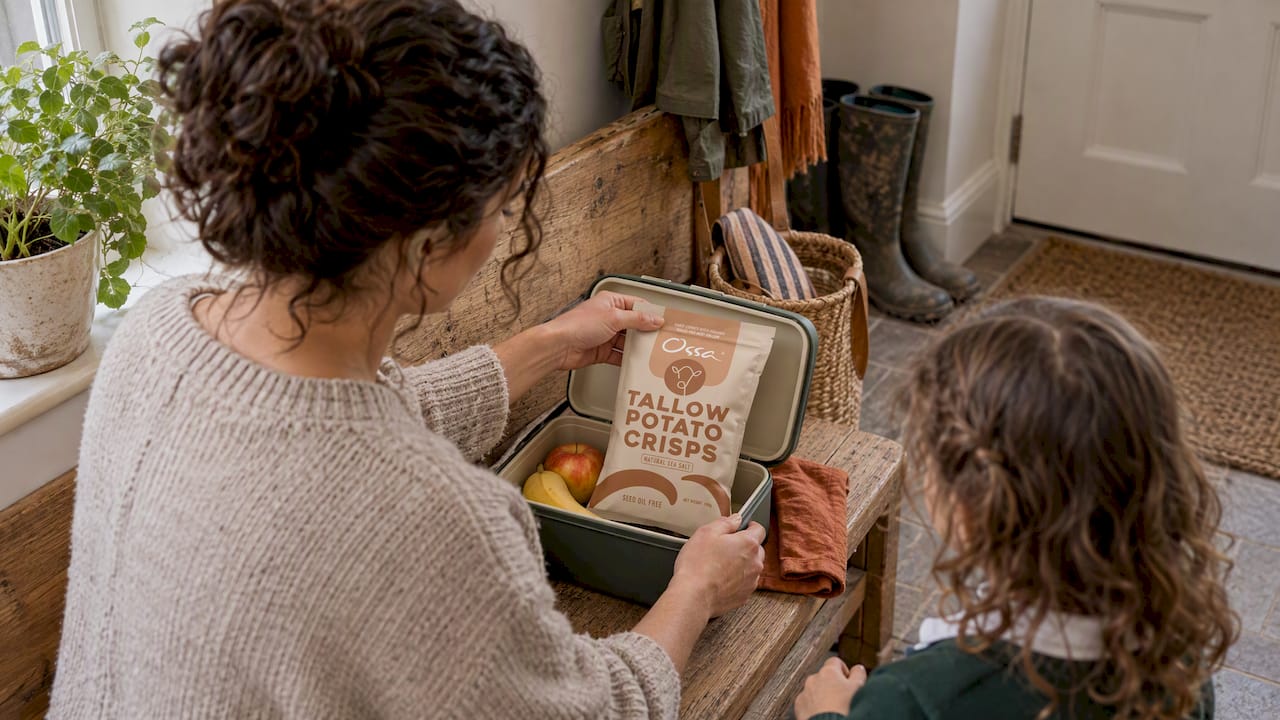
Additive-free snacks are foods with no declared preservatives, colours or E-numbers on the label, usually single-ingredient or made from a short list of whole foods. For quick choices, reach for fresh fruit, plain nuts or seeds for older children, simple homemade bakes, or a ready-made option such as Tallow Potato Crisps. The sections below cover snack ideas, label checks and storage.
TL;DR:
- Most genuinely additive-free snacks are made from whole foods like fruit, nuts, seeds, pulses, and freeze-dried vegetables, with no declared additives on the label.
- Shelf-stable options should have short ingredient lists and packaging that is chilled or simple, not just marketed as “natural,” and longer shelf lives may warrant a label recheck.
- Checking labels involves looking for E-numbers or unfamiliar chemicals and comparing best-before dates; preservatives like BHA or BHT are common in packaged fats.
- Perishable additive-free snacks require refrigeration or vacuum sealing to maintain freshness, especially since they lack synthetic preservatives.
- Opting for short, readable ingredients lists over vague “natural” claims helps ensure snacks are truly additive-free and minimally processed.
Table of Contents
- What makes a snack genuinely additive-free
- Additive-free snack ideas families can use this week
- Reading the label: how to spot hidden additives
- Where to shop and how to keep snacks fresh
- Why we build snacks around whole ingredients
- Ready-made additive-free options from Ossa
- FAQ
- Sources
What makes a snack genuinely additive-free
“Natural” and “additive-free” are not the same thing. A product can be marketed as natural while still containing preservatives, flavourings or stabilisers, because “natural” has no fixed legal definition in food labelling. Additive-free means something more specific: no declared additives, including E-numbers, on the ingredients list.
Most genuinely additive-free snacks are built from a small set of whole-food bases:
- Fruit, dried or fresh, often the only ingredient on the pack.
- Oats, nuts and seeds, usually roasted or toasted rather than chemically treated.
- Pulses such as chickpeas, roasted plain or with salt.
- Freeze-dried vegetables, which keep texture and nutrients without preservatives.
Without synthetic preservatives, manufacturers rely on other methods to keep food safe: refrigeration, vacuum sealing, or simply accepting a shorter best-before date. That trade-off is normal. A bag of preservative-free crisps or a chilled snack pot will not sit on a shelf for a year the way a conventional product might.
A snack kept to whole, unprocessed ingredients, such as fresh fruit or plain nuts, is one of the simplest ways to cut unnecessary processed ingredients from a child’s diet, and the NHS Healthier Families guidance also suggests capping packaged snacks to help manage this. Limiting packaged snacks to a moderate amount each day gives a useful benchmark for busy households trying to rebalance a lunchbox or fruit bowl.
Additive-free snack ideas families can use this week
Some of these take seconds, others need five minutes in the oven. All avoid preservatives, colours and artificial flavourings.
- Fruit skewers. Chunks of apple, banana and strawberry on a blunt skewer, ready in under five minutes.
- Rice cakes with mashed fruit. Plain rice cakes topped with mashed banana or stewed apple instead of flavoured spreads.
- Home oven crisps. Thin potato or sweet potato slices, baked with a little salt, no seed oils or stabilisers.
- Roasted chickpeas. Drained, dried, oven-roasted with a pinch of paprika or cumin.
- Two-ingredient fruit bars. Blended dates and oats, pressed into bars and chilled.
- Plain yoghurt with fruit. Full-fat natural yoghurt topped with berries or toasted oats, a variation on the NHS toasted oats recipe.
For shelf-stable options bought rather than made, look for a short ingredients list, usually five items or fewer, and packaging that is either chilled or genuinely simple, not just labelled “natural.” That one check does more than any marketing claim on the front of the pack.
A few safety notes matter here. Whole nuts should not be given to children under five because of choking risk; ground nuts or smooth nut butters are a safer substitute. Always supervise young children with skewers, bars or anything cut into firm chunks.
Pro Tip: Batch-roast chickpeas or oven crisps on a Sunday and split them into small, reusable pots so the week’s lunchboxes are sorted without extra effort.

Reading the label: how to spot hidden additives
Checking a label takes under a minute once you know what to look for.
- Ingredients are listed in descending order of weight, so the first few items tell you what the snack is mostly made of.
- Watch for E-numbers or unfamiliar chemical names rather than recognisable food words.
- Words like “preservative,” “stabiliser” or “colour” (even “natural colour”) signal an added ingredient, not a whole food.
- Compare the best-before date with what you would expect: a minimally processed snack with a shelf life of many months longer than six is worth a second look.
Food sold pre-packed in the UK must, under the food information regulation, list all ingredients in descending order by weight, and any additive present must be declared, by E-number or name. The Food Standards Agency keeps the approved list of additives and the rules around them, including a labelling threshold: sulphites must be declared once they exceed 10 mg per kg. BHA and BHT, two preservatives sometimes used to extend shelf life in fats and oils, are examples worth recognising on a label.
For more detail on which additives turn up most often and where they hide in packaged food, see our notes on common food additive hazards and where hidden chemicals tend to appear on a typical label.
Where to shop and how to keep snacks fresh
Specialist health food aisles, farmers’ markets and chilled counters tend to carry more genuinely additive-free options than standard snack shelves, partly because short-life, minimally processed food needs refrigeration or quick turnover. Ambient packs with short ingredient lists are the exception worth seeking out.
A practical pantry reset works better than an overnight overhaul: swap one processed snack for a whole-food equivalent each week, keep single-ingredient staples such as oats, nuts and dried fruit visible on the counter, and let homemade bakes replace one packaged item at a time.
- Refrigerate opened additive-free products promptly; without preservatives, they spoil faster.
- Vacuum sealing extends freshness for batch-prepared snacks like roasted chickpeas or oat bars.
- A long shelf life on a “natural” snack is a reasonable prompt to check the label again.
Favour a short, readable ingredients list over a vague “natural” claim on the front of the pack. For more on why this matters at home, our piece on reducing additives and preservatives in everyday cooking goes into the reasoning. For broader everyday food guidance, Ask the Kitchen is a useful reference point for families building simpler shopping habits.
Why we build snacks around whole ingredients
Ossa Organic started after discovering the benefits of bone broth during pregnancy, and the business has run on paleo, anti-inflammatory cooking ever since. We use organic, grass-fed ingredients and traditional slow methods instead of shortcuts. Three of our products sit squarely in the additive-free snack category, including tallow potato crisps, a functional nutrition ambient bundle, and collagen peptides and gelatine.
— Ossa Organic
Ready-made additive-free options from Ossa
For families who want the label-reading shortcut done for them, our Tallow Potato Crisps are cooked without seed oils or preservatives, and the Functional Nutrition’ Ambient Bundle pairs gut-friendly snacks with pantry staples in one order. Our Certified Grass Fed Collagen Peptides and Pasture Raised Gelatine add protein to homemade bars and bakes without any additives involved.

FAQ
What foods have no additives?
Fresh fruit, vegetables, plain nuts and seeds, and single-ingredient products like oats or dried fruit typically carry no declared additives. Anything with more than a handful of ingredients is worth checking against the label for E-numbers or preservatives.
What are some of the healthiest non-processed snacks?
Whole fruit, plain yoghurt, roasted chickpeas and home-baked oat bars are reliable choices, matching the NHS’s advice to favour whole, unprocessed foods over packaged ones. Nuts and seeds work well for children over five, given the choking risk for younger ones.
How can I tell if a packaged snack is genuinely additive-free?
Check that the ingredients list is short, usually five items or fewer, with no E-numbers or words like “preservative,” “stabiliser” or “colour.” A best-before date much longer than six months on a minimally processed food is a reasonable prompt to look again.
What are the top additive-free snacks to try first?
Fresh fruit, plain rice cakes with mashed fruit, roasted chickpeas and oven-baked potato crisps cover most tastes and take little preparation. A ready-made option such as Tallow Potato Crisps works well for busy days when homemade is not possible.