Organic ingredients
•
Naturally nourishing
•
Made with care
We've sent you an email with a link to update your password.
Reset your password
We will send you an email to reset your password.
Basting Steak with Tallow: Method, Timings and Tips
Ralph Barrozo
0 comments
To baste steak with tallow, sear the steak in a hot pan with a spoonful of beef tallow, lower the heat, then spoon the melted fat over the meat repeatedly for a few minutes with garlic and herbs in the pan. Tallow is rendered beef fat, so it carries a savoury, beefy flavour that suits steak. It stays stable at the high heat a good crust needs, and it is solid at room temperature, which makes it easy to measure. This guide covers the cuts, the quantities, the timings and the mistakes that spoil a basted steak.
Ossa Organic
Cook Steak with Traditional Fats
Explore Ossa Organic’s approach to natural food and slow cooking, rooted in traditional ingredients rather than trends.
Basting is the practice of spooning hot fat over meat while it cooks. It does three jobs on a steak. It cooks the top surface while the underside sits against the pan, so the heat arrives from both directions. It carries the flavour of garlic and herbs onto the meat. And it keeps the surface glossy and well browned.
Most recipes use butter for this. Tallow does the same work with a different character. It is a fat that handles high heat well, so you can sear hard without the fat burning and turning bitter. Its flavour is beefy rather than dairy, which pushes the steak itself forward instead of masking it. For readers who cook with traditional fats and avoid seed oils, tallow is also a natural fit with the way they already cook: slow-rendered animal fat, used in small amounts, for dishes where the flavour matters.
There is also a practical point. Tallow is a firm white fat at room temperature. It does not splash and spit as much as a thin liquid oil, and a single spoonful goes a long way in a pan. If you want to see how it compares with other cooking fats on heat tolerance and taste, our guide to tallow versus coconut oil sets them side by side.
Choosing the steak
Basting works best on steaks that are thick enough to stay pink in the middle while the outside builds a crust. Thickness matters more than the name of the cut.
Aim for 2.5 to 4 cm thick. A thin steak overcooks before the basting has had time to do anything. If your steak is under 2 cm, sear it quickly and use the tallow for the sear only, with a very short baste at the end.
Good cuts for basting:
Ribeye. Plenty of marbling and a fat cap. It releases its own fat into the pan, which mixes with the tallow.
Sirloin. Leaner than ribeye, with a strip of fat along the edge. Render that edge first by standing the steak on it for a minute.
Rump. Full flavour and a good price. Cook it a little less than you might expect, and slice it across the grain.
Bavette (flank). A thin, loose-grained cut that takes basting well when cooked quickly and sliced thinly.
Fillet. Very lean and mild, so it benefits most from the fat and flavour of a baste.
T-bone and porterhouse. Thick and generous. Baste both sides of the bone and keep the fillet side from overcooking.
Buy steak that has been aged and, where you can, comes from grass-fed cattle. If you want to understand what actually influences the flavour of the beef fat itself, our piece on why pasture diversity matters more than the grass-fed label explains how what the animal eats ends up in the fat.
Preparing the steak before it hits the pan
What you do in the hour before cooking has as much effect on the result as the basting.
Take the steak out of the fridge 30 to 45 minutes ahead. A very cold steak cooks unevenly and chills the pan. You want it cool, not warm. Never leave raw meat out for much longer than this.
Dry the surface thoroughly. Pat both sides with kitchen paper. Surface moisture turns to steam and stops the crust forming.
Salt generously. Season with flaky sea salt on both sides. Some cooks salt an hour ahead, or the day before and leave the steak uncovered in the fridge, which dries the surface further. Either approach works. Add pepper just before cooking, as it can scorch on a very hot pan.
Trim sensibly. Leave the fat cap on. You will render it in the pan.
The equipment
You need a heavy-based pan that holds heat. Cast iron is the classic choice because it recovers quickly when the cold steak goes in. A thick stainless steel frying pan also works. Avoid thin non-stick pans: they cannot reach a proper searing heat safely, and the basting angle is awkward.
If you cook with cast iron, tallow is also the fat that looks after the pan. Our guide to seasoning a cast iron pan with beef fat explains how to keep the surface in good condition, so each steak sears on a pan that is already primed.
Beyond the pan you need:
A large metal spoon for basting.
Tongs, for turning.
A probe thermometer. It removes the guesswork, especially on thick cuts.
A warm plate and a board for resting.
Garlic cloves, lightly crushed with the skin on.
Hard herbs such as thyme or rosemary.
How much tallow to use, and when to add it
This is the question most home cooks get wrong. The aim is enough fat to make basting possible, and no more.
Quantity. One tablespoon of tallow is enough for one or two steaks in a 26 to 28 cm pan. If you are cooking a single large steak in a smaller pan, a heaped teaspoon to a tablespoon is plenty. A deeper layer is for shallow frying, not for basting. If you can no longer tilt the pan to gather the fat in one corner, you have used too much.
Timing. Add the tallow to the dry pan once the pan is already hot, and let it melt and shimmer. It melts within seconds. You want it hot enough that the steak sizzles loudly the moment it lands, but not so hot that the fat is smoking heavily. A light wisp is fine. A cloud means the heat is too high.
Add the aromatics later, not at the start. Garlic and fresh herbs burn quickly on a hot pan, and burnt garlic tastes acrid. They go in once you have turned the heat down, after the first sear.
Step-by-step: pan-searing and basting a steak with tallow
These timings suit a steak about 3 cm thick. Adjust them for thinner or thicker cuts using the table further down.
Heat the pan. Put the pan over a medium-high to high heat for a few minutes until it is properly hot.
Add the tallow. Drop in a tablespoon and let it melt and spread. Swirl to coat the base.
Sear the first side. Lay the steak in away from you, so the fat does not splash towards you. Press it down lightly for the first few seconds. Leave it alone for about two minutes, until a deep brown crust has formed and the steak releases from the pan without sticking.
Turn and sear the second side. Cook for a further two minutes. If there is a fat cap, use the tongs to stand the steak on its edge for a minute or so and render the fat.
Lower the heat to medium. The pan will still be very hot. This is the moment to protect the aromatics.
Add the garlic and herbs. Drop in the crushed garlic and a few sprigs of thyme or rosemary. They will sizzle at once and perfume the fat.
Tilt the pan and baste. Tip the pan towards you so the fat pools at the lower edge. Scoop it up with the spoon and pour it over the top of the steak, again and again, working steadily. Keep the pan on the heat while you do it.
Turn and baste again. After roughly a minute, turn the steak and baste the other side. Continue for two to four minutes in total, turning every minute or so if you like, until the steak reaches the temperature you want.
Check the temperature. Push the probe into the centre from the side. Take the steak off the heat a few degrees below your target, as it keeps cooking while it rests.
Rest. Move the steak to a warm plate or board.
Timings and doneness by thickness
Use this as a starting point. Pans, hobs and steaks differ, so rely on a thermometer for anything thick. Internal temperatures below are the temperature at which to take the steak off the heat, before resting.
Steak thickness
Sear (each side)
Baste (total)
Take off at, medium-rare
2 cm
1 to 1.5 minutes
1 minute
about 50°C
3 cm
2 minutes
2 to 3 minutes
about 50 to 52°C
4 cm
2 to 3 minutes
3 to 4 minutes
about 52°C
5 cm or thicker
3 minutes
4 minutes, then finish in a hot oven
about 52°C
For medium, take the steak off about 5 to 8°C higher. For well done, cook for longer at a lower heat after the sear, so the outside does not burn before the middle is done. Thick steaks can be finished in an oven preheated to around 180°C, with the baste done on the hob before and after.
If you are serving steak to children, pregnant women, older people or anyone with a weakened immune system, cook it through to a higher temperature than you would for yourself. The Food Standards Agency gives guidance for these groups, and the surface of a whole steak should always be properly seared on every side.
Garlic, herbs and other flavours
Basting is where you can build flavour without a sauce. Keep it simple so the beef and tallow remain the main taste.
Garlic. Two to four cloves, crushed with the flat of a knife and left in their skins. They flavour the fat without burning as quickly as chopped garlic.
Thyme and rosemary. Sturdy herbs that tolerate the heat. Put in whole sprigs and remove them before serving.
Bay leaf. A single leaf adds depth in a longer baste.
Black peppercorns. Lightly crushed and added with the garlic, they toast in the fat.
A knob of butter at the end. Some cooks add a small piece of butter in the last minute for a softer, rounder finish. This is optional, and the steak is excellent with tallow alone, which is also the choice if you avoid dairy.
A strip of lemon zest or a splash of vinegar. Added off the heat, either lifts the richness. Do not add acid early, as it will cool the pan and spoil the crust.
Avoid sugary marinades before searing. Sugar burns long before the steak is cooked, and it leaves a bitter taste on the crust.
Resting and serving
Resting is not optional. While the steak is hot, the juices are pushed towards the centre. If you cut straight away they run out onto the board. Resting lets the fibres relax so the juices stay in the meat.
Rest the steak for at least as long as you cooked it, and for 5 to 10 minutes for a thick cut.
Keep it somewhere warm, loosely covered with foil. Do not wrap it tightly, or the crust will go soft in the steam.
Pour the pan juices over the top before you serve. The fat, garlic and herb flavour is in them.
Slice across the grain for rump, sirloin and bavette. Fillet and ribeye can be served whole or in thick slices.
Finish with flaky salt.
Any fat left in the pan can be strained and kept, as covered below.
Common mistakes when basting with tallow
The pan is too hot when you baste. The fat smokes, the garlic burns and the steak turns bitter. Lower the heat as soon as the sear is done.
Too much tallow. A deep pool makes it impossible to tilt the pan and gather the fat. You end up shallow-frying a steak that is meant to be basted.
Crowding the pan. Two steaks in a large pan are fine. Four in the same pan drop the temperature and steam the meat. Cook in batches and keep the first batch warm.
A wet steak. Moisture is the enemy of a crust. Pat dry and, if you can, salt ahead.
Moving the steak constantly. Leave it still for the first two minutes of each sear. Once you start basting, turning more often is fine because the heat is lower.
Skipping the thermometer. Poking and pressing is unreliable on a thick steak. A probe is the simplest way to avoid overcooking an expensive cut.
Cutting too soon. A steak sliced without resting loses a surprising amount of liquid onto the board.
Cold plates. A steak resting on a cold plate loses heat quickly. Warm the plate first.
Storing and reusing the tallow
Because you use so little, there is often a small amount of seasoned fat left in the pan. If it has not burnt, strain it through a fine sieve into a clean jar while it is still liquid, discarding the garlic and herbs. Keep it covered in the fridge and use it within a few days for roasting potatoes or frying eggs. If the fat has blackened or smells acrid, discard it.
Keep the main tub of tallow in a cool, dark place with the lid on, and always use a clean, dry spoon to scoop it out. Water and crumbs shorten the life of any cooking fat. Follow the storage instructions printed on the pack you buy.
Tallow also works well for the sides that go with steak. Our tallow recipes tagged for frying cover chips and fried vegetables, and the cooking oil recipes show other ways to use the same tub through the week.
If you wonder how tallow differs from the suet found in British butchers and supermarkets, our guide to suet versus tallow for home cooks explains what each is and where each works best.
Our perspective on tallow and steak
We started Ossa Organic with a simple belief: food should be natural, minimally processed and cooked slowly the way it was for generations. Tallow is part of that tradition. It is a cooking fat our families have used for centuries, long before refined seed oils arrived in the kitchen.
For steak, we think tallow is the natural partner. Beef fat belongs with beef. It gives a deep sear, a clean savoury flavour and a stable fat for basting, and you need very little of it. A spoonful is enough for a family supper.
What goes into the fat matters, which is why our range is organic, grass-fed and free from preservatives, hormones and additives. When you baste a steak, the fat is the flavour you are spooning over the meat, so it makes sense to start with a fat you are happy to put your name to.
We cook this way ourselves, as a family-run business that eats mostly paleo and avoids inflammatory foods. A hot pan, a good steak, a spoonful of tallow and a handful of garlic and thyme is one of the simplest meals we know.
Ossa Organic
Where to find tallow for basting
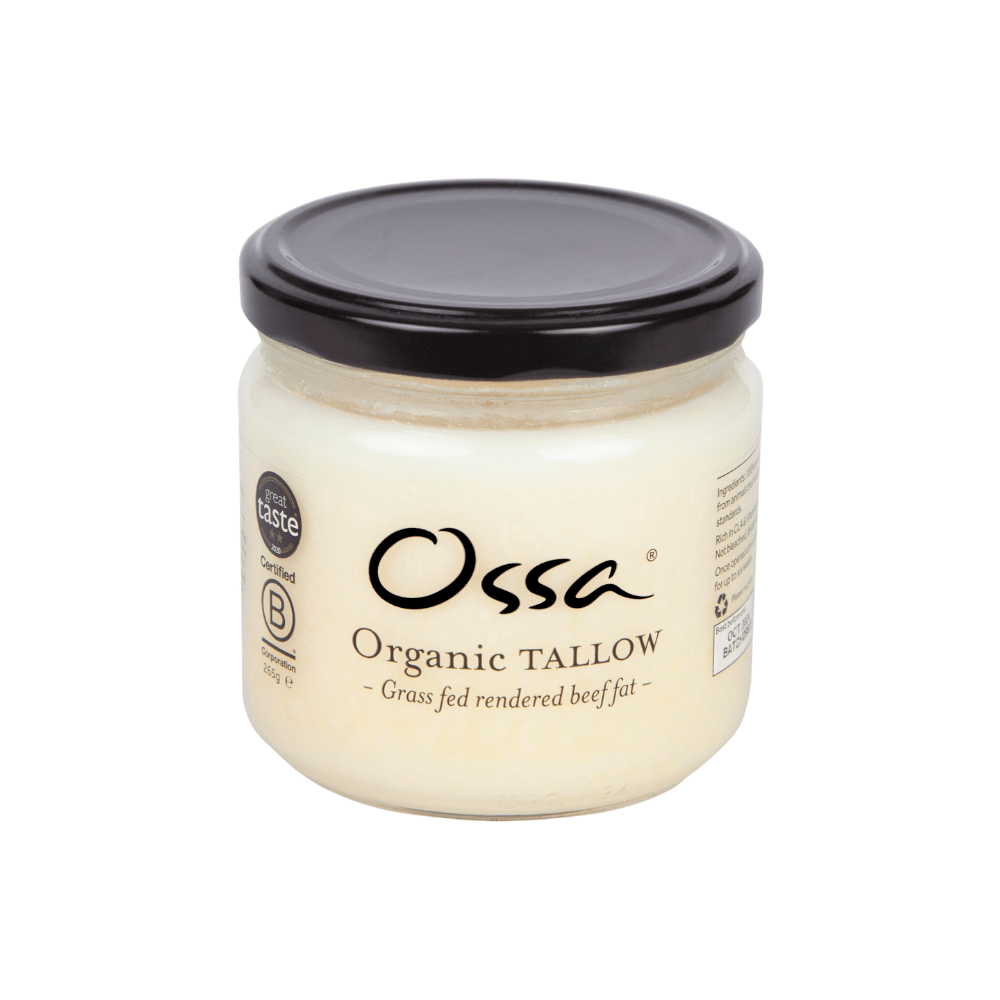
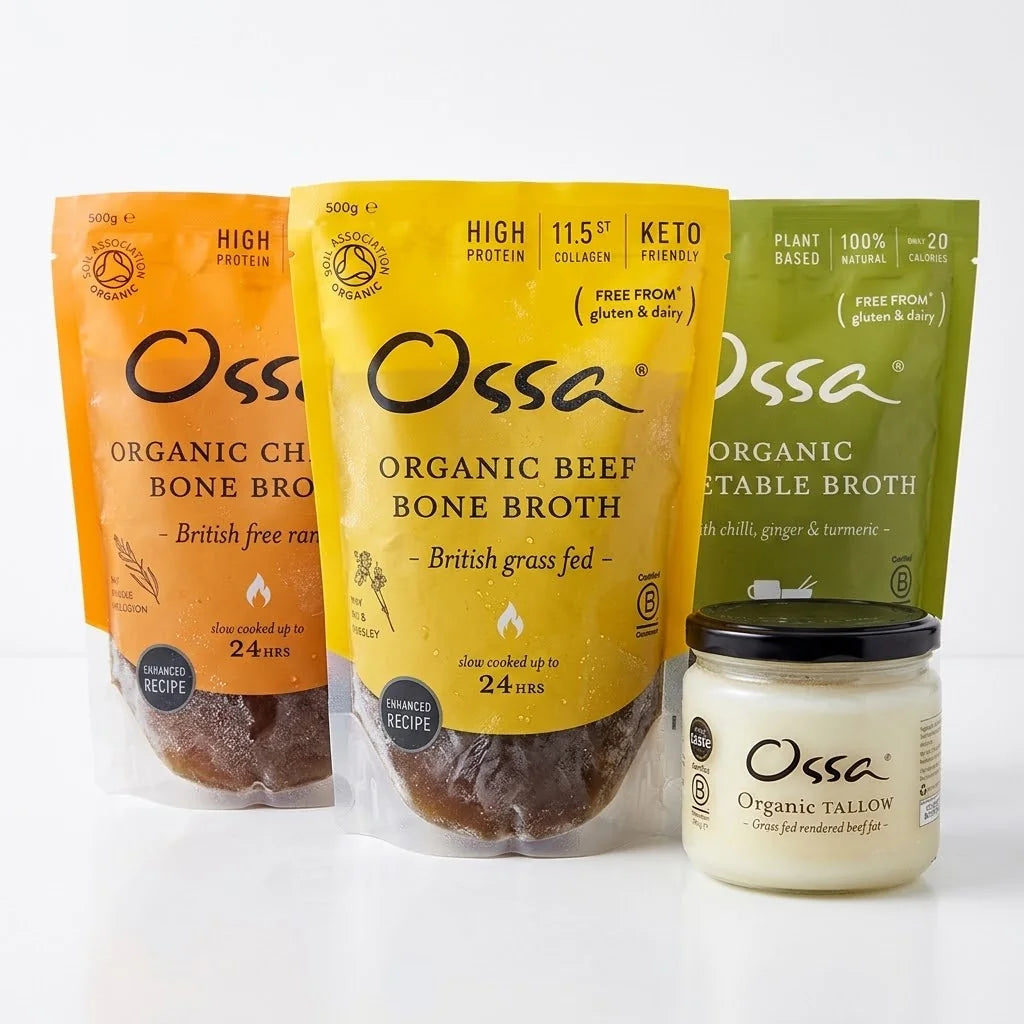
Our Grass Fed Fats range includes organic grass-fed tallow for cooking, alongside ghee. Both are made without preservatives or artificial ingredients. You can also browse our organic bone broths and collagen powders, which pair well with a steak dinner, in the Ossa Organic shop. If you are building a gut health routine around traditional foods, our bundles collect them in one order.
FAQ
Should I sear steak in beef tallow?
Yes. Tallow handles the high heat that a good crust needs, and its beefy flavour complements the steak rather than competing with it. Use about a tablespoon for one or two steaks, and lower the heat once the sear is done so the garlic and herbs do not burn.
How much tallow do I need to baste a steak?
One tablespoon is enough for one or two steaks in a standard frying pan. You need just enough fat to pool at the edge when you tilt the pan, so you can spoon it over the meat. A larger quantity turns basting into shallow frying.
When should I add garlic and herbs?
Add them after the first sear, once you have lowered the heat to medium. Garlic and fresh herbs burn quickly in very hot fat. Add them to the pan, tilt it, and start spooning the perfumed tallow over the steak straight away.
Can I use tallow and butter together?
Yes. Some cooks sear in tallow and add a small knob of butter in the last minute for a softer finish. It is optional. Basting with tallow alone gives a clean beef flavour and suits anyone avoiding dairy.
How long should I rest a basted steak?
Rest it for at least as long as you cooked it, and 5 to 10 minutes for a thick cut. Keep it on a warm plate under loosely tented foil, then pour the pan juices over before serving.