
Cart
0
Yes, ghee can replace butter in most cakes, cookies and brownies once you match the fat weight and adjust for the moisture butter normally provides. The one rule that matters more than any other: ghee contains no water, so recipes that lean on that water for steam, structure or a soft crumb need a small correction. Get that right and ghee for baking becomes one of the easiest swaps in the kitchen.
TL;DR:
- Ghee can replace butter in most baked goods by matching fat weight and adjusting for moisture loss, but it requires reducing or adding liquid depending on the recipe.
- Ghee’s higher smoke point around 250°C makes it more heat-tolerant than butter, reducing the risk of burning and improving performance in high-temperature baking.
- Unlike butter, ghee contains no water, so recipes that depend on steam for lift or soft crumb may need extra liquid or adjustments to texture.
- Ghee works best in shortbread, biscuits, and dense cakes, but is unsuitable for laminated pastries like croissants that rely on water-driven steam for flakiness.
- Proper handling—using cold ghee for shaping and soft or melted for baking—ensures better structure and reduces spreading or greasiness in baked goods.
Table of Contents
- Why ghee behaves differently from butter in the oven
- How to substitute ghee for butter without ruining the bake
- Where ghee for baking cakes and biscuits really shines
- Fixing the most common ghee baking problems
- Why Ossa Organic trusts ghee in its own kitchen
- When I still reach for butter instead
- Where to buy ghee for your own baking
- Further reading and sources
- FAQ
Why ghee behaves differently from butter in the oven
Butter is roughly 80 to 82% fat, with the rest made up of water and milk solids. Ghee is closer to 99% fat. That gap sounds small on paper but it changes almost everything about how a bake behaves once it hits the oven.
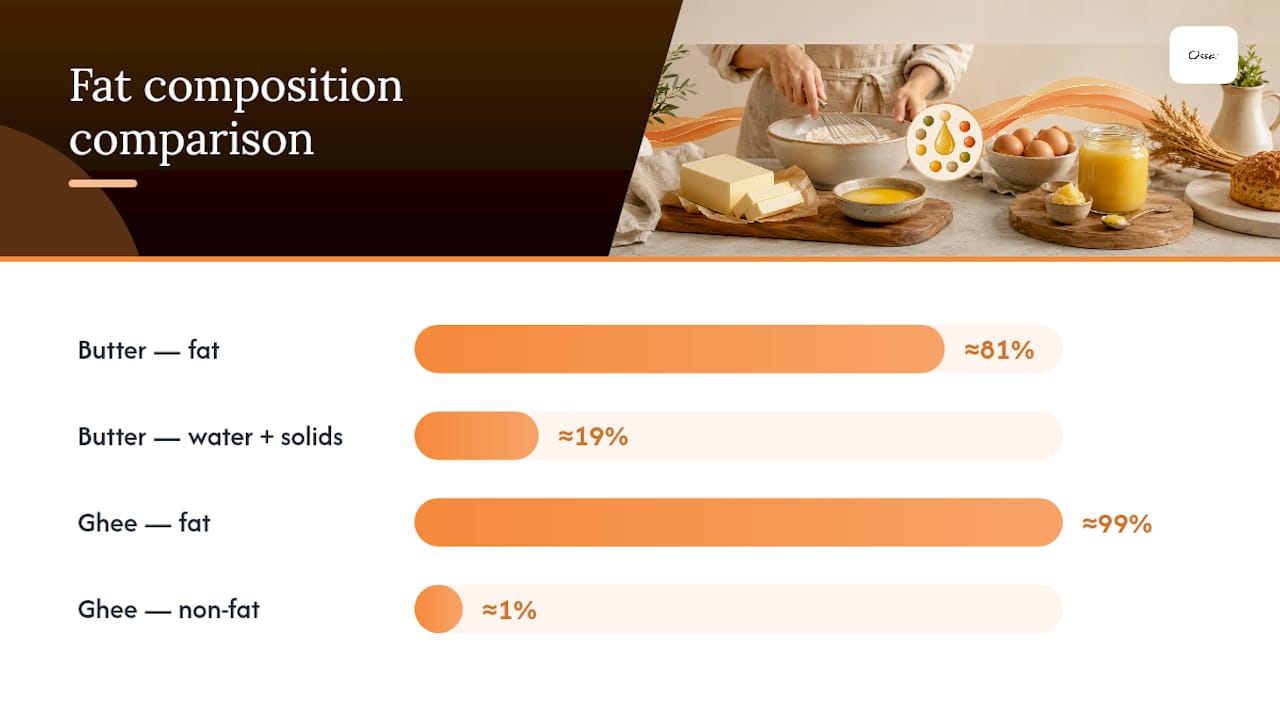
Butter’s water content creates steam during baking, which helps puff pastry rise and gives certain cakes their soft, slightly damp crumb. Strip that water out, as ghee does, and you lose some of that lift and moisture unless you compensate elsewhere. The upside is a texture many bakers actually prefer: tender, short, and less likely to turn gummy.
Flavour is the other big shift. Ghee is made by simmering butter until the milk solids caramelise and separate out, which gives it a nutty, slightly toffee-like depth that plain butter never develops. In a spiced cake or a shortbread, that flavour is a genuine upgrade. In a delicate vanilla sponge where butter is meant to stay neutral, it can be a bit much.
Heat tolerance is where ghee has a clear practical edge. Ghee’s smoke point sits around 250°C (485°F), compared with butter’s roughly 177°C (350°F). That gap matters more than people realise.
Ghee’s higher smoke point means:
- Less risk of burnt, bitter dairy notes when a recipe calls for a hot oven
- More forgiving behaviour if your oven runs hot or has uneven heat
- A genuine advantage for high-heat methods like blind-baking pastry shells or finishing biscuits under a grill
Smoke point comparison: Ghee tolerates heat up to roughly 250°C before it starts to break down, while butter typically begins smoking around 177°C. That difference is why ghee holds its flavour better in hotter ovens.
How to substitute ghee for butter without ruining the bake
Converting a recipe is straightforward once you know the three variables that actually matter: weight, moisture, and the state of the fat when it goes into the mixing bowl.
- Weigh, don’t measure by volume. For solid butter, swap in ghee at a 1:1 ratio by weight. This is the most reliable starting point for cakes, cookies and biscuits.
- Adjust for melted butter recipes. If the original recipe uses melted butter, use somewhat less ghee by volume due to its higher fat concentration, or convert both to weight for accuracy. Ghee is purer fat, so a little goes further.
- Watch the batter consistency. If it looks stiffer or drier than usual once the ghee goes in, add a small amount of milk or other liquid if the batter looks drier than usual after adding ghee. This replaces the water butter would normally have contributed.
- Match the ghee’s state to the method. Creaming needs soft, room-temperature ghee, not melted. Shaped cookies need cold ghee straight from the fridge. Brownies are the most forgiving and generally work well with melted ghee, with only a slight volume tweak.
The creaming stage deserves particular care. Ghee traps less air than butter when beaten with sugar, so cakes can lose some of their natural lift. Eggs and your leavening agent (baking powder or bicarbonate of soda) need to do more of the work than usual, so don’t skip the full creaming time even though the mixture looks different from a butter-based batter.
A quick reference for handling ghee by bake type:
- Sponge cakes: soft ghee, full creaming time, add a splash of milk if the batter looks tight
- Shortbread and biscuits: cold or firm ghee, minimal mixing, chill before baking
- Brownies: melted ghee, slightly reduced quantity, no creaming required
- Cookies: use cold ghee and chill dough before baking to help control spread
Pro Tip: Start with ghee that’s cool but pliable, not fridge-hard and not melted. Fully liquid ghee whips almost no air into a batter, so a slightly firmer texture gives you noticeably better rise in sponges.
Where ghee for baking cakes and biscuits really shines
Some bakes are practically designed for ghee. Others are better left to butter. Knowing which is which saves you a ruined tray of biscuits.
Shortbread and Nankhatai-style biscuits are the clearest win. Ghee’s pure fat coats flour proteins more thoroughly than butter, which softens gluten development and produces that classic melt-in-the-mouth crumb. Traditional Indian Nankhatai biscuits rely on ghee for exactly this reason, and a standard British shortbread recipe responds the same way. Swap in ghee 1:1 by weight, keep it cold, and expect a slightly shorter, more delicate biscuit than the butter version.
Kerala-style ghee cake is worth trying if you want to see ghee’s flavour contribution at its best. The traditional ratio leans heavily on ghee (often close to a 1:1 match with the flour weight) baked at a moderate oven temperature, around 160 to 170°C, low enough to let the cake set slowly without the edges catching. The result is dense, rich and faintly caramelised, closer to a butter cake’s sturdier cousin than a light Victoria sponge.
Brownies convert with almost no fuss.
Cookies need one extra step: chill the dough for at least 30 minutes before baking, since ghee-based dough tends to spread more than butter dough without that rest.
Where ghee doesn’t belong is laminated pastry: croissants, puff pastry, and anything relying on distinct buttery layers. Butter’s water content creates steam between the layers as it bakes, which is what makes the pastry puff and separate. Ghee has no water to do that job, so lamination collapses instead of lifting. For that specific technique, ghee’s gut-friendly qualities don’t outweigh butter’s structural role, and it’s genuinely the wrong tool for the job.
Fixing the most common ghee baking problems
Most issues with ghee baking come down to three things: too much browning, too much spread, or a crumb that feels greasy rather than tender. Each has a quick fix.
If your bake is browning too fast:
- Drop the oven temperature by 10 to 15°C from what the original recipe specifies
- Tent the top loosely with foil once it reaches your target colour
- Check the bake 5 to 10 minutes earlier than usual, since ghee accelerates the Maillard reaction at the edges
If cookies are spreading more than expected:
- Chill the dough for at least 30 minutes, ideally longer for a firmer set
- Make sure you’re using cold ghee straight from cold storage, not softened
- If spreading persists after chilling, cut the sugar slightly or add an extra tablespoon or two of flour per batch to raise the setting point
If the crumb tastes greasy instead of tender, the usual cause is an imbalance somewhere: check that you’ve matched fat weight exactly rather than eyeballing it, and that eggs were at room temperature before mixing, since cold eggs can stop a batter emulsifying properly with ghee.
One genuine advantage worth knowing about: bakes made with ghee often keep longer at room temperature than their butter-based equivalents, simply because there’s less free water available to support early mould growth. Let bakes cool completely before sealing them in a tin or container, and they’ll generally stay fresh for a bit longer than you’re used to.
Pro Tip: If a family recipe keeps spreading no matter what you try, resist the urge to add more flour across the board. Adjust the sugar first. It’s a smaller change and it’s usually the real culprit.
Why Ossa Organic trusts ghee in its own kitchen
Ossa Organic was founded on the idea that traditional, slow-cooked food does more for a family’s health than anything processed or additive-laden. That same thinking shapes how the brand talks about ghee for baking: not as a trend, but as a return to a fat that’s been used in Indian and South Asian kitchens for centuries, long before “clean baking” was a marketing phrase.
The brand’s own testing supports the 250°C smoke point guidance referenced throughout this article, and its blog carries recipes that put the substitution rules above into practice rather than just describing them in theory. If you want to see the ratios working in a real bake before trying your own, the tested ghee recipes are a sensible starting point.
When I still reach for butter instead
In our own kitchen, ghee is the default for shortbread, biscuits and most family cake recipes. It’s what tradition and taste both point to. But I won’t pretend it does everything: for croissants or puff pastry, butter’s water content still does a job ghee simply can’t replicate.
— Ossa Organic
Where to buy ghee for your own baking
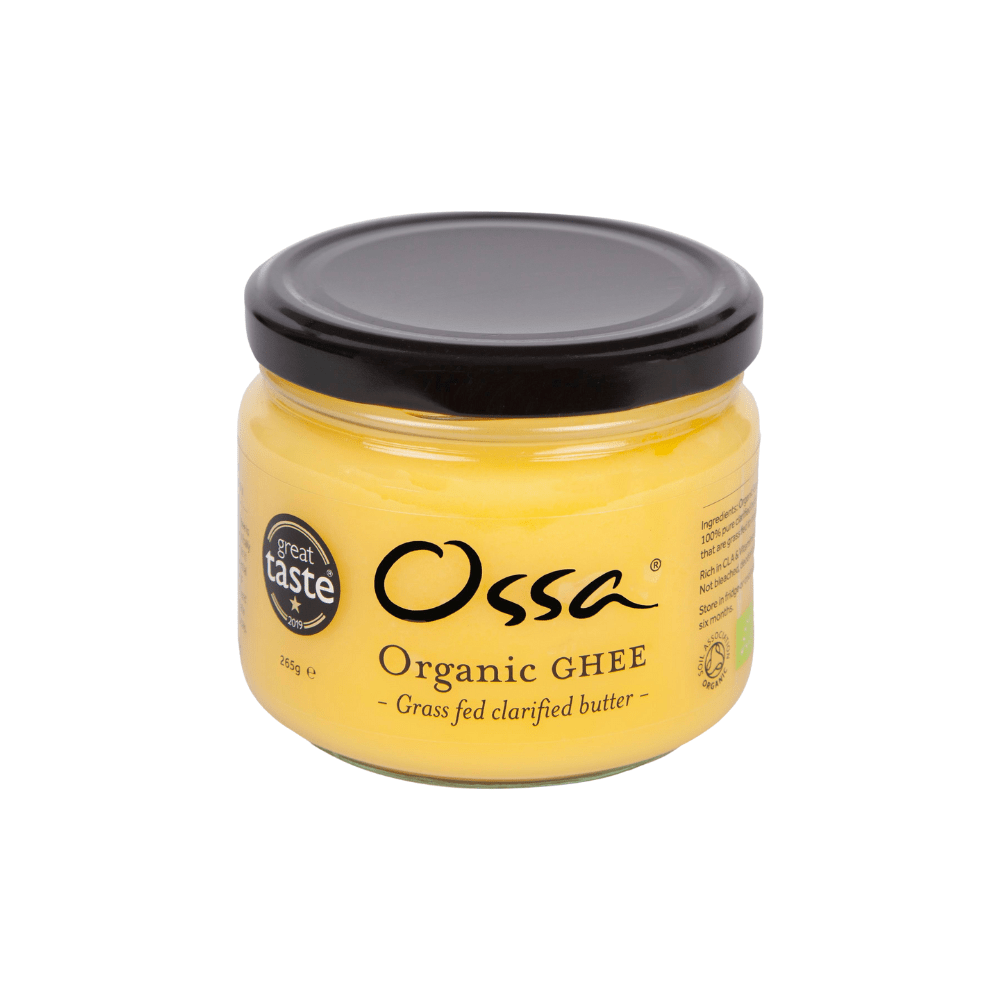
If you’re ready to put any of this into practice, start with ghee that’s actually built for it. Ossa Organic’s Organic Ghee, Grass Fed Clarified Butter is made from grass-fed British cows using slow, traditional clarification, the same process that gives ghee its baking advantages in the first place: pure fat, no water to manage, and a tested smoke point of around 250°C that holds steady through a hot oven.
It is a product around which recipes are created and tested. If your household is exploring dairy-free or lactose-friendly baking more broadly, it’s also worth browsing lactose-free recipe ideas for further inspiration.
For bakers who want to build out a wider gut-health pantry alongside their ghee, the full range of organic fats, broths and collagen is worth a browse, and the shop-all collection covers bundles and snacks for the rest of the kitchen. Order a jar, try the shortbread conversion first, and judge the result for yourself.
Further reading and sources
- Smoke point data and heat-stability guidance for ghee versus butter
- Ossa Organic’s tested notes on ghee’s 250°C smoke point
- Conversion ratios and troubleshooting drawn from recipe testing on cakes, cookies and brownies
FAQ
Can ghee be used for baking?
Yes, ghee works well in most cakes, cookies, biscuits and brownies, generally as a 1:1 swap by weight for solid butter. The main adjustment needed is extra moisture in some batters, since ghee contains no water.
Can I replace butter with ghee when baking?
In most everyday bakes, yes: match the fat weight, use soft ghee for creaming and cold ghee for shaped cookies. Avoid the swap in laminated pastry like croissants or puff pastry, where butter’s water content is essential for creating flaky layers.
Is ghee better than butter for baking?
Neither is strictly better; they suit different bakes. Ghee’s smoke point of around 250°C, compared with butter’s roughly 177°C, gives it an edge in hot ovens and produces a more tender crumb in shortbread, while butter remains the better choice for lamination and very airy sponges.
Can we use ghee instead of butter in baking cookies?
Yes, though cookies made with ghee tend to spread more than those made with butter. Chilling the dough for at least 30 minutes and using cold ghee rather than softened ghee keeps the shape and thickness closer to the original recipe.