

Cart
0

Take collagen at whatever time you will actually remember, every single day, in a dose that matches your goal. That single habit does more for your skin, joints, or recovery than any hour-of-the-day trick. The one genuine exception is pre-workout timing: taking 10 to 15 grams of hydrolysed collagen or gelatin with roughly 50mg of vitamin C 30 to 60 minutes before exercise has direct trial support for tendon and ligament health.
TL;DR:
- Daily dosing and consistent use over several weeks are far more important for results than the specific time of day or whether taken with food, with no significant evidence favoring morning or evening intake.
- Hydrolyzed collagen peptides do not require an empty stomach because they are already broken down into absorbable fragments, making timing around meals largely irrelevant.
- Taking 10 to 15 grams of collagen with vitamin C roughly 30 to 60 minutes before tendon-loading exercise significantly boosts collagen synthesis and tendon function, supported by limited but promising research.
- For skin, hair, and nails, steady daily doses of 2.5 to 10 grams over 8 to 12 weeks elicit visible improvements, regardless of whether taken in the morning or evening.
- Avoid exceeding 15 to 20 grams daily, and choose collagen sources based on allergy history and transparency, with long-term use requiring patience and consistent routines.
Table of Contents
- When to take collagen: what actually matters
- Timing collagen for skin, hair and nails
- Timing collagen for joints, tendons and exercise recovery
- How to take collagen day to day: forms, dose and simple routines
- Collagen safety: what to watch for and what to avoid
- Where Ossa Organic fits into this routine
- Our honest view on collagen timing advice
- Start your daily collagen habit with Ossa Organic
- FAQ
When to take collagen: what actually matters
Forget the idea that there’s a golden hour for collagen. Multiple reviews and clinical trials point to the same conclusion: benefits track daily dose and sustained use over weeks, not the clock. Trial doses cover a range generally starting from a few grams up to the mid-teens of grams daily, and most trials span several weeks to a few months before measurable changes appear. The key point: consistent use over weeks matters more than a specific time of day.
This matters because so much of the collagen conversation online obsesses over “morning versus night” or “before versus after food”, as if getting that detail wrong wastes your supplement. It doesn’t. Hydrolysed collagen peptides, which is the form used in nearly every major trial, are already broken down into smaller peptides and short amino acid chains before you even swallow them. That pre-digestion means the “take it on an empty stomach for better absorption” advice you’ll see repeated across wellness forums has little grounding. If you prefer your collagen with breakfast, that’s fine.
What the evidence does and doesn’t support:
- Daily dose and total weeks of use predict outcomes far more reliably than time of day.
- Hydrolysed peptides don’t require an empty stomach because they’re already broken down into absorbable fragments.
- No large head-to-head trials show a clear circadian advantage for skin, hair, or general connective tissue when comparing morning versus evening intake.
- Small studies have floated the idea that nighttime dosing might support overnight tissue repair, but the evidence remains thin and inconsistent.
Evidence snapshot: Clinical trials on collagen typically use daily doses within a broad range and run for multiple weeks to months. None of the research identifies any particular hour of the day as superior for dosing.
The takeaway for anyone starting out: pick a dose suited to your goal, pick a moment in your day you won’t skip, and hold the line for at least two months before judging whether it’s working.
Timing collagen for skin, hair and nails
Cosmetic-focused trials, the ones measuring skin hydration, elasticity, and fine lines, tend to use lower daily doses than joint or tendon studies. Most sit between 2.5g and 10g a day, and the pattern across this research is consistent: participants report visible change at around 8 to 12 weeks of steady use, not days or even a couple of weeks.
Morning or evening doesn’t change that outcome. What changes it is whether you actually take the dose every day for three months straight. If mixing collagen peptides into your morning coffee is the version of the habit you’ll stick to, that’s a perfectly sound choice, and it fits naturally alongside a morning routine built around collagen. If evening feels more natural, an evening tea or warm milk works just as well, since hydrolysed peptides tolerate typical hot-drink temperatures without breaking down.
Building a skin-focused routine that sticks:
- Choose a dose in the 2.5g to 10g range and keep it consistent day to day.
- Pick one anchor moment, coffee, breakfast, or an evening drink, rather than trying to remember it “sometime today”.
- Make sure your overall diet includes enough vitamin C, since it’s a necessary cofactor for the enzymes involved in collagen synthesis.
- Give it a genuine 8 to 12 week trial before deciding whether it’s working, rather than judging after ten days.
Pairing collagen with a vitamin C source, citrus, berries, or a vitamin C supplement, is helpful rather than mandatory for cosmetic aims. Your body needs vitamin C to build new collagen structures, so if your diet is already rich in fruit and vegetables, you’re likely covering that base without thinking about it. If it isn’t, a small deliberate addition costs nothing and closes a genuine nutritional gap.
Timing collagen for joints, tendons and exercise recovery
This is where timing actually earns its place in the conversation. A 2017 human trial by Shaw and colleagues found that taking a higher dose of gelatin with vitamin C roughly an hour before tendon-loading exercise increased blood markers of collagen synthesis and improved tendon function. It remains one of the few pieces of research to isolate a specific timing window with a measurable physiological effect.
The mechanism makes sense biologically. Exercise that loads a tendon, jumping, running, resistance training, creates a short window where the tissue is primed to build new collagen fibres. Flooding your bloodstream with collagen-building amino acids and the vitamin C needed to stabilise them during that exact window gives your body the raw materials right when it’s asking for them. Outside that window, the same nutrients still get used, just without the same targeted timing advantage.
Evidence snapshot: Trial protocols for tendon support often use a higher dose of gelatin or hydrolysed collagen combined with vitamin C, taken approximately half an hour to an hour before exercise.
A practical pre-workout protocol:
- Measure out 10 to 15g of hydrolysed collagen peptides or gelatin.
- Mix it into water, juice, or a smoothie roughly 30 to 60 minutes before your session.
- Add a vitamin C source, a squeeze of lemon juice, a small glass of orange juice, or a vitamin C tablet, alongside it.
- Do your tendon-loading activity (running, jumping, resistance training) within that window while the amino acids are circulating.
- On rest days, take your normal daily dose at whatever time suits you. There’s no evidence you need to time it around a workout that isn’t happening.
Pro Tip: If you train early morning and can’t stomach a shake beforehand, a strong coffee blended with collagen peptides and a splash of orange juice covers both the dose and the vitamin C in one go.
If you don’t train at all, or your goal is general joint comfort rather than tendon-specific loading, the pre-workout window isn’t relevant to you. Stick with a steady daily dose in the 10 to 15g range, taken consistently, and expect joint-related outcomes to take longer to show, typically 12 to 24 weeks compared with the 8 to 12 weeks often seen for skin.
How to take collagen day to day: forms, dose and simple routines
Three forms dominate the market, and they behave differently once they’re in your body. Hydrolysed collagen peptides are broken down into short chains that dissolve easily in both hot and cold liquids and don’t gel. Gelatin is a less processed relative that thickens liquids as it cools, which is why it’s the form used in Shaw’s tendon protocol and why some people prefer it in warm broths. Whole-food collagen sources, like the collagen naturally present in bone broth, deliver collagen alongside other nutrients but in less standardised amounts than a measured powder.
Heat isn’t the enemy here. Hydrolysed peptides are stable at the temperatures found in a normal cup of coffee or tea, so stirring a scoop into your morning brew doesn’t destroy the peptides, despite the online rumours suggesting otherwise. If you enjoy the ritual, collagen in coffee is a genuinely sound way to build the habit.
Dose examples by goal:
- General wellness and maintenance: around 5g daily.
- Skin, hair, and nail support: 5g to 10g daily.
- Joint, tendon, and exercise recovery: 10g to 15g daily, or pre-workout as described above.
- Routine doses above roughly 20g a day haven’t shown added benefit in trials, so there’s little reason to push higher.
Two routines worth adopting:
- Morning blend: Coffee or a smoothie with 5 to 10g of collagen peptides stirred in, plus whatever fruit you’re already eating for vitamin C.
- Evening shake: A warm milk or herbal tea with your daily dose, useful if mornings are too rushed for anything beyond grabbing your coat.
Pro Tip: Keep a small tub of collagen peptides next to your kettle, not in a cupboard. The habit survives longer when the product is visible every single day.
Collagen safety: what to watch for and what to avoid
Collagen is derived from animal connective tissue, most commonly bovine (cattle) or marine (fish) sources, and allergy risk tracks the source. If you have a known fish or shellfish allergy, check the label carefully before choosing a marine collagen product, and consider a bovine or grass-fed source instead. Sourcing transparency matters here too: grass-fed, pasture-raised sourcing generally carries a lower contaminant risk than collagen from intensively farmed animals, since heavy metals and other contaminants can concentrate up the food chain.
If you’re on long-term medication, pregnant, or breastfeeding, speak to a clinician before adding any new supplement, including collagen, to your routine. This isn’t a specific red flag unique to collagen, it’s standard practice for any supplement during these life stages, and it applies whether you’re considering a 5g daily dose or a pre-workout protocol.
Sensible boundaries to keep in mind:
- Choose bovine or marine collagen based on your own allergy history, not just marketing claims.
- Favour brands that are transparent about sourcing, ideally grass-fed or pasture-raised, to reduce contaminant exposure.
- Don’t expect visible change inside a week. Eight to twelve weeks is the realistic minimum for skin outcomes, longer for joints.
- Don’t treat collagen as a substitute for addressing major health issues; it supports connective tissue, it doesn’t replace medical care.
- Avoid pushing your dose well beyond 15 to 20g daily on the assumption that more equals faster results. The trial evidence doesn’t back that idea up.
Where Ossa Organic fits into this routine
Ossa Organic started from a simple discovery: bone broth’s effect on gut health during a first pregnancy, which led to a family business built on slow-cooked, organic, additive-free food. That same philosophy shapes how we think about collagen: as a daily food habit, not a quick fix.
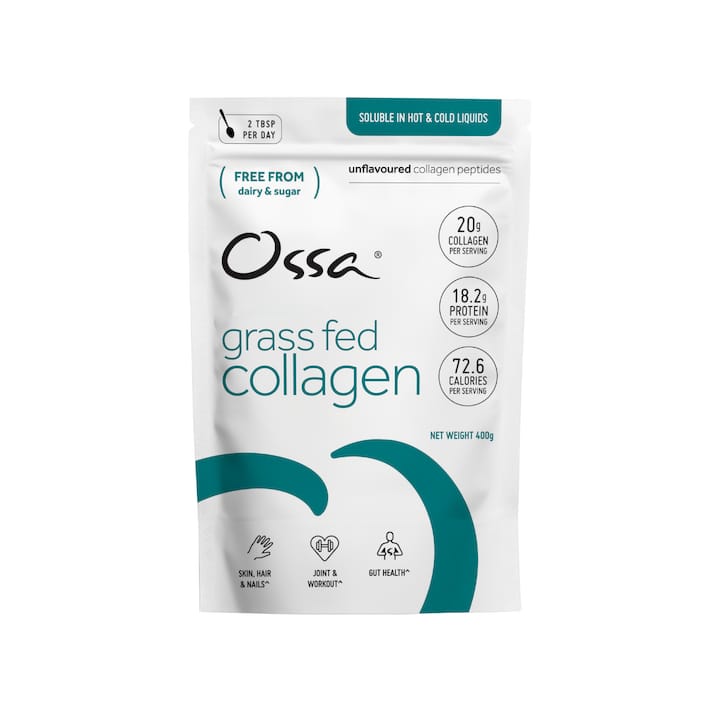
Ossa Grass Fed Collagen Peptides is a hydrolysed peptide powder that suits the daily 5g to 10g routines described above, whether stirred into coffee or a smoothie. For readers wanting both formats on hand, the Ossa Certified Grass Fed Collagen Peptides and Ossa Pasture Raised Gelatine bundle covers pre-workout gelatin protocols and everyday peptide use side by side. For habit-building ideas and food-first approaches, our guide to natural collagen food sources is worth a look.
Our honest view on collagen timing advice
Most of the collagen content circulating online spends far too much energy on the wrong variable. Morning versus evening, empty stomach versus with food, these debates generate clicks but don’t move the needle on results. The trial evidence is fairly blunt about what matters: dose, consistency, and enough weeks of use to let collagen synthesis actually happen.
Where conventional advice really falls short is in treating every goal the same way. Someone chasing skin elasticity and someone rehabilitating a tendon need different doses and, in the tendon case, a genuinely different timing strategy tied to exercise. Collapsing both into generic “take it daily” advice wastes the one piece of timing science that’s actually well supported.
If you take one thing from this article, prioritise building an unbreakable daily habit first. Only layer in the pre-workout protocol if tendon or ligament support is specifically your goal. Everything else, the coffee versus tea debate, morning versus night, is preference, not evidence.
— Ossa Organic
Start your daily collagen habit with Ossa Organic
Most collagen guides leave you working out dose, form, and sourcing on your own. Ossa Organic solves that by building products around clinically used doses from the start, so you’re not guessing whether a scoop is 3g or 12g. Our Ossa ‘Functional Nutrition’ Ambient Bundle pairs collagen peptides with other organic, gut-supporting staples, a practical starting point if you’d rather set up a full daily routine in one order than piece it together product by product. For anyone easing in gradually, the wider range of organic bone broths, collagen and gelatin powders, and grass-fed fats lets you build a routine around real food rather than isolated capsules, and our gut health bundles, honey, and healthy snacks round out a pantry built for consistency rather than novelty. If you’re pregnant, breastfeeding, or on long-term medication, check with a clinician before starting. The evidence here supports steady use over weeks, so the best next step is simply choosing your dose and adding it to your basket today.
This article is general information, not a substitute for advice from a qualified doctor. Consult a qualified healthcare professional about your own circumstances before acting on anything here.
FAQ
What is the best time to take collagen?
There isn’t a single best hour. What matters is choosing a moment you’ll repeat daily, morning coffee or an evening drink both work equally well for skin and general wellness goals. The one exception is exercise-focused use, where taking 10 to 15g with vitamin C 30 to 60 minutes before training has direct trial support for tendon health.
What to avoid when taking collagen?
Avoid marine collagen if you have a fish or shellfish allergy, and avoid unverified brands that don’t disclose sourcing, since contaminant risk rises with intensively farmed animals. Don’t expect results within days, and don’t push your dose well past 15 to 20g daily, since trials show no added benefit beyond that range.
What are the signs that collagen is working?
Look for gradual improvements in skin hydration and elasticity, typically noticeable around 8 to 12 weeks of daily use, and for joint comfort or tendon resilience, which tends to take 12 to 24 weeks. Other commonly reported signs include stronger nails and less brittle hair, though these build gradually rather than appearing suddenly.
Does taking collagen help with belly fat?
There’s no trial evidence showing collagen supplementation reduces belly fat specifically. Its evidence base covers skin, joint, and tendon outcomes tied to connective tissue, not fat loss, so it shouldn’t be relied on as a weight-management tool.
Should I take collagen with or without food?
Either works. Hydrolysed collagen peptides are pre-digested into small peptides before you consume them, so the “empty stomach” rule often repeated online has little grounding in the evidence. Taking it with breakfast, in coffee, or in a smoothie is fine.