

Cart
0

Collagen supplements help with some menopausal changes far more than others. Skin hydration and elasticity respond well within two to three months, and specific bioactive collagen peptides taken at 5 g a day alongside calcium and vitamin D have raised bone mineral density in year-long randomised trials. Joint comfort shows a smaller, more mixed benefit. Collagen is not a substitute for prescribed osteoporosis treatment, and anyone with kidney disease, liver disease, or on complex medication should check with their GP first.
TL;DR:
Collagen combined with calcium and vitamin D enhances bone density gains over at least 12 months, with continued improvements observed over four years.
Skin hydration improves by 23% and elasticity by 8.5% within six months, but results depend on pairing collagen with vitamin C, sun protection, and adequate protein intake.
Benefits for joint pain are modest and more evident in women with pre-existing collagen degradation, with noticeable effects developing over two to three months.
Hydrolysed collagen peptides at around 5 g daily from reputable sources show the strongest evidence, especially when taken consistently for at least eight weeks for skin and six to twelve months for bone.
Collagen supplements are safe for most women but require medical consultation if on complex medications, with specific caution needed for those with kidney or liver issues.
Table of Contents
-
Does collagen for menopause actually work? What the science says
-
Benefits for skin, hair and nails: what to expect and what helps
-
Benefits for bone: collagen’s role alongside calcium, vitamin D and exercise
-
How to choose a collagen supplement: types, dose and a product checklist
-
Why Ossa Organic’s approach to collagen matches the trial evidence
-
Do collagen supplements interact with menopause medications?
-
Our take: don’t expect a miracle, expect a measured improvement
Does collagen for menopause actually work? What the science says
The honest answer is: it depends on which symptom you’re asking about. Menopause research on collagen has moved well past marketing claims into genuine randomised controlled trials (RCTs), and the picture that emerges is uneven but encouraging in specific areas.
The best-documented trial in this field followed 131 postmenopausal women for 12 months. Half took 5 g a day of specific collagen peptides; the other half took a placebo. The collagen group showed a significant increase in bone mineral density at the lumbar spine and femoral neck. A four-year follow-up on the same cohort found the gains continued rather than plateaued, which matters because bone remodelling is slow and short trials often miss real effects.
A systematic review and meta-analysis pooling multiple RCTs backed this up, concluding that collagen peptide supplementation, particularly alongside calcium and vitamin D, consistently improved bone density markers in postmenopausal or osteopenic women. The review flagged heterogeneity between studies, meaning trials used different peptide types, doses, and durations, so the size of the benefit varies. That’s a normal caveat for nutrition science, not a reason to dismiss the finding.
A few consistent patterns emerge across the trial evidence:
-
Trials combining collagen with calcium and vitamin D outperformed calcium and vitamin D alone for bone markers and density in postmenopausal women with osteopenia.
-
A six-month RCT using fish-derived collagen peptides with calcium and vitamin D found skin hydration improved by 23% and elasticity by 8.5% compared with placebo.
-
Smaller trials on skin, nails, and hair shedding used doses between 2.5 g and 10 g a day, with visible changes appearing from eight weeks onward.
-
A broader literature review found collagen improved both skin measures and orthopedic outcomes, especially in people already experiencing collagen degradation, such as postmenopausal women.
The evidence at a glance: the strongest, most repeatable data sits with bone mineral density (12 month RCTs, 5 g/day peptides, plus a four-year follow-up showing continued gains) and skin hydration (a six-month RCT showing +23% hydration). Joint pain evidence is real but more modest, and hair and nail data comes mainly from smaller, shorter studies.
Timelines matter more than most supplement labels admit. Skin changes tend to show up within 8 to 12 weeks. Bone markers move more slowly, and meaningful density changes generally need six months to a year of consistent daily use. If you take a collagen supplement for three weeks and stop because “nothing happened,” you likely stopped before the outcome you wanted was ever going to appear.
Where the evidence is weaker is joint pain in the general menopausal population rather than diagnosed osteoarthritis, and in distinguishing collagen’s effect from that of the calcium and vitamin D it’s so often paired with in trials. Collagen for menopause research rarely tests the peptides in total isolation, which is worth remembering before assuming any single ingredient did all the work.
Benefits for skin, hair and nails: what to expect and what helps
Skin changes fast in early menopause because oestrogen and collagen production are tightly linked. Oestrogen stimulates fibroblasts, the cells that manufacture collagen and elastin in the dermis. When oestrogen drops, fibroblast activity slows, and the skin’s structural scaffolding thins. Public health summaries commonly cite a substantial loss of skin collagen in the first years after menopause, which explains why so many women notice fine lines, sagging, and dryness appearing faster than they expected, not gradually over a decade but within a few short years.
This is where collagen supplementation shows some of its most consistent results. Other smaller trials, using bioactive peptides at doses of 2.5 g to 10 g daily, reported improved skin elasticity, better nail growth, and reduced hair shedding, with visible change from around eight to twelve weeks onward.
That timeframe is worth repeating because it sets realistic expectations. Skin cell turnover and dermal remodelling simply take weeks, not days. Judging a collagen supplement’s effect on skin after ten days is like judging a gym programme after one session.
A few things genuinely improve the odds of seeing results:
-
Pair collagen with vitamin C. It’s a required cofactor for the body’s own collagen synthesis, and low intake blunts the benefit of supplementation.
-
Keep protein intake adequate overall. Collagen peptides are one protein source among several skin draws on for repair.
-
Use daily sunscreen. UV exposure breaks down collagen faster than menopause does on its own, so skipping this step undermines everything else.
-
Consider a topical retinoid or a well-formulated moisturiser alongside oral collagen; the two work through different mechanisms and tend to complement rather than duplicate each other.
Pro Tip: Take your collagen peptides with a vitamin C source, such as a glass of orange juice or a handful of berries, rather than on their own. Vitamin C is a cofactor your body needs to build new collagen, so pairing the two may help you get more from the same dose.
Hydrolysed collagen peptides, which are used in the collagen peptide benefits research, are broken down into smaller chains specifically so they absorb more efficiently than whole collagen protein. That processing step is one reason peptides, rather than gelatine or bone broth alone, dominate the clinical trial literature on skin outcomes.
Benefits for bone: collagen’s role alongside calcium, vitamin D and exercise
Bone is where the collagen for menopause evidence is strongest, and it’s also where expectations need the most careful framing. The 12-month RCT in 131 postmenopausal women found that 5 g a day of specific collagen peptides significantly increased bone mineral density at the lumbar spine and femoral neck compared with placebo, and a four-year follow-up showed the gains continued rather than fading once supplementation stopped being novel.
What the trials tested: 5 g/day of specific collagen peptides, taken daily for 12 months minimum, most often alongside calcium and vitamin D, with outcomes measured using DXA (dual-energy X-ray absorptiometry) bone density scans and blood markers like P1NP and CTX.
Trials that added collagen peptides to standard calcium and vitamin D regimens showed better bone marker and density outcomes than calcium and vitamin D alone in women with osteopenia. That additive pattern, rather than collagen working in isolation, is the model worth carrying into your own routine.
Collagen supplementation is not a replacement for prescribed osteoporosis medication where a GP has recommended it. If you’ve been prescribed bisphosphonates or another bone-specific drug, collagen sits alongside that treatment, not instead of it. Continue any DXA scan schedule your GP has set, since that scan, not how your joints feel, is the only reliable way to track bone density changes over time.
Weight-bearing exercise remains a non-negotiable partner to any supplement strategy here. Walking, resistance training, and impact activity stimulate bone remodelling directly, and trial protocols that combined collagen with lifestyle measures tended to show the most convincing results. If bone health is your main concern, raise collagen with your GP as one part of a wider plan that already includes calcium, vitamin D, and regular exercise, not as a stand-alone fix.
Benefits for joints and mobility: who benefits and how much
Joint pain around menopause is common, and the collagen evidence here is genuine but more modest than the bone or skin data. A literature review covering both skin and orthopedic outcomes found collagen supplementation associated with reduced joint pain and improved orthopedic markers, particularly in populations already dealing with collagen degradation, such as postmenopausal women.
The effect size tends to be smaller than what trials show for bone density, and results vary more between individuals. That’s typical of joint pain research generally, since pain has multiple contributing causes beyond cartilage collagen content, including inflammation, weight-bearing load, and muscle strength around the joint.
What tends to improve the odds of noticing a difference:
-
Combine collagen with regular movement rather than expecting the supplement to work in isolation; strengthening the muscles around a joint reduces load on the joint itself.
-
Maintain a healthy weight where possible, since every extra kilogram adds measurable load to knees and hips.
-
Consider physiotherapy input if pain is persistent, as it addresses mechanics that no supplement can fix on its own.
-
Give it time. Joint comfort improvements, where they occur, tend to build gradually over two to three months rather than arriving in week one.
You’re likeliest to notice a benefit if your joint symptoms coincide clearly with the menopausal transition rather than predating it by years. For more detail on how peptides interact with joint tissue, see how collagen supports mobility and reduces pain.
How to choose a collagen supplement: types, dose and a product checklist
Not all collagen on a shelf is equivalent, and this is where most buying decisions go wrong. Whole collagen protein is a large molecule that the digestive system struggles to absorb intact. Hydrolysed collagen peptides are that same protein broken down into shorter chains through enzymatic processing, which is why peptides, rather than whole collagen, appear in almost every clinical trial referenced in this article. Medical commentary on menopausal bone loss specifically flags this distinction: bioactive hydrolysed peptides are processed for absorption in a way generic collagen is not, and products backed by actual trial data deserve priority over those that aren’t.
Trial doses cluster around 5 g a day for bone outcomes, with a broader range of 2.5 g to 10 g a day used across skin, hair, and nail studies. Trial length also varies by outcome: give skin changes 8 to 12 weeks before judging results, and give bone outcomes 6 to 12 months minimum, since density change is a slow biological process no supplement accelerates.
A short checklist worth applying to any product before you buy:
-
Confirm it specifies hydrolysed collagen peptides, not just “collagen,” on the label.
-
Check the source (bovine, marine, or otherwise) and any allergen labelling clearly.
-
Look for third-party testing or a transparent sourcing statement rather than vague claims.
-
Check whether vitamin C or calcium is included or recommended alongside it, echoing the trial protocols.
-
Confirm the dosing instructions are specific in grams, not a vague “one scoop.”
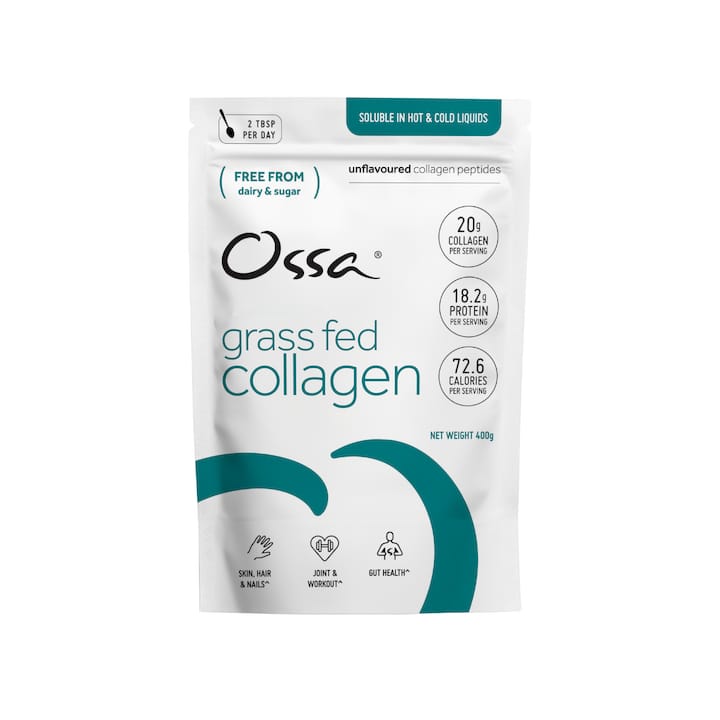
Grass-fed sourcing and minimal processing, the standard behind Ossa Grass Fed Collagen Peptides, map onto that checklist directly: hydrolysed peptide form, clear sourcing, and dosing instructions rather than ambiguity.
Three steps for trialling a new supplement sensibly:
-
Buy a smaller pack first rather than committing to bulk before you know how your body responds.
-
Read the label against the checklist above before you commit to daily use.
-
Track one or two outcomes, such as skin hydration or joint stiffness, over 8 to 12 weeks rather than judging on vague impressions after a fortnight.
Safety, side effects and when to see a GP
Collagen peptides are generally well tolerated, but they aren’t automatically risk-free for every woman. The most common issue reported is mild gastrointestinal upset, including bloating or a feeling of fullness, usually resolving once the body adjusts or the dose is lowered slightly.
Allergy risk depends entirely on source. Fish-derived, bovine, and porcine collagens each carry their own allergen profile, so anyone with a known food allergy should check the source on the label before buying, not after.
A few groups need a GP conversation before starting, not after:
-
Anyone with a history of kidney stones, since some collagen sources carry an oxalate load worth discussing.
-
Anyone with severe liver or kidney disease, where protein supplementation of any kind needs clinical oversight.
-
Anyone taking prescribed bone medication or anticoagulants, since interactions haven’t been ruled out and should be checked directly with a prescriber.
Stop and report to a GP any new or worsening symptoms after starting a supplement, particularly digestive changes that don’t settle within a week or two, or any unexpected reaction consistent with an allergy.
Why Ossa Organic’s approach to collagen matches the trial evidence
The collagen range is made based on principles valuing organic ingredients, slow cooking, and a belief that nourishing food beats processed convenience.
The trial evidence throughout this article consistently points to one form: hydrolysed bioactive peptides, taken daily, from a clear, traceable source. Ossa Grass Fed Collagen Peptides is formulated as a peptide product, aligning with the checklist above rather than sitting outside it. For readers who also want the gelatine form for culinary use, such as slow-cooked broths and set dishes, Ossa Certified Grass Fed Collagen Peptides and Ossa Pasture Raised Gelatine offers both forms together.
Full product specifications, sourcing details, and labelling information are available on the Ossa Organic site, so you can check them against the checklist yourself before buying.
Natural dietary sources of collagen for menopausal women
Supplements aren’t the only route to supporting collagen levels. Bone broth, made by slow-simmering connective tissue, cartilage, and bones, is one of the most direct dietary sources of collagen and the amino acids (glycine, proline, hydroxyproline) that make it up. Skin-on chicken, oxtail, and fish with the skin left on all contribute similarly.

Beyond collagen itself, several nutrients support the body’s own collagen synthesis. Vitamin C, found in citrus fruit, peppers, and berries, is essential for the process and is often paired with collagen in trial protocols for exactly that reason. Zinc, found in shellfish, seeds, and legumes, and copper, found in nuts and whole grains, both act as cofactors in collagen production. Adequate overall protein intake, from eggs, fish, poultry, and legumes, gives the body the raw amino acid supply it needs regardless of whether that protein comes from collagen specifically.
A useful way to think about it: supplementation adds a concentrated, measured dose of specific peptides that trials have tested directly, while food sources build the broader nutritional foundation those peptides work within. Neither replaces the other. A daily bone broth alongside a hydrolysed peptide supplement, with vitamin C rich food nearby, covers both angles without complication.
How lifestyle habits affect collagen during menopause
Hormonal decline sets the baseline for collagen loss at menopause, but daily habits accelerate or slow that decline meaningfully. Smoking is one of the clearest offenders: it damages collagen and elastin fibres directly and reduces blood flow to skin, compounding oestrogen-driven loss rather than sitting separately from it. Stopping smoking is one of the few interventions with a well-established, direct effect on skin ageing speed.
Sun exposure works similarly. UV radiation breaks down existing collagen and increases the enzymes that degrade it, a process dermatologists call photoageing, and it happens regardless of hormonal status. Daily sunscreen use protects whatever collagen supplementation and good nutrition manage to build, which is why skipping sunscreen while taking a collagen supplement undermines the investment.
Exercise, particularly resistance and weight-bearing training, works in the opposite direction. It stimulates blood flow and supports the mechanical loading that bone and connective tissue need to maintain density, which is precisely why trial protocols showing the best bone outcomes tend to pair supplementation with an active lifestyle rather than testing collagen alone. Sleep and chronic stress also play a role, since cortisol elevation over long periods has been linked to accelerated collagen breakdown.
None of this means lifestyle alone replaces supplementation, or vice versa. They’re additive, and the trial evidence with the best outcomes tends to reflect women doing more than one of these things at once.
Collagen versus HRT and vitamin D: where each one fits
Collagen supplements and hormone replacement therapy (HRT) address different mechanisms, and comparing them head to head slightly misses the point. HRT replaces the oestrogen that drives collagen production in the first place, addressing the root hormonal cause across multiple body systems simultaneously, including hot flushes, mood, and bone density. Collagen supplementation provides raw material and specific peptides that support skin and bone structure directly, but it doesn’t touch the hormonal cascade HRT addresses.
Women on HRT can still take collagen supplements, and several trials measuring bone or skin outcomes didn’t exclude HRT users, since the two work through different pathways rather than competing for the same one. Collagen is not positioned in the evidence as an alternative to HRT for women who need it, and it should never be framed as replacing a treatment a GP has recommended for menopausal symptom management.
Vitamin D sits closer to collagen in practical terms, since trials consistently paired the two. Vitamin D supports calcium absorption and bone mineralisation, and the strongest bone density results in the collagen literature came from studies where vitamin D and calcium were part of the protocol, not from collagen alone. If you’re choosing where to start, vitamin D status (often checked with a simple blood test) is worth establishing first, since deficiency is common and affects far more than bone density.
Do collagen supplements interact with menopause medications?
Direct interaction data between collagen peptides and common menopause medications, including HRT, is limited, which is different from saying no caution is needed. Collagen is a protein-derived supplement rather than a pharmacologically active drug, so it doesn’t interact with hormonal medication through the same mechanisms that cause many drug-drug interactions.
The more relevant caution concerns anticoagulants and prescribed bone medications, such as bisphosphonates, where any supplement affecting bone metabolism or blood chemistry deserves a conversation with the prescriber before starting, simply because that combination hasn’t been extensively studied. Women taking multiple medications for other conditions, particularly kidney or liver treatments, should raise any new supplement with their GP or pharmacist as a matter of routine, not because collagen specifically carries a known red flag.
If you’re on HRT and considering collagen, the practical answer from the trial evidence is that the two aren’t shown to conflict, but starting one new supplement at a time and monitoring how you feel over several weeks remains the sensible approach, particularly if you’re also managing other prescribed medication.
Our take: don’t expect a miracle, expect a measured improvement
The trial evidence doesn’t support collagen as a cure for menopause, and it’s worth saying that plainly. What it supports is narrower and, honestly, more useful: a specific, dosed intervention that measurably improves skin hydration within months and bone density over a year, provided you pick the right form and pair it with calcium, vitamin D, and exercise rather than expecting it to work alone.
Where conventional advice falls short is in blending collagen with vague “anti-ageing” marketing that ignores dose, form, and timeframe entirely. The trials that show real results used specific bioactive peptides at defined doses, tracked over defined periods, not a pinch of powder taken occasionally. That distinction between a studied intervention and a wellness trend is precisely where most buying decisions go wrong.
If you take one thing from the evidence, prioritise checking that any product you buy specifies hydrolysed peptides, states its dose clearly, and commit to the 8 to 12 week minimum before judging skin results, or six to twelve months for bone. Anything less isn’t a fair trial of what collagen can actually do.
— Ossa Organic
Start with the collagen form the evidence actually supports
There are other ways to approach menopausal nutrition, from isolated vitamin tablets to generic multi-ingredient blends, but most skip the one detail the trials keep pointing to: form and dose matter more than marketing. Ossa Organic built its collagen range around hydrolysed, grass-fed peptides precisely because that’s the form the bone density and skin hydration trials used, not a generic collagen claim bolted onto a label.
If bone and skin support are your priority, Ossa Grass Fed Collagen Peptides gives you the peptide form the research is built on. If you also cook with bone broth or want the gelatine form for culinary use, the Ossa Certified Grass Fed Collagen Peptides and Ossa Pasture Raised Gelatine bundle covers both. For a broader approach to gut and nutritional health alongside collagen, the Ossa ‘Functional Nutrition’ Ambient Bundle pairs it with complementary organic staples. Browse the full range of bone broths, collagen and grass-fed fats or explore the wider gut health bundles and healthy snacks to find the combination that fits your routine, then start tracking your own results against the timelines this article has laid out.
FAQ
Is it good to take collagen during menopause?
Yes, for most healthy women, particularly for skin hydration and, when combined with calcium and vitamin D, for supporting bone mineral density. It works best as part of a wider plan rather than as a stand-alone fix.
What is the best collagen to take for menopause?
Trial evidence points to hydrolysed bioactive collagen peptides at around 5 g a day, ideally from a clearly sourced, third-party-tested product such as Ossa Grass Fed Collagen Peptides, taken alongside calcium and vitamin D.
Should a 50 year old woman take collagen?
A woman going through or approaching menopause is within the age range studied in the strongest collagen trials, so supplementation is reasonable, provided she has no kidney or liver disease and checks with her GP if she takes other medication.
Does the NHS recommend collagen?
The NHS does not officially endorse specific collagen supplements, and its menopause guidance focuses on evidence-based options like HRT, calcium, and vitamin D; collagen sits in the wider supplement category rather than formal NHS treatment recommendations, though the underlying trial evidence for bone and skin outcomes is genuine.
How long does collagen take to work for menopause symptoms?
Skin hydration and elasticity improvements tend to appear within 8 to 12 weeks of daily use, while measurable bone density changes generally need six months to a year of consistent supplementation.