
Cart
0
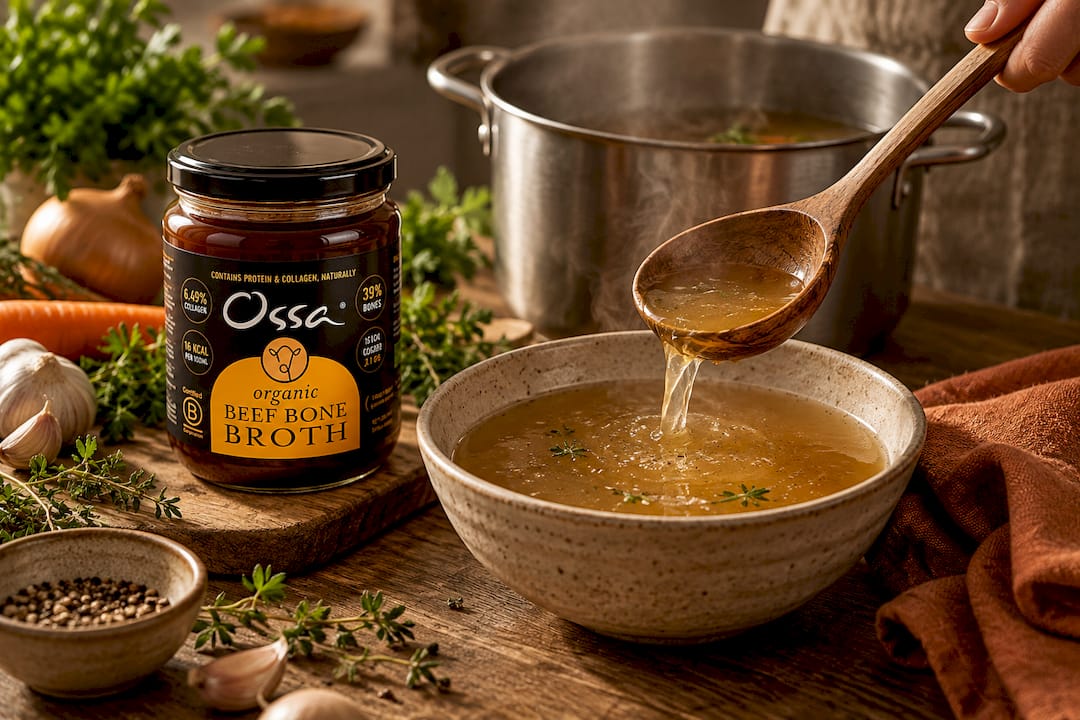
Bone broth may support eczema management as a nutrient-dense, gut-friendly food, but it is not a treatment or a cure. Some people, particularly those sensitive to histamine, may find it worsens rather than helps their skin. Slow-cooked broths and recipes are a sensible starting point for anyone wanting to test the theory carefully.
TL;DR:
Bone broth’s potential benefits rely on its nutrient combination, but no human trials have confirmed it effectively improves eczema symptoms.
The evidence mainly comes from animal and cell studies showing gut-protective properties, yet translating these results to humans remains unproven.
Those sensitive to histamine should be cautious, as long cooking increases histamine levels, which can trigger eczema flare-ups in susceptible individuals.
Starting with small servings, gradually increasing, and tracking skin and digestion responses can help safely incorporate bone broth into an eczema management plan.
Choosing organic, slow-cooked, preservative-free broth from reputable brands ensures better nutrient content and lower histamine risk.
Table of Contents
-
How bone broth might help eczema: the gut–skin connection and key nutrients
-
How to try bone broth safely: servings, timing and simple ideas
How bone broth might help eczema: the gut–skin connection and key nutrients
Eczema is often described as a skin problem, but a growing body of research points back to the gut. The idea is called the gut–skin axis: when the intestinal lining is inflamed or “leaky”, it can trigger immune responses that show up as skin flares elsewhere on the body. If your gut is under chronic low-grade stress, your skin may bear some of the cost.
Bone broth is rich in specific compounds that plausibly support both sides of that relationship. It contains collagen and gelatin, which break down into amino acids during digestion, along with:
-
Glycine – supports the gut lining and has calming, anti-inflammatory properties
-
Glutamine – a preferred fuel source for the cells lining the intestinal wall
-
Histidine – involved in tissue repair, though it can also be a histamine precursor (more on that shortly)
-
Minerals such as calcium, magnesium and phosphorus, released slowly during long cooking
None of these nutrients are unique to bone broth. What makes it worth discussing is the combination, delivered in an easily digestible liquid form.
A murine study found that bone broth reduced IL‑1β, IL‑6, and TNF‑α substantially in a colitis model, while boosting anti-inflammatory cytokines like IL‑10. That is a striking result, and it is the kind of data that gets bone broth taken seriously by researchers rather than dismissed as a wellness trend. But it was measured in mice with induced colitis, not humans with eczema, so treat it as a signal of biological plausibility rather than proof it will calm your skin.
Separately, researchers have found that incidental nanoparticles in bone soup can shift gut microbiota composition, increasing beneficial bacterial genera in mice. It’s an unusual mechanism, effects that may come from more than just the nutrients themselves.
What the evidence actually shows: strengths and gaps
The research on bone broth splits cleanly into two camps: promising animal data, and a near-total absence of human trials on eczema specifically.
On the animal side, the evidence is genuinely interesting. Beyond the cytokine reductions already mentioned, a separate mouse study using a DSS-induced colitis model found that bone soup improved symptoms and restored microbiota balance, including a reduction in Helicobacter bacteria. Reviews of the nutrient profile consistently note that amino acids like glutamine and glycine, plus minerals released during cooking, plausibly support gut barrier function.
Here’s where the evidence runs thin:
-
No large-scale human randomised controlled trials have tested bone broth specifically for eczema
-
Most gut-barrier research comes from cell studies or animal models, not people
-
Expert commentary consistently flags that preclinical promise hasn’t yet translated into confirmed clinical benefit
Systematic reviews are candid about this gap, noting that components of bone broth show gut-protective effects in preclinical models, but robust human trials proving therapeutic outcomes simply do not exist yet. That doesn’t make bone broth pointless. It means the honest position is: a supportive food with a plausible mechanism, not a proven treatment. If you’re trying it for your skin, that distinction should shape your expectations from the outset.
Who should be cautious: histamine, allergies and digestion
Bone broth isn’t universally gentle, and for some eczema sufferers, it can make things worse rather than better.
The main culprit is histamine. Long, slow cooking, the very method that extracts collagen and minerals, also tends to raise histamine levels in the finished broth. For people whose eczema has a histamine or mast-cell component, that can trigger flares rather than ease them. If your skin reacts to fermented foods, aged cheese, or leftovers reheated more than once, treat bone broth with the same suspicion.
Fat content is worth watching too. Rich, fatty broths can be harder to digest for some people, so starting with a small serving rather than a full mug is the sensible approach.
-
Introduce broth gradually rather than committing to daily large servings straight away
-
Watch for digestive symptoms (bloating, discomfort) as well as skin changes
-
Stop and speak to a GP or dietitian if your eczema worsens after starting broth
Pro Tip: Keep a simple daily note of what you ate and how your skin looked the next morning. Two weeks of tracking tells you more than any general guideline ever could.
How to try bone broth safely: servings, timing and simple ideas
If the evidence has convinced you it’s worth a trial, the safest approach is slow and deliberate rather than enthusiastic.
-
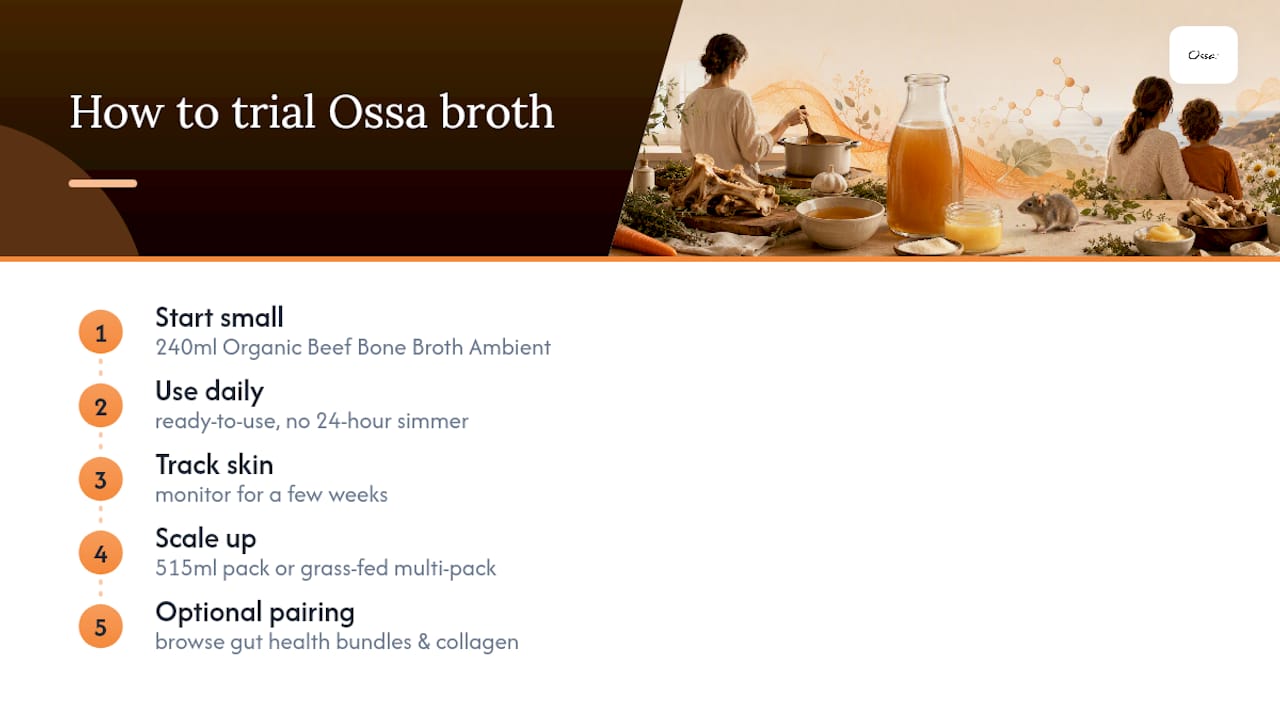
Start small. Begin with a modest serving once daily for the first week, ideally in the morning so you can watch how your skin and digestion respond that day.
-
Increase gradually. If there’s no adverse reaction, build up your portion over the following one to two weeks.
-
Track for four to six weeks. Eczema doesn’t respond overnight, so give the trial enough time before drawing conclusions, and stop immediately if your skin flares.
There are three easy ways to work broth into your routine without it feeling like a chore:
-
Sip it warm from a mug, the way you would herbal tea
-
Use it as the base for soups and stews instead of stock cubes
-
Swap it in wherever a recipe calls for stock, from risotto to braised vegetables
To keep histamine levels lower, favour freshly made batches over broth that’s been sitting in the fridge for days, and consider a shorter cook time rather than the traditional 24-hour simmer. Ossa Organic’s bone broth recipes offer a good starting point if you want inspiration beyond a plain mug.
Choosing or making bone broth: what actually matters
Not all bone broth is equal, and the difference shows up in both nutrient content and histamine risk.
Look for these markers, whether you’re buying or making your own:
-
Organic, grass-fed bones – fewer contaminants, better fat quality
-
Slow-cooked, not flash-processed – needed to actually extract collagen and minerals
-
No preservatives or artificial additives – nothing to interfere with a clean trial of diet and skin
-
Minimal added salt – easier to control your own sodium intake
Homemade broth gives you full control over cook time (useful for managing histamine) but demands hours of attention and doesn’t keep as long. Commercial broth trades some of that control for consistency and shelf stability, which matters if you’re trying to stick to a six-week trial without the process becoming a burden.
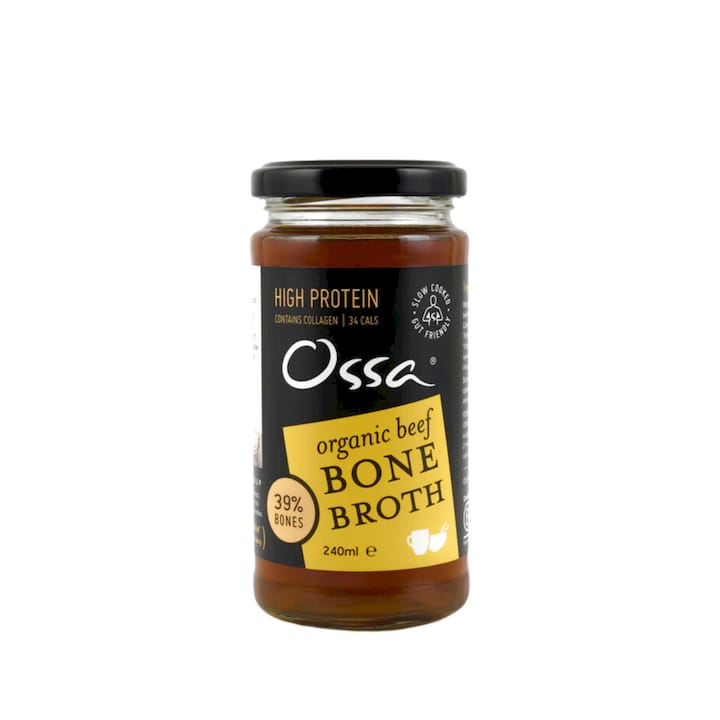
Ossa Organic’s range covers different points on that spectrum: the Organic Beef Bone Broth Ambient 240ml suits a first, low-commitment test; the Organic Beef Bone Broth Ambient 515ml works for daily use once you know it agrees with you; and the Organic Grass Fed Beef Bone Broth 500ml multi-pack suits a longer trial without repeat ordering.
Why this brand takes bone broth seriously
Ossa Organic was founded on a simple discovery made during pregnancy: bone broth made a measurable difference to health and daily life. That experience shaped a family business built on slow cooking and organic ingredients, not shortcuts. For more ideas on working broth into meals, the recipe blog is worth a browse.
— Ossa Organic
Try Ossa Organic bone broth for your own trial
If you’ve decided bone broth is worth testing, the practical hurdle is usually convenience, not conviction. Ossa Organic solves that with organic, slow-cooked broth that’s ready to use straight away, no 24-hour simmer required. The 240ml Organic Beef Bone Broth Ambient is the sensible first step: a small enough portion to introduce gradually while you watch how your skin responds over the coming weeks. Once you know it suits you, the 515ml ambient pack or the grass-fed multi-pack make daily use straightforward. Browse the full range of bone broths, collagen and grass-fed fats to find what fits your routine, or explore gut health bundles if you want to pair broth with complementary staples. Start with one product, track your skin for a few weeks, and adjust from there.
FAQ
Will bone broth clear my skin?
Bone broth is unlikely to clear eczema on its own.
What foods calm down eczema?
Foods that support gut health and reduce inflammation, such as bone broth, oily fish, leafy greens, and fermented foods (for those who tolerate histamine well), are commonly discussed as supportive options alongside avoiding personal trigger foods.
What can I drink to help eczema symptoms?
Warm bone broth is one option people try alongside plenty of water, herbal teas, and diluted vegetable juices, though hydration and an anti-inflammatory diet overall matter more than any single drink.
Is bone broth good for ulcerative colitis or Crohn’s disease?
Animal studies suggest bone broth may reduce inflammatory markers and support gut barrier function in colitis models, which is relevant given the overlap between IBD and eczema through shared gut-inflammation pathways, but there’s no confirmed human evidence for either condition yet.
Could bone broth make eczema worse?
Yes, particularly for people sensitive to histamine, since long-cooked broths tend to be higher in histamine and can trigger flares in histamine-mediated eczema. Starting with a small serving and watching for reactions is the safest approach.