

Cart
0
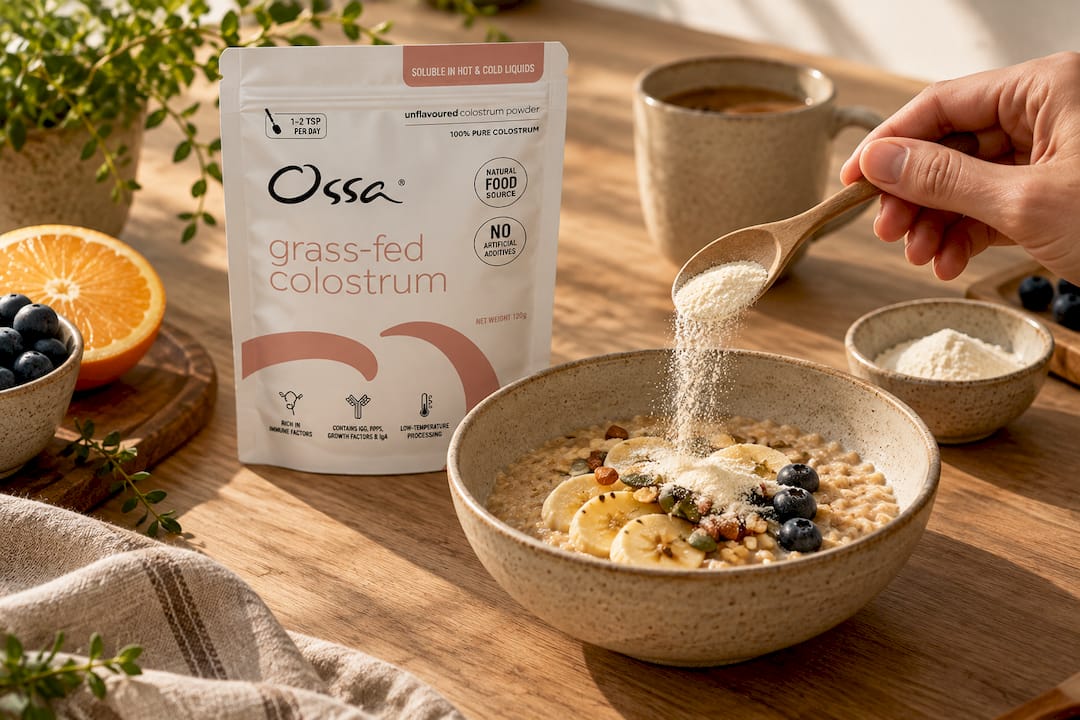
Hydrolysed collagen is generally considered low risk in pregnancy because it breaks down into the same amino acids your body already uses from other proteins. The main caveat is that pregnancy-specific clinical trials don’t exist, so the safety picture comes from mechanistic reasoning, small studies, and regulatory assessments rather than large-scale trial data. Choose a plain hydrolysed product with no added herbs or high-dose vitamin A, and check the label with your midwife or GP before starting.
TL;DR:
Collagen breaks down into amino acids your body already uses, making it low risk during pregnancy, but large-scale trial data is lacking.
Properly processed bovine and marine collagen carry minimal disease risk, but always verify ingredient labels, sourcing, and testing for heavy metals.
Supplements fortified with high-dose vitamin A or untested herbal ingredients should be avoided, especially in early pregnancy.
Common uses include improving skin elasticity, supporting joint comfort, and aiding tissue healing, but current evidence is limited to small studies.
Start with a conservative dose, watch for mild digestive effects, and consult your healthcare provider before adding collagen to your prenatal routine.
Table of Contents
-
Collagen safety in pregnancy: what the evidence actually shows
-
What collagen may do for you in pregnancy, and where the evidence runs thin
-
What to watch for: allergens, added ingredients, and trimester-specific caution
-
How to choose a collagen product and use it responsibly while pregnant
-
Ossa Organic’s food-first approach to collagen and gut health
Collagen safety in pregnancy: what the evidence actually shows
Collagen doesn’t reach your bloodstream as collagen. Once you swallow it, digestive enzymes break hydrolysed collagen down into short-chain peptides and free amino acids, chiefly glycine and proline, which your gut absorbs in much the same way it absorbs any other dietary protein. That’s the core reason clinicians and nutrition researchers tend to view it as low risk in pregnancy: it isn’t a novel compound your body has to process differently just because you’re expecting. It’s protein, broken down the way protein normally is.
This mechanistic argument matters because it fills a gap that direct trial evidence hasn’t. No randomised controlled trial has tested collagen supplementation specifically in pregnant women, which means nobody can point to a large, controlled pregnancy study and say “this proves it’s safe.” What exists instead is a patchwork: reviews describing collagen peptides as generally safe when used as a food ingredient, regulatory assessments treating properly processed collagen and gelatine as low risk, and small observational or open-label studies in late pregnancy and early postpartum that report good tolerability without serious adverse events. It’s a reasonable evidence base. It isn’t a definitive one.
Regulatory bodies have looked closely at the raw material itself, which is worth knowing if you’ve ever wondered whether bovine collagen carries disease risk. Assessments from bodies including EFSA have judged the risk of BSE transmission through properly processed bovine gelatine and collagen to be low, because the manufacturing process that turns bone and connective tissue into collagen peptides removes the tissues most associated with prion risk. This is one of the reasons collagen appears on GRAS (Generally Recognised As Safe) style lists for food use in several jurisdictions, rather than being treated as a novel or restricted ingredient.
None of this means every collagen product on a shelf is automatically fine for you to take. The NHS is specific about pregnancy supplementation: it recommends folic acid and vitamin D as the two supplements with a clear evidence base for most pregnant women, and it explicitly warns against taking supplements containing vitamin A (retinol) or eating liver products, because excess vitamin A is linked to birth defects. That warning is the single most important piece of official guidance to carry into any collagen-buying decision, because some collagen blends are fortified with additional vitamins, including vitamin A, that push well past what’s appropriate in pregnancy.
Statistic callout: There is currently no published randomised controlled trial testing collagen supplementation specifically in pregnant women. Everything you read about collagen and pregnancy, including this article, is built on mechanistic reasoning, regulatory food-safety assessments, and small studies in adjacent populations, not a large pregnancy-specific trial.
Quality control is the other half of the safety conversation, and it’s the half that gets less attention than it should. Collagen powders are typically derived from bovine, marine, or porcine sources, and the raw material can carry trace heavy metals depending on where and how the animals were raised and where the connective tissue was processed. This isn’t unique to collagen. It’s a known issue across the supplement industry generally. What separates a lower-risk product from a higher-risk one is whether the brand tests for it and shows you the results.
Here’s what actually reduces your risk when you’re choosing a product:
-
A Certificate of Analysis (COA) from third-party testing, ideally covering heavy metals such as lead, arsenic, cadmium, and mercury.
-
A single, declared source (grass-fed bovine, for example) rather than a vague “collagen blend” of unspecified origin.
-
No added herbs, adaptogens, or high-dose vitamins, particularly vitamin A, folded into the same scoop.
-
Clear manufacturing transparency, including where the animals were raised and where the product was processed.
-
A plain ingredients list you can read in ten seconds, not a proprietary blend with unnamed “other ingredients.”
None of this replaces a conversation with your midwife or GP, particularly if you have an existing health condition, are taking medication, or are further along in a pregnancy with any complications. But it does mean the safety question isn’t really “is collagen safe?” in the abstract. It’s “is this specific product, at this dose, safe for me?” That’s a more useful question, and it’s one you can actually answer by reading a label.
What collagen may do for you in pregnancy, and where the evidence runs thin
The benefits people report from collagen during pregnancy and postpartum cluster around a few consistent themes: skin elasticity, joint comfort, and wound or tissue healing. None of these claims come from large trials. All of them have some grounding in either small human studies or the basic biology of what collagen supplies.
Skin elasticity is the most talked-about benefit, and it makes physiological sense given that your skin’s own structural protein is, well, collagen, and pregnancy puts real mechanical stress on skin as your body changes shape over several months. Joint comfort is the second common report, particularly in the third trimester when relaxin and weight changes place extra load on the pelvis, hips, and lower back. The third area, and arguably the one with the most direct clinical relevance, is wound and tissue healing, including perineal healing after vaginal birth and recovery from a caesarean.
Small clinical studies in late pregnancy and early postpartum have reported improved tolerability and modest gains in recovery or quality-of-life measures among women taking collagen supplements, without serious adverse events showing up in those trials. That’s a genuinely useful data point. It’s also, by design, a limited one.
The honest summary of the evidence: small sample sizes, a narrow focus on late pregnancy and the early postpartum window, and an absence of the kind of large, multi-site, placebo-controlled trials that would let anyone say collagen “improves” a specific outcome with confidence. What these studies show is that collagen was well tolerated and that some women reported feeling better. What they don’t show is causation at scale.
It’s worth being blunt about what collagen isn’t. It’s not a substitute for adequate dietary protein overall, and it’s not a substitute for the folic acid, vitamin D, iron, and other micronutrients your prenatal routine already covers. Collagen is also an incomplete protein on its own, lacking meaningful tryptophan, so it works best as a complement to a varied protein intake rather than a replacement for meat, fish, eggs, pulses, or dairy.
So when might supplementing actually make sense, rather than just being a nice-to-have? A few practical scenarios stand out:
-
Your dietary protein intake is genuinely low, perhaps due to nausea, appetite changes, or dietary restrictions, and a food-first fix isn’t quite closing the gap.
-
You’re dealing with symptomatic joint discomfort, particularly later in pregnancy, and want a dietary addition alongside physiotherapy or midwife-guided advice.
-
You’re preparing for or recovering from perineal or surgical wound healing and want to support tissue repair through diet, alongside, not instead of, medical care.
Collagen for postpartum recovery is a related question in its own right, particularly around breastfeeding safety and timing, which is worth reading up on separately if that’s your immediate concern.
What to watch for: allergens, added ingredients, and trimester-specific caution
The risks worth taking seriously with collagen in pregnancy fall into four categories: mild digestive effects, allergens, added ingredients, and contaminants. Understanding which is which helps you know what’s a minor inconvenience and what should send you back to your midwife.
-
Digestive upset is the most commonly reported side effect, showing up as bloating, mild nausea, or a heavier feeling after taking a full dose on an empty stomach. It’s usually dose-related rather than an intolerance, and it tends to resolve when the dose is split across the day or taken with food rather than alone.
-
Allergen risk depends entirely on the source. Marine collagen, typically derived from fish skin or scales, is unsuitable if you have a fish or shellfish allergy. Bovine collagen carries a much lower allergy profile but should be avoided if you follow a diet that excludes beef products for religious, ethical, or dietary reasons. Always check the declared source on the label rather than assuming.
-
Added ingredients are where the real pregnancy-specific risk usually sits, not in the collagen itself. Blends fortified with adaptogenic herbs (ashwagandha and similar botanicals are common additions in general wellness collagen products) haven’t been established as safe in pregnancy and are generally best avoided. The same goes for any product with added vitamin A or retinol, given the NHS warning covered earlier, and for high-dose vitamin blends generally, where “more” isn’t automatically better and can push you past safe upper limits when stacked on top of your prenatal vitamin.
-
Contaminants are a sourcing and testing issue, not a collagen issue specifically. Ask whether the brand publishes a Certificate of Analysis covering heavy metals, and be wary of unbranded or unusually cheap powders with no visible testing information. This is the single most practical filter for reducing risk, and it takes about thirty seconds to check on a product page.
-
Trimester and personal history both matter. Extra caution, meaning a conversation with your midwife or GP before starting anything new, is sensible in the first trimester when foetal development is most sensitive, and for anyone with a history of miscarriage, hypertension, pre-eclampsia, or renal disease, since these conditions can affect how your body handles increased protein or specific supplement ingredients.
Pro Tip: If you’re introducing collagen for the first time in pregnancy, start with a half dose for the first few days and take it with a meal rather than on an empty stomach. This makes it much easier to tell whether any mild digestive symptoms are genuinely related to the collagen or to something else entirely, such as normal pregnancy nausea.
The same logic that applies to introducing a new food safely applies here: go slowly, watch for a reaction, and don’t introduce several new things at once. If you want a broader read on how to manage that process, introducing new foods and allergies safely covers the general principles well, and they map directly onto how you’d trial a new supplement too. For a deeper look at side effects specifically, collagen side effects and safer use breaks down what six months of use tends to look like at a 10g daily dose.
How to choose a collagen product and use it responsibly while pregnant
A safe choice starts with the label, not the marketing copy. What you want is boring, in the best sense: a short ingredients list, a named source, and evidence the brand has actually tested what’s in the tub.
Run through this before you buy:
-
Plain hydrolysed collagen as the entire product, or close to it, rather than a “collagen complex” padded with extras.
-
A declared, single source, such as grass-fed bovine or a named marine species, not an unspecified blend.
-
No added herbs or adaptogens folded into the formula.
-
No high-dose vitamins, particularly vitamin A, which can push you over safe pregnancy limits when combined with your prenatal.
-
A published Certificate of Analysis for heavy metals, ideally accessible on the brand’s website rather than available only on request.
On dosage, most guidance for general adult use sits around 5 to 10 grams a day, and that conservative range is a sensible starting point in pregnancy too, rather than reaching for higher-dose protocols marketed for athletic recovery or aesthetic goals. Pregnancy increases your overall protein requirement, with guidance suggesting roughly 1.1 grams per kilogram of body weight, so collagen should be thought of as one contributor to that total rather than an unlimited add-on. If your diet already covers your protein needs comfortably, a modest daily dose is plenty. There’s no established pregnancy benefit to stacking collagen on top of an already protein-adequate diet at high doses, and doing so simply adds more supplement without a clear additional gain.
Statistic callout: Pregnancy protein requirements rise compared to non-pregnant adults. A typical woman needs substantially more protein daily from all sources combined, not from collagen alone.
Interactions with your existing prenatal routine are generally straightforward, since collagen isn’t known to interfere with the absorption of folic acid, vitamin D, or iron in any clinically meaningful way. Vitamin C is worth a specific mention because it plays a role in your body’s own collagen synthesis, so pairing a small amount of vitamin C-rich food, citrus fruit or peppers, with your collagen dose is a reasonable, food-first habit. Be cautious, though, of collagen powders pre-fortified with large added doses of vitamin C, since this can tip you into unnecessary excess when stacked against a prenatal vitamin that likely already includes some.
Practically, mixing collagen into porridge, soup, or a smoothie tends to sit better than taking it as a standalone drink, and splitting the daily amount into two smaller servings, morning and evening, is a simple way to sidestep the mild digestive symptoms covered earlier. Introduce it gradually, keep half an eye on how your body responds over the first week or two, and flag anything unusual to your midwife or GP rather than assuming it will pass. If you’re unsure whether you need a supplement at all, the signs your body might be asking for collagen support is a useful starting point before you spend money on a tub you may not need.
Ossa Organic’s food-first approach to collagen and gut health
Ossa Organic was founded on a very specific piece of personal experience: discovering the difference bone broth made during a first pregnancy, and building a business around the idea that nourishing, traditionally prepared food should come before processed alternatives. That founding story shapes how the brand thinks about collagen. Food-first, ingredient-transparent, and slow-cooked rather than industrially processed.
This philosophy is reflected in sourcing products from grass-fed, pasture-raised animals and using short ingredient lists without unnecessary additions. This standard applies when reading any collagen label, regardless of brand.
A few resources worth having open alongside this one if collagen in pregnancy is on your mind:
-
Collagen for postpartum recovery and breastfeeding safety, for what changes once your baby arrives.
-
A closer look at collagen side effects, including what six months of consistent use tends to involve.
-
Signs your body may need collagen support, if you’re weighing up whether supplementing is worth it at all.
If you’d rather get collagen from food than from a scoop, a simple slow-simmered bone broth, made with beef or chicken bones, a splash of vinegar to help draw out the minerals, and simmered gently for many hours, is one of the oldest and most direct ways to get natural collagen and gelatine into your diet. Stirred through soups, used as a base for stews, or sipped on its own with a pinch of sea salt, it’s a food-first complement to any supplement decision you make, not a replacement for medical advice.
Why the conventional advice on this topic misses the point
Most articles on collagen and pregnancy spend their energy on whether collagen itself is dangerous. It generally isn’t, and the mechanistic case for that is solid. The real safety conversation almost never happens: what else is in the tub.
Vague warnings and long ingredient checklists don’t serve pregnant readers well. What serves you is a short, specific standard: plain hydrolysed collagen, one declared source, no added herbs or high-dose vitamins, and a Certificate of Analysis you can actually find. That standard filters out the genuine risks, added vitamin A, unlisted adaptogens, untested sourcing, without asking you to fear a protein your body already knows how to use.
If there’s one thing to prioritise above all else, it’s this: read the label before you read the marketing. A beautifully branded tub with a vague “wellbeing blend” tells you less than a plain label that names its source and shows its testing.
— Ossa Organic
Collagen products that meet the pregnancy safety checklist
If you’ve read this far, you already know what to look for: a plain hydrolysed collagen, a single declared source, nothing added that doesn’t need to be there, and a source you can trust. Two of Ossa Organic’s products are built around exactly that standard.
Ossa Grass Fed Collagen Peptides is a single-ingredient, grass-fed bovine collagen peptide powder, with no added herbs, no fortified vitamins, and no proprietary blend to decode. Stirred into porridge or a smoothie at a conservative 5 to 10 gram serving, split morning and evening if digestion feels sensitive, it fits the checklist this article has walked through.
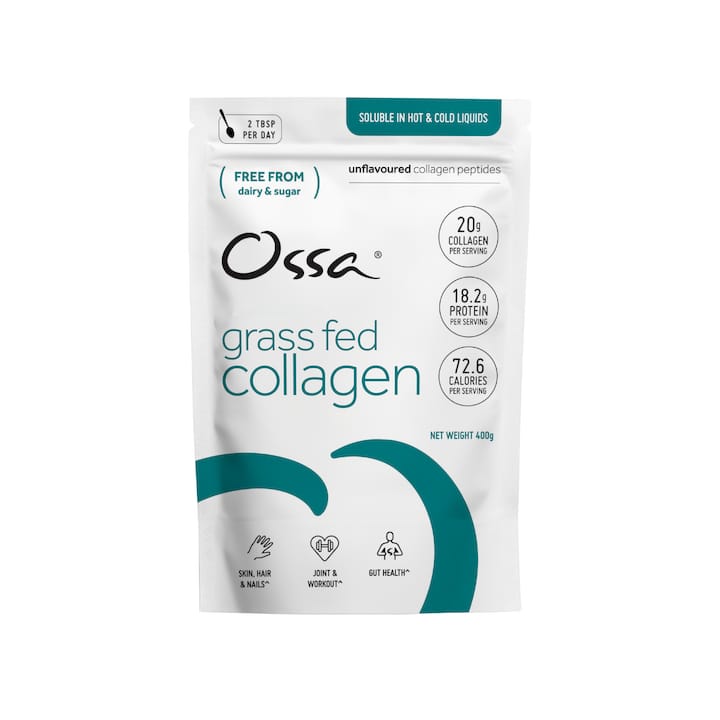
For readers who want both a supplement and a food-first option in one order, the Certified Grass Fed Collagen Peptides and Pasture Raised Gelatine bundle pairs the peptide powder with a pasture-raised gelatine, useful for anyone who’d rather get some of their collagen through cooking, gut-friendly broths, homemade jellies, slow-cooked stews, alongside a daily supplement.
If gut health and general wellbeing during pregnancy are the wider goal, not just collagen specifically, the Functional Nutrition Ambient Bundle brings together a curated set of Ossa Organic’s food-first products for a broader nutritional base.
Before choosing a product, check the label carefully and consult your midwife or GP if unsure.
Primary references and further reading
-
Vitamins and supplements in pregnancy — NHS guidance on folic acid, vitamin D, and the specific warning against vitamin A and liver products.
-
Hydrolysed collagen review (PMCID PMC3003457) — physiology of collagen peptide digestion and amino acid absorption.
-
Narrative review on collagen peptide safety (PMCID PMC8227014) — summary of safety data for collagen as a food ingredient.
-
PubMed article (ID 30681787) — mechanistic and physiological data on collagen peptide metabolism.
-
British Journal of Nutrition research on protein and amino acid physiology in pregnancy — basis for increased protein requirement guidance.
These sources cover the mechanistic and regulatory basis for collagen safety discussed throughout this article. None of them constitute a pregnancy-specific randomised controlled trial, which remains the key evidence gap, so use them as background alongside a conversation with your own midwife or GP rather than as a substitute for personalised advice.
FAQ
What supplements should be avoided during pregnancy?
The NHS specifically advises against supplements containing vitamin A (retinol) and against liver products, while recommending folic acid and vitamin D as the two supplements most pregnant women should take. Any collagen product fortified with high-dose vitamin A or unproven herbal additions should also be avoided.
Can I take collagen and prenatal vitamins together?
Yes. Collagen doesn’t meaningfully interfere with the absorption of folic acid, vitamin D, or iron, so a plain hydrolysed collagen alongside your prenatal vitamin is generally fine. Just check that neither product duplicates high doses of the same added vitamin, particularly vitamin A.
Can collagen help with postpartum hair loss?
Some women report improvements in hair and skin quality while taking collagen postpartum, likely linked to the amino acids it supplies, but this hasn’t been confirmed in large controlled trials. Postpartum hair shedding is largely driven by hormonal changes and tends to resolve on its own regardless of supplementation.
Can collagen help with stretch marks?
Collagen supplies the amino acids involved in skin structure, which is the mechanistic basis for claims around skin elasticity, but no robust trial has confirmed that supplementing prevents or reduces stretch marks specifically. Genetics, skin type, and rate of weight change tend to influence stretch marks more than any single supplement.
Is it safe to take collagen in the first trimester?
Plain hydrolysed collagen carries no specific first-trimester warning based on current evidence, but extra caution is sensible in early pregnancy generally, so check with your midwife or GP before starting, particularly if you have a history of miscarriage or an existing health condition.