
Cart
0
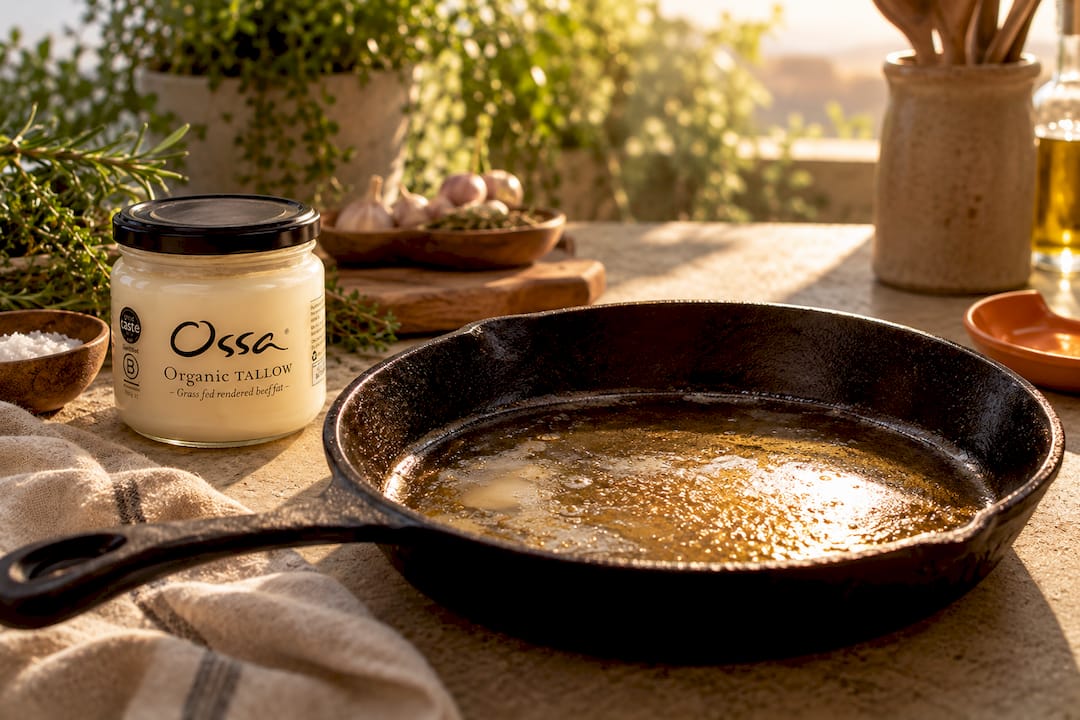
For sustained high heat, reach for ghee, beef tallow, refined avocado oil, light olive oil or refined high-oleic rapeseed oil. Each is dominated by saturated or monounsaturated fat, which resists heat-driven oxidation far better than the polyunsaturated fats found in standard sunflower or corn oil. Whatever you choose, never push a fat past its smoke point or reuse it once it darkens or smells acrid.
TL;DR:
Choose fats with a fatty-acid profile dominated by saturated or monounsaturated fats, such as ghee or beef tallow, to better resist breakdown during high heat cooking.
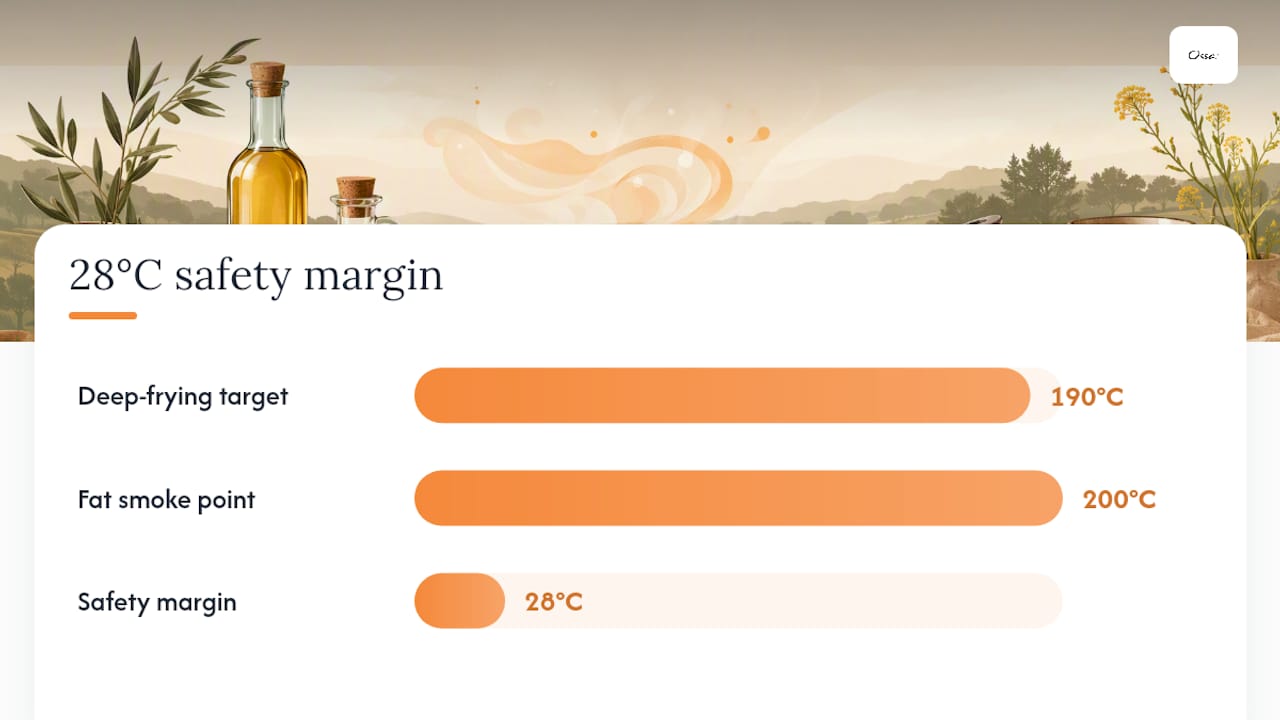
Use a cooking fat with a smoke point at least 28°C above the target temperature, and avoid reusing oil once it darkens or develops an acrid smell.
For deep frying or high-temperature searing, refined avocado oil, ghee, or beef tallow are more stable options than seed oils like sunflower or corn oil, which oxidize quickly.
Repeatedly reheated fats accumulate harmful oxidation compounds and should be replaced after two or three uses or when signs of degradation appear.
Refining increases a fat’s smoke point by removing unstable components, but it can also reduce antioxidants, making temperature control and technique equally important.
Table of Contents
-
What is smoke point, and why does fat composition matter more?
-
Do high heat cooking fats carry environmental or ethical trade-offs?
-
The gap between smoke point charts and how fats actually behave
What is smoke point, and why does fat composition matter more?
Smoke point is the temperature at which a fat starts visibly smoking, a sign that it is breaking down into volatile compounds rather than simply heating up. It is a useful starting figure, but it is not the whole story. Refining a fat removes minor components like free fatty acids and phospholipids, which pushes the smoke point higher without necessarily making the fat more stable once it is actually cooking.
What happens inside the fat matters more than the number on a chart. As oils heat, they oxidise, and if you push them further, they polymerise, forming sticky residues and compounds like acrolein, the same irritant responsible for the sharp sting of burning fat in your eyes. Fats rich in monounsaturated fatty acids (MUFA) and saturated fat resist this breakdown considerably better than fats loaded with polyunsaturated fatty acids (PUFA), because PUFA molecules have more of the chemical double bonds that oxygen attacks first.
A few practical points follow from this:
-
Choose a fat with a smoke point at least 28°C (50°F) above your target cooking temperature, to allow for the drop that happens the instant food hits the pan.
-
Most home cooking sits below typical moderate heat ranges; deep frying typically runs at high heat.
-
A high smoke point on its own does not guarantee stability. A refined oil can smoke less yet still oxidise faster than a naturally stable fat like tallow.
-
Reserve high-PUFA seed oils for dressings and cold applications rather than the frying pan or the seed oil alternative many cooks are now switching to.
Which fats work best for high heat cooking?
-
Ghee (clarified butter). Ghee has had its milk solids removed, which gives it a smoke point around 190 to 250°C depending on quality, alongside a fatty-acid profile that leans saturated and monounsaturated. It suits searing steaks, roasting vegetables and frying eggs, and carries a rich, faintly nutty flavour that plain butter cannot survive at the same temperatures.
-
Beef tallow. Rendered beef fat sits comfortably in the 200 to 250°C range and is dense in saturated and monounsaturated fat, making it one of the more heat-stable options available. It has a savoury, slightly beefy character that suits roast potatoes, Yorkshire puddings and deep frying chips. How stable a given batch is depends partly on how well it was rendered and stored, so sourcing quality matters as much as the fat itself.
-
Refined avocado oil. Refined versions commonly carry smoke points above 240°C, among the highest of any common cooking fat, with a fatty-acid profile dominated by MUFA. It is close to flavourless, which makes it a safe default for stir-frying or blackening food at genuinely high heat.
-
Light or refined olive oil. Not the extra virgin bottle on your worktop. Refined olive oil loses much of its peppery flavour but gains a smoke point around 200 to 240°C, and olive oil’s naturally MUFA-heavy profile makes it degrade more slowly under frying conditions than sunflower or linseed oil. Save extra virgin for dressings and low-heat finishing.
-
Refined high-oleic rapeseed oil. High-oleic varieties are bred or processed to carry a fatty-acid profile closer to olive oil than standard rapeseed, which improves thermal stability while keeping the neutral flavour and roughly 220°C smoke point cooks expect from an everyday frying oil.
-
Coconut oil. Mostly saturated fat with a smoke point around 175 to 200°C for refined versions, coconut oil suits medium-high sautéing and baking where its distinct flavour is welcome. It is less versatile for very high heat searing than tallow or avocado oil.
Standard sunflower, corn and soybean oils sit at the opposite end of this list. Their smoke points can look respectable on paper, but their PUFA-heavy composition means they oxidise faster under sustained heat, generating more of the breakdown compounds that good frying practice tries to avoid.
What temperatures suit each cooking method?
Matching the fat to the method starts with knowing what temperature that method actually demands:
-
Searing: 230 to 260°C, brief and intense, ideal for tallow or ghee.
-
Pan-frying: 175 to 190°C, suited to refined olive oil, ghee or high-oleic rapeseed oil.
-
Shallow frying: 170 to 180°C, similar fats work well here.
-
Deep frying: 175 to 190°C, tallow and refined avocado oil hold up reliably at this range.
-
Stir-frying: 200°C or higher in brief bursts, best served by refined avocado oil or high-oleic rapeseed oil.
-
Roasting: 180 to 220°C oven temperature, tallow and ghee both perform well.
Pro Tip: Keep a probe thermometer by the hob. Sight alone underestimates how hot fat has become, and consistent temperature control cuts down oil uptake into food as well as degradation of the fat itself.
The 28°C (50°F) margin rule matters most here: a fat that smokes at 200°C is a poor match for 190°C deep frying, because the temperature will spike past that ceiling the moment food touches it. Watch for thin, constant smoke rather than the odd wisp, and treat any acrid or burnt smell as your cue to stop, not push through.
How should you store and reuse cooking fat safely?
Good handling extends the life of any high-heat fat and limits the harmful compounds that build up with repeated use.
-
Let fat cool fully before straining it through a fine sieve or muslin to remove food debris.
-
Store filtered tallow, ghee or duck fat in a sealed jar; refrigerate if you plan to keep it for more than a few weeks, though solid fats can often sit at room temperature short term.
-
Watch for darkening colour, persistent foaming, a rancid or acrid smell, or smoke appearing well before the usual temperature. Any of these means the fat is spent.
-
Fry in smaller batches rather than one enormous pot, since less food-to-fat ratio means less contamination per session.
-
Pat food dry before it goes in. Excess moisture accelerates the very oxidation and thermoxidation reactions that break fat down.
-
Skim floating debris between batches instead of letting it burn and taint the oil.
-
Replace fat outright once it looks or smells off, rather than topping it up with fresh oil, which only masks the problem.
Pro Tip: A conservative rule for reused frying oil is two or three sessions maximum before replacing it, fewer if you are frying breaded or heavily seasoned food, since coatings shed debris that speeds up degradation.
Ossa Organic’s take on choosing traditional cooking fats
Some brands promote the belief that traditional cooking fats deserve a place back in modern kitchens and that traditional, minimally processed food supports gut and body health better than ultra-processed food.
Certain ghee and tallow products fit the stability criteria this guide has laid out. Both lean heavily on saturated and monounsaturated fat, both hold up under sustained heat, and both may come from slow, traditional rendering rather than industrial refining.
-
Use ghee for searing, roasting vegetables or frying eggs where a rich flavour is welcome.
-
Use tallow for chips, roast potatoes or deep frying where a savoury depth suits the dish.
-
Pair either fat with an organic bone broth base for gravies, braises and pan sauces built on the same slow-cooked principles.
What happens when fat is overheated?
Push any fat past its smoke point for long enough and it stops behaving like a cooking medium and starts breaking apart chemically. The visible sign is smoke, but the more important changes are happening at a molecular level: oxidation accelerates, and if heating continues, polymerisation sets in, thickening the fat and leaving a sticky residue on pans that soap struggles to shift.
Among the compounds formed during overheating is acrolein, released when glycerol in the fat breaks down at high temperature. It is the sharp, throat-catching irritant behind burnt cooking smells, and its presence is a reliable signal that a fat has gone well past useful cooking temperature. Repeated exposure to overheated fats, through smoke inhalation or through eating food cooked in badly degraded oil, is something good frying practice aims to avoid rather than something to treat casually.
Recognising fat breakdown early is straightforward once you know the signs. Colour deepens from golden to brown. The fat foams more than it did when fresh. Smoke appears at a lower temperature than it used to, sometimes well before you have reached your intended heat. A previously neutral or pleasant smell turns sharp, bitter or burnt. Any single one of these is a reason to stop and start again with fresh fat, not a texture to cook through.
The fix is almost always about restraint rather than substitution. Lowering the heat, using a thermometer, and avoiding the temptation to squeeze one more batch out of tired oil does more for food safety than swapping between fashionable oils ever will.
Should you choose refined or unrefined fat for high heat?
Refining strips out the components responsible for strong flavour, colour and aroma, which is exactly why refined oils tolerate higher heat. Refined avocado oil, light olive oil and refined coconut oil all sit well above their unrefined counterparts on smoke point, because the free fatty acids, phospholipids and pigments removed during processing are the first things to burn.
That trade-off runs both ways. Refinement often strips out antioxidant compounds alongside the flavour molecules, which is part of why a fat can carry a high smoke point yet still degrade under sustained frying if its underlying fatty-acid profile is unstable. Unrefined extra virgin olive oil, by contrast, keeps its antioxidants and its peppery character, but its lower smoke point (typically 160 to 190°C) makes it a poor fit for deep frying or hard searing.
The practical rule most cooks land on: use refined for anything approaching or exceeding 200°C, unrefined for finishing, dressing or gentle sautéing where flavour matters more than headroom. Ghee occupies useful middle ground, since removing milk solids raises its smoke point close to refined-oil territory while keeping much of butter’s flavour intact. Tallow, similarly, needs no refining step to reach a high smoke point, because rendered animal fat is naturally low in the components that break down first.
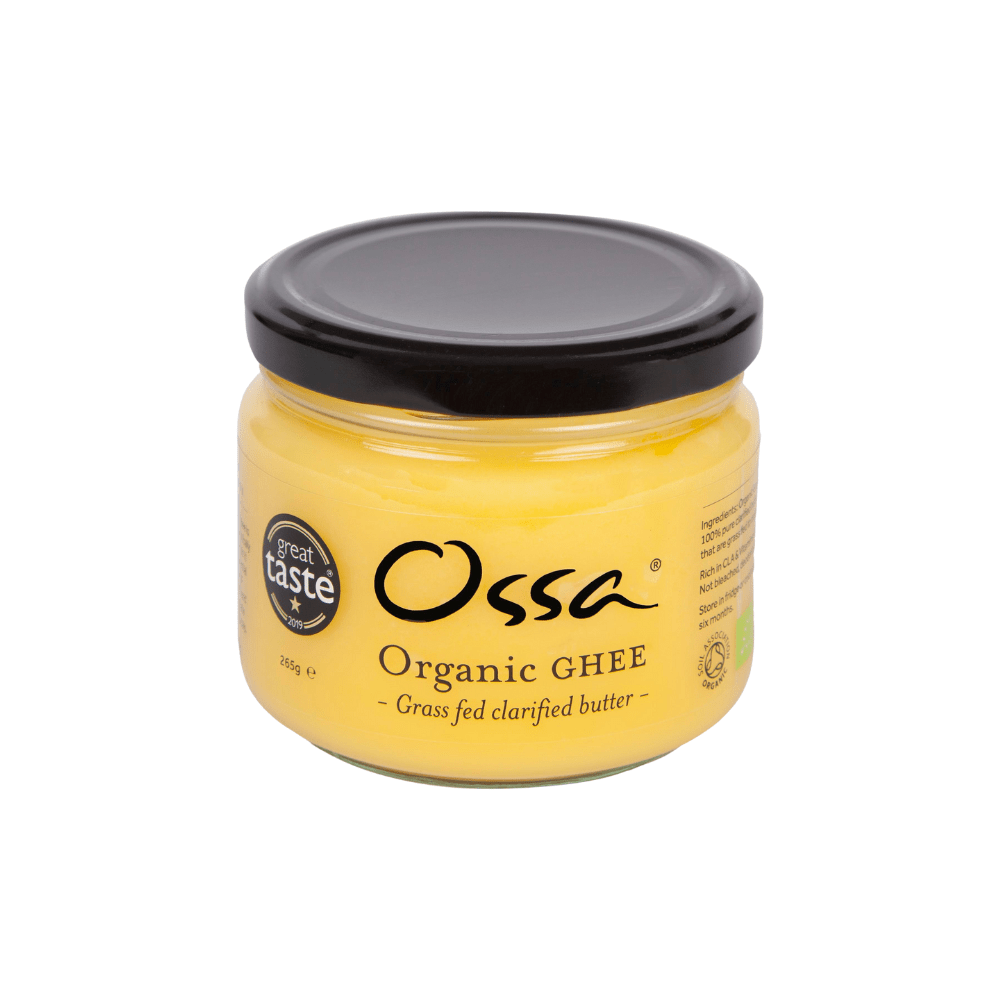
For long frying sessions covering multiple batches, a refined neutral oil or a well-rendered animal fat tends to outlast delicate unrefined oils, which struggle once they have been through more than one heating cycle.
Is it bad to keep reusing the same cooking fat?
Reused fat accumulates the products of oxidation and thermoxidation with every heating cycle, and those changes do not reverse once the pan cools. Moisture from food, oxygen exposure, and leftover food particles all accelerate the process, which is why fat that has fried fish, then chips, then doughnuts looks and behaves nothing like it did the first time round.
Moderate consumption of fried food cooked in properly maintained oil fits comfortably within a balanced diet. The concern is specifically repeated reuse of degraded fat, since that is where harmful compounds concentrate and where flavour and nutritional quality drop fastest. A fat used once and discarded carries a very different risk profile from one reused across a dozen sessions without any filtering or quality check.
Saturated and monounsaturated fats like tallow and ghee tend to hold up across more reuse cycles than PUFA-rich oils, simply because they have less of the chemical structure that degrades under heat and oxygen. That does not make them infinitely reusable. Every fat has a point at which darkening, foaming or an off smell signals it is time to start fresh, and ignoring those signs to save money on oil is a false economy against the quality of the food it produces.
Good frying technique, filtering between uses, keeping temperatures steady, minimising how many times any batch gets reheated, matters as much to safety as which fat sits in the pan to begin with.
Do high heat cooking fats carry environmental or ethical trade-offs?
Every fat on this list carries a different footprint, and none is free of trade-offs. Palm oil, though not featured in the shortlist above, remains one of the most heavily scrutinised cooking fats for its association with deforestation, which is precisely why it is absent here despite its high heat stability.
Tallow and ghee, sourced from grass-fed animals raised on pasture, tend to sit better on animal welfare grounds than fats from intensive systems, though transparency about sourcing varies enormously between brands. Buying from producers who state their farming standards clearly gives you more certainty than a supermarket own-label tub with no provenance listed.
Avocado oil brings its own scrutiny. Avocado cultivation for oil and fresh fruit has been linked to water stress in some growing regions, a trade-off worth weighing if sustainability sits high on your priority list. Refined rapeseed oil, grown widely across Europe including the UK, generally carries a lower transport footprint for British cooks than oils shipped from further afield, though its environmental profile depends heavily on farming practice.
There is no single fat that wins on every axis. Choosing one that matches your cooking method, comes from a producer transparent about sourcing, and gets used sensibly rather than wastefully is a more realistic goal than chasing a perfect option that does not exist.
The gap between smoke point charts and how fats actually behave
Most guidance on cooking fat still leans almost entirely on smoke point, treating it as the single number that settles the question. That approach undersells the reader. Two oils with near-identical smoke points can behave completely differently after fifteen minutes in a hot pan, because one is dominated by monounsaturated and saturated fat while the other leans polyunsaturated and starts oxidising almost immediately.
The advice worth prioritising first is fatty-acid composition, not the number printed on a bottle. A fat rich in MUFA or saturated fat, tallow, ghee, refined olive oil, refined avocado oil, gives you a wider margin for error than a high-PUFA oil with a superficially impressive smoke point. Traditional fats earn their place here not through nostalgia but through chemistry: they were the stable options long before smoke point charts existed to explain why.
Where conventional advice falls short is in treating oil choice as the entire safety picture. Technique carries just as much weight. A mediocre oil handled well, kept at a steady temperature, filtered, replaced before it turns, often performs better in practice than a premium oil abused through overheating and repeated reuse. Choose a heat-stable fat first, then handle it with the same care you would give any ingredient that matters.
— Ossa Organic
How to buy Ossa Organic products that match this guide
Some ghee and tallow products line up with what this guide recommends: heat-stable, traditionally rendered fats free from preservatives and artificial additives, built for searing, roasting and frying rather than dressings or delicate finishing. If you are switching away from seed oils, these are the two products to start with, alongside a bone broth as your stock base for the gravies, braises and pan sauces that follow.
For a stock to build meals around, the 1x Organic Beef Bone Broth Ambient 515ml pairs naturally with tallow-cooked roasts, while the Organic Free Range Chicken Bone Broth 500ml suits lighter ghee-based cooking. Vegetarian cooks can reach for the Organic Vegetable Broth Ambient 240ml alongside refined olive oil or high-oleic rapeseed oil for plant-based dishes. Browse the full range and start building a kitchen stocked with heat-stable, traditionally made fats at the Ossa Organic shop.
Sources and further reading
This guide draws on peer-reviewed research covering fat stability and frying degradation, alongside practical cooking references on smoke point and everyday fat selection. Key sources include a review on fat stability and health implications, a review on vegetable oils and their use for frying, and practical guidance from Serious Eats on smoke point and cooking fats.
FAQ
Which fats are best for high heat cooking?
Ghee, beef tallow, refined avocado oil, light olive oil and refined high-oleic rapeseed oil all combine a high smoke point with a fatty-acid profile dominated by monounsaturated or saturated fat, which resists oxidation better under sustained heat.
What cooking oil has the highest smoke point?
Refined avocado oil commonly carries the highest smoke point among widely available cooking oils, often cited above 240°C, though refined light olive oil and some high-oleic rapeseed oils sit close behind.
What cooking fat has the highest fat content?
Pure fats like tallow, ghee and coconut oil are essentially 100% fat by weight, compared with foods that merely contain fat; among these, tallow and ghee lean heavily saturated and monounsaturated, which suits their high heat stability.
Is olive oil considered a high heat oil?
Refined or light olive oil qualifies as a high heat option, with a smoke point around 200 to 240°C, but extra virgin olive oil does not; its lower smoke point of roughly 160 to 190°C makes it better suited to dressings and gentle sautéing.