Organic ingredients
•
Naturally nourishing
•
Made with care
We've sent you an email with a link to update your password.
Reset your password
We will send you an email to reset your password.
Organic Beef Stock: What It Is and How to Choose It
Ralph Barrozo
0 comments
Organic beef stock is a liquid made by simmering organic beef bones, usually with vegetables, herbs and water, for several hours. It is used as a base for soups, gravies, stews and sauces. In the UK you can buy it as stock cubes, liquid stock, bone broth or raw bones to cook yourself. This guide explains how the types differ, what to check before you buy, and how to make a good pot at home.
Ossa Organic
ossaorganic.com
Bring Slow-Cooked Broth to Your Kitchen
Ossa Organic makes slow-cooked bone broths without preservatives or artificial ingredients, offering a ready-made option for cooking with broth.
Beef stock is made from bones simmered slowly and is mainly a cooking base. Broth is usually lighter and shorter cooked. Bone broth is simmered longer, often up to 24 hours.
On any label, check the bones (organic, grass-fed, British where stated), the short ingredient list and the sodium per serving.
Homemade stock needs about 1kg to 2.5kg of beef bones, roasting at around 200C, then a gentle simmer of 3 to 8 hours.
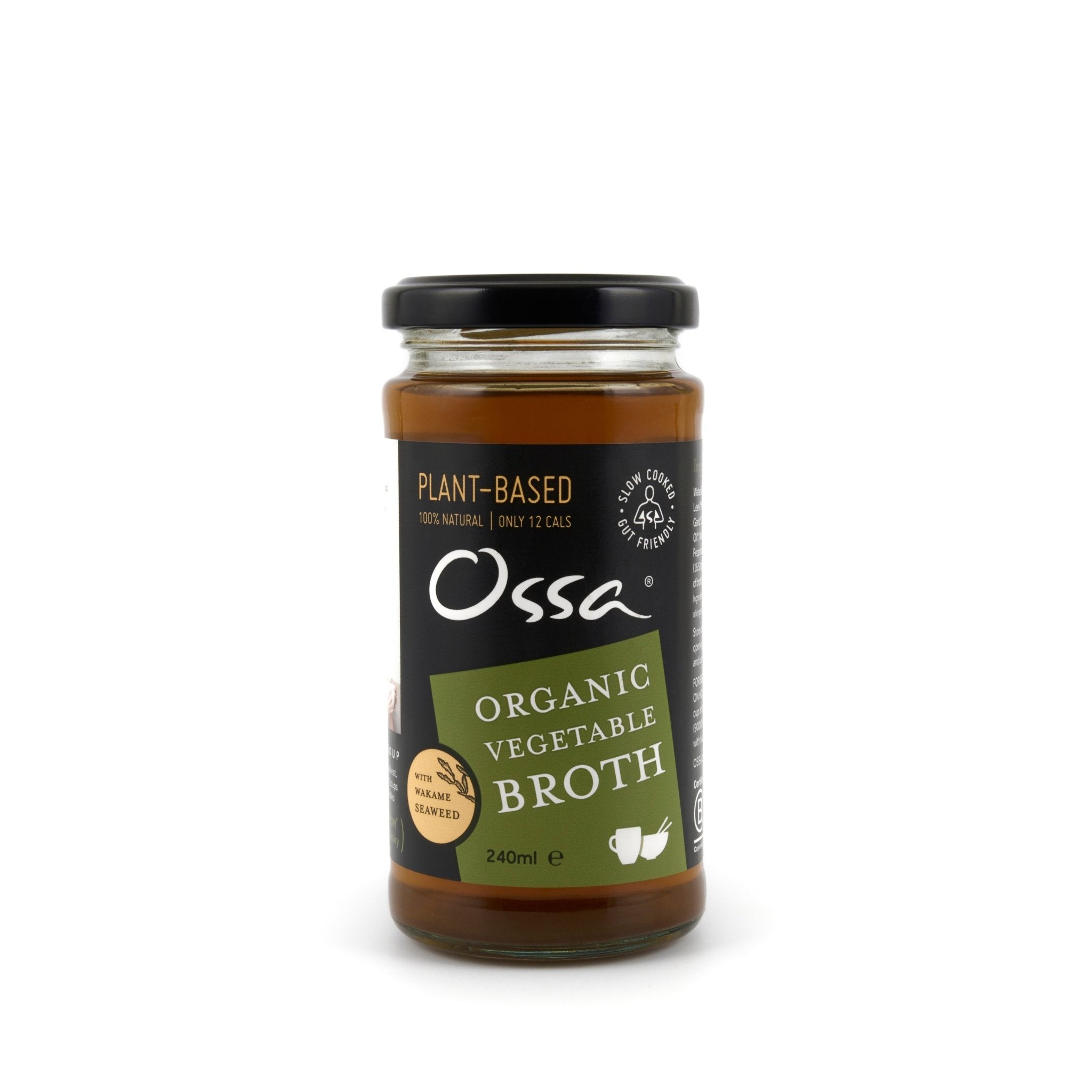
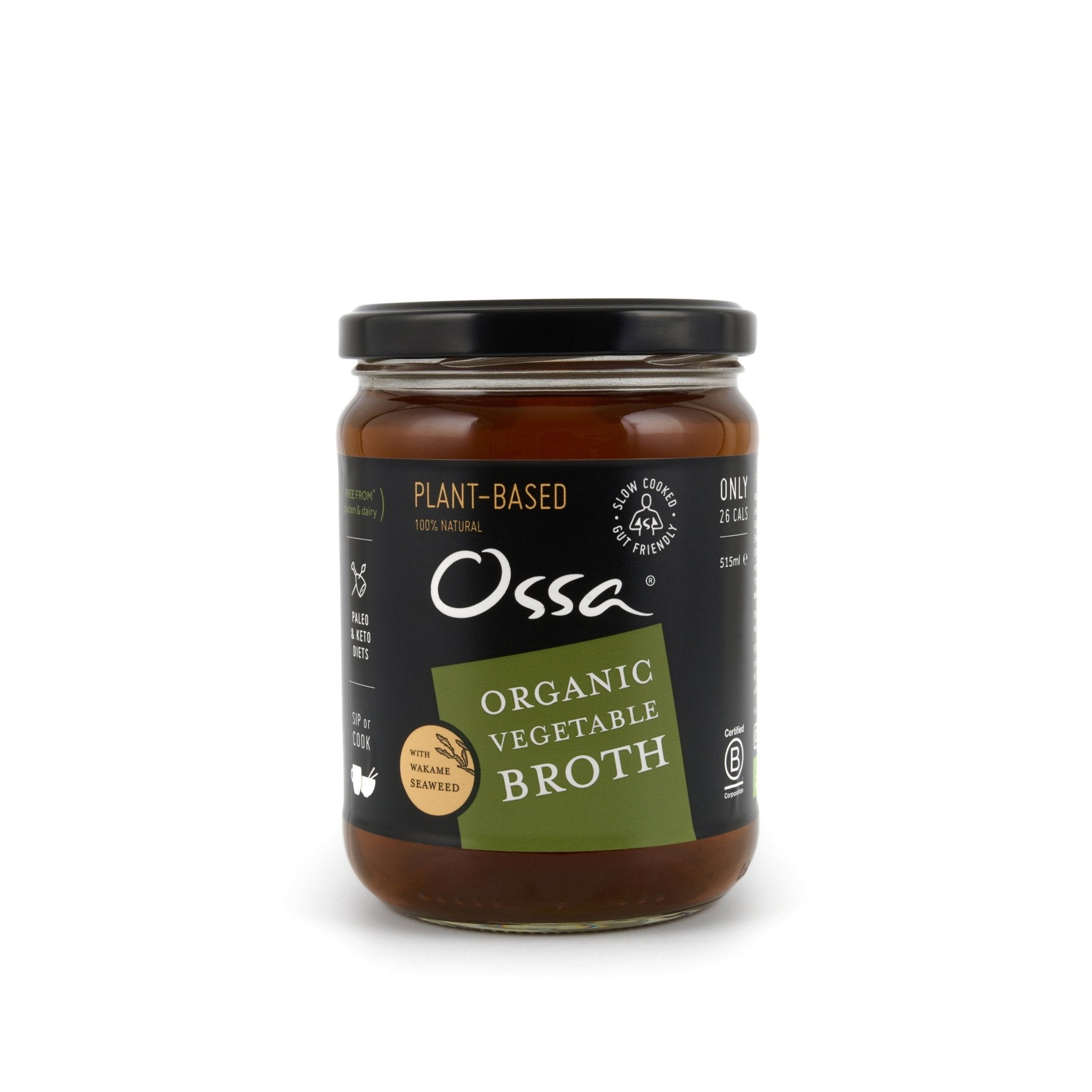
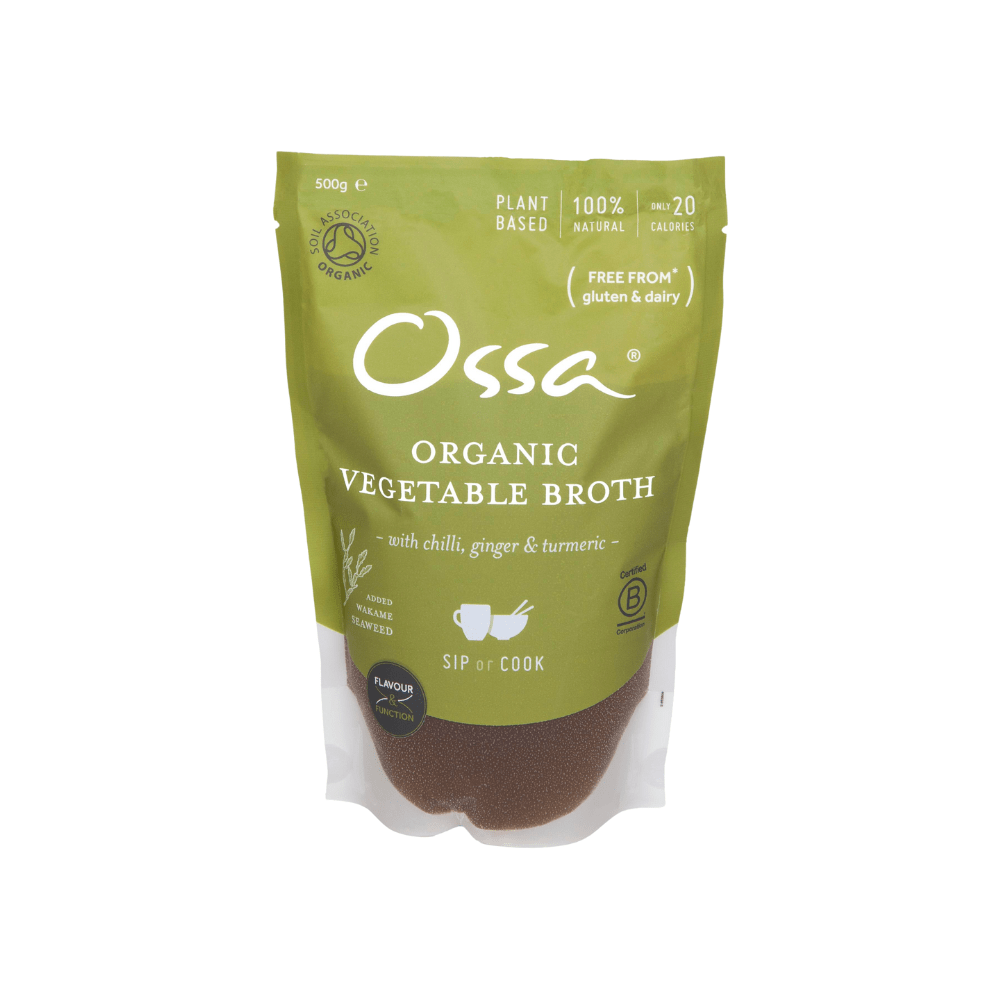
Organic vegetable stock is the plant-based alternative for soups, risotto and grains, and it freezes well.
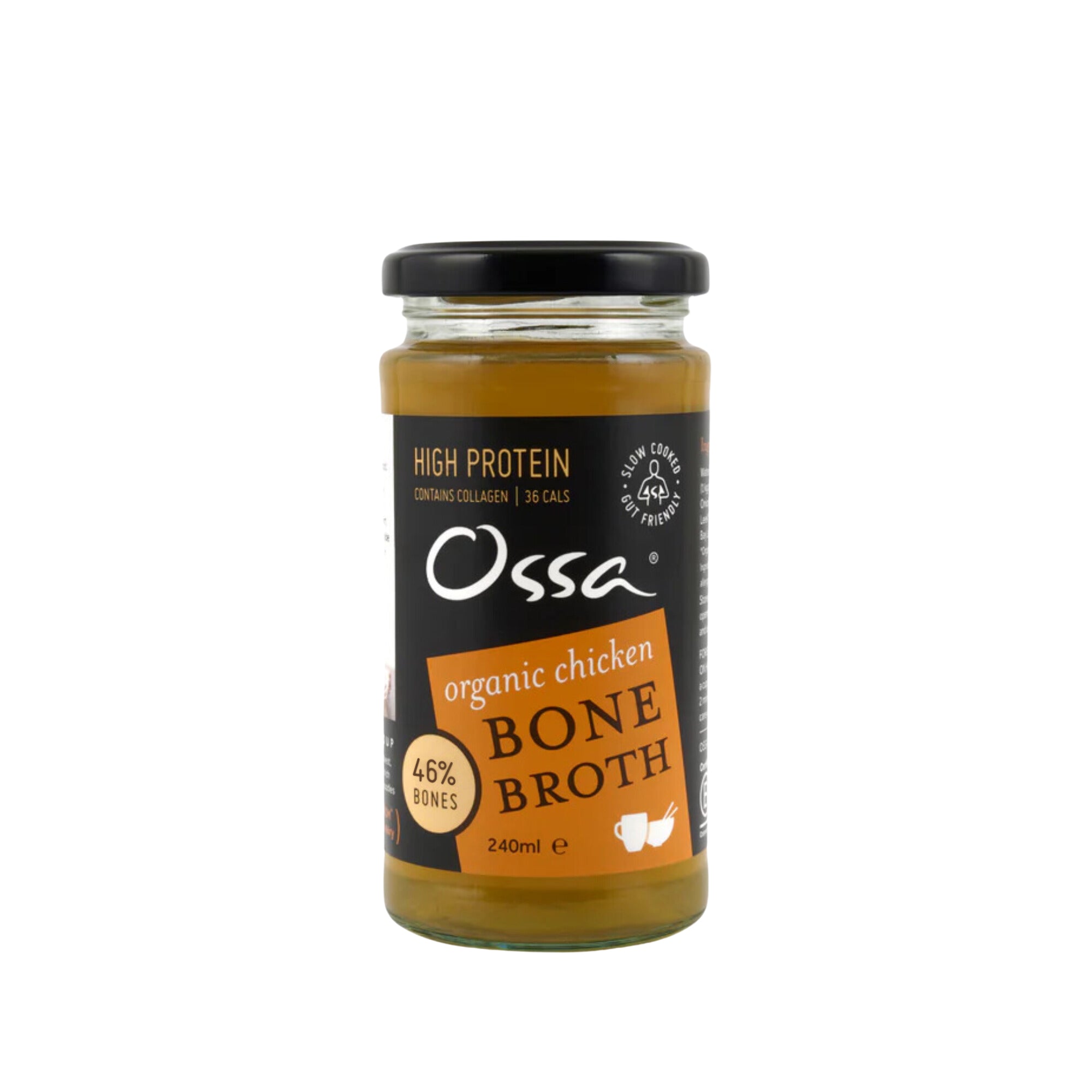
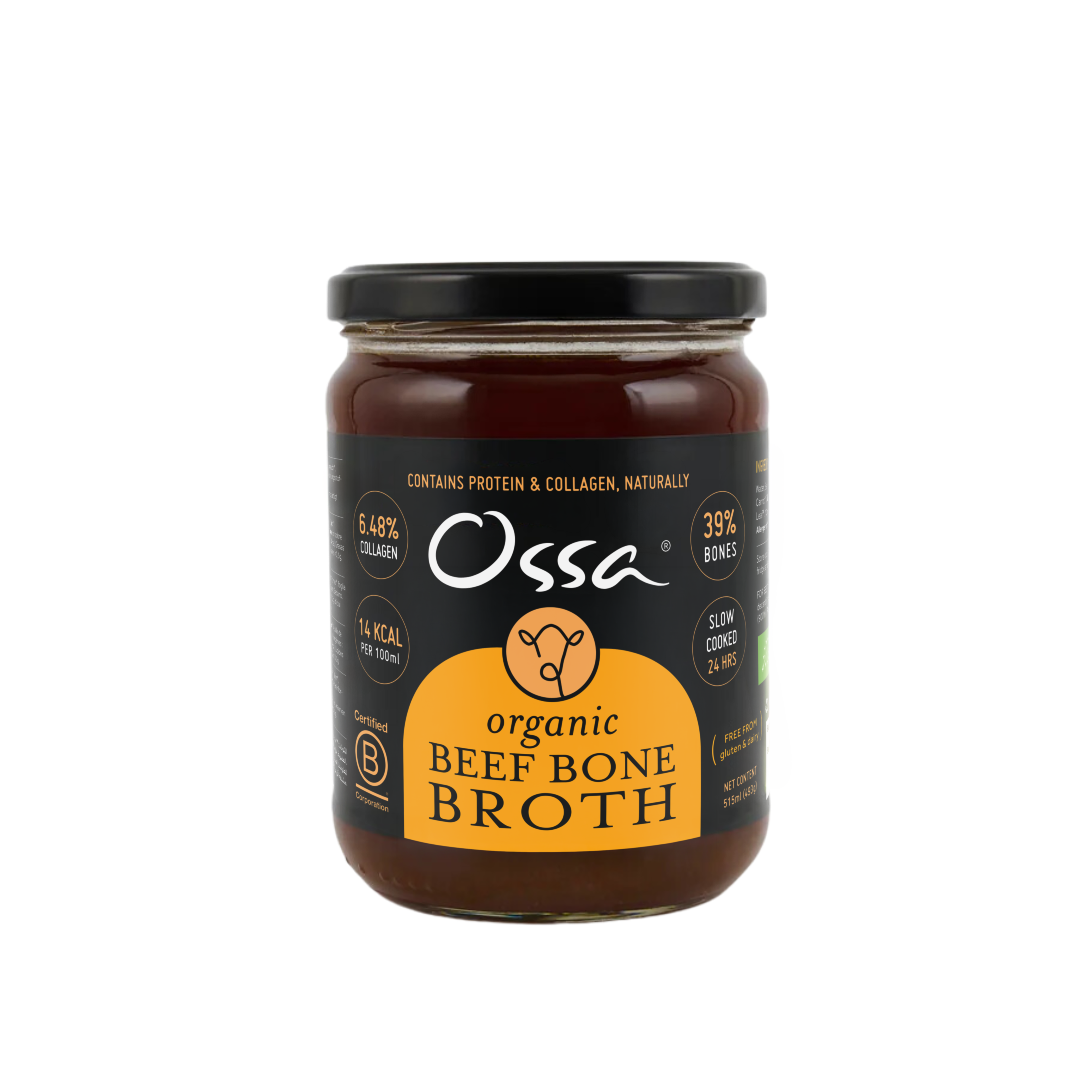
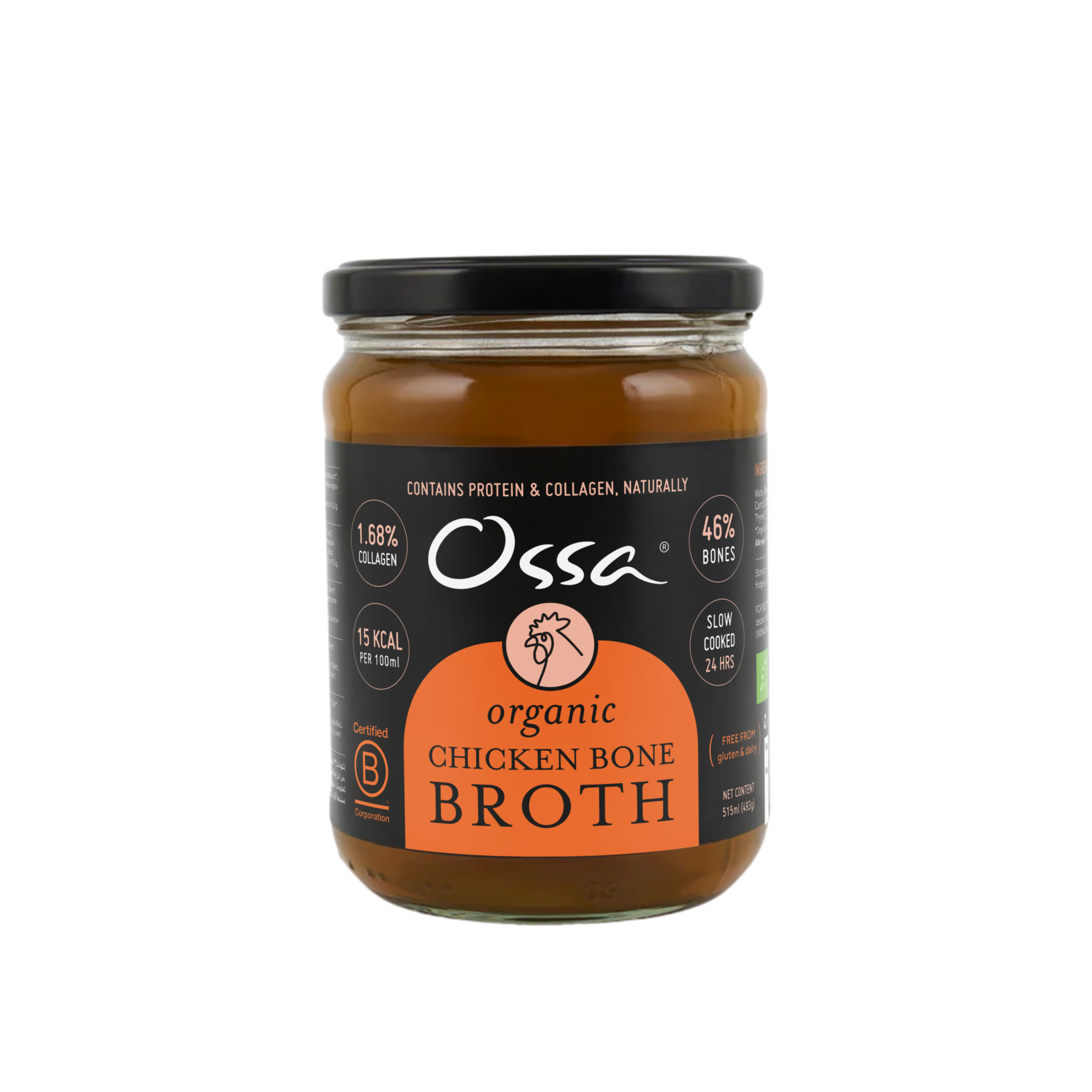
Our organic beef bone broths are slow cooked and free from preservatives and artificial ingredients, for people who want the depth of stock without the work.
A classic beef stock has four parts: bones, aromatics, water and time. The bones give body and flavour. Onion, carrot and celery add sweetness and depth. Peppercorns, bay and thyme add background notes. Water carries it all.
The word “organic” describes how the ingredients were produced. In the UK, organic livestock must be reared to organic standards, which cover feed, access to pasture and restrictions on routine medication. The vegetables in an organic stock come from farms that do not use synthetic pesticides. For a cook, that means you are starting from ingredients you can trace and a pot that contains nothing you did not put in.
Stock is not vegan, because it comes from animal bones. It is also not a finished dish. Most people use it as an ingredient, so it is normally lightly seasoned, or not seasoned at all, and left for the cook to finish.
Why the bones matter
Meaty bones with some cartilage give the best result. Rib, neck, back and leg bones are common choices, and a marrow bone adds richness. Joints and knuckle bones release gelatine as they cook, which is why a good stock sets to a wobbly jelly when chilled. That set is a quick visual sign that the pot was simmered long enough and used bones with plenty of connective tissue.
If you buy bones, ask your butcher or a local organic farm shop for beef bones from grass-fed cattle. Many organic box schemes and farm suppliers sell stock bones by the kilogram, usually frozen.
Stock, broth and bone broth: the differences
The three terms overlap on supermarket shelves, so it helps to know the traditional meanings.
Beef stock
Beef broth
Beef bone broth
Made from
Meaty bones, often roasted
Meat, sometimes with bones
Bones, often roasted, with vegetables
Typical cook time
Several hours
Shorter
Long, often up to 24 hours
Texture
Light body, sets when chilled
Thinner, less gelatinous
Often gelatinous and richer
Usual role
Cooking base for sauces, soups and gravy
Can be sipped or used in a dish
Sipped as a drink or used as a base
A chef-instructor quoted by EatingWell describes stock as bones simmered over a long period and used mainly as a cooking ingredient, while broth is made with meat, cooks for less time and is less gelatinous. Bone broth sits at the long end of that spectrum. A dietitian at MD Anderson Cancer Center describes it as water, vegetables and roasted bones simmered for up to 24 hours.
In practice, the label on the pack matters less than what is in it and how it was made. If you want to understand how a concentrated cube or bouillon differs from a slow-cooked liquid, our guide to bone broth versus bouillon goes through it side by side.
What to check when you buy organic beef stock
The search results for this topic show four main product types: stock cubes, liquid stocks and broths, concentrates, and raw bones. Each suits a different cook.
Stock cubes and pots
Organic cubes are the cheapest and most convenient option. They keep for a long time in the cupboard and dissolve in seconds. Look for a short ingredient list, no artificial colours, flavours or preservatives, and no added MSG if that matters to you. Salt is usually the first thing to check. Diabetes UK notes that shop-bought stock cubes tend to be higher in salt, which matters because people with diabetes are more likely to be affected by high blood pressure. Making up a cube with more water than the pack suggests is a simple way to lower the sodium in your dish.
Liquid stock and bone broth
Liquid products come ready to use. They usually taste fuller than a cube because they contain real bone extract rather than flavouring. Check three things:
The bones. Look for organic, grass-fed and, if it matters to you, British beef.
The cook time. A slow-cooked product will often say so. Twenty-four hours is the figure many bone broth makers give.
The sodium. Harvard Health notes that some broths contain over 450mg of sodium per cup, about 20% of the recommended daily limit, and suggests reduced-sodium or low-sodium versions. Children’s Hospital of Philadelphia suggests choosing a prepared broth or stock with under 140mg of sodium per serving.
Raw organic bones
If you have a freezer and a big pot, bones are the best value and give you full control. Typical packs are 1kg. You add the vegetables, herbs and water, and you decide how long to simmer.
A quick label checklist
Check
What a good label shows
Beef source
Organic, grass-fed, country of origin stated
Ingredients
Water, bones, vegetables, vinegar, spices; nothing you would not use at home
Additives
No artificial colours, flavours or preservatives
Sodium
Per serving or per 100ml figure, ideally low
Allergens
Clear gluten and lactose statement if you need it
Format
Cube, liquid, concentrate or bones, matched to how you cook
How to make organic beef stock at home
Homemade stock needs little skill and a lot of patience. Published recipes from BBC Food agree on the method: roast, simmer gently, strain, chill and skim.
Ingredients
A typical BBC Food recipe uses 1kg of beef bones, 2 carrots, 2 onions, 2 sticks of celery, 1 tablespoon of vegetable oil, 8 peppercorns, 2 dried bay leaves, a few parsley stalks and a sprig of thyme. A larger BBC Food recipe uses 2kg to 2.5kg of bones from rib and leg, with extra vegetables, tomato, garlic and leek. Use organic bones and vegetables throughout if you want an organic result. A splash of apple cider vinegar is a common addition to help draw minerals and flavour from the bones.
Method
Roast. Heat the oven to around 200C. Roast the bones and roughly chopped vegetables until well browned. The BBC Food recipes give 40 to 45 minutes for the larger batch. Chef Gizzi Erskine stresses that this browning, a caramelisation of the surface, drives both the flavour and the deep colour of the finished stock.
Transfer. Move everything to a large pot. Scrape the roasting tin with a little hot water so none of the browned bits are lost.
Add water and aromatics. Cover with cold water and add the herbs, peppercorns and any vinegar.
Simmer gently. Bring just to the point where small bubbles break the surface, then keep it there. Erskine warns that boiling bones makes a cloudy, unrefined stock.
Skim. Remove any foam that rises in the first half hour.
Strain. Pour through a sieve and discard the solids.
Chill. Refrigerate overnight so the fat sets on top, then lift it off.
How long to simmer
Times vary with the amount of bone, so treat these as a guide rather than a rule.
Source
Simmer time
BBC Food, 1kg bones
3 to 4 hours
BBC Food, 2kg to 2.5kg bones
4 to 6 hours, six for a strong stock
Professional kitchens (Gizzi Erskine)
Generally 4 to 8 hours
RecipeTin Eats, 2.5kg bones
3 to 8 hours, ideally 8
Bone broth style
Up to 24 hours
If you want a richer, more concentrated stock, simmer for longer or reduce the strained liquid. The larger BBC Food recipe suggests reducing by half for about an hour.
Storing it
BBC Food says the basic recipe keeps for up to 3 days in the fridge, or you can freeze it. Freezing in small portions is the practical route: ice cube trays for a splash in a pan sauce, mugs or tubs for soup bases. Diabetes UK suggests freezing homemade stock in portions, and also points out that making stock is a way to use up leftovers and cut waste.
Common mistakes
Boiling hard. It clouds the stock and can make it taste dull.
Salting early. Add salt at the end, to the dish you are cooking, because stock reduces and concentrates.
Too much water. A pot that is just covered gives a fuller flavour than one that is flooded.
Skipping the roast. Raw bones make a paler, lighter stock. That can suit a delicate soup, but not a gravy.
Organic vegetable stock: when to use it instead
Organic vegetable stock is the answer when you are cooking for vegetarians or vegans, or when you want a lighter base. It is quicker too: vegetables give up their flavour in about an hour.
A vegetable stock recipe from Diabetes UK, which makes 1.5 litres, uses 2 large onions, 2 sticks of celery, 2 carrots, a leek, a broccoli stalk, 8 mushrooms, a courgette, a medium potato, a bay leaf, parsley, thyme, 3 black peppercorns and 3 litres of water. It simmers gently for at least an hour, then for 10 more minutes after the vegetables are broken up. Prep takes 10 minutes.
Here is how the two compare in the kitchen.
Organic beef stock
Organic vegetable stock
Flavour
Deep, savoury, rounded
Lighter, sweeter, fresher
Time
3 to 8 hours or more
About 1 hour 40 minutes
Best for
Gravy, stews, French onion soup, braises, sauces
Risotto, lentil soup, grains, light soups
Suitable for vegans
No
Yes
Texture when chilled
Often sets
Stays liquid
You can swap one for the other in most recipes. A beef recipe made with vegetable stock will taste lighter, and a delicate vegetable soup made with beef stock will taste heavier, so match the stock to the dish. Save vegetable peelings, leek tops, celery ends and mushroom stalks in a freezer bag, and you have the base of a free vegetable stock.
Stock at breakfast
It may seem odd to put stock in a breakfast, but a savoury morning meal is a good place for it, and many people searching for an organic breakfast are looking for something more substantial than cereal.
UK Organic describes an organic breakfast as food free from GM ingredients, artificial additives and preservatives, and suggests porridge with oats, nuts, seeds and fruit, overnight oats with chia seeds, and savoury options such as eggs. Stock slots into the savoury side:
Warm mug of broth. Heat a cup of beef stock or bone broth with a pinch of black pepper and drink it as you would a hot drink.
Poached or soft-boiled eggs in broth. Slip a poached egg into a bowl of hot stock with chopped spring onions or herbs.
Savoury porridge. Cook oats in stock instead of water, then top with an egg, wilted greens and a little grated cheese.
Stock-cooked greens or beans. Warm through beans or spinach in a splash of stock and serve on toast with an egg.
Savoury pancakes or omelettes. A spoonful of reduced stock in the filling adds depth.
For weekday mornings, portion frozen stock into mugs the night before and move one to the fridge to thaw.
Our perspective
We started Ossa Organic because of bone broth. Our founder discovered it while pregnant with her first child, and it changed how our family cooks and eats. Five years on, we still make our broths on the same principle: organic ingredients, slow cooking and nothing that does not belong in a pot.
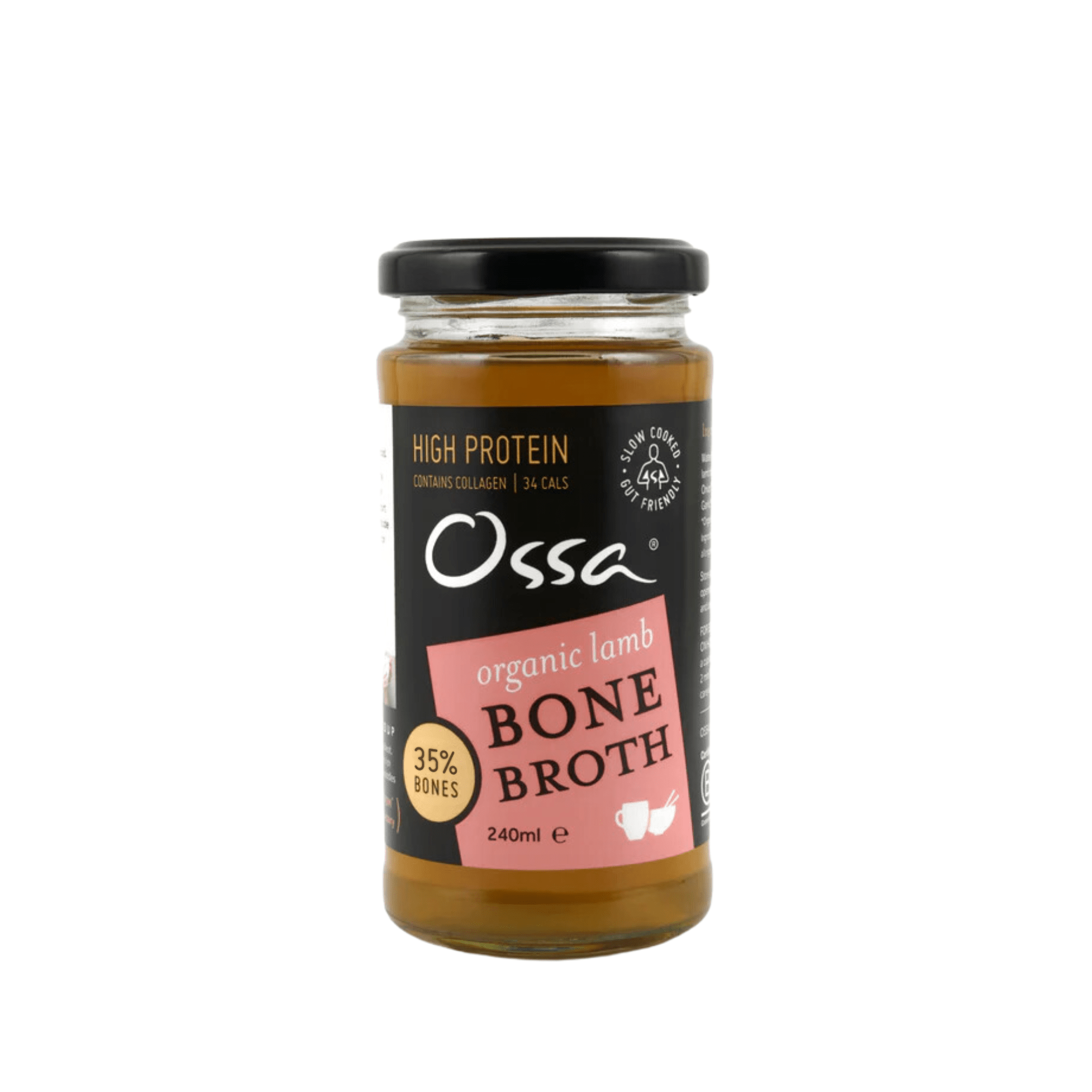
Homemade stock is a wonderful thing, and we cook it ourselves. But most weeks, most families do not have six spare hours or a freezer full of bones. That is where we think a well-made ready broth earns its place. Ours is made with organic, grass-fed ingredients and traditional slow cooking, and it is free from preservatives, hormones and additives. You can use it exactly as you would use stock: in gravy, risotto, soup or a mug at breakfast.
Our approach is tradition, not trend. We would rather give you a short ingredient list and a long cook time than a long list of flavourings. Eating mostly paleo and avoiding processed food with preservatives is how we live at home, and the range is built the same way.
If you are choosing between a cube, a carton and a pot of your own, our view is to keep all three in mind. Cubes for the cupboard, homemade for the weekend, and a ready organic bone broth for the days between.
Ossa Organic
Choosing beef or chicken, and using bone broth in your cooking
If you are deciding which base to keep in the kitchen, beef gives a darker colour and a stronger flavour, which suits red meat dishes, onion soup and gravy. Chicken is gentler and works across more dishes. Our comparison of chicken and beef bone broth sets out where each one fits, and our page on beef bone broth nutrition covers calories, protein and macros.
On nutrition, keep expectations sensible. Harvard Health reports that bone broth provides roughly 8 to 10 grams of protein per cup, against 2 to 6 grams in most broths and stocks. The MD Anderson dietitian suggests keeping to about one cup a day. As with any food, it works best as part of a varied diet that includes vegetables, whole grains, legumes and dairy.
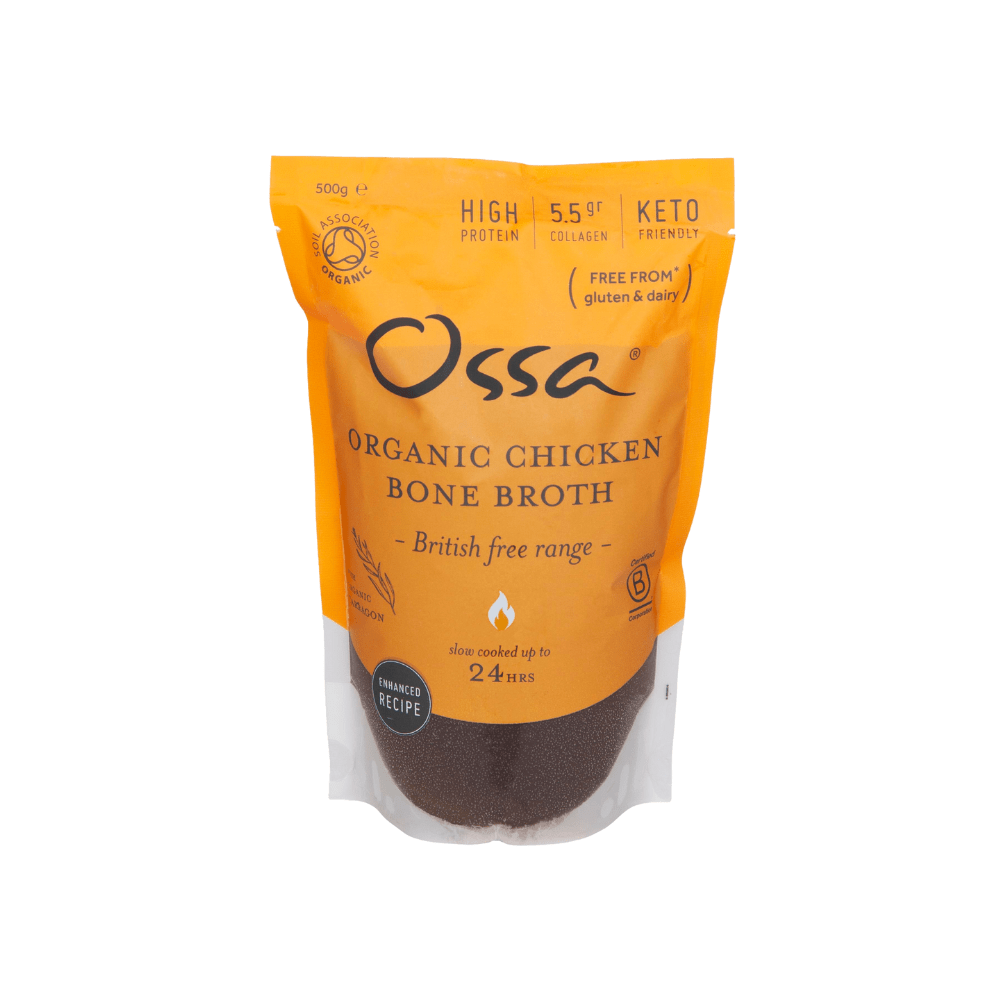
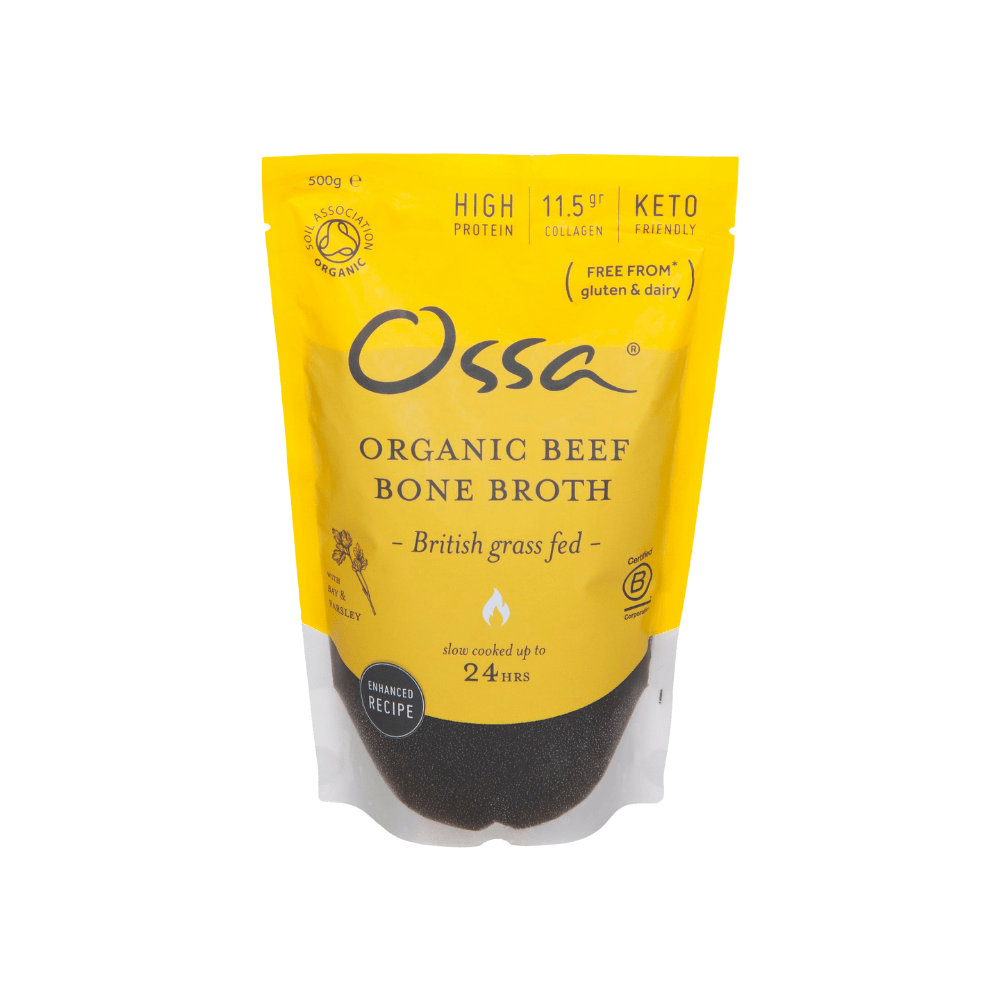
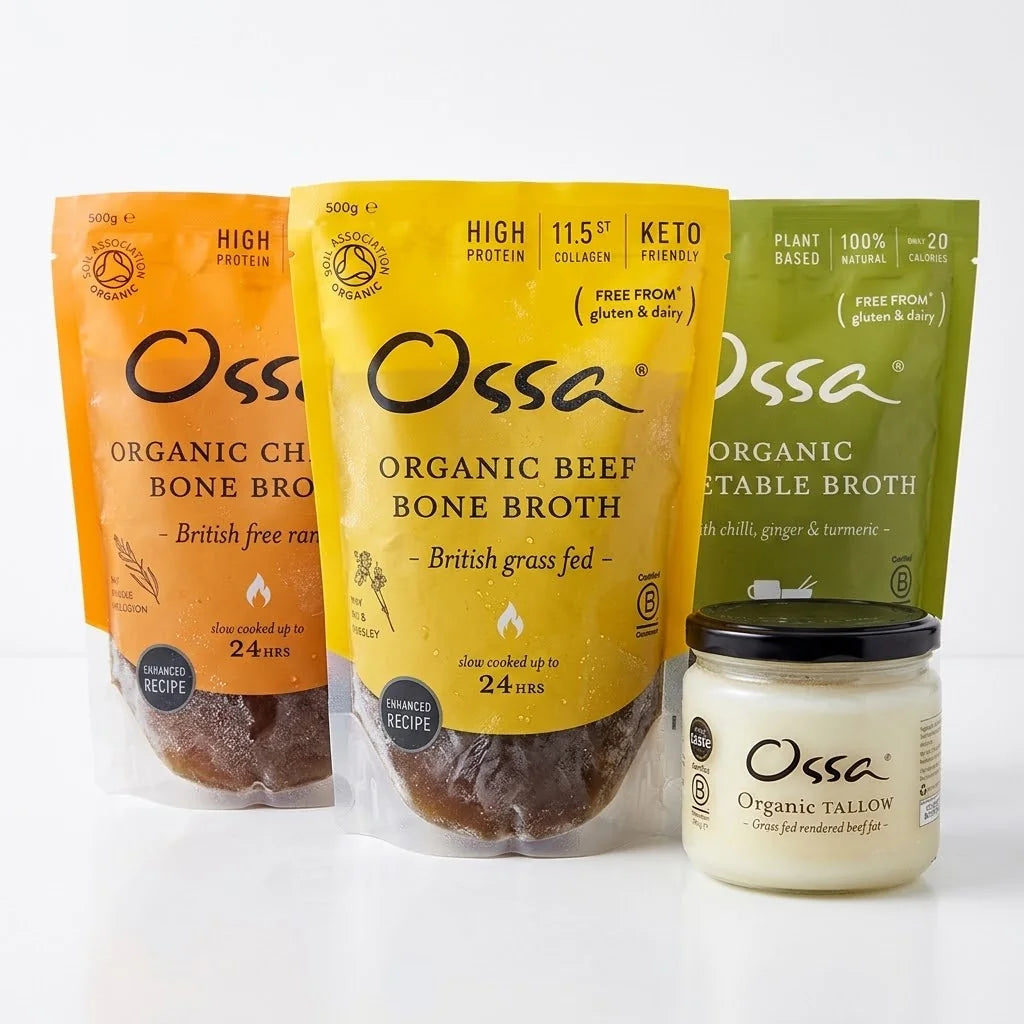
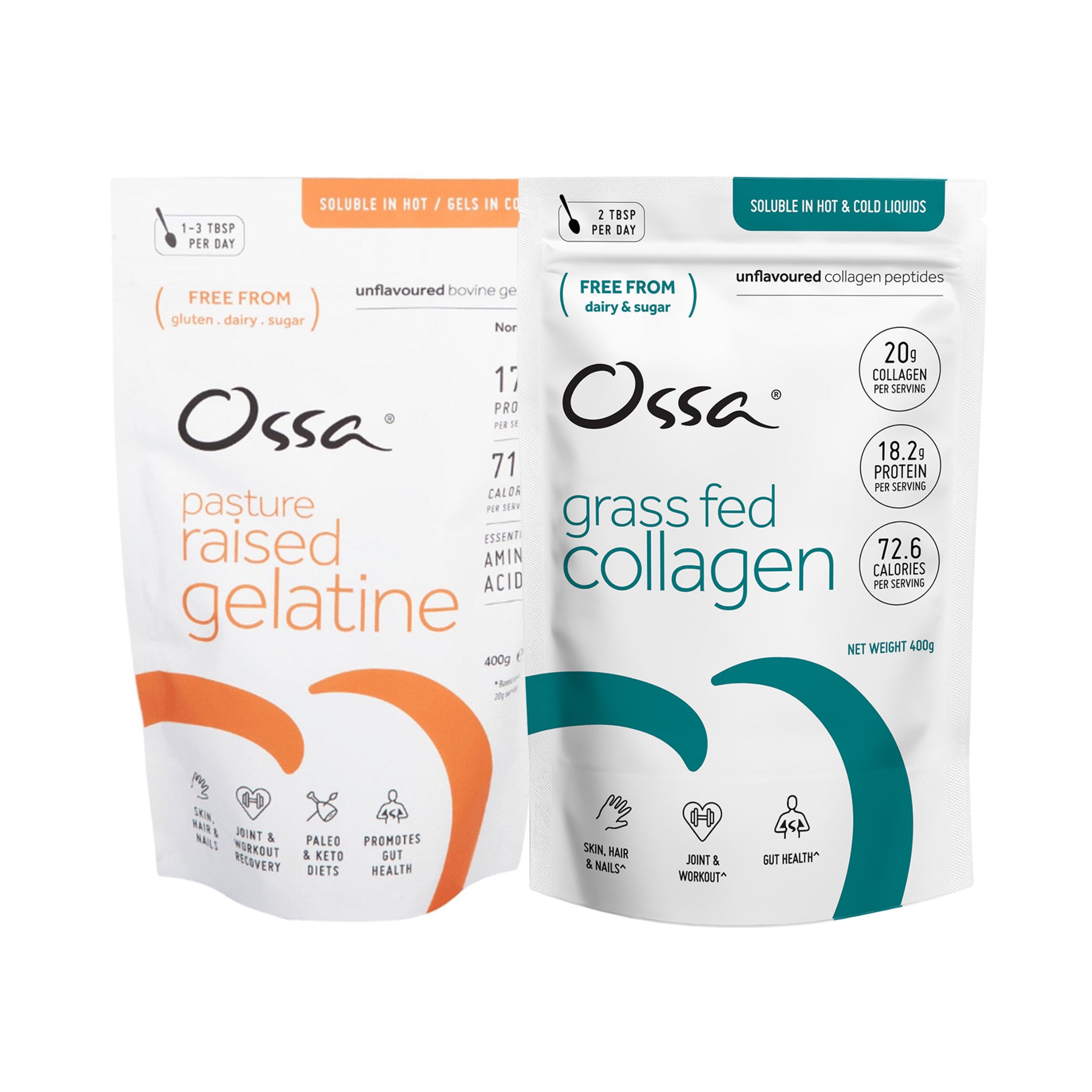
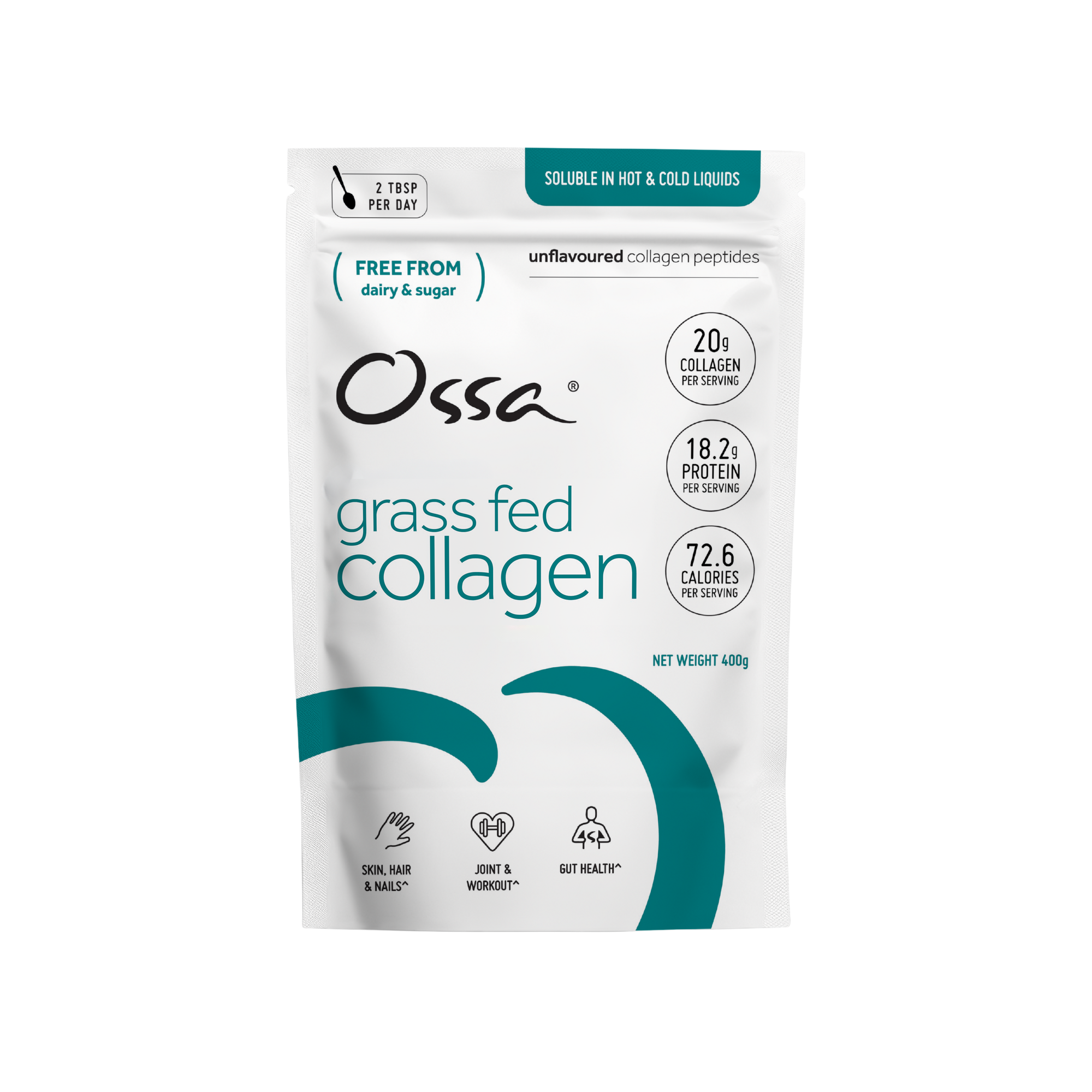
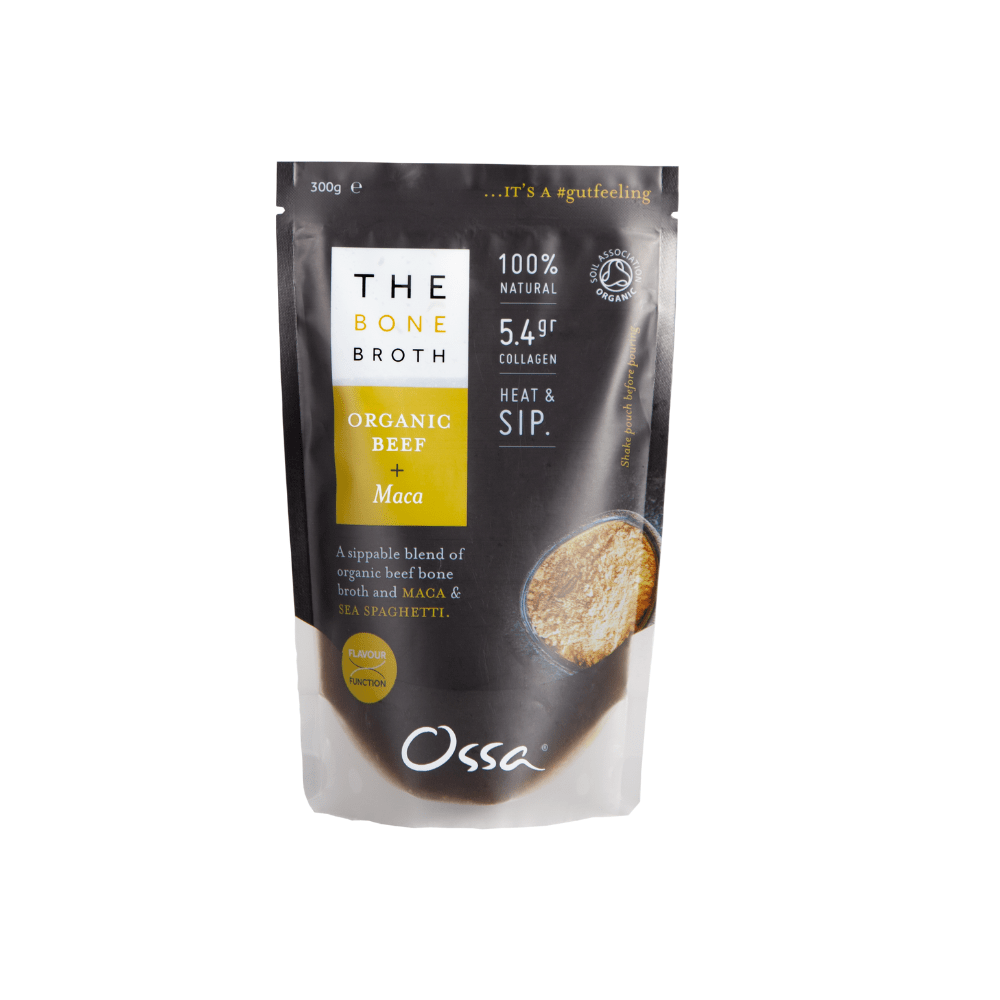
When you want the flavour of slow-cooked organic beef without the hours at the hob, our organic bone broths are made with organic, grass-fed ingredients and traditional slow cooking, with no preservatives or artificial ingredients. Our range also includes grass-fed ghee and tallow for cooking, collagen powders and gut health bundles, so you can build a whole natural pantry in one order. You can see the full range in our shop.
FAQ
What is the difference between beef stock and beef broth?
Stock is traditionally made from meaty bones simmered for a long time and is used mainly as a cooking base. Broth is made with meat, sometimes with bones, cooks for less time and is usually thinner. In shops the words are often used interchangeably, so read the ingredients and any stated cook time.
Is beef stock good for you?
Stock and broth provide protein and small amounts of minerals, and they can be a tasty way to add flavour without much fat. Sodium varies a lot between products, so check the label and choose low-sodium versions if you are watching your salt. If you have a medical condition such as diabetes or high blood pressure, ask your GP or dietitian how much salt suits you.
How long should I simmer beef stock?
Published recipes range from 3 to 4 hours for a 1kg batch up to 6 to 8 hours for a larger one. Professional kitchens generally cook beef stock for 4 to 8 hours. Keep the heat low enough that the surface barely moves, because boiling makes the stock cloudy.
Can I use organic vegetable stock instead of beef stock?
Yes, in most recipes. Vegetable stock gives a lighter, sweeter result, which suits soups, risotto and grain dishes. For gravy, stews and braised beef, beef stock gives a deeper flavour.
How long does homemade stock keep?
BBC Food advises using basic homemade beef stock within 3 days of making it, or freezing it. Freeze it in small portions so you only defrost what you need.