

Cart
0
TL;DR:
- Organic food additives are natural substances or approved synthetics that preserve freshness and safety in organic products. Strict regulations require these additives to appear on the USDA National List, with “100% Organic” products containing no synthetics. Natural preservatives like salt, vinegar, and honey are common, while certain synthetic additives are allowed only when natural options are unavailable.
Organic food additives are ingredients added to organic products to preserve freshness, improve texture, or maintain safety, and they must be either natural substances or officially approved synthetic additives under organic certification standards. The term you will see used in food science is “food additives in organic products,” though the everyday phrase “organic food additives” covers the same ground. Understanding what these additives are, which ones are permitted, and how they affect your health gives you real power at the supermarket shelf.
What are organic food additives and how are they regulated?
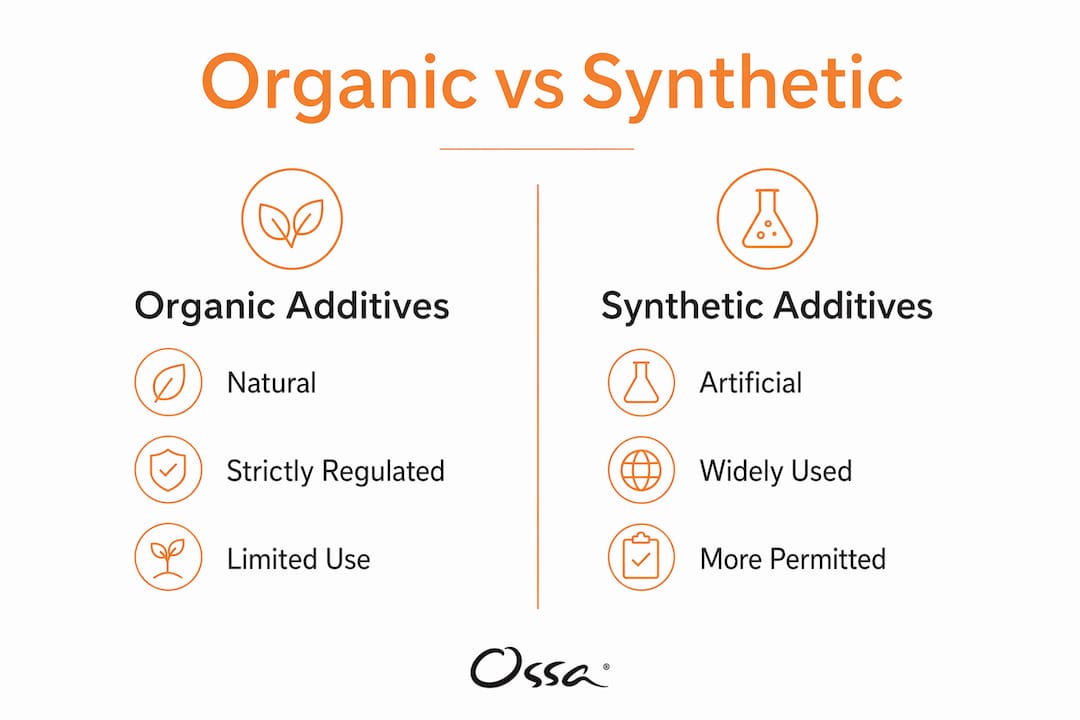
Organic food additives are not a free-for-all category. The USDA National Organic Program (NOP) sets the rules, and those rules are strict. Any substance added to an organic product must either be a natural ingredient or appear on the National List of approved synthetic substances. If it is not on that list, it cannot be used, full stop.
The NOP draws a clear line between two label categories. Products carrying the “100% Organic” seal contain no synthetic additives whatsoever. Products carrying the standard “Organic” seal may contain up to 5% non-organic ingredients, but those ingredients are restricted to the National List. That 5% threshold sounds small, but it matters because it is where approved synthetic additives can appear.
Organic regulation follows what experts describe as a “guilty until proven innocent” principle. A substance cannot enter the National List unless it has been proven necessary and safe. This is the opposite of conventional food regulation, where additives are generally permitted unless shown to cause harm. The result is a much shorter, more tightly controlled list of permitted substances in organic foods.
Key differences between organic and conventional additive regulation:
- Organic: additives must be explicitly approved on the National List before use
- Conventional: additives are permitted unless evidence of harm emerges
- Organic: synthetic additives are only allowed where no natural alternative exists
- Conventional: synthetic additives are used routinely for cost and shelf-life reasons
- Organic “100% Organic” label: zero synthetic additives permitted
- Organic “Organic” label: up to 5% non-organic ingredients from the National List
| Label | Synthetic additives allowed | Non-organic content limit |
|---|---|---|
| 100% Organic | None | 0% |
| Organic | National List only | Up to 5% |
| Made with Organic | National List only | Up to 30% |
| Conventional | Broad approval | No organic requirement |
The Soil Association in the UK operates a comparable certification framework, with its own permitted substances list that aligns closely with European organic regulations. Families buying organic in the UK benefit from both sets of standards working in parallel.
What types of organic food additives are commonly used?
Natural preservatives are the backbone of organic food preservation. Salt draws moisture out of food, preventing bacterial growth. Honey works similarly by creating a high-sugar, low-moisture environment that bacteria cannot survive in. Vinegar lowers the pH of food, making it acidic enough to inhibit spoilage organisms. Rosemary extract acts as a natural antioxidant, preventing rancidity in fats and oils. Cultured celery powder provides naturally occurring nitrates used in organic cured meats.
These ingredients are not new inventions. Salt, vinegar, and honey have been used to preserve food for thousands of years. Their mechanisms are well understood: moisture reduction, pH lowering, and antioxidant activity. They work without the need for laboratory-synthesised chemicals, which is exactly why they fit within organic principles.
Approved synthetic additives also appear in some organic products, but only where no natural alternative exists. Ascorbic acid (vitamin C), tocopherols (vitamin E), and citric acid are the most common examples. These undergo rigorous safety testing before approval and are used specifically to prevent browning or spoilage in products where natural options fall short.
| Additive | Type | Function | Found in |
|---|---|---|---|
| Salt | Natural | Moisture reduction, preservation | Meats, fermented foods |
| Vinegar | Natural | pH lowering, antimicrobial | Pickles, condiments |
| Rosemary extract | Natural | Antioxidant, prevents rancidity | Oils, snacks |
| Honey | Natural | Moisture reduction, antimicrobial | Baked goods, drinks |
| Ascorbic acid | Approved synthetic | Prevents browning | Juices, cut fruit |
| Tocopherols | Approved synthetic | Antioxidant | Oils, cereals |
| Citric acid | Approved synthetic | Preservative, flavour balance | Sauces, drinks |
Additives that are banned in organic foods include artificial colours such as tartrazine and sunset yellow, synthetic preservatives such as sodium benzoate and BHA, and artificial sweeteners such as aspartame. These are standard ingredients in many conventional processed foods but are entirely prohibited under organic certification.
Pro Tip: When reading an organic product label, look for rosemary extract or ascorbic acid in the ingredient list. Their presence confirms the manufacturer is using approved, functional additives rather than reaching for cheaper synthetic alternatives.
Are organic food additives safe?
Organic food additives are generally considered safe, but “natural” does not automatically mean “risk-free.” This is the most important misconception to address. The FDA has acknowledged that natural and synthetic dyes are held to safety standards, but they carry different risk profiles. Natural does not equal harmless.
Some natural additives carry genuine health considerations. Annatto, a natural colouring derived from seeds of the achiote tree, can trigger allergic reactions in sensitive individuals. Carmine, made from cochineal insects, causes reactions in some people. Curcumin, the active compound in turmeric, has been linked to rare liver injury when consumed in concentrated supplement form. Beta-carotene supplements have been associated with increased lung cancer risk in smokers, though this applies to high-dose supplements rather than food-level use.
“Consumers should understand that natural additives carry their own risk profiles distinct from synthetic ones, necessitating informed choices rather than assumption of safety.” — FDA natural food dyes and safety
Organic foods do reduce your exposure to synthetic pesticides and prohibited additives. Studies show organic produce has fewer pesticide residues than conventional produce, though both are typically below safe consumption thresholds. The benefit of choosing organic is real, but it is a reduction in exposure rather than a guarantee of zero risk.
Potential side effects to be aware of with natural organic additives:
- Annatto: may cause hives, digestive upset, or respiratory reactions in sensitive individuals
- Carmine (cochineal): allergic reactions, including anaphylaxis in rare cases
- Curcumin: liver stress at high supplement doses, not at food-level amounts
- Salt: excess intake linked to raised blood pressure regardless of organic status
- Rosemary extract: generally very well tolerated; rare contact sensitivity reported
The practical takeaway is straightforward. Organic additives are safer than most synthetic alternatives for the majority of people. For those with known sensitivities, reading the full ingredient list remains necessary even on organic products.
How to identify and choose organic products with trustworthy additives
The USDA Organic seal is your first filter. It guarantees at least 95% organic ingredients and confirms that any additives present are restricted to the National List. Without that seal, a product labelled “natural” or “made with organic ingredients” carries no such guarantee.
Reading the ingredient list is the next step. Ingredients are listed in descending order by weight. If salt, vinegar, or rosemary extract appear near the end of a long list, they are present in small functional amounts. If you see sodium benzoate, BHA, or artificial colours anywhere on an organic product’s label, that product is mislabelled or not genuinely certified.
- Check for the USDA Organic or Soil Association seal before reading anything else. The seal confirms third-party certification and additive restrictions.
- Count the ingredients. Fewer ingredients generally means less processing and fewer additives. A bone broth with four ingredients is a better choice than a sauce with fourteen.
- Identify any additives by function. Ascorbic acid preserves colour. Tocopherols prevent oxidation. Citric acid balances acidity. Knowing what each additive does helps you judge whether it is necessary.
- Choose whole or minimally processed organic produce where possible. Fresh organic vegetables, fruits, and unprocessed meats contain no additives at all. Packaged organic products are where additive scrutiny matters most.
- Buy in bulk for staples. Whole organic grains, dried pulses, and nuts purchased in bulk from certified suppliers contain no additives by default. This removes the need to decode labels entirely.
Pro Tip: If you want to preserve organic seasonal produce at home without additives, Ossa Organic’s guide on preserving seasonal produce covers practical, traditional methods using only salt, vinegar, and natural fermentation.
Understanding certified organic labels takes practice, but the core principle is simple. The more specific the certification claim, the stricter the additive rules. “100% Organic” is the cleanest category. “Organic” is still tightly controlled. “Made with Organic” requires more scrutiny.
Key takeaways
Organic food additives are regulated more strictly than conventional additives, with natural substances preferred and synthetic options only permitted where explicitly approved on the National List.
| Point | Details |
|---|---|
| Definition and regulation | Organic additives must be natural or appear on the USDA National List; unapproved substances are banned outright. |
| Label distinctions matter | “100% Organic” means zero synthetic additives; “Organic” allows up to 5% National List substances. |
| Common natural preservatives | Salt, vinegar, honey, and rosemary extract preserve organic foods using moisture, pH, and antioxidant mechanisms. |
| Natural does not mean risk-free | Annatto, carmine, and curcumin can cause reactions; informed label reading remains necessary even for organic products. |
| Choosing wisely | Look for the USDA Organic or Soil Association seal, count ingredients, and prioritise minimally processed organic foods. |
Ossa Organic’s view on organic additives and real food
At Ossa Organic, we have always believed that the fewer ingredients on a label, the better the food. When we developed our bone broths, the question was never “what can we add?” It was “what can we leave out?” That thinking is not a marketing position. It is how we actually cook and eat at home.
What concerns us most about the organic additives conversation is the assumption that certification alone is enough. The “Organic” seal is a meaningful standard, and we respect it. But a certified organic product can still contain a list of approved additives that, while permitted, add nothing to your nutrition. A long ingredient list on an organic biscuit is still a long ingredient list.
The research on organic foods is honest about its limits. Limited long-term data confirm that organic foods provide direct measurable health advantages over conventional foods. What organic certification does guarantee is reduced synthetic pesticide exposure and stricter additive controls. That is genuinely valuable. But the real health work is done by the quality and simplicity of what you eat, not the label alone.
Our advice, grounded in years of cooking for our own family, is to treat whole organic foods as the default and packaged organic products as the exception. When you do buy packaged, use the skills in this article to read the label properly. The goal is not perfection. The goal is consistent, informed choices that reduce your family’s exposure to unnecessary additives over time.
— Ossa Organic
Nourish your family with Ossa Organic
Ossa Organic’s bone broths are made with certified organic ingredients, slow-cooked using traditional methods, and contain no artificial preservatives, colours, or flavourings. The ingredient list is short by design. Our Organic Beef Bone Broth and Organic Chicken Bone Broth are examples of what additive-conscious food production looks like in practice. No synthetic additives. No hidden preservatives. Just organic bones, water, and time. If you are ready to move away from processed food and towards genuinely clean ingredients, explore the full Ossa Organic range and see what real food looks like on a label.
FAQ
What are organic food additives in simple terms?
Organic food additives are substances added to organic products to preserve freshness, maintain safety, or improve texture. They must be natural ingredients or appear on the USDA National List of approved synthetic substances.
Are organic food additives safe to eat?
Organic food additives are generally safe, but natural does not automatically mean risk-free. Additives like annatto and carmine can cause allergic reactions in sensitive individuals, so reading the full ingredient list remains important.
What is the difference between organic and synthetic food additives?
Organic additives are natural substances or strictly approved synthetics; conventional synthetic additives are permitted unless proven harmful. Organic regulation uses a stricter approval system where substances must be proven safe and necessary before use.
Do organic food preservatives actually work?
Yes. Natural organic preservatives like salt, vinegar, and rosemary extract use well-established mechanisms including moisture reduction, pH lowering, and antioxidant activity to prevent spoilage effectively.
How do I know if an organic product has unwanted additives?
Check for the USDA Organic or Soil Association seal, then read the full ingredient list. Any synthetic additive not on the National List should not appear on a certified organic product. Shorter ingredient lists generally indicate less processing and fewer additives overall.