

Cart
0

Bone broth is defined as a slow-simmered stock made from animal bones and connective tissue, and its nutritional value centres on the collagen-derived amino acids it releases during cooking. The role of amino acids in bone broth is the primary reason health-conscious individuals reach for it as a dietary addition. Collagen breaks down into gelatin during simmering, and digestion yields glycine, proline, hydroxyproline, and glutamine alongside small peptides. These compounds serve as substrates for connective tissue repair, gut barrier maintenance, and antioxidant pathways. Nutrient content varies considerably depending on the animal source, bone type, and cooking duration, so understanding what you are actually consuming matters before drawing conclusions about its effects.
What amino acids are found in bone broth?
Bone broth’s amino acid profile is dominated by four collagen-derived compounds: glycine, proline, hydroxyproline, and glutamine. Each has a distinct biochemical role, and together they account for the majority of the proposed benefits of bone broth for gut and connective tissue health.
Glycine is the most abundant amino acid in collagen and the one with the broadest range of functions. It contributes to collagen synthesis, supports the production of glutathione (the body’s primary antioxidant), and acts as an inhibitory neurotransmitter in the central nervous system. Glycine also plays a direct role in gut barrier function by supporting the integrity of intestinal epithelial cells.
Proline and hydroxyproline are structurally unique. Hydroxyproline is formed by the post-translational modification of proline and is found almost exclusively in collagen. These two amino acids provide the mechanical stability of the collagen triple helix, making them particularly relevant to connective tissue in tendons, cartilage, and the gut lining. You will not find hydroxyproline in meaningful quantities in most other dietary proteins, which makes bone broth a genuinely distinctive source.
Glutamine is conditionally essential, meaning the body can produce it under normal circumstances but may require dietary sources during physiological stress, illness, or intense exercise. It serves as the primary fuel source for intestinal epithelial cells and supports tight junction proteins that regulate gut permeability.
Bone broth also contains glycosaminoglycans such as glucosamine, chondroitin, and hyaluronic acid, though in small and variable amounts. These compounds are associated with joint health, though the evidence for supplemental forms is mixed at best.
- Glycine: collagen synthesis, glutathione production, neurotransmission, gut epithelial support
- Proline and hydroxyproline: structural integrity of connective tissue, found almost exclusively in collagen
- Glutamine: enterocyte fuel, tight junction maintenance, conditionally essential under stress
- Glycosaminoglycans: glucosamine, chondroitin, hyaluronic acid in small quantities
Pro Tip: If you want to maximise hydroxyproline and glycine yield from homemade broth, use cartilage-rich bones such as chicken feet, knuckles, or marrow bones, and simmer for a minimum of 12 hours.
How consistent is the amino acid content in bone broth?
The honest answer is: not very consistent. Amino acid concentrations vary massively between batches, depending on the species of animal, the cut of bones used, the ratio of bones to water, acidity of the liquid, and total cooking time. This variability is one of the most important facts to understand before treating bone broth as a therapeutic supplement.
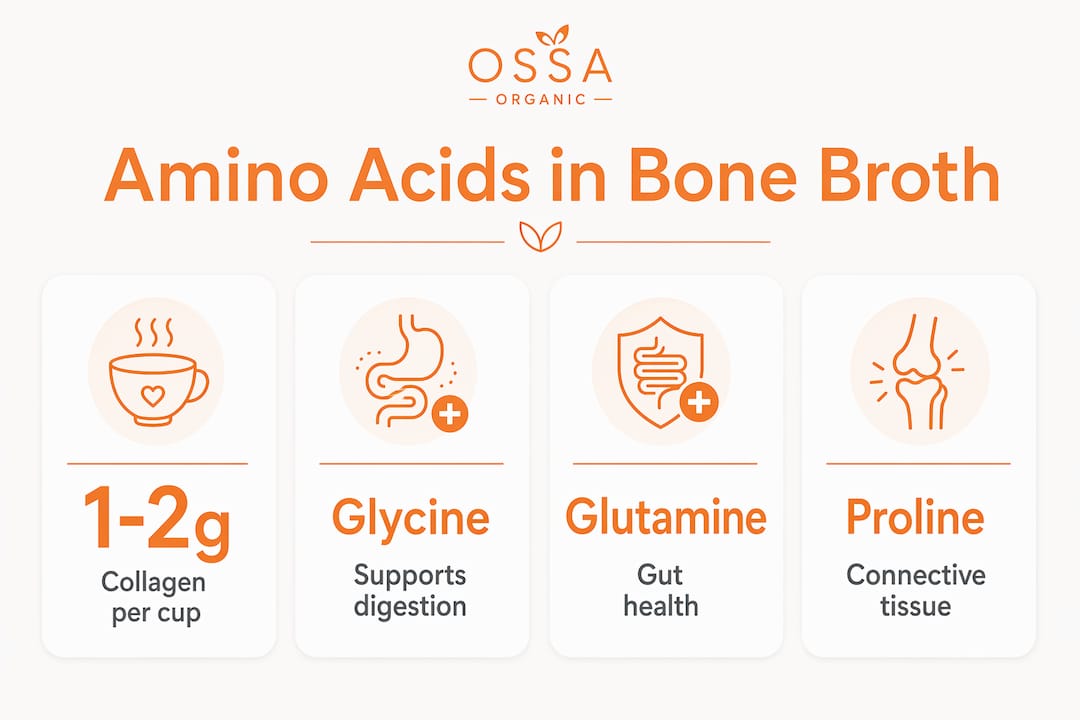
A typical cup of bone broth provides a modest amount of protein, but bone broth may provide only 1 to 2 grams of collagen amino acids per cup. That figure matters because oral collagen supplement research typically uses standardised doses of 5 to 10 grams per day to demonstrate modest skin and joint benefits. A single cup of broth falls well short of those doses, which means extrapolating supplement study results to everyday bone broth consumption is not scientifically sound.
| Amino acid source | Typical amount per serving | Clinical supplement dose |
|---|---|---|
| Bone broth (1 cup) | 1 to 2 g collagen amino acids | Not standardised |
| Collagen supplement | 5 to 10 g per day | Used in skin and joint studies |
| Glutamine supplement | 5 to 30 g per day | Used in bowel disease trials |
Supplement research uses larger, standardised doses than a typical dietary serving of bone broth can realistically provide. This does not make bone broth without value. It does mean you should treat it as a complementary protein and nutrient source rather than a precise therapeutic intervention.
Pro Tip: Adding a small amount of apple cider vinegar to your broth during simmering helps draw minerals and amino acids from the bones into the liquid, improving overall yield.
What does the science say about bone broth and gut health?
The mechanistic rationale for bone broth supporting gut health is plausible and well-grounded in basic science. Glycine and glutamine support intestinal epithelial cells and tight junction integrity, which are the structural components that regulate what passes through the gut wall. When tight junctions are compromised, the condition commonly referred to as increased intestinal permeability (or “leaky gut” in popular usage) can develop. Providing the gut lining with adequate amino acid substrates is a reasonable nutritional strategy.
Animal studies and limited human research support the idea that glycine and glutamine contribute to gut mucosal maintenance. Glutamine in particular has been studied in clinical settings for conditions such as Crohn’s disease and post-surgical gut recovery, though those trials use doses far above what bone broth delivers. Glutamine is conditionally essential under physiological stress, and typical bone broth consumption will not achieve the therapeutic doses used in bowel disease research.
“Bone broth breaks down into amino acids during digestion, but effective therapeutic dosing for conditions like leaky gut remains unclear, and clinical evidence for typical dietary servings is limited.” — Zoe
The gap between mechanistic plausibility and clinical proof is significant. No robust randomised controlled trials have demonstrated that drinking bone broth at typical dietary quantities measurably heals or prevents gut permeability issues in humans. What the evidence does support is that the amino acids present in bone broth are biologically relevant to gut function, and that regular consumption as part of a varied diet is a sensible, low-risk nutritional choice. Overstating the healing properties of bone broth does a disservice to people managing genuine digestive conditions who need accurate information.
The nutrition from bone broth also includes small amounts of minerals such as calcium, magnesium, and phosphorus, though these contributions are modest and should not be relied upon as primary mineral sources.
How to use bone broth as part of a balanced nutrition plan
Bone broth works best as a complement to a varied, whole-food diet rather than as a standalone solution. The following approach helps you get the most from it without overstating its role.
- Choose homemade or low-sodium options. Low-sodium or homemade bone broth minimises excess salt intake while still delivering amino acids and minerals. Commercial broths vary widely in quality and sodium content, so reading labels matters.
- Pair it with diverse protein sources. Bone broth is not a complete protein. It lacks adequate amounts of essential amino acids such as leucine, lysine, and methionine. Combining it with eggs, fish, legumes, or meat gives you a full amino acid spectrum.
- Use it in cooking, not just as a drink. Bone broth adds depth to soups, stews, risottos, and sauces. Using it as a cooking liquid means you absorb its amino acids through a varied meal rather than treating it as a supplement. Explore bone broth recipes for practical ideas on working it into everyday meals.
- Consider your specific context. Athletes benefit from glycine and proline for connective tissue recovery after training. Older adults may find the collagen-derived amino acids useful for supporting joint and skin tissue. Individuals with digestive sensitivities often find bone broth easier to tolerate than solid protein sources during flare-ups, making it a practical transitional food.
- Be consistent rather than occasional. The modest amino acid amounts in each serving mean frequency matters more than volume. A cup daily over weeks is more likely to contribute meaningfully to your amino acid intake than occasional large quantities.
For those interested in collagen-rich preparations beyond broth, collagen recipes offer additional ways to incorporate glycine and glutamine into your diet through varied formats.
Key takeaways
The role of amino acids in bone broth is real and biologically grounded, but typical servings deliver modest amounts that complement rather than replace a varied diet or targeted supplementation.
| Point | Details |
|---|---|
| Core amino acids | Glycine, proline, hydroxyproline, and glutamine are the primary collagen-derived amino acids in bone broth. |
| Serving size limitation | A typical cup provides 1 to 2 g of collagen amino acids, well below clinical supplement doses of 5 to 10 g. |
| Gut health mechanism | Glycine and glutamine support intestinal epithelial cells and tight junctions, but clinical proof at dietary doses is limited. |
| Variability is significant | Amino acid yield depends on animal source, bone type, and simmer time, making bone broth a variable dietary source. |
| Best used as a complement | Bone broth works alongside diverse protein sources and a whole-food diet, not as a standalone therapeutic food. |
Ossaorganic’s view on bone broth and amino acids
Bone broth has been part of traditional food cultures for centuries, and the science largely confirms why. The amino acids it provides, particularly glycine and hydroxyproline, are genuinely useful to the body. The problem is not with bone broth itself. The problem is with the gap between what the research supports and what some marketing claims.
From experience, the people who benefit most from bone broth are those who use it consistently as part of a diet already rich in whole foods. They are not relying on it to fix a specific condition. They are using it because it is nourishing, practical, and genuinely pleasant to consume. That is a reasonable and evidence-aligned position.
The tendency to frame bone broth as a cure for leaky gut or a replacement for collagen supplements is where the conversation goes wrong. The amino acid content is real. The variability is also real. A cup of well-made broth from quality bones delivers meaningful nutrition. It does not deliver the equivalent of a clinical collagen supplement. Holding both of those facts at the same time is what allows you to use bone broth intelligently.
Focus on diet quality overall. Bone broth is one useful component of that, not the centrepiece.
— Ossaorganic
Explore Ossaorganic’s bone broth range
Ossaorganic produces bone broth using organic ingredients and slow-cooking methods designed to maximise amino acid extraction from high-quality bones. The range is free from preservatives, additives, and unnecessary sodium, making it a clean source of glycine, proline, and collagen-derived nutrition.
Products are compatible with keto and paleo dietary approaches and are available in formats that suit both drinking and cooking. If you want a reliable, traceable source of bone broth amino acids without the variability of homemade batches, explore the full range at Ossaorganic. Every product reflects the same principle: real ingredients, slow preparation, no shortcuts.
FAQ
What amino acids does bone broth contain?
Bone broth contains glycine, proline, hydroxyproline, and glutamine as its primary amino acids, all derived from collagen breakdown during simmering. It also contains small amounts of glycosaminoglycans such as glucosamine and chondroitin.
Does bone broth actually support gut health?
The amino acids in bone broth, particularly glycine and glutamine, support intestinal epithelial cells and tight junction proteins at a mechanistic level. However, no robust clinical trials confirm that typical dietary servings measurably improve gut permeability in humans.
How much collagen do you get from a cup of bone broth?
A typical cup of bone broth provides approximately 1 to 2 grams of collagen-derived amino acids. This is considerably less than the 5 to 10 grams per day used in collagen supplement studies showing skin and joint benefits.
Is homemade bone broth better than shop-bought?
Homemade bone broth made from cartilage-rich bones with a long simmer time generally yields more amino acids than many commercial products. Low-sodium homemade broth also avoids the excess salt found in some shop-bought versions.
Who benefits most from including bone broth in their diet?
Athletes, older adults, and individuals with digestive sensitivities are the groups most likely to notice practical benefit from regular bone broth consumption, due to its collagen amino acid content and digestibility as a protein source.