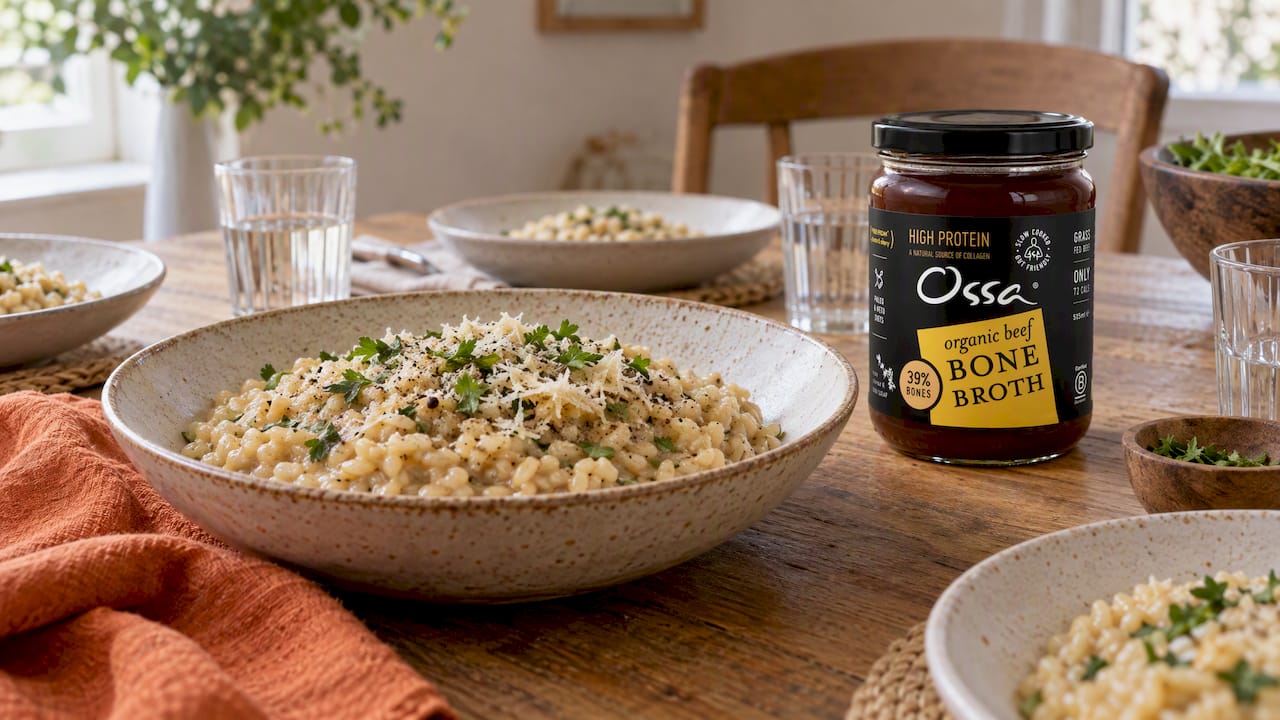
Yes, bone broth makes a creamy, deeply flavoured risotto, and it works as the primary cooking liquid without any adjustment to standard technique. Arborio or Carnaroli rice stay the right choice, and active cooking time runs 20 to 30 minutes. The broth adds a rounder, slightly richer mouthfeel than stock cubes give, and the full recipe follows below.
TL;DR:
- For four servings, use 320 g Arborio or Carnaroli rice with 1.2 to 1.4 liters of broth, kept at a gentle simmer.
- Toast the rice for 1 to 2 minutes, then add hot broth gradually; after 18 to 22 minutes, finish off heat with butter and Parmesan.
- Choose broth that sets when chilled for more body, and check its sodium level before salting because commercial versions vary widely.
- Add roasted pumpkin purée during the final 5 minutes, but fold chicken in near the end to keep it from drying out.
- Chill leftovers within an hour or two, refrigerate for no more than 24 hours, and reheat until steaming hot, only once.
Ossa Organic
Bring Bone Broth to Your Risotto
Ossa Organic makes naturally nourishing foods using organic ingredients and slow cooking techniques, rooted in tradition rather than trend.
Table of Contents
Classic bone broth risotto for four
This version uses bone broth as the sole cooking liquid, which gives the finished dish a fuller body than water-based stock.
Ingredients:
- 320g Arborio or Carnaroli rice
- 1 small onion or 2 shallots, finely chopped
- 2 tablespoons olive oil or butter
- 125ml dry white wine (or a splash of white wine vinegar)
- 1.2 to 1.4 litres bone broth, kept hot on a low simmer
- 40g butter, cold and cubed
- 50g Parmesan, finely grated
- Salt and black pepper to taste
Method:
- Warm the bone broth in a separate pan and keep it at a gentle simmer throughout cooking. Cold broth stops the rice cooking evenly and extends the whole process.
- Sweat the onion or shallot in olive oil or butter over medium-low heat for 4 to 5 minutes, until soft but not coloured.
- Add the rice and stir for 1 to 2 minutes, the tostatura step, until each grain looks slightly translucent at the edges. This coats the rice in fat and helps it hold its shape later.
- Pour in the wine and let it bubble away, scraping any sticky bits from the base of the pan.
- Add the hot bone broth one ladle at a time, stirring regularly and waiting for each addition to be mostly absorbed before adding the next.
- Continue for 18 to 22 minutes, tasting from the 18-minute mark. The rice should be tender with a slight bite at the centre.
- Take the pan off the heat and beat in the cold butter and Parmesan, the mantecatura step, which gives the dish its glossy, creamy finish.
- Rest for 1 to 2 minutes before serving, loosened with a splash more hot broth if needed.
Active stove time sits at 20 to 30 minutes, with total time including prep around 35 to 45 minutes. This quantity serves four as a main course. Plate it shallow rather than piled high, and finish with a final grind of pepper and a little extra Parmesan at the table.
Three variations to try once you know the base recipe
Once the core method is familiar, these three swaps change the flavour without changing the technique.
-
Porcini: soak dried porcini in warm water for 20 minutes, then use the soaking liquor to top up part of the bone broth. Sauté fresh mushrooms separately in a little butter and stir them through at the mantecatura stage so they keep their texture.
-
Pumpkin: fold in roasted pumpkin purée during the final 5 minutes of cooking and reduce the broth slightly to account for the extra moisture. A spoonful of mascarpone alongside the butter gives extra creaminess.
-
Chicken: poach diced chicken briefly in a little bone broth, or fold through shredded cooked chicken, during the last few minutes of cooking. Adding it too early dries the meat out before the rice finishes.
Each variation keeps the same ladle-by-ladle method and the same 20 to 30 minute active window. The only change is what gets folded in near the end.
Getting the texture right every time
Rice choice sets the ceiling for creaminess. Arborio is the most widely available and gives a reliably creamy result. Carnaroli holds its shape slightly better and is often considered the better choice for a firmer bite, while Vialone Nano cooks faster and suits a looser, more fluid risotto. All three are high-starch, short-grain varieties, and that starch is what the technique is built around.
Tostatura coats the grains in fat before any liquid goes in, and regular stirring afterwards agitates the surface starch, which is what thickens the liquid into that familiar creamy sauce. Keeping the broth hot throughout matters just as much: cold liquid shocks the rice and stalls the cooking, extending the time well past 30 minutes.
-
Too stodgy: stir in a splash more hot broth and loosen gently off the heat.
-
Too watery: simmer briskly, uncovered, for another minute or two to concentrate the liquid.
-
Undercooked at the centre: cover the pan and let it rest for 1 to 2 minutes off the heat.
This cuts the active cooking time at the table to around 10 minutes.*
What bone broth brings to the dish, and how to store leftovers safely
Bone broth contributes gelatin-derived protein and minerals, and commercial versions vary widely in sodium, so taste before adding salt rather than seasoning on instinct; learn more about its impact on bone health here.
Bone broth typically provides protein and potassium in amounts that vary depending on the bones used and simmering time.
- Chill leftover risotto quickly after cooking, within an hour or two.
- Store it in the fridge for no more than 24 hours.
- Reheat until steaming hot all the way through, and only reheat rice once.
Why Ossa Organic’s approach to bone broth shapes this recipe
We believe in slow cooking and organic ingredients rather than shortcuts, which is the same principle that makes risotto worth the standing-and-stirring effort. Bone broths that simmer long enough develop the gelatin body that gives risotto its richest mouthfeel, the kind a stock cube can’t replicate.
Bone broth risotto versus a traditional version
A traditional risotto made with chicken or vegetable stock from a cube or carton delivers salt and flavour but little else. Bone broth risotto starts from a liquid that has simmered for many hours, which means it carries gelatin-derived protein and minerals into every ladleful rather than just seasoning the rice.
The practical difference shows up in texture before it shows up in nutrition. Gelatin-rich broth thickens slightly as it cooks down, which means the finished risotto often needs a touch less butter at the mantecatura stage to reach the same creaminess. It also carries more savoury depth on its own, so a traditional risotto leaning on stock cubes often needs more Parmesan or salt to reach a similar flavour intensity.

None of this turns risotto into a health food. It’s still a dish built around rice, butter and cheese. But swapping a thin, salty stock for a properly simmered bone broth changes both the nutritional content and the eating experience of the same basic recipe, without adding a single extra step to the method.
Choosing and prepping bone broth for the best result
Not all bone broth behaves the same way in a pan. A broth that has simmered long enough to turn slightly gelatinous when chilled will give the risotto more body than a thin, clear one, so a broth that sets lightly in the fridge is usually the richer option for this recipe.
Check the sodium content before you start, since commercial broths vary considerably from one brand to the next. A lower-sodium broth gives more control over final seasoning, letting the Parmesan and any finishing salt do the work rather than fighting an already-salty base.
Always bring the broth to a simmer before it goes anywhere near the rice. Cold or lukewarm broth added straight from the fridge stalls the cooking process and can leave the rice unevenly cooked. Keep it on a low, steady simmer in a separate pan throughout, ladling as needed.

For the gut-health side of things, a broth simmered long enough to release gelatin and amino acids such as glycine is doing more work than one rushed through a short cook. Reading the ingredients list for whole bones, vegetables and a long simmer time, rather than extracts or concentrates, is the simplest way to judge which broth is worth bringing into the kitchen regularly, not just for risotto.
What to serve alongside bone broth risotto
Risotto is rich enough that it rarely needs more than one or two accompaniments. A simple green salad with a sharp vinaigrette cuts through the butter and cheese, and a bitter leaf such as rocket or chicory works particularly well against the sweetness of a pumpkin version.
For the mushroom variation, a small plate of roasted vegetables, especially something with a bit of char like roasted courgette or blistered cherry tomatoes, adds contrast without competing for attention. The chicken variation pairs naturally with steamed greens such as tenderstem broccoli or green beans, kept simple so the risotto stays the centrepiece.
Bread isn’t usually necessary alongside a rice dish, but a thin slice of toasted sourdough brushed with olive oil suits a starter portion well if risotto is being served as a first course rather than a main. Keep sides light: the dish itself is already dense enough that a heavy side can tip the meal from comforting into overwhelming on the plate, if not in spirit.
A note on tradition and comfort food
We cook the way our grandparents did: slow, with real bones and real time, because that’s what gives the broth its body in the first place. A good bone broth risotto has that same unhurried quality, glossy, faintly savoury, the kind of dish that smells like the kitchen before it even reaches the table. We serve it on cold evenings, alongside roasted vegetables, as a meal that asks for nothing more.
— Ossa Organic
Ready-made broth options for this recipe
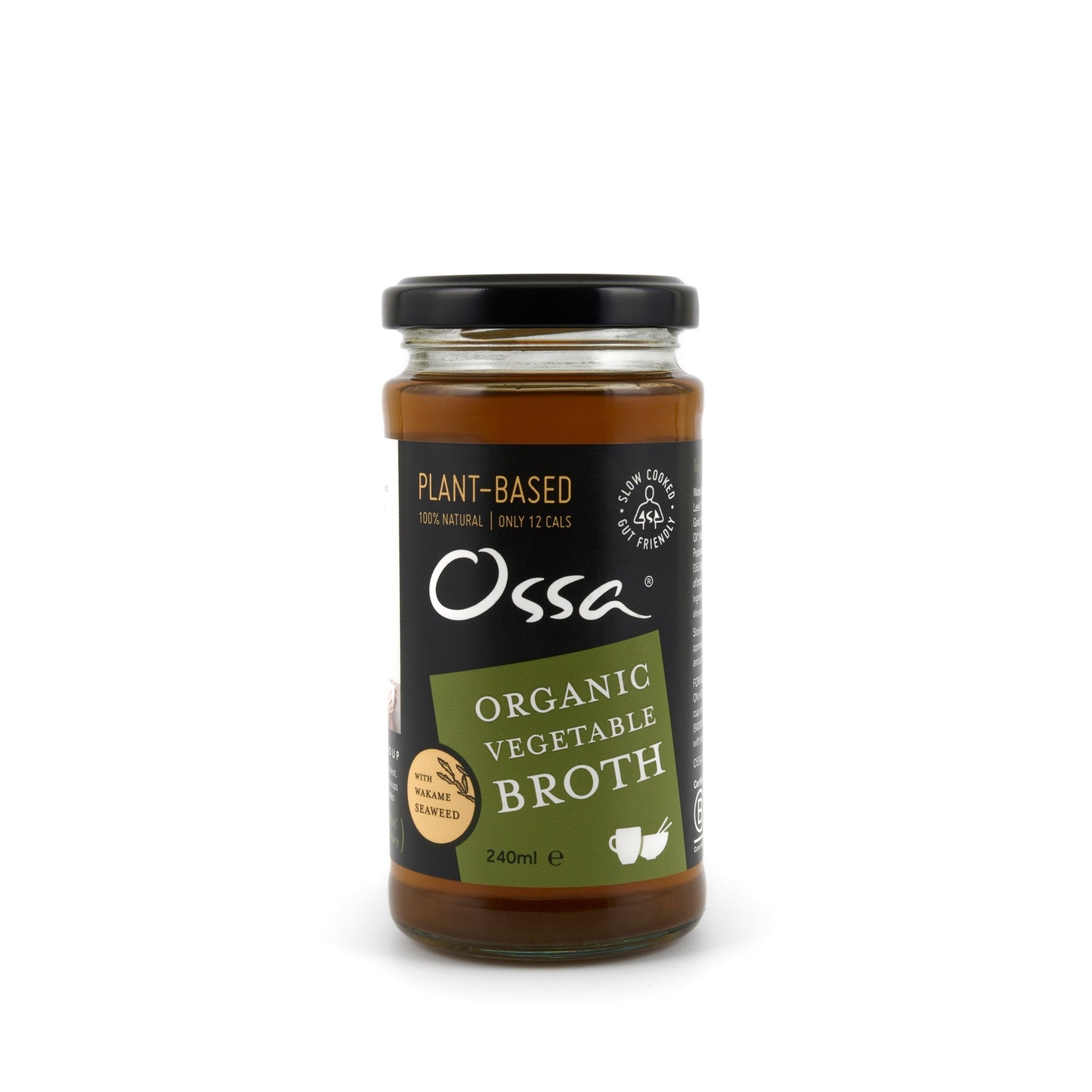
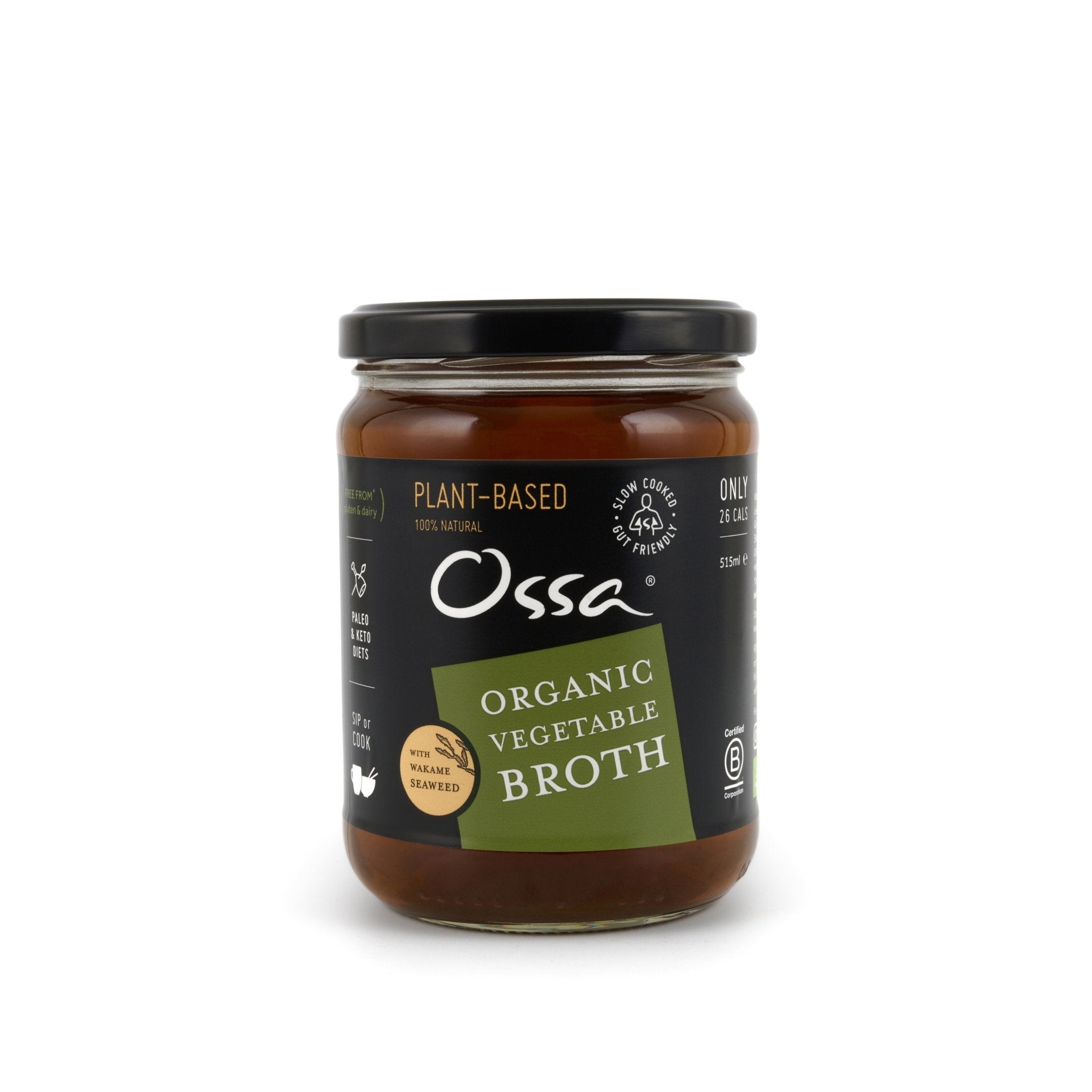
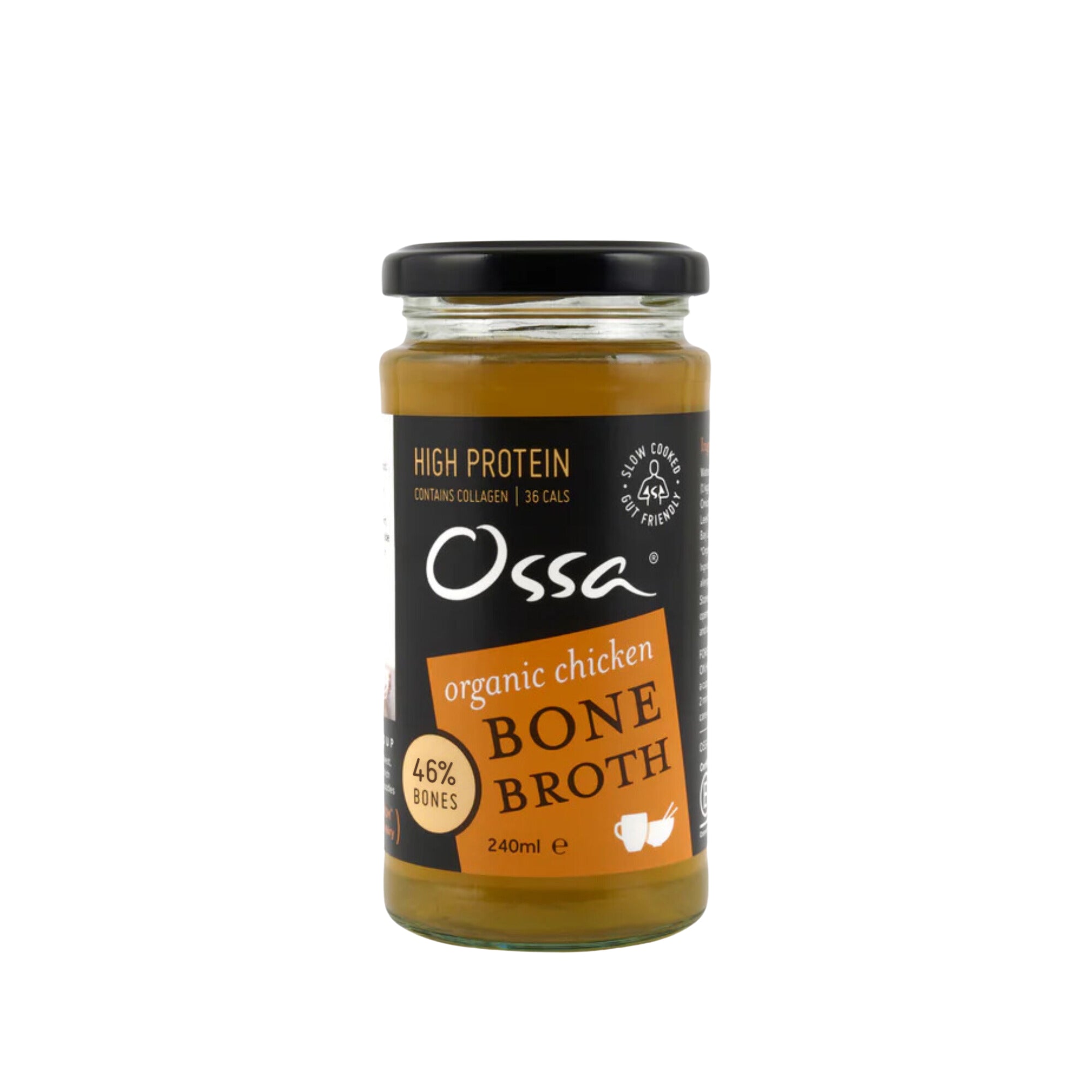
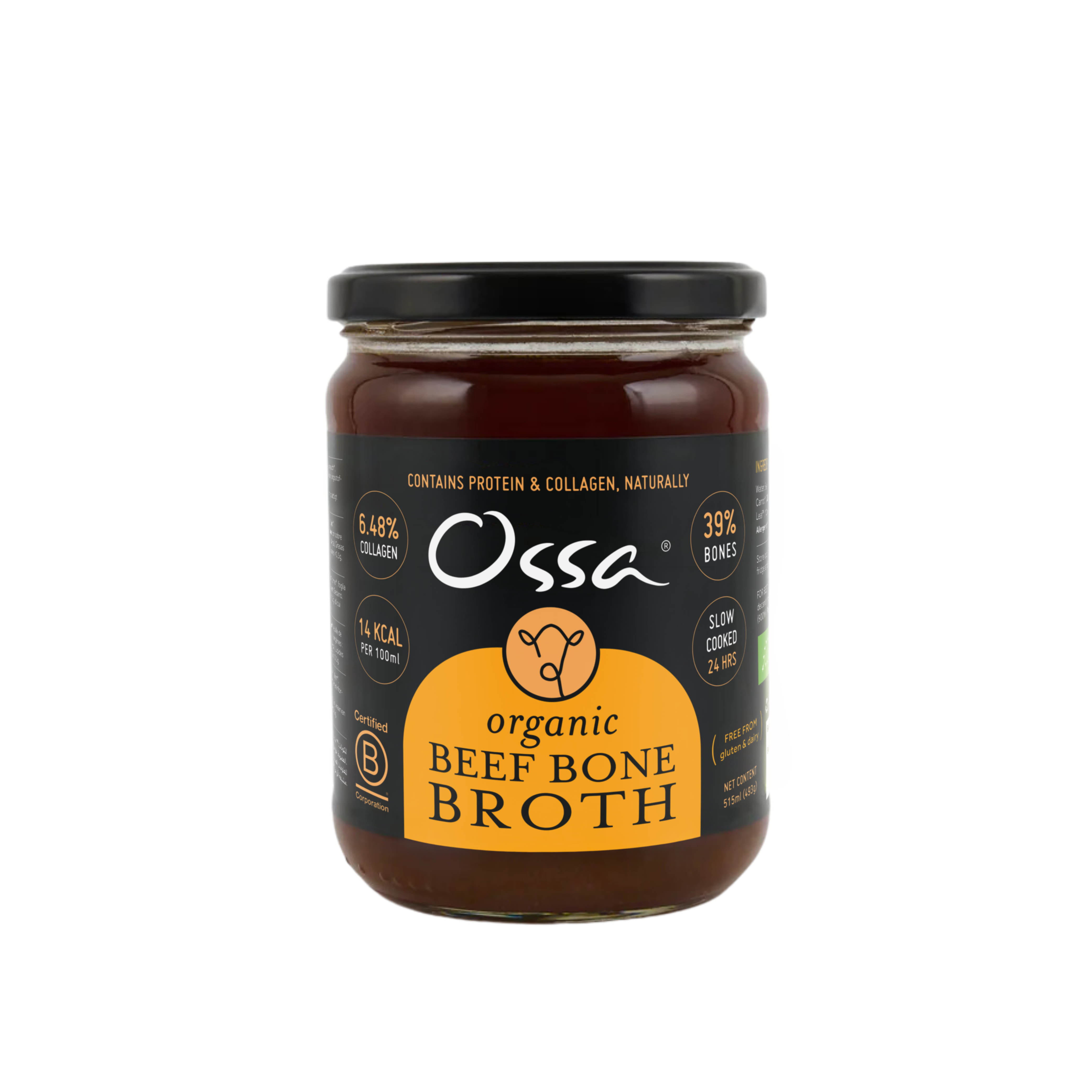
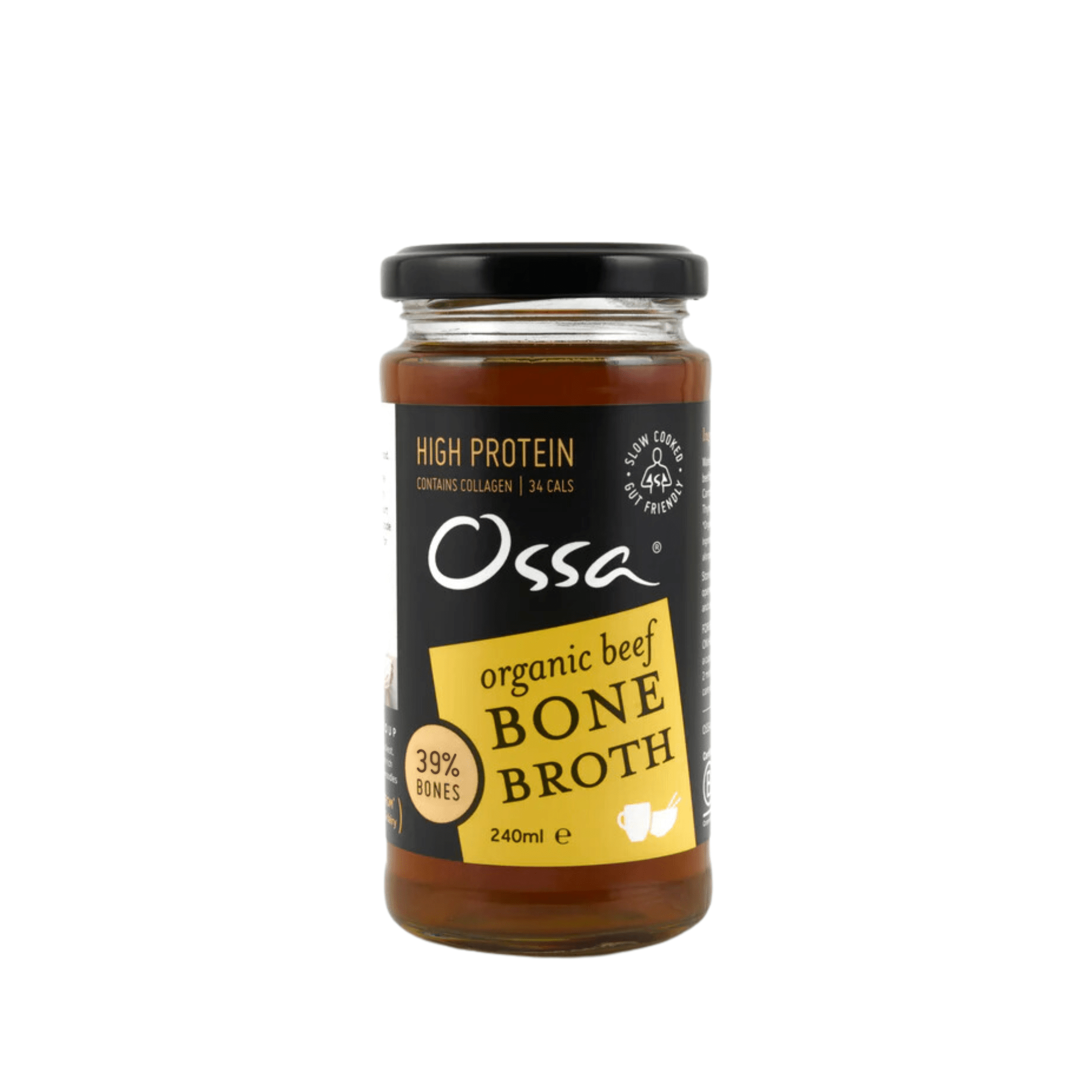
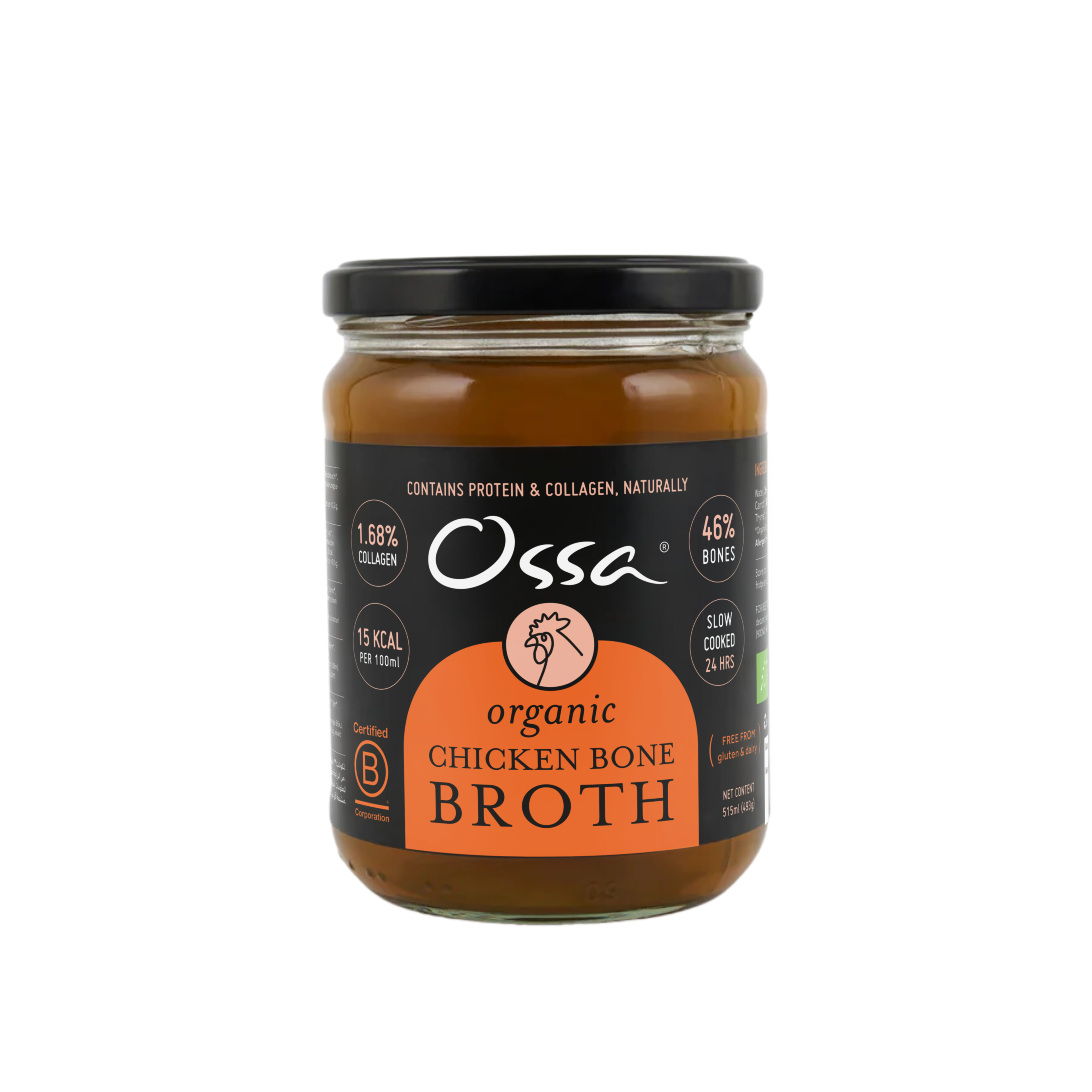
An Organic Beef Bone Broth Ambient 240ml suits a smaller batch or a single serving adjustment, and an Organic Vegetable Broth 500ml gives a plant-based base for the same method. Whichever you choose, heat it to a gentle simmer before ladling it in, and taste before adding extra salt, since each one carries its own seasoning level. Browse the full range on our shop page.
FAQ
How do I use chicken stock for risotto?
Chicken stock works exactly like bone broth in this recipe: keep it hot on a low simmer and add it ladle by ladle while stirring, over 20 to 30 minutes of active cooking. Taste before salting, since stock strength varies between brands and homemade batches.
Is there a downside to bone broth?
Commercial bone broths vary widely in sodium, so checking the label or tasting before adding salt matters more than with a homemade batch. Broad health claims around bone broth go beyond what’s well established, so it’s worth treating it as a nourishing ingredient rather than a cure for a specific condition.
Can you give a recipe for vegetarian risotto?
Follow the same tostatura and ladle-by-ladle method using a hot vegetable broth, such as our Organic Vegetable Broth 500ml, in place of bone broth. Finish with butter and Parmesan as usual, or swap in a plant-based alternative if the dish needs to stay fully vegetarian.
Can you give a recipe for creamy risotto?
The classic method above produces a creamy risotto: toast the rice, deglaze with wine, add hot broth gradually while stirring, then finish with cold butter and Parmesan off the heat. That final step, the mantecatura, is what gives risotto its glossy, creamy texture rather than a separate cream addition.
Sources
Recommended