The evidence points to real, modest benefits for skin hydration and elasticity within roughly eight weeks, and for joint comfort within three to five months, though results vary by product and person. Bone density and muscle mass benefits show up over longer trial periods, typically 12 weeks to a year, usually alongside resistance training. Grass-fed options like Ossa Organic’s collagen peptides fit naturally into this evidence-led approach.
TL;DR:
-
Collagen supplements show the quickest benefits for skin hydration and elasticity within eight weeks, with joint relief typically appearing after three to five months.
-
Doses of 2.5 to 5 grams daily improve skin health, while higher amounts of 8 to 10 grams are needed for meaningful joint pain relief over several months.
-
The systemic effects of collagen peptides mean benefits are broad and modest, especially when coupled with vitamin C and consistent daily intake.
-
Research quality varies, with small sample sizes and industry sponsorship, so collagen should be viewed as a helpful supplement, not a cure-all.
-
Food sources like bone broth and a nutrient-rich diet can support collagen levels naturally and may be preferable for some individuals.
Table of Contents
What are collagen peptides?
Collagen peptides are hydrolysed collagen. That means whole collagen protein, too large and tightly wound for your gut to absorb efficiently, has been broken down through enzymatic hydrolysis into shorter chains of amino acids. This is the key difference from gelatine, which is collagen that has been partially broken down by heat but still forms a gel. Hydrolysed peptides dissolve in cold liquid and slip past digestion far more readily.
Most supplements on UK shelves derive from one of a handful of sources:
-
Bovine (cattle) hide and bone, the most widely available and often grass-fed
-
Marine collagen from fish skin and scales
-
Porcine (pig) skin, less common in UK retail
-
Eggshell membrane, a newer, smaller-volume source
Food sources such as bone broth deliver collagen alongside minerals, gelatine and other nutrients your body recognises as a meal, not just an isolated protein. Ossa Organic’s guide to natural collagen food sources covers how these compare to supplement forms in more depth.
How do collagen peptides work in the body?
Once swallowed, hydrolysed collagen is digested into free amino acids and small peptide fragments, some of which survive digestion intact. Among these, dipeptides such as Pro-Hyp appear to act as signalling molecules rather than simple building blocks. Researchers have found that low-molecular-weight collagen peptides can activate pathways including Wnt/β-catenin, IGF-1 and VEGF, mechanisms tied to cell proliferation and tissue repair in laboratory and animal studies.
This matters because it changes what you should expect. Oral collagen doesn’t travel directly to your knee joint or your scalp. It circulates systemically, and wherever your body happens to be building or repairing collagen fibres, whether that’s skin, cartilage or bone, these signalling fragments and amino acids may lend a hand. Proline, one of collagen’s dominant amino acids, plays a particularly important structural role; Ossa Organic explores this further in its piece on proline and collagen synthesis. The systemic nature of supplementation explains why benefits tend to be broad but modest, rather than dramatic and localised.
Which type of collagen targets which tissue?
Collagen isn’t one substance. At least 28 types exist, but three dominate supplements and each has a different job:
-
Type I – the most abundant type in the body, found in skin, bone, tendons and ligaments
-
Type II – concentrated in cartilage, the type most relevant to joint health
-
Type III – found alongside Type I in skin and blood vessel walls
Bovine collagen leans towards Types I and III, making it a common choice for skin and general wellness goals. Worth noting for shoppers: bovine collagen sourced appropriately can meet Halal and Kosher requirements, whereas porcine sources cannot, and marine collagen sidesteps both concerns entirely.
What benefits does the evidence actually support?
Confidence varies sharply by outcome, and it’s worth being honest about where the science is strong versus merely promising.
Skin hydration and elasticity has the most consistent backing. Randomised controlled trials have repeatedly shown measurable improvements in skin hydration and elasticity after around eight weeks of consistent daily intake. This is the outcome you can expect quickest, and the one with the least argument against it.
Joint comfort takes longer to show up. Trials on knee osteoarthritis find that three to five months of daily supplementation can meaningfully reduce pain and improve function, which points to collagen for joint pain as a genuinely useful, if slow-burning, option.
Bone density has thinner but interesting evidence. A one-year trial in 39 postmenopausal women with low bone density found that daily collagen supplementation reduced markers of bone loss compared with placebo. That’s a small sample, but it’s one of the few studies to run a full year, which lends it some weight despite its size.
Muscle mass and strength improve modestly when collagen is paired with resistance training over roughly 12 weeks, particularly in older adults. Collagen alone, without training, hasn’t shown the same effect.
Hair and nails sit at the speculative end. Fish-derived collagen peptides promoted hair regrowth and stimulated dermal papilla cell activity in laboratory and mouse studies, giving a plausible mechanism for collagen for hair growth claims. But human clinical trials remain sparse, so anyone asking does collagen help hair growth should treat this as promising rather than proven.

How strong is the research behind these claims?
Judging collagen peptide research means looking past the headline and checking the study behind it. Sample sizes are frequently small, trial durations vary enormously, and a good portion of the research carries industry sponsorship, which doesn’t invalidate findings but does mean effect sizes should be read with some caution.
| Outcome |
Typical study duration |
What was measured |
| Skin hydration/elasticity |
8 weeks |
Elasticity and hydration scores in RCTs |
| Knee osteoarthritis pain |
3–5 months |
Pain scores and joint function |
| Muscle mass with training |
12 weeks |
Fat-free mass, strength in older adults |
| Bone density (postmenopausal) |
1 year |
Bone loss markers, 39 participants |
Clinical commentators reviewing this body of research consistently frame collagen as a reasonable supplement worth trying, not a guaranteed fix, and stress that diet and lifestyle remain the primary levers. That’s a fair summary. The pattern across nearly every trial is the same: modest, real effects that need consistent use over months, not days, to become noticeable.
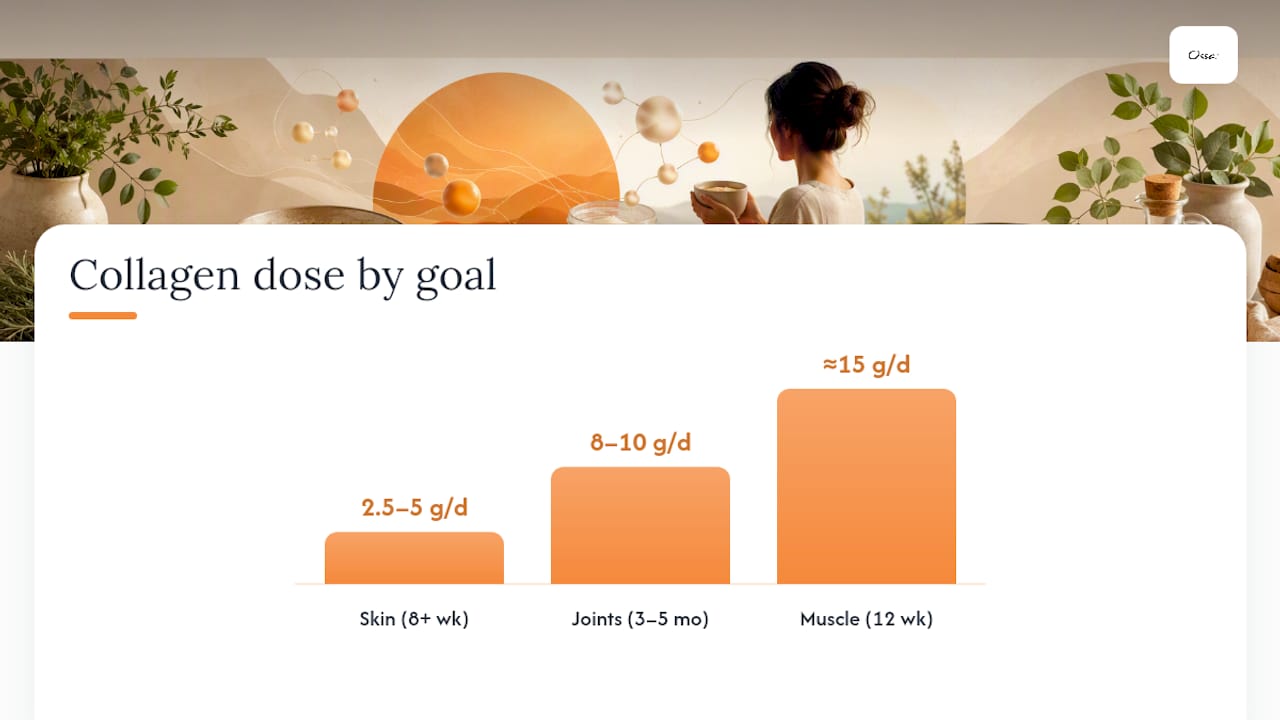
Trial doses across the research range from 2.5g to 15g per day, with the effective amount depending on your goal.
-
For skin outcomes, doses around 2.5 to 5g daily for eight weeks or longer are typical in successful trials.
-
For joint comfort, higher doses of 8 to 10g daily, sustained for three to five months, reflect what osteoarthritis trials have used.
-
For muscle support, around 15g daily paired with resistance training two to three times weekly over 12 weeks matches the protocol behind reported strength gains.
-
Powder versus capsules: powder lets you hit these higher doses affordably and dissolves in coffee, soup or smoothies; capsules are convenient but rarely deliver more than 2 to 3g per serving, which may undershoot joint or muscle goals.
Pairing collagen with a source of vitamin C, whether from citrus, peppers or a supplement, supports your body’s own collagen synthesis alongside what you’re taking in. Set yourself a genuine three-month trial, track one or two specific markers (skin hydration photos, a joint pain diary, grip strength), and judge the result at the end rather than after a fortnight.
Pro Tip: Take your collagen dose at the same time each day, ideally with a vitamin C source, and keep a simple weekly note of how your target outcome feels. Consistency, not timing precision, is what the trials actually reward.
Are there side effects or risks to know about?
Collagen peptides are generally well tolerated at trial doses, but a few points deserve attention before you start.
-
Mild gastrointestinal symptoms, such as bloating or a feeling of fullness, are the most commonly reported issue.
-
Marine-derived collagen carries a genuine allergy risk for anyone with a fish or shellfish allergy.
-
Quality varies between brands. Look for third-party testing and clear labelling of source and dose rather than vague “collagen blend” wording.
-
Cheaper products occasionally carry contaminant risks, particularly heavy metals in poorly sourced marine collagen, so provenance matters.
-
If you take regular medication, mention any new supplement to your pharmacist or GP, since interaction data for collagen peptides specifically remains limited.
When should you speak to a doctor before starting collagen?
Get medical advice first if you’re pregnant or breastfeeding, experiencing sudden or severe hair loss, or dealing with joint symptoms that are worsening rather than merely uncomfortable. The same applies if you manage a chronic condition, take multiple medications, or suspect a food allergy might be involved. A GP, pharmacist or dietitian can flag interactions and rule out causes that a supplement won’t fix.
Can food alone support your collagen levels?
Supplements aren’t the only route, and for many people they shouldn’t be the first one. Bone broth remains one of the most concentrated whole-food sources of collagen and gelatine, delivered alongside the minerals and amino acids your body uses for its own synthesis.
-
Slow-simmered bone broth from beef, chicken or a vegetable-forward blend
-
Vitamin C rich foods (citrus, peppers, leafy greens) to support natural collagen production
-
Sufficient dietary protein overall, since amino acids from any complete protein feed collagen synthesis
-
Sun protection and avoiding smoking, both of which accelerate collagen breakdown in skin
-
Regular resistance exercise, which supports both muscle and connective tissue health
Ossa Organic’s guide to collagen in a natural diet and its explainer on gelatine for gut and skin health both cover practical, food-first ways to build this into daily meals.
Why Ossa Organic favours slow-cooked, grass-fed sourcing
Ossa Organic’s founder began making bone broth from necessity during pregnancy, not as a trend, and that shaped how the brand sources everything since. Grass-fed sourcing and traditional slow-cooking aren’t marketing flourishes here; they reflect a belief that nutrients extracted patiently, from animals raised properly, do more for gut and joint health than anything rushed. Our piece on collagen’s role in skin, joints and gut health sets out that reasoning in full.
— Ossa Organic
Ossa Grass Fed Collagen Peptides: a food-first way to supplement
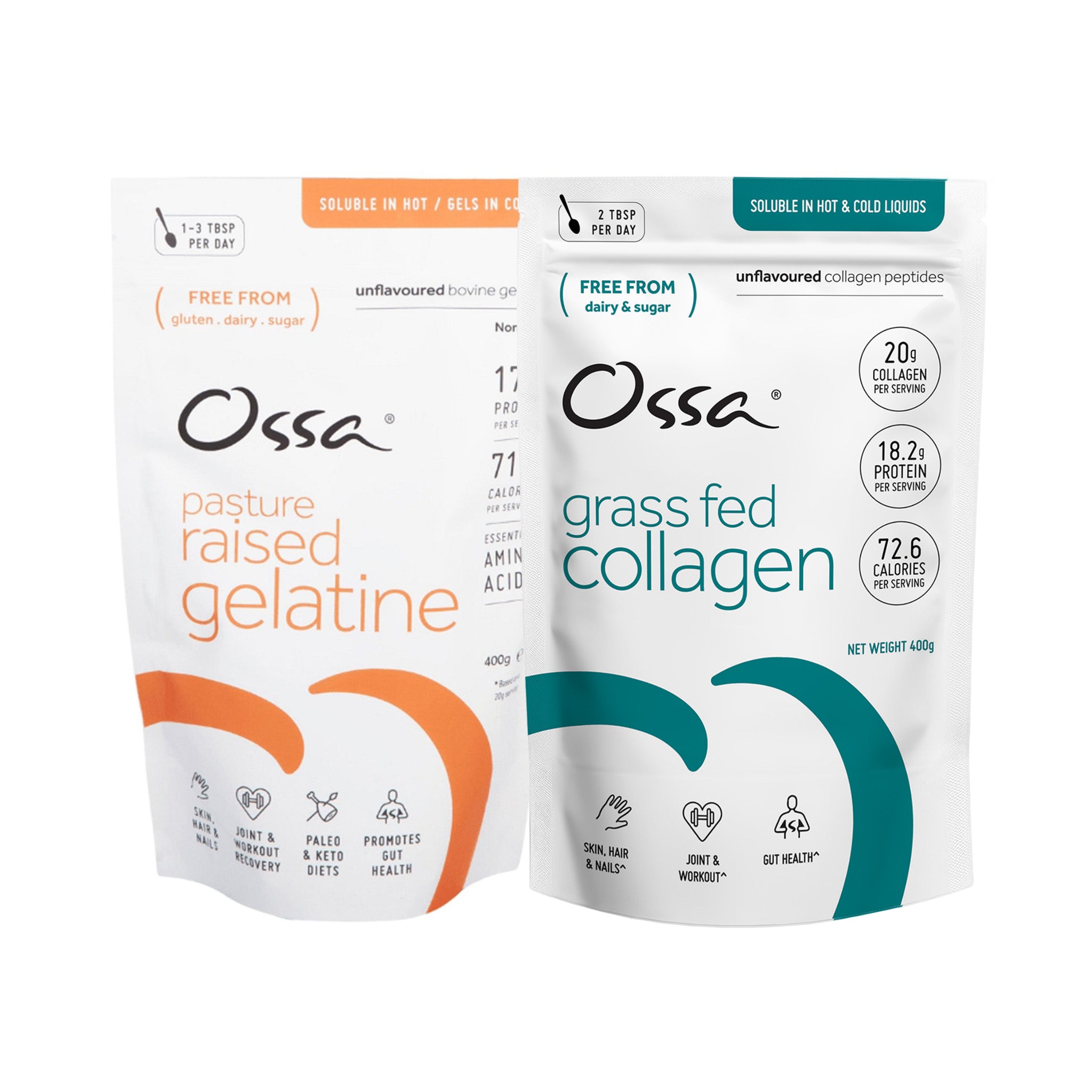
Ossa Grass Fed Collagen Peptides give you a flavourless, hydrolysed powder sourced from grass-fed cattle, built for anyone who wants the joint, skin and gut-health benefits covered above without an ultra-processed shortcut. It suits daily use stirred into coffee, soup or a smoothie, with a suggested serving that fits comfortably within the 2.5g to 15g range trials have used for skin, joint and muscle goals. If you want a grass-fed option that pairs naturally with a three-month trial and a vitamin C rich diet, shop Ossa Grass Fed Collagen Peptides and build it into your routine from today.
Sources and further reading
Key evidence drawn from PubMed-indexed RCTs, MDPI Nutrients bone density research, and bone health guidance on collagen.
This article is general information, not a substitute for advice from a qualified doctor. Consult a qualified healthcare professional about your own circumstances before acting on anything here.
FAQ
What happens if I take collagen peptides every day?
Daily use over weeks or months is how every positive trial result was achieved; skin improvements tend to appear around eight weeks, with joint benefits taking three to five months. Mild bloating is the most common side effect reported at typical doses.
What are the first signs that collagen is working?
Skin hydration and elasticity are usually the earliest noticeable changes, showing up in trials around the eight-week mark. Joint comfort and muscle changes take considerably longer, often three months or more.
What are the disadvantages of taking collagen peptides?
The main downsides are cost, inconsistent product quality between brands, occasional mild digestive upset, and a genuine allergy risk with marine-sourced collagen. Evidence for outcomes like hair growth also remains limited compared with skin and joint research.
Can I take a collagen supplement with citalopram?
There’s no well-documented interaction between hydrolysed collagen peptides and citalopram, but anyone on antidepressant medication should still check with a pharmacist or GP before adding a new supplement, since individual medication regimens vary.
Recommended