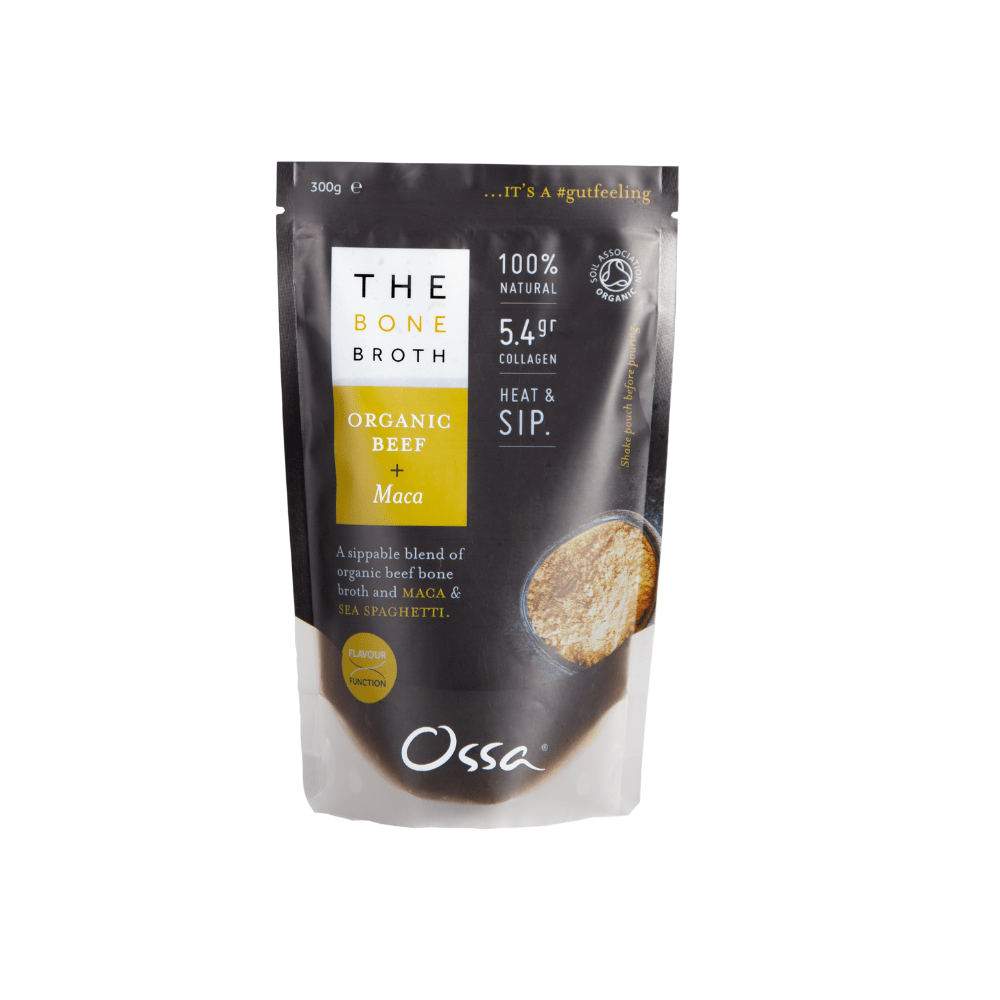
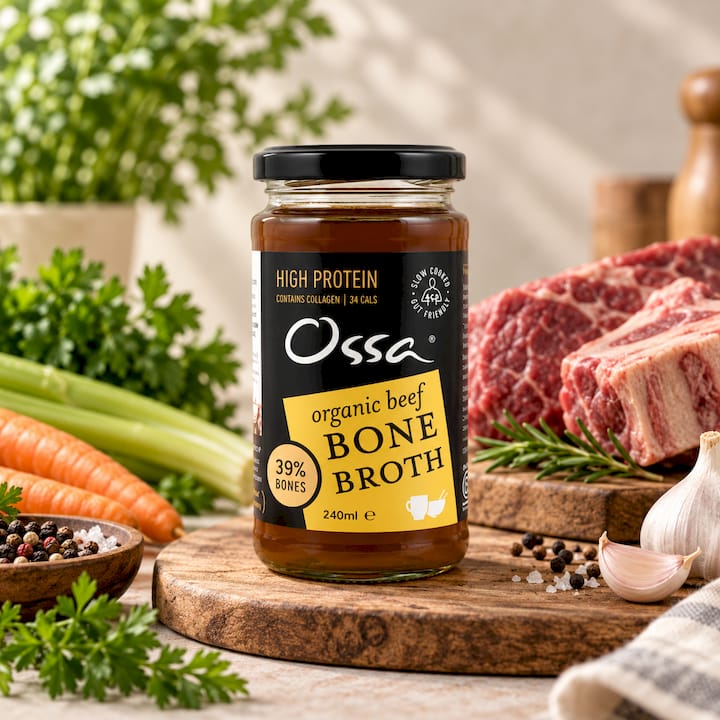
Yes, bone broth is allowed on Whole30, provided it contains only bones, water, vegetables, herbs and salt. Plain, homemade broth is automatically compliant; shop-bought versions need a label check because one excluded ingredient, such as added sugar or yeast extract, breaks the rules. Look for the Whole30 Approved badge as a shortcut, but slow-cooked, organic broth (homemade or otherwise) still delivers the most gelatin and nutrition.
TL;DR:
-
Commercial bone broth with added sugar, yeast extract, soy, or unspecified “natural flavors” is not compliant, even if it carries the Whole30 badge.
-
To ensure compliance, verify that ingredient lists only include bones, water, vegetables, herbs, and salt, and avoid products with vague flavorings or sweeteners.
-
Homemade broth typically offers better gelatin content and control over ingredients, with a simmer time of 12 to 48 hours to maximize collagen extraction.
-
Broth that gels when chilled indicates a long simmer and higher collagen content, but gel formation is not a strict legal requirement for Whole30.
-
Using broth for sipping, cooking, or pan deglazing is common, with most people consuming a cup or two most days during the program.
Table of Contents
What “Whole30 compliant” actually means for bone broth
Whole30’s rules are binary. There’s no “mostly compliant” category: a single disqualifying ingredient, however small the quantity, takes a product out of the running for your 30 days. This catches people out with bone broth more than almost any other pantry staple, because broth cartons often carry long ingredient lists dressed up as simple stock.
The programme’s own guidance is straightforward: bone broth made with bones, water, vegetables, salt and herbs is fine. The complexity comes from what manufacturers add to cut cooking time or boost shelf life. Many commercial broths lean on fast, high-heat production methods and flavouring agents rather than the long simmer that gives real bone broth its depth, and that’s where non-compliant additions creep in.
Common disqualifiers to watch for:
-
Yeast extract or autolysed yeast — used to deepen savoury flavour quickly, but not permitted on Whole30 regardless of quantity.
-
Added sugar in any form — including cane sugar, dextrose, or syrup solids used to round out flavour.
-
Soy or soy-derived ingredients — sometimes hidden in “natural flavouring” bases.
-
Unspecified “natural flavours” — this phrase can legally conceal MSG, sugar derivatives, or soy, so an unclear label is a red flag rather than a reassurance.
-
Any form of dairy or gluten-containing thickener — rare in broth, but worth a second glance on flavoured varieties.
The Whole30 Approved badge exists precisely because label reading gets tedious. It signals a product has been vetted against the programme’s ingredient standards, so a shopper doesn’t need to decode every entry themselves. But it’s a convenience, not a requirement. Plenty of small, genuinely compliant producers never pursue the certification, so the absence of a logo doesn’t automatically mean a product is out.
Quick checklist (save or screenshot this):
-
Does the ingredient list contain bones, water, vegetables, herbs, salt, and nothing else unfamiliar?
-
Is there any yeast extract, autolysed yeast, or “flavouring” with no further explanation?
-
Is sugar listed under any name, including ones that don’t obviously say “sugar”?
-
Does the product carry a Whole30 Approved badge, or can you verify every ingredient yourself?
-
When chilled, does the broth gel? A loose, watery texture even when cold often signals a shorter cook time and thinner nutritional profile, even if the ingredients are technically compliant.
That last point matters more than most shoppers realise. Gel isn’t a legal requirement for Whole30 compliance, but it’s a genuinely useful, informal indicator that a broth was simmered long enough to extract real collagen.
Homemade Whole30 bone broth: master recipe and gelatin tips
Making your own broth removes the guesswork entirely. You control every ingredient, and with the right technique you’ll consistently get a broth that sets to a wobble in the fridge, the visual sign that it’s rich in gelatin and worth the effort.
The master recipe
Ingredients:
-
mixed bones (a combination of marrow bones, knuckles, feet and backs works best)
-
4–6 litres cold water
-
1–2 tablespoons apple cider vinegar
-
2 onions, roughly chopped
-
3 carrots, roughly chopped
-
3 celery stalks, roughly chopped
-
2 bay leaves, a handful of peppercorns, and fresh herbs to taste
-
Salt, added at the end rather than the start
Method:
-
Roast the bones first. Twenty to thirty minutes at a high heat deepens the flavour considerably and is worth the extra step for beef or lamb bones especially.
-
Add bones and vinegar to your pot, then cover with cold water. Let the bones sit in the acidic water for 20 to 30 minutes before applying heat. This starts breaking down the mineral structure of the bone before cooking even begins.
-
Bring to a gentle simmer, never a rolling boil. A boil emulsifies fat into the liquid and can make the finished broth cloudy and greasy rather than clean.
-
Skim the froth that rises in the first hour.
-
Add vegetables and aromatics partway through, not at the start, so they don’t disintegrate into mush over a long cook.
-
Simmer low and slow: 12 to 24 hours for chicken, 18 to 48 hours for beef.
-
Strain, cool, and salt to taste once you’ve decided how the broth will be used.
Chicken feet, backs and knuckles are worth specifically seeking out, even alongside a standard chicken carcass, because they carry a disproportionate amount of the connective tissue and cartilage that converts into gelatin during a long simmer. The apple cider vinegar isn’t just tradition: the mild acidity helps pull calcium and other minerals out of the bone matrix and into the liquid, which is the entire nutritional point of making broth rather than simply boiling bones for stock.
Pro Tip: If your broth won’t gel, the fix is almost always more collagen-rich parts (feet and knuckles specifically) or a longer cook, not more bones generally. A mountain of meaty rib bones will give you flavour without much gel; a modest amount of feet and knuckles will give you gel without needing much else.
Troubleshooting:
-
Broth won’t gel: Add chicken feet or pork trotters next time, or extend the simmer by several hours.
-
Flavour is flat: Roast the bones more aggressively before simmering, and season generously with salt only once the broth is finished.
-
Broth is cloudy: You likely boiled rather than simmered. Keep the heat low enough that only occasional bubbles break the surface.
-
Too greasy: Chill the finished broth overnight and lift the solidified fat cap off the top before reheating.
Storage and batch cooking: Cooked broth keeps for around four to five days refrigerated, and freezes well for several months. Freezing in individual portions (ice cube trays for cooking use, larger containers for sipping mugs) means you’re never defrosting more than you need. If you’re doing a full Whole30, a single large batch cooked over a weekend can comfortably cover a fortnight of sipping and cooking needs, which matters when motivation to start a fresh pot on a Wednesday evening is in short supply. For a slow-cooker specific method with exact timings, Ossa Organic’s slow cooked bone broth guide walks through the process step by step.
When buying commercial broth makes more sense
Homemade broth is the gold standard for control and cost, but it’s not always realistic. Travel, a demanding work week, illness, or simply not having 24 hours free to babysit a pot are all legitimate reasons to reach for a carton instead, and a well-made commercial broth can sit close to homemade in nutritional value if it’s produced the same way: long, slow cooking with clean ingredients.
The challenge is that quality varies enormously between brands, and price doesn’t always track with compliance or nutrition.
What to check on the label before buying:
-
Ingredient list limited to bones, water, vegetables, herbs and salt, with nothing unexplained.
-
No yeast extract, autolysed yeast, or added sugar under any name.
-
No vague “natural flavours” without further clarification from the brand.
-
A Whole30 Approved badge, where present, though its absence doesn’t automatically disqualify a smaller producer.
-
Sourcing claims (organic, grass-fed, free-range) that are specific rather than generic marketing language.
Format matters more than most shoppers expect. Ambient, shelf-stable cartons are convenient for a cupboard or a suitcase, but slow-cooked, higher-gelatin broths are more commonly found chilled or frozen, since these formats don’t rely on the same aggressive processing that ambient shelf life demands. That’s not a hard rule, since some ambient products are still slow-simmered and genuinely compliant, but it’s a useful pattern to know when comparing two similar-looking cartons.
| What to check |
Why it matters |
Compliant example |
| Ingredient list length |
Longer lists usually mean added flavourings or preservatives |
Bones, water, vegetables, salt, herbs only |
| Sugar under any name |
Any added sugar disqualifies the product outright |
No sugar, dextrose, or syrup listed |
| Format (chilled/frozen/ambient) |
Chilled and frozen options are more often slow-simmered |
Either format is fine if the label checks out |
| Whole30 Approved badge |
Confirms vetting but isn’t mandatory |
Badge present, or ingredients independently verified |
Whole30’s own founders have made the point that convenience products make the programme more sustainable for people who genuinely can’t cook from scratch every night, but they’ve also been consistent that label literacy and basic cooking skills are what actually get people through a full 30 days without slipping. Buying a good broth isn’t cheating; not knowing how to check what’s in it is where people run into trouble.
Practical ways to use bone broth during your Whole30
Bone broth earns its place in a Whole30 for reasons beyond compliance. It’s genuinely versatile, which matters over 30 days when food fatigue is a real risk to sticking with the programme.
-
Sip it as a snack. A warm mug mid-afternoon or after a workout works well when you want something more substantial than water but aren’t ready for a full meal.
-
Use it as your base for soups and stews. Swap it in wherever a recipe calls for stock, and you’ll get a noticeably richer result than most standard stocks provide.
-
Deglaze pans with it. A splash after searing meat lifts the fond and turns into an instant, compliant pan sauce.
-
Cook grains and vegetables in it. Cauliflower rice, roasted vegetables, or braised greens all take on more depth when broth replaces water.
-
Drink it first thing. Some people prefer it to coffee or tea as a way to start the day with protein rather than caffeine alone.
On frequency: there’s no official Whole30 limit on daily bone broth, and drinking a cup or two most days is common practice among people doing the programme. If you notice digestive discomfort or you’re relying on broth to replace actual meals rather than supplement them, that’s worth moderating rather than a sign something is wrong with the broth itself. For more structured recipe ideas that build broth into full meals rather than just sipping, Ossa Organic’s bone broth recipes collection is a good place to start, and pairing broth-based cooking with a wider meal prep routine makes it far easier to keep this up for the full 30 days rather than just the first week.
Ossa Organic’s perspective: sourcing, slow cooking and product use
Ossa Organic started from a personal discovery rather than a market gap. Its founder came to bone broth while pregnant with her first child and found it made a measurable difference to her family’s health, which is why the business has been built around organic ingredients and slow cooking rather than speed or shelf-life engineering.
That founding logic shapes every product decision since. Broths are simmered slowly rather than pressure-processed for throughput, because the gelatin and mineral content people actually want from bone broth comes from time, not shortcuts. No preservatives, no artificial flavour carriers, and no unspecified “natural flavours” hiding behind a tidy label.
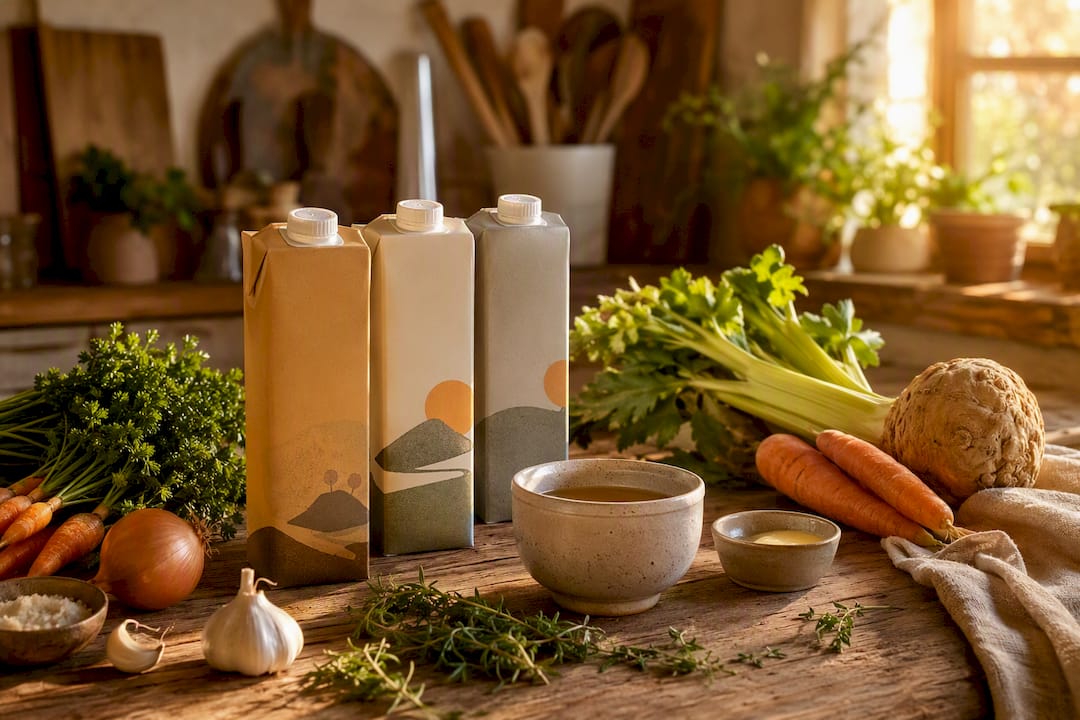
The product range reflects the different ways people actually use broth during a Whole30: single cartons for daily sipping, larger formats for cooking bases, and bundles for households who want to stock up once rather than reorder weekly. It’s a range built around how families genuinely cook, not around what’s cheapest to manufacture at scale.
What the research actually supports, and where the advice usually goes wrong
Most Whole30 content treats bone broth as either entirely simple (“it’s just bones and water”) or entirely fraught (“check every single label obsessively”). Neither framing is quite right. The rules genuinely are binary, but the checklist for applying them is short: sugar, yeast extract, soy, vague “natural flavours.” Learn those four and you can scan a label in ten seconds.
Where conventional advice falls short is in treating homemade and commercial broth as competing choices rather than complementary ones. The realistic pattern for most people doing a Whole30 is homemade broth when time allows, because it’s cheaper and lets you control collagen content directly, and a well-vetted commercial option for the weeks it doesn’t. Pretending everyone will simmer a pot for 24 hours every fortnight isn’t useful guidance; it’s aspirational.
If you take one thing from this, prioritise learning the four disqualifiers over hunting for a perfect brand. That skill outlasts the programme itself.
— Ossa Organic
Which Ossa Organic broth to choose for your Whole30
Ossa Organic’s range is built to cover the three main ways people use bone broth during a Whole30: sipping, everyday cooking, and stocking up so you’re not reordering mid-programme.
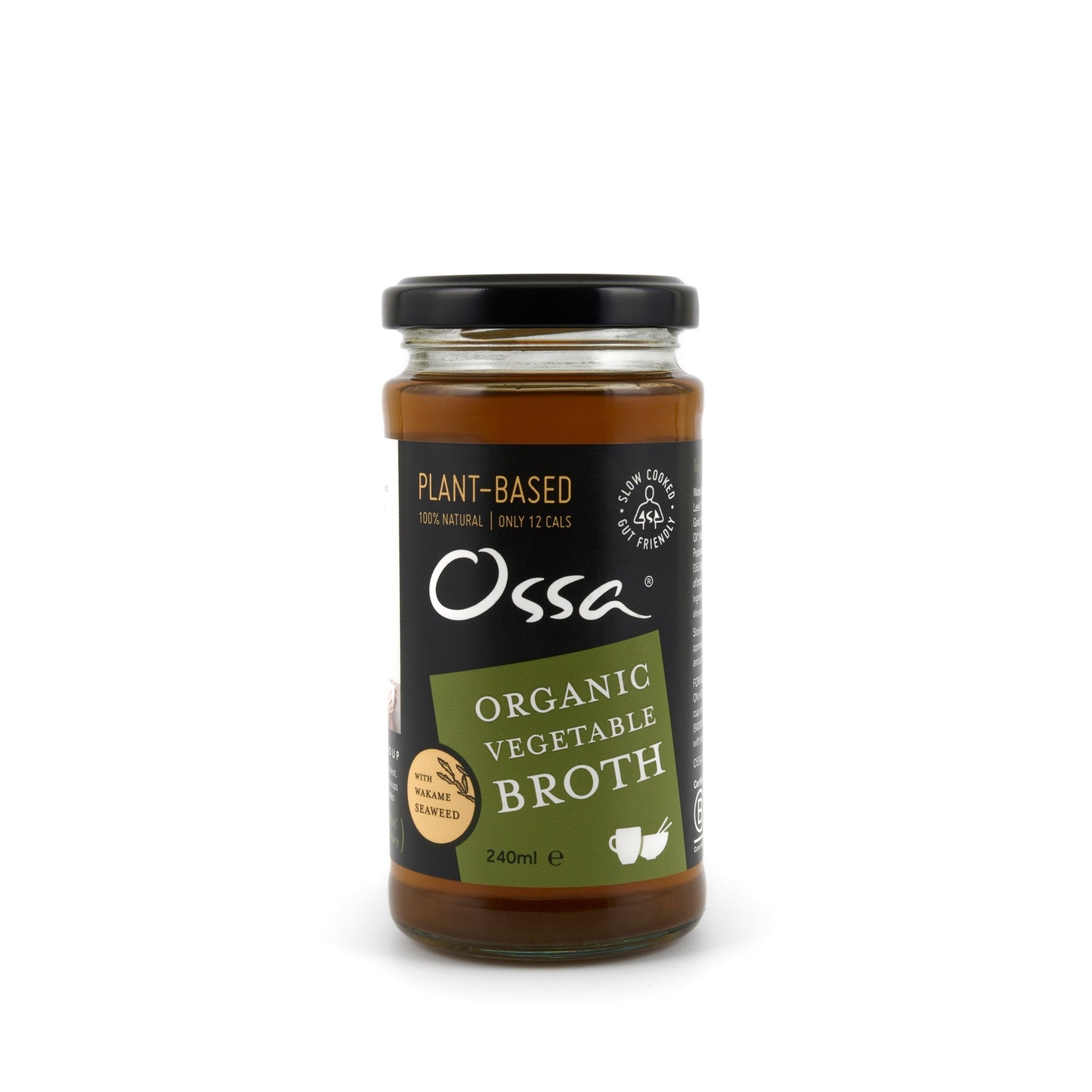
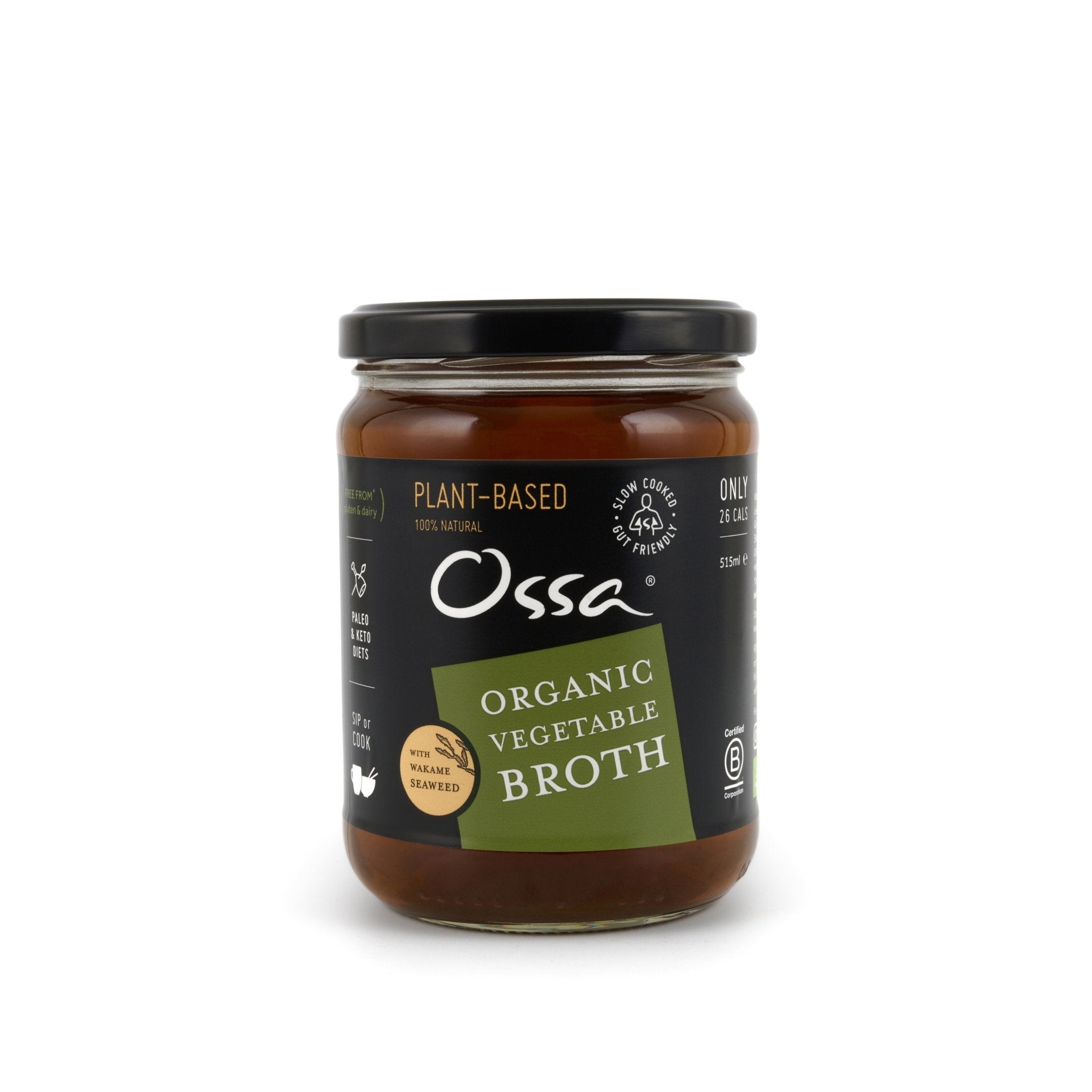
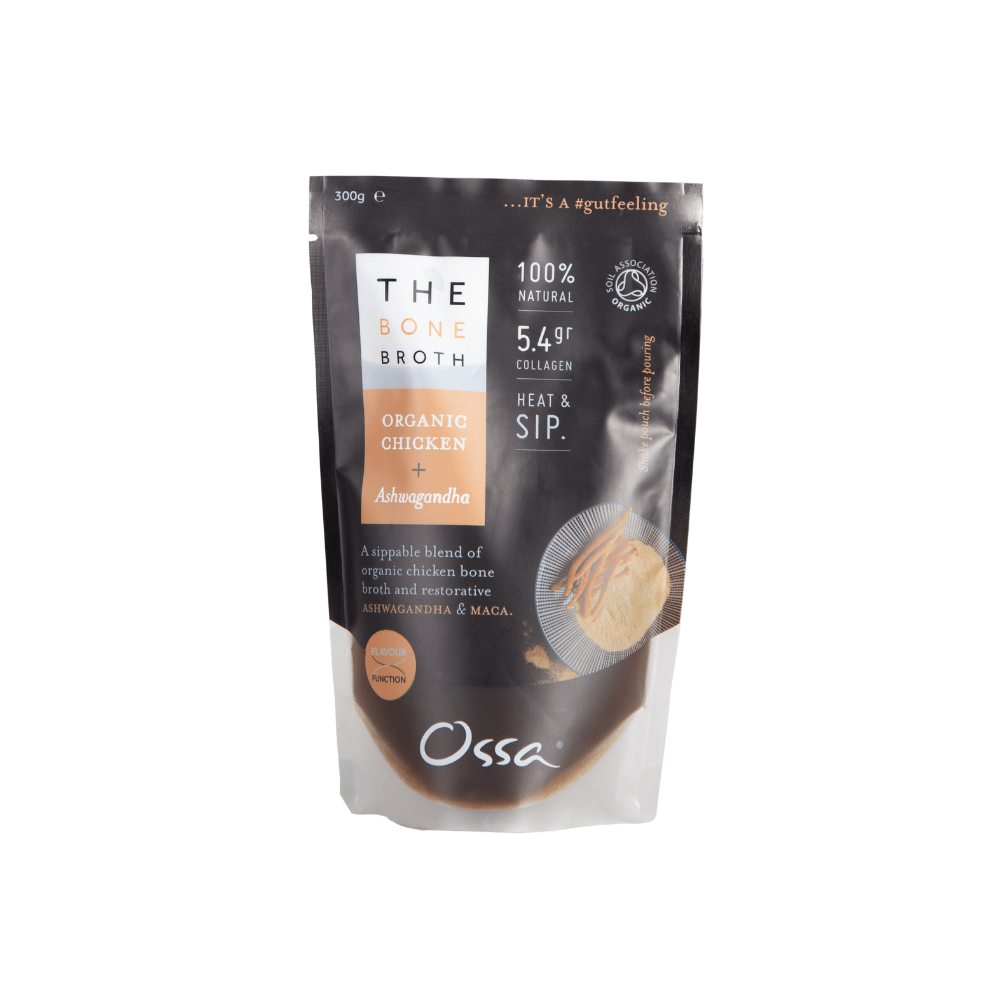
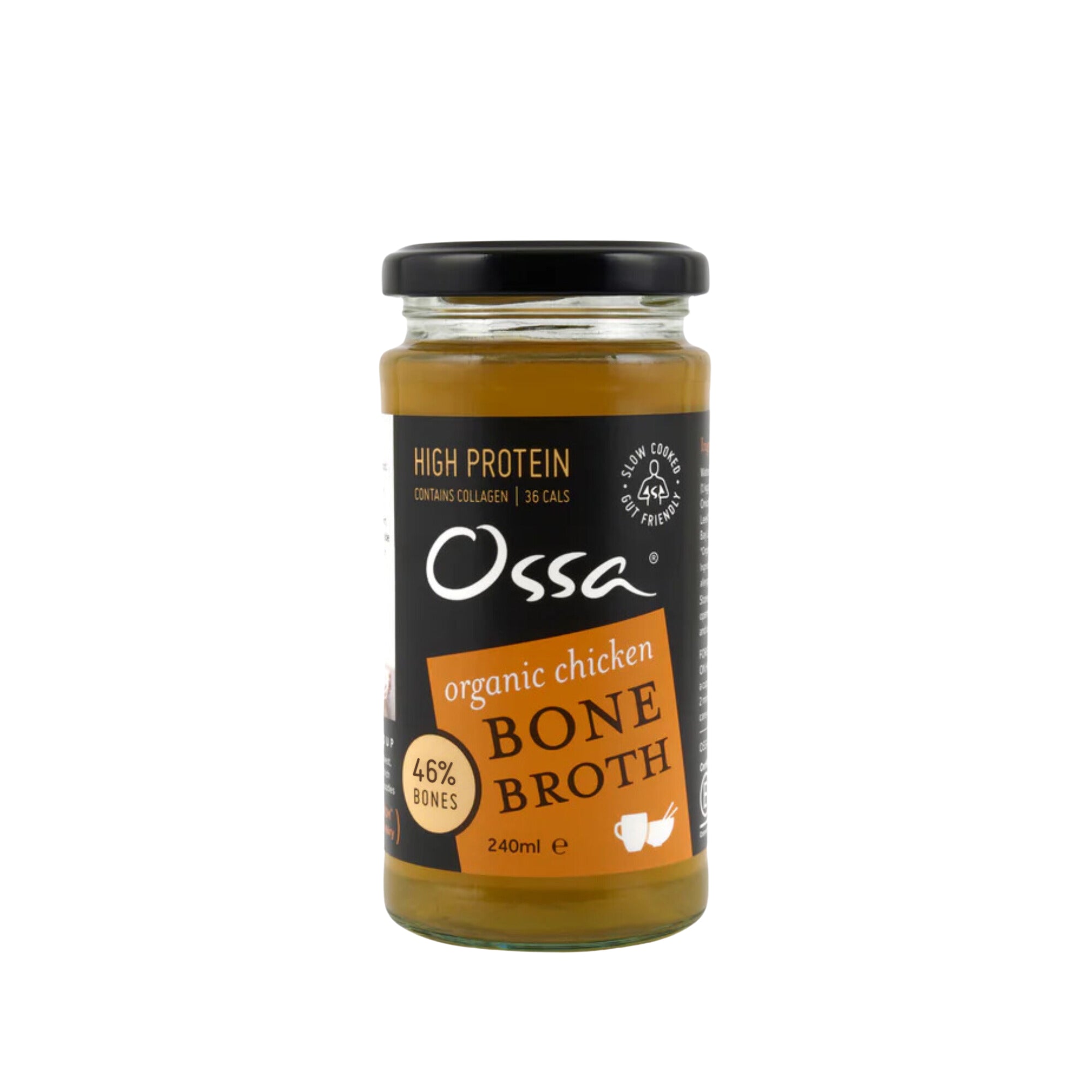
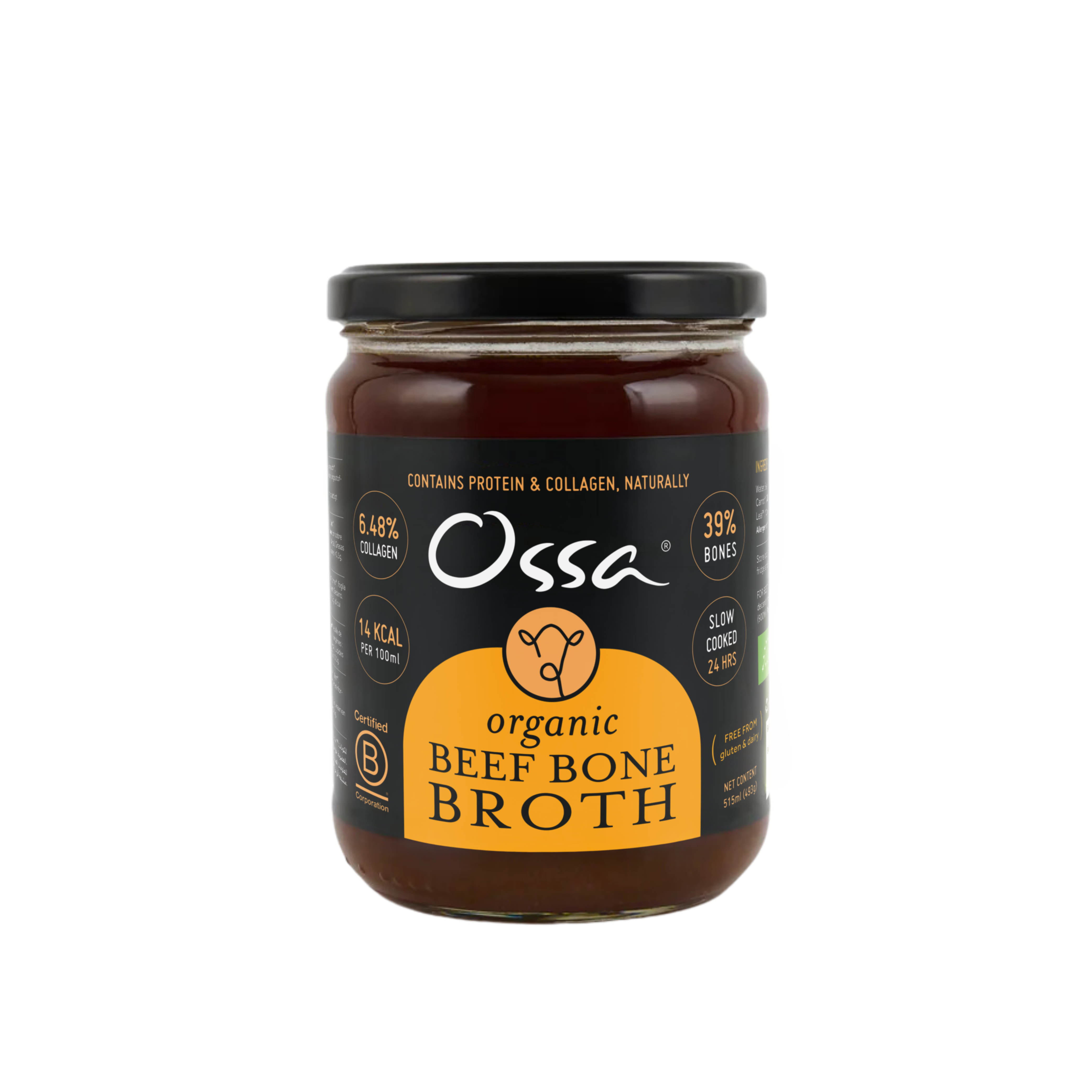
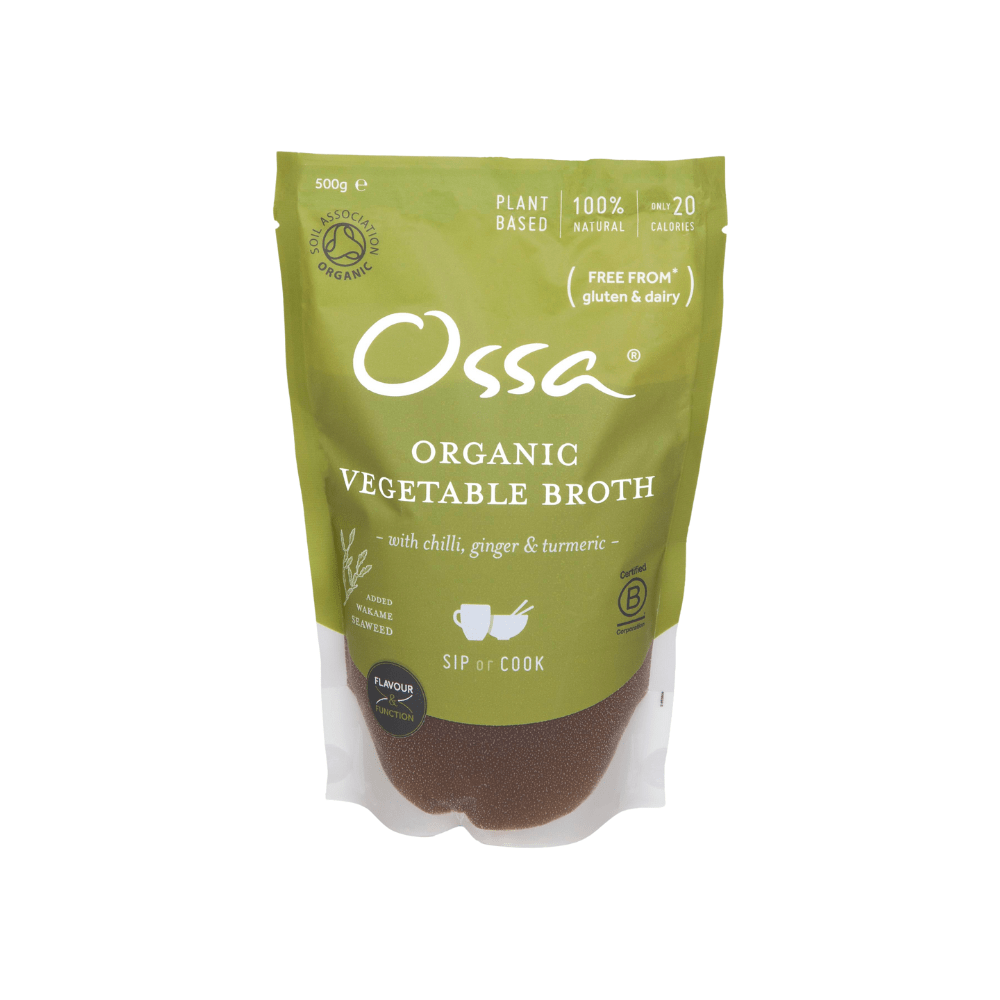
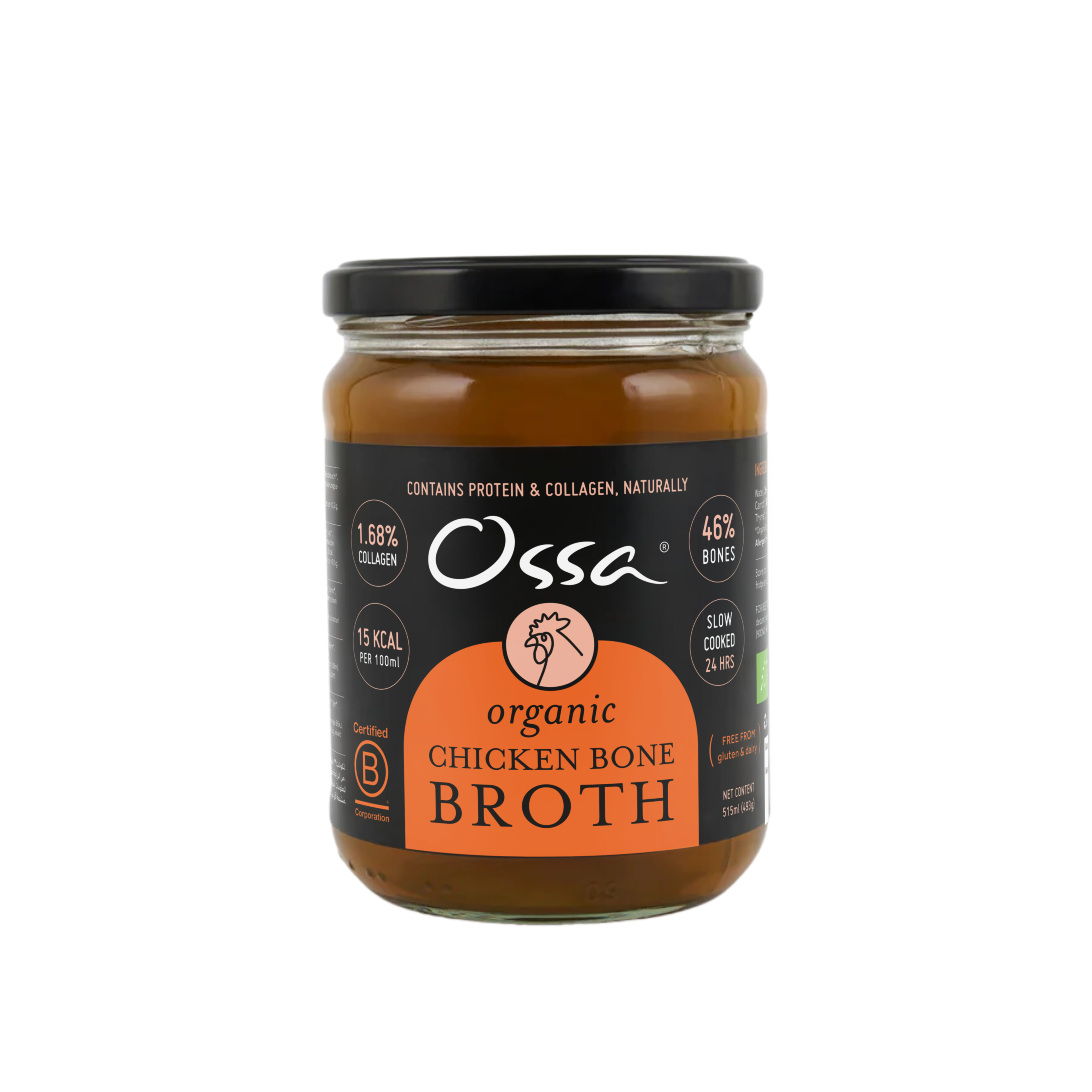
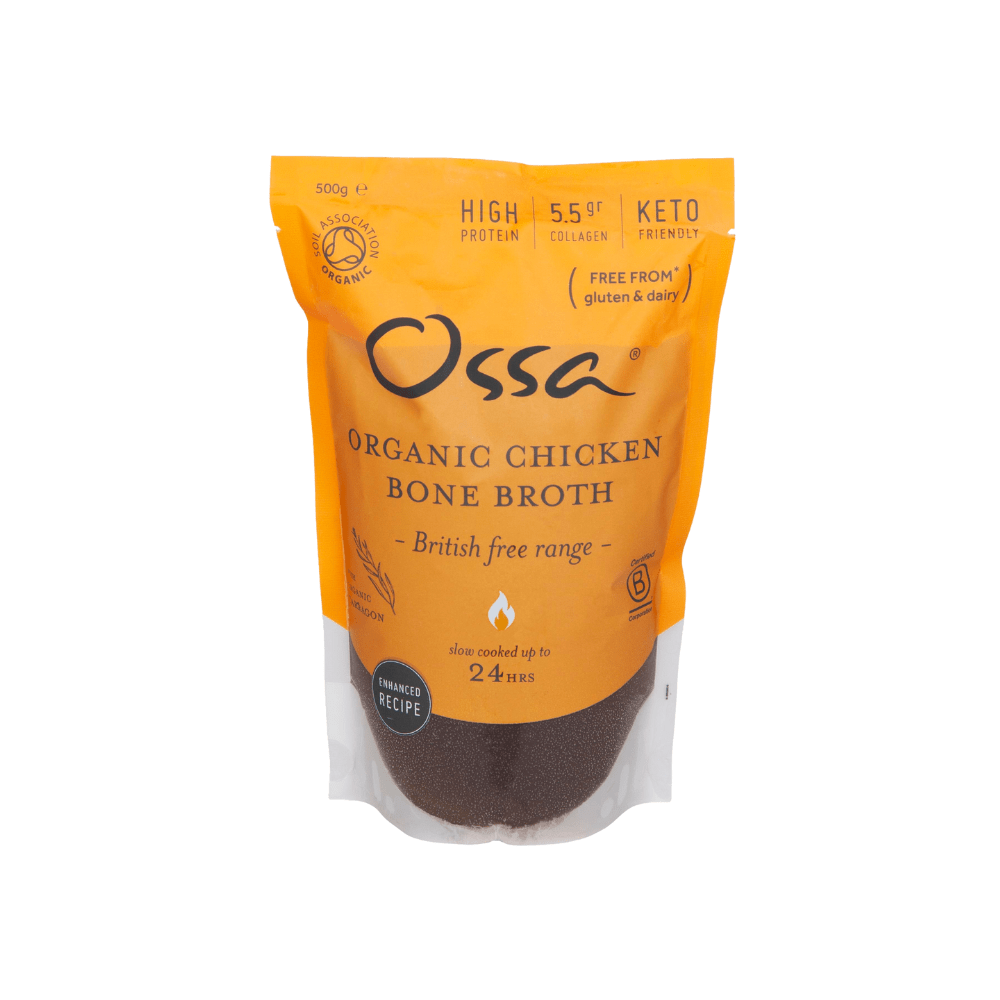
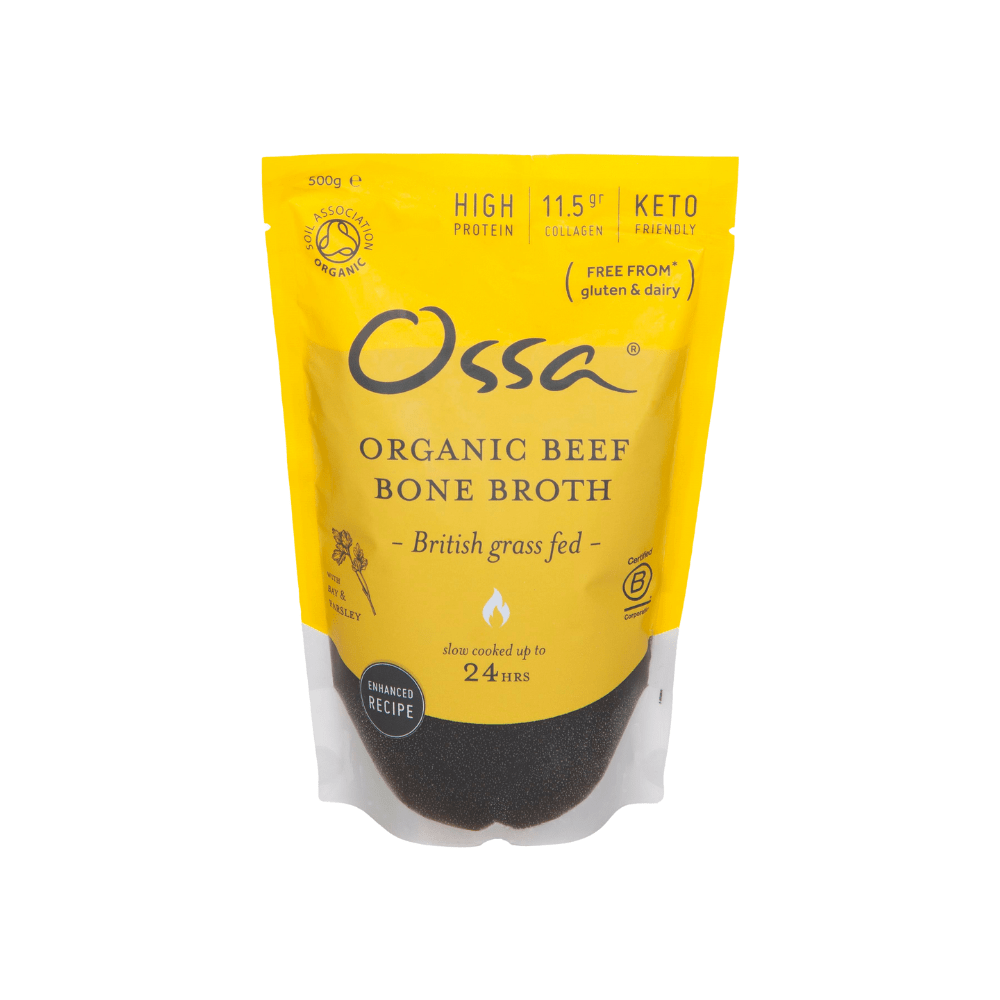
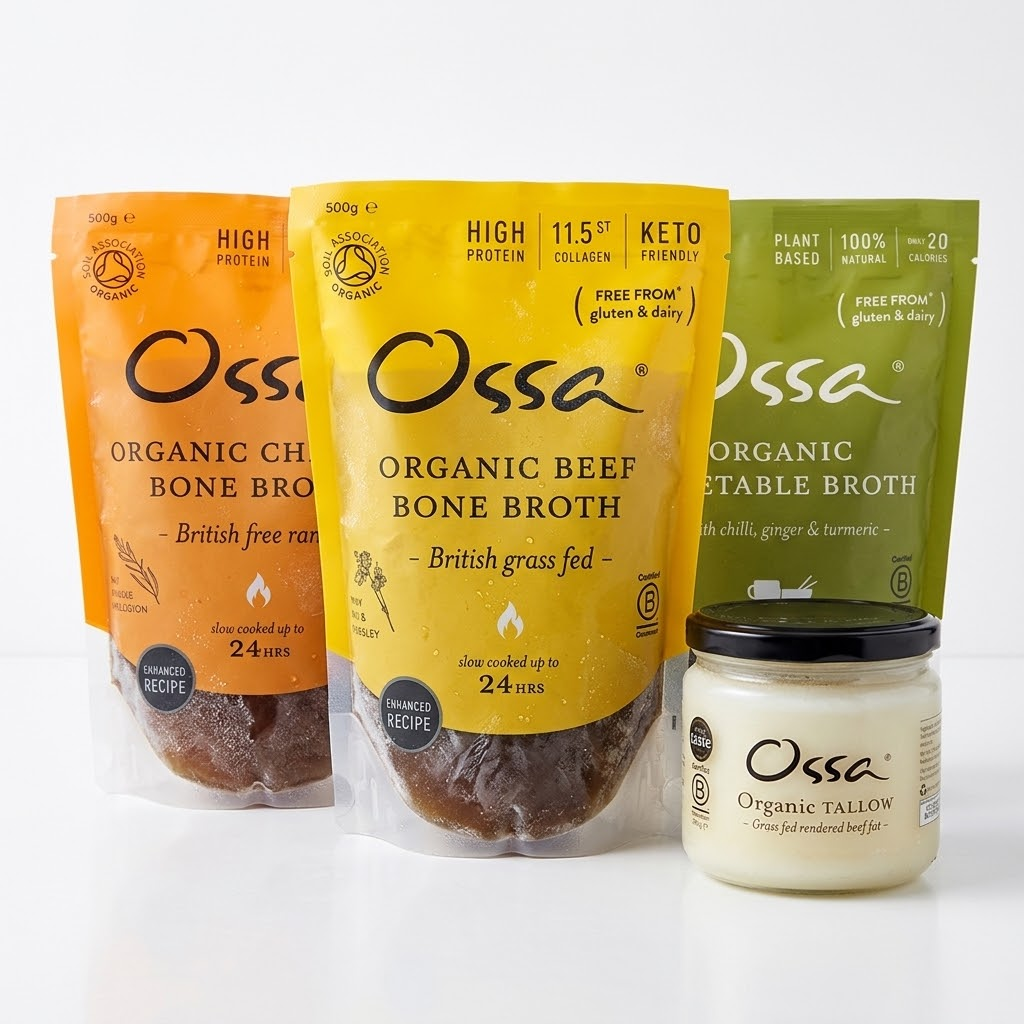
For sipping and general use, the Organic Free Range Chicken Bone Broth 500ml is the lighter, everyday option, well suited to mornings or a mid-afternoon mug. If you’d rather have a shelf-stable version on hand for travel or a busy week, the 1 x Organic Chicken Bone Broth Ambient 515ml doesn’t need refrigeration until opened. For richer, deeper cooking applications such as stews and braises, the 1x Organic Beef Bone Broth Ambient 515ml is the better base. Anyone avoiding animal products, or simply wanting a vegetable-based option to rotate in, has a choice between the Organic Vegetable Broth Ambient 515ml for a full-size cooking base, the compact Organic Vegetable Broth Ambient 240ml for sampling or single servings, or the single-carton 1 x Organic Vegetable Broth Ambient 515ml.
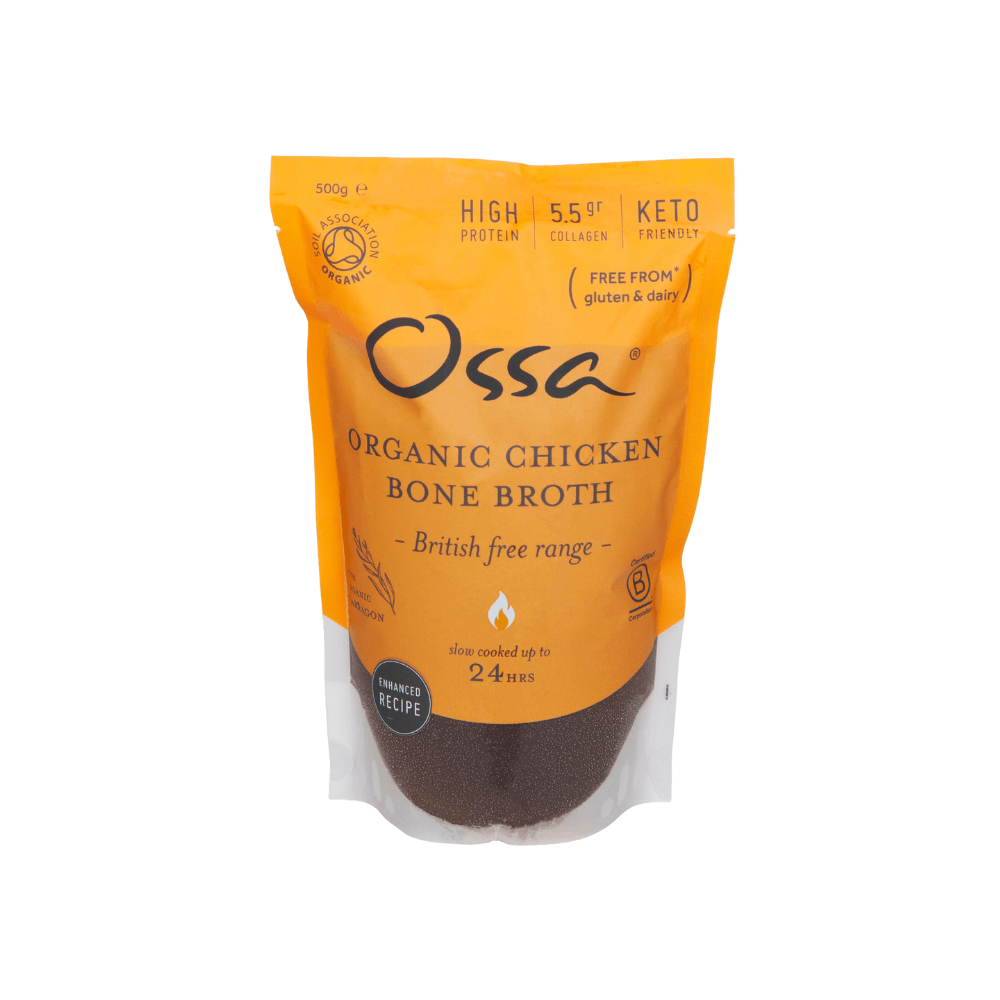
If you’re doing a full 30 days and don’t want to think about reordering, the Cooking Bundle groups multiple broths together at once, which works out more convenient than buying single cartons piecemeal through the month. All products ship ambient where noted, so a bundle can sit in a cupboard until you need it rather than taking up fridge or freezer space. For more on how to build broth into daily meals rather than just drinking it plain, the how to use bone broth guide has practical starting points.
Sources and further reading
Whole30’s own guidance remains the clearest reference point for what counts as compliant bone broth, including its FAQ on the topic and its explanation of what the Whole30 Approved badge does and doesn’t guarantee. Independent label-checking guides are useful for spotting specific disqualifying ingredients like yeast extract and unspecified flavourings, particularly when comparing several commercial cartons side by side.
For hands-on recipes, Ossa Organic’s bone broth vs bone stock explainer is worth reading if you want to understand why simmer time changes the finished product so significantly, and the chicken bone broth guide covers daily drinking habits in more depth than fits here.
FAQ
Is bone broth allowed on Whole30?
Yes. Plain bone broth made from bones, water, vegetables, herbs and salt is fully compliant. Commercial versions need a label check, since any added sugar, yeast extract, or soy disqualifies the product.
Is there a downside to drinking bone broth?
For most people, no, though some notice digestive discomfort if they drink large quantities on an empty stomach or use it to replace meals rather than supplement them. Moderating intake, rather than eliminating it, usually resolves this.
What happens if I drink bone broth every day for a month?
There’s no official Whole30 limit on daily bone broth, and many people drink a cup or two most days without issue. The main thing to watch is using it alongside proper meals rather than instead of them.
What bone broth is good for fasting?
Plain bone broth with no added carbohydrates, such as a straightforward chicken or beef broth made from bones, water and salt, is the common choice during fasting windows because it provides electrolytes and some protein without the sugars found in flavoured varieties. Checking the label for hidden sugar matters here just as much as it does for Whole30 compliance.
Recommended