Organic ingredients
•
Naturally nourishing
•
Made with care
We've sent you an email with a link to update your password.
Reset your password
We will send you an email to reset your password.
Collagen vs Bone Broth: Which Is Right for You?
Ralph Barrozo
0 comments
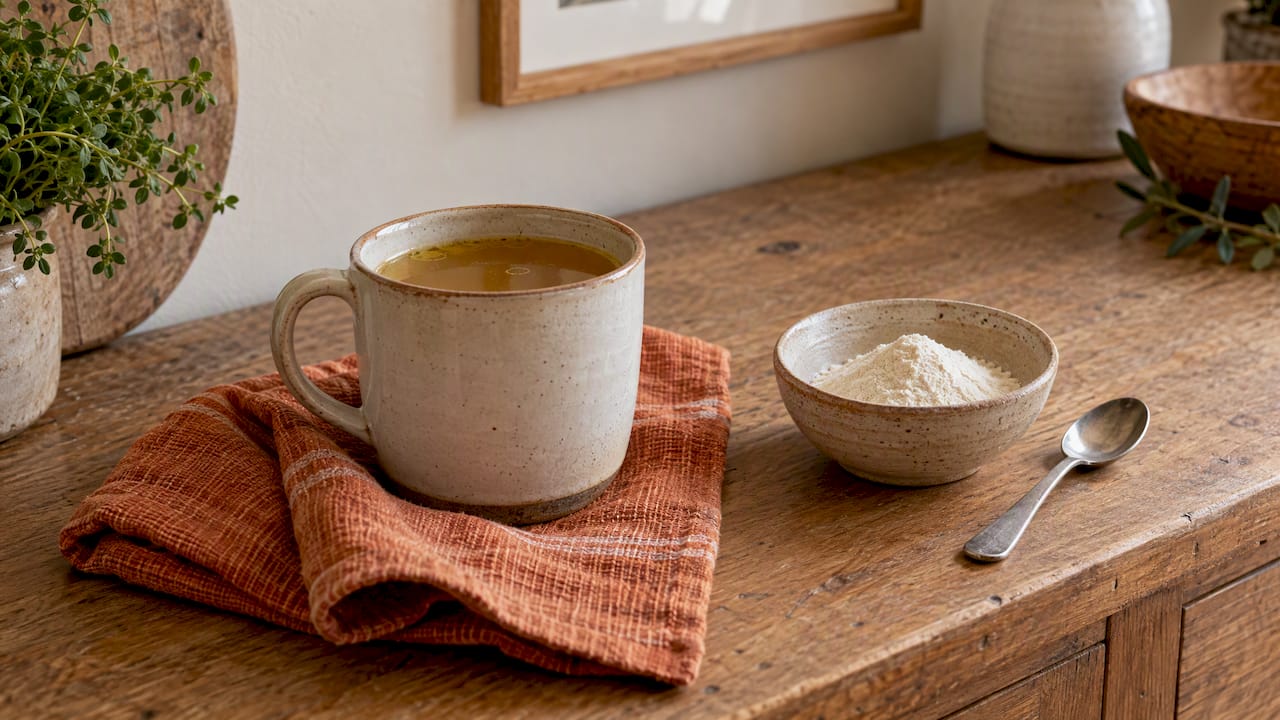
Collagen peptides and bone broth both come from animal connective tissue, but they are different products. Collagen powder is a measured, concentrated dose of protein with one job. Bone broth is a slow-cooked whole food that carries collagen-derived protein alongside minerals, amino acids and flavour, in amounts that vary from pot to pot. If you want a consistent daily dose, powder is the more predictable choice. If you want a nourishing food that fits into meals, broth is. Many people use both.
This guide sets out what each one is, how much collagen you can realistically expect, what the evidence does and does not show, and how to decide.
Ossa Organic
ossaorganic.com
Bring Bone Broth Into Your Meals
Ossa Organic makes slow-cooked, natural foods rooted in tradition, including bone broth for nourishing everyday meals.
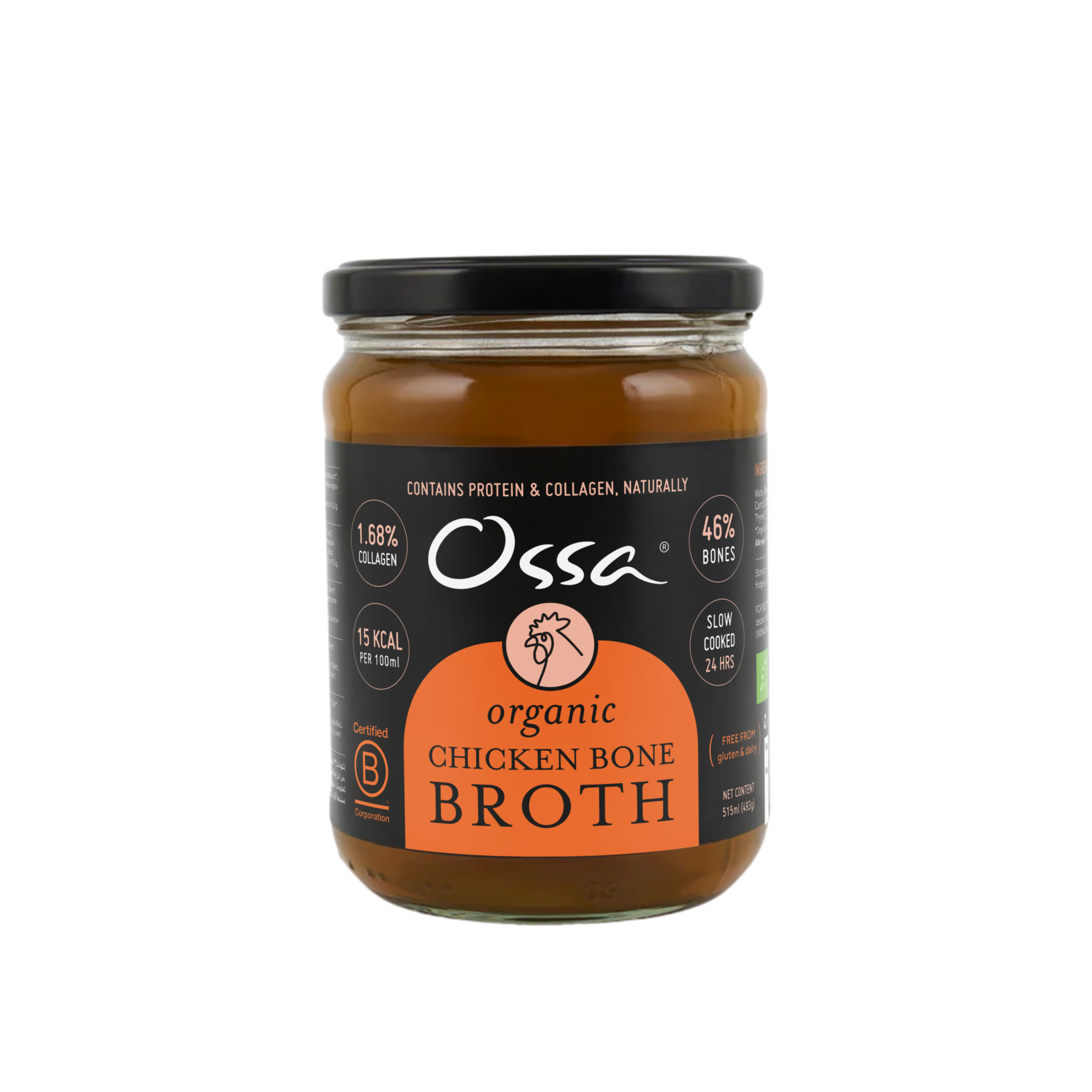
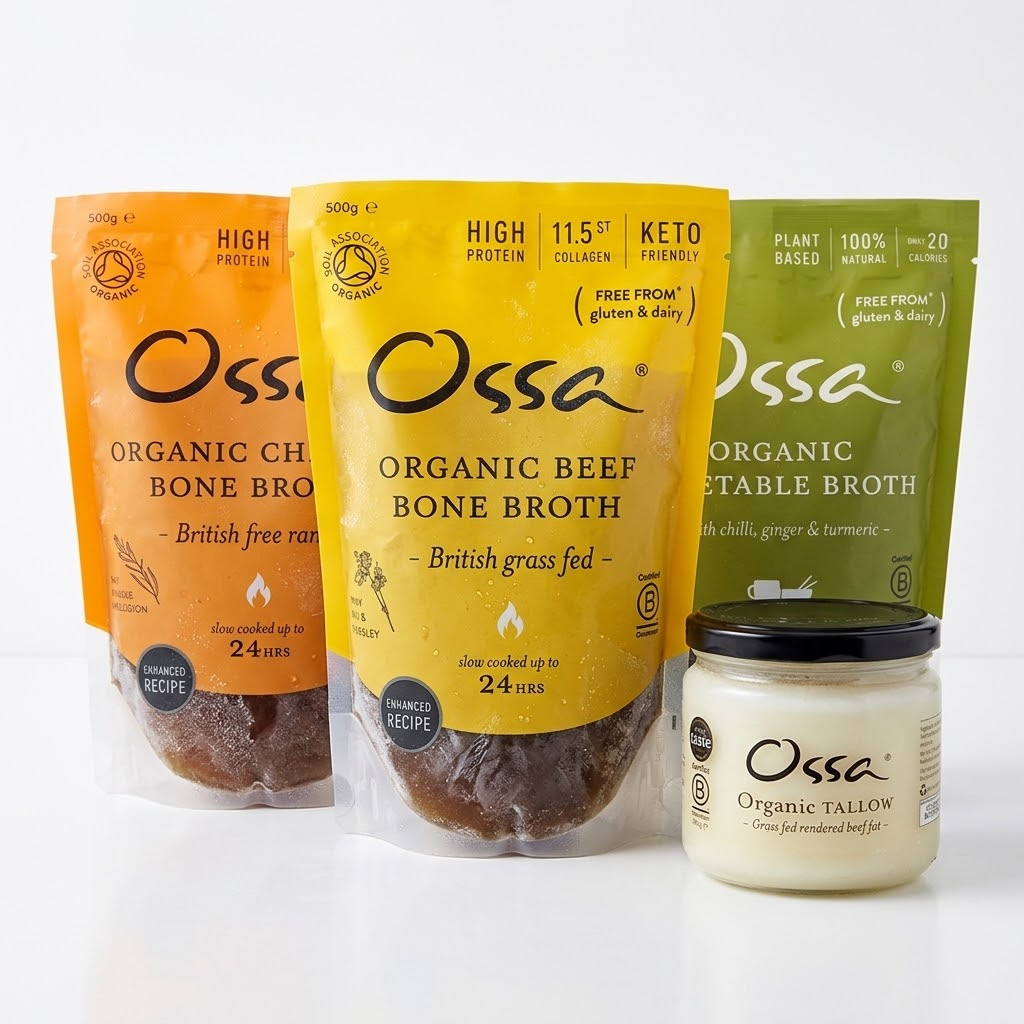
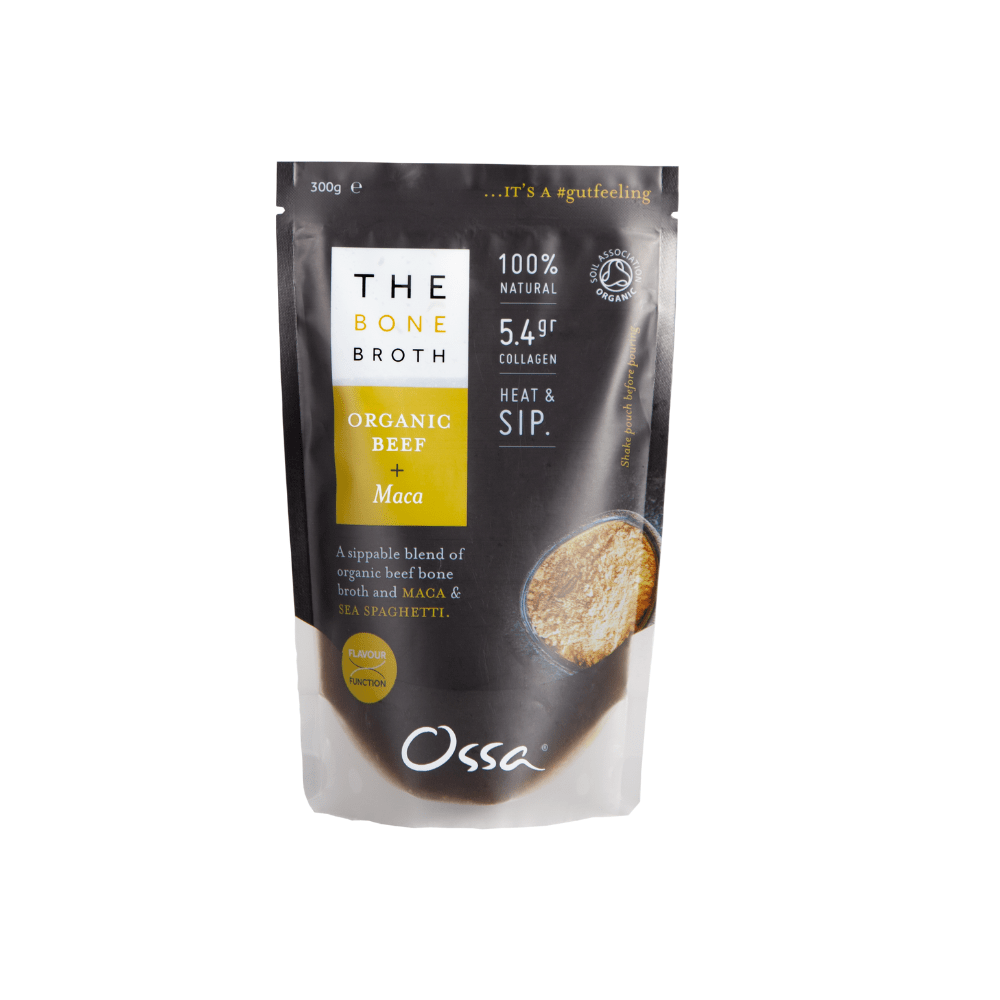
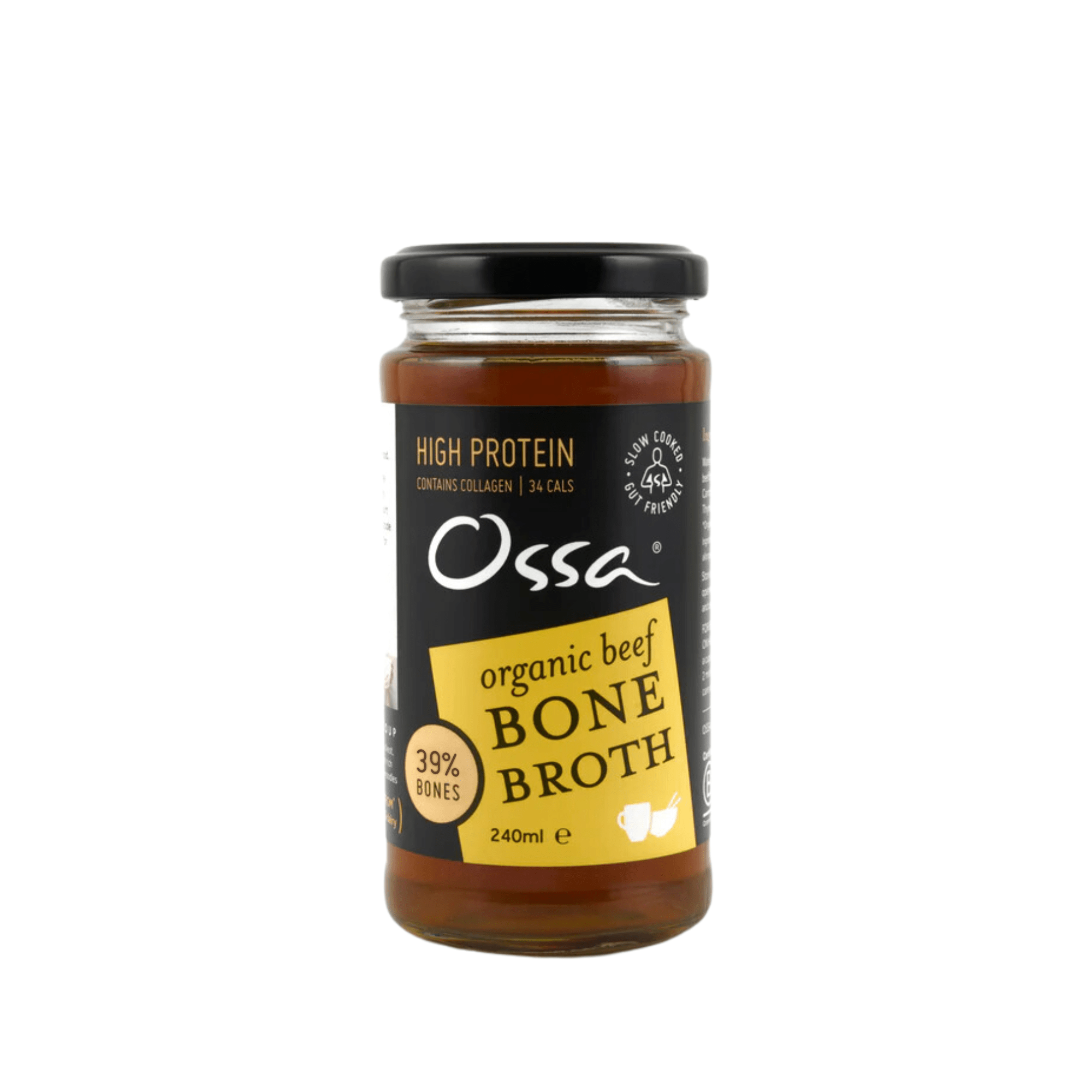
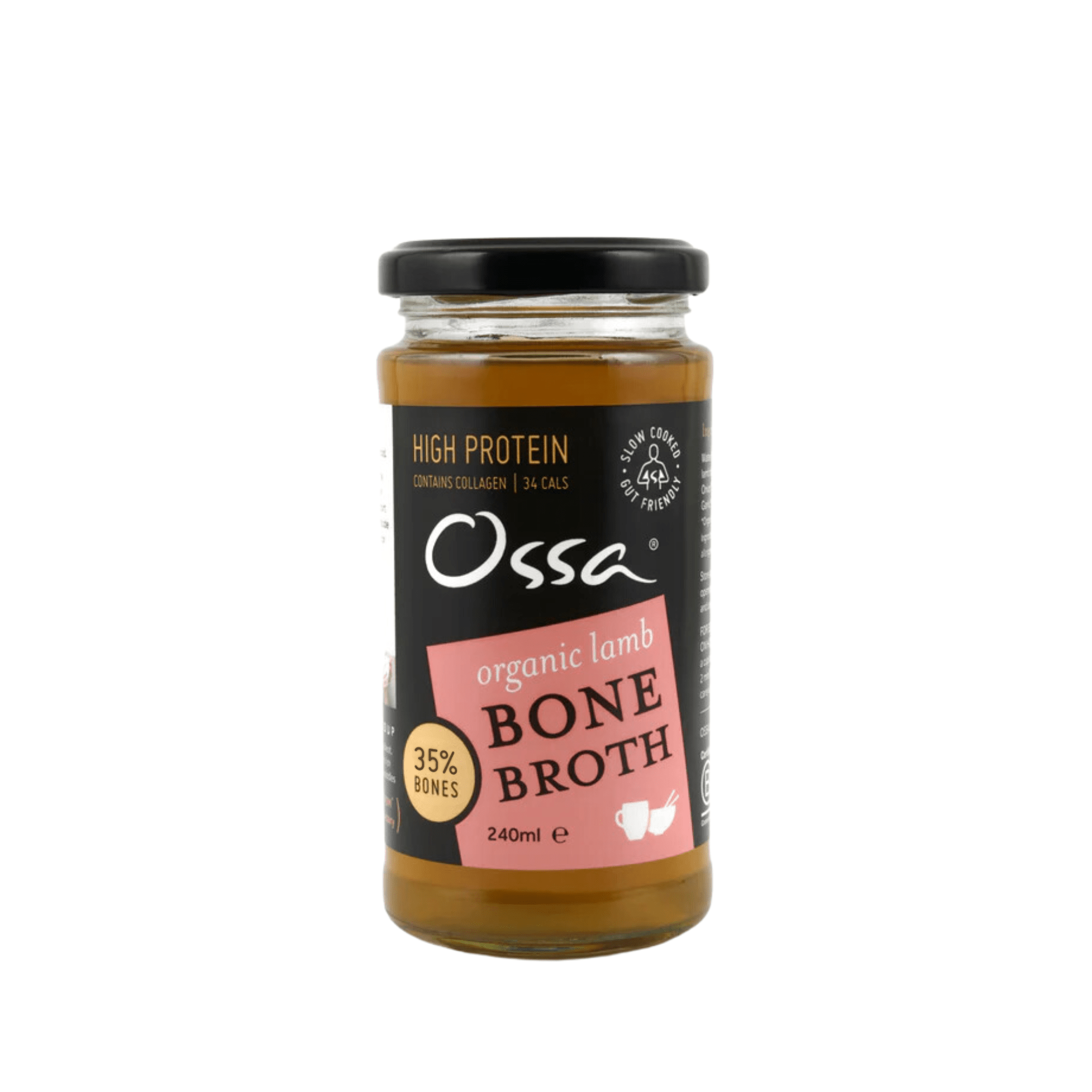
Bone broth is made by simmering animal bones, usually beef or chicken, in water for many hours. Connective tissue such as cartilage and tendon breaks down during the long cook, releasing collagen in the form of gelatine, along with amino acids and minerals from the bones. A good broth often sets to a jelly when it is chilled, which is a visible sign that gelatine is present.
How the broth is made matters. The bones used, the ratio of bones to water, whether an acid such as apple cider vinegar is added and how long it simmers all change what ends up in the cup. That is why two bowls of broth can differ a great deal.
Collagen peptides
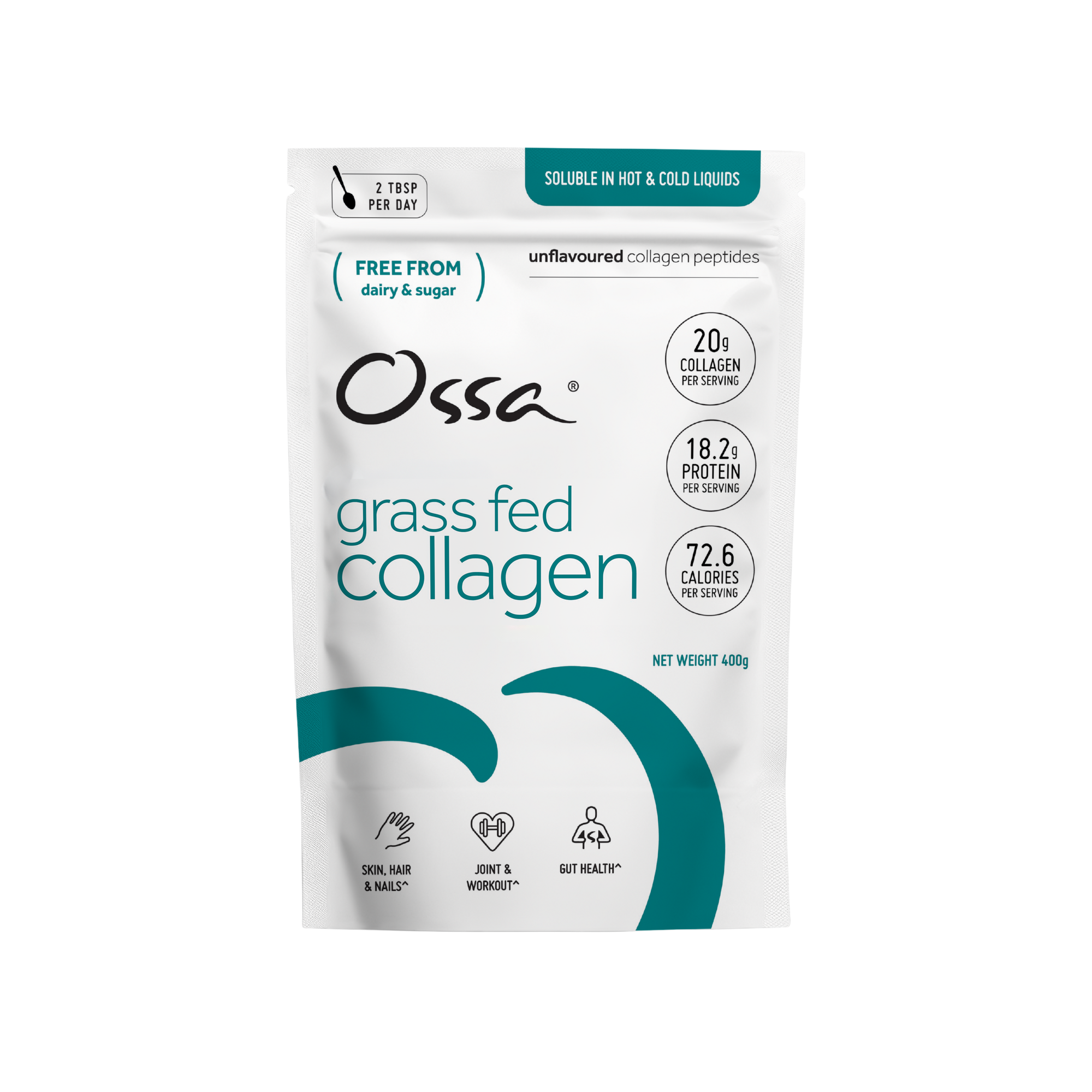
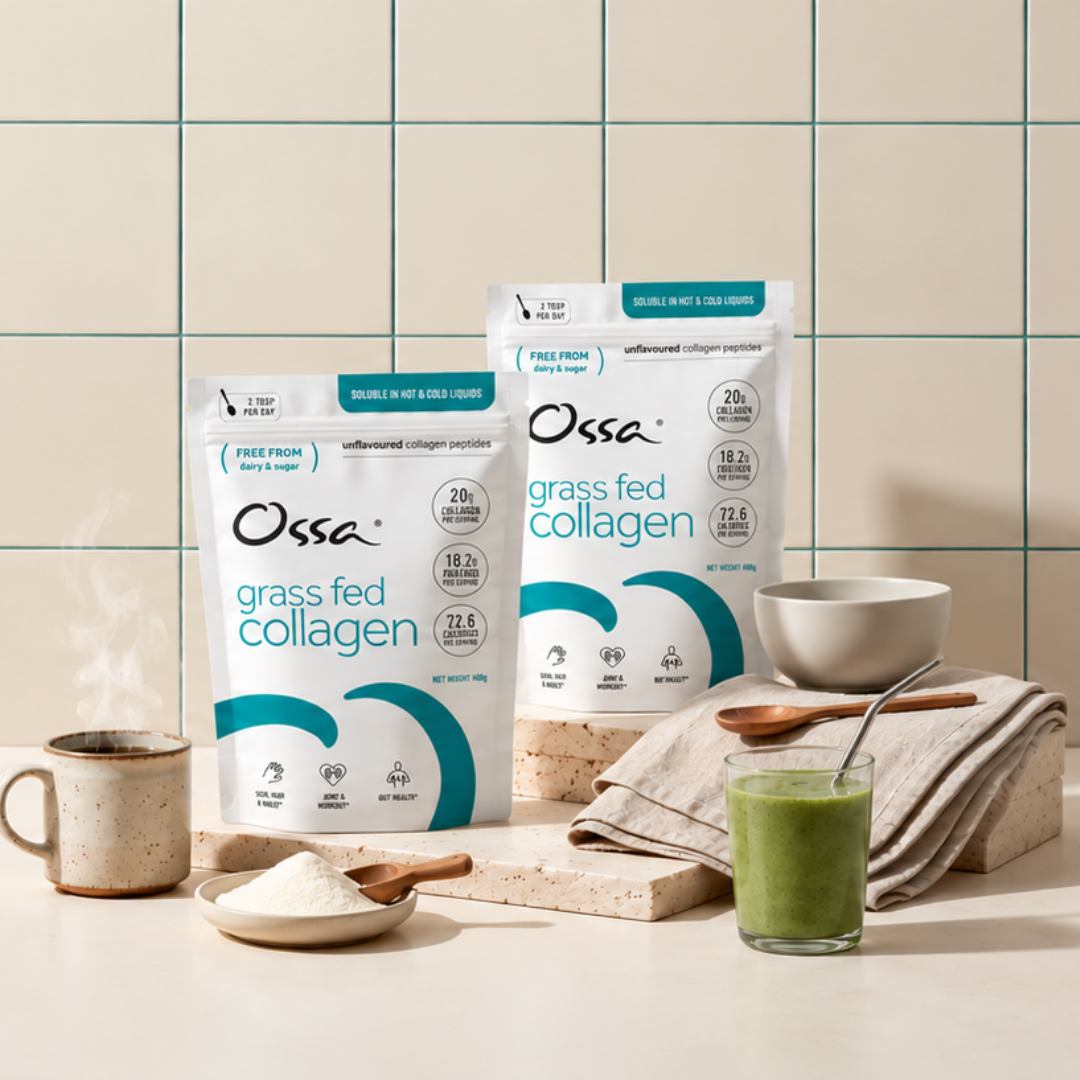
Collagen peptides, often labelled hydrolysed collagen, are collagen that has been broken down into small chains of amino acids so that it dissolves easily. They are sold as a powder, in capsules or in ready-mixed drinks. Most powders are made from bovine hide or bone, marine sources such as fish skin, or chicken. The powder is usually neutral in taste and dissolves in coffee, tea, smoothies or porridge.
Gelatine, the middle ground
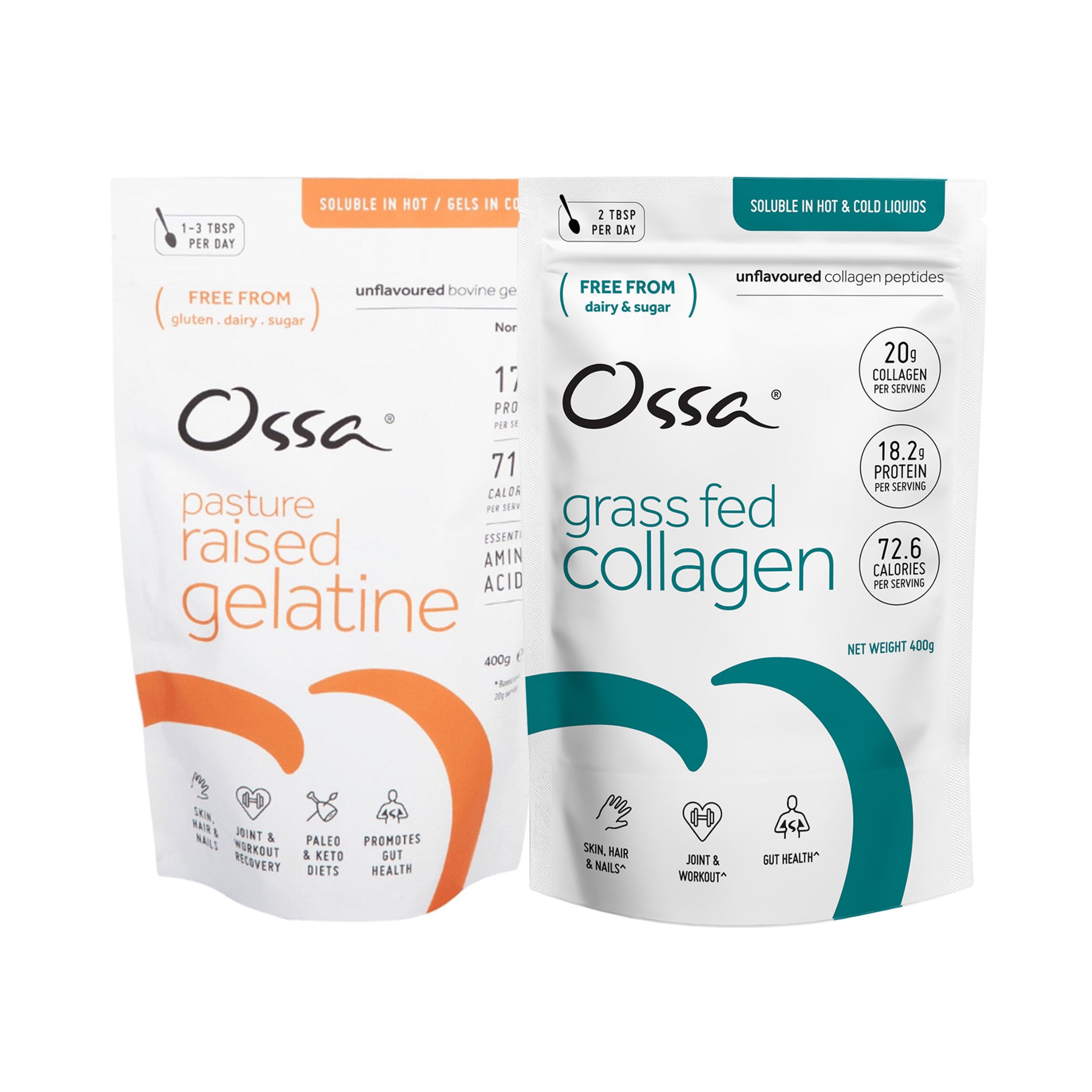
Gelatine sits between the two. It is partially broken-down collagen that gels when cooled. It is what makes broth set, and it is what gives home-made jellies and gummies their texture. Collagen peptides are processed further so they stay liquid. Gelatine is useful in cooking, while peptides are easier to drink.
Collagen vs bone broth at a glance
Bone broth
Collagen peptides
What it is
Slow-cooked whole food
Concentrated, hydrolysed protein powder
Collagen per serving
Variable, often lower
Standardised, often 10 to 20 g on typical labels
Other nutrients
Minerals, amino acids, electrolytes, some fat depending on the bones
Almost entirely protein
Taste
Savoury
Neutral
Best used
As a mug, soup base or cooking liquid
Stirred into drinks, porridge or smoothies
Consistency from serving to serving
Depends on recipe and brand
High
Salt
Can be significant in some shop-bought products
None added in a plain powder
Research base
Limited human studies on broth itself
Larger body of trials, mostly on supplements
The rest of this article expands on each row.
How much collagen are you really getting?
This is the question that separates the two most clearly.
A typical collagen supplement provides roughly 10 to 20 grams of collagen peptides per serving, according to figures commonly quoted for these products. A cup of bone broth is usually estimated to give somewhere between 1 and 10 grams of protein from collagen, depending on how it was made. That is a wide range, and it is the honest answer: broth cannot be pinned to a single number.
A 2019 analysis of commonly consumed bone broth preparations, published in a peer-reviewed journal, concluded that bone broth is unlikely to provide reliable concentrations of collagen precursors compared with the supplemental sources used in collagen research. In other words, if you are trying to match the doses used in studies, a cup of broth is not a dependable way to do it.
That does not make broth poor food. It means broth and powder are answering different needs. A powder is a dose. Broth is a meal component.
What affects the collagen in a pot of broth
The bones. Joints, feet, knuckles and cartilage-rich cuts tend to release more gelatine than plain meaty bones.
The time. Beef broth is often simmered for 24 hours or more, chicken for a shorter period. Longer cooking extracts more, within reason.
The water ratio. A broth made with less water per kilo of bones is more concentrated.
The acid. A splash of vinegar is traditionally used to help draw minerals and connective tissue into the liquid.
How it is stored. A broth that sets firmly in the fridge usually contains more gelatine than one that stays thin.
What the evidence says
Collagen supplements
The research on collagen supplements, particularly hydrolysed collagen, is much larger than the research on broth. Systematic reviews and meta-analyses have suggested possible benefits for skin hydration and elasticity and for joint discomfort, typically at daily doses somewhere between 2.5 and 15 grams.
There is an important caveat. Some reviewers have pointed to funding bias, because many of the positive trials were sponsored by companies that make or sell collagen. Where analyses have looked at studies without industry funding, the picture for skin hydration and wrinkles has been less clear. A sensible reading is that collagen supplements may help some people, that the effect is modest, and that the evidence is not as settled as marketing often implies.
Bone broth
Bone broth is valued as a whole food. It supplies collagen-derived protein alongside minerals such as calcium, magnesium and potassium, and electrolytes. What is missing is human clinical research showing that drinking broth produces the same improvements in skin or joints seen in supplement trials. Much of the enthusiasm rests on the nutrients we know are in it, and on tradition, rather than on trials of broth itself.
That gap is worth stating plainly. We do not claim that broth will change your skin or fix your joints, and you should be wary of any seller who does.
Why “collagen in, collagen out” is too simple
When you eat collagen, in broth or powder, your digestive system breaks it down into amino acids and small peptides. Your body then uses those building blocks where it needs them. Collagen does not travel intact from the cup to the skin or the knee. UK nutritionists, including Rhiannon Lambert, have made this point when cautioning against treating any single food, bone broth included, as a cure-all.
The practical conclusion: both products are sources of protein and specific amino acids such as glycine and proline. Whether that translates into a visible difference varies between individuals, and a varied diet with enough protein, vitamin C and overall nutrition matters at least as much.
Marketing claims in the UK
The Advertising Standards Authority regulates health claims in UK advertising. Businesses cannot make general anti-ageing or disease-treatment claims for collagen or bone broth without authorised evidence, and food supplement marketing has to comply with the GB nutrition and health claims register. If a product page promises to erase wrinkles or heal your gut, treat that as a reason to look more closely.
Nutrition beyond collagen
This is where bone broth earns its place. A powder is nearly pure protein. A broth is a food, and what it contains depends on the bones and vegetables used. Minerals such as calcium, magnesium and potassium appear in broth, along with electrolytes, and the savoury liquid is easy to eat when appetite is low, for example when you are unwell or recovering from a cold.
Broth also works as an ingredient. You can use it to cook rice or lentils, thin a sauce, make a soup base or sip it from a mug. We keep a collection of bone broth recipes for exactly this, including options filtered for gluten-free and dairy-free cooking.
Watch the salt in shop-bought broth
Salt is the main thing to check on a label. Some shop-bought bone broths contain a lot of it, and certain products reach the red band under UK traffic-light labelling, which is over 1.5 g salt per 100 g for foods generally and a lower threshold for drinks. If you drink broth every day, read the nutrition panel and compare products per serving. A plain collagen powder has no such issue, though flavoured and ready-mixed collagen drinks can carry added sugars, sweeteners or flavourings, so check those labels too.
Which should you choose?
There is no universal winner. The better question is what you want from it and how you like to eat.
Choose collagen peptides if
You want a predictable, measurable daily amount of collagen protein.
You are following a research-style dose and want to match it.
You prefer something with no taste and no preparation that you can add to coffee, tea, porridge or a smoothie.
You travel often or have little time to cook or heat anything.
You want to keep the salt in your diet low and the process simple.
Choose bone broth if
You want a savoury, warming food that fits into soups, stews and sauces.
You value whole-food nutrition and variety over a single concentrated dose.
You enjoy cooking with stock and want something richer than a standard cube.
You prefer to get your protein from food you can taste and see, rather than from a scoop.
You eat a traditional or paleo-style diet and want slow-cooked ingredients at the centre of it.
Use both if
The two do not compete. A common pattern is a mug of broth in the late morning or with dinner, plus a scoop of collagen in a morning drink. The powder supplies a consistent dose. The broth adds minerals, flavour and variety. Used together, you are not doubling up on anything you cannot easily digest, but you are adding protein, so keep an eye on your total daily intake if you are managing a medical condition.
A few worked examples
A busy parent who wants a simple routine. A scoop of unflavoured powder stirred into a morning coffee takes seconds. Broth is then something to heat for lunch or to use as the base of a family soup, so the same ingredient serves everyone, not just the person taking the supplement.
Someone cooking from scratch most evenings. Broth fits straight into what they already make: rice cooked in broth, a pan sauce, a bowl of soup. Powder would be an add-on rather than a part of the meal.
Someone who dislikes savoury drinks. Collagen peptides can go into a smoothie or oats without altering the taste. Broth may feel like too much of a change.
Someone watching their salt. Plain powder, or a broth whose label shows a sensible salt level per serving, is the better route. Compare labels before you commit to a daily habit.
Safety and who should check first
For most healthy adults, collagen powder and bone broth are ordinary foods. A few situations call for a conversation with a professional first.
Allergies. Collagen is animal-derived. If you have a fish or shellfish allergy, avoid marine collagen. People with other animal-source allergies should check the source on the label, and anyone with a sulphite sensitivity should read the ingredients list carefully, because additives can differ between products.
Pregnancy and breastfeeding. Research on collagen supplements in these groups is limited, and some clinical guidance suggests caution. If you are pregnant or breastfeeding, ask your midwife, GP or a registered dietitian before starting a collagen supplement.
Kidney disease or a prescribed protein-restricted diet. Both products add protein. Ask your GP or renal dietitian before adding them.
High blood pressure or a salt-restricted diet. Choose broths with low salt per serving, and check with your GP or dietitian if you have been given a specific limit.
Persistent joint or skin problems. A supplement is not a diagnosis or a treatment. See your GP if symptoms are ongoing, worsening or new.
Our perspective
We started Ossa Organic around bone broth, and we still cook it slowly and from organic, grass-fed ingredients without preservatives or artificial additives. We also make collagen peptides and gelatine, so we do not see this as a contest where one has to lose.
Here is how we think about it. Broth is food. We make it for people who want a traditional, minimally processed ingredient in their kitchen, something to sip, cook with and share with the family. We are honest that the collagen in a cup of broth will vary and that it should not be sold as a precise dose. Collagen peptides are a tool. We make them for people who want something quick, consistent and neutral in taste that can go into whatever they are already eating or drinking.
We also think the wellness world has promised too much about both. Eating collagen does not mean the collagen arrives where you want it. Nutrition is built from many small, regular choices: enough protein, plenty of plants, fewer heavily processed foods, and ingredients you can recognise. Our range is built around that idea, tradition rather than trend.
If you are choosing between the two, our advice is simple. Decide whether you need a dose or a food. If it is a dose, use the powder. If it is a food, use broth. If you want both, use both, and read the label on anything you buy.
Stir a scoop into a warm drink, porridge, yoghurt or a smoothie. Hot liquid dissolves it fastest, and it will not clump if you add it gradually while stirring. Follow the serving size on the pack. Because it is tasteless, you can place it wherever suits your routine, and the timing does not need to be exact.
Bone broth
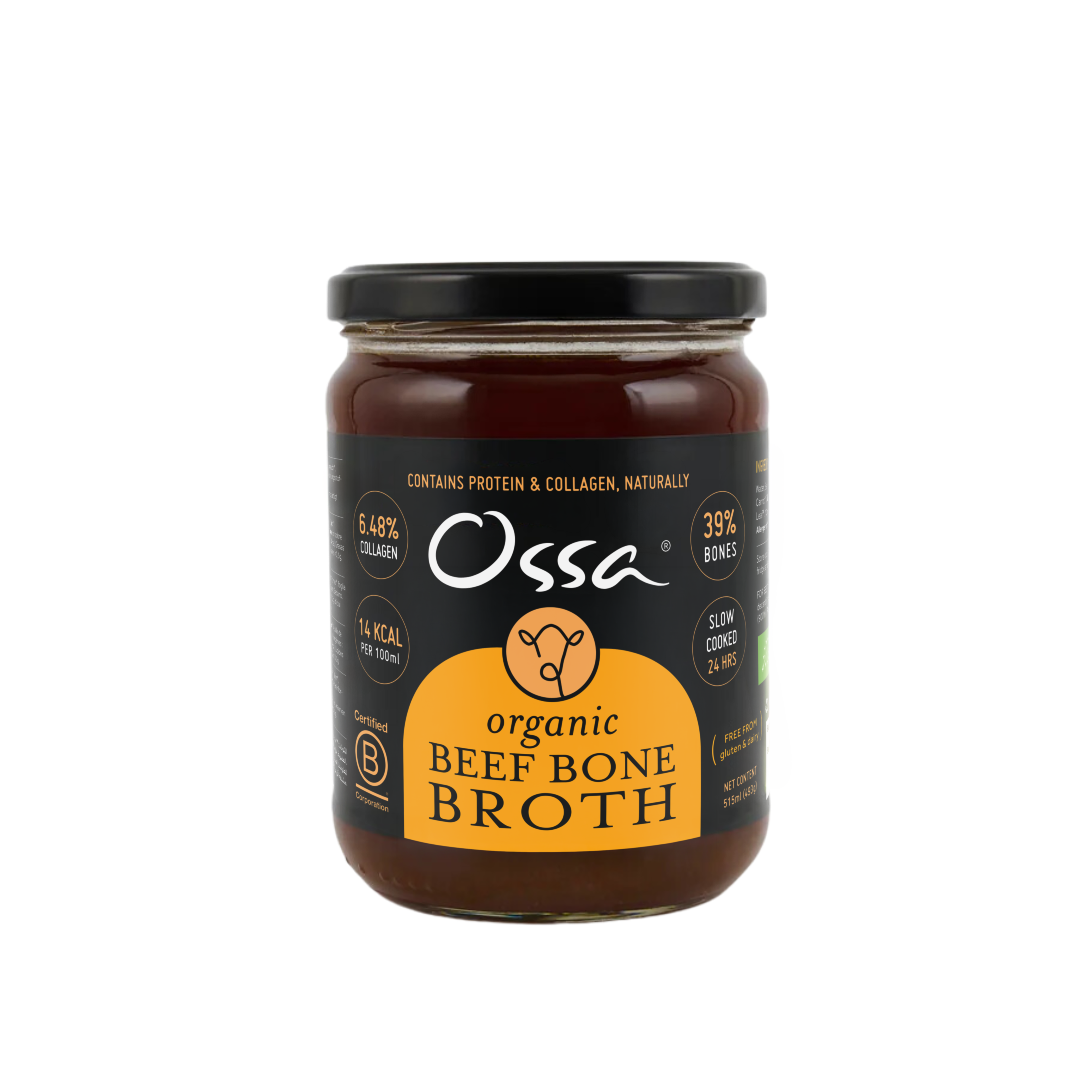
Heat gently and sip from a mug, or use it in place of water or stock cubes. It works as the liquid for rice and grains, as the base for soups and stews, and as a pan sauce after roasting. Ambient broths keep in the cupboard until opened, which is convenient if you do not have fridge space for fresh broth. Once opened, store as the pack instructs and use within the stated time.
Gelatine
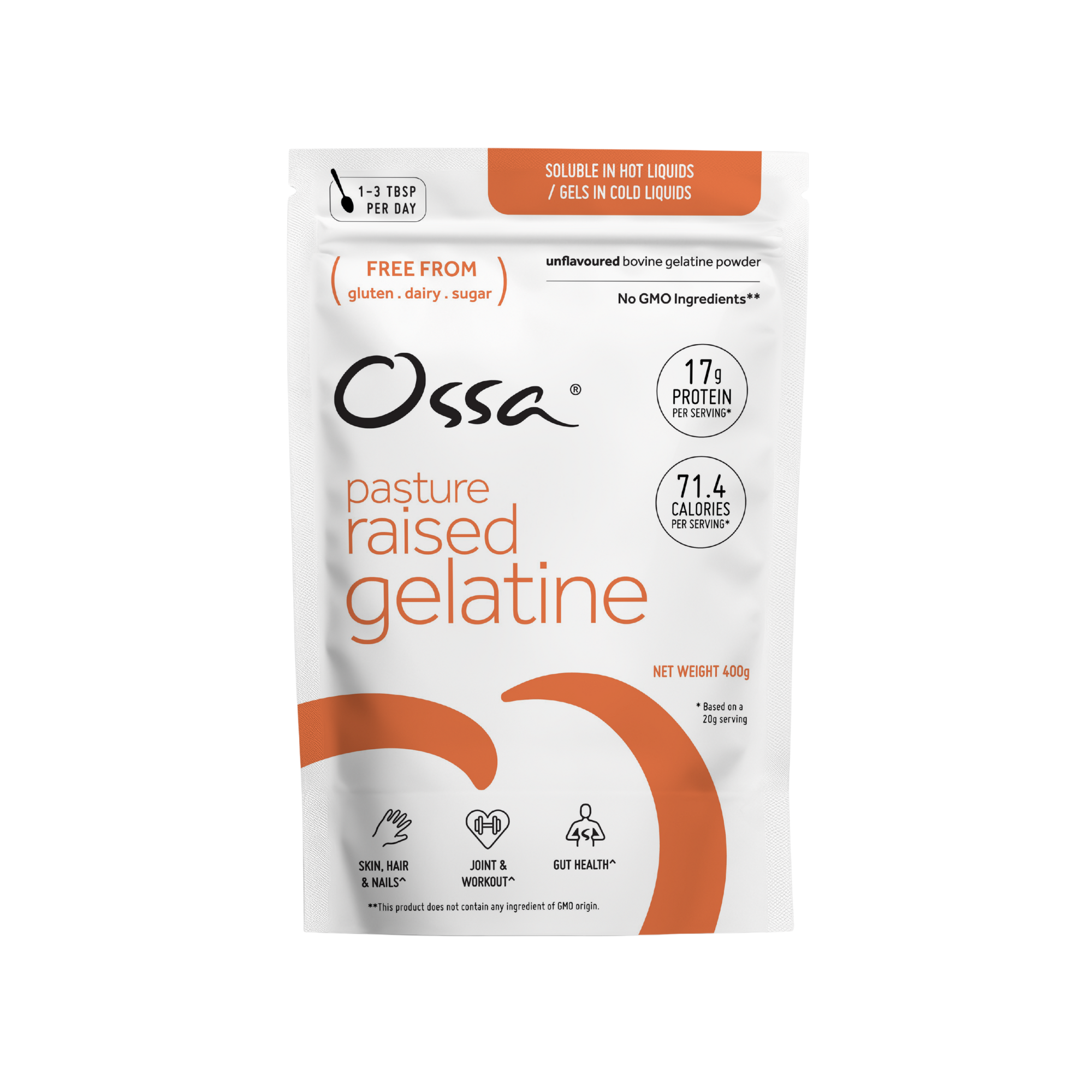
Bloom it in cold water, then dissolve it into a hot liquid. It will set as it cools, which makes it suited to jellies, set puddings, gummies and thickening sauces. It is a kitchen ingredient rather than a drink.
Common myths worth dropping
“Broth is just expensive stock.” Broth and stock overlap. Broth is typically simmered longer and often richer in gelatine, although the labels are not strictly regulated, so the product matters more than the word.
“Powder is more processed, so it is worse.” It is processed, but processing is what gives it a reliable dose and easy digestion. Broth is a better food in many ways. Neither label alone tells you which is better for you.
“You can feel collagen working within days.” Studies of collagen supplements generally run for weeks to months, and results vary between individuals. Do not expect overnight change from either product.
“More is always better.” Extra protein from any source is just protein once digested. Taking larger and larger amounts will not produce larger and larger effects.
Frequently asked questions
Is bone broth as good as collagen powder?
They are good at different things. Powder gives a consistent, concentrated dose, and most of the research has been done on supplements like it. Broth gives a smaller and more variable amount of collagen-derived protein, plus minerals and the benefits of a whole food. Which is better depends on whether you want a dose or a food.
Can I get enough collagen from bone broth alone?
There is no official daily requirement for collagen, so there is no set amount to hit. If you want to reach the doses used in supplement studies, broth is unlikely to do it reliably, because the collagen content varies so much. If you simply enjoy broth as part of a varied, protein-adequate diet, it is a sound choice.
Should I take collagen peptides and drink bone broth on the same day?
Yes, many people do, and there is no known problem with it for healthy adults. The powder gives a measured amount and the broth adds minerals and flavour. Both add protein, so if you follow a protein-restricted diet, have kidney disease or are pregnant or breastfeeding, ask your GP, midwife or dietitian first.
Is bone broth or collagen better for gut health?
Neither has been proven to heal the gut, and any seller who says so should be treated with caution. Broth is a gentle, easily digested food that many people include as part of a diet built on whole ingredients. If you have ongoing digestive symptoms, see your GP rather than relying on either product.
How long before I notice any difference?
Studies on collagen supplements usually last several weeks to a few months, and results differ from person to person. Some people notice nothing. If you try either one, give it a consistent trial and judge it on how you feel, then adjust. Persistent symptoms deserve a medical opinion rather than another supplement.