

Cart
0

TL;DR:
- Most healthy adults can safely consume one to two cups of bone broth daily, focusing on low-sodium options. Bone broth differs from stock by its long simmering time, which extracts collagen and minerals essential for its nutritional claims. People with health conditions like hypertension or kidney disease should seek medical advice before regular intake.
For most healthy adults, a moderate daily amount of bone broth equivalent to 1–2 cups (8–16 fl oz) per day is sensible, supported by clinician-reviewed guidance from sources including UT MD Anderson. Start with one cup and adjust from there.
Quick conversions:
- One cup (8 fl oz/240 ml) is a standard serving size.
- Some short-term wellness protocols suggest up to 32 fl oz (4 cups, 960 ml) daily, though this is not a standard everyday recommendation.
Two immediate caveats apply. First, sodium: a single cup of commercial bone broth can contain over 450 mg of sodium, which represents a meaningful portion of the NHS adult limit of 6 g of salt per day (roughly 2.4 g sodium). Second, certain health conditions change the picture entirely. People managing high blood pressure, gout, or kidney disease should speak with a GP or registered dietitian before making bone broth a daily habit.
The short version: start with one cup daily, choose a low-sodium product or make your own, and adjust based on your goals and any medical advice you receive.
Table of Contents
- What is bone broth, and how does it differ from stock?
- What does bone broth actually support?
- How much bone broth should you drink a day?
- When is the best time to drink bone broth?
- Who should be cautious about daily bone broth?
- How to choose or make bone broth for daily use
- Key takeaways
- A note on daily bone broth from Ossa Organic
- Ready-made daily options from Ossa Organic
- Useful sources
- FAQ
What is bone broth, and how does it differ from stock?
Bone broth is a long-simmered liquid made from animal bones, connective tissue, and aromatics such as onion, celery, and bay leaves. The extended cooking time, typically 12–24 hours, draws collagen, gelatin, amino acids (notably glycine and proline), and minerals into the liquid. That is the key practical difference from a standard stock, which simmers for a shorter period and extracts less collagen.
Why does that distinction matter for daily use? Collagen and glycine are the nutrients most often cited in the health claims around bone broth. A shorter-simmered stock will contain less of both. For daily sipping with a nutritional purpose, longer-simmered bone broth is the more appropriate choice. For more detail on how the two compare, see broth vs stock vs bone broth.
Nutrient content also varies with the type and quality of bones used, the water-to-bone ratio, and whether an acid (such as apple cider vinegar) is added to help draw minerals from the bone matrix. Two batches made from different sources can differ noticeably in protein and mineral content.
Common uses beyond sipping:
- Base for soups, stews, and sauces
- Cooking liquid for grains or pulses
- Savoury warm drink as an alternative to tea or coffee
Pro Tip: When choosing between a product labelled ‘stock’ and one labelled ‘bone broth’ for daily sipping, favour the longer-simmered bone broth for its collagen and glycine content, but always check the sodium figure on the label before you commit to drinking it daily.
What does bone broth actually support?
Bone broth is best treated as a nutrient-rich supportive food rather than a therapeutic supplement. The claims around it range from well-supported to plausible-but-unproven, and the distinction is worth knowing before you build expectations around a daily habit.
What the evidence supports reasonably well:
- Protein and hydration: Bone broth contributes a modest amount of protein and is a warm, palatable way to stay hydrated. These benefits are straightforward and consistent.
- Glycine: This amino acid, present in meaningful quantities in well-made bone broth, has some clinical backing for supporting sleep quality and gut lining integrity.
- Minerals: Calcium, magnesium, and phosphorus leach from bones during simmering. Amounts vary, but bone broth can contribute to overall mineral intake.
Where evidence is limited:
- Claims that bone broth directly rebuilds cartilage or reverses joint damage are not conclusively proven in human trials. Collagen consumed orally is broken down during digestion; whether the resulting amino acids preferentially reach joint tissue is still debated.
- Dramatic skin improvements from bone broth alone, while plausible given the collagen content, lack robust clinical trial data.
The practical framing from nutrition experts is consistent: bone broth functions best as a consistent addition to a balanced whole-food diet, not as a quick-fix supplement. For a deeper look at the gut health benefits of organic bone broth, Ossa Organic’s resource covers the evidence in more detail.
How much bone broth should you drink a day?
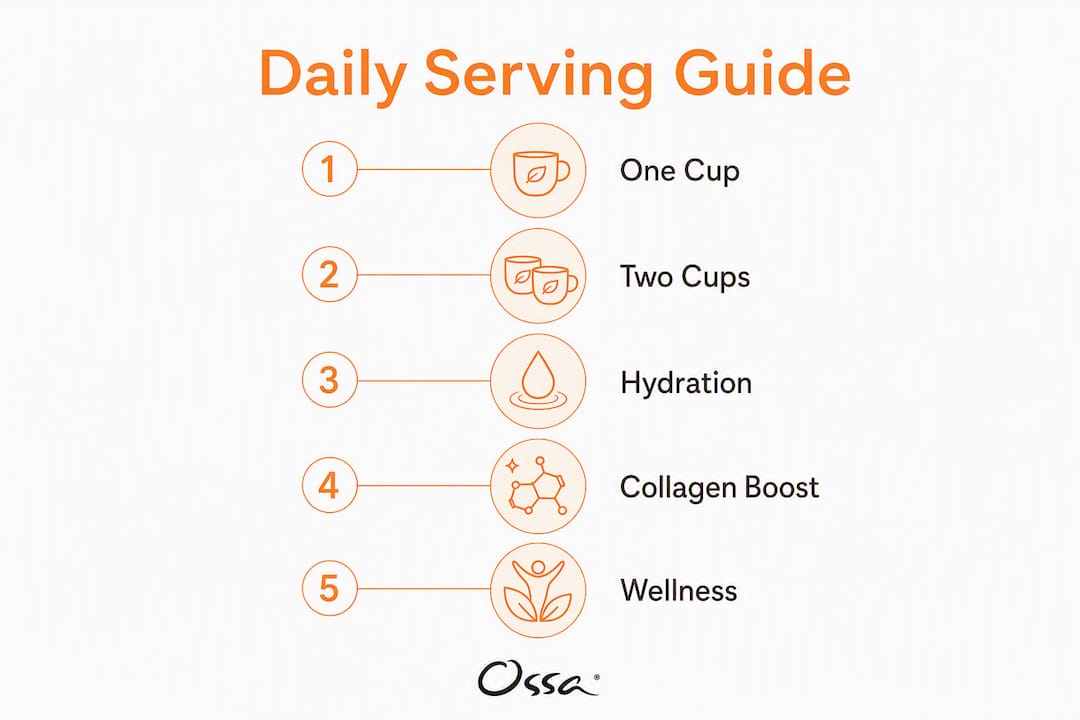
The standard recommendation from clinician-reviewed sources is a modest daily intake equivalent to one or two cup servings for healthy adults. Some short-term protocols suggest a larger temporary amount for acute goals such as short-term inflammation management, but that is not intended for indefinite daily use.

Serving size conversions
| Cups | Millilitres | Fluid ounces |
|---|---|---|
| 1 | 240 ml | 8 fl oz |
| 2 | 480 ml | 16 fl oz |
| 4 | 960 ml | 32 fl oz |
Goal-based guidance
| Goal | Suggested daily amount | Notes |
|---|---|---|
| General wellness | 1 cup (240 ml/8 fl oz) | A practical starting point for most people |
| Collagen and skin support | 1–2 cups (240–480 ml/8–16 fl oz) | Consistency over weeks matters more than quantity |
| Post-exercise recovery | 1–2 cups (240–480 ml/8–16 fl oz) | Pair with a protein-containing meal for best effect |
| Short-term anti-inflammatory protocol | Up to 4 cups (960 ml/32 fl oz) | Temporary; monitor sodium carefully |
Consistency produces more reliable results than occasional large doses. Daily small servings maintain a steadier supply of glycine and collagen-derived amino acids than drinking a large quantity once or twice a week.
Sodium is the most important practical constraint. Commercial bone broths can exceed 450 mg of sodium per cup. Two cups of a high-sodium product could account for roughly a third of the NHS 6 g daily salt limit (2.4 g sodium). Choosing reduced-sodium products or making your own broth without added salt gives you meaningful control over this.
When to limit intake: People with high blood pressure, kidney disease, or gout should not increase bone broth consumption without clinician guidance. Very high daily intakes over long periods also carry a theoretical risk of trace heavy-metal accumulation from bones during prolonged simmering, particularly with lower-quality sources.
When is the best time to drink bone broth?
There is no single optimal timing window. The best time to drink bone broth is whichever time you will actually do it consistently. That said, matching timing to your goal does make practical sense.
- Morning: A warm cup on an empty stomach supports rehydration after sleep and provides a gentle protein start before breakfast.
- Post-workout: Amino acids from bone broth, particularly glycine and proline, support muscle repair. Drinking a cup within an hour of exercise fits naturally into a recovery routine.
- Evening: Glycine has a calming effect and some evidence links it to improved sleep onset. A cup in the evening works as a low-caffeine alternative to herbal tea.
Three sample daily routines
Routine A: Morning sip + lunch base Warm one cup (240 ml) first thing in the morning as a rehydration drink. Use a second cup as the liquid base for a midday soup or grain dish. Total: 2 cups.

Routine B: Post-workout + evening cup Drink one cup (240 ml) within an hour of exercise. Have a second cup in the evening as a calming wind-down drink. Total: 2 cups.
Routine C: Single evening comfort cup One cup (240 ml) in the evening, warmed and lightly seasoned. A low-effort entry point for anyone new to daily bone broth. Total: 1 cup.
For practical ideas on fitting bone broth into meals and snacks, 50 ways to use bone broth covers everything from morning drinks to cooking applications.
Pro Tip: Build the habit around one consistent moment in your day rather than trying to optimise the timing window. A cup you drink reliably at 7 AM or 9 PM will deliver more benefit over time than a perfectly timed cup you forget half the week.
Who should be cautious about daily bone broth?
Bone broth is a food, not a supplement, and for most healthy adults it carries no significant risk at 1–2 cups per day. Several groups, however, need to approach daily intake with more care.
High-risk groups:
- High blood pressure: Sodium content in commercial broths can be substantial. People on sodium-restricted diets should choose very low-sodium options or make their own unsalted broth.
- Kidney disease: Both the protein load and the mineral content of bone broth can be problematic for people with reduced kidney function. Clinician consultation is necessary before regular use.
- Gout: Bone broth contains purines, which the body converts to uric acid. High purine intake can trigger gout flares in susceptible individuals.
- Pregnancy: Bone broth is generally considered safe in moderate amounts during pregnancy, but the heavy-metal concern (see below) makes sourcing quality especially important. Consult a midwife or GP.
- Sodium-restricted diets: Anyone prescribed a low-sodium diet for any reason should treat commercial bone broth with caution and check labels carefully.
The sodium calculation in practice: The NHS recommends no more than 6 g of salt per day for adults (approximately 2.4 g sodium). Some commercial broths contain over 450 mg of sodium per cup. Two cups of a high-sodium product could represent close to 40% of that daily sodium allowance from one source alone.
Heavy-metal risk: Long simmering extracts more collagen and amino acids, but also increases the potential for trace heavy metals to leach from bones. This risk is minimised by using organic, pasture-raised bones from reputable sources and avoiding excessively prolonged simmer times.
Action steps if you have a relevant condition:
- Tell your GP or dietitian the amount you drink and show them the product label
- Note any symptoms (digestive upset, bloating, increased blood pressure readings)
- Reduce or stop intake if symptoms arise and seek advice before restarting
This article provides general information, not medical advice. Confirm suitability with your GP or a registered dietitian if you have any of the conditions listed above.
How to choose or make bone broth for daily use
Buying ready-made: what to check on the label
- Sodium per serving: Look for products with lower sodium per 240 ml serving. Reduced-sodium or unsalted options give you the most flexibility.
- Ingredient list: Bones and water should lead the list. Avoid products with long additive lists, artificial flavourings, or preservatives.
- Organic and pasture-raised: These sourcing claims reduce the risk of contaminants and support nutrient density.
- Serving size consistency: Check whether the stated serving size matches how you plan to drink it (240 ml vs 515 ml containers affect your sodium maths).
Making a basic low-sodium bone broth at home
- Use 1–1.5 kg of organic, pasture-raised bones (beef, chicken, or a mix).
- Cover with cold water (roughly 2–3 litres) in a large pot or slow cooker.
- Add 1–2 tablespoons of apple cider vinegar to help draw minerals from the bone matrix.
- Bring to a gentle simmer and skim any foam from the surface in the first 30 minutes.
- Simmer on low heat: 12–18 hours for chicken bones, 18–24 hours for beef bones.
- Strain, cool, and season only at the point of serving to keep the batch sodium-free.
Storage guide
| Storage method | Duration | Notes |
|---|---|---|
| Refrigerator | 4–5 days | Store in a sealed glass jar; fat cap on top preserves freshness |
| Freezer | Up to 3 months | Portion into 240 ml (1-cup) silicone moulds or ice-cube trays |
| Reheating | Gentle heat only | Avoid boiling repeatedly; warm to drinking temperature |
Pro Tip: Freeze individual 240 ml portions so you can pull out exactly one cup at a time. It removes the daily decision and keeps the habit frictionless.
Long simmering increases collagen extraction but also raises the potential for trace contaminants to leach from bones. Using organic, pasture-raised sources is the most practical way to reduce that risk. For bone broth recipes that incorporate homemade broth into everyday meals, Ossa Organic’s recipe collection is a useful starting point.
Key takeaways
One to two cups (8–16 fl oz/240–480 ml) of low-sodium bone broth per day is the practical daily intake for most healthy adults, with sodium management and consistent habit formation being the two factors that matter most.
| Point | Details |
|---|---|
| Daily serving | A moderate daily serving for most healthy adults is one to two cups (8–16 fl oz/240–480 ml). |
| Sodium awareness | Some commercial broths may have high sodium content; stay within recommended daily salt limits. |
| Who should check first | People with high blood pressure, kidney disease, or gout should consult a GP before daily use. |
| Timing flexibility | Morning, post-workout, or evening all work; consistency matters more than the precise window. |
| Ossa Organic option | Organic Chicken and Beef Bone Broths in 240 ml and 515 ml formats offer a convenient, quality-sourced daily option. |
A note on daily bone broth from Ossa Organic
At Ossa Organic, the case for daily bone broth is not built on trend. It is built on the same principle that has guided the brand since its founding: that slow-cooked, organic food made from quality ingredients supports the body in ways that processed alternatives simply cannot replicate. The founder’s own experience, discovering bone broth during pregnancy and making it central to family nutrition, reflects exactly the kind of moderate, consistent daily use this guide describes.
The recommendation here, one to two cups of a well-sourced broth each day, aligns with what Ossa Organic has always advocated: not dramatic quantities or short-term cleanses, but a sustainable habit rooted in whole-food nutrition. Organic, pasture-raised sourcing is not a marketing claim. It directly reduces the contaminant risk that comes with long simmering and supports the mineral and collagen profile you are drinking for in the first place.
For readers who want to go further, Ossa Organic’s content on gut health and bone broth covers the nutritional science in more depth, and the 50 ways to use bone broth resource offers practical ideas for building the habit without it feeling repetitive.
Ready-made daily options from Ossa Organic
For readers who want a convenient, quality-controlled daily option without the commitment of a 24-hour simmer, Ossa Organic’s ambient bone broths are made from organic, pasture-raised bones with no preservatives or artificial ingredients.
The Organic Chicken Bone Broth 240 ml is a single-serve ambient format, exactly one cup, designed for warming and drinking straight. It fits Routine C (single evening cup) or Routine A (morning sip) without any preparation. The Organic Beef Bone Broth 240 ml offers a richer, deeper flavour and is well suited to post-workout use or as a savoury base for a midday meal. For families or anyone who prefers to portion across two servings, the Organic Chicken Bone Broth 515 ml covers two days of single-cup intake from one carton.
Always check the sodium per serving on the label and factor it into your daily salt total. Browse the full range at ossaorganic.com and use the how to use guide for portioning and serving ideas.
Useful sources
The following sources informed the guidance in this article. All are clinician-reviewed or published by recognised health institutions.
- NHS (UK): — The primary reference for the 6 g daily salt limit for UK adults. The NHS also provides general dietary guidance relevant to sodium management.
- Harvard Health Publishing: — Covers sodium content in commercial bone broths (some exceeding 450 mg per cup) and practical label-reading advice.
For personalised advice, particularly if you have a medical condition or are pregnant, consult your GP or a registered dietitian rather than relying on general guidance.
FAQ
Is it better to drink bone broth in the morning or at night?
Neither timing is definitively superior. Morning suits rehydration after sleep; evening suits those seeking glycine’s calming effect. Match the timing to your goal and prioritise whichever slot you will maintain consistently.
Is 2 cups of bone broth a day too much?
For most healthy adults, 2 cups (480 ml) per day is within the standard recommended range. The main consideration is sodium: check the label and confirm that two servings keep you within the NHS 6 g daily salt limit.
How much bone broth should I drink daily for collagen support?
One to two cups per day, maintained consistently over several weeks, is the practical approach for collagen-related goals. Consistency over time matters more than drinking a larger quantity on any single day.
Can you overdo bone broth?
Yes, particularly on sodium and, with very high long-term intakes, trace heavy metals that can leach from bones during prolonged simmering. Stick to 1–2 cups per day, choose organic sources, and consult a clinician if you have high blood pressure, kidney disease, or gout.