Beef tallow works for seasoning cast iron. Wiped on in very thin coats and baked in a hot oven, it forms a hard, slick coating, and every time you cook with it afterwards the coating gets a little better. It builds more slowly than some oils sold for the purpose, so the method matters more than the fat. This guide covers the method, the oven settings in °C, the mistakes that cause sticky pans, and how tallow compares with other fats.
Ossa Organic
Cook with traditional, natural fats
Ossa Organic makes natural foods rooted in tradition, including tallow for cooking and seasoning cast iron.
TL;DR
- Tallow is a good fat for seasoning cast iron and for keeping a seasoned pan in shape through everyday cooking.
- Use a very thin layer, wiped until the pan looks almost dry, then bake it upside down for one hour at about 230 to 260°C (450 to 500°F).
- Repeat the thin coats several times. Several light layers beat one heavy one.
- Fats high in polyunsaturated fat polymerise faster, so tallow builds a base more slowly, but it makes an excellent maintenance fat.
- Store the tallow itself somewhere cool and dark, or in the fridge, and use the pan regularly.
Table of Contents
Does tallow work for seasoning cast iron?
Yes. Tallow is rendered beef fat. It is solid at room temperature and liquid when warm, and it is made up mostly of saturated fat. When you heat a thin film of any cooking fat on iron to a high temperature, the fat bonds to the metal and hardens. Cooks call that process seasoning. Tallow does this reliably, and the result is a coating that is hard, dark and resistant to sticking.
Tallow has a smoke point of roughly 204°C (400°F). That is below the oven temperatures most people use for seasoning, and this is fine. Seasoning is not about avoiding smoke. A little smoking in the oven is normal, and it is part of how the coating forms. You should still open a window and switch on the extractor fan.
There is one honest caveat. Food scientists generally rate fats with more polyunsaturated fat, such as flaxseed or grapeseed oil, as quicker at building a first coating. Their molecules have more reactive points that link together into a firm network. Saturated fats like tallow still polymerise, but they take a few more rounds. In practice, that means a new or stripped pan seasoned with tallow needs patience, and a pan that is cooked in often will keep improving.
Many cooks accept the slower start because tallow has other advantages:
- It is a single, natural ingredient with no refining additives.
- You probably already cook with it, so the pan and the kitchen share one fat.
- It is excellent for the cooking itself: searing, shallow frying and roasting in the same pan.
- It tends to give a smooth, even finish when applied thinly.
What seasoning actually is
Understanding the chemistry makes the method easier to remember, because every step in it follows from two ideas.
Polymerisation
When fat is heated on iron, its molecules link together into a hard, plastic-like film. This film is water-repellent and slick. It is what gives a seasoned pan its non-stick quality. It only forms properly from a thin layer. A thick layer cannot cure all the way through, so it stays tacky.
Carbonisation
The second part is heating the fat past its smoke point, which turns part of the film into a dark carbon-rich layer. This is the deep black finish people associate with a mature pan. Without it, the coating still protects the iron, but it looks paler or brownish and is less slick.
So you are aiming for a thin film, heated hot enough and long enough to cure and darken, and then built up in layers over time.

What you need
The kit is short:
-
A cast iron pan. New, old or recently stripped back to bare metal all work. If the pan has rust, scrub it off first and dry it completely.
-
Beef tallow. Use a soft, clean-smelling tallow that has been properly rendered, so it contains no leftover water or connective tissue. Water and bits of tissue make it more likely to go off.
-
Lint-free cloths or paper towels. You need one for applying and a second clean one for wiping off.
-
Oven gloves. A cast iron pan at 230°C or more is hot for a long time.
-
Foil or a baking tray. Place it on the shelf below to catch any drips.
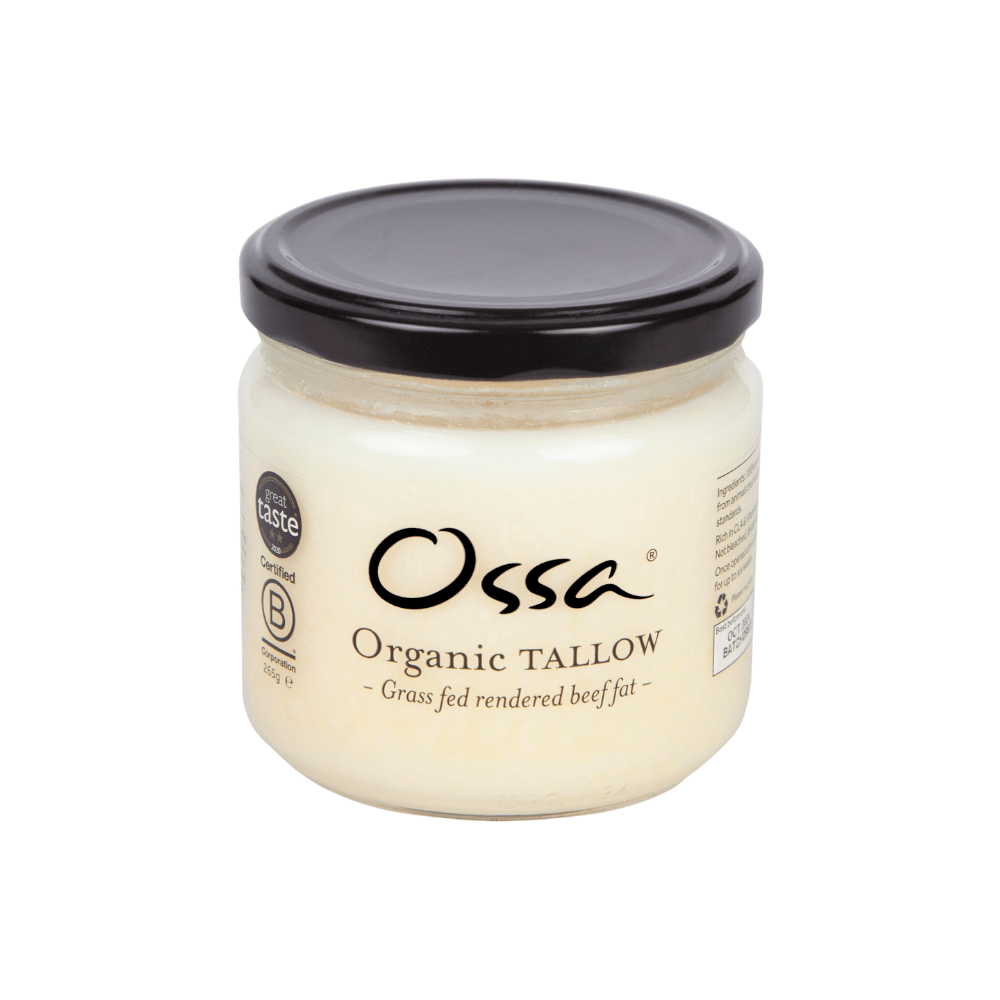
If you want to check which tallow we make for cooking and seasoning, our organic grass-fed beef tallow comes from British cows grass-fed to organic standards.
How to season a cast iron pan with tallow
This method works for a new pan, a pan that has been stripped, and a pan whose seasoning has gone patchy. The key points are a clean pan, a thin coat and a hot oven.
-
Wash the pan. Use warm water and a little washing-up liquid if the pan is new or stripped. New pans often carry a factory coating that you should remove if it is flaking. Scrub off any loose or flaking old seasoning and any rust.
-
Dry it thoroughly. Towel it, then warm it on the hob for a couple of minutes or in the oven until every trace of moisture is gone. Water left in the pores of the iron causes rust and patchy results.
-
Warm the pan slightly. A pan that is warm to the touch, not hot, helps the tallow spread. Put the tallow on with a cloth or paper towel.
-
Rub a small amount of tallow over every surface. This means the cooking surface, the underside, the sides and the handle. Cover everything the oven air will touch.
-
Wipe it all off. Take a clean cloth and buff the pan until it looks almost dry, with no shine pooling anywhere. This feels wrong the first time, since it seems like you are removing everything. A microscopic film stays behind, and that film is all you need.
-
Heat the oven. Place a tray or foil on the lower shelf. Set the oven to a temperature in the 230 to 260°C range (450 to 500°F). Most domestic ovens in the UK peak around 240 to 250°C, so use the highest setting that is comfortable and consistent. On a fan oven you may want to set it a little lower than a conventional one, following your manufacturer’s guidance.
-
Bake the pan upside down. Place it on the middle or upper shelf for one hour. Upside down means any excess fat drips off rather than gathering in the base.
-
Cool it in the oven. Switch off the heat and let the pan cool inside with the door closed. This slow cooling lets the film settle.
-
Repeat. Apply a new thin coat, wipe it off, and bake again. Three to six rounds gives a solid base. Some cooks do more for a very new pan.
The pan should come out looking dark, slightly glossy and smooth to touch, not sticky. A first round on a new pan usually looks tan to brown. It deepens with each cycle and with use.
Oven temperature and timing
Because most online guides use Fahrenheit, here is a conversion table for the settings people use with tallow.
| Setting |
Fahrenheit |
Celsius |
Notes |
| Tallow smoke point (approximate) |
400°F |
204°C |
The point at which it begins to smoke |
| Lower seasoning temperature |
450°F |
232°C |
Common for oils and tallow, gentler on smoke |
| Higher seasoning temperature |
500°F |
260°C |
Faster darkening, more smoke |
| Typical bake time |
n/a |
n/a |
One hour per coat |
| Cooling |
n/a |
n/a |
Inside the oven with the heat off |
Why a temperature above the smoke point? Heating past it is what produces the carbonised black layer. If you season at a gentler temperature, around 180 to 200°C, the film still forms, but it is likely to stay lighter and a little less slick. Both approaches are used. The hotter one is quicker to a classic black finish, and the gentler one is easier on your kitchen.
Some cooks prefer a stovetop method for a quick touch-up: warm a lightly tallow-coated pan on the hob until it just starts to smoke, hold it for a few minutes, and let it cool. This is fine for maintenance. For a full re-season, the oven gives a more even result.

Common mistakes with tallow
Most failures come down to the same few errors.
Using too much fat
This is the most frequent cause of a sticky, gummy or blotchy pan. A layer that looks thin can still pool as it heats, and pooled fat cannot cure properly. Wipe until the pan appears almost dry. If you can see a shine or feel grease, wipe again.
Skipping the drying step
If moisture stays on the iron, the tallow cannot bond cleanly and rust spots can appear under the coating. Heat the pan to dry it every time you wash it.
Baking the pan the wrong way up
Placed right way up, the pan collects drips in the base, and you end up with a patch that is sticky and uneven. Upside down, excess runs off.
Expecting one coat to be enough
One coat is a start. Tallow in particular rewards several thin layers, because it builds more slowly than polyunsaturated oils. If your first attempt looks patchy, that is normal. Add another layer.
Using poorly rendered tallow
Tallow that still contains water or tissue is more prone to rancidity and may smell off when heated. A clean, well-rendered fat avoids this. If a batch smells sour, sharp or like old crayons, do not use it on your pan.
Washing the pan harshly
Soaking it overnight or scrubbing hard with abrasive pads strips seasoning and can bring rust. See the care section below.
Fixing a sticky pan
If your pan comes out tacky, you have too much fat on it. Put it back in the oven, upside down, at the same temperature for another hour. Often the extra heat finishes the cure. If it is still sticky afterwards, scrub the surface with hot water and a stiff brush, dry the pan, and start again with a thinner coat.
How tallow compares with other fats
The question “what is the best fat to season cast iron” has no single answer. It depends on what you value: speed, simplicity, or the fat you already cook with. Here is a comparison by type of fat.
| Type of fat |
Examples |
How it seasons |
Strengths |
Weaknesses |
| Animal fat (saturated) |
Beef tallow, lard |
Polymerises, but builds more slowly |
Simple, natural, doubles as a cooking fat |
Needs several thin coats, can go rancid if stored badly |
| High polyunsaturated oil |
Flaxseed, grapeseed, sunflower |
Cross-links quickly into a firm film |
Fast, hard first layer |
Flaxseed coatings can flake if applied thickly |
| Neutral vegetable oil |
Rapeseed, vegetable oil blends |
Reliable and inexpensive |
Easy to find, widely used |
Refined, and a thick coat turns sticky |
| Clarified butter |
Ghee |
Similar to tallow |
Good flavour for cooking |
Slower to build, less common for seasoning |
A useful point from food science: the smoke point is not what makes a fat good for seasoning. The amount of polyunsaturated fat matters more. A fat with a very high smoke point is not automatically better. It just needs to be able to reach the stage where it cures in a normal oven, which is typically in the 230 to 260°C range.
So what should you do? A practical approach that many home cooks use is this:
- Build the base with tallow in several thin oven coats, if you prefer a single natural fat.
- Maintain the pan by cooking with tallow, which keeps topping up the seasoning every time you sear or fry.
- If the pan is badly stripped and you want speed, you could start with a polyunsaturated oil and then switch to tallow for everyday use.
The third option is perfectly reasonable. We would still say tallow earns its place in the cast iron kitchen mostly because of what it does after the first seasoning.
Keeping the seasoning going
Seasoning is not a one-off job. It builds through use, and good habits matter more than any single oven session.
-
Cook with fat. Searing meat, shallow frying and roasting vegetables in tallow all add a microscopic layer each time. The frying recipes on our site show typical uses.
-
Clean while the pan is warm. Use hot water and a brush or a non-metal scraper. A little washing-up liquid is fine on a well-seasoned pan. Avoid long soaking.
-
Dry straight away. Put the pan on a low hob for a minute to drive off moisture.
-
Add a thin film after drying. A small amount of tallow, buffed until nearly dry, protects against rust between uses.
-
Be careful with acidic food early on. Long simmers of tomato or wine sauces can dull a young seasoning. Wait until the coating is well established.
-
Do not stack wet or store lidded. Trapped moisture is the quickest route to rust.
If seasoning flakes or patches appear, you do not always need a full strip. A light scrub, a dry, and one or two thin tallow oven coats can restore most pans. For rust, scrub it to bare metal, dry, and begin again from step one.
Storing tallow so it stays fresh
One criticism of animal fats is rancidity. Saturated fats are fairly stable, but they are not immune to going off over a long period, especially if the fat was not rendered cleanly or if the pan sits unused for a long time with a coating that has not fully cured.
Two habits reduce the risk:
-
Cure the film properly. A fully polymerised coating, baked hot and wiped thin, is far less likely to turn rancid than a greasy one. Using the pan regularly also helps.
-
Store the tallow well. Keep the jar in a cool, dark place, or in the fridge for the longer term. A tightly closed lid, and a clean spoon every time you scoop, keep out moisture and crumbs.
If you want to know why the source of the fat matters, we have written about how pasture diversity affects tallow beyond the grass-fed label.
Choosing tallow for your pan
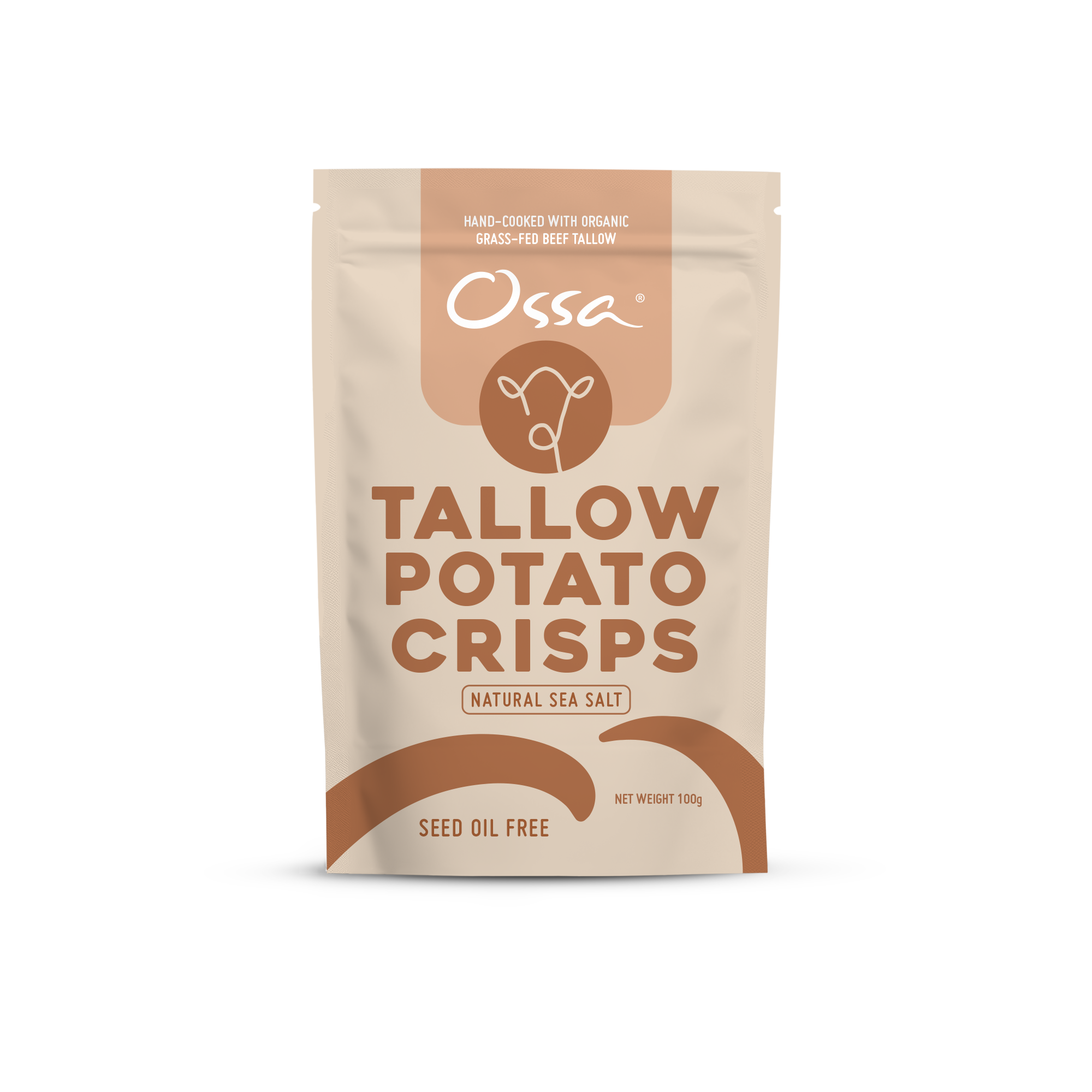
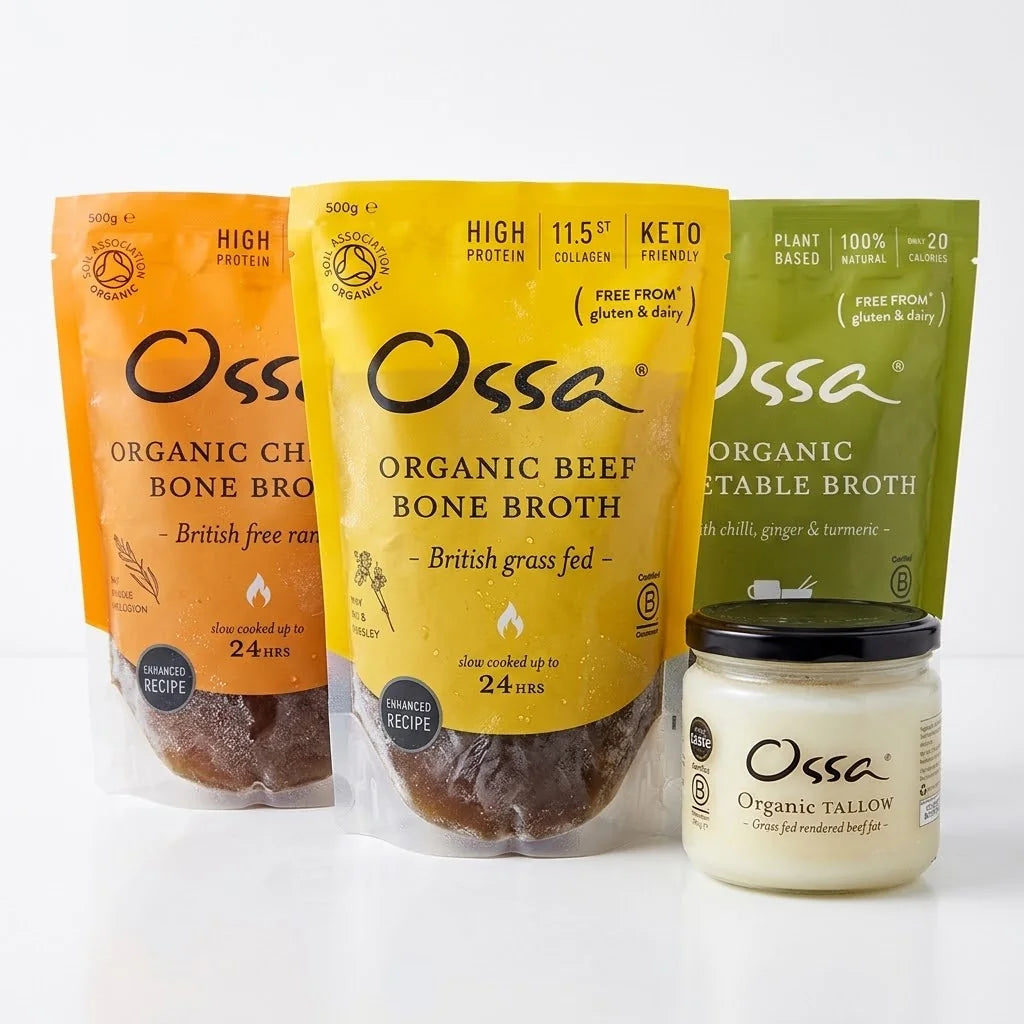
For seasoning, you want a tallow that is clean, fully rendered and free from additives. Our Organic Tallow is beef fat from British cows grass-fed to organic standards, and it is made for cooking, which means the same jar will season your pan and fry your dinner. Our other grass-fed fats, bone broths, collagen and bundles are on the main shop page. If you want ideas for what to cook once the pan is ready, the cooking oil recipe collection is a good place to start.
Our view on tallow and cast iron
We are a family-run business, and tallow is a staple in our own kitchen. We cook mostly paleo, and we use animal fats for searing, roasting and frying because we value traditional, minimally processed food.
Our view on cast iron follows the same thinking. A pan seasoned with a single natural fat, and then cooked in often, is simple to look after. You do not need a cupboard full of specialist oils. You need a thin coat, a hot oven, some patience, and regular cooking.
We are also honest about the trade-off. If speed is your only goal, some polyunsaturated oils will lay down a firm first coat in fewer rounds. Tallow takes a little longer to get going. What it offers is a pan that improves each time you use it with the same fat you cook with, and a short ingredient list.
The quality of the fat matters. We use organic, grass-fed, slow-prepared ingredients because the starting material affects how a fat tastes, smells and keeps. A clean tallow gives a clean seasoning.
— Ossa Organic
FAQ
Can I season my cast iron pan with tallow?
Yes. Apply a very thin layer to a clean, dry, slightly warm pan, wipe it until it looks almost dry, and bake it upside down in a hot oven for an hour. Repeat several times and let the pan cool in the oven between coats. Cooking with tallow afterwards keeps building the seasoning.
What are the downsides of using beef tallow on cast iron?
Tallow is mostly saturated fat, so it builds a first coating more slowly than oils high in polyunsaturated fat. It can also go rancid if it is poorly rendered or stored for a long time. Keeping the tallow in a cool, dark place or the fridge, applying thin coats and using the pan regularly reduces both issues.
Is it safe to use old tallow for seasoning?
Only if it still smells clean. Sour, sharp or paint-like smells mean the fat has oxidised, and you should throw it away rather than bake it onto your pan. Well-rendered tallow stored cool and sealed lasts far longer than tallow with water or tissue left in it.
What temperature should I use to season with tallow?
A range of about 230 to 260°C (450 to 500°F) for one hour per coat is the most commonly recommended. Tallow starts to smoke at roughly 204°C (400°F), so expect some smoke and ventilate the kitchen. Use the highest setting your oven handles comfortably and keep to thin coats.
Is tallow better than vegetable oil for seasoning?
Not in speed, but often in simplicity. Polyunsaturated oils cross-link quickly, so they can give a harder first layer. Tallow is a single natural fat that you can also cook with, which makes ongoing care easier. Many cooks use whichever fat they cook with most, because regular use does most of the work.
Recommended