


Cart
0

The paleo diet framework is defined as a modern nutritional pattern built around whole, unprocessed foods that mirror the dietary habits of pre-agricultural humans, excluding grains, legumes, dairy, processed foods, and added sugars. Formally recognised by researchers as the Paleolithic Diet, it is not a strict historical reenactment. It is a flexible template grounded in evolutionary physiology, and studies show improved glycemic control and lipid profiles in Type 2 Diabetes Mellitus patients after just three months of adherence. The Mayo Clinic and leading nutrition researchers acknowledge its potential for metabolic improvement, and a 28-day reset period is widely recommended for beginners to stabilise blood sugar and reduce cravings. For anyone seeking to reduce processed food and eat more intentionally, this framework offers a clear, evidence-backed starting point.
What is the paleo diet framework and what does it include?
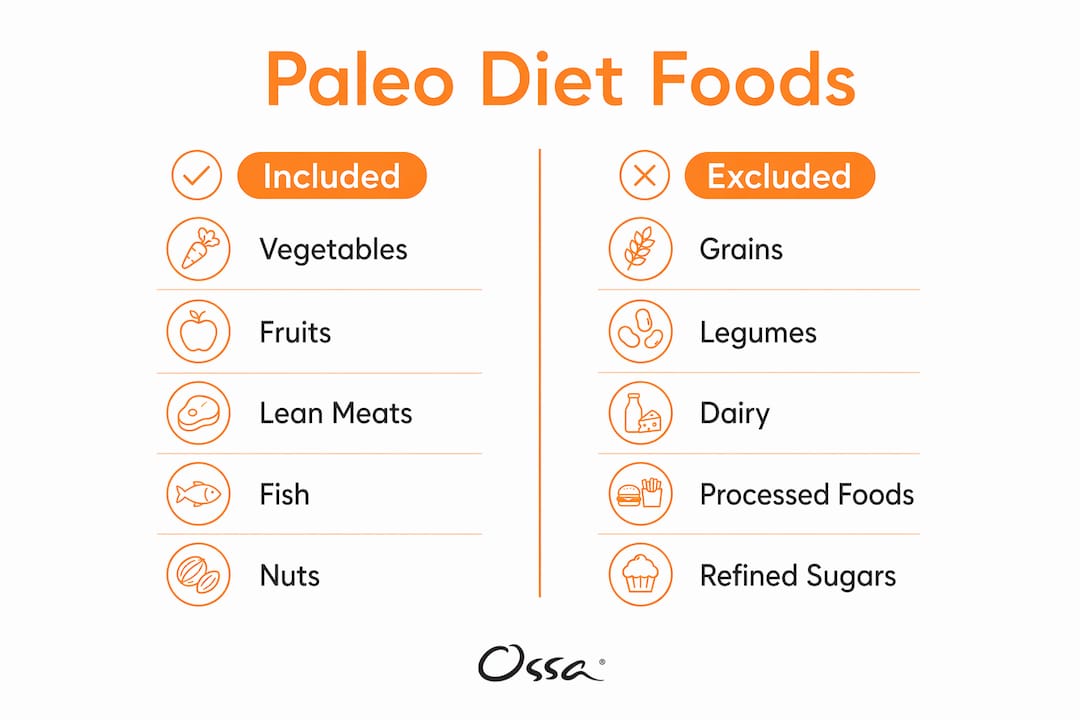
The paleo diet framework centres on eating whole, unprocessed foods including vegetables, fruits, lean meats, fish, nuts, and seeds, while systematically excluding grains, legumes, dairy products, processed foods, and added sugars. This is not about replicating a specific ancestral menu. It is about applying a modern nutritional template informed by how human physiology evolved before industrialised food production.

Researchers use a tool called the Paleolithic Diet Fraction (PDF) to measure how closely a person’s diet aligns with paleo principles. A higher PDF score reflects greater adherence to whole, minimally processed foods and lower intake of refined carbohydrates and seed oils. This scoring system gives the framework scientific rigour beyond simple food lists.
| Included foods | Excluded foods |
|---|---|
| Vegetables (all types) | Grains (wheat, oats, rice) |
| Fruits | Legumes (beans, lentils, peanuts) |
| Lean meats and poultry | Dairy products |
| Fish and seafood | Processed and packaged foods |
| Nuts and seeds | Added sugars and sweeteners |
| Eggs | Refined vegetable and seed oils |
| Natural fats (tallow, olive oil) | Salt-heavy processed condiments |
The framework does not require expensive specialist products. Many people fall into the trap of buying heavily marketed “paleo-labelled” snack bars and supplements, which often undermine the diet’s core purpose. The paleo food list is fundamentally a whole-food shopping list, and seasonal produce will always outperform processed alternatives in both nutrition and cost.
Pro Tip: Build your pantry around seasonal vegetables, quality animal proteins, and natural fats like tallow or olive oil. Avoid spending money on processed products with “paleo” on the label. The framework works best when it stays simple.
What scientific evidence supports the benefits of paleo eating?
The health benefits of the paleo diet are rooted in two primary mechanisms: a reduced glycemic load and a measurable anti-inflammatory effect. By eliminating refined carbohydrates and seed oils while increasing omega-3 fatty acids and antioxidants from whole foods, the diet improves insulin sensitivity and cardiovascular health. These are not theoretical claims. They are supported by clinical data.
A study published in The Egyptian Journal of Internal Medicine found that Type 2 Diabetes Mellitus patients following a paleo protocol showed improved glycemic and lipid profiles within three months. This matters because glycemic control is one of the most difficult outcomes to shift through diet alone, and three months is a short intervention window.
The Malmö Diet and Cancer Study, which tracked 24,104 participants, found an inverse association between PDF scores and cardiovascular mortality. Higher adherence to paleo principles was linked to lower rates of death from cardiovascular disease. The same study found that greater PDF adherence correlated with reduced levels of C-reactive protein (CRP) and the neutrophil-to-lymphocyte ratio (NLR), both established markers of systemic low-grade chronic inflammation.
| Health outcome | Evidence |
|---|---|
| Glycemic control | Improved in Type 2 DM patients after 3 months |
| Lipid profiles | Positive changes observed in clinical trials |
| Cardiovascular mortality | Inversely associated with PDF adherence in 24,104-person cohort |
| Inflammatory markers (CRP, NLR) | Reduced with higher paleo adherence |
| Body weight and waist circumference | Improvements noted across multiple studies |
One ongoing debate concerns long-term sustainability and whether the exclusion of entire food groups creates nutritional gaps over time. This is a legitimate concern, and it is addressed directly in the next section. The evidence for short to medium-term metabolic benefits, however, is consistent across multiple study designs.
How does the paleo framework handle common critiques?
The most frequent criticism of the paleo diet is that removing legumes, grains, and dairy creates nutritional deficiencies, particularly in calcium, fibre, and B vitamins. This critique deserves a direct answer rather than dismissal.
On calcium specifically, research shows that calcium homeostasis is maintained in paleo adherents despite lower dairy intake. A high-protein, low-salt dietary pattern reduces urinary calcium excretion, meaning the body retains more calcium from non-dairy sources such as leafy greens, sardines, and almonds. Bone health is not automatically compromised by removing dairy.
The second major critique is that the paleo diet is a “meat-heavy” approach with little room for plant diversity. This is a myth about the framework that persists largely because of how it is marketed rather than how it is practised. A well-constructed paleo plate is predominantly vegetables, with animal protein as one component rather than the centrepiece.
Many dietitians now advocate for what is called a “Paleo-adjacent” approach. This means:
- Prioritising whole, unprocessed foods as the foundation
- Reducing refined sugars and seed oils without total elimination of every excluded group
- Allowing moderate amounts of legumes or fermented dairy if tolerated individually
- Focusing on food quality and preparation method over strict categorical rules
This flexibility is not a compromise of the framework. It is the framework working as intended. The paleo diet is best understood as a personalised template that assesses individual responses rather than enforcing rigid historical replication.
Pro Tip: If you find strict paleo adherence unsustainable, a Paleo-adjacent approach that eliminates processed foods and refined sugars while allowing occasional legumes or fermented dairy will still deliver the majority of the metabolic benefits.
How to start the paleo diet: practical steps for beginners
Starting the paleo diet does not require a complete kitchen overhaul on day one. A structured, gradual approach produces better long-term results than an abrupt total elimination. The recommended 28-day reset gives your body time to adapt, stabilise blood sugar, and reduce cravings for refined carbohydrates before you assess how you feel.
Here is a practical starting framework:
- Week 1: Remove processed foods, added sugars, and refined seed oils. Keep everything else the same.
- Week 2: Eliminate grains and replace with additional vegetables, sweet potatoes, and root vegetables.
- Week 3: Remove legumes and dairy. Introduce bone broth, quality animal fats, and fermented vegetables.
- Week 4: Assess how you feel, identify any gaps, and adjust portions and food variety accordingly.
Paleo meal plan ideas do not need to be complicated. Breakfasts built around eggs, vegetables, and avocado. Lunches of grilled fish or chicken with a large salad dressed in olive oil. Dinners centred on slow-cooked meats, root vegetables, and leafy greens. Ossa Organic’s bone broth recipes offer a practical starting point for incorporating nutrient-dense, slow-cooked meals that align directly with paleo principles.
For context, here is how the paleo framework compares with two other popular dietary approaches:
| Diet | Core focus | Excludes | Allows |
|---|---|---|---|
| Paleo | Whole, evolutionary foods | Grains, legumes, dairy, processed foods | Meats, fish, vegetables, fruits, nuts |
| Mediterranean | Heart health, plant diversity | Processed foods, excess red meat | Whole grains, legumes, dairy in moderation |
| Ketogenic | Fat-based metabolism | Most carbohydrates | High fat, moderate protein, minimal carbs |
The paleo framework sits between Mediterranean and Ketogenic in terms of carbohydrate restriction. It is less restrictive than keto but more structured than Mediterranean in its exclusion of grains and dairy. For beginners, this middle ground often makes it the most accessible starting point. Explore paleo-adapted recipes to build a practical weekly rotation without relying on specialist products.
Key takeaways
The paleo diet framework delivers measurable metabolic benefits by eliminating refined carbohydrates and processed foods, and it works best when treated as a flexible, personalised whole-food template rather than a rigid historical diet.
| Point | Details |
|---|---|
| Core definition | A modern nutritional template based on whole, unprocessed foods, excluding grains, legumes, dairy, and processed foods. |
| Scientific support | Clinical studies show improved glycemic control, lipid profiles, and reduced cardiovascular mortality with higher paleo adherence. |
| Flexibility matters | A Paleo-adjacent approach that removes processed foods and refined sugars delivers most benefits without strict total exclusion. |
| Calcium concern addressed | High-protein, low-salt paleo eating reduces urinary calcium loss, supporting bone health without dairy. |
| Beginner strategy | A structured 28-day reset, seasonal whole-food pantry, and simple meal planning support sustainable adherence. |
Paleo in practice: what years of whole-food eating actually teaches you
The most common mistake people make with the paleo framework is treating it as a binary pass-or-fail system. Either you are fully paleo or you have failed. That framing produces short-term compliance and long-term abandonment.
What actually works is using the framework as a diagnostic tool. Remove the obvious culprits first: refined sugar, seed oils, ultra-processed foods. Notice what changes. Then remove grains and see how your digestion, energy, and sleep respond. The framework is most useful when you treat your own body as the primary data source, not a food list on a website.
The “meat-heavy” stereotype does real damage to how people approach this way of eating. A plate that is 60 to 70 per cent vegetables, with quality animal protein and natural fats, is not a carnivore diet. It is a well-constructed paleo meal. The distinction matters because people who go meat-heavy often feel worse, not better, and blame the framework rather than the imbalance.
Slow cooking is underrated in this context. Bone broth, braised meats, and long-cooked vegetables are not just traditional techniques. They extract nutrients that fast cooking methods leave behind. Ossa Organic was built on exactly this principle, and it shows in the difference between a slow-simmered broth and a stock cube.
Long-term adherence comes down to preparation, not willpower. A well-stocked kitchen with quality fats, seasonal produce, and a few reliable recipes removes the daily decision fatigue that causes most dietary frameworks to collapse.
— Ossa Organic
How Ossa Organic supports your paleo diet

Ossa Organic produces a range of keto and paleo-friendly products designed to make whole-food eating practical and nourishing. The range includes collagen, gelatine, bone broths, and tallow, all sourced from organic ingredients and produced using slow cooking techniques that preserve nutritional integrity. These are not paleo-labelled novelty products. They are traditional foods that fit naturally into a paleo framework because they have always been part of one. Whether you are building your first paleo meal plan or looking to add more nutrient-dense staples to an established routine, Ossa Organic’s product range and recipe library give you the tools to do it without compromise.
FAQ
What foods are excluded on the paleo diet?
The paleo diet excludes grains, legumes, dairy products, processed foods, refined seed oils, and added sugars. The focus is on removing foods that became dietary staples only after the agricultural revolution.
How long does it take to see results on a paleo diet?
Clinical studies show measurable improvements in glycemic control and lipid profiles within three months. Many beginners notice changes in energy and digestion within the first two to four weeks of a structured 28-day reset.
Is the paleo diet suitable for vegetarians?
The paleo framework is challenging but not impossible for vegetarians. It excludes legumes and grains, which are primary plant protein sources, so vegetarians following paleo principles need to rely heavily on eggs, nuts, seeds, and a wide variety of vegetables.
Does the paleo diet cause calcium deficiency?
Research shows that calcium homeostasis is maintained on a paleo diet through reduced urinary calcium excretion. Non-dairy sources such as leafy greens, sardines, and almonds contribute sufficient calcium when the diet is well-planned.
What is the difference between paleo and keto?
Paleo focuses on food quality and evolutionary alignment, excluding grains, legumes, and dairy but allowing natural carbohydrates from fruit and root vegetables. Keto focuses on achieving a fat-burning metabolic state by restricting nearly all carbohydrates, regardless of food source.



Erica James —
A helpful point is that sustainable eating often depends on balance, variety, and choosing minimally processed foods rather than strict rules.
Paleo-style meals can be adapted to individual nutritional needs while still focusing on vegetables, quality proteins, fruits, nuts, and seeds.
For more practical health and wellbeing information, https://www.islipsurgery.org.uk/ can also be a useful resource.