

Cart
0
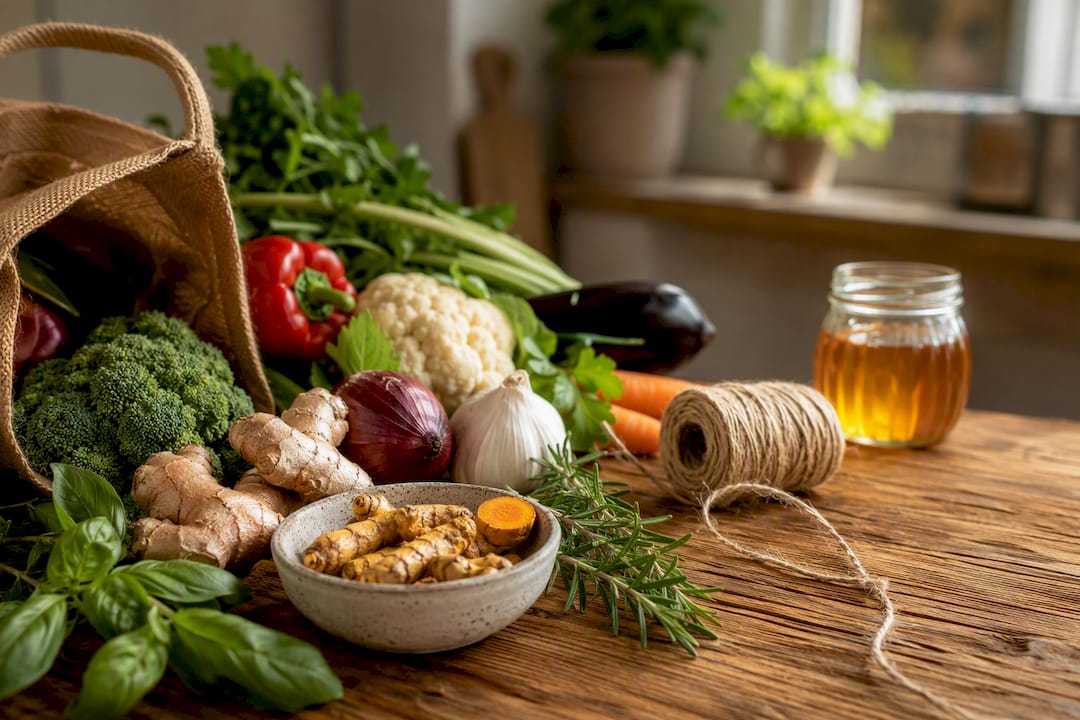
A plant-forward eating pattern rich in omega-3s, polyphenols, fibre and unsaturated fats reliably lowers markers of chronic inflammation. Prioritise berries, leafy greens, crucifers, oily fish, nuts and seeds, extra virgin olive oil, turmeric, fermented foods and bone broth. Start tomorrow: make half your plate vegetables or fruit, and swap in olive oil or oily fish at least twice a week.
TL;DR:
- Consistent intake of oily fish twice weekly and daily consumption of walnuts or seeds can significantly lower inflammatory markers in the body.
- Brightly colored fruits and vegetables, such as berries, tomatoes, and dark leafy greens, contain polyphenols and carotenoids that actively reduce cellular damage linked to inflammation.
- Replacing processed snacks, refined carbs, fried foods, and sugary drinks with whole-food alternatives like whole grains, roasted vegetables, and homemade broth can make a measurable difference within a few weeks.
- Pairing turmeric with black pepper and a fat source enhances curcumin absorption, maximizing its anti-inflammatory benefits in cooking.
- Incorporating fermented foods and bone broth into meals supports gut health, which is closely connected to inflammation reduction and systemic well-being.
Table of Contents
- Anti-inflammatory foods list: what to put in your trolley
- Why colourful fruit and vegetables matter so much
- Which fats and proteins actually reduce inflammation
- The pantry spices that punch above their weight
- Gut health, fermented foods and bone broth’s place on the shelf
- What to limit, and easy swaps that don’t feel like sacrifice
- Building your anti-inflammatory shopping list
- How soon will you notice a difference?
- Do these foods interact with medications or health conditions?
- What does the science actually say?
- What Ossa Organic brings to this conversation
- Making bone broth part of your everyday anti-inflammatory meals
- FAQ
Anti-inflammatory foods list: what to put in your trolley
You don’t need a supplement cupboard to change how your body handles inflammation. You need a shopping list that actually reflects what works, and enough repetition to make it a habit rather than a one-off health kick.
- Blueberries and dark cherries — packed with anthocyanins, a polyphenol that helps dampen the chemical signals behind chronic inflammation. Add a handful to porridge or yoghurt.
- Spinach and kale — rich in carotenoids and vitamin K. Wilt into eggs or blend into a smoothie.
- Broccoli and Brussels sprouts — crucifers containing sulforaphane, best roasted with olive oil to soften their bitterness.
- Salmon, mackerel and sardines — the richest dietary sources of EPA and DHA, the omega-3s most studied for lowering inflammatory markers.
- Walnuts and chia seeds — plant-based ALA omega-3s and fibre in one handful.
- Extra virgin olive oil — a cooking and dressing staple with oleocanthal, a compound that behaves similarly to mild anti-inflammatory medication.
- Turmeric — its active compound, curcumin, works best paired with black pepper and a source of fat.
- Ginger and garlic — everyday aromatics with a long history in anti-inflammatory cooking.
- Live-culture yoghurt and kefir — feed beneficial gut bacteria that produce inflammation-calming compounds.
- Sauerkraut and kimchi — fermented vegetables offering both fibre and probiotics.
- 1x Organic Beef Bone Broth Ambient 515ml — a slow-simmered, minimally processed base for soups and grain dishes.
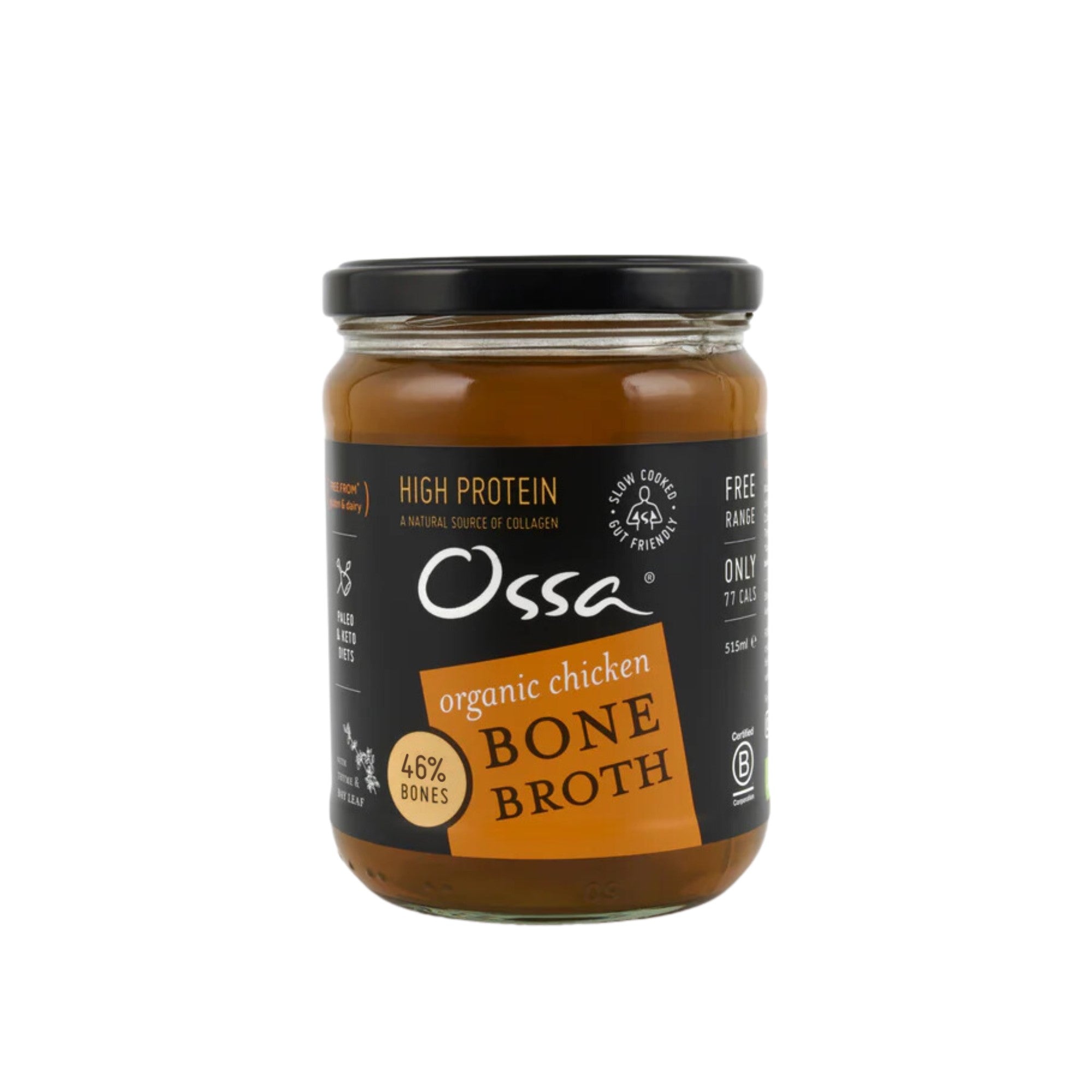
- Organic Free Range Chicken Bone Broth 500ml — a gentle, sippable option on days your gut needs something soothing.
- 1 x Organic Chicken Bone Broth Ambient 515ml — useful for cooking rice or quinoa in place of water.
- Organic Vegetable Broth Ambient 515ml — a plant-based base for stews and risottos.
Rotate these through the week rather than treating any single item as a cure. Consistency, not novelty, is what moves the needle.
Why colourful fruit and vegetables matter so much
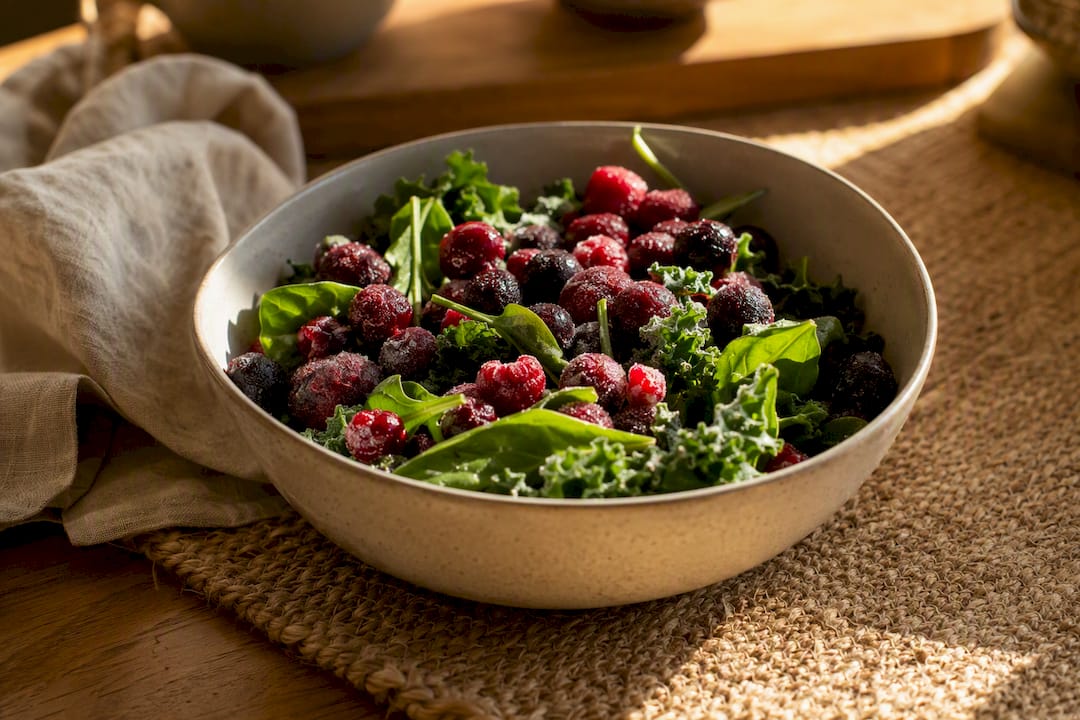
Colour is doing real biochemical work here. The pigments that make berries deep purple and tomatoes red, polyphenols and carotenoids, act almost like an off switch for the chain reactions that drive cellular damage and systemic inflammation. The deeper or brighter the colour, generally, the higher the concentration.
The highest-value examples worth stocking regularly:
- Blueberries, blackberries and dark cherries
- Tomatoes, especially cooked (lycopene becomes more available with heat)
- Spinach, kale and other dark leafy greens
- Broccoli, cauliflower and Brussels sprouts
Batch-roast a tray of vegetables at the weekend and you’ve solved lunch for three days. The simplest daily target is the “half your plate” rule: fill half of every meal with vegetables or fruit before you think about anything else.
Pro Tip: Frozen berries and frozen leafy greens keep their polyphenol content well and cost less than fresh, so there’s no need to feel that anti-inflammatory eating requires a premium fruit bowl.
Which fats and proteins actually reduce inflammation
Not all fat behaves the same way in the body, and the distinction matters more than most food lists explain. Oily fish, such as salmon, mackerel and sardines, supply EPA and DHA, the two omega-3 forms most directly linked to lower inflammatory markers in institutional dietary guidance. Walnuts, flax and chia seeds provide ALA, a plant-based omega-3 that the body converts to EPA and DHA at a modest rate, useful but not a full substitute for fish.
Statistic callout: Guidance from Johns Hopkins Medicine highlights oily fish as a top source of anti-inflammatory omega-3s, with regular consumption, a frequency considered practical for most people.
- Salmon, mackerel, sardines and trout, twice weekly
- Walnuts, chia seeds and ground flaxseed, daily in small amounts
- Extra virgin olive oil for dressings and low to medium heat cooking
- Avocado as a spreadable, cooking-stable fat
Olive oil loses some of its beneficial compounds at very high heat, so save it for finishing dishes or gentle sautéing rather than deep frying. If fish isn’t part of your diet, an algae-based omega-3 supplement is a reasonable substitute worth discussing with a pharmacist or dietitian.
The pantry spices that punch above their weight
Turmeric gets most of the attention, and rightly so, but curcumin, its active compound, is poorly absorbed on its own. Pairing it with black pepper and a fat source, such as olive oil or coconut milk, meaningfully improves how much your body actually takes up. A pinch in a lentil stew does more good than a spoonful stirred into water.
- Turmeric, stirred into stews, curries or scrambled eggs with black pepper
- Fresh ginger, grated into dressings, teas or stir-fries
- Garlic, crushed into almost anything savoury
- Green tea, a daily source of polyphenols with no preparation effort
- Dark chocolate, 70% cocoa or higher, in small squares
Pro Tip: A cup of green tea after meals is one of the easiest anti-inflammatory habits to keep, precisely because it requires no cooking, no shopping list change and no willpower.
Gut health, fermented foods and bone broth’s place on the shelf
Inflammation and gut health are tightly linked. A diet rich in prebiotic fibre and probiotic foods cultivates gut bacteria that produce compounds which calm inflammation elsewhere in the body, not just in the digestive tract.
- Live-culture yoghurt and kefir
- Sauerkraut and kimchi
- Asparagus, leeks and bananas (prebiotic fibre sources)
- Bone broth, traditionally used for gut comfort and easy digestion
If you’re new to fermented foods, start with a small serving rather than a full portion; introducing them gradually avoids digestive upset. Ossa Organic’s Organic Vegetable Broth Ambient 240ml or the 1 x Organic Vegetable Broth Ambient 515ml make a gentle entry point, while the beef and chicken broths suit heartier, slow-cooked meals. For a fuller look at how fibre and fermentation support this, see this guide to natural gut healing foods.
What to limit, and easy swaps that don’t feel like sacrifice
Four categories do most of the damage: ultra-processed snacks, refined carbohydrates, fried food and sugary drinks. Processed meats sit close behind. None of this requires elimination, just a shift in default choices.
- Swap sugary fizzy drinks for sparkling water with fresh lemon or a splash of juice.
- Swap fried chips for oven-baked sweet potato wedges.
- Swap white bread and pastries for wholegrain versions most of the week.
- Swap processed deli meats for roast chicken or grilled fish where practical.
- Swap a chocolate bar for two squares of 70%+ dark chocolate.
- Ultra-processed snacks (crisps, packaged pastries)
- Refined carbohydrates (white bread, sugary cereals)
- Fried and deep-fried food
- Processed meats (bacon, sausages, deli slices)
- Sugary drinks, including fruit juice in large amounts
Moderation beats perfection. Cutting these back three or four days a week does more for you long-term than a rigid ban you abandon within a fortnight.
Building your anti-inflammatory shopping list
A shopping list organised by storage location keeps the theory from evaporating at the supermarket door.
Fridge: spinach, broccoli, berries, live-culture yoghurt, salmon fillets, kefir. Cupboard: turmeric, black pepper, extra virgin olive oil, walnuts, chia seeds, tinned sardines. Freezer: frozen berries, frozen leafy greens, oily fish fillets.
Three quick swaps to try this week:
- Breakfast: swap sugary cereal for porridge with walnuts and blueberries.
- Lunch: swap a shop-bought sandwich for a salad with olive oil, tinned salmon and leafy greens.
- Dinner: swap fried rice for a stew simmered with turmeric, ginger and vegetable broth.
Pro Tip: When reading labels, check whether sugar appears in the first three ingredients and avoid anything listing hydrogenated or partially hydrogenated oils. High-quality packaged foods with short, whole-food ingredient lists still have a place in an anti-inflammatory diet; blanket avoidance of anything packaged isn’t necessary. Wild Foodz has a useful set of tips for building balanced meals that travel well beyond holidays.
How soon will you notice a difference?
Some people notice changes in symptoms or energy within 2–3 weeks of consistently cutting inflammatory foods and adding the ones above. Blood markers, if you’re tracking them, usually need a clinical test to confirm any shift. Diet is one lever among sleep, exercise and stress management, not the whole system. If symptoms persist beyond a few weeks, speak to a GP or registered dietitian rather than pushing further dietary changes alone.
Do these foods interact with medications or health conditions?
Food and medication interactions are worth taking seriously, particularly with the pantry items that get the most enthusiastic press. Turmeric and high-dose curcumin supplements can interact with blood-thinning medication, including warfarin, and with some diabetes medications, because curcumin has mild blood-sugar and clotting effects of its own. Culinary use, a teaspoon in a curry, sits at a very different level of exposure to a concentrated supplement, but anyone on anticoagulants should mention regular turmeric use to their GP or pharmacist.
Oily fish and omega-3 supplements can also have a mild blood-thinning effect at high doses, which matters for anyone already on anticoagulant or antiplatelet medication, or scheduled for surgery. Fermented foods, while generally safe, can cause bloating or discomfort in people with histamine intolerance, and should be introduced gradually in anyone with inflammatory bowel conditions, since high-fibre foods can aggravate symptoms during a flare rather than outside one.
People managing kidney disease need to be cautious with high-potassium foods such as leafy greens and some fruit, since these are usually restricted rather than encouraged in that context. Green tea contains caffeine and modest amounts of vitamin K, which can matter for those on warfarin. None of this means avoiding these foods outright. It means treating dietary change as something to mention at your next medication review, particularly if you’re on anticoagulants, diabetes medication, or managing a chronic digestive or kidney condition.
What does the science actually say?
The idea of an “anti-inflammatory diet” isn’t a single prescribed plan; it’s a pattern. Broader dietary patterns such as the Mediterranean or DASH diets are the ones institutions actually study and recommend, rather than any fixed list of superfoods. Peer-reviewed research on diets high in plant foods, whole grains and unsaturated fats consistently links that pattern to lower inflammatory markers, and reviews of nuts and whole grains specifically show associations with reduced inflammation and better cardiometabolic outcomes.
The mechanisms are reasonably well understood even if the full picture is complex. Omega-3 fatty acids from oily fish and plant sources reduce the production of certain inflammatory compounds in the body. Curcumin, turmeric’s active ingredient, has documented anti-inflammatory properties but notably low bioavailability unless it’s consumed alongside black pepper and fat, which is precisely why culinary use tends to outperform poorly formulated supplements for daily consistency.
What the evidence doesn’t support is the idea that any single ingredient works in isolation. The pattern matters more than the individual item; a diet of daily turmeric lattes alongside fried food and sugary drinks isn’t doing much. Consistent, unglamorous daily choices, more vegetables, more oily fish, less refined sugar, produce the measurable results that show up in the research.
What Ossa Organic brings to this conversation
Ossa Organic’s founder, Catherine Farrant, discovered bone broth’s benefits while pregnant with her first child, and built the business around slow-cooked, organic ingredients rather than shortcuts. That tradition-not-trend approach, paired with the brand’s B Corp certification, shapes every product on the shelf. Every broth in this list follows the same principle behind the wider article: whole ingredients, gently prepared, with nothing artificial added. It’s why bone broth sits comfortably alongside berries and oily fish rather than as an afterthought.
— Ossa Organic
Making bone broth part of your everyday anti-inflammatory meals
Bone broth earns its place through versatility rather than novelty. Cooking rice or quinoa in 1 x Organic Chicken Bone Broth Ambient 515ml instead of water adds flavour and nutrients without extra effort, while the Organic Vegetable Broth Ambient 515ml gives plant-based cooks a comparably rich base for risottos and lentil dishes. For joint-friendly meals, a mug of broth alongside your usual dinner is an easy, low-effort addition rather than a separate health project. Browse the full range and recipe ideas on the Ossa Organic bone broth guide, or start with the 14 Day Gut Reset if you want a structured way to build these habits from scratch.
FAQ
What is the strongest anti-inflammatory food?
No single food outperforms all others, but oily fish (for EPA and DHA) and berries (for concentrated polyphenols) are the two most consistently cited across institutional dietary guidance.
What reduces inflammation quickly?
Cutting sugary drinks, fried food and refined carbs while adding vegetables, oily fish and olive oil can produce noticeable changes in symptoms or energy within 2–3 weeks for some people, though blood markers usually need clinical testing to confirm.
What are the top 3 inflammatory foods to avoid?
Sugary drinks, fried foods and processed meats are consistently named as the main dietary drivers of chronic inflammation.
What is a good anti-inflammatory breakfast?
Porridge with walnuts, chia seeds and blueberries covers fibre, omega-3s and polyphenols in one bowl, and a mug of Ossa Organic bone broth alongside it adds a gentle, gut-friendly start to the day.