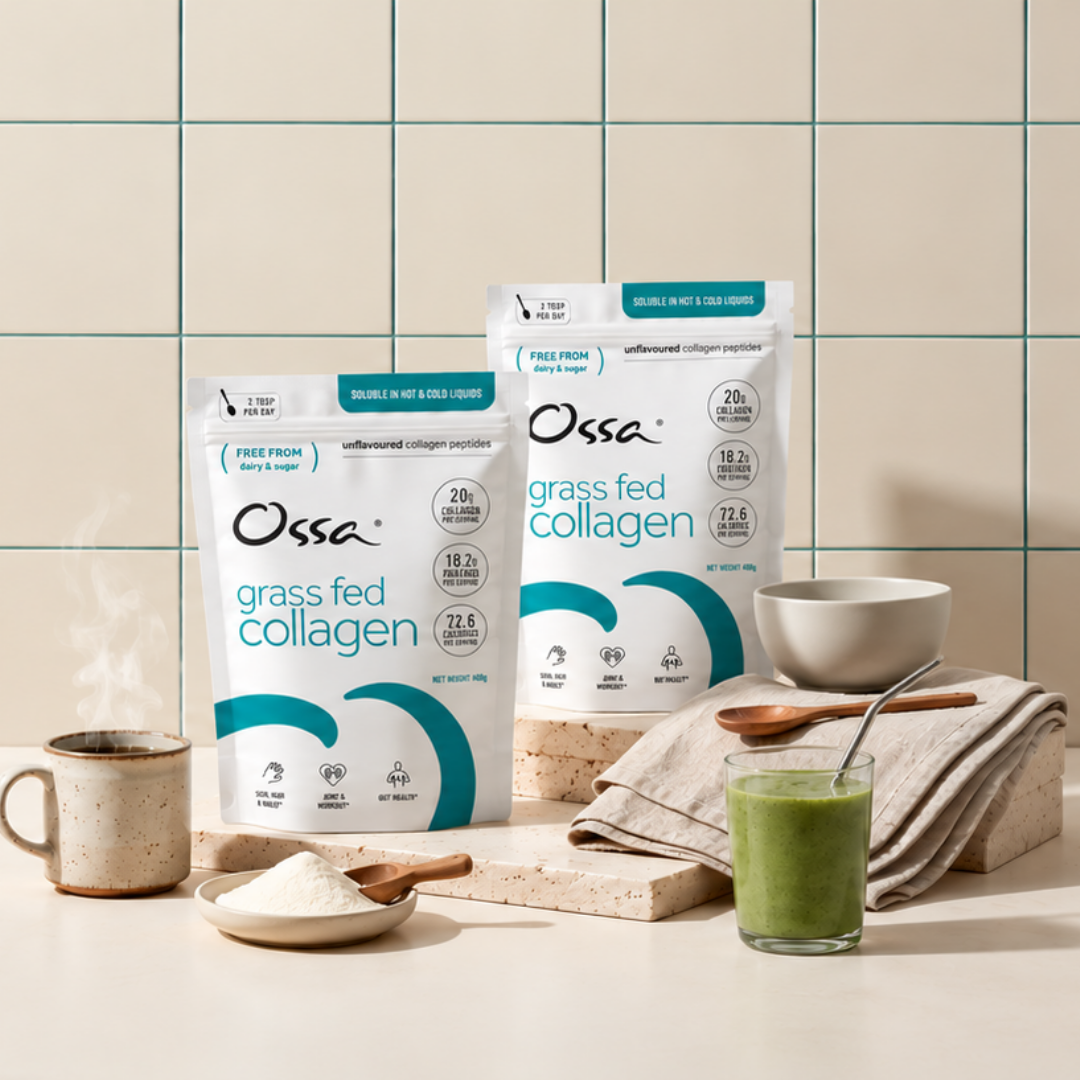
Collagen is generally safe to take after birth, including while breastfeeding, and the evidence points to genuine benefits for skin elasticity, hair thickness and joint comfort. Hydrolysed collagen breaks down into amino acids during digestion, the same way any dietary protein does, so transfer into breast milk is thought to be minimal. That said, “safe” doesn’t mean “start immediately at full dose.”
The sensible approach: begin conservatively, choose a third-party tested product or a whole-food source like bone broth, and mention it at your six-week check if you’re breastfeeding and have any underlying health concerns.
-
Look for third-party tested collagen or organic, traceable bone broth rather than unbranded powders
-
Start with a smaller amount for the first week and watch for any reaction in yourself or your baby
-
Raise it with your midwife or GP if you take medication, have allergies, or had birth complications
What the research actually shows: clinical trials in adults report measurable improvements in skin hydration and elasticity after several weeks of daily hydrolysed collagen peptides compared with placebo, though direct trials in breastfeeding populations remain limited. NHS guidance on postpartum supplementation focuses on vitamin D rather than collagen, so treat collagen as a supportive addition, not a medical necessity. Ossa Organic’s own approach, built on bone broth as a whole-food source, reflects this same food-first thinking.
Key Takeaways
Collagen is generally safe during breastfeeding and offers the strongest evidence-backed support for skin hydration, elasticity and joint comfort when sourced from a tested, traceable product.
| Point |
Details |
| Safety while breastfeeding |
Hydrolysed collagen digests like any dietary protein, meaning breast milk transfer is thought to be minimal. |
| Strongest evidence |
Skin hydration, elasticity and joint comfort have the most trial support in general adult populations. |
| Sourcing beats dosing |
Choose third-party tested products or traceable bone broth over cheap, unverified marine powders. |
| Timing and duration |
Benefits typically appear after several weeks of consistent daily use, not days. |
| Food-first option |
Ossa Organic’s organic bone broths offer a traceable, whole-food route to collagen alongside minerals and gelatine. |
Table of Contents
What benefits can collagen deliver after birth?
Collagen is the structural protein holding your skin, tendons, ligaments and joint cartilage together, and pregnancy and birth put unusual strain on all of it. Skin stretches over nine months then has to recover. Joints loosen under the hormone relaxin and take time to restabilise. Hair, paused in its growth cycle during pregnancy, often sheds in clumps a few months postpartum. Collagen supplementation won’t reverse any of this overnight, but it supplies the raw materials the body uses to rebuild.
Collagen consumption increases the availability of glycine and proline, two amino acids essential for tissue repair and collagen synthesis. During postpartum recovery, when your body is simultaneously healing from birth, producing milk and losing collagen density (oestrogen, which supports collagen production, drops sharply after delivery), that extra amino acid supply may matter more than at any other life stage.
The evidence is strongest for two things:
-
Skin hydration and elasticity. Randomised trials report measurable improvements in skin hydration and reduced wrinkle depth after daily hydrolysed collagen peptides, typically after several weeks of use.
-
Joint comfort. Systematic reviews find modest but consistent benefits for joint pain and connective tissue function in adults, though few studies focus specifically on postpartum populations.
Claims about stretch mark fading, pelvic floor strengthening and postpartum hair regrowth are more plausible than proven. Some trials in adult women show improved bone density markers with collagen and co-factor supplementation, but nobody has run the equivalent trial on postpartum-specific bone recovery. Understanding collagen’s role in supporting skin, joints and gut health helps set realistic expectations: most women notice changes in skin texture and joint stiffness somewhere between six and twelve weeks of consistent use, not overnight, and not for every symptom on the list.
Is collagen safe while breastfeeding?
This is the question that actually keeps new mothers up at night (as if they needed another reason), so here’s the direct answer: hydrolysed collagen is broken down into peptides and amino acids during digestion and absorbed the same way any other dietary protein is. That digestion process means transfer into breast milk is thought to be minimal, though it’s worth being honest that direct studies in lactating women specifically are limited. Most of the safety reasoning is extrapolated from general adult nutrition science rather than breastfeeding-specific trials.
That gap in the research doesn’t mean collagen is risky. It means the safety checklist below matters more than it would for a well-studied nutrient like vitamin D.
-
Check the source and testing. Marine-derived collagen carries a genuine risk of mercury and heavy metal contamination. Choose brands that publish third-party testing results or batch certificates, not just marketing claims about purity.
-
Watch for allergy signals. Fish-based collagen can trigger reactions in anyone with a fish or shellfish allergy; bovine collagen occasionally does the same for beef or gelatine sensitivities. If your baby develops unexplained rashes, digestive upset or unusual fussiness after you start supplementing, stop and note the timing.
-
Introduce gradually. Start with a half dose for the first few days rather than jumping straight to the full serving size on the tub.
-
Speak to a midwife or GP before starting if you had birth complications, take regular medication, have a known food allergy, or simply feel unsure. This is exactly the kind of question worth raising at your six-week postnatal check.
Pro Tip: Keep the packaging or batch number of any new collagen product for the first month you use it. If anything unexpected comes up with you or your baby, your GP or health visitor can check the exact source and testing standard far faster than if you’re trying to remember the brand from memory.
The contamination point deserves a bit more weight than it usually gets. Reviews of dietary supplement quality consistently flag marine and unregulated protein powders as higher risk categories for heavy metal contamination, which is precisely why sourcing matters more than dose when you’re breastfeeding. A cheaper, untested marine collagen isn’t a bargain if you can’t verify what’s actually in it.
What does the clinical evidence actually show?
The research on collagen is genuinely encouraging for general adult skin and joint health, but it has a specific, important gap: almost none of it was conducted on postpartum or breastfeeding women. That distinction shapes how confidently you should read every headline about collagen “curing” postpartum skin or hair loss.
Randomised controlled trials in adult populations show consistent, measurable improvements in skin hydration, elasticity and wrinkle depth after several weeks of daily hydrolysed collagen peptides versus a placebo. Systematic reviews and meta-analyses report similar modest gains for joint pain and connective tissue function, again in general adult cohorts rather than new mothers specifically. Separately, trials in adult women have found changes in bone density markers with collagen plus co-factor supplementation, though nobody has tested this directly in the postpartum bone-recovery context.
The clearest way to read the evidence is this: collagen peptides have a solid track record for skin and joint outcomes in general populations, and the biological mechanism (extra glycine and proline for tissue repair) applies just as logically to postpartum recovery. What’s missing isn’t proof that it doesn’t work for new mothers. It’s simply that nobody has run the trial yet.
Regulatory bodies have taken note of how collagen is marketed. In the EU, health claims about collagen supplements are scrutinised under EFSA’s claims framework, and specific therapeutic claims (like “cures stretch marks” or “reverses postpartum hair loss”) generally haven’t met the evidence bar for approval. That’s a useful filter: if a brand promises a specific, dramatic outcome with a guaranteed timeline, treat it with more scepticism than a brand that describes plausible, modest support.
NHS guidance on postpartum nutrition centres on vitamin D and a balanced diet rather than routine collagen supplementation, which is worth knowing before you assume collagen is a standard part of postnatal care. It isn’t, officially. It’s a reasonable, evidence-supported addition for many women. Those are different things, and the distinction matters when you’re deciding whether it belongs in your budget and your routine.
Hydrolysed, marine, bovine or bone broth: which source fits you?
The four main routes to collagen each solve a slightly different problem, and the right choice usually comes down to convenience, allergies and whether you’d rather eat food than take a supplement.
-
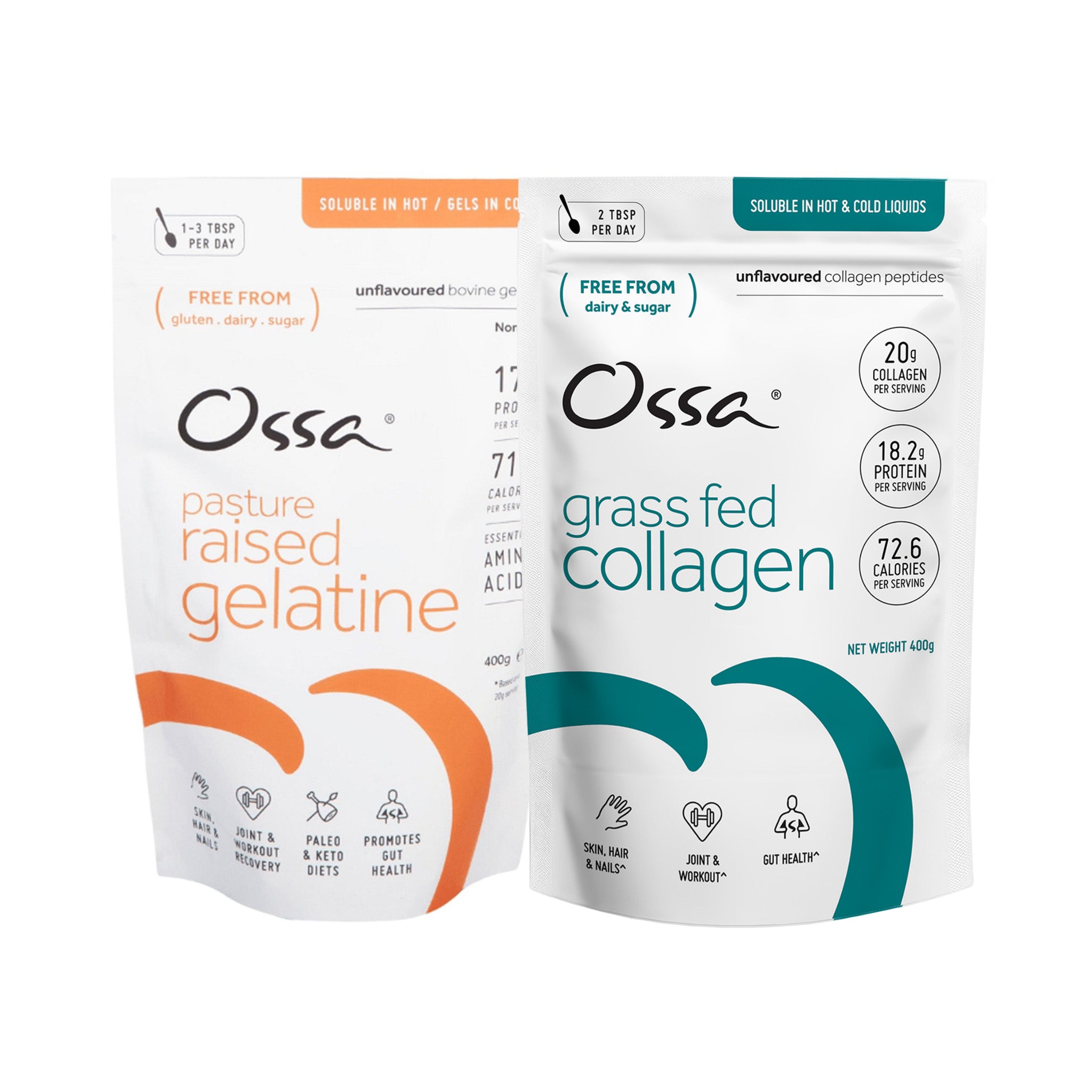
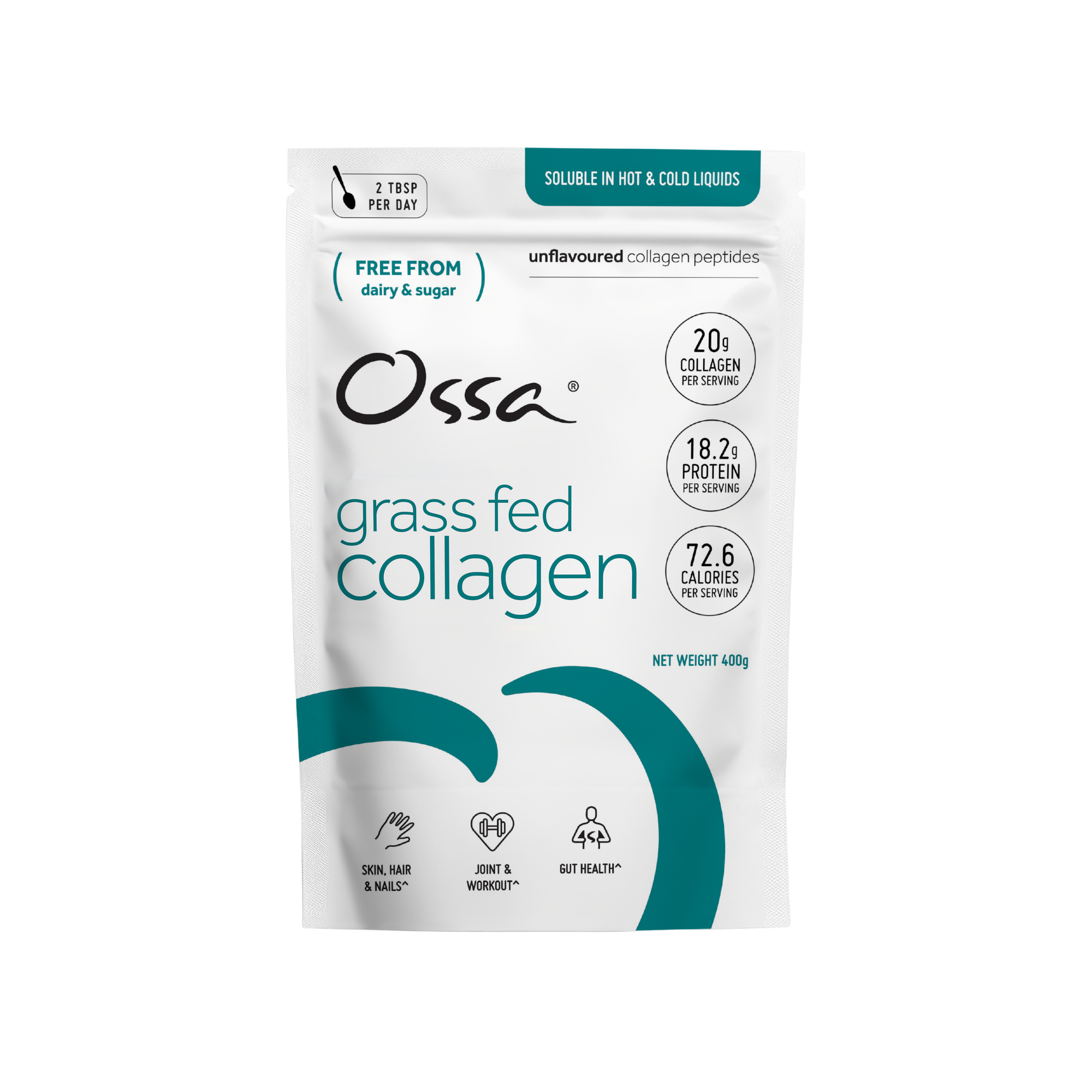
Hydrolysed collagen peptides are pre-broken into small chains for faster absorption. They dissolve into hot or cold drinks without gelling, which makes them the easiest to add to a morning coffee or smoothie one-handed while holding a newborn.
-
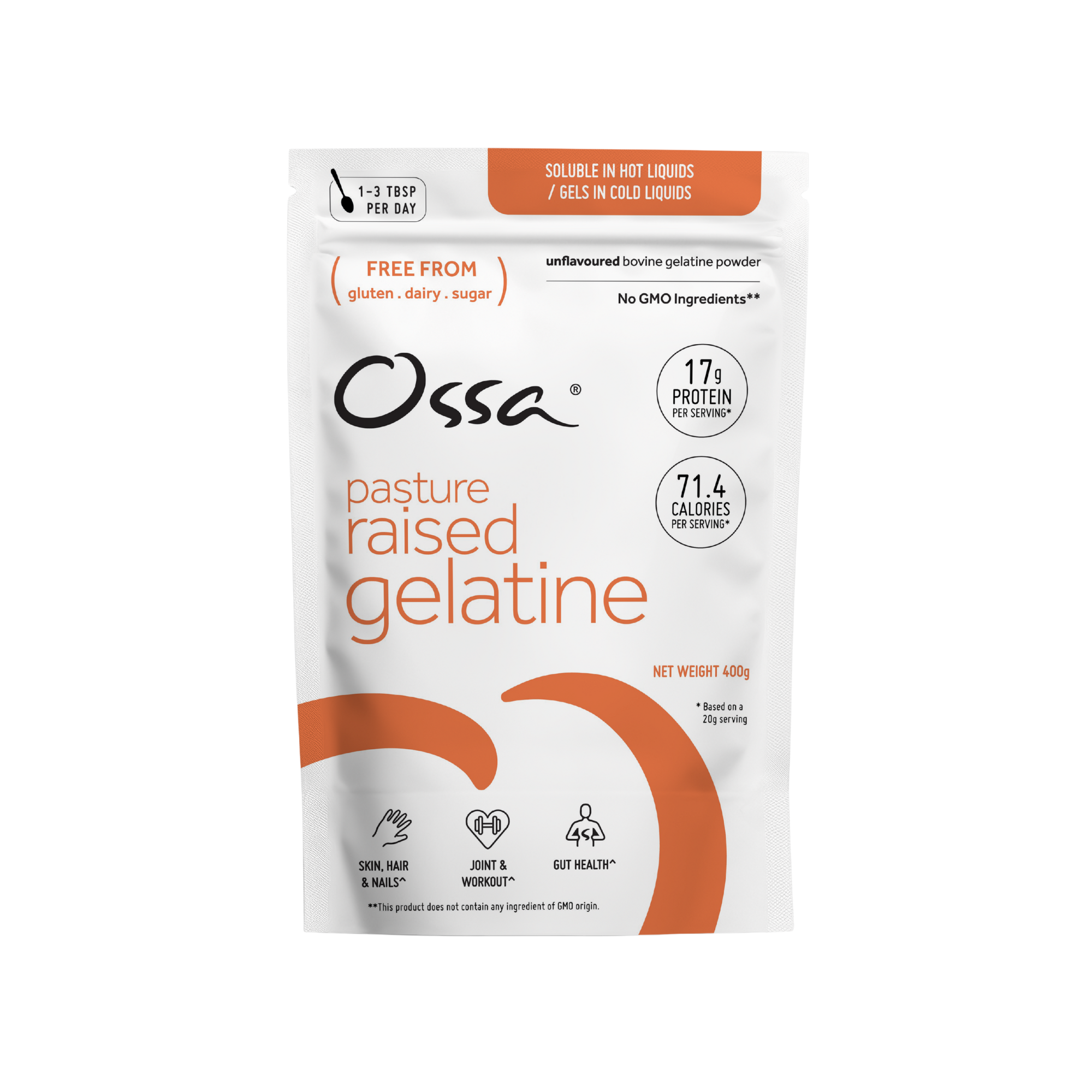
Gelatine is chemically similar but unhydrolysed, so it sets into a gel. It works well in homemade broths, jellies and slow-cooked dishes but is less convenient for a quick drink.
-
Marine collagen suits anyone avoiding beef or pork products, but carries a higher contaminant risk from ocean pollutants and is unsuitable for anyone with a fish allergy.
-
Bovine collagen, sourced from cattle, is the most widely used type in supplements and tends to carry fewer allergy concerns than marine sources, provided the cattle are grass-fed and traceable.
-
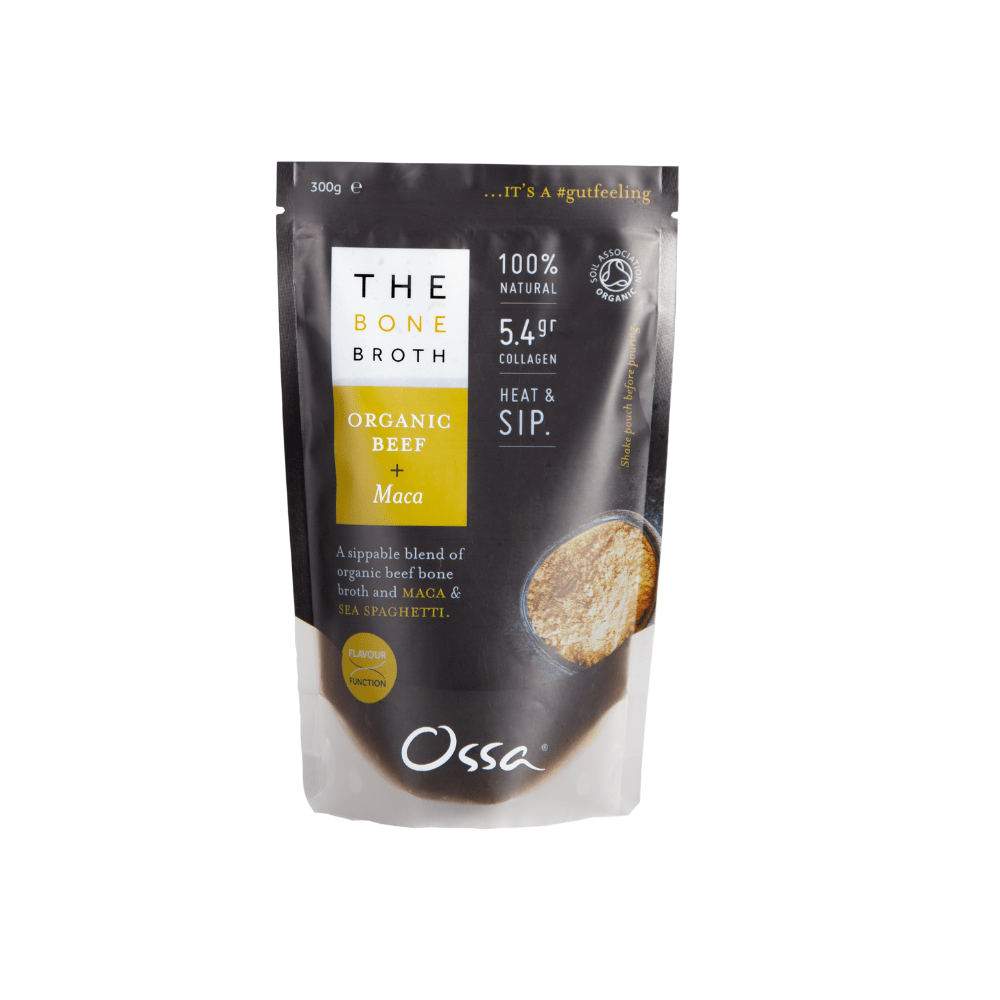
Bone broth delivers collagen, gelatine and glycine in a whole-food form, alongside minerals like calcium and magnesium that don’t come in an isolated powder. It’s also, unlike a capsule, actually a meal.
For readers who’d rather eat their way to collagen than supplement it, bone broth’s role in pregnancy and postpartum nutrition is worth understanding as a complementary approach. Ossa Organic’s broths are built on exactly this logic: slow-simmered bones for the collagen and gelatine, organic ingredients for the rest, and no shortcuts in between.
How to use collagen safely after birth
There’s no single officially agreed dose for postpartum collagen use, but most clinical trials showing skin and joint benefits used somewhere between 2.5g and 15g of hydrolysed collagen peptides daily. A sensible starting point for a breastfeeding mother is the lower end of that range, building up gradually if you tolerate it well.
-
Start small. Try 2.5 to 5g daily for the first week, mixed into a warm drink or porridge, before increasing.
-
Pair with vitamin C. Collagen synthesis depends on vitamin C as a cofactor, so add citrus, berries or a vitamin C-rich vegetable to the same meal rather than taking collagen in isolation.
-
Prioritise total protein. Collagen supplements work best alongside adequate overall protein intake, not as a replacement for meat, fish, eggs or legumes in your diet.
-
Check medications. Collagen has no major known drug interactions, but mention any new supplement to your GP if you’re on regular medication, particularly anything affecting kidney function.
-
Reduce or stop if you notice digestive upset, unusual bloating, or any signal from your baby that coincides with starting.
A warm mug of collagen turmeric latte before your baby’s first nap, or a spoonful stirred into porridge, is a realistic way to build the habit without adding another task to an already full day.
Pro Tip: Glycine, one of collagen’s main amino acids, is also mildly calming. Many mothers find a warm collagen drink in the evening doubles as a small wind-down ritual, not just a supplement dose.
Why sourcing matters as much as the science
Catherine Farrant founded Ossa Organic after discovering bone broth’s benefits during her own pregnancy, and built the business around a simple principle: tradition over trend, and slow-cooked, organic ingredients over anything processed. That founder story matters here because sourcing quality is exactly where collagen safety lives or dies, particularly for a breastfeeding mother weighing up a new product.
For postpartum use specifically:
-
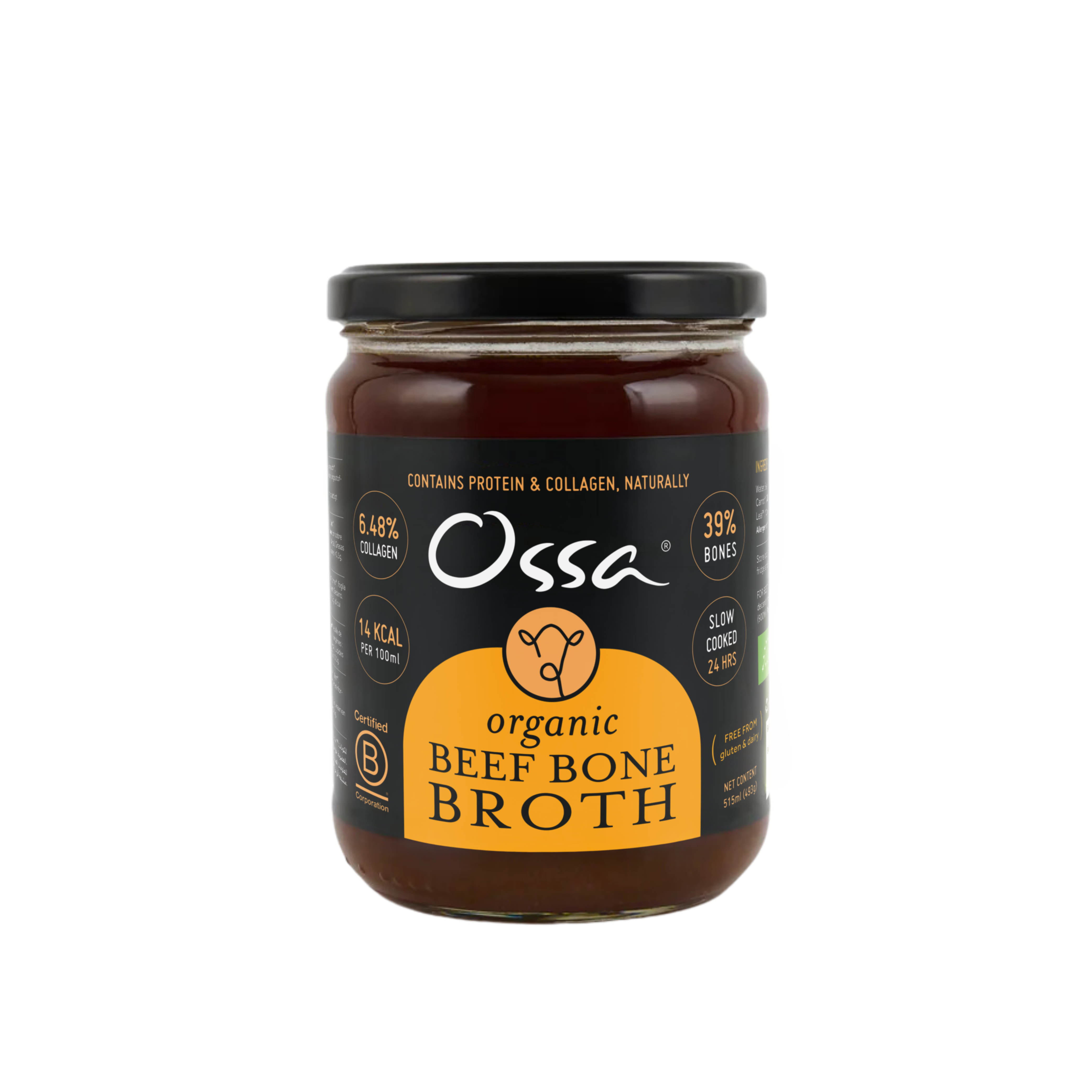
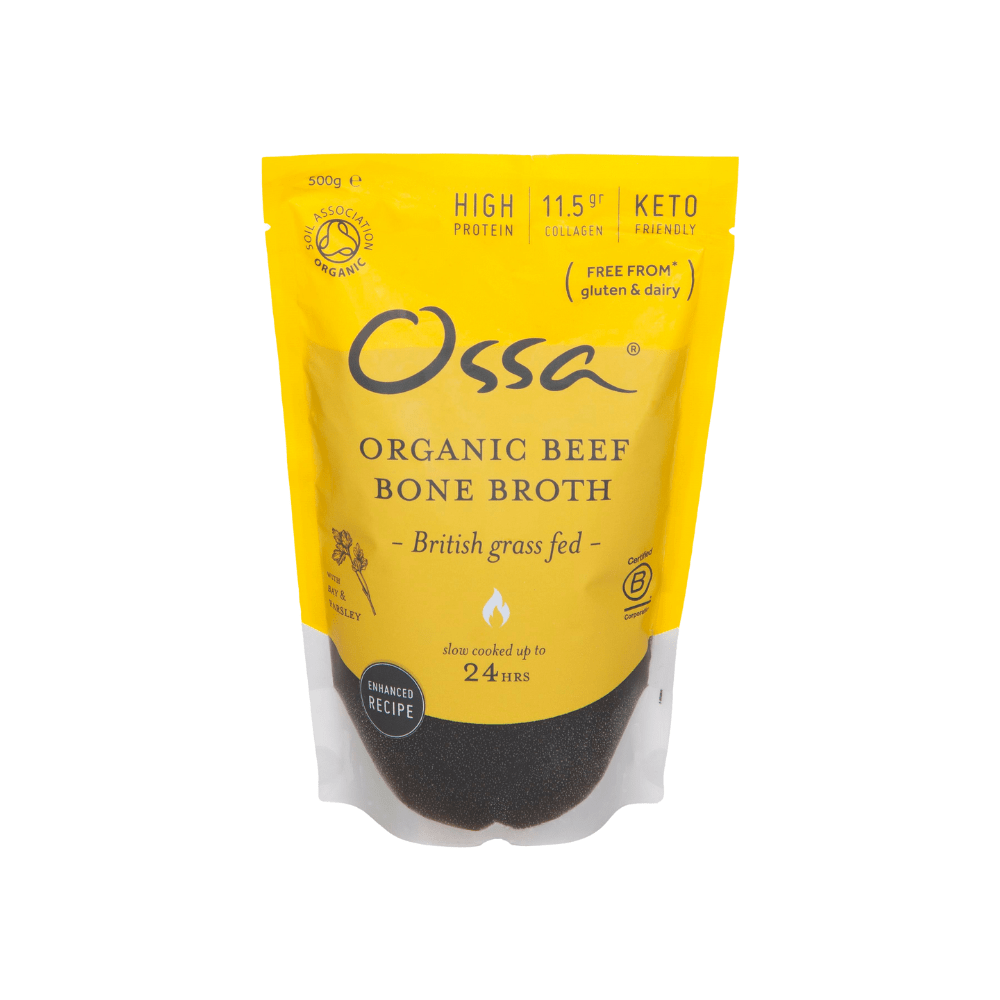
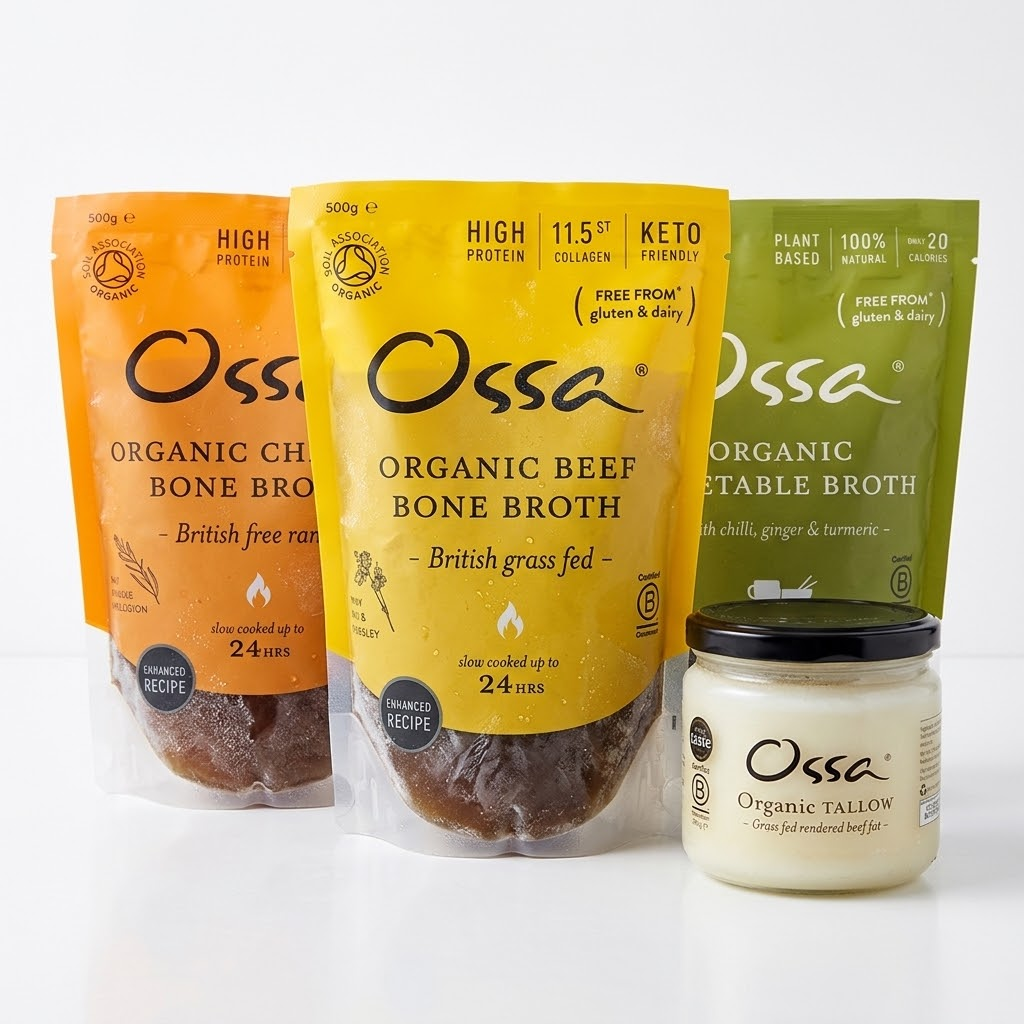
Organic Beef Bone Broth works well as a restorative sipping drink between feeds, rich in gelatine and minerals
-
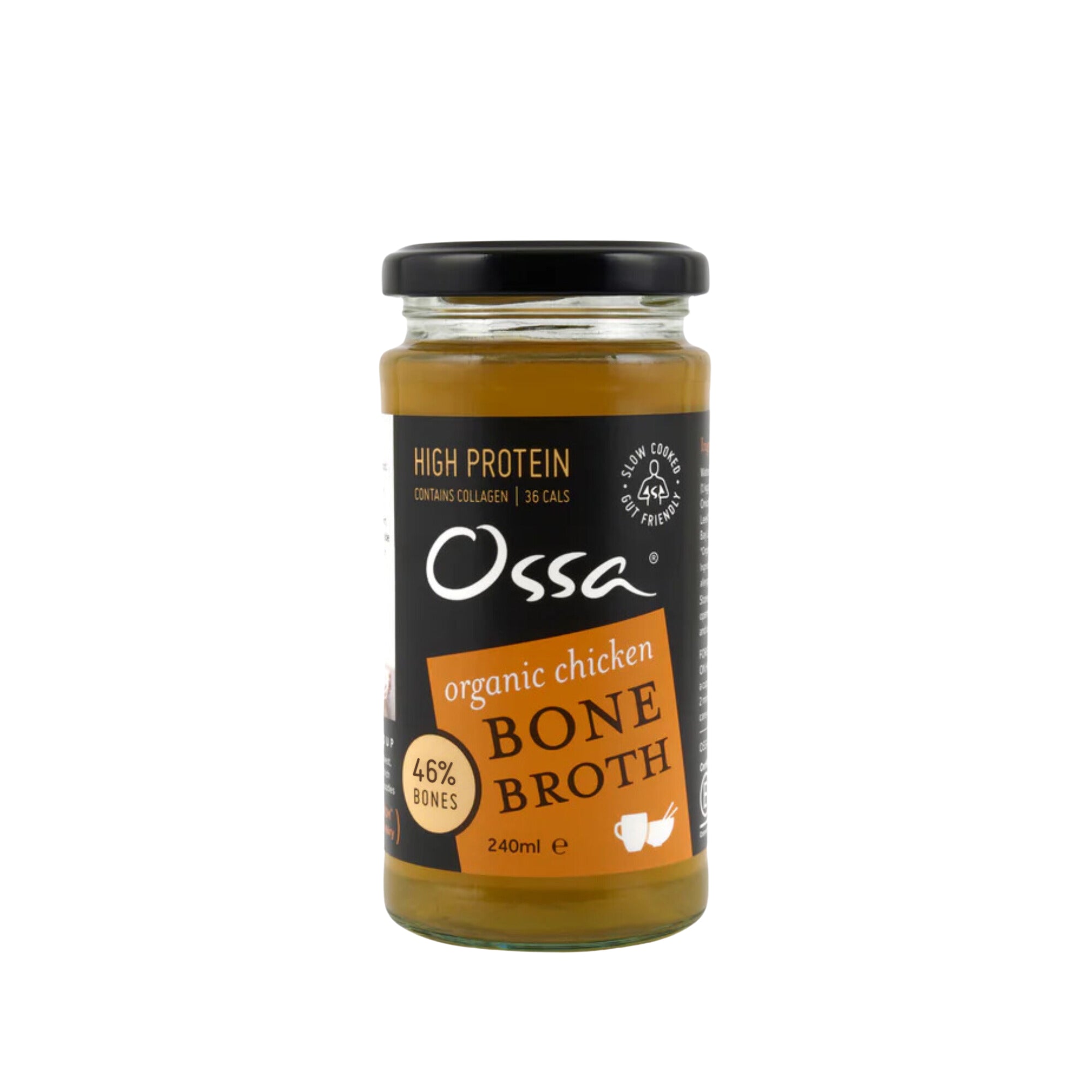
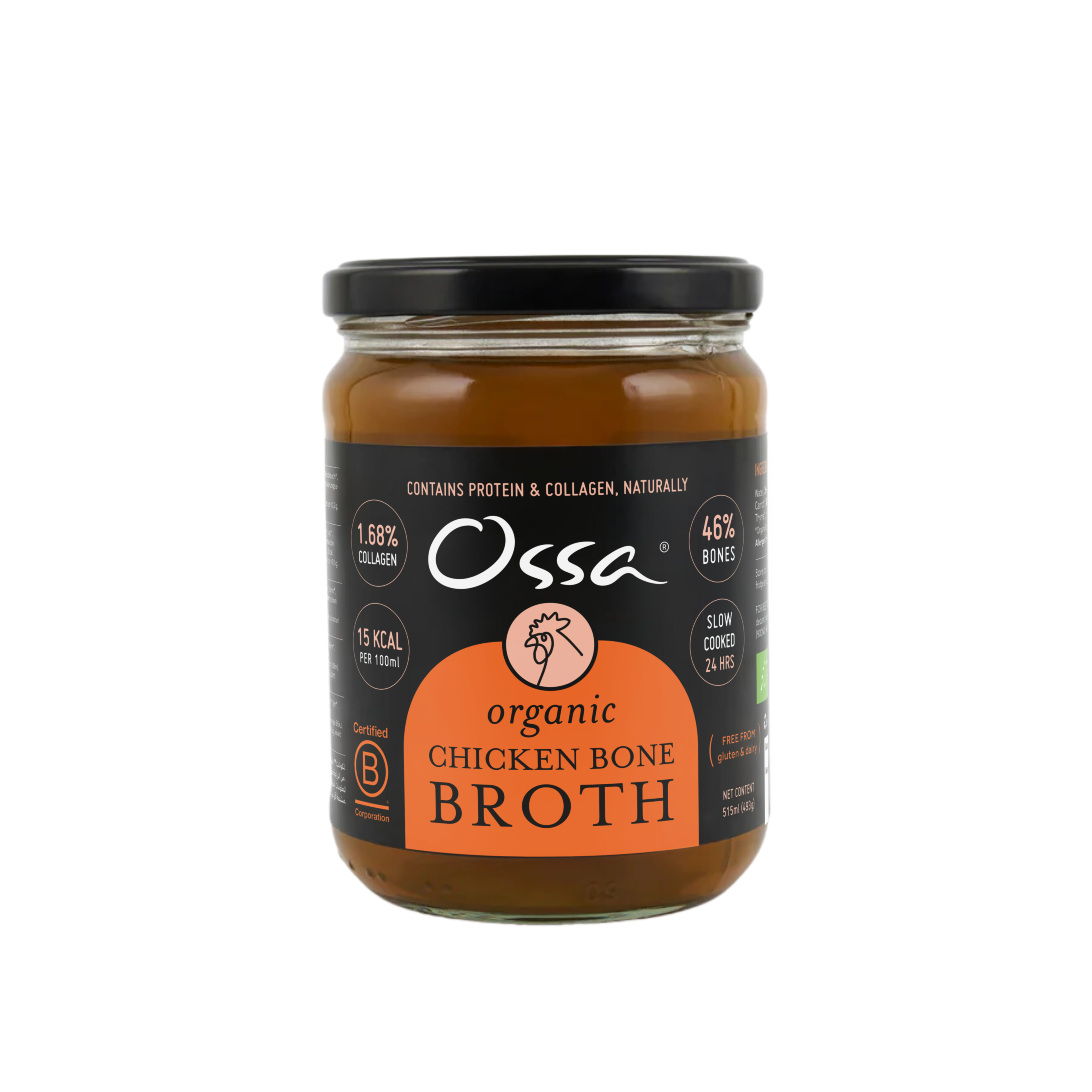
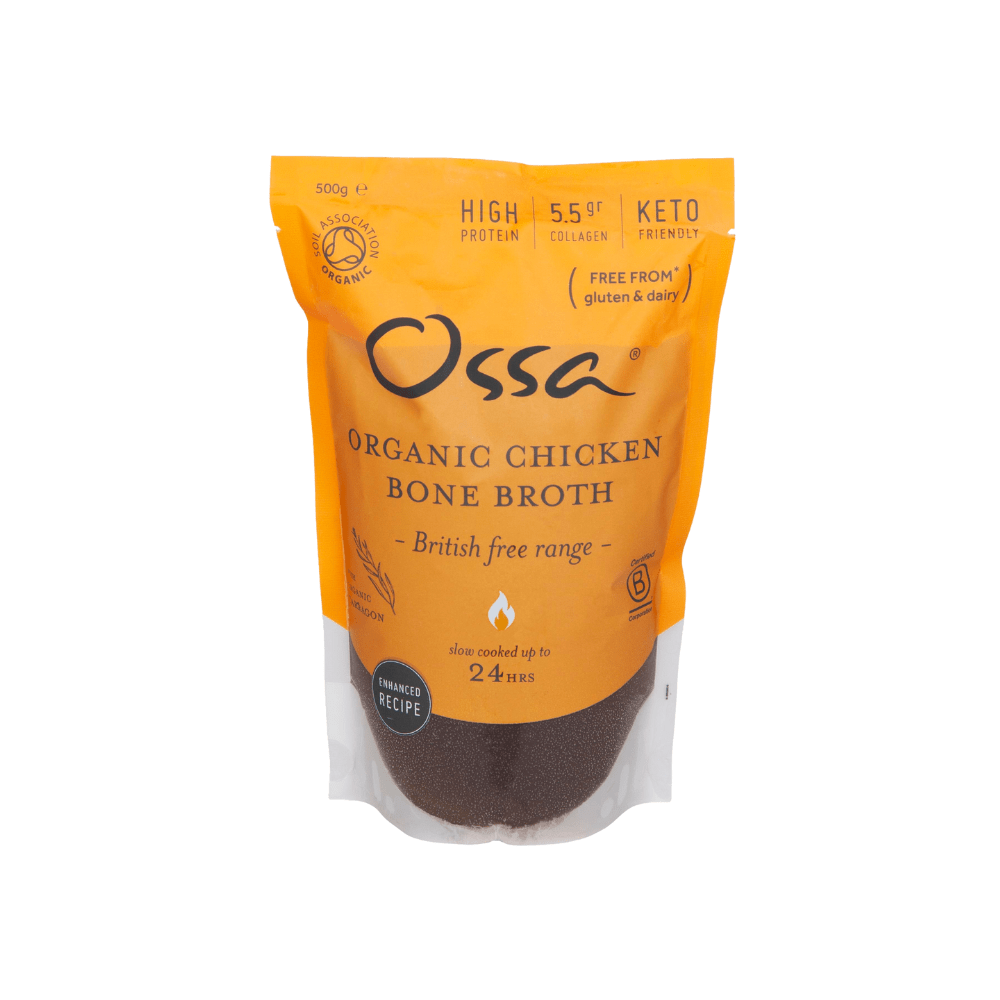
Organic Free Range Chicken Bone Broth is gentler and versatile enough for soups, risottos or a simple warm mug
-
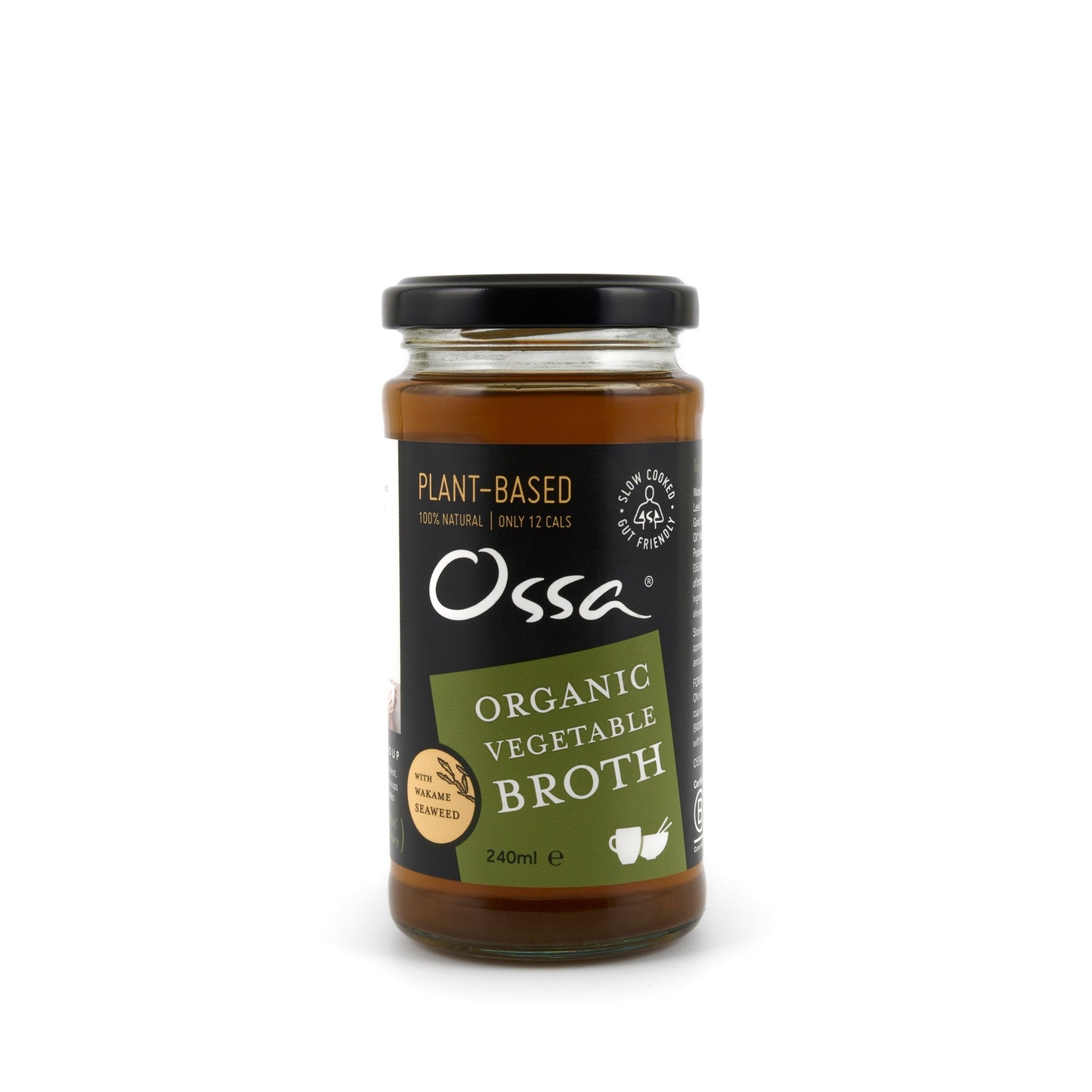
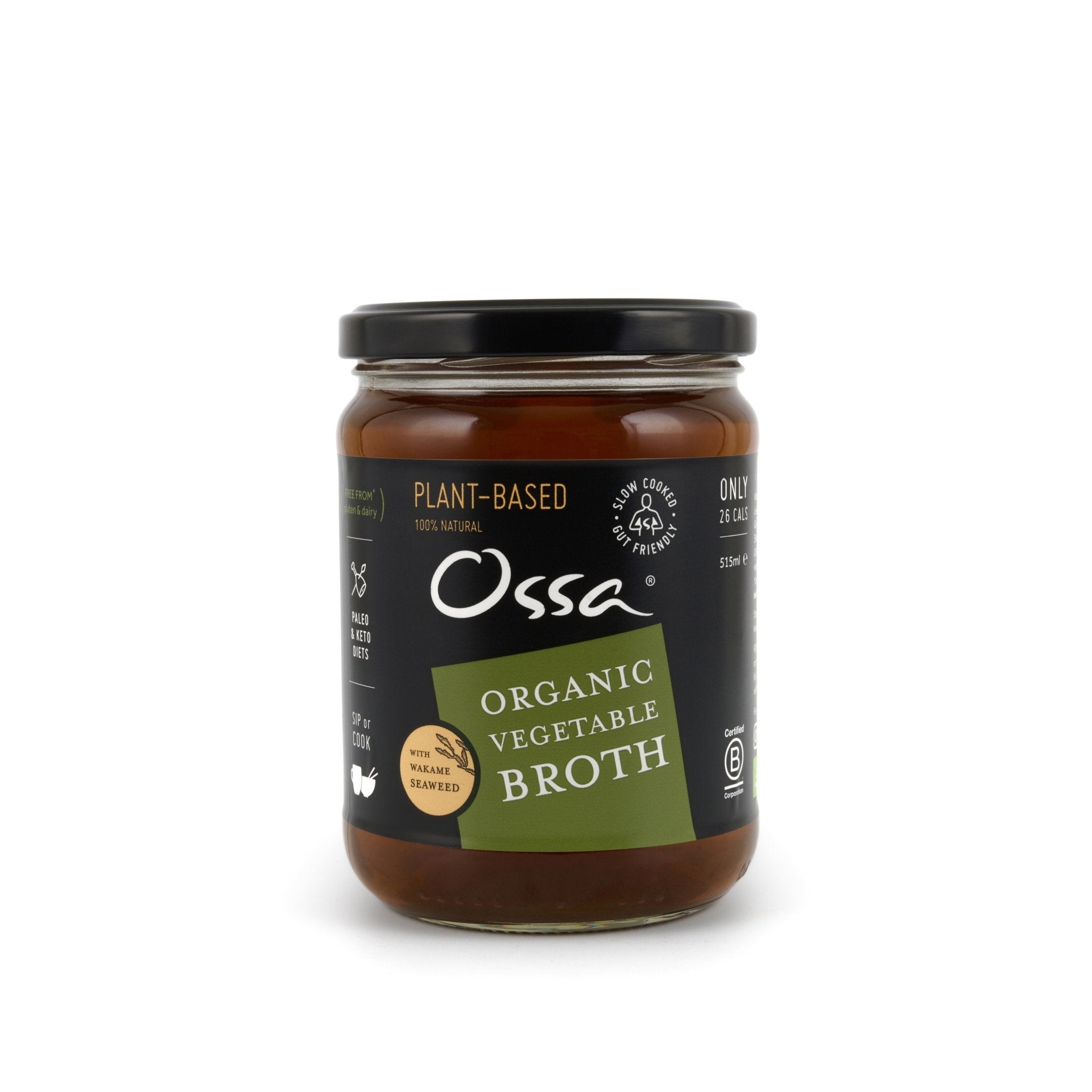
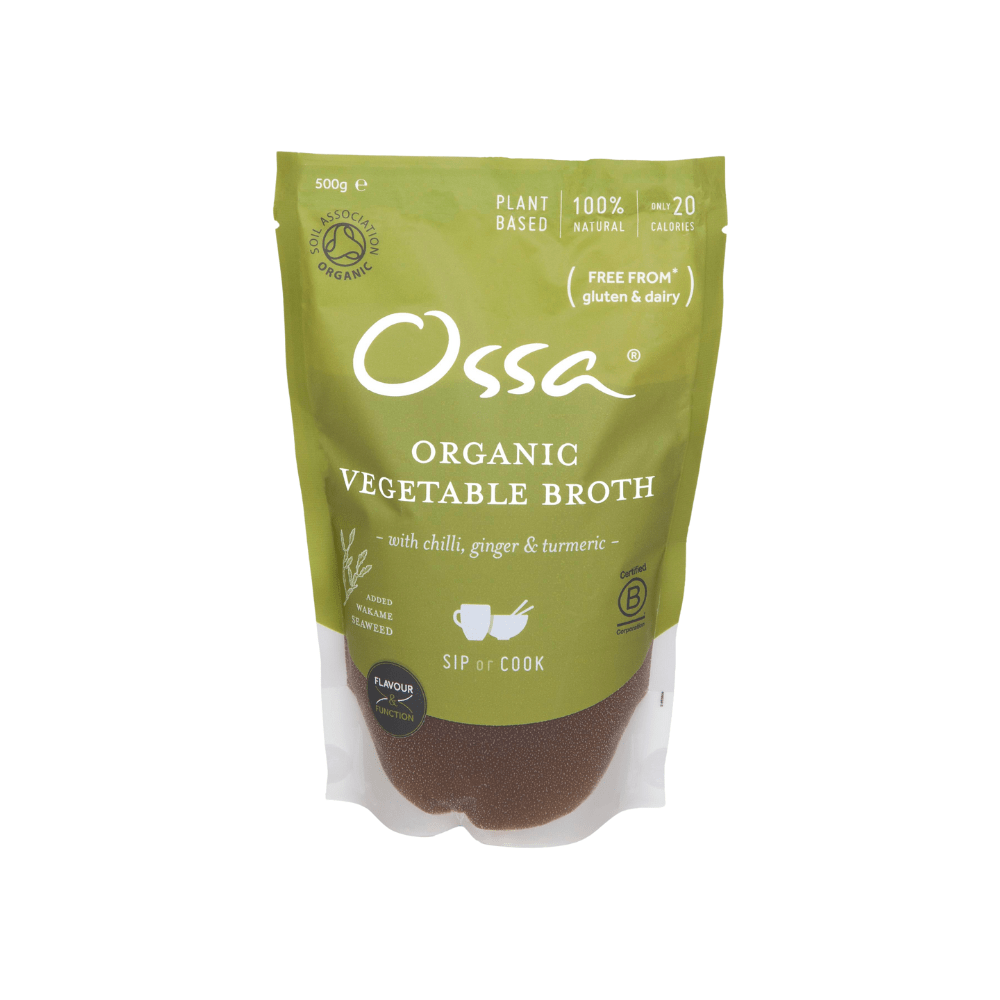
Organic Vegetable Broth suits vegetarian mothers wanting the mineral and hydration benefits without an animal-based source
-
Collagen peptides stirred into porridge, smoothies or a collagen chia pudding turn breakfast into a quiet, low-effort routine
Does collagen help with wound healing after a cesarean?
Collagen is the primary structural protein your body deploys during wound repair, forming the scaffold that new tissue grows across as a cesarean incision or a perineal tear closes. The biological logic for supplementing collagen during this healing window is genuinely sound: glycine and proline, the two amino acids collagen supplies in abundance, are direct building blocks for the new collagen fibres your body lays down at the wound site.
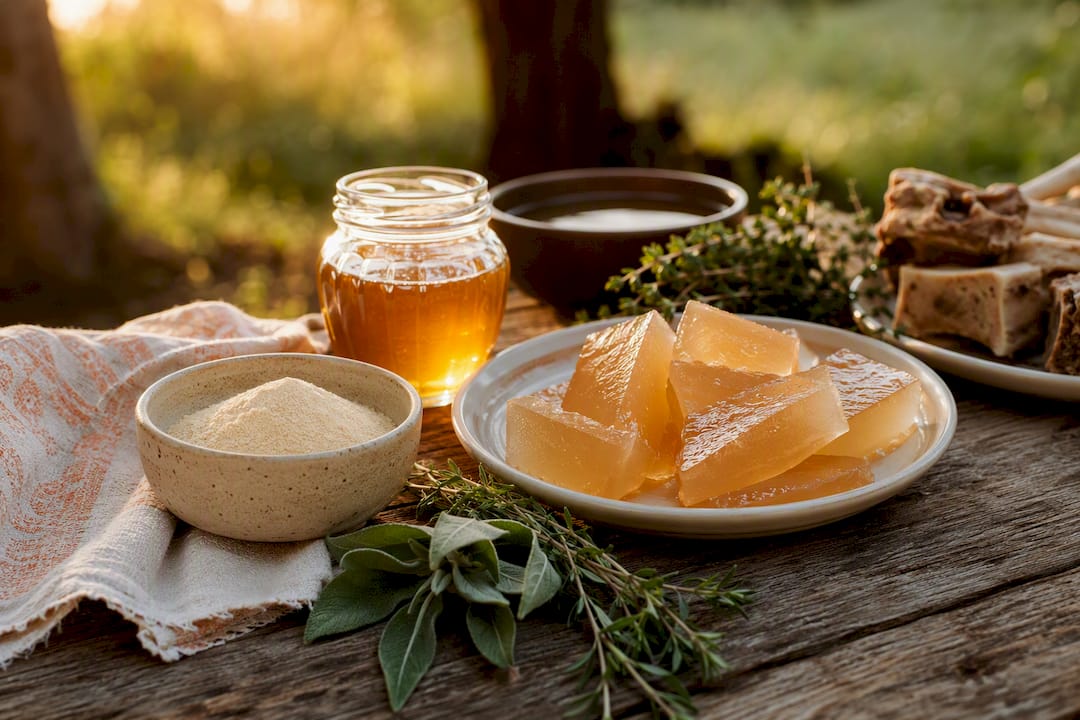
Trials on collagen and general wound healing in adults report faster closure and improved tissue strength in some settings, but postpartum-specific research on cesarean or perineal healing is thin on the ground. What exists is mostly extrapolated from general surgical recovery studies rather than birth-specific trials.
Practically, this means collagen is a reasonable, low-risk addition to a cesarean recovery diet rather than a proven fast-track to healing. Adequate protein overall, vitamin C for synthesis, zinc, and rest matter just as much, if not more. If your wound shows signs of infection (increasing redness, discharge, fever or worsening pain), collagen supplementation is not a substitute for contacting your midwife or GP. Treat it as one supportive piece of a recovery plan built primarily on rest, nutrition and proper wound care, not the main event.
Are there side effects specific to postpartum women?
Collagen is generally well tolerated, and most reported side effects are mild: bloating, a feeling of fullness, or an unusual taste that fades after a few days of use. These aren’t unique to postpartum women, but the postpartum body does add a few specific considerations worth flagging.
Digestive sensitivity runs higher in the weeks after birth for many women, particularly after a cesarean or with ongoing constipation from iron supplements. Adding a new protein source, even a gentle one, can occasionally add to digestive load if introduced too quickly. Starting at a lower dose, as outlined earlier, sidesteps most of this.
Allergic reactions are rare but real. Marine collagen carries fish-allergy risk; bovine collagen occasionally triggers reactions in people with red meat or gelatine sensitivities. Watch for hives, swelling, or breathing difficulty, and stop immediately if these appear, seeking urgent medical help.
The other consideration is indirect: any new supplement taken while sleep-deprived and stretched thin is easier to forget, mistime, or take inconsistently. That’s not a physiological side effect, but it does affect whether you actually get the benefit you’re hoping for. Consistency matters more with collagen than with a quick-acting medication, since the skin and joint improvements shown in trials built up gradually over weeks, not days.
When should you start, and for how long?
There’s no fixed rule requiring you to wait a set number of weeks before starting collagen postpartum, but a cautious, practical approach makes sense for most women. If your birth was straightforward and you’re breastfeeding without complications, many women start gently in the first few weeks, prioritising food-based sources like bone broth initially and introducing a concentrated peptide supplement closer to the six-week check if they choose to add one.
If you had a cesarean, significant blood loss, or any birth complication, it’s worth raising the timing specifically at your six-week appointment rather than guessing.
Duration matters more than most people expect. The skin and joint benefits shown in clinical trials typically appeared after eight to twelve weeks of consistent daily use, not days. Collagen isn’t something you take for a week and evaluate. Realistic postpartum use looks like a sustained routine over several months, ideally tied to a habit you’ll actually keep, such as a daily warm drink or a breakfast addition, rather than a supplement that sits in the cupboard after week two.
Supplements versus food: which collagen route wins postpartum?
Both routes work, and they’re not mutually exclusive. The real difference is convenience, dose control and what else you get alongside the collagen itself.
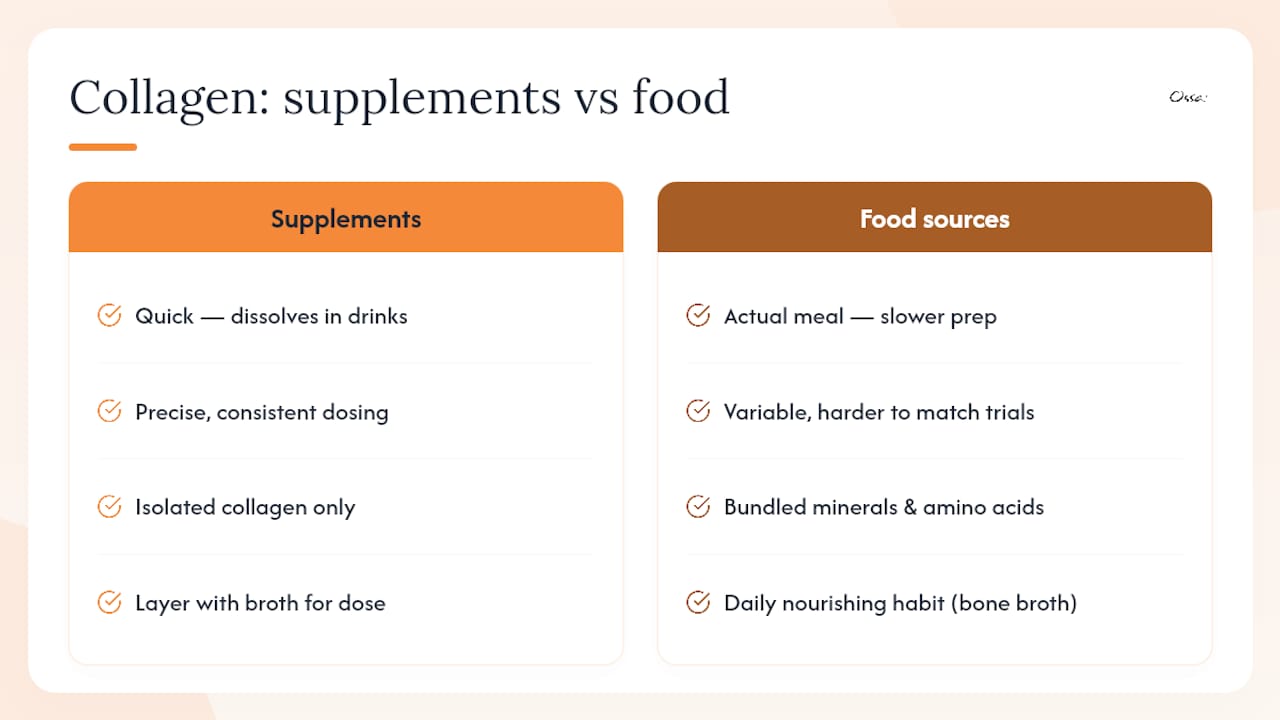
Concentrated hydrolysed collagen supplements offer precise, consistent dosing, which matters if you’re trying to replicate the amounts used in clinical trials. They’re also faster to prepare, dissolving into any drink in seconds, which counts for a lot when you’re managing a newborn’s feeding schedule with one free hand.
Bone broth and other whole-food sources deliver collagen and gelatine alongside minerals, amino acids and the simple satisfaction of an actual meal rather than a powder. The nutritional case for gelatine and collagen in early motherhood rests partly on this: food-based collagen sources come bundled with nutrients that support the same recovery goals, rather than isolating one protein and hoping the rest of your diet covers the gaps.
For most postpartum women, the practical answer is both: bone broth as a nourishing daily habit, with a hydrolysed peptide supplement layered in if you want a more measurable, trial-matched dose for specific skin or joint goals.
Our take: evidence over hype, food first
The collagen industry oversells certainty it doesn’t have. Scroll through enough postpartum content and you’ll find claims that read like guarantees: collagen will fix your stretch marks, regrow your hair, tighten your pelvic floor. The actual evidence supports something more modest and, frankly, more trustworthy: collagen plausibly helps skin hydration, joint comfort and tissue repair, backed by real trial data, with genuine gaps where postpartum-specific research simply hasn’t caught up yet.
Where conventional advice falls short is treating every collagen source as interchangeable. A cheap, untested marine powder and a traceable, third-party tested bone broth are not the same risk profile, and breastfeeding mothers deserve that distinction spelled out rather than glossed over.
If we had to prioritise one thing for a new mother reading this: sourcing quality matters more than dose precision. Get that right first, whether through food or supplement, before worrying about hitting an exact gram count from a trial that wasn’t even conducted on postpartum women. Understanding why gut health and collagen work together is a genuinely useful next step once the basics are settled.
— Ossa Organic
Try collagen support the food-first way
If you’d rather start with something you can actually taste and trust than a jar of unbranded powder, Ossa Organic’s bone broths give you a traceable, organic route into postpartum collagen support without any guesswork about sourcing. Every batch is slow-simmered from organic bones, with no preservatives or artificial fillers, which matters more than usual when you’re breastfeeding and reading every label twice.
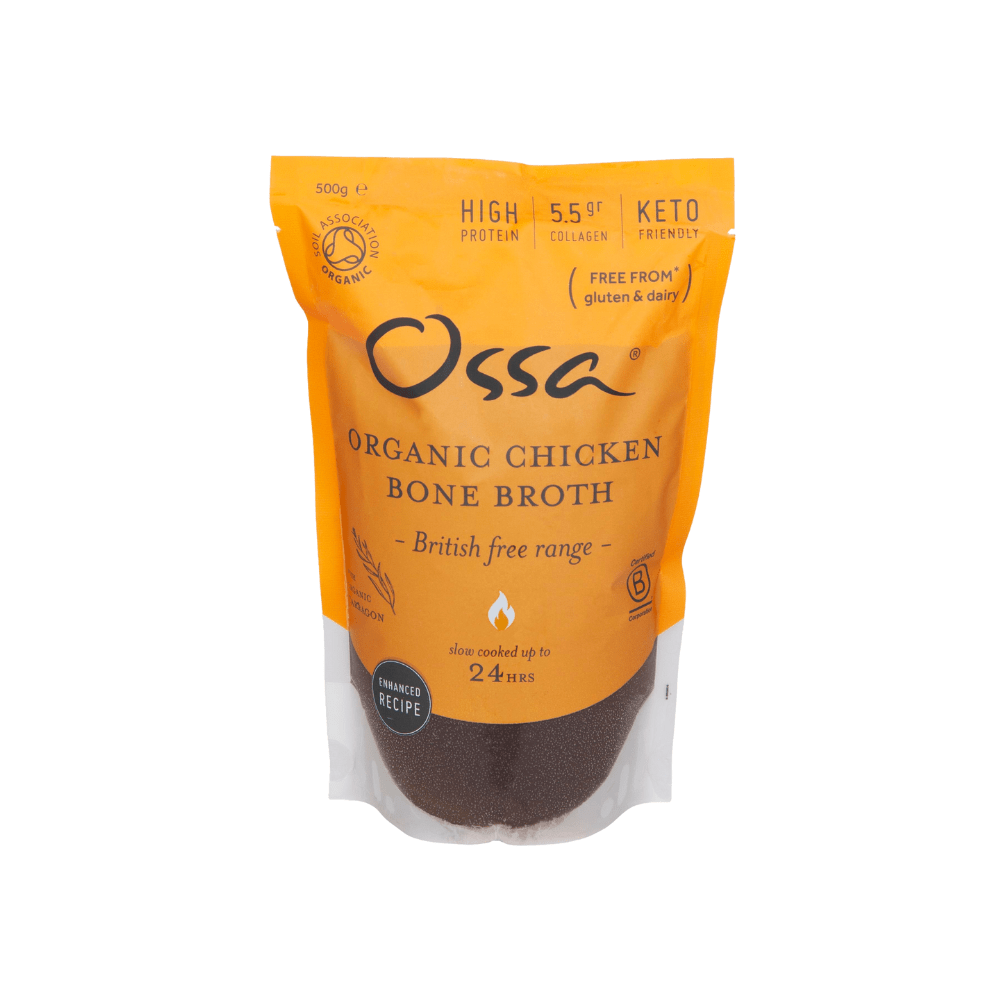
Start with the Organic Free Range Chicken Bone Broth as a gentle daily sipping drink, or the Organic Beef Bone Broth for a richer, more restorative option between feeds. Vegetarian mothers can get similar mineral and hydration support from the Organic Vegetable Broth. Sip it warm, stir it into a risotto, or use it as the base for a simple postpartum soup. For more ways to work it into daily meals, the how to use bone broth guide has practical recipes to get you started this week.
FAQ
Is it good to take collagen postpartum?
For most women, yes: collagen plausibly supports skin elasticity, joint comfort and tissue repair during postpartum recovery, though evidence specific to breastfeeding populations is still limited.
Can I take collagen after giving birth?
Yes, collagen is generally considered safe after birth, including while breastfeeding, since hydrolysed collagen breaks down into amino acids during digestion the same way other dietary proteins do.
Does the NHS recommend collagen?
No, NHS postpartum guidance focuses on vitamin D and a balanced diet rather than routine collagen supplementation, so collagen is a personal choice rather than a standard recommendation.
What is the best collagen for postpartum recovery?
A third-party tested hydrolysed collagen peptide or a traceable, organic bone broth like those from Ossa Organic are sound choices, since sourcing quality matters more for breastfeeding mothers than any specific brand claim.
Recommended