


Cart
0
TL;DR:
- Bone broth contains high histamine levels due to prolonged simmering and bacterial activity during cooking. Proper preparation, rapid cooling, and fresh ingredients can reduce histamine accumulation, but some individuals may still react. Short-cooked meat broths are a safer alternative for those sensitive to histamine.
Bone broth is high in histamine. That is the short answer, and it matters if you experience flushing, headaches, or digestive discomfort after drinking it. The prolonged simmering that gives bone broth its depth also creates the conditions for histamine to accumulate: proteins break down, bacteria act on the amino acid histidine, and histamine levels rise throughout the cooking process. For people with histamine intolerance, even a small serving can trigger symptoms within 30–60 minutes of consumption. The good news is that preparation method, storage, and ingredient freshness all influence how much histamine ends up in your cup.
Key facts at a glance:
-
Bone broth typically contains moderate to high histamine levels, driven by slow cooking and protein breakdown.
-
Symptoms in histamine-sensitive individuals can include flushing, palpitations, anxiety, nasal congestion, and digestive discomfort.
-
Individual tolerance depends heavily on diamine oxidase (DAO) enzyme activity and overall gut health.
-
Proper preparation and rapid cooling reduce histamine build-up, though they cannot eliminate it entirely.
-
Short-cooked meat broths offer a lower-histamine alternative for those who react to traditional bone broth.
How histamine forms in bone broth
Histamine is a biogenic amine produced naturally in the body and found in many foods. In the body, it plays roles in immune response, digestion, and neurotransmission. The problem arises when histamine from food accumulates faster than the body can break it down.
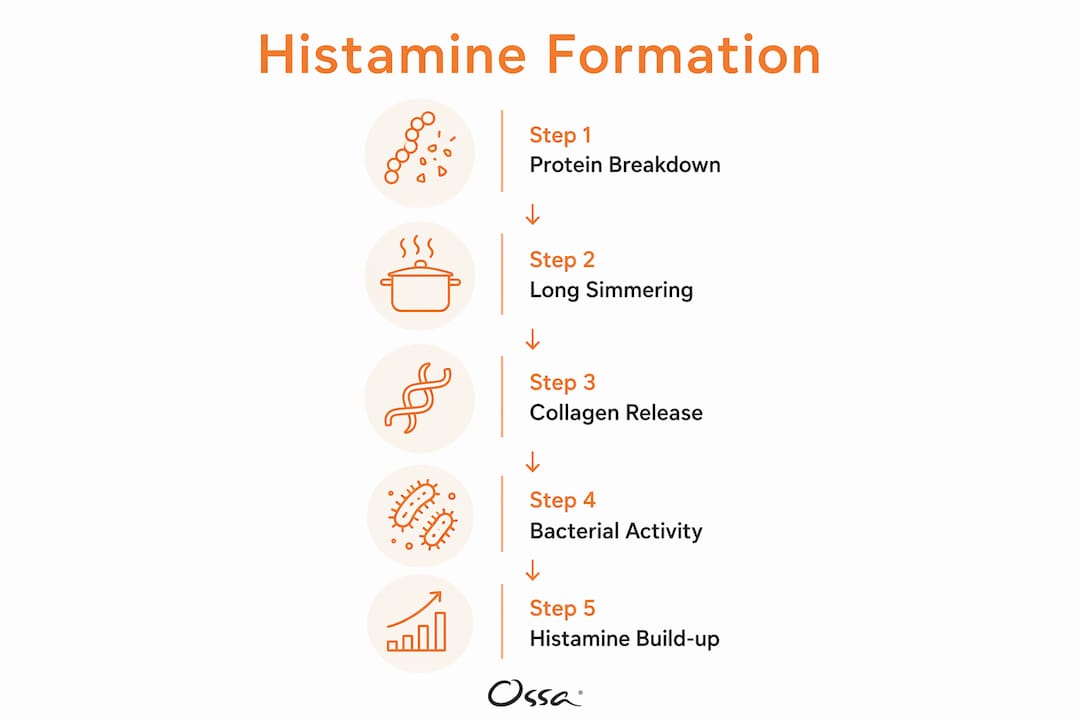
Bone broth creates ideal conditions for histamine formation. During long, slow simmering, collagen and other proteins break down into free amino acids, including histidine. Bacteria present in the cooking environment then convert histidine into histamine through enzymatic activity. The longer the broth simmers, the greater the histamine accumulation from bacterial growth and protein breakdown.
Temperature and time are the two biggest variables. Broths left to cool slowly at room temperature, or refrigerated for several days before use, continue to accumulate histamine even after cooking stops. Bacterial activity does not cease the moment heat is removed.
Collagen breakdown also releases gelatin, which can itself trigger mast cell activation in sensitive individuals. Glutamate, another byproduct of protein breakdown, may produce anxiety-like symptoms separately from histamine. So the reaction some people experience after bone broth is not always purely histamine-driven.
Pro Tip: Use the freshest bones you can source, ideally direct from a butcher on the day of purchase, and begin cooking immediately. Older bones that have been sitting in a fridge for several days already carry higher bacterial loads before the pot even goes on the hob.
Key factors that raise histamine levels in bone broth:
-
Extended simmering times (traditional recipes often run 12–24 hours)
-
Bones stored for several days before use
-
Slow cooling after cooking
-
Refrigerating broth for more than 24 hours before consuming or freezing
-
Reheating broth multiple times
What does the science actually say about histamine in bone broth?
The scientific picture on bone broth and histamine intolerance is clear in its fundamentals, even if popular health writing muddies it. Histamine intolerance is primarily caused by a deficiency in DAO, the enzyme responsible for breaking down ingested histamine in the gut. When DAO activity is reduced, histamine from food is not metabolised efficiently, and it enters the bloodstream, producing symptoms.
Gut inflammation and microbiome imbalances worsen DAO production, which is one reason histamine sensitivity often worsens during periods of digestive illness or after a course of antibiotics. This also explains why bone broth, which is frequently recommended for gut healing, can paradoxically cause problems for the very people who try it.
Histamine intolerance and IgE-mediated food allergies are distinct conditions requiring different diagnostic approaches. Confusing the two leads to unnecessary food restriction or, worse, missed management of a genuine allergy.
Common myths versus facts:
-
Myth: Bone broth is always safe because it is natural and traditional. Fact: Natural foods can still be high in histamine; preparation method determines the level.
-
Myth: Freezing bone broth destroys histamine. Fact: Freezing halts further bacterial activity but does not eliminate existing histamine.
-
Myth: Only people with diagnosed allergies need to worry. Fact: Histamine intolerance is an enzymatic deficiency, not an allergy, and is far more common than formal diagnosis rates suggest.
-
Myth: A small amount of bone broth is always tolerable. Fact: Cumulative histamine exposure throughout the day matters. Bone broth consumed alongside other high-histamine foods can push total intake over an individual’s threshold, even if the broth alone would have been fine.
Research published via PubMed confirms that DAO deficiency is the central mechanism in histamine intolerance, and that dietary histamine load is the primary trigger for symptoms. The cumulative nature of histamine exposure is clinically significant: a person who tolerates bone broth at breakfast may react if they also eat aged cheese, wine, or fermented foods later in the day.
How to prepare low-histamine bone broth at home
Reducing histamine in bone broth is achievable, though it requires departing from traditional long-simmering methods. The goal is to limit the time and conditions that allow bacterial histamine production.
Step-by-step low-histamine preparation
-
Source the freshest bones available. Buy directly from a butcher on the day of use. Avoid bones that have been frozen and thawed multiple times, as each freeze-thaw cycle can increase bacterial load.
-
Use a pressure cooker or Instant Pot. Pressure cooking reduces cooking time to approximately 2 hours, which limits the window for bacterial activity and histamine formation compared with a 12-hour stovetop simmer.
-
Keep the cooking environment clean. Wash bones briefly under cold water before use. Use clean equipment throughout.
-
Cool the broth rapidly. Once cooked, transfer the broth to shallow containers and place them in an ice bath to bring the temperature down quickly before refrigerating or freezing.
-
Freeze immediately if not consuming within 24 hours. Refrigerated broth continues to accumulate histamine over days. Freezing within a few hours of cooking is the most effective storage strategy.
-
Portion into single servings before freezing. This avoids repeated reheating of the same batch, which raises histamine levels each time.
Pro Tip: Freeze broth in silicone ice cube trays or small 150ml portions. Defrost only what you need for a single serving, and consume it the same day. Never refreeze thawed broth.
Storage and consumption guidance for histamine-sensitive individuals:
-
Consume fresh broth within 24 hours of cooking, or freeze immediately.
-
Reheat only once; discard any leftover reheated broth.
-
Start with small portions (100–150ml) to assess individual tolerance before increasing.
-
Avoid drinking bone broth on the same day as other high-histamine foods such as aged cheese, fermented vegetables, or processed meats.
-
Keep a food and symptom diary for at least two weeks to identify your personal threshold.
Low-histamine broth alternatives and recipes
For those who react to traditional bone broth regardless of preparation method, short-cooked meat broth is the most practical alternative. Meat broths simmered for 2–3 hours have measurably lower histamine levels than long-simmered bone broths, because the shorter cooking window limits bacterial enzymatic activity.
The key difference is that meat broth uses fresh muscle meat rather than bones, which contain less collagen and therefore produce less histidine through breakdown. The result is a lighter broth that still provides protein and minerals, without the same histamine burden.
Simple low-histamine chicken broth (UK-friendly recipe)
Ingredients:
-
500g fresh chicken breast or thigh (purchased the same day)
-
1 medium carrot, peeled and roughly chopped
-
1 stick of celery
-
Half a white onion
-
1 litre cold filtered water
-
A pinch of sea salt
Method: place all ingredients in a pot, bring to a gentle boil, then simmer for 2 hours maximum. Strain, cool rapidly in an ice bath, and consume or freeze immediately.
Low-histamine ingredient notes for UK shoppers:
-
Fresh chicken, lamb, or beef from a butcher (same-day purchase) are all suitable.
-
Carrots, courgettes, sweet potato, and leeks are low-histamine vegetables widely available in UK supermarkets.
-
Avoid adding tomatoes, spinach, or vinegar, as these are high-histamine ingredients.
-
Skip bay leaves and mixed herbs if you are highly sensitive; stick to fresh parsley or nothing at all.
Vegetable broths made from low-histamine vegetables (carrot, courgette, sweet potato) are another option, though they lack the protein content of meat-based broths. They suit people who want the warming, savoury quality of broth without any animal protein. Introduce any new broth gradually, starting with a small portion and waiting 24 hours to assess your response before increasing the amount.
Managing symptoms and deciding who should avoid bone broth
Histamine intolerance symptoms from bone broth typically appear within 30–60 minutes of consumption. The most common are flushing of the face and neck, heart palpitations, headaches, nasal congestion, and digestive discomfort including bloating or loose stools. Some people also experience anxiety or a sense of agitation, which relates to glutamate and histamine’s neurological effects rather than histamine alone.
Distinguishing a histamine reaction from a food allergy matters for management. A true IgE-mediated food allergy usually produces symptoms within minutes and can include hives, swelling, or anaphylaxis. Histamine intolerance tends to produce milder, more diffuse symptoms that vary with the quantity consumed and the total histamine load of the day’s diet. If you are unsure which you are dealing with, a GP or allergy specialist can arrange appropriate testing.
An elimination diet is the most practical first step for self-assessment. Remove all high-histamine foods for four weeks, then reintroduce them one at a time while tracking symptoms. This approach, combined with a detailed food diary, gives a clearer picture of individual thresholds than any single test.
Indicators that bone broth should be avoided or significantly limited:
-
Consistent flushing, palpitations, or headaches within an hour of consumption
-
Known DAO enzyme deficiency confirmed by a healthcare professional
-
Diagnosed mast cell activation syndrome (MCAS)
-
Symptoms that worsen when bone broth is combined with other fermented or aged foods
-
A history of reactions to fermented foods, aged cheeses, or red wine, suggesting a broader histamine sensitivity pattern
DAO enzyme supplements may help some people manage reactions to histamine-rich foods, but they should only be used under medical guidance. They are not a substitute for identifying and addressing the underlying cause of reduced DAO activity, which often relates to gut health.
Ossa Organic’s approach to bone broth and histamine intolerance
Ossa Organic was founded on a direct personal experience of food’s power to affect health. The brand’s founder discovered bone broth during pregnancy and built the business around the principle that traditional, natural food preparation produces genuinely nourishing results. That founding philosophy shapes how Ossa Organic sources ingredients and approaches production.
Organic, fresh ingredients are central to Ossa Organic’s sourcing. The brand’s commitment to avoiding preservatives and unnatural additives is directly relevant to histamine-sensitive consumers, because additives and poor-quality ingredients can themselves contribute to histamine load. Ossa Organic’s organic beef bone broth and organic chicken bone broth are made without the synthetic preservatives found in many commercial stock products.
For those managing histamine sensitivity, Ossa Organic also provides bone broth recipes and preparation guidance through its blog, covering topics from cooking techniques to gut-friendly adaptations. The brand’s gut-friendly broth guide addresses related intolerances, reflecting an understanding that digestive sensitivities rarely exist in isolation.
Brand credibility and approach at a glance:
-
Family-run business with a founder whose personal health journey informs the brand’s values
-
Organic, additive-free ingredients sourced with gut health in mind
-
Traditional preparation methods balanced with awareness of modern dietary sensitivities
-
Educational content covering histamine, FODMAP, and gut health considerations
-
No synthetic preservatives, artificial flavourings, or fillers in any product
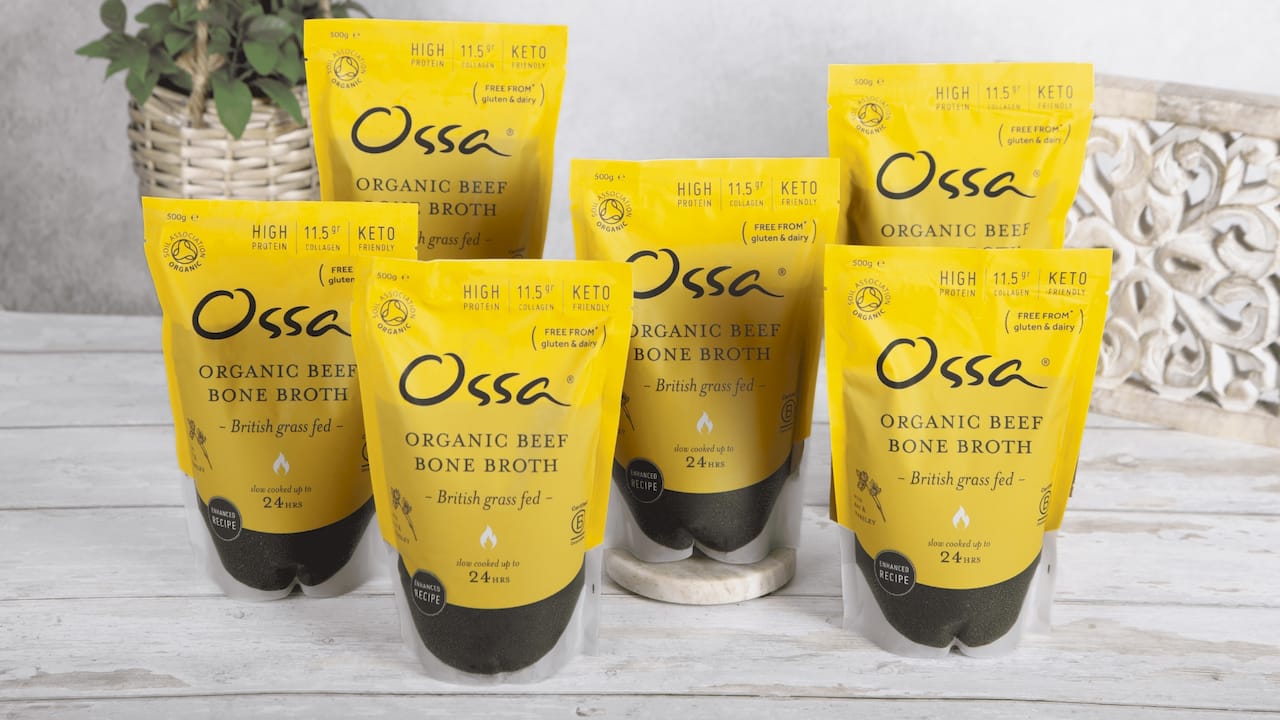
For those who want the convenience of a ready-made broth without the preparation variables that affect histamine levels, Ossa Organic’s ambient range is available as a six-pack for regular use.
How does bone broth compare to other broths for histamine?
Not all broths carry the same histamine risk. The table below sets out how common broth types compare in terms of histamine potential, based on cooking method and ingredient composition.
| Broth type | Histamine risk | Key reason |
|---|---|---|
| Traditional bone broth (12–24 hrs) | High | Long simmering drives histamine accumulation via bacterial activity |
| Pressure-cooked bone broth (2 hrs) | Moderate | Shorter cooking limits bacterial histamine production |
| Short-cooked meat broth (2–3 hrs) | Lower | Fresh muscle meat, brief cook time, less collagen breakdown |
| Vegetable broth | Low to moderate | Depends on ingredients; tomatoes and spinach raise histamine |
| Commercial stock cubes | Variable | Often contain yeast extract and additives that are high in histamine |
| Fresh chicken soup (home-cooked, same day) | Low | Fresh ingredients, short cook time, consumed immediately |
Traditional bone broth sits at the high end because the combination of long cooking, collagen-rich bones, and bacterial activity creates the maximum conditions for histamine formation. Pressure-cooked bone broth reduces that risk meaningfully by cutting the cooking window to around 2 hours, as noted earlier. Short-cooked meat broths, simmered for 2–3 hours using fresh muscle meat, offer the lowest histamine levels among animal-based options.
Vegetable broths vary more than people expect. A broth made from carrots, leeks, and courgettes is genuinely low in histamine. One that includes tomatoes, spinach, or fermented additions is not. Commercial stock cubes and ready-made liquid stocks frequently contain yeast extract, which is itself a significant histamine source, making them a poor choice for histamine-sensitive individuals regardless of the base ingredients.
Key takeaways
Bone broth is high in histamine due to prolonged cooking and bacterial activity, but preparation method, ingredient freshness, and storage practice can meaningfully reduce the risk for histamine-sensitive individuals.
| Point | Details |
|---|---|
| Histamine levels are cooking-time dependent | Traditional 12–24 hour broths accumulate the most histamine; pressure cooking to 2 hours reduces this. |
| DAO enzyme deficiency drives intolerance | Reduced DAO activity prevents efficient histamine breakdown, making dietary histamine load the key variable. |
| Freezing controls but does not eliminate histamine | Rapid cooling and immediate freezing inhibit further bacterial activity; existing histamine remains in the broth. |
| Short-cooked meat broth is the safest alternative | Broths simmered for 2–3 hours using fresh muscle meat carry lower histamine levels than traditional bone broth. |
| Cumulative daily intake matters | Bone broth consumed alongside other high-histamine foods can push total intake over an individual’s threshold. |
FAQ
Who should not drink bone broth?
People with confirmed histamine intolerance, DAO enzyme deficiency, or mast cell activation syndrome should avoid or strictly limit traditional bone broth. Those who consistently experience flushing, palpitations, or headaches within 30–60 minutes of consumption should also reconsider regular use.
What broth is lowest in histamine?
Short-cooked meat broth, simmered for a shorter period using fresh muscle meat purchased on the day of cooking, carries the lowest histamine levels among animal-based options. A home-made vegetable broth using low-histamine vegetables such as carrot, courgette, and sweet potato is another suitable choice.
How do you make bone broth low in histamine?
Use a pressure cooker to reduce cooking time to approximately 2 hours, source the freshest bones available, cool the broth rapidly in an ice bath immediately after cooking, and freeze it in single-serving portions straight away rather than refrigerating it for days.
Why do I feel strange after drinking bone broth?
Symptoms such as flushing, anxiety, palpitations, or digestive discomfort after bone broth are consistent with a histamine reaction, though glutamate from protein breakdown can also contribute to anxiety-like effects. If symptoms appear within a short time of consumption, histamine intolerance is a likely explanation and warrants assessment by a GP or registered dietitian.


CARNIVORE DIET —
EXCELLENT