

Cart
0
TL;DR:
- Bone broth is richer, thicker, and more savory than standard chicken broth because it is simmered for longer to extract collagen and minerals. It offers a deeper umami flavor and a silky, gelatinous texture, making it ideal for drinking straight or adding complexity to recipes. Substituting bone broth for chicken broth enhances dishes but may require seasoning adjustments due to its bolder taste and thicker consistency.
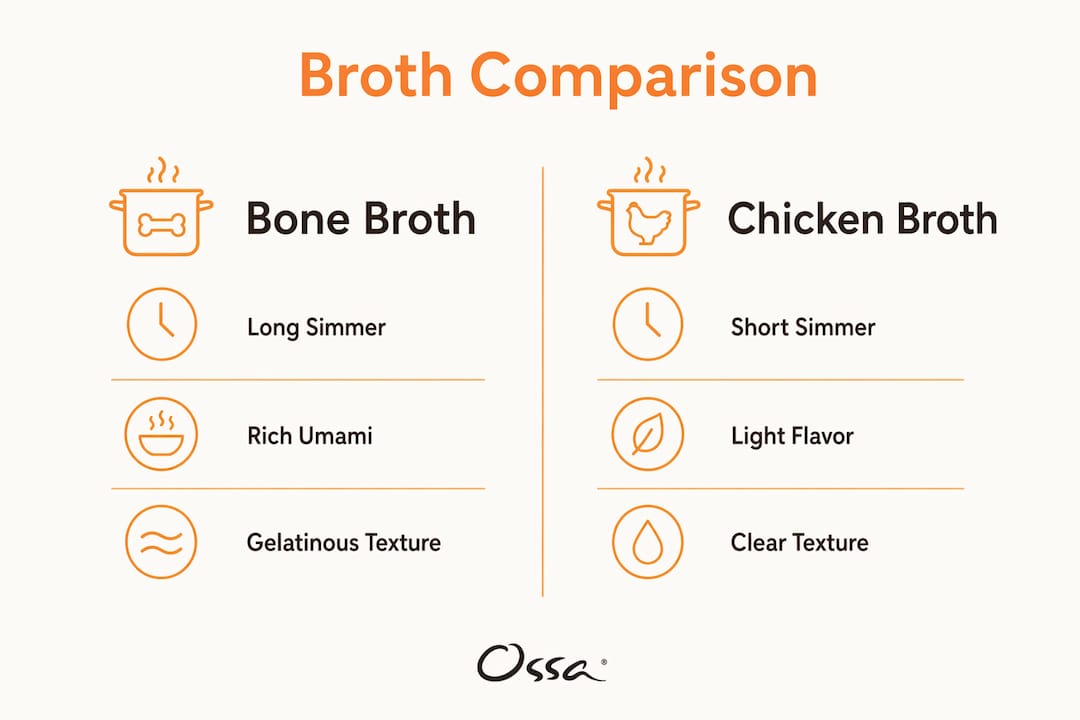
Bone broth and chicken broth share the same base flavour, but they are not the same drink. Bone broth is richer, thicker, and more savoury, with a depth that standard chicken broth simply cannot match. Here is a quick comparison before going further:
-
Base flavour: Both are savoury and chicken-forward when made from poultry bones.
-
Richness: Bone broth is noticeably fuller and more concentrated.
-
Texture: Bone broth has a silky, slightly gelatinous mouthfeel; chicken broth is thin and watery.
-
Saltiness: Commercial chicken broth tends to be saltier; bone broth is milder and more complex.
-
Umami depth: Bone broth carries a deeper umami note from collagen, marrow, and connective tissue.
How cooking method shapes the flavour of bone broth
The difference in taste comes down almost entirely to time and temperature. Bone broth simmers for many hours, sometimes a full day, which draws collagen and minerals out of the bones and connective tissues. That extended process converts collagen into gelatin, producing the characteristic silky texture and a layered savoury depth that shorter-cooked chicken broth cannot replicate.
Chicken broth, by contrast, is typically cooked for one to two hours using meat and bones together. The result is a lighter, cleaner liquid that tastes of chicken without the underlying richness that marrow and connective tissue provide. It works well as a cooking base, but it lacks the body that makes bone broth satisfying to drink on its own.
Umami is the flavour most people notice first when they try bone broth. Amino acids released during extended simmering amplify that savoury quality, giving the broth a complexity that sits on the palate rather than disappearing quickly. Food experts describe bone broth as a foundational drink, subtle and mild rather than aggressively seasoned, which is why it benefits from a pinch of sea salt or a squeeze of lemon added at home.
Pro Tip: Place a small amount of bone broth in the fridge after cooking. If it sets into a soft jelly, the collagen extraction has worked. A broth that stays liquid when cold has not simmered long enough to develop full flavour and nutritional depth.
When to use bone broth instead of chicken broth
Bone broth works in almost every recipe that calls for chicken broth, but it changes the result. Soups become more substantial, rice pilafs take on a richer colour and taste, and gravies develop a natural body without added thickeners. The bolder flavour means you may want to reduce other seasonings slightly.
Common uses for both broths:
-
Soups and stews: Both work, but bone broth adds depth and a fuller mouthfeel.
-
Braising liquid: Bone broth produces a more gelatinous, flavourful sauce as it reduces.
-
Cooking grains: Rice or quinoa cooked in bone broth absorbs more flavour than in chicken broth.
-
Sipping straight: Bone broth is designed for this; standard chicken broth is not.
-
Sauces and gravies: Bone broth reduces to a naturally thick consistency without cornflour.
Drinking bone broth as a warm beverage is where the flavour difference becomes most obvious. The umami is present but gentle, and the texture is smooth rather than watery. Chicken broth drunk plain tends to taste flat or overly salty by comparison. You can explore 50 creative uses for bone broth if you want to go beyond the obvious applications.
For substitution, a one-to-one swap works in most recipes. If the dish is delicate, such as a light consommé or a pale cream sauce, the stronger flavour of bone broth may overpower it. In those cases, diluting bone broth with a little water brings it closer to the lighter profile of chicken broth.
Common misconceptions about how bone broth tastes
Many people try bone broth expecting it to taste like canned soup stock. It does not, and that gap in expectation is the most common reason people find it disappointing on first taste.
Misconception 1: All bone broths taste the same. Flavour varies widely depending on ingredients and cooking time. A bone broth made with only bones, water, and a splash of apple cider vinegar tastes very different from one loaded with vegetables and spices. Simpler ingredient lists generally produce a cleaner, more balanced flavour.
Misconception 2: The thick or oily texture means it is greasy. That mouthfeel signals high collagen content converting to gelatin, which is exactly what you want. Nutritionists confirm that this texture is a marker of quality, not a flaw. A broth that feels silky and coats the mouth slightly has extracted the most from the bones.
Misconception 3: Commercial bone broth tastes like homemade. Many shelf-stable products use yeast extract or other flavour enhancers to imitate savouriness. These additives can produce an artificial aftertaste that genuine bone broth does not have. Authentic broths with minimal ingredients present the real flavour of marrow and collagen. You can read more about the difference between stock and bone broth to understand what separates a quality product from a processed one.
Misconception 4: Bone broth should taste intensely savoury straight from the pack. Authentic bone broth is mild by design. It is a base, not a finished seasoning. Adding salt, herbs, or a little ginger transforms it into something far more satisfying without masking the underlying flavour. Understanding food quality standards helps when choosing between products on the shelf.
How Ossa Organic approaches authentic bone broth in the UK
Ossa Organic was founded after its founder discovered the benefits of bone broth during pregnancy and began making it at home using traditional methods. That origin shapes everything about how the product is made today.
Ossa Organic uses organic, free-range chicken bones and slow simmers them for an extended period without adding flavour enhancers or artificial ingredients. The result is a broth that gelatinises when refrigerated, confirming high collagen extraction, and delivers a clean, savoury flavour that reflects what bone broth is supposed to taste like.
Key characteristics of the Ossa Organic approach:
-
Organic free-range bones: No intensively farmed poultry, which affects both flavour and nutritional profile.
-
Slow simmering: Extended cooking time extracts collagen, gelatin, and minerals fully.
-
No added flavour enhancers: The savouriness comes from the bones, not from yeast extract.
-
Minimal ingredients: Traditional vegetables and seasoning only, preserving natural flavour balance.
-
Suitable for sipping or cooking: The broth is mild enough to drink warm and flavourful enough to use as a cooking base.
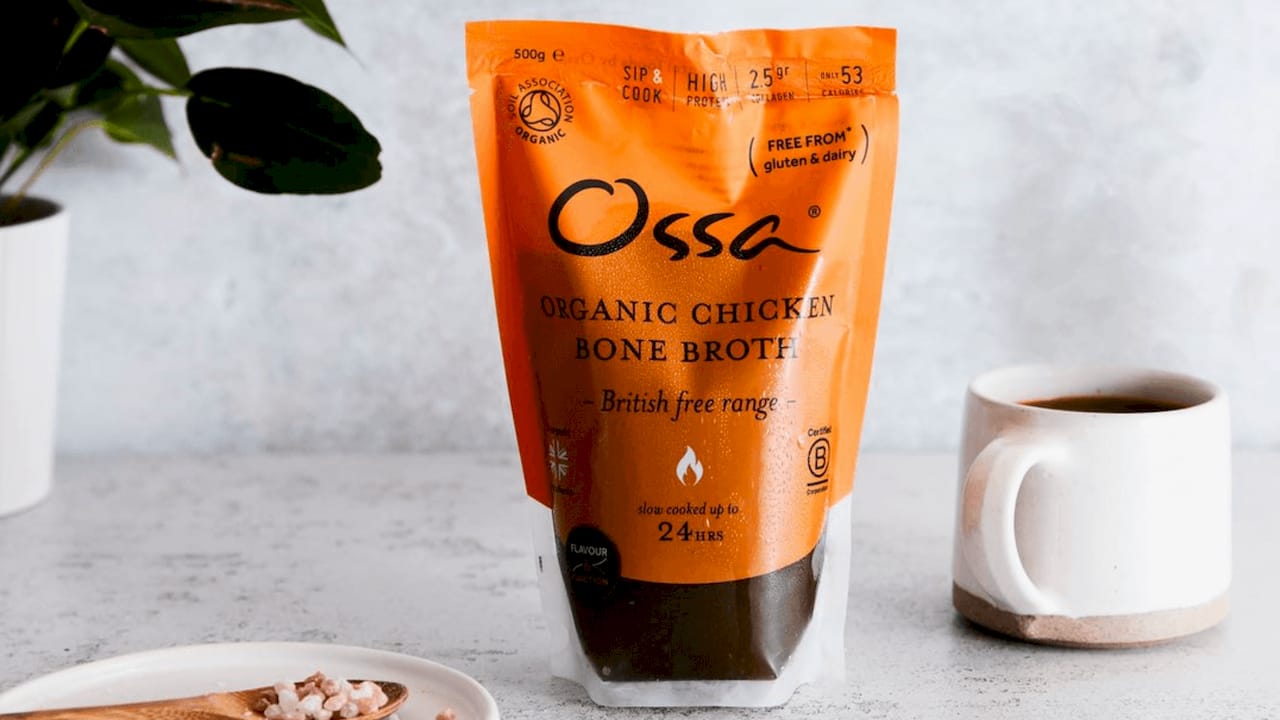
The Organic Free Range Chicken Bone Broth 500ml reflects this philosophy directly. For those new to bone broth, the single 500ml chicken bone broth is a practical starting point, and the 240ml ambient format suits people who want a portable option for sipping on the go. The collagen and gut health benefits of slow-simmered broth are covered in detail on the Ossa Organic benefits page.
Key takeaways
Bone broth tastes similar to chicken broth but is richer, more gelatinous, and carries a deeper umami flavour due to extended simmering of bones and connective tissue.
| Point | Details |
|---|---|
| Shared base flavour | Both broths are savoury and chicken-forward, but bone broth is noticeably richer and fuller. |
| Texture signals quality | A broth that sets to a jelly when cold has extracted sufficient collagen and gelatin. |
| Substitution works one-to-one | Bone broth replaces chicken broth in most recipes but adds bolder flavour and more body. |
| Commercial broths may use enhancers | Yeast extract and additives can produce an artificial aftertaste absent from authentic bone broth. |
| Mild by design | Authentic bone broth is a foundational base, best seasoned to taste before drinking or serving. |
FAQ
Does bone broth taste like chicken broth?
Yes, they share a savoury, chicken-forward base, but bone broth is richer, thicker, and more complex due to longer simmering and collagen extraction from bones and connective tissue.
Can you substitute chicken broth for bone broth?
You can swap them one-to-one in most recipes. Bone broth adds a bolder flavour and thicker texture, so you may want to reduce other seasonings slightly when making the switch.
What does drinking bone broth taste like?
Bone broth drunk warm has a mild, savoury umami flavour with a smooth, slightly silky texture. It is less salty than standard chicken broth and benefits from a pinch of salt or herbs added at home.
What is the downside of bone broth?
Authentic bone broth is milder than many people expect, which can disappoint those anticipating an intensely seasoned stock. It also requires seasoning adjustment when substituted in recipes designed for saltier chicken broth.
Why do some people feel unusual after drinking bone broth?
Bone broth contains glutamates from collagen breakdown, which can cause sensitivity in some people. Starting with a smaller portion and building up gradually tends to resolve this for most.