

Cart
0
Drinking bone broth before bed can support sleep quality and overnight recovery, primarily through its glycine content. Glycine is an amino acid that acts as an inhibitory neurotransmitter, helping to lower core body temperature and ease the transition into sleep. The effect is real but modest: a single cup delivers roughly 0.5–1.7 g of glycine, while clinical trials have used 3 g of supplemental glycine to produce measurable improvements in sleep quality. Expect a gentle, cumulative benefit rather than a dramatic change from one mug.
Quick takeaways:
-
Glycine in bone broth may support sleep onset by calming the nervous system and reducing core body temperature.
-
Finish your mug 30–90 minutes before bed for best results; allow up to two hours if you are sensitive to fluids at night.
-
If you have kidney disease, raised blood pressure, or are pregnant, check with your GP before making bone broth a nightly habit.
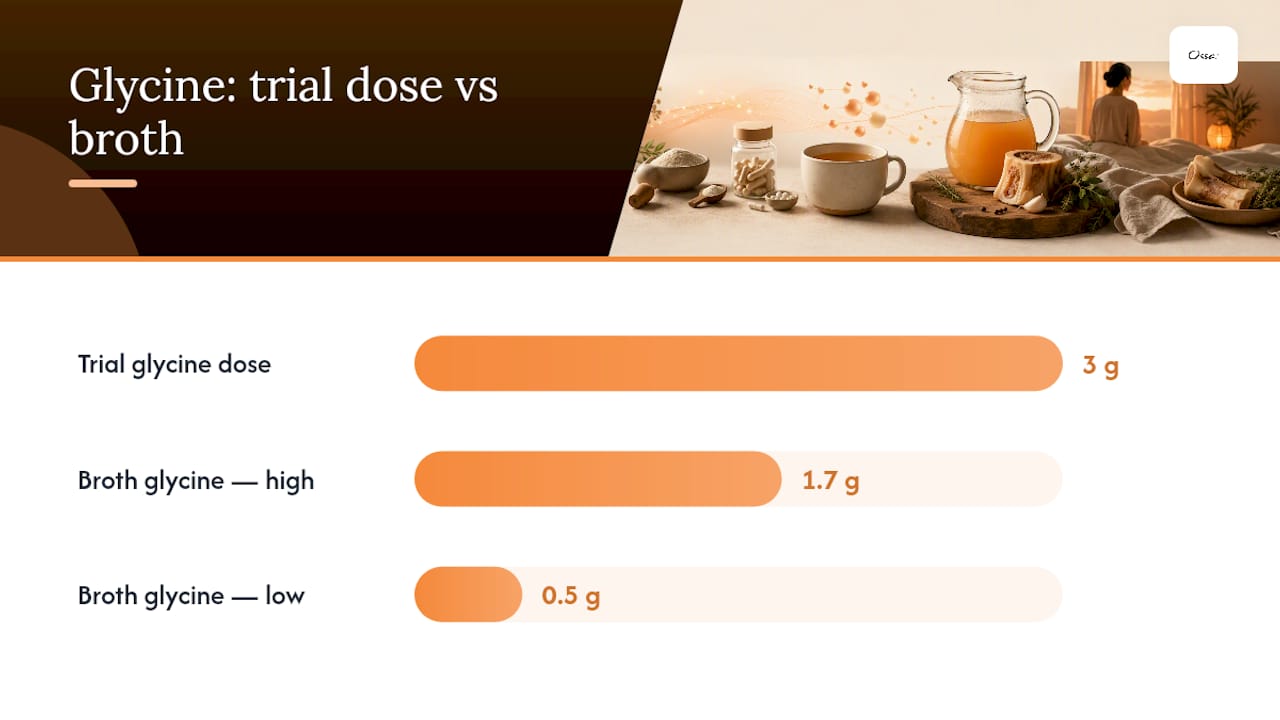
Dosage note: One cup of bone broth contains approximately 0.5–1.7 g of glycine. The 3 g dose used in some clinical trials would require two to four cups, so a single serving offers a partial contribution, not a therapeutic dose.
Key takeaways
Drinking bone broth before bed offers a modest, evidence-supported contribution to sleep quality through glycine, alongside broader recovery benefits from collagen amino acids, with sodium and histamine as the main risks to manage.
| Point | Details |
|---|---|
| Glycine and sleep | A 3 g glycine dose improved sleep quality in clinical trials; one cup of broth provides roughly 0.5–1.7 g. |
| Best timing | Finish your mug 30–90 minutes before bed; extend to two hours if you have reflux or bladder sensitivity. |
| Sodium management | Choose low-sodium or unsalted broth and dilute if needed to reduce blood pressure and nocturia risk. |
| Who should seek advice | Pregnant women, those with kidney disease, raised blood pressure, or anyone on anticoagulants should consult a GP first. |
| Ossa Organic options | Organic Beef and Chicken Bone Broths from Ossa Organic are preservative-free and suited to a low-sodium evening serving. |
Table of Contents
-
Why bone broth may help sleep and support nighttime recovery
-
What the research actually says about glycine and bone broth
Why bone broth may help sleep and support nighttime recovery
The case for drinking bone broth at night rests on three overlapping mechanisms, each supported by a different body of evidence.
Glycine and the nervous system. Glycine functions as an inhibitory neurotransmitter in the central nervous system. Research published on NCBI suggests it may lower core body temperature, a process closely linked to sleep onset. Cooler core temperature signals the brain that it is time to sleep, which is why a warm drink that paradoxically cools you from the inside can be useful in the evening.
Collagen, amino acids and overnight repair. Bone broth is a source of collagen-derived amino acids, including proline and hydroxyproline, alongside glycine. NCBI reviews indicate these amino acids play a supportive role in tissue repair and gut lining integrity. The body carries out much of its cellular repair work during sleep, so providing these building blocks in the evening is a logical fit, even if direct clinical evidence for the specific timing is limited.
The ritual effect. A warm, savoury drink before bed can replace less useful late-night habits. Nutrient timing research suggests that when you drink bone broth does not significantly change how its nutrients are absorbed, so the evening window is chosen for behavioural reasons as much as biochemical ones.
-
Glycine: may lower core body temperature and calm the nervous system.
-
Collagen amino acids: support tissue repair processes that occur during sleep.
-
Warmth and ritual: a low-calorie, low-sugar alternative to snacks that disrupt sleep.
A clinical trial registered on PubMed found that 3 g of glycine taken before bed improved subjective sleep quality in people with difficulty sleeping. Bone broth contributes a portion of that dose per cup.
Pro Tip: Swap a biscuit or crisps for a small mug of low-sodium bone broth in the evening. You get the comfort of a warm drink, a modest glycine contribution, and none of the blood sugar spike that delays sleep onset.
What the research actually says about glycine and bone broth
The science here is promising but not conclusive. Understanding where the evidence is strong and where it thins out helps you set realistic expectations.
What is established. A clinical trial on PubMed found that 3 g of supplemental glycine before bed improved subjective sleep quality in participants with self-reported sleep difficulties. A separate NCBI review describes the physiological mechanism: glycine appears to act on NMDA receptors and may reduce core body temperature via the hypothalamus, both of which facilitate sleep onset. These are credible, peer-reviewed findings.
Where the evidence gets thinner. Bone broth is not a measured glycine supplement. Glycine content varies depending on bone type, simmer time, and water ratio, with estimates ranging from roughly 0.5–1.7 g per cup. That variability means you cannot reliably replicate a clinical dose from broth alone. A review on NCBI covering nutritional approaches to sleep also notes that most trials use isolated amino acids rather than whole foods, and that direct evidence for food-based sources is limited.
Key limitations of the current evidence:
-
Most glycine sleep trials are small, with short follow-up periods and mixed populations.
-
Broth composition varies widely, making dose standardisation impossible.
-
No large randomised controlled trials have tested bone broth specifically as a sleep intervention.
-
Mechanistic plausibility (from amino acid physiology research) does not equal proven clinical therapy.
The honest summary: glycine has a credible mechanism and some trial support, but bone broth delivers it in variable, sub-therapeutic amounts. The bone broth collagen benefits extend well beyond sleep, which is worth keeping in mind when evaluating whether an evening habit is worthwhile.
How to time, portion and prepare your evening broth
Getting the practical details right matters more than the biochemistry for most people.
Timing
Finish your mug 30–90 minutes before bed. This window gives glycine time to absorb and lets the warming effect settle without leaving you needing the bathroom at 2 AM. If you are sensitive to fluids at night or have nocturia, extend that gap to two hours.
Portion and sodium
A standard serving is 150–250 ml, roughly a small mug. Sodium is the main variable to watch: commercial broths can range from low to very high in sodium, and a high-sodium drink before bed can raise blood pressure and disrupt sleep in sensitive individuals. Choose a low-sodium or unsalted option wherever possible.
Simple evening preparation steps:
-
Pour 150–250 ml of bone broth into a small saucepan.
-
Warm gently over a low heat; do not boil, as prolonged boiling can degrade some amino acids.
-
Add a pinch of dried herbs (thyme, rosemary) or a small squeeze of lemon if you prefer flavour without sodium.
-
Pour into a mug and allow to cool for two to three minutes before drinking.
Two quick evening options:
-
Chicken broth mug: 200 ml of organic free-range chicken broth, warmed with a sprig of thyme. Light, mild, and easy to digest.
-
Beef broth mug: 150 ml of organic beef bone broth, diluted with 50 ml of hot water to reduce sodium concentration. Richer flavour, slightly higher collagen content.
Pro Tip: Avoid eating a full meal within two hours of bed. A small mug of broth sits comfortably in the stomach without triggering the digestive activity that delays sleep. If you are using broth as part of a healthy evening eating routine, keep any additions minimal.
Risks, contraindications and when to check with a clinician
Bone broth is a food, not a medicine, but that does not mean it is risk-free for everyone.
Main risks to be aware of:
-
High sodium: Many commercial broths contain significant sodium per serving. High intake before bed can worsen blood pressure and cause fluid retention.
-
Nocturia: Any fluid close to bedtime increases the risk of waking to urinate, particularly in older adults or those with bladder sensitivity.
-
Reflux and GERD: The fat and collagen content in broth can trigger reflux in people with gastro-oesophageal reflux disease, especially when lying down shortly after drinking.
-
Histamine sensitivity: Long-simmered broths are high in histamine. People with histamine intolerance may experience headaches, flushing, or disrupted sleep rather than improved sleep.
-
Medication interactions: Bone broth contains vitamin K (from marrow and fat), which can interact with anticoagulants such as warfarin. If you take blood-thinning medication, discuss dietary changes with your GP.
Who should consult a GP before starting a nightly broth habit:
-
Anyone who is pregnant (sodium and food safety considerations apply).
-
People with chronic kidney disease (protein and phosphorus load).
-
Those with raised blood pressure or cardiovascular conditions.
-
Anyone on anticoagulant or immunosuppressant medication.
Practical mitigation steps:
-
Choose low-sodium or unsalted broth and dilute with water if needed.
-
Finish drinking at least 90 minutes before bed; two hours if you have reflux or bladder sensitivity.
-
Start with a small portion (150 ml) to assess your individual tolerance.
If you have a diagnosed medical condition or take prescription medication, consult your GP before adding bone broth to your nightly routine. This article provides general information, not clinical advice.
Pro Tip: If you suspect histamine sensitivity, try a shorter-simmered broth or a collagen peptide supplement instead, which delivers glycine without the histamine load of a long-cooked stock.
Why an evening mug of broth has always made sense to us
At Ossa Organic, the evening broth ritual is not a marketing concept. It grew from direct experience: founder Catherine Farrant began using bone broth during pregnancy and built it into a daily routine that the whole family now follows. The evening mug became a practical anchor, a moment of warmth and nourishment that replaced less useful habits at the end of the day.
What matters from a sourcing perspective is that the broth you drink before bed is genuinely clean. Ossa Organic uses organic ingredients, slow simmering, and no preservatives or artificial additives, because the whole point of a bedtime ritual is to give your body something restorative, not something it has to process and filter. The Ossa Organic founder story reflects that philosophy directly.

The bone broth benefits for gut, joint and bone health extend well beyond sleep, which is why an evening habit tends to stick: you notice the cumulative effects across digestion, skin, and joints, not just in how you sleep.
Ossa Organic broths suited to an evening routine
Three Ossa Organic products work particularly well as a bedtime option, each with slightly different flavour profiles and serving notes.
-
1x Organic Beef Bone Broth Ambient 515ml: Rich in collagen and glycine, made from organic grass-fed beef bones. For an evening serving, use 150 ml diluted with 50 ml of hot water to moderate the sodium concentration. Shelf-stable and convenient to keep in a kitchen cupboard.
-
Organic Free Range Chicken Bone Broth 500ml: Lighter in flavour and easier to digest than beef, making it a good first choice for those new to evening broth. Warm 200 ml gently and drink plain or with a pinch of dried thyme.
-
1x Organic Chicken Bone Broth Ambient 515ml: The ambient format means no refrigeration until opened, useful for keeping a supply ready without planning ahead. Same serving approach as the free-range chicken option.
All three are free from preservatives and artificial ingredients. For reheating guidance and further serving ideas, the Ossa Organic how-to page covers portioning, storage, and preparation in detail. UK delivery is available directly through the Ossa Organic website.
Key sources and further reading
-
PubMed clinical trial on 3 g glycine and subjective sleep quality improvement in people with sleep difficulties
-
NCBI review on glycine as an inhibitory neurotransmitter and its role in lowering core body temperature to support sleep onset
-
Healthline summary of glycine content in bone broth (approximately 0.5–1.7 g per cup) and dosage context relative to clinical trials
This article is general information, not a substitute for advice from a qualified doctor. Consult a qualified healthcare professional about your own circumstances before acting on anything here.
FAQ
Is bone broth better in the morning or at night?
Both timings are valid, and nutrient absorption does not change significantly by time of day. Morning suits gut support and appetite management; evening suits sleep and recovery, where glycine’s calming properties are most relevant.
Is bone broth a good late-night snack?
A small mug of low-sodium bone broth is one of the more practical late-night options: low in calories, free from added sugar, and a source of glycine. Finish it at least 30–90 minutes before sleep to reduce fluid-related disruption.
What is the downside of drinking bone broth?
The main concerns are high sodium in commercial products, histamine content in long-simmered broths, and the potential to trigger reflux in people with GERD. Those on anticoagulants should check with their GP due to the vitamin K content.
How much bone broth should you drink before bed?
A single small mug of 150–200 ml is a practical starting portion. One cup delivers roughly 0.5–1.7 g of glycine, which is below the 3 g dose used in clinical trials, so effects are likely to be subtle rather than pronounced.
Can bone broth help with sleep if you do not have sleep problems?
Glycine’s temperature-lowering mechanism can support sleep onset even in people without diagnosed sleep difficulties. The ritual of a warm, savoury drink before bed also replaces habits that actively disrupt sleep, which is a benefit in its own right.