

Cart
0

Slow living food rituals are practical, repeatable acts that bring attention back to what you eat, how you prepare it, and who you share it with. Harvard’s mindful-eating guidance, the Slow Food movement’s ‘Good, Clean and Fair’ principles, and Ossa Organic’s approach to restorative cooking all point to the same conclusion: small, consistent rituals do more for your eating habits than any short-term diet overhaul. Here are 12 ready-to-use examples of slow living food rituals, grouped by phase so you can pick one and start today.
-
Before meals: a weekly farmers’ market shop, a five-minute mise en place, or a mindful chopping warm-up
-
At the table: phone-free meals, eating slowly and stopping before feeling completely full, plating food with care
-
After eating: a short gratitude pause, gentle clearing, a ten-minute digestion walk
-
Preservation and batch cooking: a long-simmer broth, quick sauerkraut, batch soup on a Sunday
Pro Tip: Start with one ritual from one phase only. Cleveland Clinic clinicians note that beginning with a single meal per day is enough to build the habit before expanding.
Key takeaways
Slow living food rituals work because they apply intention to acts already present in the day, not because they add time or complexity to it.
| Point | Details |
|---|---|
| Start with one phase | Pick one ritual from preparation, mealtime, or after-meal and run it for a week before adding another. |
| Use sensory anchors | A zest, a breath-stir, or a warm broth cup signals the nervous system to shift from task mode to presence. |
| Seasonal rituals rotate naturally | UK seasons provide a built-in structure: foraging in spring, preserving in autumn, long simmers in winter. |
| Evidence supports the approach | Harvard and Cleveland Clinic both recommend eating without distractions and stopping at roughly 80% fullness as practical, repeatable steps. |
| Ossa Organic broths fit the ritual | Ready-made organic broths from Ossa Organic work as a savouring sip, a simmer base, or a restorative evening cup with no preparation required. |
Table of Contents
Rituals by phase: preparation, mealtime, after-meal, and preservation
Grouping rituals by phase makes it easier to slot them into a day that already has its own shape.
Preparation rituals
1. The weekly market shop. Choosing produce in person, from a stall rather than a supermarket shelf, slows the decision process and connects you to the season. UK farmers’ markets run year-round; the National Farmers’ Retail and Markets Association lists over 500 certified markets across England, Scotland, and Wales. The act of selecting, not just clicking, is itself a ritual.
2. Mise en place before cooking. Lay out every ingredient before the hob goes on. Wash, peel, and measure in sequence. This ten-minute preparation step converts cooking from a rushed task into something closer to cooking as meditation, where the sequence of small acts holds your attention rather than your to-do list.
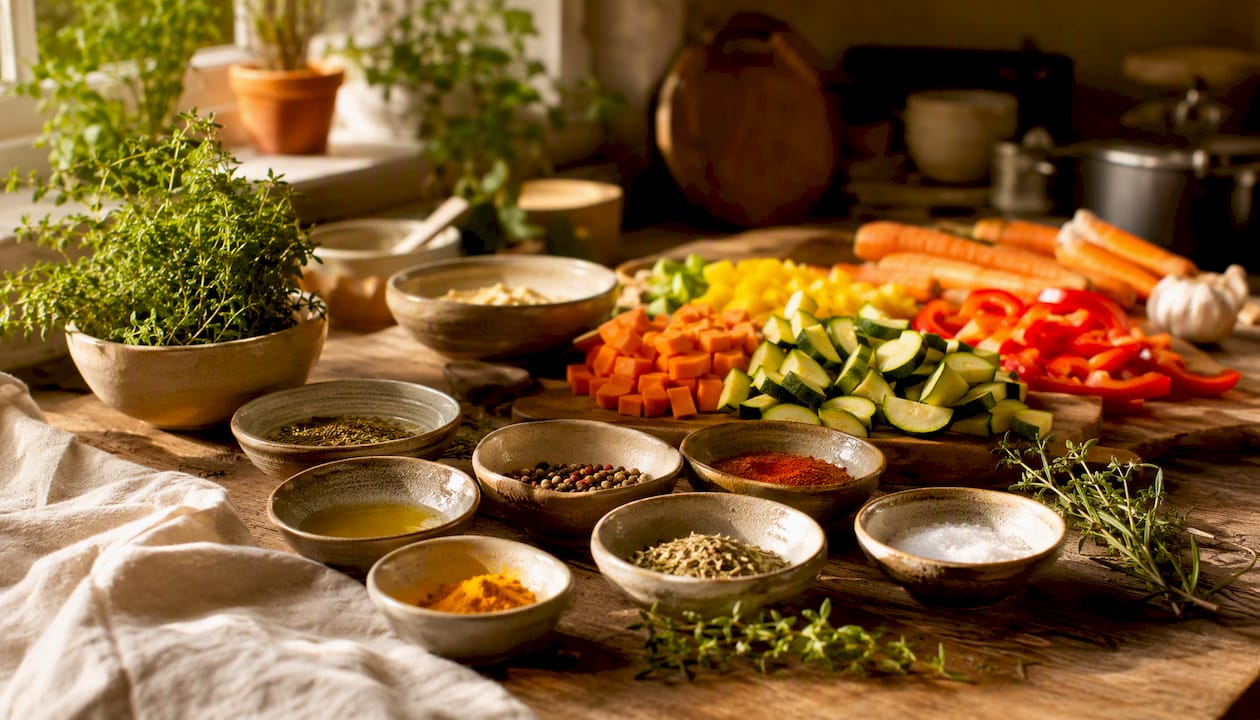
3. The sensory warm-up. Zest a lemon, crush a garlic clove, or tear a handful of fresh herbs before you begin. The sharp scent acts as a sensory anchor, a signal to the nervous system that this time belongs to the kitchen. Slow-cooking writers describe similar boundary signals in the ‘tadka’ tempering tradition, where the final bloom of spices in hot fat marks the shift from workday to communal eating.
Mealtime rituals
4. Phone-free meals. Harvard’s mindful-eating guidance is direct: eating without screens allows satiety cues to register. Modest portions served on a suitably sized plate, and no device on the table are the three practical steps it recommends. One phone-free dinner per week is a realistic starting point.
**5. Check whether you are still hungry or eating from habit. Stop at around the point when you start feeling comfortably satisfied. This is a core principle in both Harvard’s guidance and the Slow Food movement’s emphasis on eating with awareness rather than speed.
6. Single-item focus. Choose one element of the meal and give it your full attention for the first two minutes: its colour, texture, temperature, and taste. Healthline’s mindful-eating guide suggests starting with foods that reward slow attention, such as pomegranates, cherries, or in-shell nuts, precisely because they require effort to eat.
After-meal rituals
7. The gratitude pause. Before clearing the table, take thirty seconds to acknowledge the meal. This does not need to be formal or spiritual; it can be as simple as noting one ingredient you enjoyed. The pause separates eating from the next task and signals the meal is complete.
8. The digestion walk. A ten-minute walk after dinner is a low-effort, high-return ritual. It supports digestion and creates a natural boundary between the meal and the evening.
Preservation and slow-cooking rituals
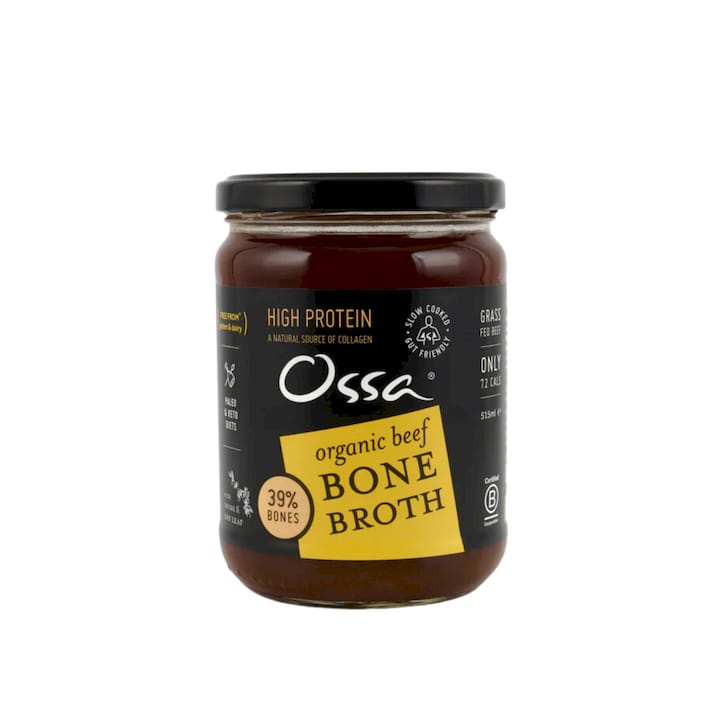
9. The long-simmer broth. Place bones, a halved onion, a few peppercorns, and cold water in a large pot. Bring to a gentle simmer at moderate simmering temperatures suitable for legumes and hold it there for several hours. Slow-cooking practitioners note that this temperature range aids flavour development and digestibility. The process itself, the occasional skim, the low bubble, the gradual deepening of colour, is a meditative food preparation routine that asks very little of you once it is running. For a practical comparison of broth and stock methods, the slow simmer technique is worth reading before you start.
**10. Massage cabbage for five minutes until brine forms, pack tightly into a sterilised jar, and press until the cabbage sits below the liquid. Leave at room temperature for five to seven days. The daily check, pressing the cabbage down, watching the brine cloud and then clear, is a preservation ritual that takes under two minutes once the jar is set up.
Pro Tip: For batch cooking, meal prep with bone broth offers a practical weekly structure: one broth batch on Sunday becomes the base for soups, grains, and sauces across the week.
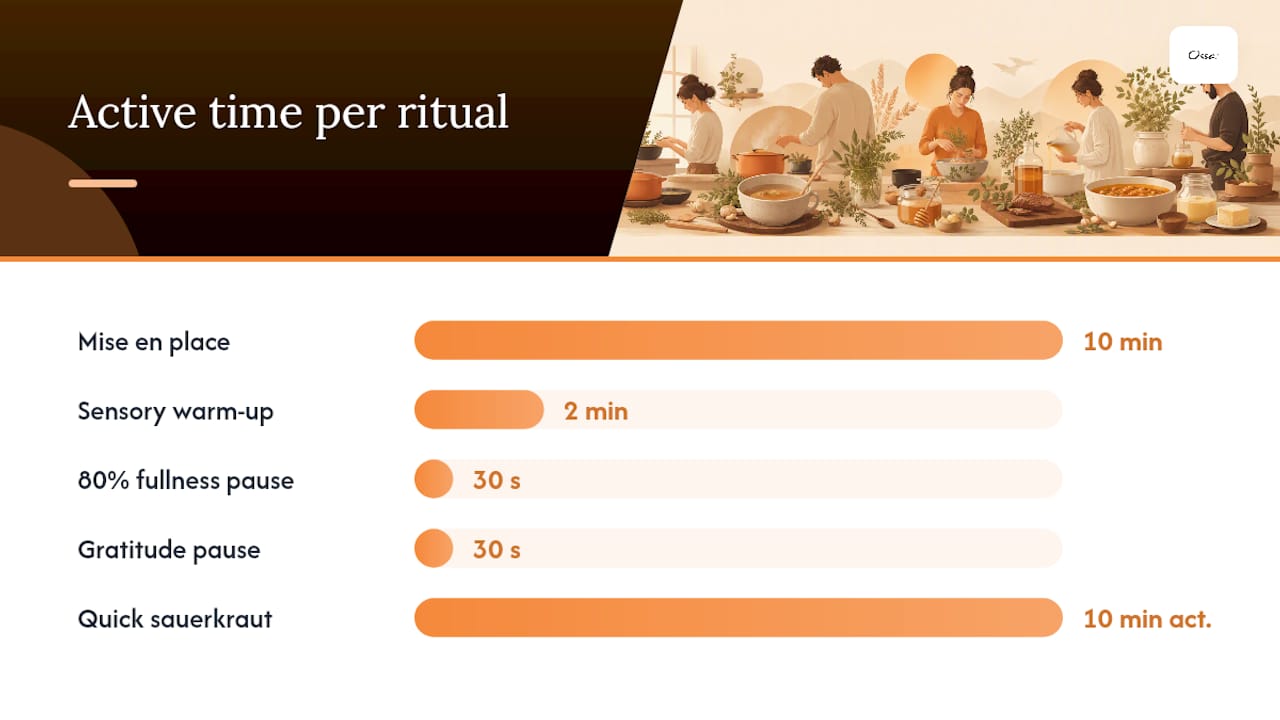
| Phase | Ritual | Time needed |
|---|---|---|
| Preparation | Mise en place | 10 minutes |
| Preparation | Sensory warm-up (zesting, crushing) | 2 minutes |
| Mealtime | Phone-free meal | Duration of meal |
| Mealtime | 80% fullness pause | 30 seconds |
| After-meal | Gratitude pause | 30 seconds |
| After-meal | Digestion walk | 10 minutes |
| Preservation | Long-simmer broth | 10 min active, several hours passive |
| Preservation | Quick sauerkraut | 10 min active, 5–7 days fermenting |
How to start small and make food rituals stick
The most common reason rituals fail is that people try to adopt too many at once. The approach below is built around one commitment per week.
A two-week starter plan
-
Days 1–3: Choose one mealtime ritual only. Phone-free dinner is the easiest entry point because it requires no equipment and no extra time.
-
Days 4–7: Add one preparation ritual. The sensory warm-up (zesting or crushing before cooking) takes under two minutes and creates an immediate, repeatable cue.
-
Week two, days 8–10: Add one after-meal ritual. The gratitude pause or a short walk both work. Pick whichever fits your evening pattern.
-
Days 11–14: Attempt one preservation or batch-cooking ritual. A small sauerkraut jar or a litre of broth on a Sunday afternoon is enough to complete the cycle.
By the end of two weeks, you have one ritual from each phase running simultaneously, and none of them required restructuring your day.
Easy commitments checklist
-
One phone-free meal per day
-
One sensory preparation step before cooking (zesting, crushing, tearing)
-
One after-meal pause of thirty seconds or more
-
One batch or preservation task per week
Troubleshooting
-
No time: Clinicians note that mindful eating does not require extra time; it requires intention applied to acts already present in the day. A gratitude pause takes thirty seconds.
-
Family resistance: Introduce phone-free meals as a trial for one week rather than a permanent rule. Frame it as an experiment, not a restriction.
-
Social eating: Rituals do not disappear in restaurants or at other people’s tables. The 80% fullness pause and single-item focus both work anywhere.
Track one simple metric: the number of phone-free meals per week. Write it in a notebook or a phone note on Sunday evening. A single number is enough to show whether the habit is building. For further habit scaffolding, nourishing weekly habits offers a practical weekly structure.
Pro Tip: Cleveland Clinic recommends starting with one meal per day and using sensory prompts, not willpower, to maintain the practice. Attach a new ritual to an existing cue: the moment the hob goes on, the moment you sit down, the moment you push your plate away.
Why food rituals reduce stress and improve eating habits
The evidence base for mindful eating rituals is coherent, if not uniform across every study design.
Harvard’s mindful-eating guidance frames the practice around four questions: what to eat, why, how much, and how. Its practical steps, eating without screens, savouring small bites, serving modest portions on a modestly sized plate, are designed to allow satiety cues to register before overeating occurs. The mechanism is straightforward: slower eating gives the body time to signal fullness.
A peer-reviewed review available via PMC summarises evidence that mindful-eating interventions can improve eating behaviours in some studies, though results vary by study design and population. The review discusses how attention and sensory engagement reduce automatic, habitual eating. The signal is consistent enough to be useful, even if it is not uniform.
Cleveland Clinic describes mindful eating as a non-judgemental awareness practice that separates physical hunger from emotional eating. Its clinicians recommend chewing food slowly and attentively, removing distractions, and planning smaller meals roughly three hours apart. The emphasis on non-judgement matters: these are sustainable meal practices, not rules to fail.
The Slow Food movement’s 2024 strategy reinforces this by emphasising biodiversity preservation and support for small-scale producers. Attending a farmers’ market or choosing a seasonal veg box is not a passive act; it is a direct expression of those principles. For a broader view of how organic sourcing connects to these ideas, organic foods and sustainable living sets out the practical links clearly.
Slow-cooking writers also point to the sensory richness of long simmers and tempering steps as boundary signals: the smell of a broth reducing or spices blooming in fat tells the nervous system that the workday is over and communal eating is beginning. These are not abstract benefits; they are physiological cues built into the cooking process itself.
Seasonal food rituals suited to UK rhythms
UK seasons offer a natural structure for rotating slow living food rituals across the year. Choosing produce that is actually in season, rather than imported and out of season, is itself one of the most direct examples of slow food practices in daily life. A practical guide to sourcing organic ingredients locally covers how to find seasonal suppliers across the UK.
| Season | Ritual | Local UK activity |
|---|---|---|
| Spring | Wild garlic foraging, sprouting seeds, light broths | Woodland walks, early farmers’ markets |
| Summer | Outdoor dining, preserving soft fruit, cold soups | Pick-your-own farms, allotment harvests |
| Autumn | Batch broths, apple pressing, fermenting, communal soup nights | Apple orchards, hedgerow foraging |
| Winter | Long simmers, bone broth rituals, candlelit shared meals | Root vegetable box schemes, baking days |
Spring
Wild garlic appears in UK woodlands from March and is free to forage in small quantities. Washing and roughly chopping a handful before adding it to a broth or soup is a preparation ritual tied directly to the season. Seed-sprouting on a windowsill, mung beans or lentils in a jar rinsed twice daily, is a five-minute daily ritual that produces fresh food within a week.
Summer
Dining outside, even in a UK garden or on a balcony, changes the pace of a meal. Pick-your-own farms across England and Scotland open from June; strawberry picking with family or friends is a communal ritual that connects the act of eating to the act of harvesting. Preserving soft fruit as a simple jam or compote extends the season and creates a jar that carries the memory of the day it was made. For more on the nutritional case for eating seasonally, seasonal produce and nutrition sets out the practical benefits clearly.
Autumn
Autumn is the strongest season for preservation rituals in the UK. Apple pressing, either at a community press or with a simple hand press at home, produces fresh juice and a sense of collective effort. Batch broths made from the bones of a Sunday roast are a practical autumn ritual: the broth simmers while the house cools, and the smell alone signals the shift into the slower half of the year. Communal soup nights, where each person brings one ingredient, are a low-effort shared dining experience that builds a regular rhythm.
Winter
Long simmers suit winter because the heat is welcome and the time is available. A bone broth started on a Saturday morning and left to run until evening requires almost no active attention. Candlelit meals, even on a Tuesday, slow the pace of eating by removing the overhead light that signals efficiency. Shared baking, bread or a simple cake, is a preparation ritual that involves the whole household and produces something to eat together.
Five food rituals you can do in five minutes or less
These rituals require no equipment, no planning, and no extra time in the day. Each one creates a small, repeatable boundary around a meal.
-
The 60-second gratitude. Before your first bite, name one thing about the meal: the colour of the vegetables, the smell of the broth, the effort that went into it. Sixty seconds, no more.
-
The sensory check-in. Pick up your fork, then pause. Notice the temperature of the plate, the smell rising from the food, the texture of what you are about to eat. This two-breath pause before the first bite shifts attention from the previous task to the present meal.
-
One-minute plating. Transfer food from the pan to a plate rather than eating from the container. Arrange it, even loosely. The act of plating signals that this is a meal, not a refuelling stop.
-
The herbal infusion. Steep a teabag or a few fresh herbs in hot water for three minutes before or after a meal. The waiting itself is the ritual: it creates a pause that cannot be rushed.
-
The breath-stir. When stirring a pot or sauce, take one slow breath in and one slow breath out before moving on. Slow-cooking practitioners describe this as a sensory anchor that converts a mechanical act into a moment of presence.
These fit naturally into common UK day patterns. The sensory check-in works at a desk lunch. The herbal infusion fits a mid-morning work break. The one-minute plating works even on a school-run evening when dinner is assembled in ten minutes. For more ideas on building quick, nourishing habits into mornings, gut-healthy breakfasts offers practical options that take under ten minutes.
Why Ossa Organic champions ritual and slow cooking
Ossa Organic was founded after its founder discovered the benefits of bone broth during pregnancy and began building a family diet around organic, anti-inflammatory foods and slow-cooked meals. That origin is not incidental to the products; it is the reason they exist. The broths are made to be used as rituals, not just ingredients: a morning cup, a base for a weekly simmer, a restorative drink at the end of a long day.
The brand’s B Corp certification reflects the same values that underpin slow food practices: accountability to sourcing, transparency in production, and a commitment to ingredients that do not require a label full of additives to justify their presence on a shelf. Slow cooking and intentional eating are not marketing positions at Ossa Organic; they are the operating model.
The invitation here is simple: pick one ritual from this list and try it this week. If you want a practical starting point that requires no preparation, a warm cup of broth before a meal is one of the oldest and most direct examples of an intentional eating habit.
Ossa Organic bone broth as a ritual-ready staple
Ossa Organic publishes this article and sells the products mentioned below. The suggestion is practical, not obligatory.
A ready-made bone broth removes the only barrier to the long-simmer ritual: time. Three ways to use it as a slow-living ritual staple:
-
The savouring sip. Warm a cup of organic beef bone broth and drink it slowly before dinner, without a screen, as a five-minute transition between the working day and the meal.
-
The weekly simmer base. Use organic chicken bone broth as the liquid for a Sunday soup or grain dish. Add seasonal vegetables, simmer for twenty minutes, and the week’s batch cooking is done.
-
The restorative night cup. A warm cup of ambient chicken broth in the evening, taken slowly and without distraction, is a winter ritual that requires nothing more than a mug and two minutes.
All three broths are free from preservatives and artificial ingredients. For recipe ideas and practical usage guidance, the how-to-use page covers the full range. If you want a structured approach to building these habits over a fortnight, the 14-day gut reset programme offers a step-by-step framework.
Sources
The evidence and guidance in this article draws on the following sources. Each covers a distinct aspect of slow living food rituals.
- Mindful eating 101 — A beginner’s guide
Ossa Organic’s blog and product pages offer practical how-tos for incorporating bone broth and organic ingredients into these rituals. The intuitive eating guide is a useful companion piece for readers building mindful eating habits alongside slow-cooking practices.
FAQ
What are some examples of slow living food rituals?
Practical examples include phone-free meals, a weekly farmers’ market shop, a long-simmer broth on a Sunday, quick sauerkraut fermentation, a gratitude pause before clearing the table, and a sensory warm-up before cooking. Each is a repeatable act that brings attention to food preparation or eating.
What is a slow living routine?
A slow living routine is a set of small, repeatable daily acts that prioritise presence and intention over speed. In food terms, this typically includes one mindful meal per day, one preparation ritual, and one weekly batch or preservation task.
What are examples of everyday food rituals?
Everyday food rituals include plating food onto a proper plate rather than eating from a container, taking two breaths before the first bite, steeping a herbal infusion as a post-meal pause, and noting one thing you enjoyed about a meal before clearing up.
How do you start a slow living food practice?
Cleveland Clinic recommends starting with one meal per day and attaching a sensory prompt to an existing cue, such as the moment you sit down or the moment the hob goes on. A two-week starter plan, one new ritual per phase per week, is a practical way to build without overloading the day.
Can slow food rituals fit into a busy UK schedule?
Yes. The five rituals in the quick-ritual section each take five minutes or less. The breath-stir, the one-minute plating, and the 60-second gratitude pause require no extra time; they apply intention to acts already happening in the day.