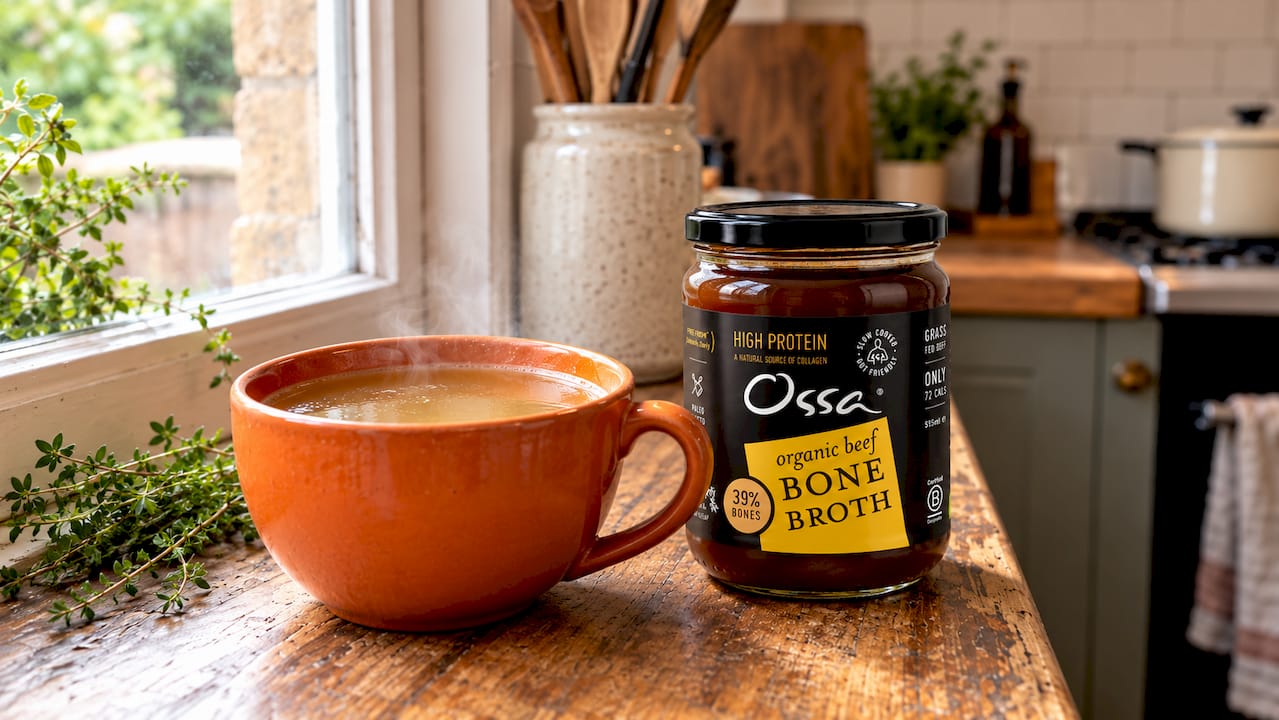
Bone broth can be one of the fluids you drink during diarrhoea, if you tolerate it. It is not a treatment, and there is no good evidence that it stops diarrhoea or heals the gut. Its realistic value is that it is a warm, savoury liquid that supplies some fluid and salt when you may not fancy much else. Oral rehydration sachets from a pharmacy are designed for replacing lost fluid and salts, and they remain the better choice when dehydration is a concern.
This guide covers when broth is reasonable, how to try it in small amounts, what to look for on a label, what else to eat as you recover and which symptoms mean you should get medical advice instead of waiting.
Ossa Organic
Keep a simple broth on hand
Ossa Organic makes natural foods with organic ingredients and slow cooking techniques, for those who want broth as part of everyday eating.
TL;DR
-
Bone broth is a supportive fluid, not a cure. Research has not shown that it stops diarrhoea or repairs the gut lining.
-
Start with water and oral rehydration sachets if you are losing a lot of fluid. Add broth only once fluids are staying down.
-
Choose a plain, thin, lightly seasoned broth and take small sips. Very fatty, salty or heavily spiced broths are more likely to upset a sensitive stomach.
-
Children, older adults and people with kidney disease, diabetes or a weakened immune system need individual advice from a pharmacist or GP.
-
Blood in the stool, severe pain, fever, signs of dehydration or diarrhoea lasting beyond about a week need medical assessment.
Table of Contents
Is bone broth good for diarrhoea?
The honest answer is that it is acceptable for many adults and unproven as a remedy. Clinical guidance on acute diarrhoea centres on one principle: replace the fluid and electrolytes you are losing. Broths appear in that guidance as one of several liquids that can contribute, alongside water, diluted juice and rehydration drinks. They are not singled out as special.
A clinical dietitian at a US cancer centre has said there is no evidence that bone broth has greater health benefits than other broths. She also notes that it is not a substantial source of calories or protein. Another major children’s hospital advises treating gut-health claims about bone broth cautiously, because research has not established benefits for digestion or inflammation.
What that means in practice:
-
Broth can help you take in fluid and some salt. That matters when you feel too unwell to eat.
-
Broth is not a stool-firming food. Nothing in the evidence supports the idea that it hardens loose stools.
-
Broth is not a gut repair treatment. Claims that it seals or heals the intestinal lining come mostly from lab studies on individual components and from anecdote, not from trials in people with acute diarrhoea.
-
Feeling better after drinking broth is usually recovery. Most infectious diarrhoea settles by itself, so improvement during a stomach bug is hard to credit to any one food.
Broth or oral rehydration solution?
This is the most useful distinction in the whole topic. Diarrhoea removes water, sodium, potassium and other salts. Oral rehydration solution (ORS) is made to replace them in a balanced ratio that the gut can absorb efficiently. Broth contains water and often a good deal of sodium, but it is not balanced for that purpose and has little potassium to speak of.
|
Plain broth |
Oral rehydration sachets |
| Designed to replace fluid and electrolytes |
No |
Yes |
| Easy to take when you feel nauseous |
Often, if warm and plain |
Can taste unpleasant to some people |
| Salt content |
Varies widely by product |
Measured and consistent |
| Fat content |
Varies, sometimes high |
None |
| Suitable as the main fluid in significant dehydration |
No |
Yes, as directed on the pack |
| Offers some savoury variety |
Yes |
No |
A sensible way to use both: rely on water and ORS as the backbone, and treat broth as a comfortable extra when you want something that is not sweet or fizzy. If you have been vomiting as well, or the diarrhoea is frequent and watery, do not swap sachets for broth.
A pharmacist can advise which sachets suit your age and health, and how to make them up. This matters most for babies, young children, older adults and anyone with a long-term condition.
Broth for a stomach bug: a cautious way to try it
Gastroenteritis, the usual stomach bug, mostly gets better without specific treatment. Guidance centres on staying hydrated, and when vomiting is present, taking small, frequent sips rather than large drinks. Broth fits into that routine only after the first, roughest hours.
A practical sequence for an adult who is otherwise well:
-
Begin with water or ORS. Take small, frequent sips. If you vomit, wait a short while and start again with smaller amounts.
-
Wait until fluids stay down. Once you have kept drinks down for a few hours, you can consider a warm broth.
-
Try a small cup. A few sips, or around half a mug, is plenty to begin with. Make sure the broth is warm rather than scalding.
-
Watch how you feel for the next hour or two. If cramping increases or stools get looser, stop and go back to water or ORS.
-
Build up gradually. If it sits well, you can have a little more through the day alongside other fluids.
-
Return to normal eating as appetite comes back. There is no need to stay on liquids longer than you feel necessary.
If you are caring for someone else, keep an eye on how alert they are, how often they pass urine and whether they can keep fluids down. These are better indicators of how they are coping than how much broth they have taken.
Why a small amount matters
A large mug of rich, salty, fatty broth is a lot for a gut that is already irritated. Fat slows stomach emptying and can trigger cramping in some people. A concentrated broth can also deliver a lot of salt in one go. A small serving of a plain broth is a more cautious trial than a big bowl of a concentrated one, and it is easier to stop if it does not agree with you.
Choosing a broth that is easier on the gut
Not all broths are the same, and the differences matter more during diarrhoea than at any other time. Here is what to check.
Fat
Home-made bone broth can develop a layer of fat that sets on top when chilled. That layer can be skimmed off and discarded before reheating. Shop-bought broths vary, so look at the nutrition panel. For an upset stomach, lower fat is the more cautious choice.
Salt
Some sodium is useful when you are losing fluid, but a very salty broth is not the goal. Compare the salt per serving on the label, and do not add more at the table while you are unwell.
Seasoning and aromatics
Onion, garlic, chilli, pepper and strong spices can worsen symptoms for some people. During a bout of diarrhoea, a broth with a short, simple ingredients list is easier to judge. If you notice that a particular ingredient disagrees with you, avoid it until you have recovered.
Additives and ingredients list
A short list of recognisable ingredients makes it easier to know what you are taking. Look for products that list only bones, water, vegetables, herbs and perhaps a little salt or vinegar, without preservatives or artificial ingredients.
Handling and storage
Broth is a food that spoils. Cool home-made broth quickly, refrigerate it, use it within a couple of days or freeze it, and reheat it until steaming hot. Follow the storage instructions on shop-bought products, and use opened cartons promptly. Food poisoning on top of a stomach upset is a risk you can avoid.

Beef, chicken or vegetable?
No evidence shows that one type is better for diarrhoea. The decision comes down to tolerance, taste and dietary needs.
| Type |
Things to consider |
| Chicken |
Usually mild in flavour and a familiar choice when you feel unwell |
| Beef |
Richer and often stronger tasting, which some people find harder to face with nausea |
| Vegetable |
Suits people who avoid meat, but check for onion, garlic and strong seasoning |
If a particular broth makes you feel worse, switch to a different one or go back to water and ORS. Dislike or intolerance is a good enough reason to skip it.
What to eat as diarrhoea settles
The old advice to fast, or to live on a rigid diet of bananas, rice, apple and toast, is no longer how clinical guidance approaches acute diarrhoea. In most cases, you can go back to your normal diet once your appetite returns. Children should keep to their usual age-appropriate diet, and infants should continue breast milk or formula.
In the first day or so, many people find bland, starchy foods easiest. Examples that people commonly tolerate:
These foods are not stool hardeners, and you do not have to eat only them. They are simply gentle options when your appetite is small.
Foods and drinks that commonly make things worse include:
-
High-fat or fried foods
-
Alcohol
-
Caffeine, in large amounts
-
Large amounts of sugar, including sugary drinks and sweets
-
Dairy, for some people, because temporary lactose intolerance can follow a stomach infection
Choosing foods by how you tolerate them is better than hunting for one food that firms up stools. Broth can sit comfortably in that pattern as one of the gentle foods, and you can add it to plain rice or noodles once you are eating again.
Can bone broth cause diarrhoea?
It can, for some people. Reasons include:
-
A high-fat broth. Rich, fatty broths can loosen stools.
-
A large serving after a long break. Suddenly drinking several mugs is a big change.
-
Sensitivity to an ingredient. Onion, garlic or spices in the recipe may be the culprit.
-
A food intolerance. Some people react to particular ingredients, or to foods high in naturally occurring amines, and notice symptoms after a rich broth.
If you are adding broth to your diet for general wellbeing, start with a small cup and increase slowly. If loose stools appear and keep returning when you have broth, reduce the amount, skim the fat or stop and speak to a GP or dietitian if the problem persists.
Our view on bone broth and a sensitive stomach
We make bone broth, so we have a stake in this question, and we would rather be straight about it. Bone broth is a food, and food is not medicine. We do not claim it treats diarrhoea, and we would not want anyone relying on it when what they need is fluid replacement or a doctor.
Our approach is built on organic ingredients and slow cooking, with no preservatives or artificial ingredients. We started Ossa Organic after discovering how much broth added to our own family’s eating, and we still think of it as part of an everyday, mostly natural way of eating. That is where it does its best work: as a regular, nourishing part of normal meals, in sauces, soups and mugs, when you are well.
When you are unwell, our advice is simple. Hydrate first, keep it plain and keep it small. Read the label of whatever you choose, because fat, salt and seasoning matter more to an unsettled stomach than whether a broth is labelled as bone broth. Once you feel better, broth can be a comfortable way to ease back into eating.
— Ossa Organic
If you would like to keep broth in the cupboard
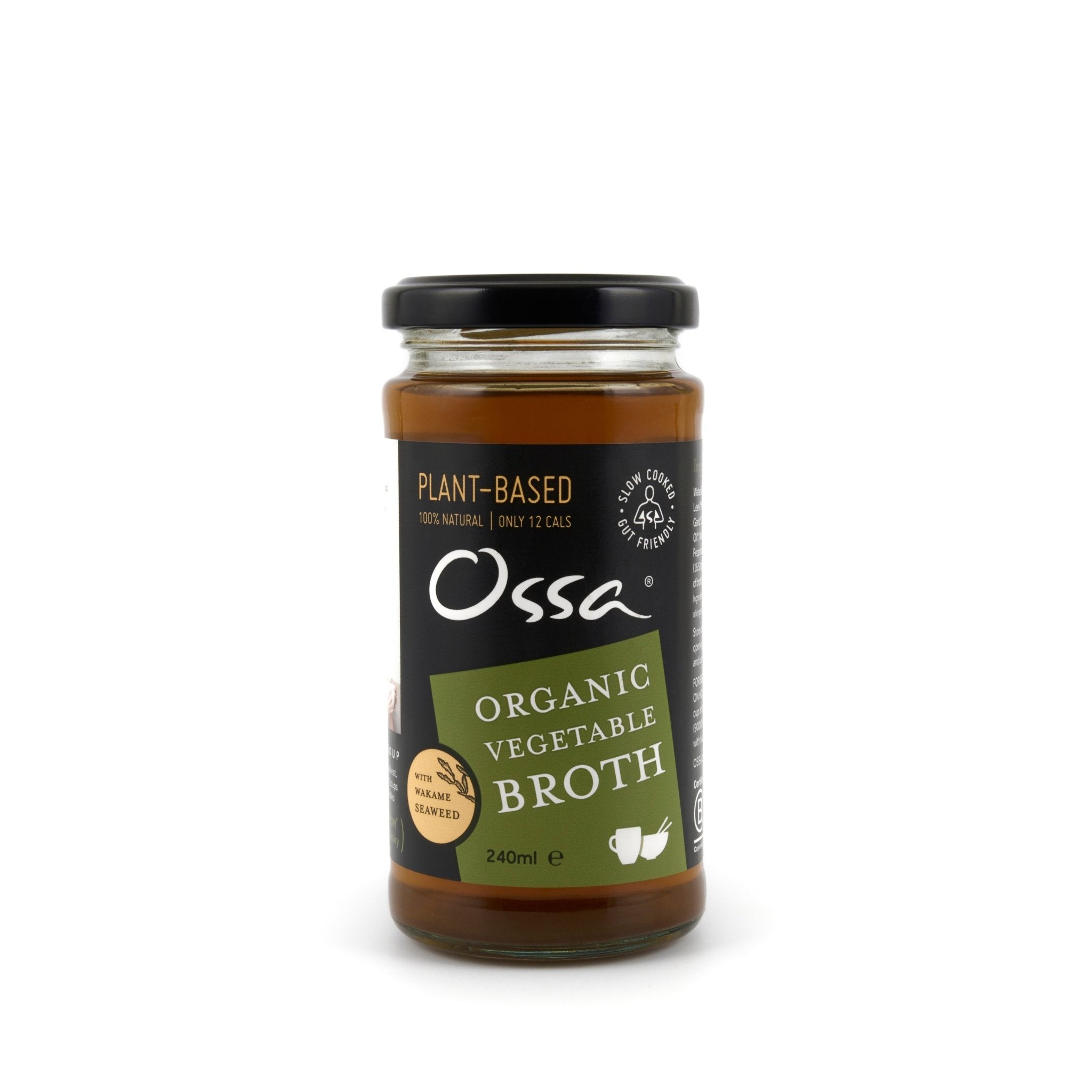
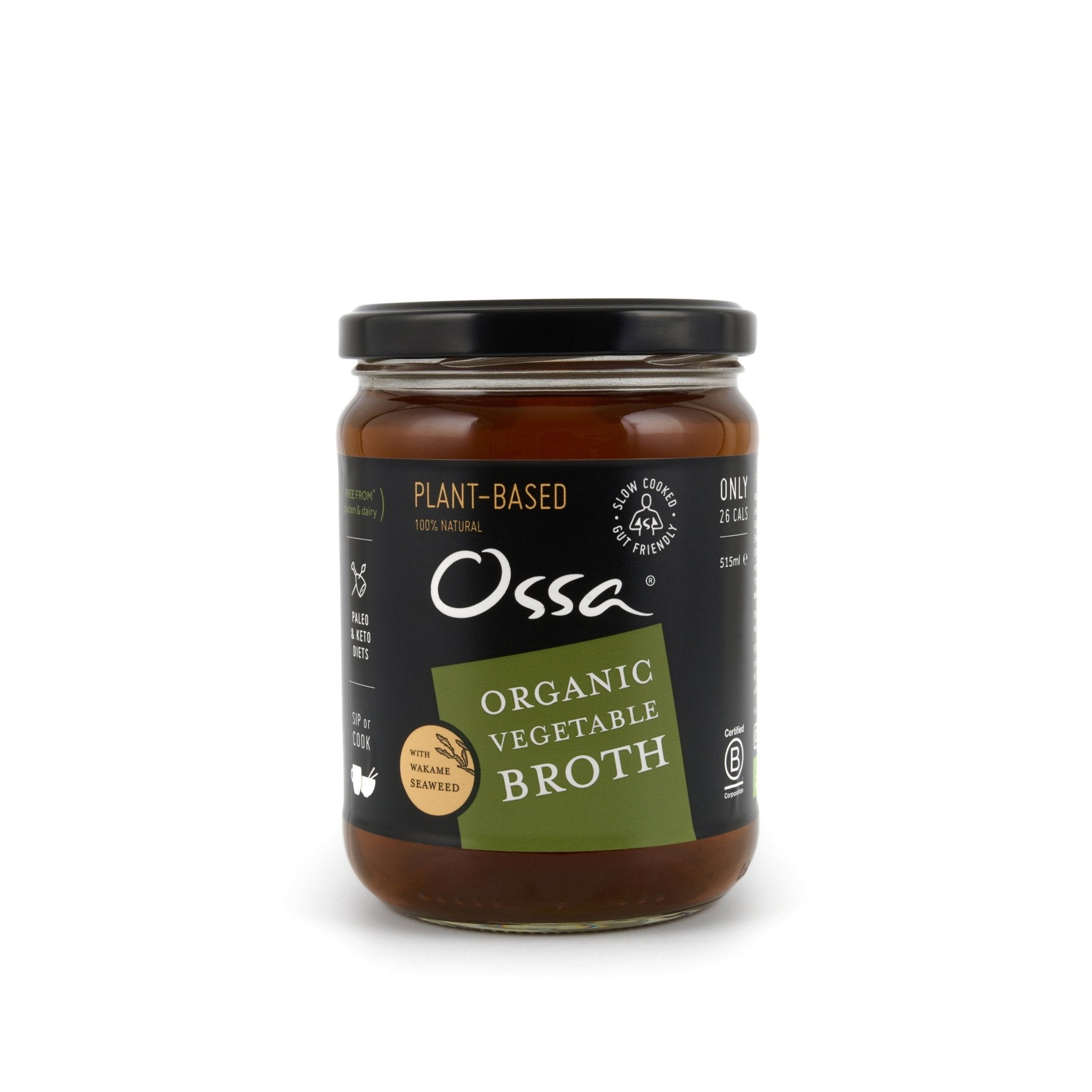
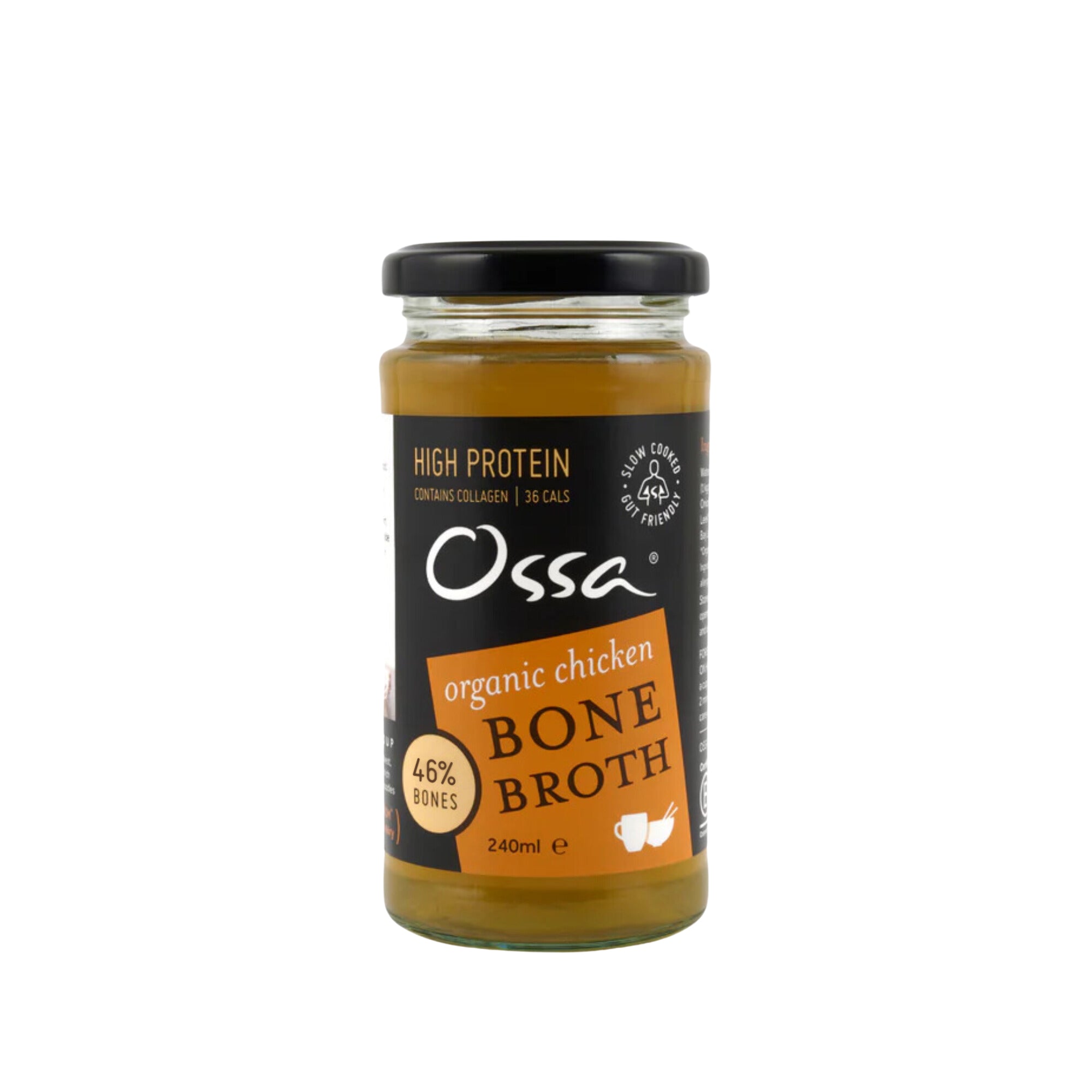
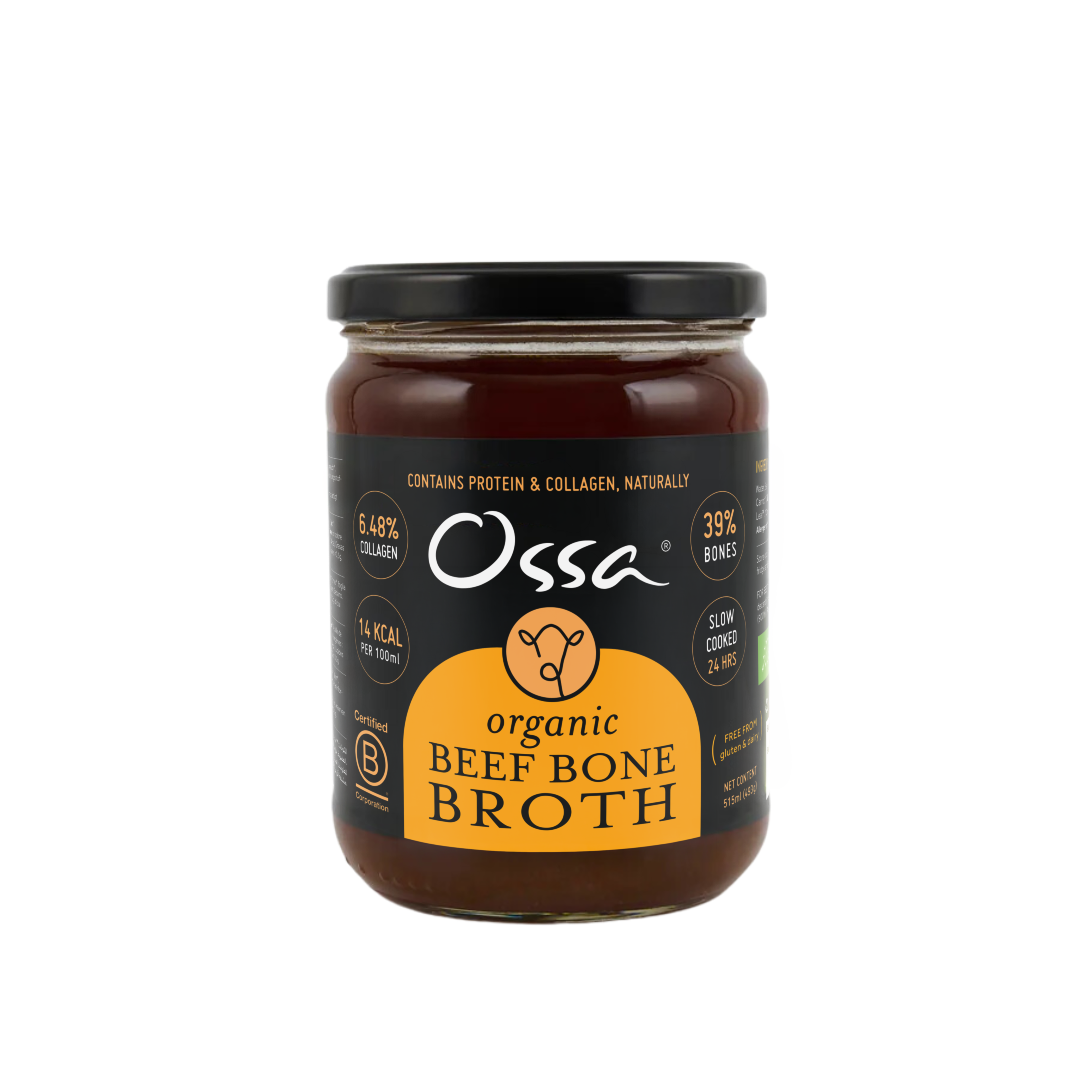
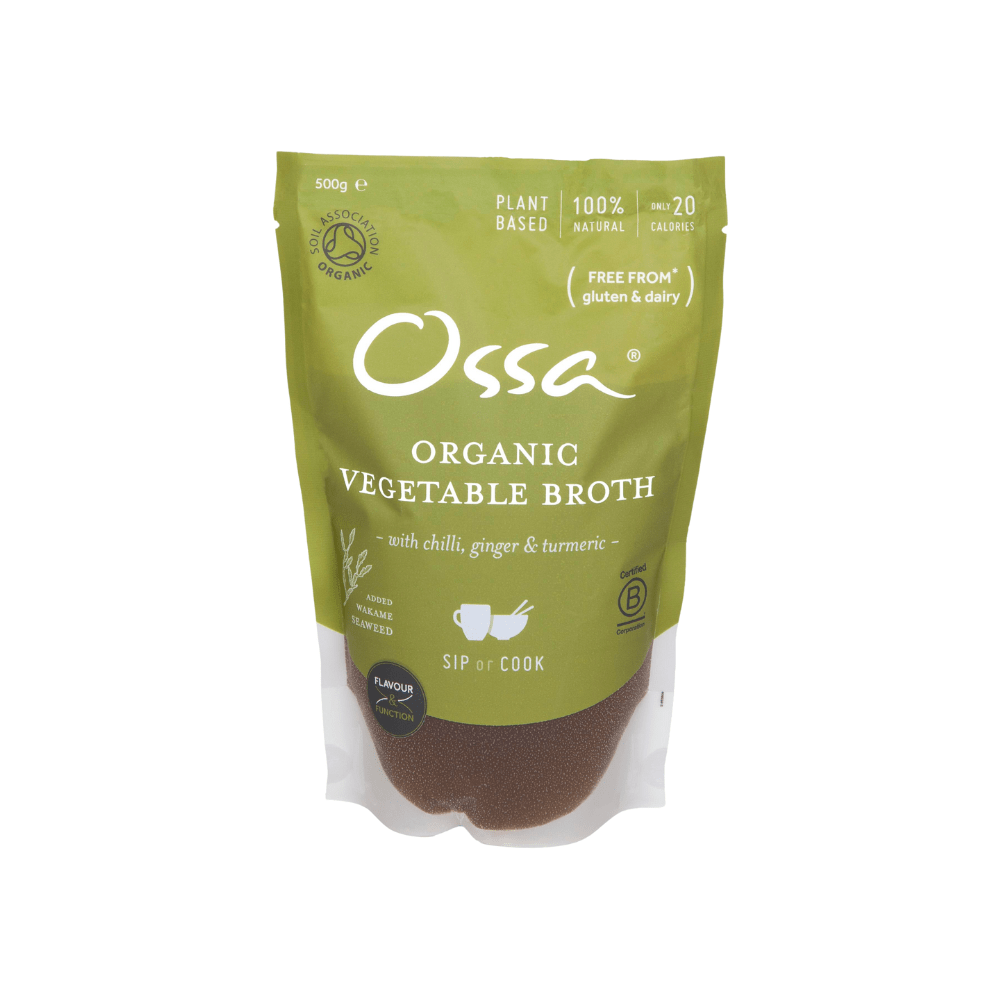
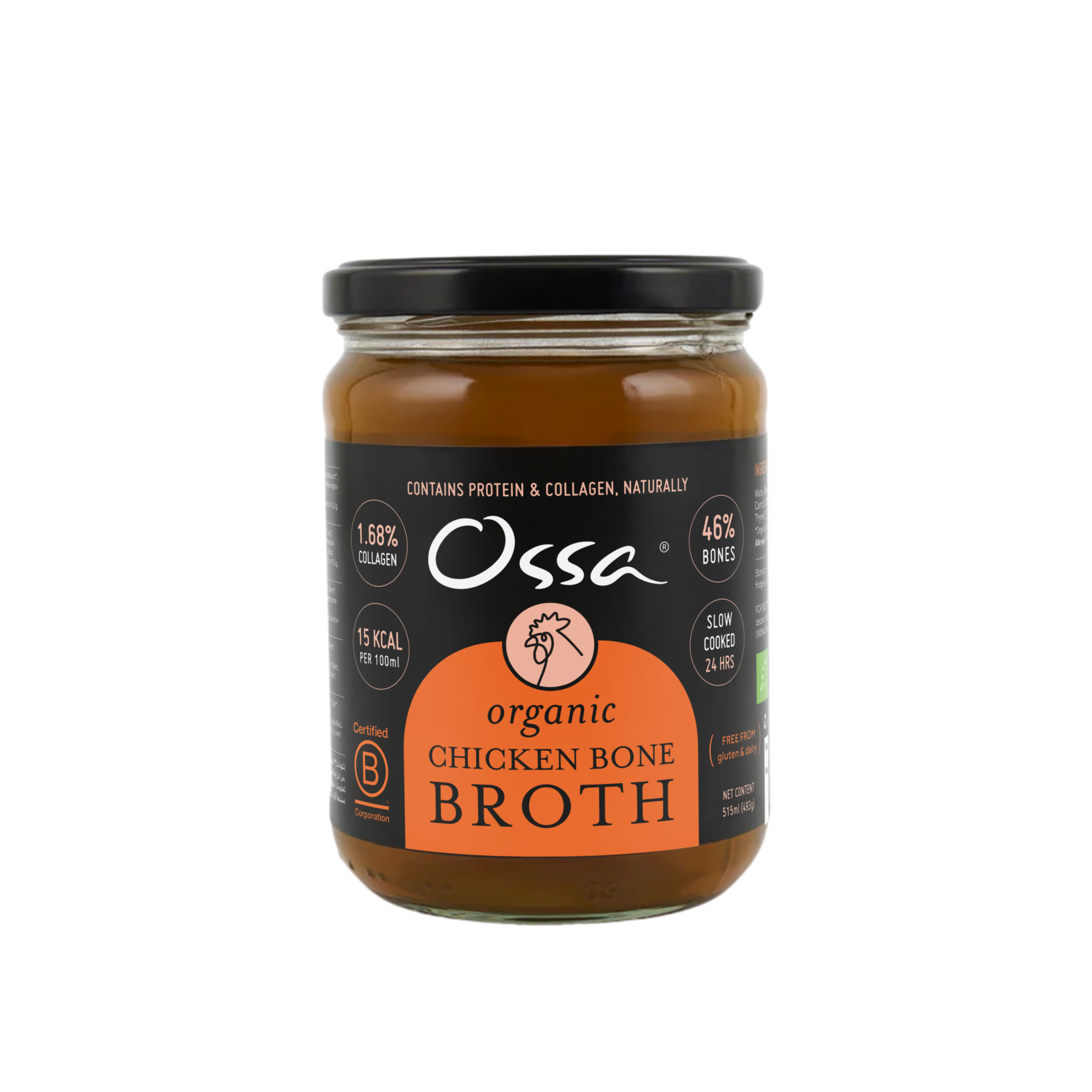
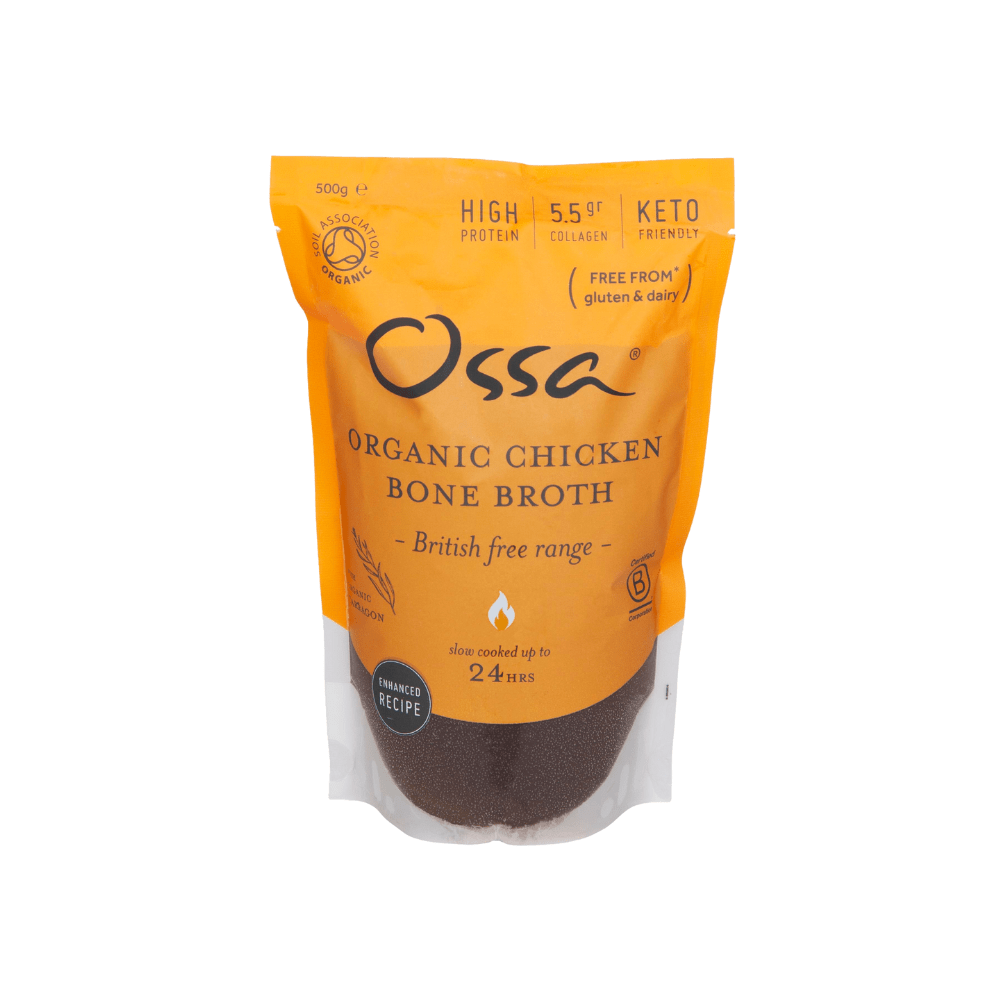
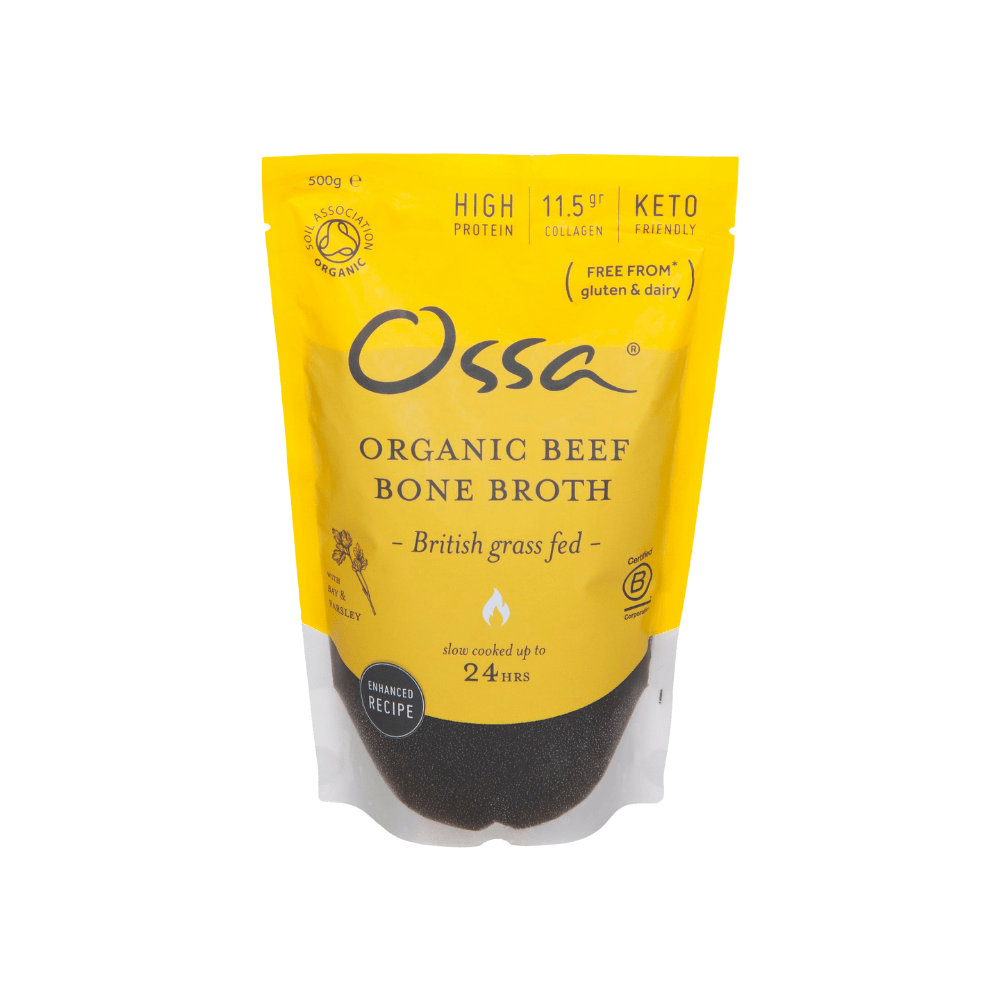
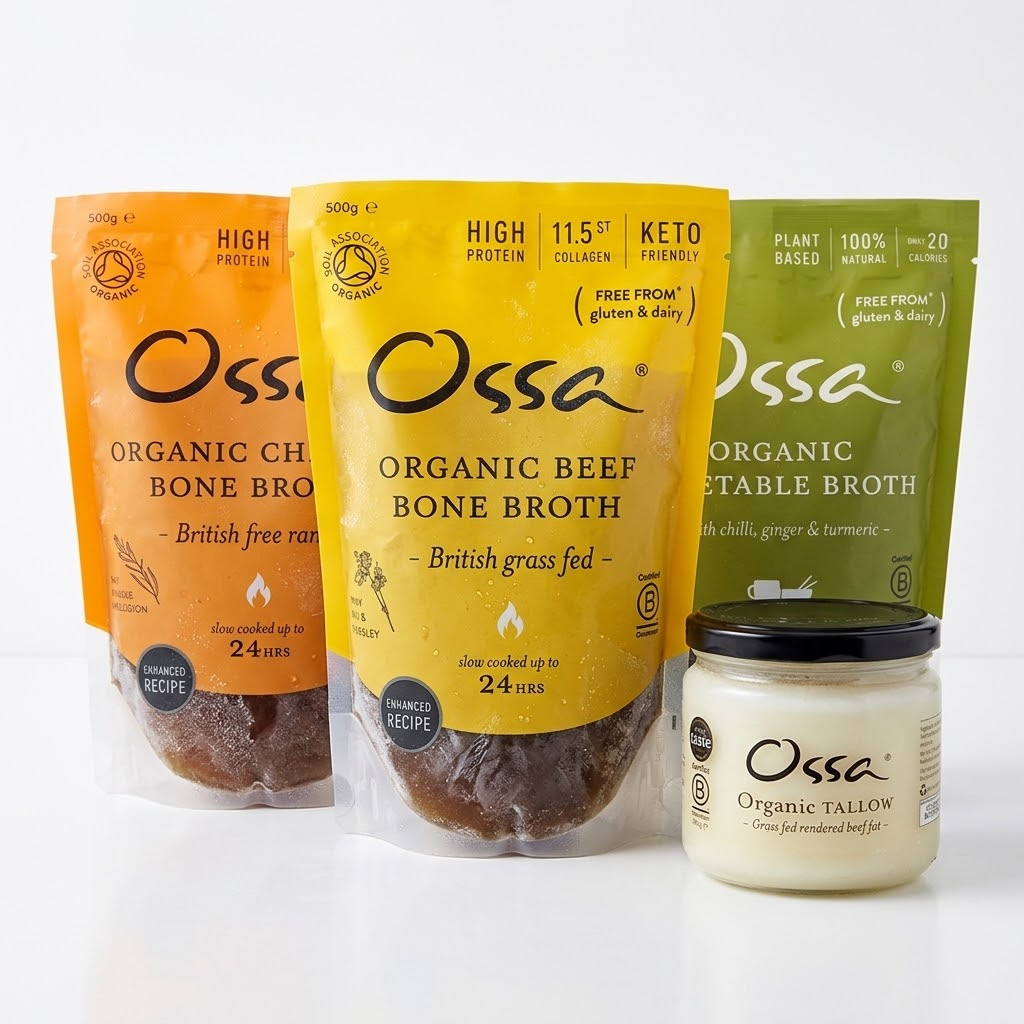
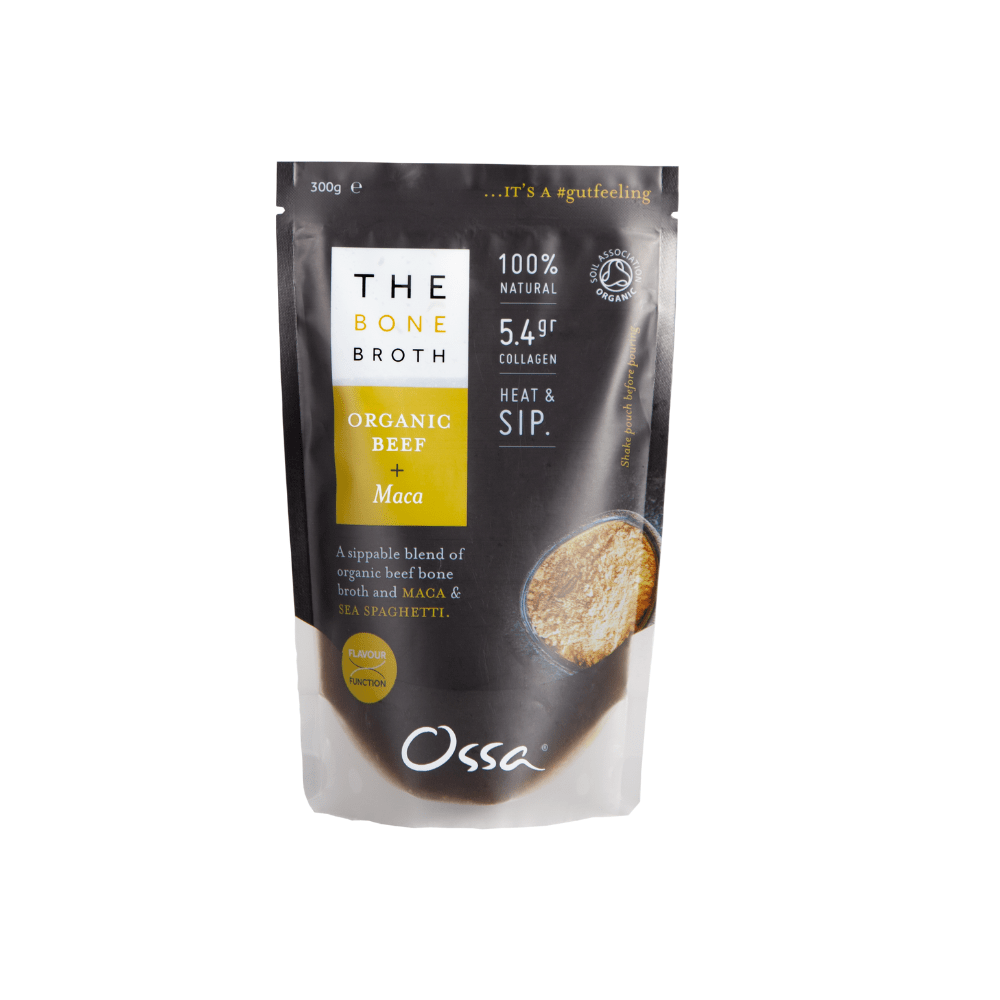
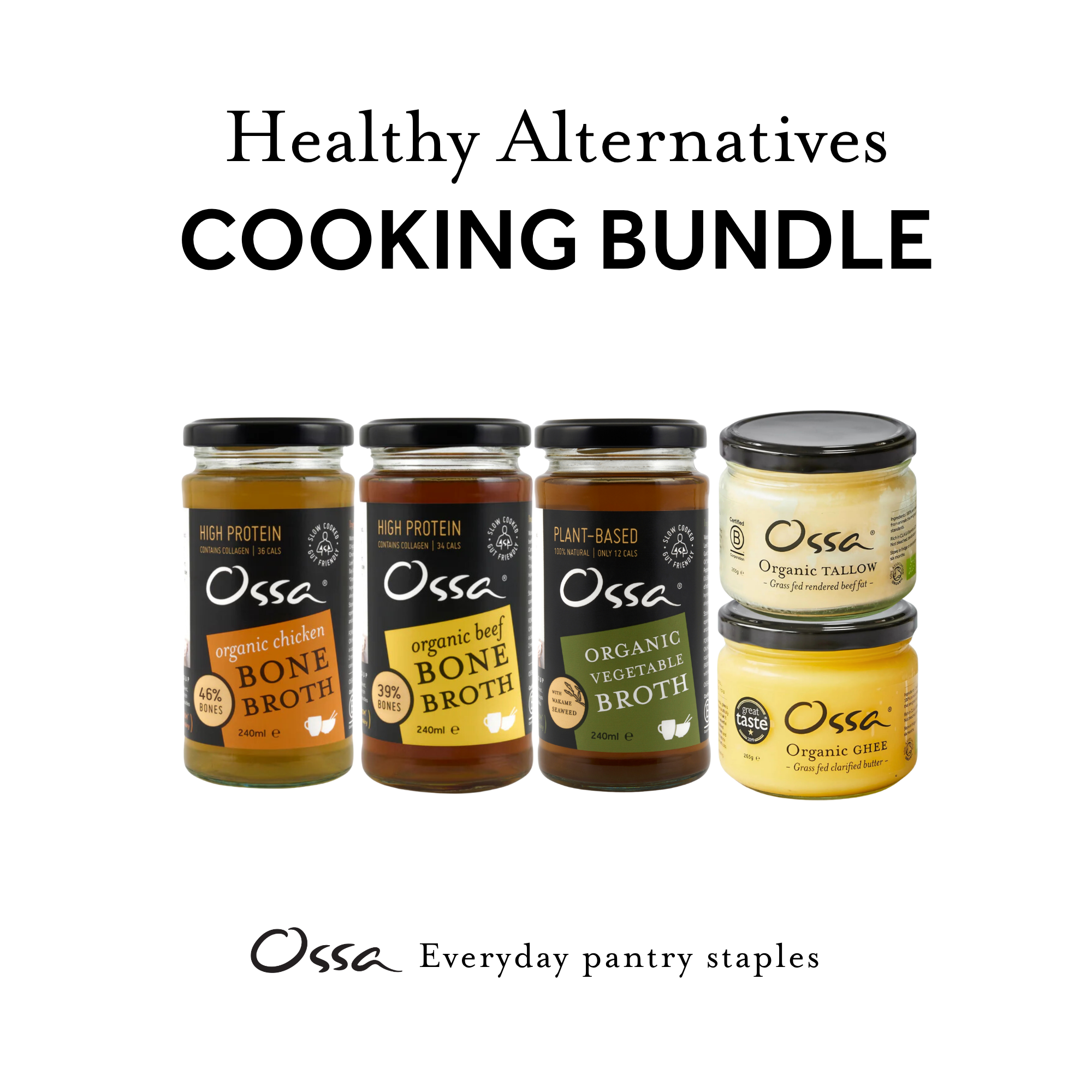
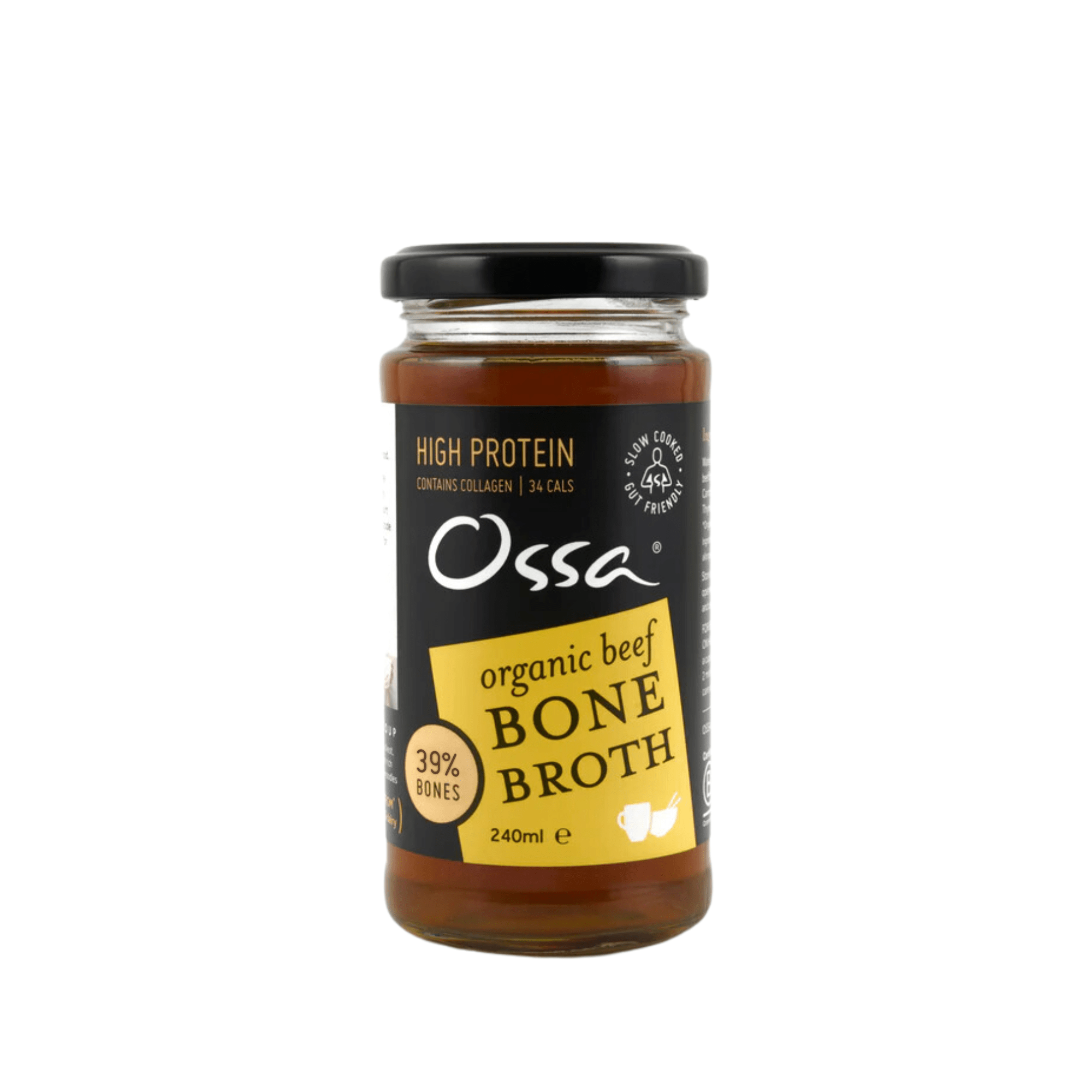
Many people reach for broth only once they are already ill, and then find the shop has nothing plain. If you prefer to have a simple option to hand, our range includes organic free range chicken bone broth and organic vegetable broth, both made without preservatives or artificial ingredients. You can see the full range, including beef broth, on our shop page. Check the ingredients and nutrition information on the product page against your own needs before you buy, particularly if you are avoiding certain ingredients while your stomach is sensitive.
For ideas on using broth once you are eating normally again, our bone broth recipes include simple soups and sauces, and there are options that are dairy-free or gluten-free.
When to get medical advice
Most adults with a short bout of diarrhoea recover at home. Diarrhoea usually improves within about a week. Broth is not the right tool for any of the situations below, so contact NHS 111, your GP or a pharmacist, or seek urgent care, if you notice:
-
Blood or pus in the stool, or black, tarry stools
-
Severe or worsening abdominal pain
-
Inability to keep fluids down, for example repeated vomiting
-
Signs of dehydration, such as very dark urine or passing little urine, a dry mouth, dizziness, extreme tiredness, or sunken eyes in a child
-
A fever, especially a high one
-
Diarrhoea lasting longer than about seven days
Extra care is needed for:
-
Babies and young children, who can become dehydrated quickly. Do not rely on broth for them. Ask a pharmacist, health visitor or GP about the right rehydration solution.
-
Older adults, who are also at higher risk of dehydration.
-
People with kidney disease, heart conditions or diabetes, for whom salt and fluid balance matter. Ask your GP or pharmacist before using salty broths.
-
People with a weakened immune system, or who are taking medicines that affect hydration, such as diuretics.
-
Anyone who has recently taken antibiotics or travelled abroad, because the cause may need testing.
Persistent loose stools without an obvious infection, or diarrhoea that comes and goes over weeks, deserve a proper assessment rather than a dietary experiment. Bone broth has been popular with people dealing with ongoing gut problems, but it should not delay a diagnosis.
FAQ
Should I drink bone broth if I have diarrhoea?
You can, if you tolerate it, as one of several fluids. Water and oral rehydration sachets should come first, particularly if the diarrhoea is watery or frequent. Start with a small cup of a plain, low-fat broth and stop if cramping or looser stools follow.
How fast does bone broth heal the gut?
There is no established timeline, because research has not shown that bone broth repairs the gut lining or treats acute diarrhoea. When people feel better after a stomach bug, it is mainly because the illness has run its course and they have stayed hydrated. If your symptoms last more than about a week, see a GP rather than waiting for broth to work.
What is the best broth for diarrhoea?
A plain, thin, low-fat broth with moderate salt and little seasoning is the most cautious choice. No evidence shows that beef, chicken or vegetable broth is better than the others, so choose the one you tolerate. Avoid onion, garlic or chilli if they usually upset you, and use oral rehydration sachets if dehydration is a worry.
No single food reliably does this, and clinical guidance does not require a restricted diet. Eat normally as your appetite returns, and start with bland foods such as rice, toast, oats, potatoes, bananas or plain chicken if they appeal. Avoid fatty foods, alcohol, caffeine and large amounts of sugar until you recover.
Is bone broth safe for children with diarrhoea?
Children become dehydrated more quickly than adults, so broth should not be their main fluid. Ask a pharmacist, health visitor or GP which rehydration solution to use and how much. Broth is often high in salt, so do not give it to babies, and check with a health professional before offering it to young children.