
Cart
0
TL;DR:
- The best ramen base is a blended pork and chicken bone broth simmered gently for up to 18 hours. Proper preparation includes blanching, rinsing, and maintaining a low gentle heat to create a clear and gelatinous broth. Using a separate tare allows for customizable seasoning, and ready-made organic broths offer a convenient alternative.
The best base for ramen is a blended bone broth made from pork and chicken bones. For several servings, start with a balanced mix of pork soup bones and chicken carcasses to achieve the desired richness and texture. That combination delivers the richness and gelatinous texture ramen needs. Keep the heat low throughout: a gentle simmer, never a rolling boil, is what separates a clear, silky broth from a grey, cloudy one.
- Bone mix: 1 kg pork bones + 1–1.25 kg chicken carcasses
- Bone-to-water ratio: approximately 450 g bones per 950 ml water
- Expected yield: roughly 1.5–2 litres of finished broth
- Tare (seasoning base): always prepared separately and added per bowl
Pro Tip: Blanch bones in boiling water for 10–15 minutes and rinse thoroughly before your long simmer. Skipping this step is the single most common reason home-made ramen broth turns grey and muddy.
Table of Contents
- What quantities do you need for 4–6 servings?
- How do you simmer bone broth for ramen, step by step?
- How do you make tare and assemble the bowl?
- What does bone broth actually give you nutritionally?
- Where can you buy organic, grass-fed bones in the UK?
- How do you store and reheat bone broth safely?
- Key takeaways
- Why Ossa Organic believes slow-simmered broth matters
- Ossa Organic ready-made broths for ramen
- FAQ
What quantities do you need for 4–6 servings?
Precise quantities matter here. Too little bone and the broth lacks body; too much water and it never gels. Aim for a balanced bone-to-water ratio that allows the broth to gel when chilled, signaling successful collagen extraction.
| Bone type | Weight | Purpose |
|---|---|---|
| Pork soup bones (knuckles, trotters) | 1 kg | Gelatin, body, richness |
| Chicken carcasses | 1–1.25 kg | Nuance, lighter collagen |
| Total water | 1.5–2 litres | Adjust to bone weight |
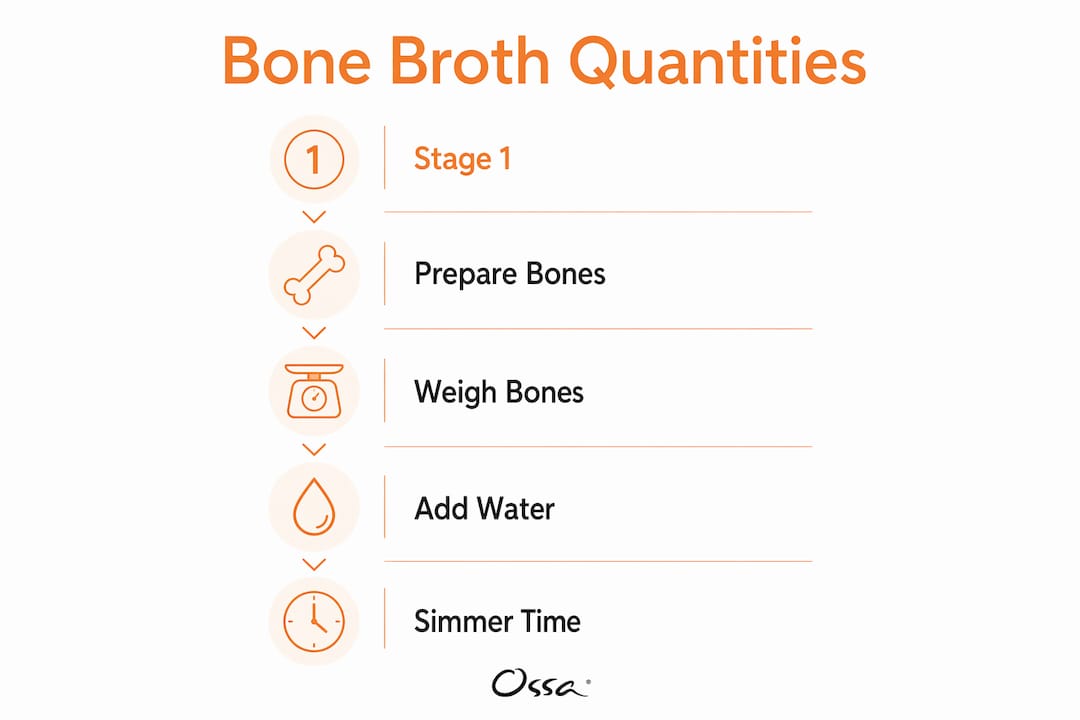
Use filtered or cold tap water where possible. Hard tap water can dull the broth’s clarity slightly, though it is not a deal-breaker. The yield from this quantity is roughly 1.5–2 litres of finished broth after skimming and straining. To scale up for eight or more servings, simply double the bone weights and water proportionally.
How do you simmer bone broth for ramen, step by step?
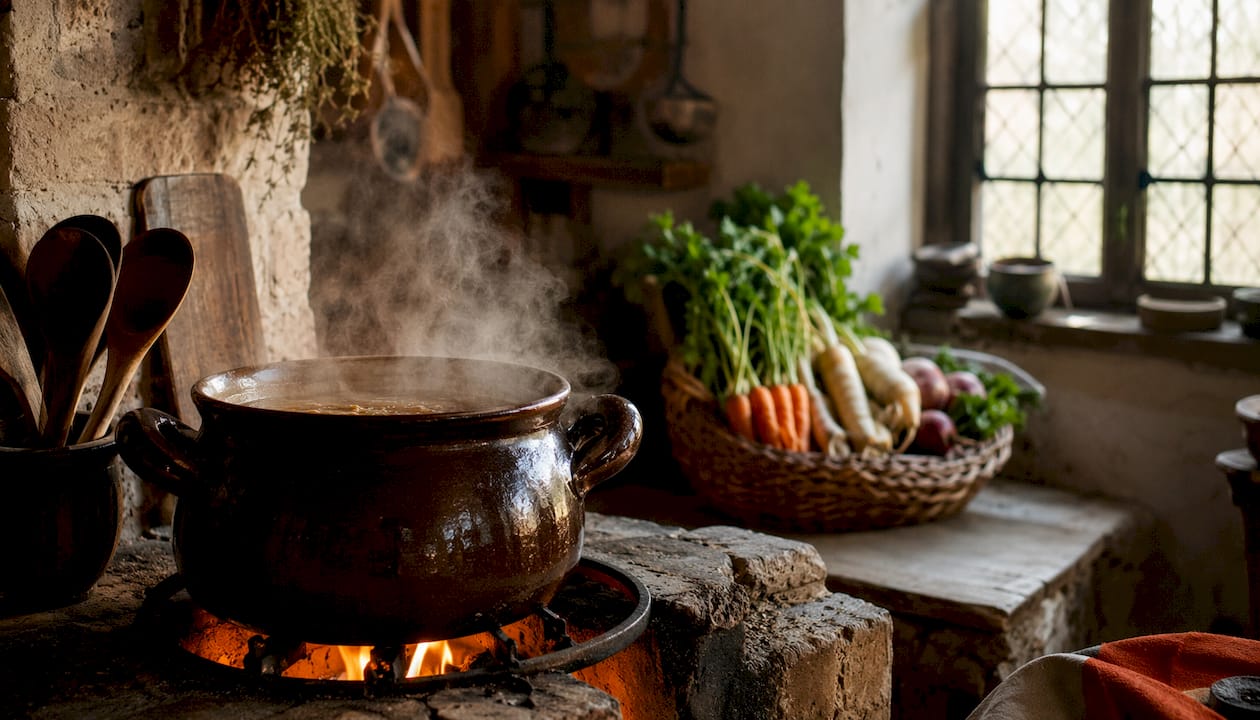
A clear, silky broth comes from discipline at the hob, not from complicated equipment. Follow these steps in order.
- Blanch the bones. Place all bones in a large pot, cover with cold water, and bring to a full boil. Hold at a boil for 10–15 minutes. Drain, then rinse each bone under cold running water to remove coagulated blood and marrow residue.
- Optional roast. For a beef or pork broth with deeper umami, spread rinsed bones on a roasting tray and roast at 220°C (425°F) for 30–50 minutes until well browned. The Maillard reaction at this temperature builds flavour that would otherwise take hours of simmering.
- Cold-water start. Return bones to a clean pot and cover with cold water. Starting cold draws out remaining proteins slowly, making them easier to skim.
- Bring to a boil, then skim. Bring the pot to a boil over medium-high heat. A grey foam will rise; skim it off continuously for the first 10–15 minutes.
- Reduce to a bare simmer. Lower the heat until the surface barely trembles. Hold here for 2–4 hours for a lighter broth, or up to 12–18 hours for a deeper, more gelatinous result.
- Finishing for creaminess. For a tonkotsu-style creamy broth, raise the heat in the final hour to a moderate boil. This emulsifies fats and collagen into the liquid. For a clear, silky broth, maintain the gentle simmer throughout and skip this step.
- Strain and cool. Pour through a fine-mesh sieve. Discard solids. Cool rapidly before storing.
| Stage | Temperature / method | Duration |
|---|---|---|
| Blanch | Full boil | 10–15 minutes |
| Optional roast | 220°C oven | 30–50 minutes |
| Initial boil and skim | Medium-high | 10–15 minutes |
| Gentle simmer | Bare tremor | 2–18 hours |
| Emulsification (optional) | Moderate boil | final hour |
Pro Tip: Lay a sheet of kitchen paper over the surface of the strained broth and lift it off to remove the last traces of fat and fine particles. Repeat once for a noticeably cleaner result.
How do you make tare and assemble the bowl?
Tare is the concentrated seasoning added directly to each bowl before the broth goes in. It is what defines the final flavour: the broth stays neutral and versatile, while the tare does the seasoning work. Making tare separately also means you can adjust saltiness bowl by bowl.
| Tare type | Core ingredients | Quantity per bowl |
|---|---|---|
| Shoyu (soy) | Soy sauce, mirin, optional sake | 2–3 tablespoons |
| Miso | White or red miso, mirin, dashi | 1–2 tablespoons |
| Shio (salt) | Sea salt, kombu water, sake | 1 tablespoon |
For a basic shoyu tare, combine 100 ml soy sauce with 50 ml mirin and 30 ml sake in a small saucepan. Simmer gently for 5 minutes to cook off the alcohol. Cool and store in a jar; it keeps refrigerated for up to two weeks and improves with time.
Assembly order: tare in the bowl first, then a ladle of hot broth (stir to combine), then freshly cooked noodles, then toppings. Add a few drops of sesame oil or mayu (blackened garlic oil) on top for finishing depth. Cook noodles separately and add them at the last moment; noodles left sitting in broth absorb liquid quickly and turn soft.
What does bone broth actually give you nutritionally?
Bone broth supplies gelatin (derived from collagen), minerals including calcium, magnesium and phosphorus, and amino acids such as glycine and proline. These components support joint cushioning and contribute to gut lining integrity. The collagen in bone broth is particularly relevant for gut health because gelatin helps maintain the mucosal layer of the digestive tract.
Bone broth is a nutrient-dense food that complements a balanced diet. It is not a medical treatment or a substitute for professional health advice. If you have a specific health condition, consult a qualified practitioner before making dietary changes.
| Component | Role |
|---|---|
| Gelatin / collagen | Supports gut lining, joint cushioning |
| Glycine | Amino acid involved in digestion and sleep |
| Calcium, magnesium | Bone and muscle function |
| Phosphorus | Cell repair and energy metabolism |
Adding kombu to the broth during the last hour increases its mineral content further. Fermented condiments in the tare (miso, for example) add gut-friendly bacteria to the finished bowl. For a deeper look at collagen and gut health, Ossa Organic covers the evidence in detail.
Where can you buy organic, grass-fed bones in the UK?
Quality starts with the bones. For a genuinely nourishing broth, the sourcing matters as much as the method.
- Organic certification: look for the Soil Association or OF&G logo on packaging or ask your butcher directly.
- Grass-fed label: means the animal grazed on pasture rather than grain, which affects the fatty-acid profile of the broth.
- No additives: bones should be plain, with no added salt, preservatives or flavour enhancers.
- Cuts to request: knuckles and trotters for maximum gelatin; femur bones for marrow; chicken carcasses or feet for lighter collagen.
- Where to shop: independent artisan butchers, farm shops, farmers’ markets, and organic farm-box suppliers (such as those delivering across the UK) are the most reliable sources. Some supermarkets with organic ranges stock frozen carcasses.
Pro Tip: Ask your butcher to chop or saw larger bones into smaller pieces before you take them home. More surface area means faster collagen extraction and a richer broth in less time.
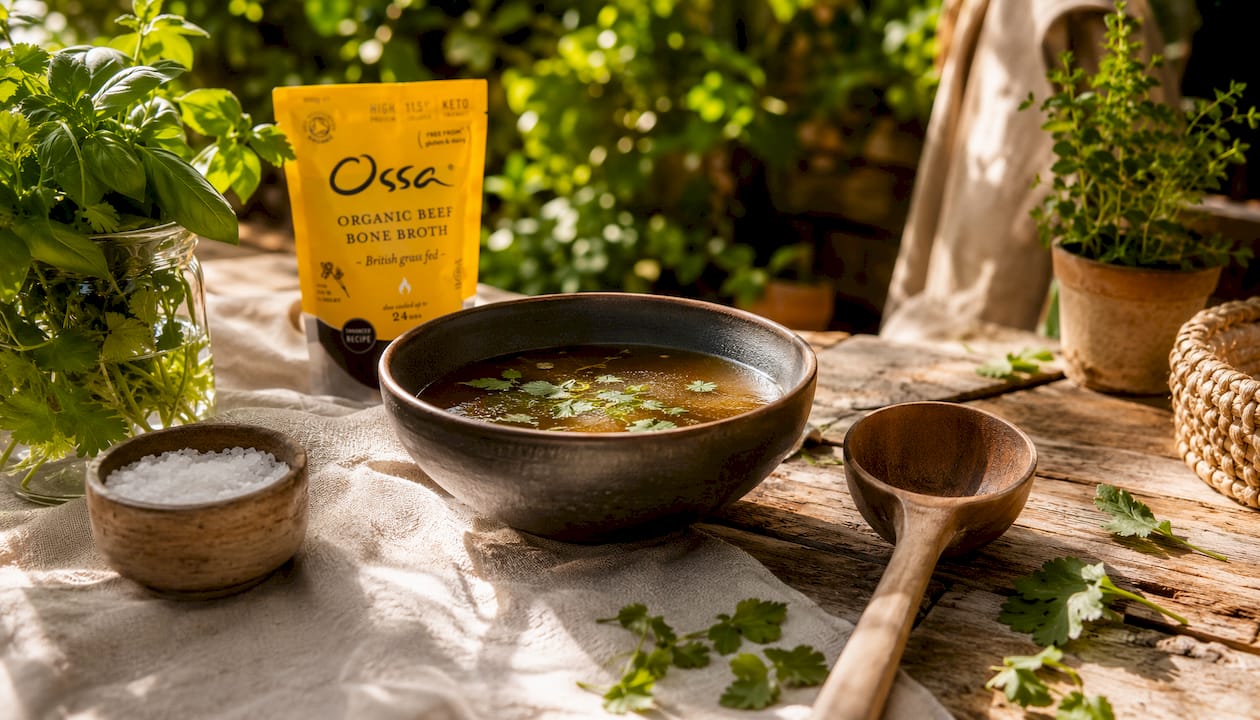
When you want a ready-made option without the sourcing effort, a 500 ml organic bone broth is a practical alternative for ramen use.
How do you store and reheat bone broth safely?
Cool broth quickly after straining. Pour it into shallow containers and leave uncovered until it stops steaming, then refrigerate within two hours of cooking. In the fridge, bone broth keeps for up to five days. A layer of solidified fat will form on top; this acts as a natural seal and can be lifted off before reheating or stirred back in for richness.
For longer storage, freeze in 500 ml or 1-litre portions with at least 2 cm of headspace to allow for expansion. Frozen broth keeps well for up to three months. Thaw overnight in the fridge or in a saucepan over low heat from frozen.
Always reheat bone broth to a full rolling boil before serving. Do not reheat the same batch more than once. Discard any broth with an off or sour smell, or that shows signs of mould.
If the broth smells sour or fermented after refrigeration, discard it. A properly made and stored broth smells clean and savoury when reheated.
Key takeaways
Organic bone broth for ramen works best when made from a blended pork and chicken base, simmered gently, seasoned with a separate tare, and stored safely.
| Point | Details |
|---|---|
| Bone quantities | Use 1 kg pork bones and 1–1.25 kg chicken carcasses for 4–6 servings. |
| Bone-to-water ratio | Approximately 450 g bones per 950 ml water gives a broth that gels when chilled. |
| Simmer method | Maintain a bare, gentle simmer throughout; a rolling boil clouds the broth. |
| Tare is separate | Add tare per bowl, not to the pot, to keep the broth versatile and control saltiness. |
| Ossa Organic option | The Organic Grass Fed Beef Bone Broth 500ml is a ready-made organic base suited to ramen. |
Why Ossa Organic believes slow-simmered broth matters
Ossa Organic was founded after its founder discovered the benefits of bone broth during pregnancy and began cooking it regularly for the family. That experience shaped everything about the brand: the commitment to organic, grass-fed ingredients, the preference for slow-cooking over shortcuts, and the belief that food made from real, traceable ingredients supports long-term health in ways that processed alternatives cannot.
The recipes and guidance Ossa Organic shares, including this one, come from years of cooking bone broth as everyday family food, not as a trend. The brand’s position is straightforward: tradition-based cooking with organic ingredients is not complicated, but it does require the right starting point.
Ossa Organic ready-made broths for ramen
If you want a restaurant-quality ramen base without a full day at the hob, Ossa Organic’s ready-made organic broths are a direct solution. Each 500 ml bottle is made from organic, grass-fed bones with no additives or preservatives.
The Organic Grass Fed Beef Bone Broth delivers a rich, deeply savoury base suited to a beef ramen noodle soup or a miso beef ramen. One 500 ml bottle covers one to two bowls; adjust your tare quantity downward slightly as the broth is already well-seasoned with natural flavour. For first-time buyers, the single 500 ml beef broth is the straightforward starting point. For a plant-based bowl, the Organic Vegetable Broth works as a lighter mushroom broth ramen base or as a blending liquid alongside a meat broth. Shop the full range at Ossa Organic and use the broth directly from the bottle, heated and combined with your tare.
FAQ
What bones make the best broth for ramen?
Pork knuckles, trotters and chicken carcasses give the best combination of gelatin and flavour. Use 1 kg pork bones and 1–1.25 kg chicken carcasses for 4–6 servings.
How long should you simmer bone broth for ramen?
A minimum of 2–4 hours produces a light, clear broth; 12–18 hours gives a deeper, more gelatinous result. Keep the heat at a bare simmer throughout.
Why is my bone broth cloudy?
Cloudy broth usually means the bones were not blanched and rinsed before the long simmer, or the heat was too high. Blanch bones for 10–15 minutes, rinse thoroughly, and maintain a gentle simmer.
Can you use ready-made bone broth for ramen?
Yes. A 500 ml organic bone broth, such as Ossa Organic’s Organic Grass Fed Beef Bone Broth, works as a direct ramen base. Heat it, add your tare per bowl, and adjust seasoning to taste.
How long does home-made bone broth keep?
Up to five days in the fridge and up to three months in the freezer. Always reheat to a full rolling boil before serving.