

Cart
0
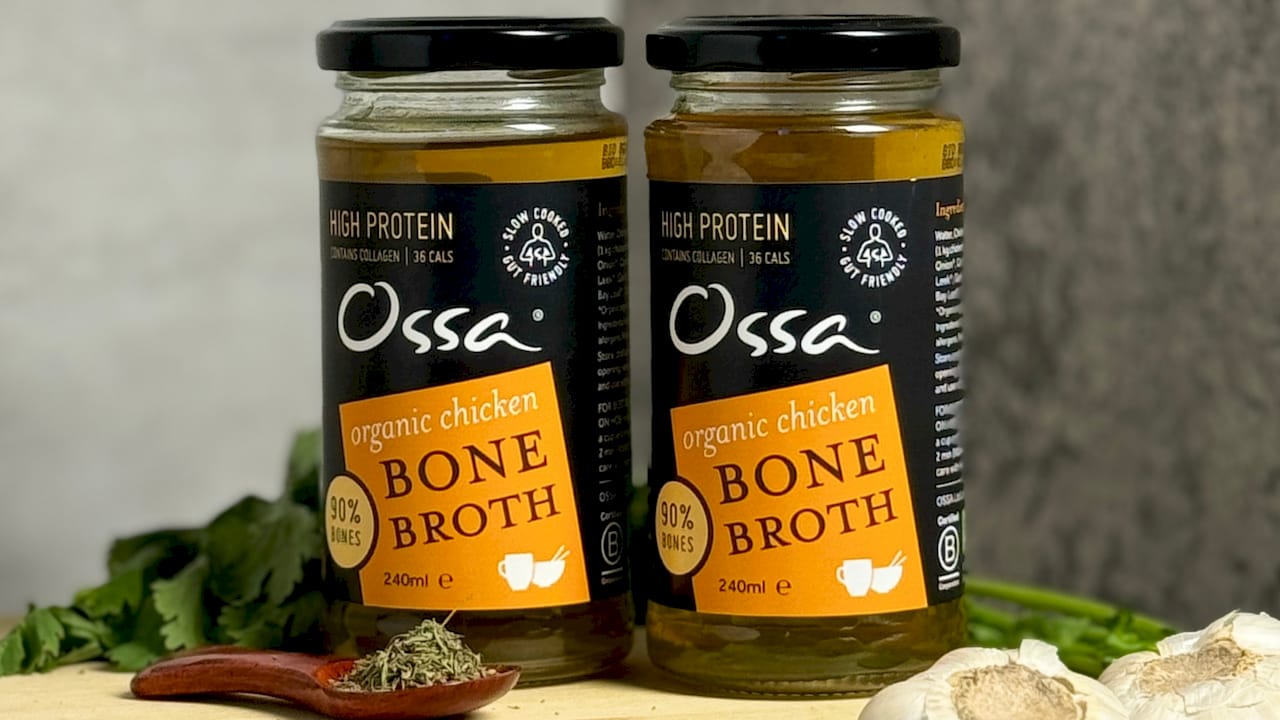
Bone broth is a supportive dietary habit that can help skin over time, not a cosmetic quick fix. Its collagen fragments and amino acids give your body raw materials for its own collagen production, but they don’t travel straight to your face. A realistic approach is around one cup a day, alongside a balanced diet, with subtle changes possible within weeks and more noticeable shifts over a few months.
TL;DR:
Drinking one cup of bone broth daily provides around 8 to 10 grams of protein, but collagen content varies depending on the batch and preparation method.
Subtle skin improvements, such as hydration and elasticity, can appear within weeks, while noticeable changes often take two to three months with consistent consumption.
The benefits depend heavily on overall diet quality, age, genetics, and skincare routine, making bone broth a supportive rather than standalone solution.
Commercial broths with over 450 mg of sodium per cup or lacking transparency about sourcing and simmer time should be chosen carefully to avoid risks.
Regularly check for gelatin content by seeing if the broth sets when chilled, and consider pairing bone broth with vitamin C-rich foods for better collagen synthesis.
Table of Contents
-
Is bone broth good for skin? What the evidence actually shows
-
How much bone broth should you drink, and when will you see results?
-
What are the risks and who should be cautious with bone broth?
-
Why Ossa Organic believes in bone broth as a daily skin-support habit
What is bone broth and how does it supply collagen?
Bone broth is made by simmering animal bones and connective tissue for long stretches, often 12 to 48 hours, sometimes with a splash of vinegar to help pull minerals and collagen out of the bone matrix. That extended cooking time is what separates it from ordinary stock, which is typically simmered for a few hours and yields a thinner, less gelatinous liquid.
The slow process breaks collagen down into gelatin and smaller amino acids, particularly glycine, proline and glutamine, alongside trace minerals. This is the foundation behind most claims about collagen in bone broth: you’re not getting intact collagen protein, but its building blocks.
Standardised collagen peptide supplements offer a more consistent dose, since manufacturers control concentration and purity tightly. Bone broth, by contrast, varies from batch to batch depending on the bones used and how long it simmers. Both can play a role in how bone broth supports healthy hair, skin and nails, but they aren’t identical products.
Is bone broth good for skin? What the evidence actually shows
Here’s the honest mechanism: when you drink bone broth, your digestive system breaks its gelatin down into individual amino acids and small peptides, the same way it processes any dietary protein. Your body then decides where those amino acids go, whether that’s muscle repair, immune function, or, potentially, new collagen synthesis in the skin. There’s no direct pipeline from broth to your face.
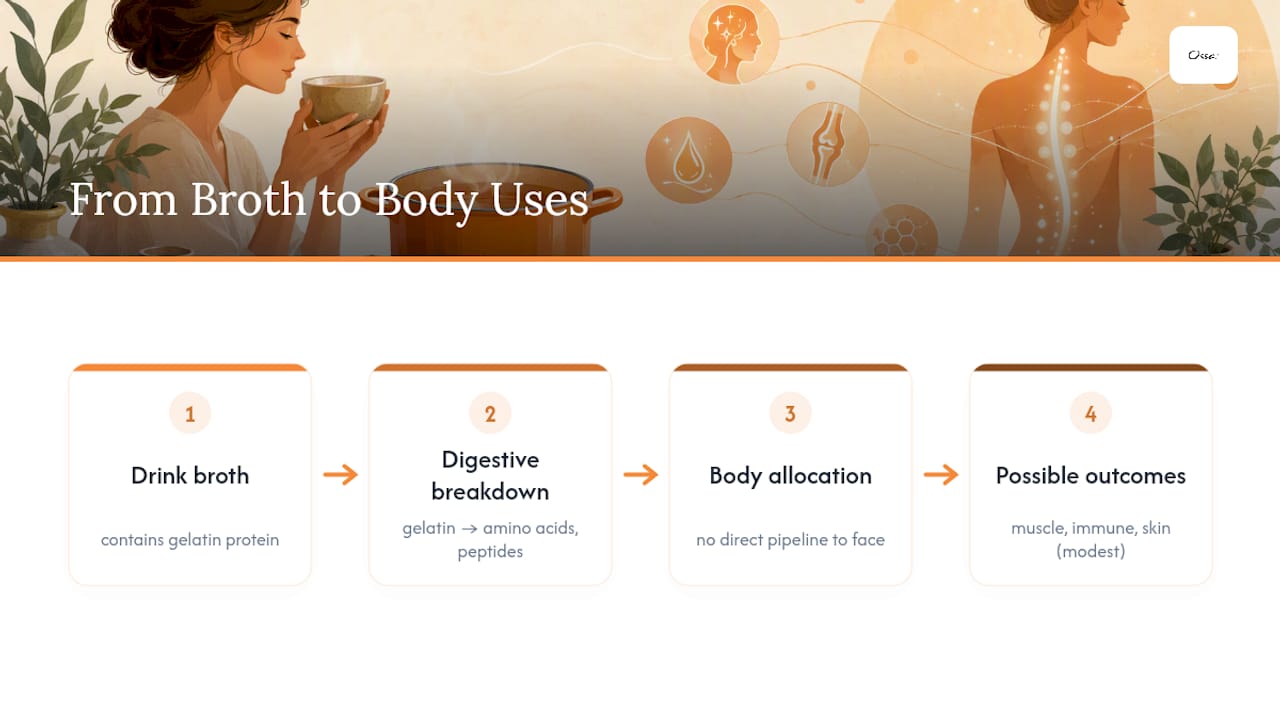
Nutritionists tend to frame this correctly: bone broth supplies collagen and amino acids that can support skin structure, but the effect is modest and depends heavily on your wider diet and consistency, not some reversal of ageing. That’s a fair summary of where the science currently sits.
Statistic Callout: What the research actually finds Clinical trials and reviews on oral collagen peptides show modest improvements in skin elasticity and hydration with consistent use, but bone broth studies are far fewer and less standardised, making it harder to draw the same firm conclusions for broth specifically. Journal reviews describe the mechanism as biologically plausible but the direct evidence for cosmetic skin firming from whole bone broth as limited.
Hydration and adequate protein intake both matter independently for skin structure, and bone broth delivers both at once. Pairing it with vitamin C rich foods is worth doing too, since vitamin C acts as a cofactor your body needs to actually build new collagen from those amino acids. Broth without that support does less work on its own.
How much bone broth should you drink, and when will you see results?
A cup of bone broth typically supplies around 8 to 10 grams of protein, though the collagen content itself varies widely between recipes and brands, so treat any specific collagen gram figure with a healthy dose of scepticism. One cup daily is a sensible, sustainable starting point rather than an aggressive multi-cup regime.
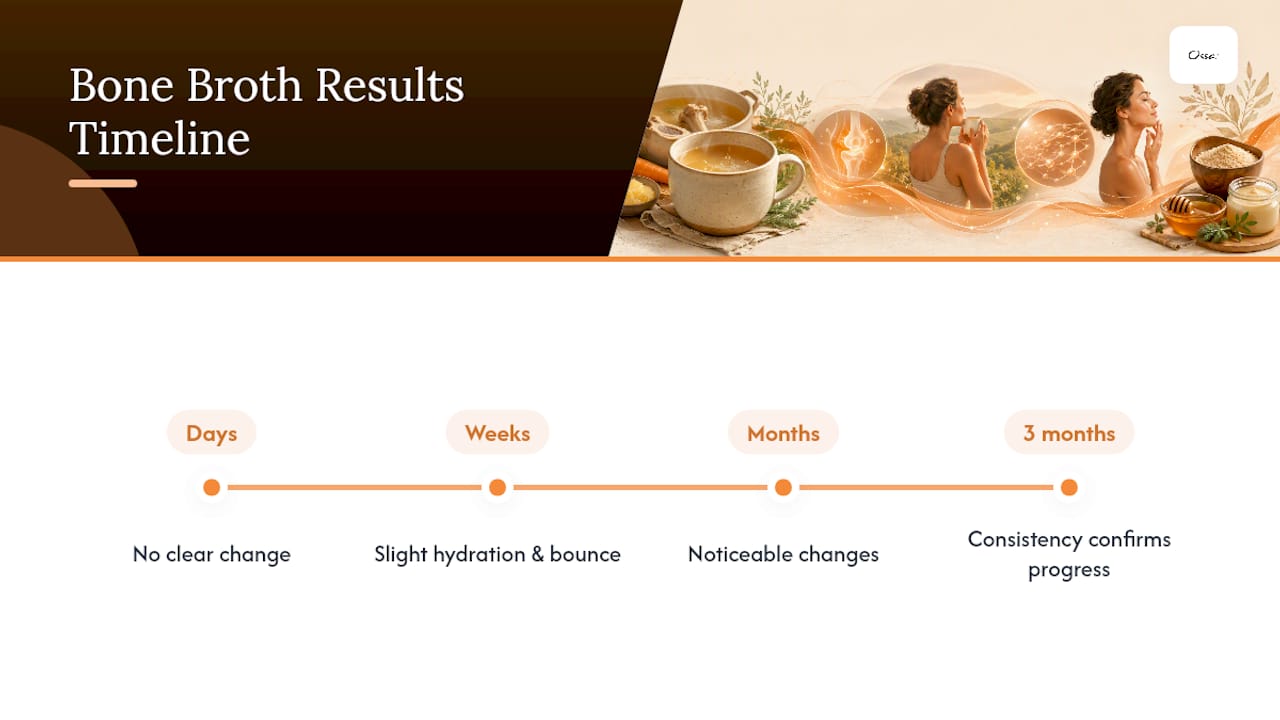
Timelines matter more than most guides admit. Subtle changes, slightly better hydration, a touch more skin bounce, tend to show up within a few weeks of consistent intake. More measurable changes, the kind you’d actually notice in the mirror, generally take a few months of daily or near-daily consumption.
Results also depend on variables outside the broth itself: your baseline diet, age, genetics, sun exposure, and whatever skincare routine you’re already running. Someone eating a nutrient-poor diet with little protein will likely notice more change than someone whose diet is already protein-rich and well-rounded. Consistency beats quantity here. A cup most days for three months tells you more than a week of double portions followed by weeks of nothing.
Homemade vs store-bought bone broth: what to check
The clearest home test for gelatin content is simple: chill your broth and see if it sets into a wobbly, jiggly consistency. That jiggle is a genuine indicator of how much collagen was extracted during cooking, and it’s a trick worth using whether you’re making your own or judging an unlabelled batch from a market stall.
For store-bought bone broth, the label tells you most of what you need to know:
-
Protein per serving (aim for a meaningful amount per cup, not a token trace)
-
Sodium content (some commercial broths carry over 450mg per cup, more than you’d expect)
-
Ingredient list length (fewer additives generally signals a more traditional process)
-
Organic sourcing and stated simmer time, where the brand is transparent enough to list it
Pro Tip: If a brand won’t tell you how long it simmers its broth or where the bones come from, that silence is itself useful information. Transparent sourcing tends to correlate with a genuinely gelatin-rich product.
If you’re making broth at home, roast the bones first for flavour, add a tablespoon or two of vinegar to aid extraction, simmer for as long as your schedule allows, and skim excess fat once it’s chilled.
What are the risks and who should be cautious with bone broth?
Sodium is the most common issue. Many commercial broths run high, so check labels and choose low-sodium versions, or make your own where you control the salt entirely.
Histamine sensitivity is a genuine consideration too. Long-simmer broths can accumulate histamines and glutamates during cooking, which may trigger symptoms in people who are histamine intolerant. If that’s you, shorter-simmer stocks consumed fresh are a gentler alternative to a broth that’s been on the hob for two days.
There’s also a theoretical risk of heavy metal contamination if the bones come from low-quality or poorly sourced animals, since bones can accumulate trace metals over an animal’s lifetime. This is one reason sourcing matters more with bone broth than with many other foods. Anyone with kidney issues, sodium-sensitive conditions, or known allergies should check with a doctor before making it a daily habit.
How to use bone broth daily without it feeling like a chore
You don’t need to force down a plain mug every morning. There are several easy ways to build how to use bone broth into a routine that actually sticks:
-
Sip it plain, warmed, as a mid-morning or evening ritual instead of a snack.
-
Use it as the cooking liquid for rice, quinoa or other grains instead of plain water.
-
Swap it into soups, stews and sauces where it quietly does double duty as flavour and nutrition.
-
Add a splash to gravies or reductions to boost both taste and protein content.
-
Keep a low-sodium version on hand for flavouring dishes without pushing your daily salt intake too high.
A simple weekly target works better than a rigid daily rule: aim for two to seven cups a week depending on your goals, budget and how much you enjoy the taste. Morning use suits people who want it as a savoury alternative to coffee, while evening use fits neatly into dinner prep. If you want recipe inspiration beyond sipping it straight, bone broth collagen recipes are a useful place to start experimenting with different types and uses.
Why Ossa Organic believes in bone broth as a daily skin-support habit
Ossa Organic was built on a simple discovery: slow-simmered, organic bone broth changes how you feel, not just what you eat. That conviction shapes every batch we make, using proper simmer times and organic bones to maximise gelatin extraction, with nothing added to dilute it.
We formulate around tradition rather than shortcuts, which is why our broths lean towards higher gelatin content and minimal ingredient lists. If you’re building the daily habit described above, a consistent, trustworthy product removes the guesswork about sodium, sourcing or dilution.
— Ossa Organic
Which Ossa Organic bone broth fits your routine?
There are other ways to get collagen into your diet, including standardised peptide powders like the unflavoured collagen peptides from PRYM Wellness, which suit people who want a precisely doseable supplement rather than a savoury drink. Ossa Organic takes a different route: real, slow-simmered broth that fits into meals and daily rituals rather than a measuring spoon.
Our Organic Chicken Bone Broth 500ml is the straightforward daily option, ready to warm and sip or stir into a soup base. For anyone who travels, works long days, or wants something in a desk drawer or lunch box, the Organic Chicken Bone Broth Ambient 240ml keeps without refrigeration until opened, making it the practical pick for portability. If sourcing matters most to you, the Organic Free Range Chicken Bone Broth 500ml is made with free-range chicken for readers who want that welfare standard built in from the start.
Whichever format fits your week, the next step is simple: pick one, add it to your basket, and start with a cup most days for a month to see how it settles into your routine.
Further reading and primary sources
Harvard Health’s overview of bone broth explains the simmering process and gelatin extraction in detail. The Harvard T.H. Chan School of Public Health covers collagen’s role in the body and vitamin C’s part in synthesis. WebMD outlines sodium, histamine and contamination considerations worth understanding before daily use.
FAQ
Does bone broth improve your skin?
It can support skin health by supplying collagen-derived amino acids and hydration, but effects are modest and depend on consistent use alongside a balanced diet, rather than acting as a standalone fix.
Is there a downside to drinking bone broth?
Yes: sodium content can be high in some commercial broths, and long-simmer batches may cause issues for people with histamine sensitivity. Sourcing quality also matters, since low-quality bones carry a theoretical heavy metal risk.
Can I get enough collagen from bone broth?
You can get meaningful amounts of collagen-derived amino acids, roughly 8 to 10 grams of protein per cup, but exact collagen content varies by batch and brand, so it’s best treated as a supportive source rather than a precise dose.
What happens if I drink bone broth every day for a month?
Most people notice subtle changes, like improved hydration, within a few weeks, with more measurable skin changes typically appearing after two to three months of consistent daily intake alongside a generally healthy diet.