Bone marrow jelly is simply chilled, gelatin-rich stock where collagen has set into gelatin. If your broth wobbles like a soft set custard once cold, that’s good evidence you’ve extracted collagen successfully, not a sign anything has gone wrong.
Gelation is the expected, desirable outcome of a properly made bone broth. It tells you the bones released enough collagen and the liquid was concentrated enough to trap it as it cooled.
-
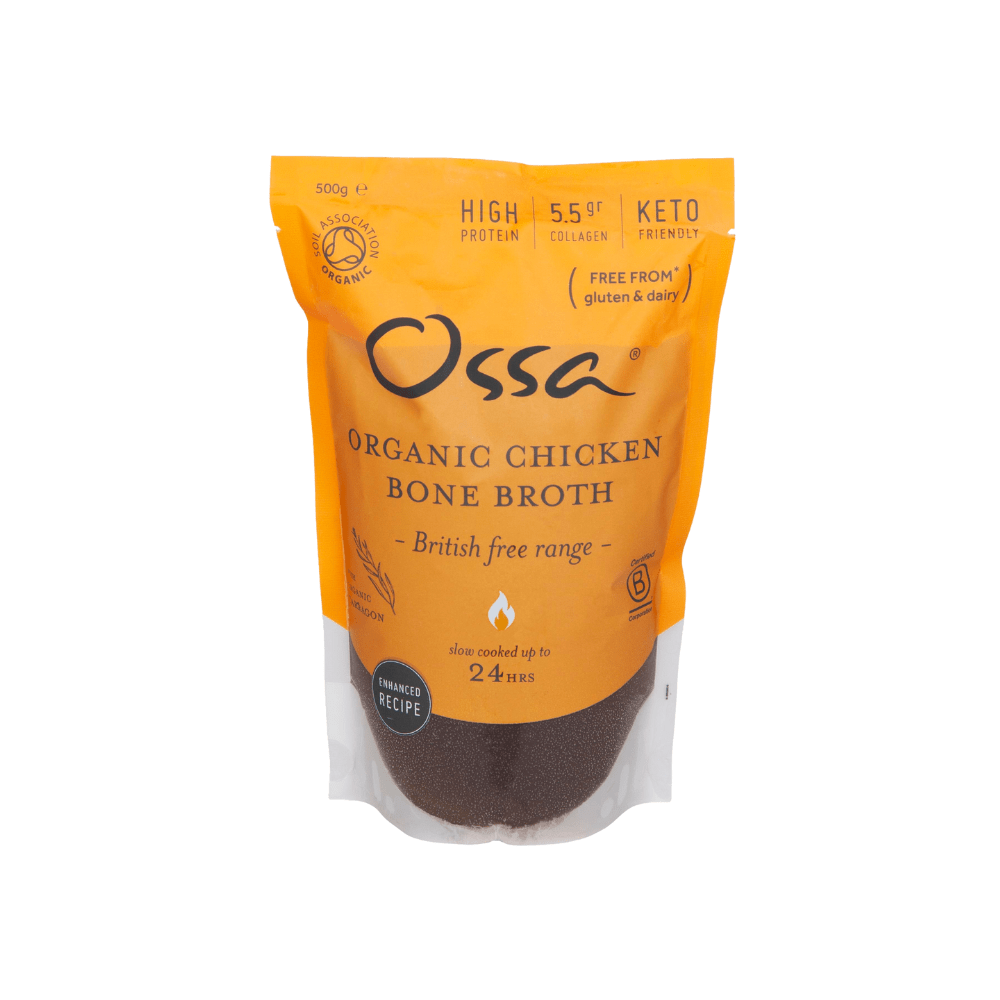
Chicken bones: simmer for a duration typical for collagen extraction, using carcasses, feet, and wing tips
-
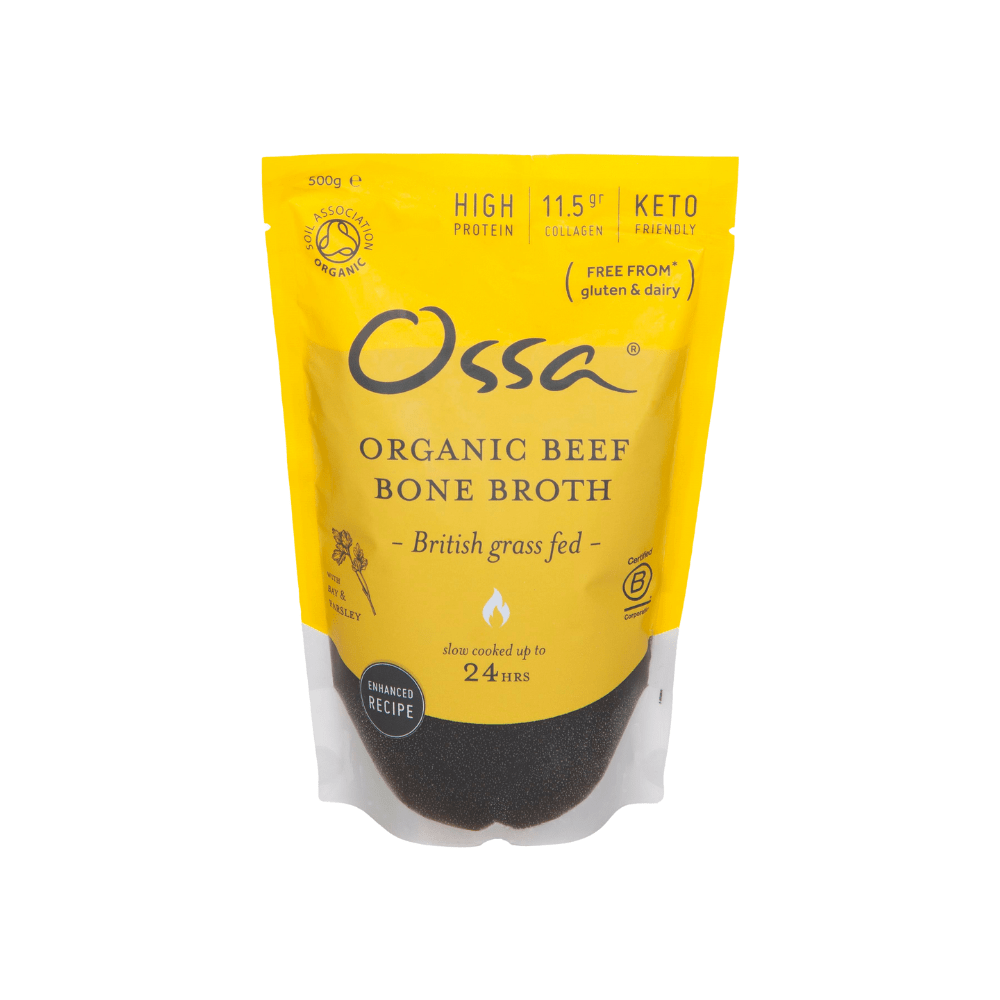
Beef bones: simmer for a longer period appropriate for beef collagen extraction, using knuckles, marrow bones, and joints together
Key Takeaways
Reliable bone marrow jelly comes from mixing cartilage-rich bones with marrow, simmering long enough to convert collagen fully, and cooling the reduced stock slowly.
| Point |
Details |
| Mix your bones |
Combine marrow bones with knuckles or feet for a firm set; marrow alone gels weakly. |
| Respect simmer time |
Chicken needs 12 to 24 hours; beef needs 24 to 48 hours for full collagen conversion. |
| Concentration beats quantity |
A diluted broth won’t set regardless of simmer time; reduce gently if the batch tastes thin. |
| Cool slowly, store safely |
Refrigerate within two hours, use within three to four days, or freeze for up to three months. |
| Ossa Organic offers a shortcut |
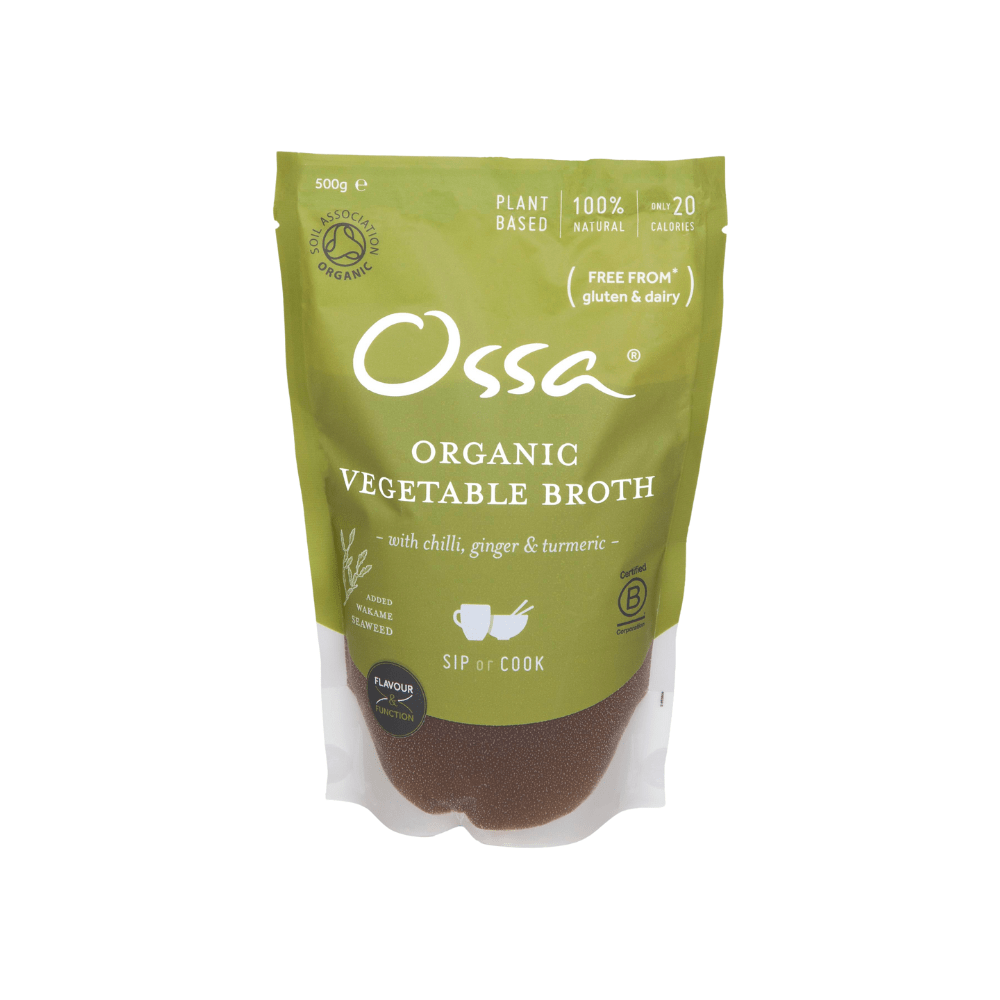
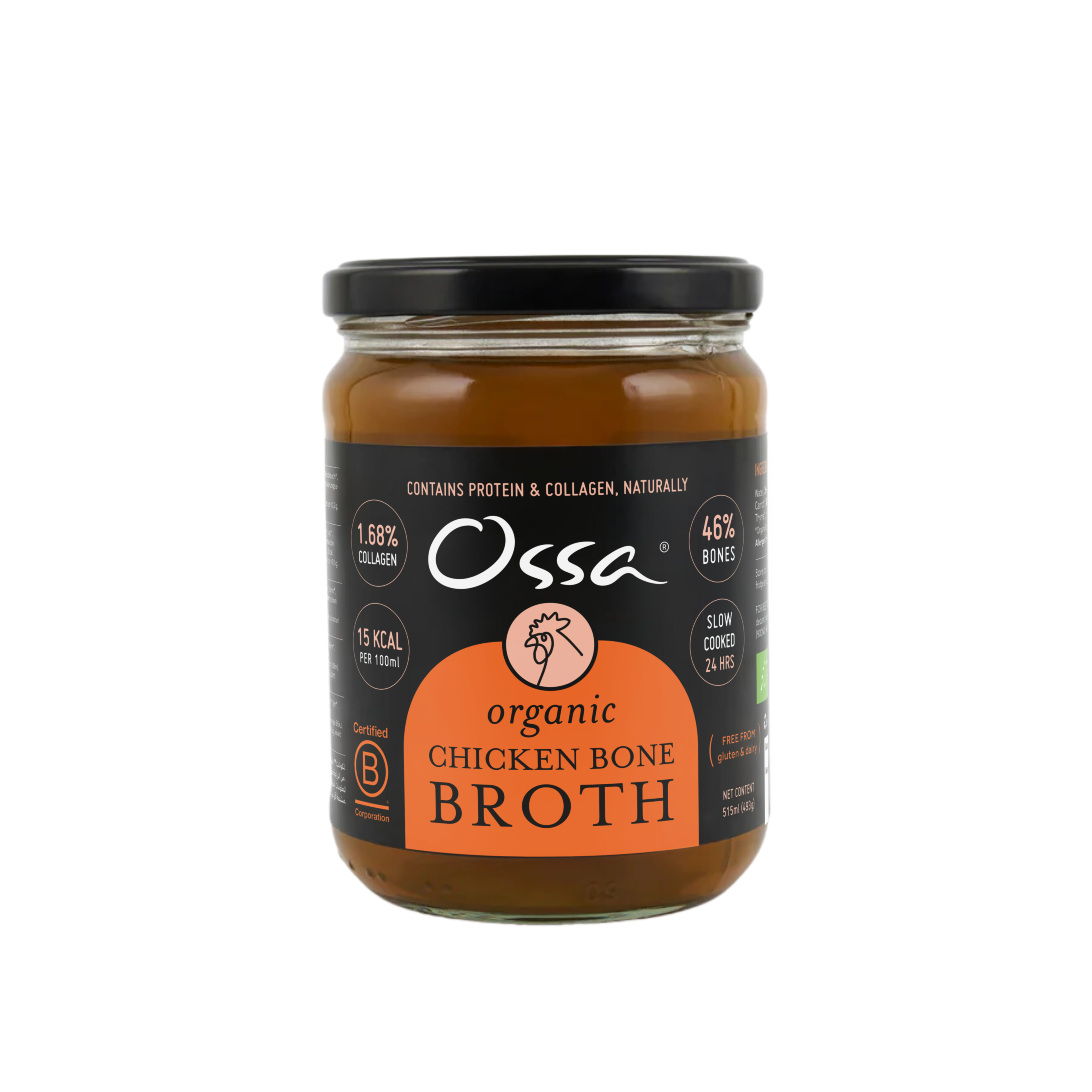
Its Organic Beef Bone Broth and bundles provide a slow-cooked, organic base you can use or reduce directly. |
Table of Contents
What makes bone marrow jelly gel?
Collagen is a structural protein found in connective tissue, tendons, skin, and the cartilage that caps the ends of bones. It doesn’t dissolve easily. Long, gentle heat is what breaks its triple-helix structure down into gelatin, the soluble protein that gives set broth its jelly-like wobble.
Simmering time matters because collagen conversion is gradual. Beef bones typically require a notably longer simmer than chicken bones, which convert more quickly due to thinner connective tissue. Concentration matters just as much as time. A broth diluted with too much water can simmer for two days and still refuse to set, because the gelatin present is too spread out to form a network. Reducing the liquid afterwards, or simply using less water at the start, fixes this.
It’s worth being precise about terminology here, because one phrase causes genuine confusion. “Gelatinous transformation of bone marrow” is a real medical term, but it describes a rare pathological condition linked to severe malnutrition, where mucopolysaccharide material builds up inside the marrow itself. That has nothing to do with your stockpot. The jelly you’re making in your kitchen is a culinary phenomenon: gelatin dissolved in water, cooled until it sets. Different process, different substance, same word used in two unrelated contexts.
-
Collagen breaks down into gelatin with sustained heat, not high heat
-
Concentration, not just time, decides whether the finished broth sets
-
Culinary “gelatinous” broth and the clinical GTBM condition share a name but nothing else
Pro Tip: If you’re unsure whether your broth has converted enough collagen, cool a small ladleful in a cup in the fridge for an hour before committing the whole batch to storage. It sets faster than a full pot, giving you an early read.
Understanding this distinction, and the difference between collagen and gelatine, makes the rest of the process far less mysterious.
Which bones and add-ins give the best gel?
Not every bone contributes equally, and marrow bones on their own are often the weakest choice for gelling, despite the flavour they bring.
-
Knuckle and joint bones – dense in cartilage, the single richest source of convertible collagen
-
Feet (chicken feet or beef trotters) – exceptionally high in connective tissue, ideal for a firm set
-
Marrow bones – contribute fat, flavour, and nutrients, but comparatively little gelatin alone
-
Mixed cuts with cartilage – the most reliable combination for a jelly that actually holds together
Mixing bone types is the single most useful habit to build. Marrow bones alone tend to produce a rich, fatty broth that stays liquid; adding knuckles or feet to the same pot is what pushes it into a proper set.
A few extraction boosters help too:
-
Roasting bones beforehand deepens flavour, though it isn’t essential for gelling
-
Crushing or splitting bones exposes more surface area to the water
-
A splash of apple cider vinegar, roughly one to two tablespoons per litre, helps draw collagen and minerals out during the early stage of heating
Sourcing well matters as much as technique. Ask your butcher specifically for a “gelatinous mix” or “bones for stock” rather than just marrow bones, and if organic or grass-fed matters to you, most independent butchers will happily tell you where their beef and chicken come from.
How do you make bone marrow jelly step by step?
This method works for both chicken and beef, with the main variables being ratio and time.
-
Prepare the bones. Roast beef bones at 200°C for 30 to 40 minutes if you want a deeper flavour (optional for chicken). Rinse everything under cold water first.
-
Set your ratio. For beef, use roughly 1.5 to 2 kg of mixed bones per 4 to 5 litres of water. For chicken, scale down to around 1 to 1.5 kg per 3 to 4 litres, since chicken bones convert faster and more efficiently.
-
Add acid and soak. Stir in one to two tablespoons of apple cider vinegar per litre and leave the bones to soak in cold water for 30 to 60 minutes before applying heat. This gives the acid a head start on loosening collagen.
-
Bring to a gentle simmer. Never a rolling boil, which breaks the gelatin structure down further and can leave you with a cloudy, weaker-setting stock. A lazy bubble at the edge of the pot is what you want.
-
Hold the simmer. Chicken needs 12 to 24 hours; beef needs 24 to 48 hours. A slow cooker or a low oven setting makes this far easier to manage overnight than a stovetop you have to babysit.
-
Reduce if needed. If your finished stock tastes thin, simmer it uncovered for 30 to 60 minutes to concentrate the gelatin further. Taste as you go, since over-reducing can turn the flavour bitter.
-
Strain and cool. Pass the liquid through a fine sieve, then cool it gradually rather than plunging it straight into the freezer. Gelatin forms its water-trapping network more reliably during a slow cool than a rapid one.
-
Degrease and store. Once chilled, the fat rises and hardens on top. Skim most of it off for clarity, but leaving a thin layer helps protect the jelly during short-term fridge storage.
Refrigerated, a well-made jelly keeps for three to four days. For longer storage, freeze it in flat portions or ice cube trays for up to three months, and reheat gently rather than blasting it in a microwave, which can break the set unevenly.
Pro Tip: If you’re new to this, make a small test batch first. Cooling a single cup rather than a whole pot lets you judge gel strength before you commit five litres of stock to the fridge.
The role of gelatin in natural foods covers more on how this protein behaves once it leaves the pot and enters other dishes.
Why won’t my bone broth set into a jelly?
A batch that refuses to gel almost always comes down to one of a handful of causes, and most are fixable without starting again.
-
Too few gelatin-rich bones (all marrow, no knuckles or feet)
-
Too much water relative to the amount of bone used
-
Simmer time cut short, especially common with beef cooked for under 24 hours
-
Over-skimming fat during cooking, which can strip out gelatin along with it
-
Cooling the batch too fast, which disrupts the network as it forms
If your finished broth is watery, reduce it uncovered on a gentle simmer to concentrate the gelatin, then cool a small sample to test before reducing the whole batch further. As a last resort, powdered gelatine can rescue a weak batch. Roughly one teaspoon, about 3 grams, dissolved per 250 ml of warm liquid gives a soft set; bloom it in a little cold water first for a smoother texture.
To check whether collagen is present at all before you troubleshoot further, warm a spoonful of the finished stock and chill it in a small dish for 20 to 30 minutes. If it sets even slightly, the collagen is there and the fix is concentration, not the recipe itself.
Pro Tip: Keep a small notebook of bone ratios and simmer times for each batch. Gelling behaviour varies more by butcher’s cut than most recipes admit, and your own log becomes more useful than any general guideline.
Is bone marrow jelly good for you nutritionally?
Bone marrow jelly delivers a genuinely useful nutrient profile, though it’s worth being clear-eyed about what it can and can’t do.
-
Glycine and proline, the amino acids that make up gelatin, support skin and connective tissue structure
-
Glucosamine and chondroitin in small amounts, compounds associated with joint health
-
Minerals, though only in modest quantities. Nutritional analyses suggest often less than 5% of the daily value transfers from bone into the finished broth, so it’s a contributor rather than a mineral supplement
-
Fat and cholesterol, concentrated in the marrow itself, which matters if you’re monitoring lipid intake
Bone broth’s mineral contribution is real but limited. Public nutrition analyses put typical transfer at under 5% of daily value for many minerals, with amino acids like glycine doing most of the nutritional heavy lifting.
Bone marrow’s health reputation has outrun the evidence in places. A specialist osteoporosis clinic has noted that while marrow contains compounds plausibly linked to joint and skin health, there’s no clinical evidence that eating it prevents or treats osteoporosis. Treat it as a supportive food within a varied diet, not a targeted therapy for bone disease. If you’re managing cholesterol, moderate your portion of the fattier, marrow-heavy batches and favour leaner cuts more often.
On food safety: cool jelly promptly after straining, refrigerate within two hours, use within three to four days, and reheat to a rolling simmer before serving rather than just warming through. If you experience any unusual digestive reaction after drinking rich broth, it’s often the fat content or histamine load in long-simmered stock rather than anything wrong with the batch, but persistent symptoms are worth raising with a GP.
You can read more on marrow’s specific nutrient profile if you want the fuller picture.
What makes Ossa Organic’s approach to bone broth different?
Ossa Organic started from a genuinely personal discovery. Its founder began making bone broth while pregnant with her first child, and found the difference it made to her family’s health significant enough to build a business around it. That origin shapes the brand’s whole approach: slow cooking, organic ingredients, and a refusal to shortcut the process with additives or fillers, which is precisely what tradition-based bone broth demands.
That grounding in traditional method, rather than trend, is why the brand’s recipes and guides focus on getting the ratios and timings right rather than promising quick fixes.
How does bone marrow jelly differ from ordinary bone broth?
The two aren’t separate foods so much as two states of the same liquid, separated mainly by concentration and temperature.
Standard bone broth is thinner, served warm, and sits somewhere between a light stock and a nourishing drink. It hasn’t necessarily been reduced or cooled long enough to reveal how much gelatin it actually contains. Bone marrow jelly is that same broth taken further: simmered long enough, and often reduced enough, that once chilled it sets into a soft, wobbling mass rather than staying liquid.
Texture is the most obvious difference. Broth pours; jelly holds a shape and has to be spooned or scraped from the container. Flavour tends to be more concentrated in the jelly form too, simply because reduction drives off water and intensifies whatever was dissolved in it, including the savoury, slightly mineral notes that mark a well-made stock.
The uses diverge accordingly. Broth works as a drinking stock, a soup base, or a cooking liquid you add in volume. Jelly is better treated as an ingredient in its own right: a spoonful melts into a sauce to add body, a knob can enrich a risotto at the last minute, or it can be used cold as a savoury layer in a terrine. Neither form is more “correct.” A jelly is simply a broth that has been taken far enough, and cooled long enough, to show its gelatin content honestly.
How do you use bone marrow jelly in cooking?
Bone marrow jelly earns its place well beyond the soup bowl once you start treating it as a flavour-and-texture booster rather than a finished dish.
Stirred into a pan sauce, a spoonful melts almost instantly and adds body without the need for a flour or cornflour thickener, which is the classic French technique behind a proper jus. Whisked into gravy at the end of cooking, it deepens the mouthfeel considerably. In soups, a cube dropped into a simmering pot dissolves back into liquid form and effectively fortifies a thinner homemade or shop-bought stock.
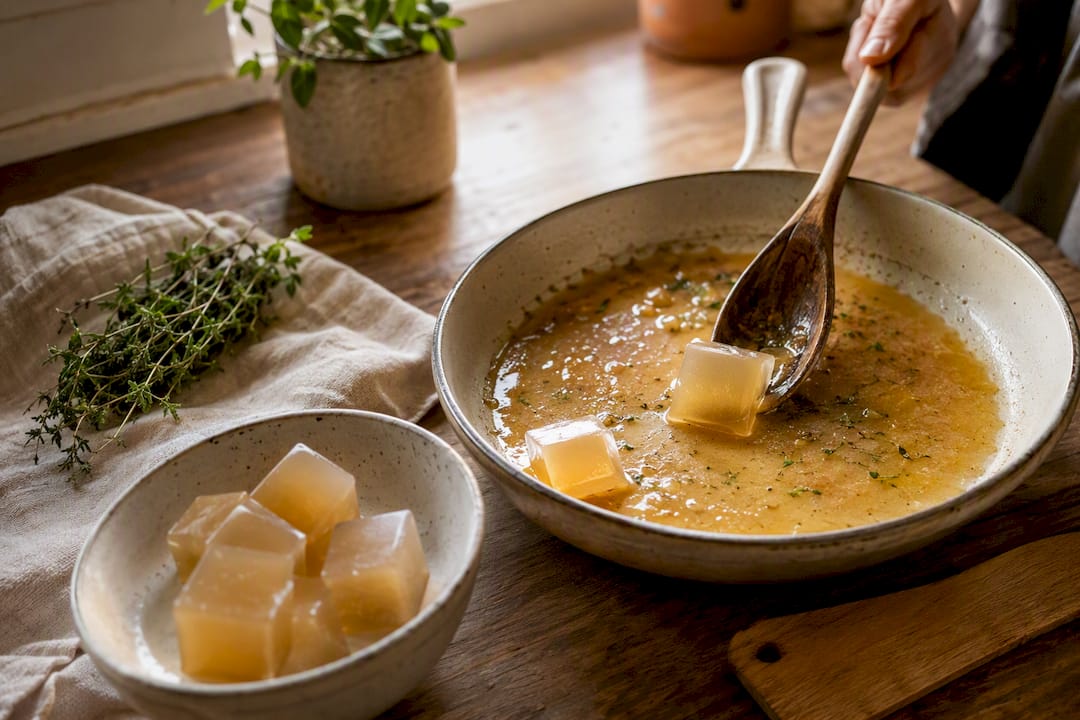
Cold applications work just as well. Softened jelly makes a rich base for a savoury spread, particularly when blended with a little softened butter and herbs, and it’s a traditional addition to potted meats and terrines, where its set helps bind other ingredients as it chills. A thin layer poured over a meat pie filling before the pastry lid goes on adds moisture and richness that dry roasting alone can’t achieve.
For a lighter application, try folding a little into a warm vinaigrette base for roasted vegetables, or pair it with something crunchy for contrast; a savoury seed-based snack alongside a jellied terrine is a combination worth trying if you want texture variety on the same plate. However you use it, the core principle stays the same: treat it as a concentrated flavour carrier, add it gradually, and taste as you go, since a little goes further than expected.
What the conventional advice on bone broth gets wrong
Most guides treat gelling as either a magic trick or a health guarantee, and both framings do readers a disservice. The truth is more mundane and more useful: a set jelly is simply confirmation that you used the right bones, in the right ratio, for long enough. It’s a quality check, not a miracle.
Where the conventional advice really falls short is in conflating “gelatinous” with “nutritionally superior.” A weakly set broth from well-sourced bones can still deliver perfectly good amino acids; a firmly set one made with excess vinegar and rushed timing can taste harsh. Texture tells you about extraction technique, not about overall nutrition, and treating a wobble as proof of health value oversells what the science actually supports.
What we’d prioritise first is ratio and bone selection over any single trick, acid, roasting, or otherwise. Get knuckle bones and feet into the pot alongside your marrow bones, respect the simmer time, and the gel tends to follow. Everything else is refinement, not the foundation.
A shortcut worth having on hand
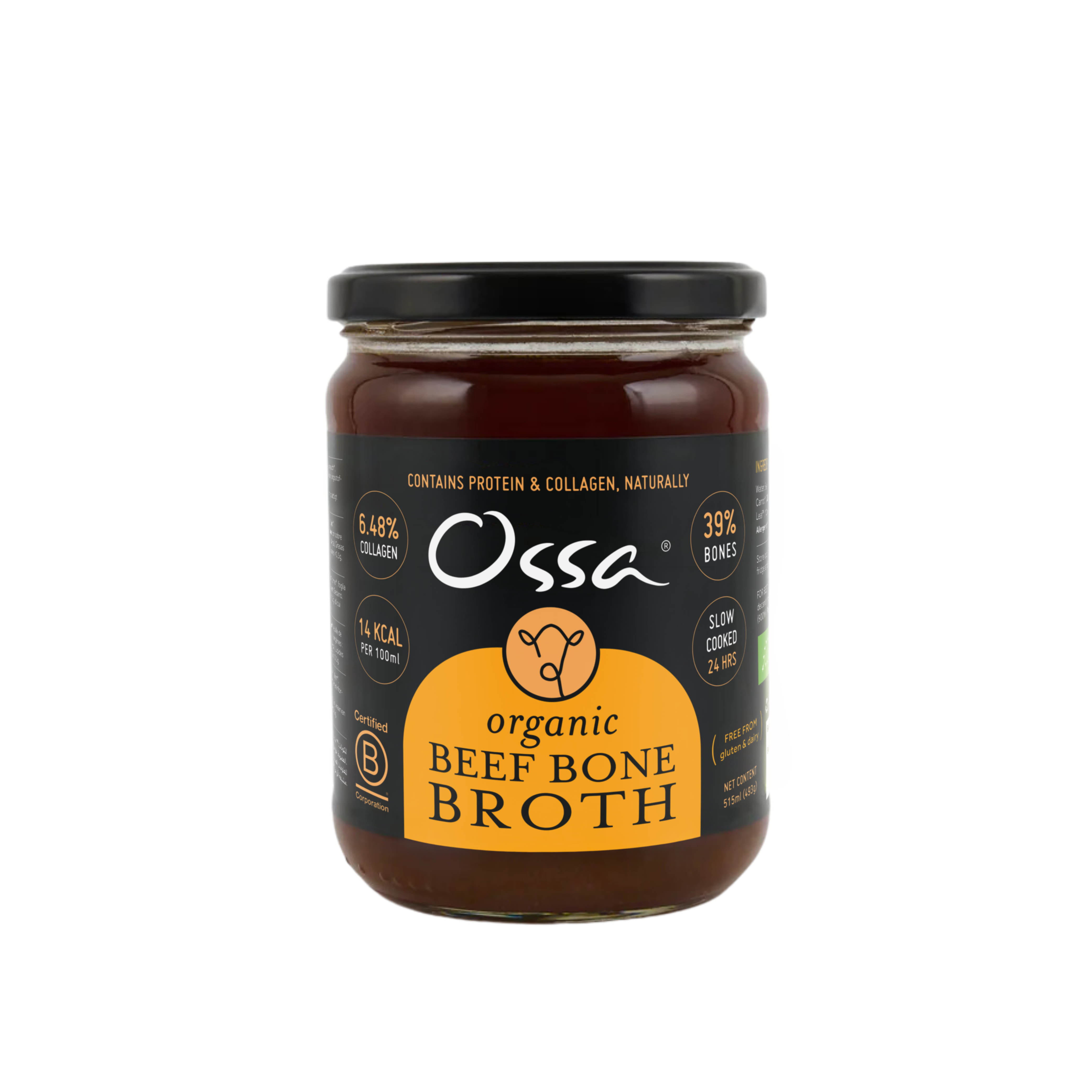
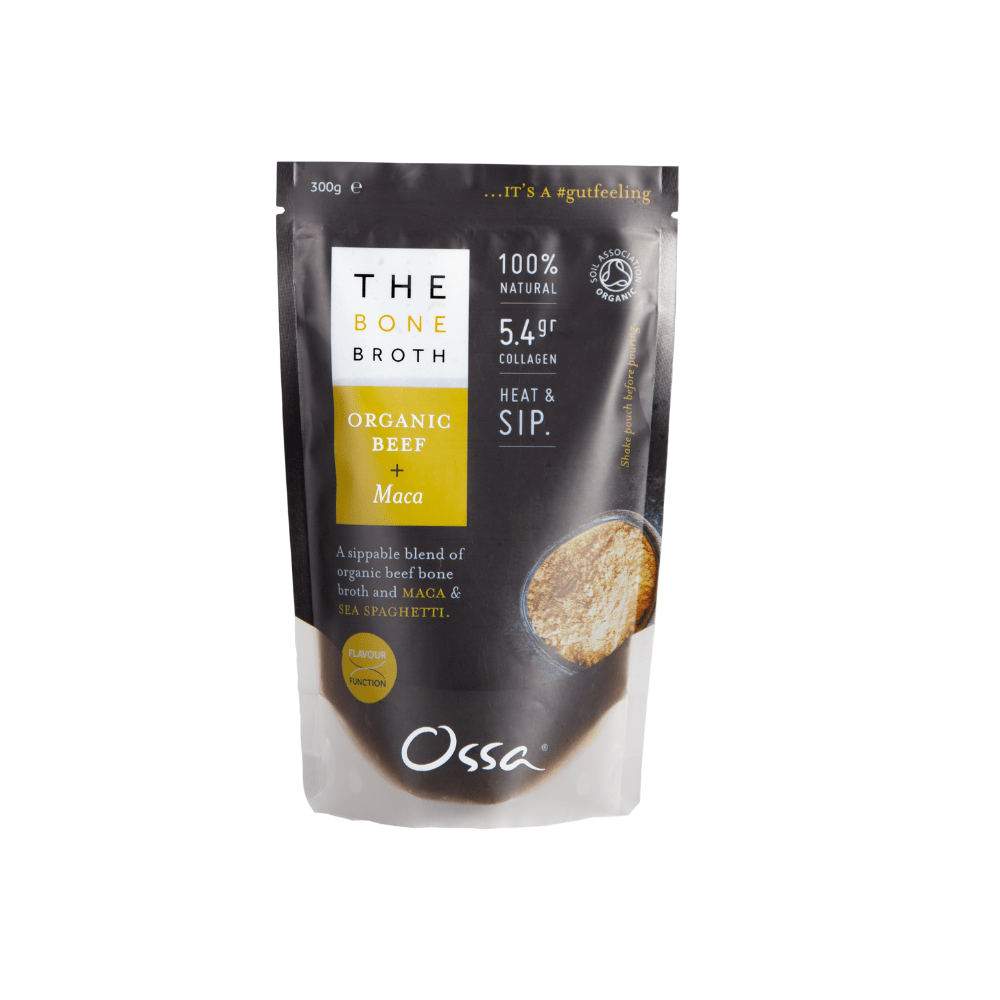
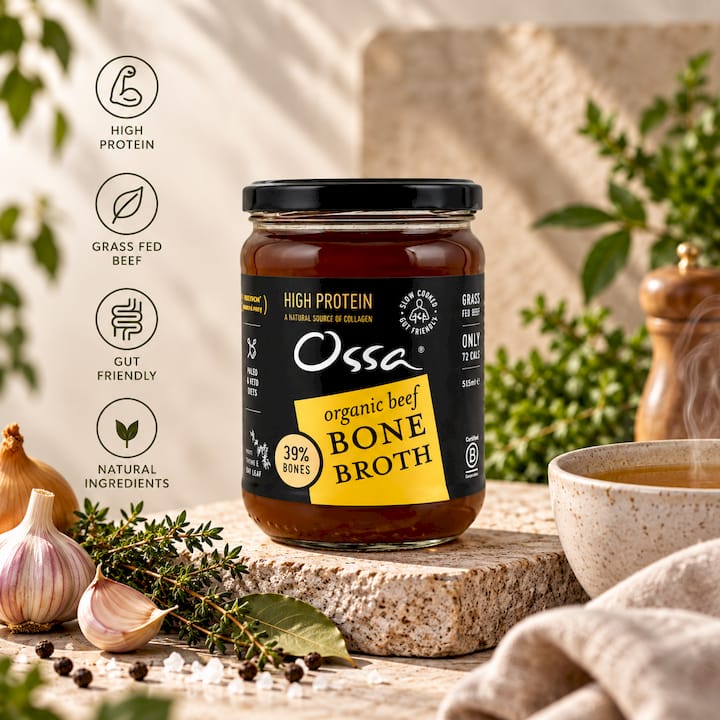
Making a proper jelly from scratch is worth doing, but nobody needs to do it every single week. Ossa Organic’s Organic Beef Bone Broth Ambient 515ml is built from slow-cooked organic bones and can be used straight from the box or gently reduced on the hob to strengthen its own set, giving you a jelly-ready base without the 48-hour wait.
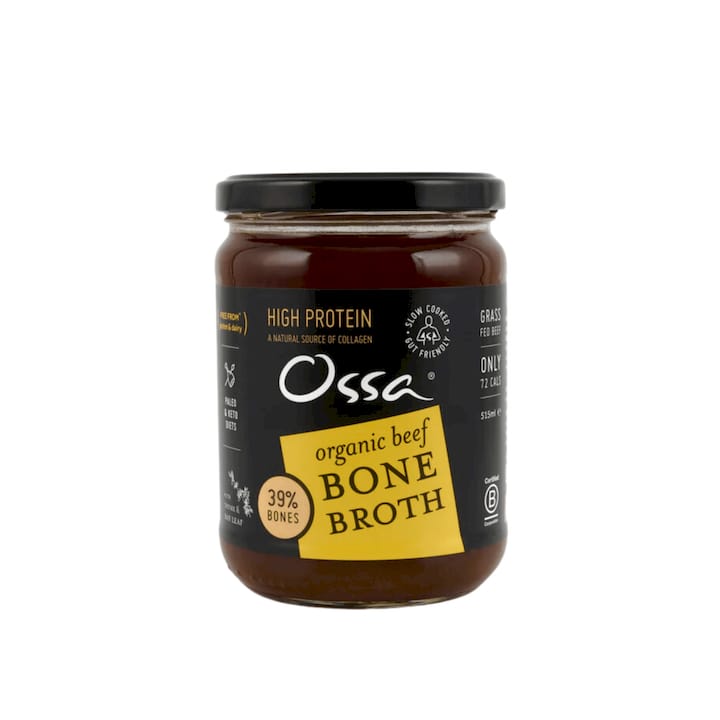
For households that get through broth regularly, the Functional Nutrition Ambient Bundle keeps a rotating stock on hand for sauces, soups, and reductions without repeat ordering. If you prefer fresh, chilled stock ready to use straight from the fridge, the Daily Essentials Chilled Bundle covers that daily-use case instead. Either way, you get the same collagen-rich foundation this article has walked through, just without standing over a pot for two days. Have a browse of the range and pick the format that fits how often you actually cook.
Useful sources for further reading
FAQ
Is gelatinous bone broth healthy?
Yes, in the context of a varied diet. It provides amino acids like glycine and proline along with modest mineral amounts, though it isn’t a treatment for any medical condition.
Is there bone marrow in jelly?
Not necessarily. Bone marrow jelly can be made from marrow bones, but the actual gel comes mainly from collagen in cartilage-rich bones like knuckles and feet, not from the marrow itself.
Why do I feel weird after drinking bone broth?
Rich, long-simmered broth is high in fat and can carry a notable histamine load from extended cooking, which occasionally causes mild digestive discomfort in sensitive individuals. Persistent or severe symptoms are worth discussing with a GP.
What part of chicken has the most collagen?
Chicken feet and the carcass, particularly the joints and cartilage around the knee and wing tips, contain the highest concentration of convertible collagen.
Recommended