Short answer: yes, most bone broths contain some cholesterol, but the amounts are small enough that they’re unlikely to be the thing wrecking your heart health. A typical cup ranges from 0mg to around 4.8mg of cholesterol, depending on the brand and how it’s made, next to a daily dietary intake that many adults sit well above from other foods. If you have high blood pressure, kidney disease, familial hypercholesterolaemia, or you’re on statins or other lipid-lowering therapy, check with your GP before making broth a daily habit, mainly because of sodium and saturated fat rather than cholesterol itself.
Key Takeaways
Bone broth contains small, variable amounts of cholesterol, and saturated fat and sodium matter more to heart health than the cholesterol figure alone.
| Point |
Details |
| Cholesterol amounts are small |
Measured examples range from 0mg to about 4.8mg per cup, well below typical daily dietary intake from other foods. |
| Saturated fat matters more |
Clinical guidance points to saturated fat, not small dietary cholesterol amounts, as the stronger driver of blood LDL. |
| Sodium is the real caution |
Commercial broths can carry up to 450mg of sodium per cup, which deserves more attention than cholesterol. |
| Skimming fat helps |
Chilling broth and removing solidified fat before reheating lowers both fat and cholesterol content. |
| Ossa Organic offers transparent options |
Ossa Organic states clear nutrition figures on its chicken bone broths, making label comparison straightforward. |
Table of Contents
Does bone broth have cholesterol? What it actually is
Bone broth is bones and connective tissue simmered for an extended period, often 12 to 24 hours, sometimes with a splash of vinegar to help pull minerals out of the bone. Ordinary stock or standard bouillon cooks for a fraction of that time and rarely extracts the same volume of collagen or marrow content. The extended simmer is what makes bone broth different: it draws gelatine, amino acids, and small amounts of calcium, magnesium and phosphorus from marrow and cartilage — key components highlighted in the role of collagen for bone health. That’s also precisely why cholesterol content swings so widely between one batch and the next. If you want the full technical breakdown of how bone broth differs from stock, it’s worth reading in detail.
Nutritional value of bone broth: the real numbers
A standard serving is one cup, roughly 240 to 250ml, and that’s the figure used on most nutrition labels and in food databases. The trouble is that “bone broth” isn’t one product. It’s a category, and the numbers move depending on the bones used, whether skin and meat went into the pot, and how the manufacturer processes the final liquid.
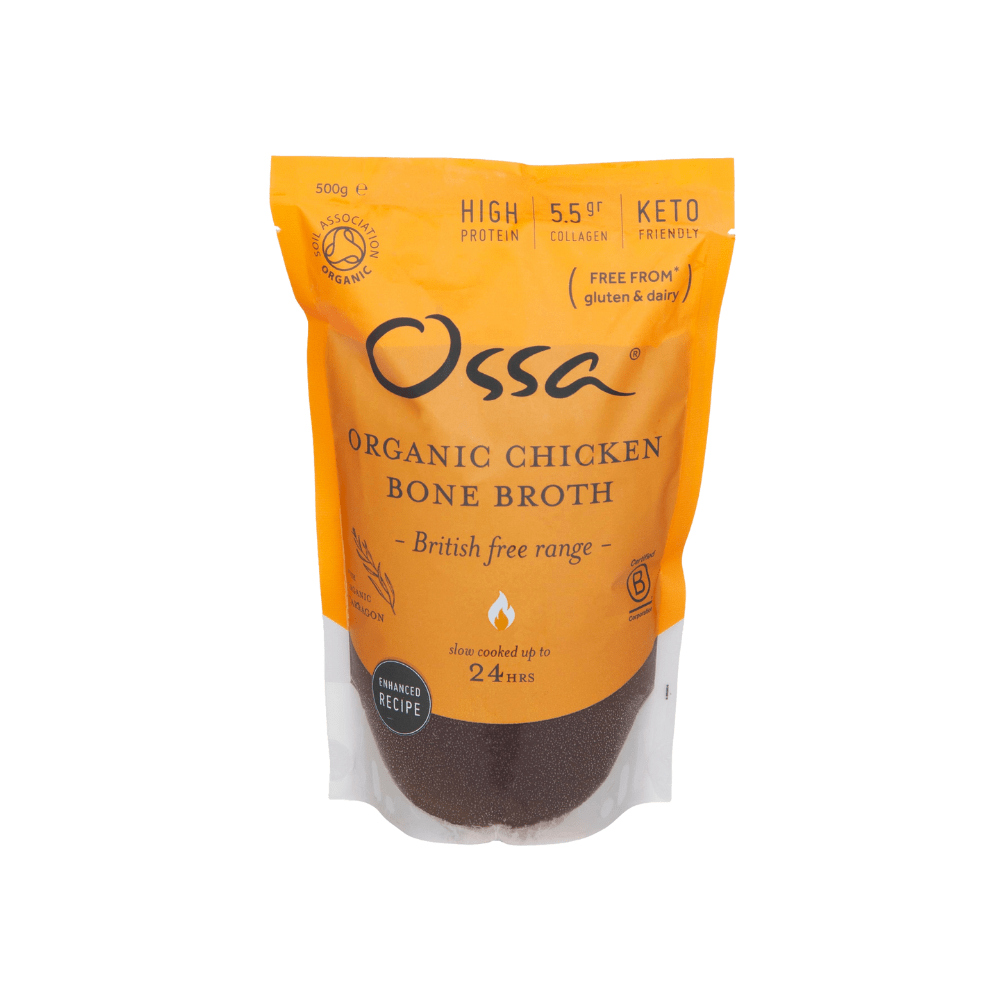
Tested examples make the spread obvious. One canned chicken bone broth was measured with cholesterol content below the labelling threshold per cup. A different brand of the same category came in at a low single-digit milligrams per cup, purely down to formulation choices. A typical homemade chicken bone broth, simmered with some skin left on, tends to sit somewhere between those two figures, alongside 50 or so calories, around 9 to 10g of protein, 0.5 to 1g of fat, roughly 280mg of potassium, and sodium that can climb towards 450mg per cup even before you add salt at the table.
| Broth type |
Calories |
Protein |
Cholesterol |
Sodium |
| Commercial chicken bone broth (lean) |
~50 |
9–10g |
0mg |
~450mg |
| Commercial chicken bone broth (higher-fat) |
~50 |
around 9 to 10g |
~4.8mg |
Varies by brand |
| Homemade chicken bone broth (with skin) |
around 280mg |
around 9 to 10g |
1–4mg (estimated) |
Depends on added salt |
A few things worth flagging before you compare products on a shelf:
-
Cholesterol figures on packaging often round to the nearest milligram, so “0mg” can mean genuinely zero or simply below the labelling threshold.
-
Sodium is the number that varies most between brands and usually deserves more attention than cholesterol.
-
If a label doesn’t state cholesterol content clearly, the USDA FoodData Central database is a reliable place to check specific values for similar products or homemade recipes.
For a closer look at how chicken broth specifically stacks up on cholesterol, we’ve broken down the figures in more depth on our dedicated cholesterol guide.
Why cholesterol levels vary between brands and batches
Cholesterol in bone broth comes almost entirely from fat, and fat content depends on what goes into the pot and what happens to it afterwards.
-
Meat and skin: leaving chicken skin or fatty cuts of beef in the stockpot raises both fat and cholesterol.
-
Marrow content: bones cut to expose marrow release more lipid into the liquid than sealed, whole bones.
-
Simmer time: longer cooking extracts more fat and marrow content unless it’s removed afterwards.
-
Skimming after chilling: refrigerating broth lets fat solidify on top, so skimming it off before reheating meaningfully lowers both fat and cholesterol.
-
Processing format: concentrates and powdered broths can reintroduce fat during manufacturing, depending on the recipe used.
Commercial recipes and labelling practices differ enough that two broths sitting side by side in a shop can carry noticeably different profiles, even when both are marketed the same way.
Does bone broth raise cholesterol? What the evidence says
Small amounts of dietary cholesterol in a cup of broth are unlikely, on their own, to meaningfully shift blood LDL for most people. That’s not a brand opinion. It’s where current clinical guidance consistently lands.
The National Heart, Lung, and Blood Institute’s heart health guidance points to saturated fat, not dietary cholesterol, as the stronger driver of blood LDL levels for the general population. Dietary cholesterol still matters, but for most people it plays a smaller role than the saturated fat that often travels alongside it in meat, skin and marrow. That distinction explains why a lean, skimmed bone broth and a fatty, unskimmed one can carry a similar cholesterol figure yet behave very differently once saturated fat is factored in.
Clinical guidance consistently points to saturated fat and overall diet quality as the main modifiable drivers of blood LDL cholesterol, rather than small, occasional sources of dietary cholesterol such as a cup of broth.
Individual response varies too. Some people are “hyper-responders” whose LDL rises more sharply with dietary cholesterol than the average population, though this is the exception rather than the rule. It matters more in specific clinical contexts: familial hypercholesterolaemia, established cardiovascular disease, or diets that combine high cholesterol intake with high saturated fat and high sodium at the same time. Broader human research on bone broth’s direct health effects, including its amino acid content, is still limited, so claims about gut or inflammatory benefits deserve a cautious read alongside the cholesterol question. If you’re weighing up the wider evidence on bone broth’s benefits and limits, our gut health explainer covers that ground.
How to make or buy a heart-friendlier bone broth
Making it at home:
-
Choose leaner bones over fatty cuts, and trim visible skin and meat before simmering.
-
Simmer for flavour, not maximum extraction. A shorter, well-seasoned batch avoids over-extracting marrow fat.
-
Chill the finished broth overnight, then skim the solidified fat layer off the top before reheating.
-
Strain thoroughly and store in the fridge, discarding any leftover solids rather than reincorporating them.
Buying checklist:
-
Check the label for cholesterol (mg), total fat, saturated fat, and sodium per serving, not just per bottle.
-
Favour organic or free-range sourcing where it’s stated, since it typically signals more transparent ingredient practices.
-
Treat portion size as one cup, not the whole carton, when comparing figures across brands.
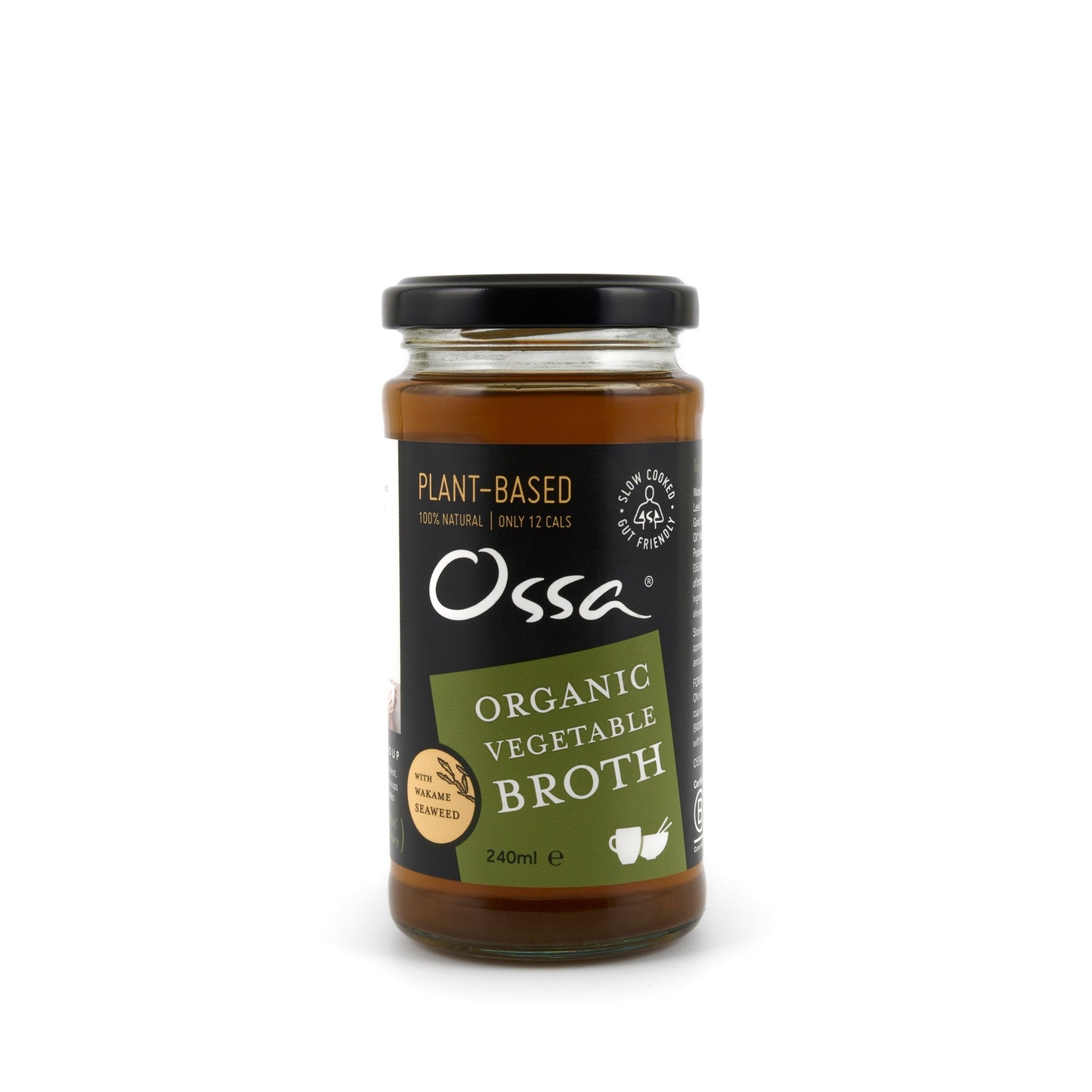
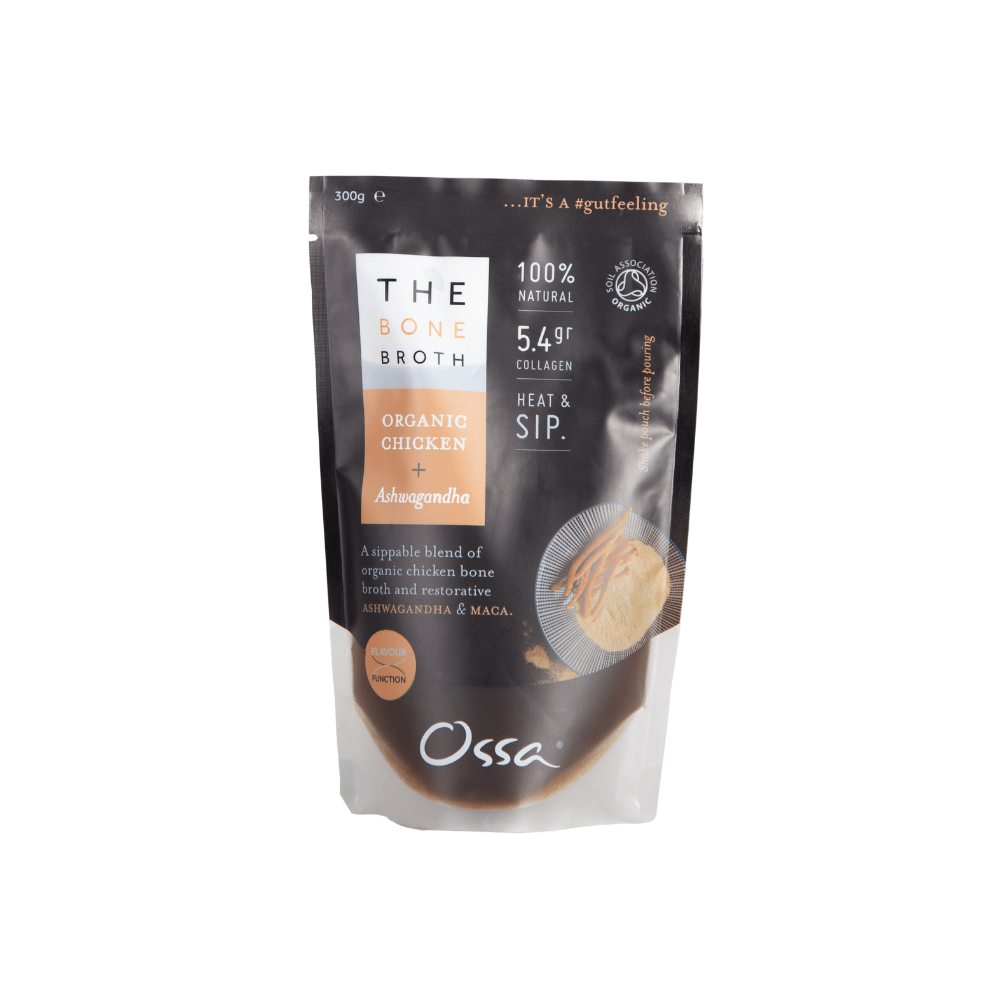
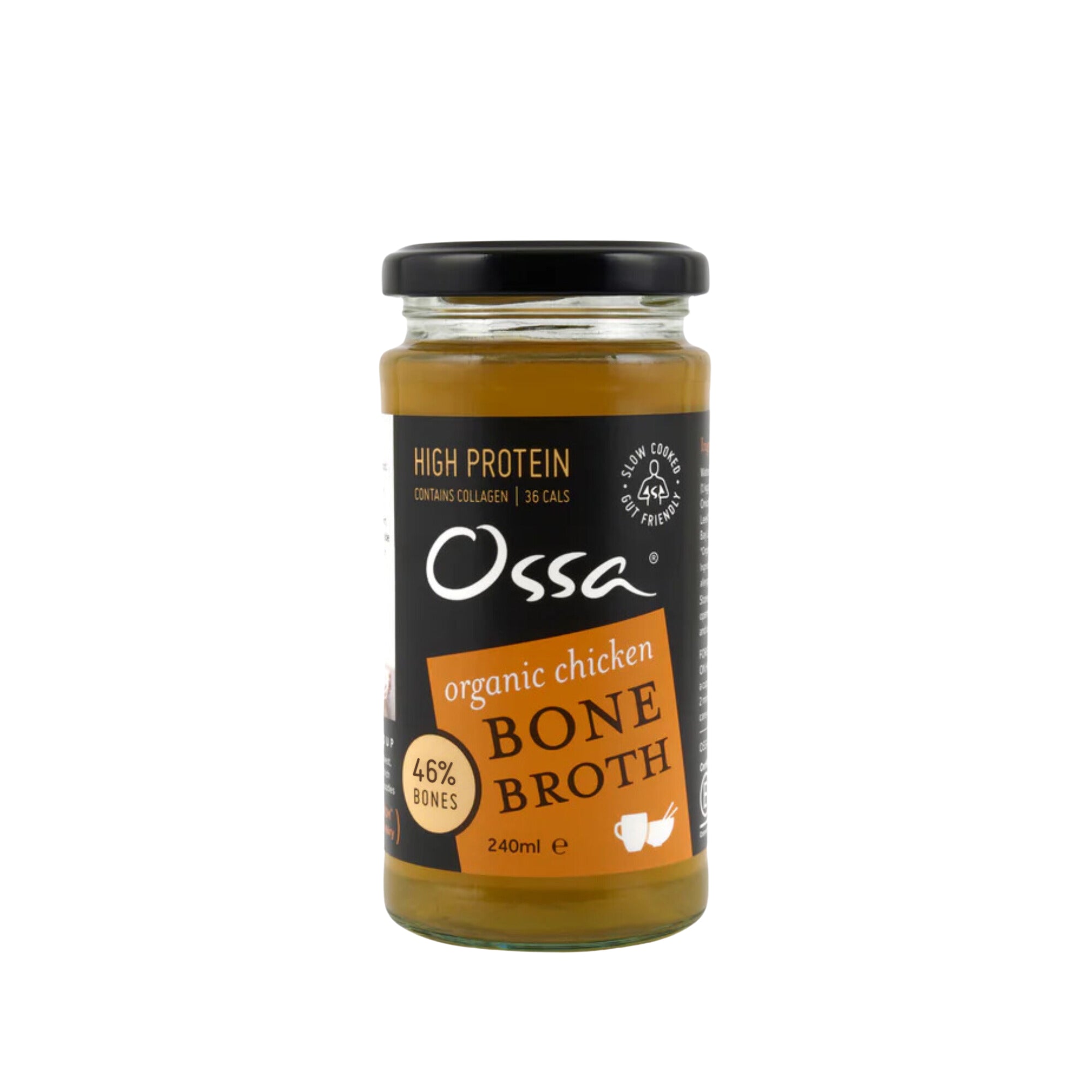
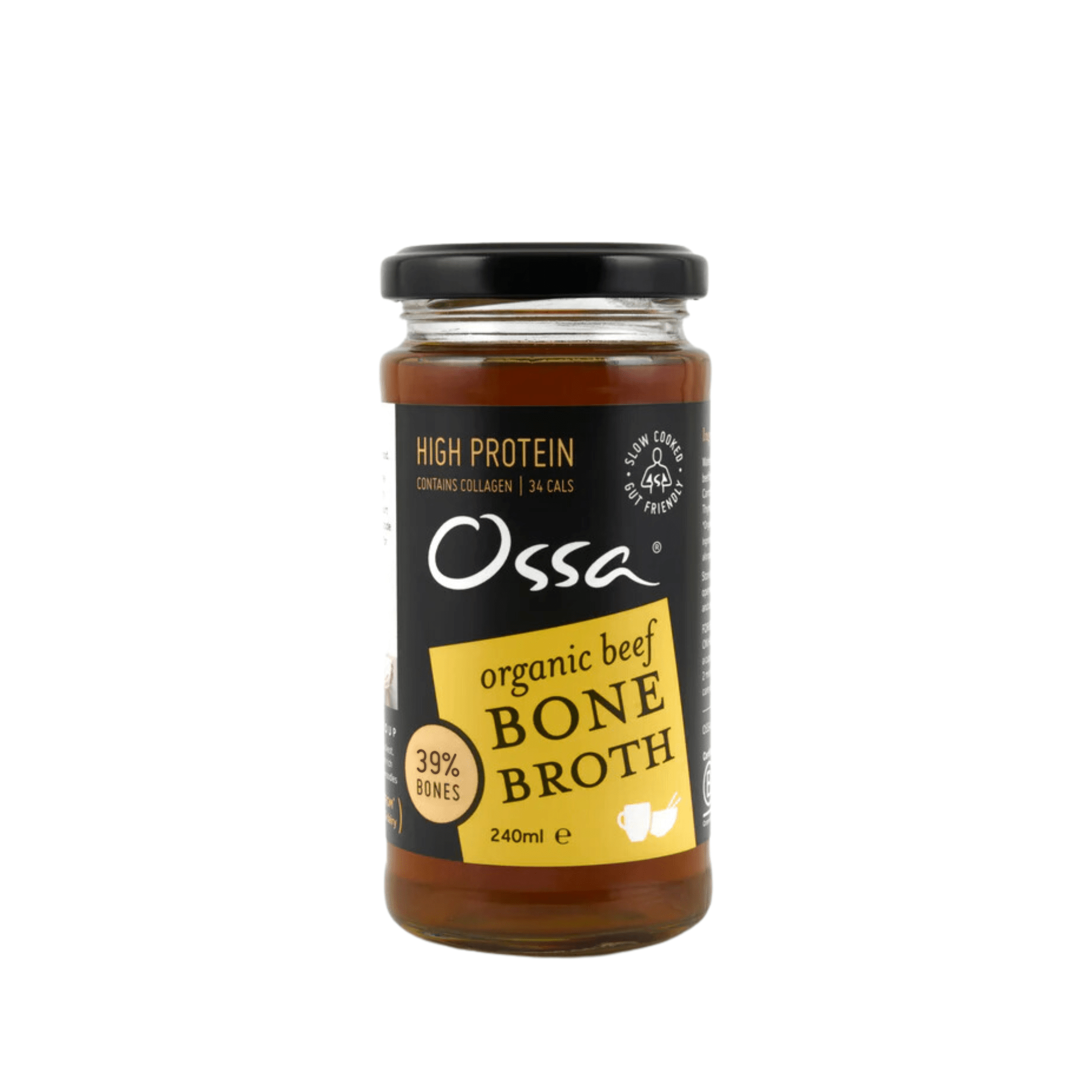
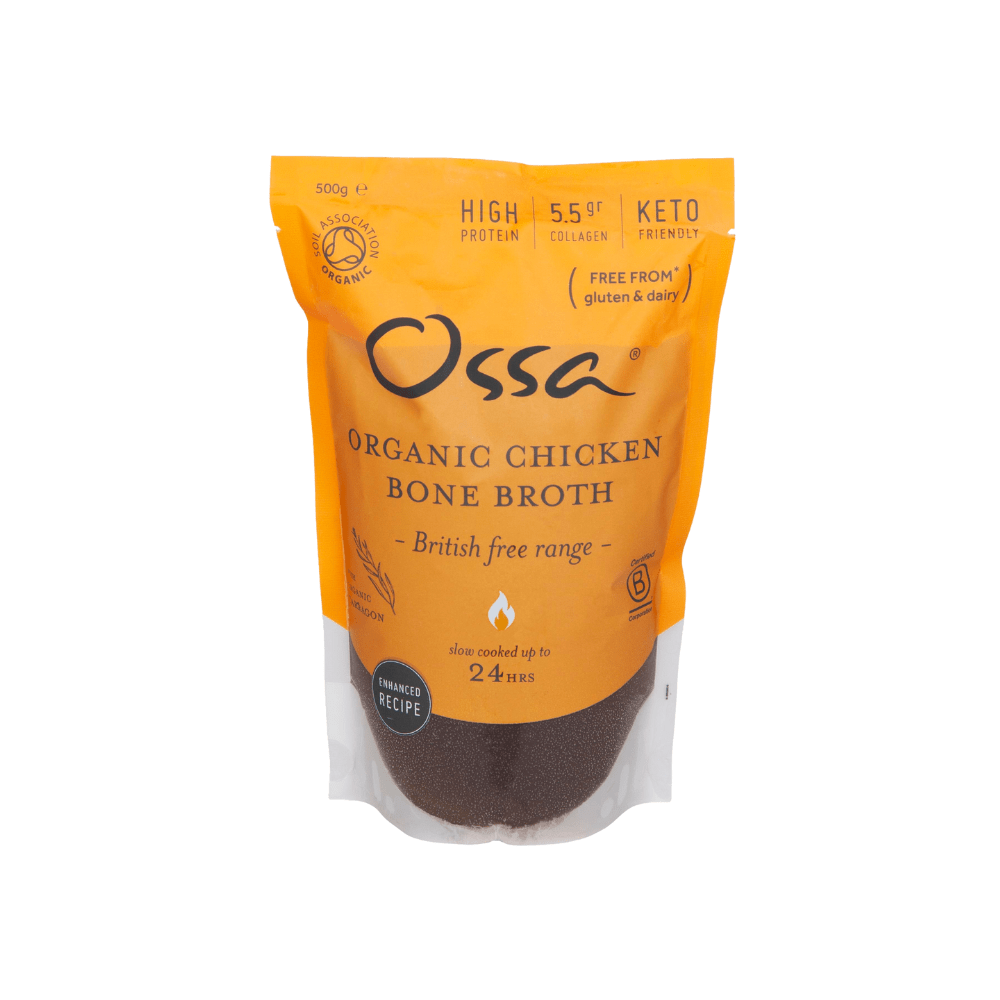
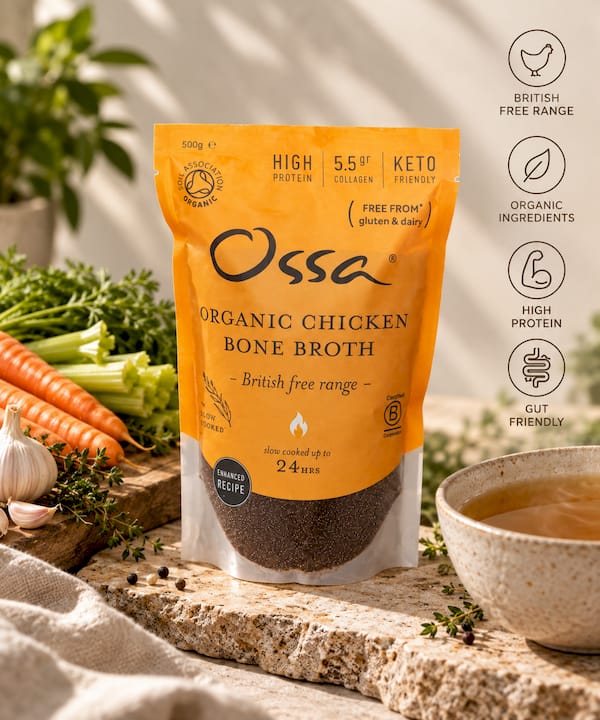
Ossa Organic’s Organic Free Range Chicken Bone Broth and the Organic Chicken Bone Broth are both made with clearly stated nutrition figures, so you’re never guessing at what’s in the bottle.
Pro Tip: If you want richer flavour without the extra fat, roast your bones first, then simmer with herbs and a splash of vinegar. You get depth from browning, not from the fat you’d otherwise need to add back in.
Potential downsides and who should check with a clinician first
Sodium is the biggest practical concern with most commercial bone broths, some of which run close to 450mg per cup before any extra seasoning. Slow-simmered recipes made with bones sourced from poorly regulated supply chains can also carry trace contaminants, so relying on reputable, lab-tested brands reduces that risk. Treating broth as a meal replacement rather than a supplement to a varied diet is its own separate problem, since it’s low in several nutrients a full meal would provide.
-
High sodium content, particularly in canned or concentrated products.
-
Possible trace contaminant concerns in poorly sourced recipes.
-
Risk of displacing more nutritionally complete meals if used too heavily.
People with hypertension, heart failure, kidney disease, or an inherited lipid disorder such as familial hypercholesterolaemia should check with a clinician before making bone broth a regular, high-volume habit.
How often should you drink bone broth?
A cup, around 240ml, several times a week is a reasonable amount for most healthy adults. Think about your total saturated fat and sodium intake for the day rather than fixating on cholesterol alone, since that’s where the real heart-health lever sits. Anyone in an at-risk group should keep daily use in check and lean on water or a lower-sodium option between servings.
Our take on bone broth and heart health
We built Ossa Organic on the belief that slow-simmered, traditional food still has a place in a modern, evidence-led kitchen. That doesn’t mean ignoring the numbers. It means being transparent about them, skimming the fat, stating the sodium, and trusting readers to make their own call once they’ve seen the label. Good broth shouldn’t need a marketing gloss to hold up.
Choose bone broth you don’t have to second-guess
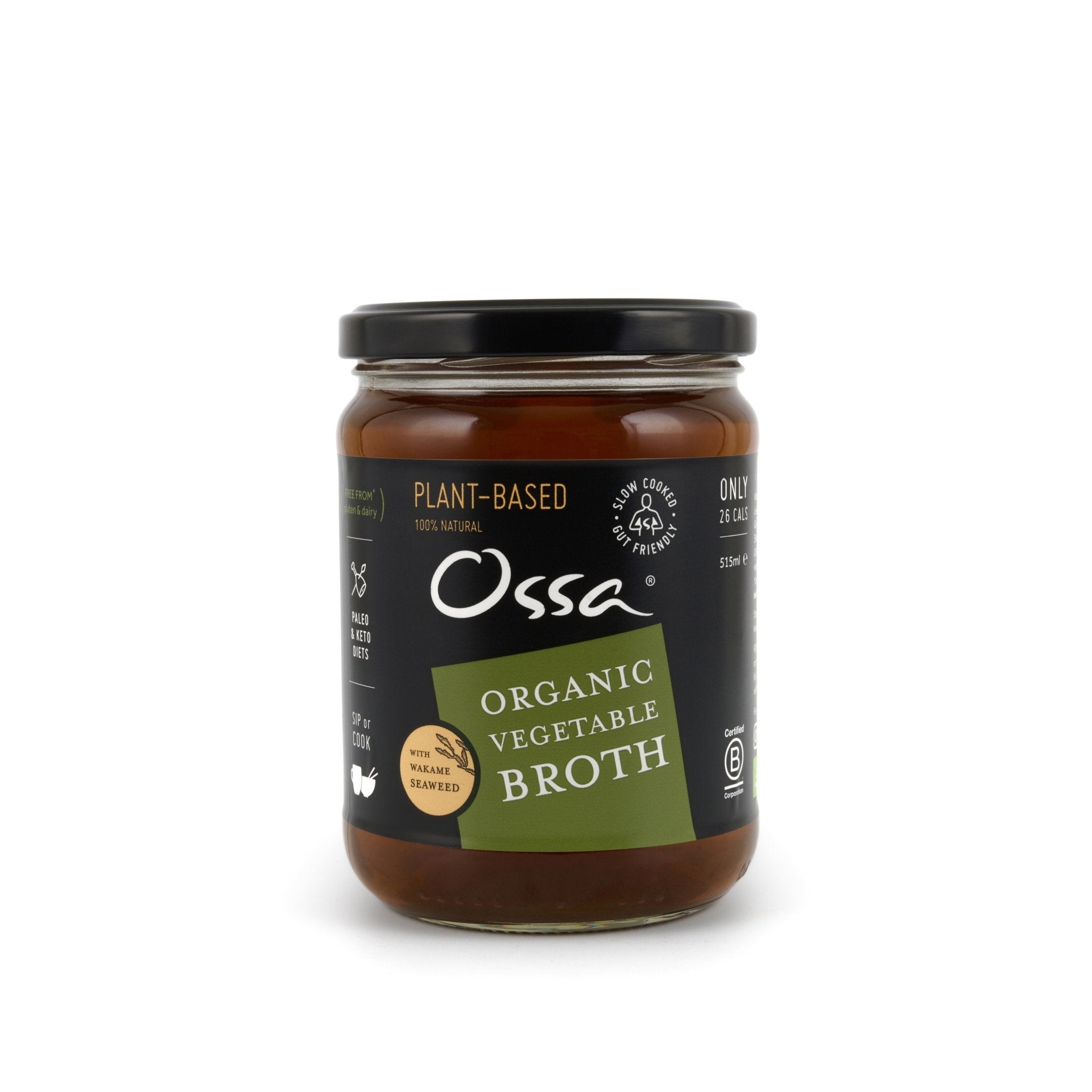
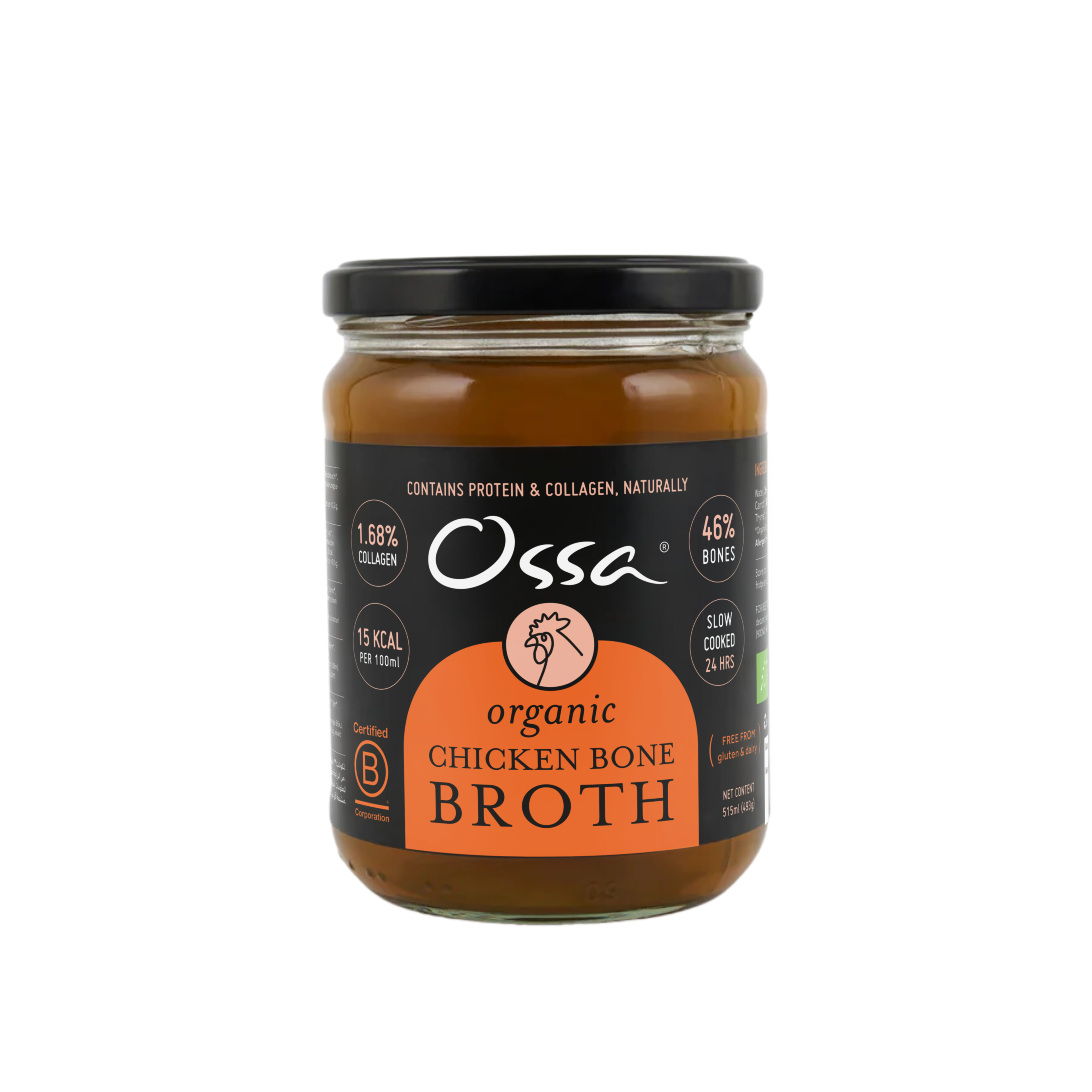
Reading labels shouldn’t feel like detective work. Ossa Organic publishes clear nutrition figures on every product, so you can compare cholesterol, sodium and fat content the same way you would compare any other food in your kitchen, without hunting for the small print. Our Organic Chicken Bone Broth suits anyone who wants a lower-fat, straightforward option, while the Organic Chicken Bone Broth Ambient 515ml works well as a storecupboard staple you can reach for without refrigeration. If you’re building broth into a heart-conscious routine, browse the range and check the nutrition panel against your own targets before you order.
Sources for further reading
-
Harvard Health — independent review of bone broth’s protein and mineral content.
-
PubMed — peer-reviewed research on bone broth amino acids and gut integrity, useful for gauging the strength of current evidence.
This article is general information, not a substitute for advice from a qualified doctor. Consult a qualified healthcare professional about your own circumstances before acting on anything here.
FAQ
Is there a downside to drinking bone broth?
The main downside is sodium, which can run high in commercial products, alongside the risk of relying on broth instead of a varied, nutritionally complete diet.
Is bone broth healthy for the heart?
In moderate amounts, most bone broths are unlikely to harm heart health, since their cholesterol content is low and saturated fat and sodium are the bigger factors to watch.
How often should you drink bone broth?
A cup a few times a week suits most healthy adults, though anyone with hypertension, kidney disease, or a lipid disorder should ask a clinician about their own limit.
What is the healthiest bone broth to buy?
Look for a product with clearly labelled cholesterol, saturated fat and sodium figures rather than vague health claims. Ossa Organic’s free-range chicken bone broth lists these figures plainly on the label.
Recommended