

Cart
0
TL;DR:
- Bone marrow is a nutrient-rich fatty tissue that provides high-energy calories, fat-soluble vitamins, and collagen precursors. It offers important nutrients like vitamins A, D, E, K2, glycine, and proline, which support metabolic health and collagen synthesis. Consumed in moderation, it can be part of a balanced diet, especially when paired with antioxidant foods like vegetables and berries.
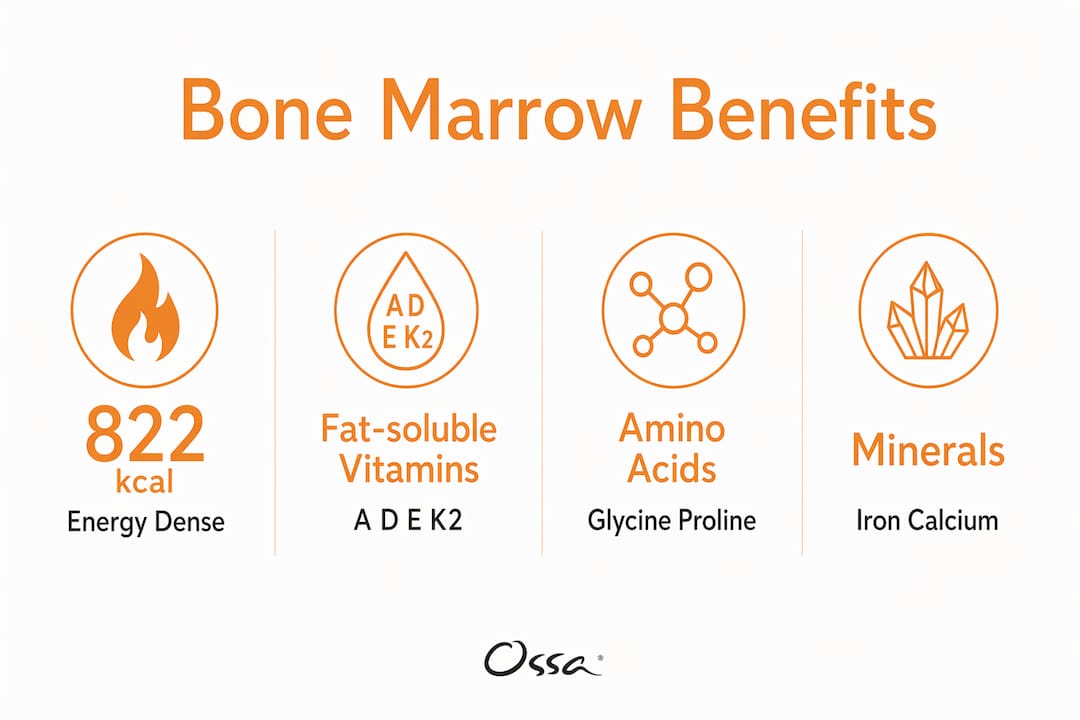
Bone marrow nutrition refers to the full nutrient profile of bone marrow, a fatty tissue found inside large animal bones that is rich in healthy fats, fat-soluble vitamins, and collagen precursors. A 100g serving of raw beef bone marrow delivers approximately 822 kcal and 88.9g of fat, making it one of the most energy-dense whole foods available. That caloric density is not a reason to avoid it. It is a reason to understand it properly before adding it to your diet.
What is bone marrow nutrition and what does it contain?
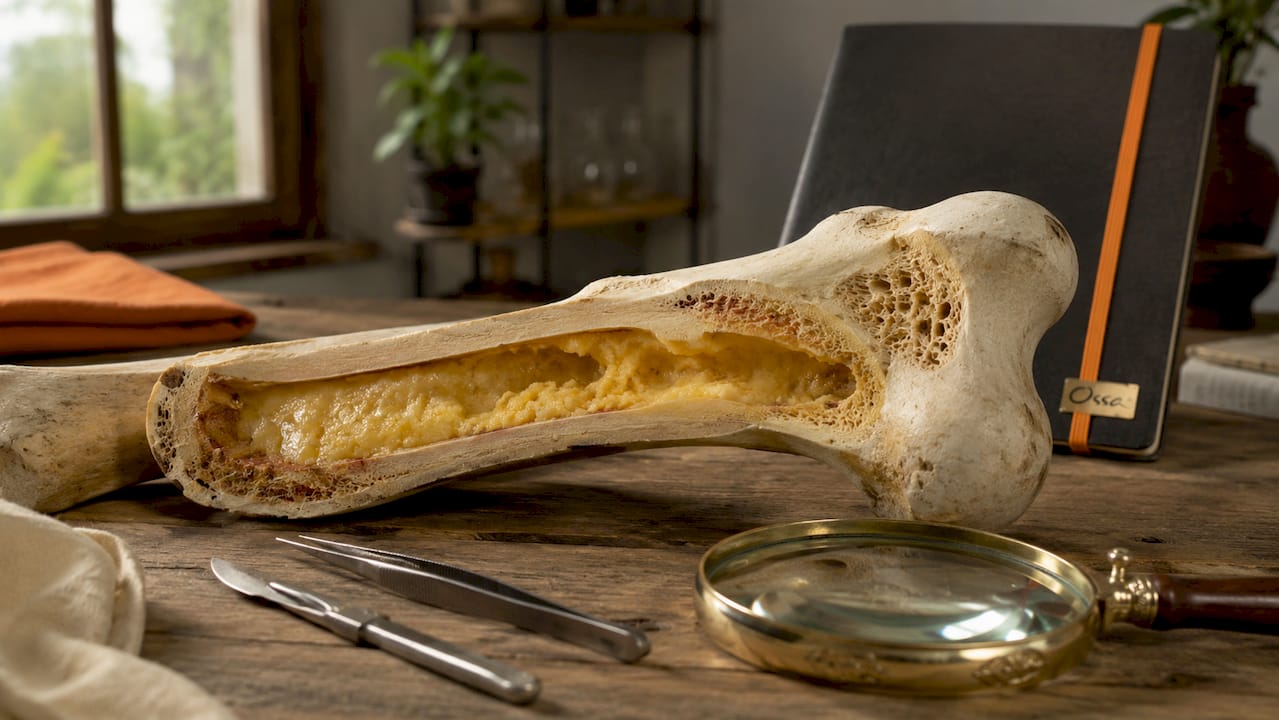
Bone marrow is the soft, fatty tissue that fills the hollow cavities of large bones, most commonly femur and tibia bones from cattle. Its nutritional identity is defined by lipids, not protein. Raw beef bone marrow contains just 3.2g of protein per 100g, which places it firmly in the category of a fat source rather than a protein food. This distinction matters enormously for anyone planning meals around it.
The fat content is where the nutritional value of bone marrow becomes genuinely interesting. It contains long-chain fatty acids, including a proportion of omega-3 fatty acids, alongside monounsaturated fats. These are the same fat types associated with cardiovascular and metabolic health when consumed as part of a varied diet.
Fat-soluble vitamins
Bone marrow contains fat-soluble vitamins A, D, E, and K2, and beef marrow shows higher vitamin D levels than fortified milk per 100g serving. That comparison is striking. Most people associate vitamin D with supplements or sunshine, not food. Vitamin K2, which supports calcium metabolism and bone mineralisation, is also present and is notably absent from most plant foods.
Collagen precursors
Bone marrow supplies the amino acids glycine and proline, which are key building blocks for collagen synthesis. These are not collagen themselves. They are the raw materials your body uses to produce it. This distinction is worth holding onto, because it prevents unrealistic expectations about what bone marrow can and cannot do.
Minerals and adiponectin
Bone marrow contains modest amounts of iron and calcium. These are not present in quantities that make it a primary mineral source. More unusual is the presence of adiponectin, a hormone produced by fat cells that plays a role in insulin sensitivity and metabolic regulation. Adiponectin improves insulin sensitivity and is associated with reduced cardiovascular and metabolic risk when consumed as part of a moderate diet.
Pro Tip: Bone marrow is best understood as a fat and micronutrient source, not a protein food. Plan your meals accordingly and pair it with protein-rich foods like eggs, legumes, or lean meat.
| Nutrient | Per 100g (raw beef bone marrow) |
|---|---|
| Calories | ~822 kcal |
| Total fat | ~88.9g |
| Protein | ~3.2g |
| Vitamins | A, D, E, K2 |
| Key amino acids | Glycine, proline |
| Hormone present | Adiponectin |
What are the health benefits of bone marrow?
The bone marrow health benefits most supported by current evidence centre on its fat-soluble vitamin content, collagen precursor supply, and metabolic effects. These are meaningful but specific. Bone marrow is not a cure-all, and the London Osteoporosis Clinic notes it should be seen as a dietary addition within a balanced approach rather than a clinical treatment for bone loss.
Collagen and joint support
Glycine and proline from bone marrow support the body’s collagen production, which benefits skin elasticity, joint cartilage, and connective tissue. These amino acids support collagen synthesis but do not directly rebuild bone. The nuance matters. People with osteoporosis or joint conditions should not rely on bone marrow as a treatment. They can, however, include it as one part of a nutrient-dense diet.
Immune and metabolic function
Vitamins A and D both play roles in immune regulation. Vitamin D deficiency is widespread in the UK, particularly through the winter months, and dietary sources are limited. Bone marrow offers a genuine food-based contribution. Adiponectin adds a metabolic dimension. Its presence links bone marrow consumption to improved insulin sensitivity, which is relevant for anyone managing blood sugar or metabolic health.
Anti-inflammatory potential
Bone marrow contains compounds with anti-inflammatory properties, including certain fatty acids. The Weston A. Price Foundation notes that best nutritional results occur when marrow is combined with antioxidants, supporting a balanced dietary approach. Pairing bone marrow with leafy greens or berries helps counteract the pro-inflammatory potential of its saturated fat content.
The risks: saturated fat and cholesterol
Bone marrow contains high saturated fat and approximately 300mg of cholesterol per 100g. That level of cholesterol in a single serving is significant. People with cardiovascular conditions or elevated LDL cholesterol should consult a GP before adding bone marrow regularly to their diet.
“High cholesterol and saturated fat content means marrow should be enjoyed occasionally in small portions for cardiovascular health.” — Tua Saúde
Pro Tip: A typical serving of roasted bone marrow is 30–50g, not 100g. Keeping portions to this size reduces saturated fat intake while still delivering meaningful amounts of vitamins and collagen precursors.
-
Supports collagen production via glycine and proline
-
Provides vitamins A, D, E, and K2 in bioavailable form
-
Contributes adiponectin for metabolic and insulin support
-
Contains anti-inflammatory fatty acids
-
High saturated fat and cholesterol require moderation
-
Not a substitute for clinical bone or joint treatment
How to consume bone marrow as part of a balanced diet
The two most common ways to consume bone marrow are roasted marrow bones and bone broth. Both methods are effective, but they deliver slightly different nutritional profiles. Roasted marrow is eaten directly from the bone and retains its full fat content. Bone broth extracts collagen precursors, minerals, and glycosaminoglycans into liquid form, making them easier to absorb.
Slow cooking for maximum benefit
Slow cooking marrow bones increases bioavailability of beneficial compounds like glucosamine and chondroitin that are not fully accessible in raw marrow. A low, slow simmer over 12–24 hours extracts the most from the bone. This is the method behind traditional bone broth, and it is the reason broth has been a staple of restorative cooking across cultures for centuries.
Post-extraction, marrow fat is susceptible to oxidation. Consume broth or extracted marrow promptly, or store it in an airtight container in the refrigerator for no more than three to four days. Freezing is the better option for longer storage.
Sourcing quality marrow
Grass-fed, organic marrow bones produce a better nutritional result than conventionally farmed alternatives. Grass-fed cattle have higher omega-3 concentrations in their fat, which improves the fatty acid ratio of the marrow. Organic certification also reduces the risk of antibiotic and hormone residues. Ossa Organic sources from free-range, organic animals for exactly this reason.
Practical serving suggestions
-
Roast split femur bones at 220°C for 15–20 minutes and serve on sourdough toast with a pinch of sea salt and fresh parsley.
-
Add bone broth to soups, stews, or risottos as a cooking liquid to incorporate marrow nutrients without a large fat load.
-
Use bone broth as a base for morning drinks, adding a squeeze of lemon and fresh ginger for an antioxidant pairing.
-
Pair roasted marrow with a side of dressed rocket or spinach to balance saturated fat with fibre and antioxidants.
-
Blend bone broth into sauces or gravies to increase nutrient density without altering flavour significantly.
Pro Tip: Treat bone marrow as a condiment or flavour base rather than a main portion. A 30–50g serving alongside fibre-rich vegetables gives you the nutritional benefits without excess saturated fat.
Bone broth recipes that incorporate marrow are a practical way to build these habits without overhauling your entire diet. The gut health benefits of organic bone broth extend beyond marrow alone, making broth one of the most efficient ways to access these nutrients daily.
How does bone marrow compare with other animal foods?
Bone marrow occupies a distinct nutritional position. Compared to muscle meat and organ meats, bone marrow provides unique fatty acid profiles and fat-soluble vitamins but is lower in protein and minerals. This makes it a functional fat source rather than a protein food, which is a category most people do not have a clear mental model for.
Liver, for example, is the most nutrient-dense organ meat by most measures. It delivers high concentrations of vitamin A, B12, iron, and zinc alongside meaningful protein. Bone marrow cannot compete with liver on protein or mineral density. Where marrow stands apart is in its fat-soluble vitamin K2 content and its collagen precursor amino acids, both of which liver provides in smaller quantities.
Muscle meat such as beef steak or chicken breast is primarily a protein source with modest fat content. It contains no meaningful collagen precursors and lower concentrations of fat-soluble vitamins. Bone marrow and muscle meat are complementary rather than interchangeable.
Collagen supplements, typically sold as hydrolysed collagen powder, deliver glycine and proline in concentrated form. They do not, however, provide fat-soluble vitamins, adiponectin, or the fatty acid profile that whole bone marrow offers. Supplements isolate one function. Whole food delivers several simultaneously.
| Food | Primary nutrient | Collagen precursors | Fat-soluble vitamins | Protein |
|---|---|---|---|---|
| Bone marrow | Healthy fats | High (glycine, proline) | A, D, E, K2 | Low |
| Liver | Vitamins and minerals | Low | A, D, B12 | High |
| Muscle meat | Protein | Very low | Minimal | High |
| Collagen supplement | Glycine, proline | High | None | Moderate |
| Bone broth | Glycosaminoglycans | Moderate | Trace | Low |
-
Bone marrow is the primary dietary source of vitamin K2 in animal foods
-
Liver outperforms marrow on protein, iron, and B vitamins
-
Muscle meat and marrow are nutritionally complementary, not competitive
-
Collagen supplements replicate only the amino acid function of marrow, not its full profile
Key takeaways
Bone marrow nutrition is defined by its fat and micronutrient content, not protein, making it most effective as a dietary addition paired with fibre-rich, antioxidant-dense foods.
| Point | Details |
|---|---|
| Energy-dense fat source | A 100g serving delivers around 822 kcal and 88.9g fat, so portion size matters. |
| Fat-soluble vitamins | Bone marrow provides vitamins A, D, E, and K2, with vitamin D levels exceeding fortified milk. |
| Collagen precursors | Glycine and proline support collagen synthesis but do not directly rebuild bone or joints. |
| Moderation required | High saturated fat and approximately 300mg cholesterol per 100g means small, occasional servings are advisable. |
| Slow cooking increases benefit | Simmering marrow bones releases glucosamine and chondroitin for better absorption than raw consumption. |
Bone marrow in a real diet: what actually works
At Ossa Organic, we came to bone marrow through bone broth, not the other way around. The founder discovered the benefits of slow-cooked broth during pregnancy and built an entire food philosophy around it. That experience shapes how we think about bone marrow nutrition today.
The most common mistake people make is treating bone marrow as a superfood to consume in large amounts. It is not that. It is a nutrient-dense addition that works best in small, regular quantities alongside a varied diet. A tablespoon of marrow in a broth, or a 30–50g roasted portion once or twice a week, is far more useful than a large serving that pushes saturated fat intake beyond sensible limits.
The ancestral wisdom here is worth taking seriously. Traditional cultures across Europe, Asia, and the Americas used bone marrow as a flavour base and nutritional supplement, not a primary food. They cooked it slowly, paired it with vegetables and grains, and consumed it as part of a broader dietary pattern. That instinct was nutritionally sound, even without the science to explain it.
The modern tendency to either dismiss animal fats entirely or consume them without restraint misses the point. Bone marrow sits in a specific nutritional niche. It delivers fat-soluble vitamins and collagen precursors that are genuinely difficult to obtain elsewhere in meaningful quantities. Used thoughtfully, it earns its place in a health-conscious kitchen.
— Ossa Organic
Ossa Organic bone broth: marrow nutrition made simple
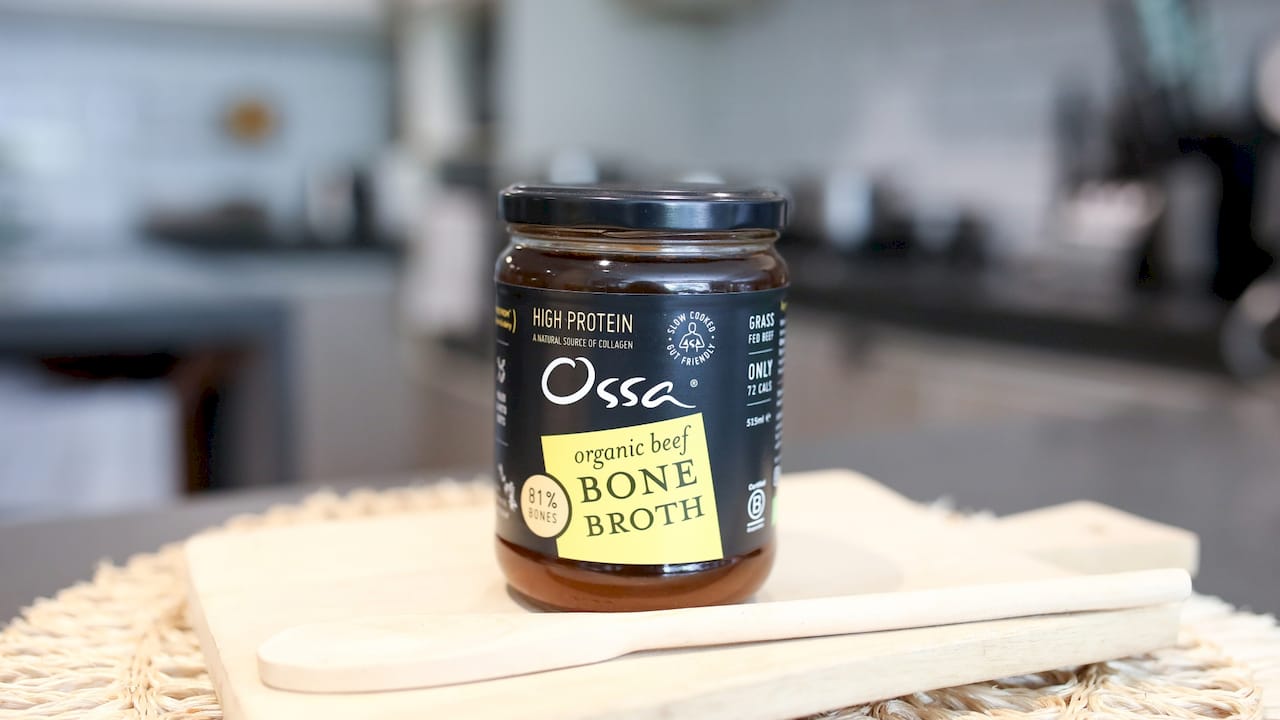
Ossa Organic’s organic bone broths are slow-cooked from free-range, organic bones, which means the collagen precursors, fat-soluble vitamins, and glycosaminoglycans from bone marrow are already extracted and ready to use. The organic beef bone broth and organic chicken bone broth are shelf-stable and require no preparation beyond opening. For anyone who wants the nutritional benefits of bone marrow without the time investment of slow cooking at home, these broths are a direct and practical solution. Full guidance on how to use bone broth in daily cooking is available on the Ossa Organic website.
FAQ
What is bone marrow nutrition in simple terms?
Bone marrow nutrition refers to the nutrients found in the fatty tissue inside animal bones, primarily healthy fats, fat-soluble vitamins A, D, E, and K2, and collagen precursor amino acids glycine and proline.
Is bone marrow healthy to eat regularly?
Bone marrow is healthy in moderate portions, typically 30–50g, but its high saturated fat and cholesterol content means daily large servings are not advisable for most people.
What is the difference between bone marrow and bone broth nutrition?
Bone marrow is the raw fatty tissue eaten directly from the bone, while bone broth is a slow-cooked liquid that extracts collagen precursors and glycosaminoglycans. Broth delivers lower fat and more glycosaminoglycans; marrow delivers more fat-soluble vitamins.
How does bone marrow support collagen production?
Bone marrow contains glycine and proline, which are the amino acids the body uses to synthesise collagen. They support collagen production but do not directly rebuild bone or cartilage on their own.
What foods pair well with bone marrow?
Pairing bone marrow with antioxidant-rich foods such as leafy greens, berries, or herbs helps balance its saturated fat content and supports better nutrient absorption overall.