

Cart
0
TL;DR:
- Buying local organic ingredients requires verified certification and reliable directories. Seasonal planning and preservation help ensure fresh, nutritious, and cost-effective produce year-round.
Sourcing organic ingredients locally means choosing certified produce grown near you, verified by recognised standards such as the Soil Association or USDA, and bought through trusted local markets, farm shops, and specialist retailers. The difference between buying local and buying certified organic is not always obvious. This guide explains what genuine organic certification requires, where to find verified suppliers near you, how to shop around the seasons, and how to avoid the label confusion that catches many families out.
What does it mean to source organic ingredients locally?
Organic certification is a process, not a marketing claim. Third-party verification is required under federal and UK rules before any product can carry an organic label. That distinction matters because a farm can be local without being certified, and a certified product can be imported rather than local. True local organic sourcing requires both criteria to be met.
Understanding certification tiers
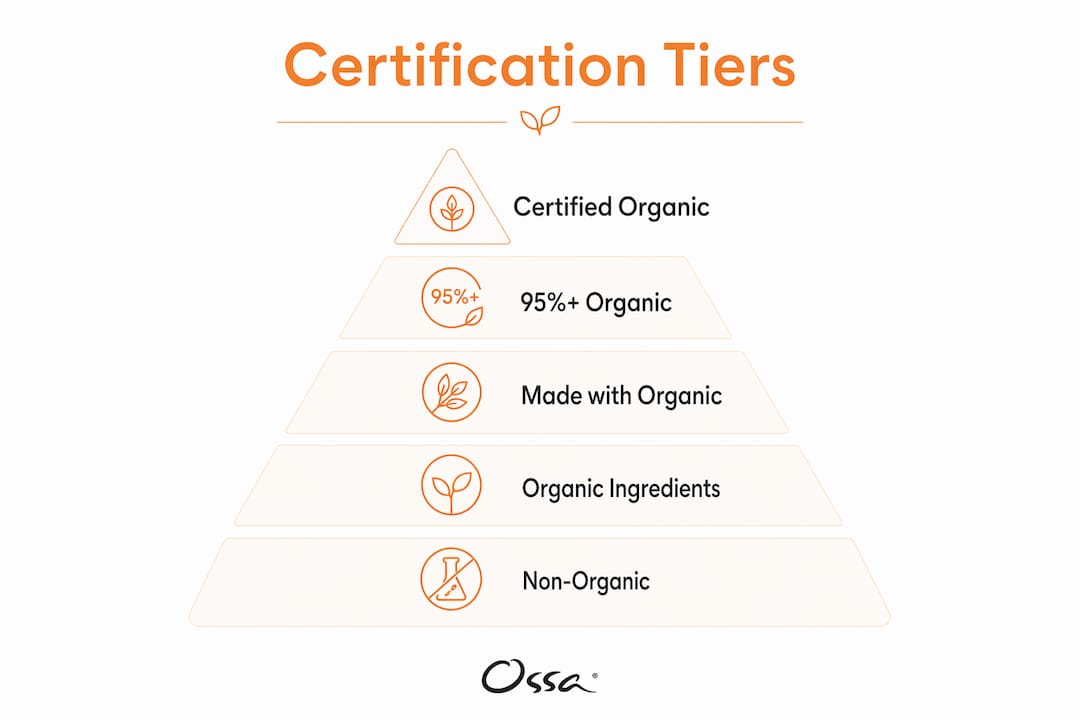
The USDA defines four distinct label tiers based on ingredient percentages. A product labelled “Organic” must contain ≥95% certified organic ingredients. A product labelled “Made with Organic” must contain ≥70% certified organic ingredients. Below 70%, no organic claim is permitted on the principal display panel. These tiers mean that not all products carrying the word “organic” are equivalent.
In the UK, the Soil Association sets the certification standard most consumers recognise. Soil Association certification covers farming practices, animal welfare, and ingredient sourcing. Products carrying the Soil Association symbol have passed independent audits, not simply declared themselves organic.
The term “locally grown organic foods” is widely used but not a regulated phrase. A product can be marketed as locally grown without any certification. Always look for the Soil Association symbol in the UK, or the USDA organic seal, rather than relying on descriptive wording alone.
-
“Organic”: ≥95% certified organic ingredients. Full USDA or Soil Association seal permitted.
-
“Made with Organic”: ≥70% certified organic ingredients. Partial claim permitted.
-
Below 70%: No organic claim on the front label. Ingredients may still be listed individually.
-
“Locally grown”: No regulated standard. Requires separate verification.
-
Soil Association certified: UK standard covering farming method, animal welfare, and traceability.
Pro Tip: When buying from a farm shop or market stall, ask the seller for their certification registration number. You can verify it instantly using the Soil Association supplier search, which is updated nightly.
Where to find organic suppliers nearby
The Soil Association provides two practical tools for finding certified organic retailers in the UK. The first is a searchable retailer map covering independent retailers, farm gates, and farm shops. The second is a supplier search database, updated nightly, that lets you search by operator name, registration number, product type, or locality. Both tools surface certified sellers that supermarkets routinely miss.
Using farmers markets effectively
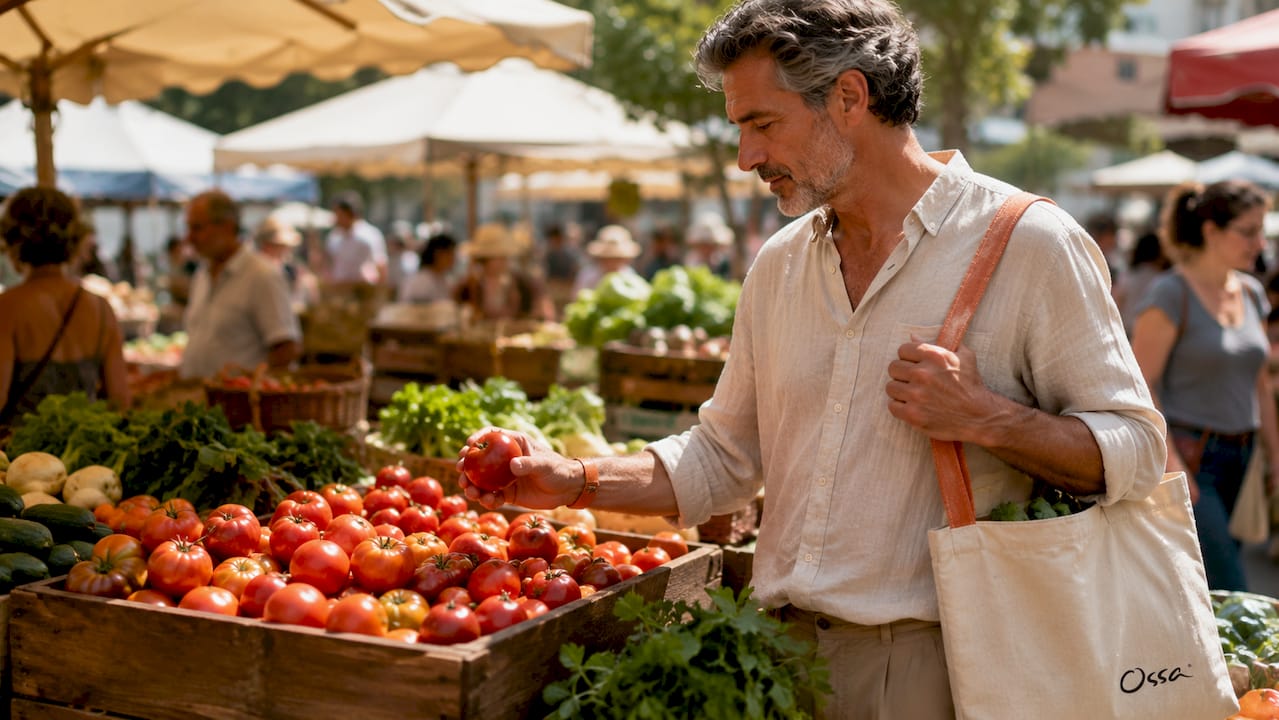
Farmers markets are the most direct route to locally grown organic foods. Producers sell their own goods, which means you can ask questions directly about growing methods, certification status, and harvest dates. GrowNYC notes that savvy market shoppers treat the market as a discovery exercise rather than a fixed shopping list. That mindset shift produces better results because availability changes week by week.
Farm shops attached to certified organic holdings are a reliable alternative when markets are not running. Many operate box schemes or click-and-collect services, making it straightforward to buy local organic produce on a regular schedule without travelling to a market each week.
Online directories complement physical visits. The Soil Association supplier search allows you to filter by product category and location, then links directly to supplier websites for contact details. This makes it practical to identify and approach producers before visiting in person.
| Source | Best for | Certification check |
|---|---|---|
| Soil Association retailer map | Finding certified shops and farm gates near you | Certification confirmed by Soil Association listing |
| Farmers markets | Fresh seasonal produce, direct producer contact | Ask for registration number, verify via Soil Association |
| Farm shops and box schemes | Regular weekly supply, wider product range | Check Soil Association or USDA seal on packaging |
| Online supplier directories | Researching producers before visiting | Soil Association supplier search updated nightly |
Pro Tip: Use a two-step approach. Locate the nearest farm shops and markets first, then confirm their certified organic status via the Soil Association supplier search before committing to regular purchases.
How to plan your shopping around the seasons
Seasonal availability is the defining feature of local organic produce. Certified organic farms do not use synthetic forcing agents, so crops follow natural growing cycles. Planning your meals around what is currently abundant is not a compromise. It is the most reliable way to access the freshest, most nutritious produce at the best price.
The following steps make seasonal shopping practical rather than guesswork:
-
Learn your local growing calendar. Spring brings salad leaves, asparagus, and early brassicas. Summer delivers courgettes, tomatoes, and soft fruits. Autumn is the season for root vegetables, squashes, and apples. Winter centres on stored roots, brassicas, and hardy greens. Knowing this cycle means you arrive at the market with realistic expectations.
-
Shift from lists to curiosity. Experienced market shoppers abandon fixed shopping lists and buy what looks best on the day. This approach reduces waste because you buy what is genuinely fresh rather than what you planned to buy three days earlier.
-
Preserve at peak season. Freezing, jamming, fermenting, and pickling extend the availability of seasonal organic produce well beyond harvest months. Tomatoes frozen in august are far superior to imported tomatoes bought in january. Ossa Organic’s guide to preserving seasonal produce covers practical methods for home preservation.
-
Adapt your meal planning weekly. Build meals around what you have bought rather than shopping to a fixed recipe list. This reduces the likelihood of produce going to waste and encourages variety across the year.
-
Build relationships with producers. Regular customers at farm shops and markets often receive advance notice of gluts, which creates opportunities to buy in bulk and preserve at low cost.
Pro Tip: Freeze soft fruits and blanched vegetables in single layers on trays before bagging them. This prevents clumping and makes it easy to use small quantities without defrosting the whole batch.
Common mistakes when buying local organic produce
Label confusion is the most frequent error families make when they begin to buy local organic produce. The word “organic” on a handwritten market sign carries no legal weight. Only a certified seal from the Soil Association, the USDA, or an equivalent recognised body confirms that the product meets verified organic farming practices.
-
Accepting verbal assurances without verification. A producer may genuinely farm without pesticides but remain uncertified. That product cannot legally be sold as organic. Verification via the Soil Association supplier search takes under two minutes.
-
Assuming local means organic. Local and organic are independent attributes. A local farm may use conventional methods. An organic product may be produced hundreds of miles away. Both labels must be checked separately.
-
Prioritising organic over local when both matter. When certified organic local produce is unavailable, the practical choice depends on your priorities. Certified organic from a more distant source guarantees farming standards. Local but uncertified produce supports your regional economy but offers no guarantee on pesticide use. Neither choice is wrong, but the trade-off should be conscious.
-
Ignoring certification tiers on processed products. A jar of organic pasta sauce labelled “Made with Organic” contains at least 70% certified organic ingredients, not 100%. Understanding certification tier rules prevents disappointment when reading ingredient lists.
-
Failing to account for supply fluctuations. Certified organic farms are subject to weather, crop failure, and seasonal gaps. Building flexibility into your meal planning and maintaining a small preserved stock reduces the impact of short supply periods.
Sustainable ingredient sourcing at the local level requires patience and a willingness to adapt. The payoff is access to produce that supports fewer pesticides, more wildlife, and higher animal welfare standards compared with conventional supply chains. That outcome is worth the additional effort of verification.
Key takeaways
Sourcing organic ingredients locally requires verified certification, reliable local directories, and a seasonal shopping mindset to deliver genuine health and environmental benefits.
| Point | Details |
|---|---|
| Certification is non-negotiable | Always verify organic claims using the Soil Association supplier search or USDA seal before buying. |
| Local and organic are separate labels | A farm can be local without certification; check both attributes independently. |
| Soil Association tools simplify sourcing | The retailer map and nightly-updated supplier search identify certified sellers near you. |
| Seasonal planning reduces waste and cost | Buy what is fresh and abundant, then preserve surplus for use through winter months. |
| Label tiers affect product quality | “Organic” means ≥95% certified ingredients; “Made with Organic” means ≥70%. Know the difference. |
Ossa Organic’s view on local organic sourcing
The families who get the most from local organic sourcing are not the ones with the most time. They are the ones who stopped treating certification as a bureaucratic detail and started treating it as the whole point.
At Ossa Organic, we have sourced certified organic ingredients since the beginning. The process taught us something that took longer than expected to fully accept: the gap between a product that looks organic and one that is certified organic is enormous. Handwritten signs, friendly producers, and attractive packaging are not substitutes for a Soil Association registration number. We check ours. You should check yours.
The environmental argument for buying certified organic locally is not abstract. Demand for organic farms drives measurable reductions in pesticide use, more wildlife in field margins, and higher animal welfare standards. Every purchase from a certified local producer reinforces those outcomes. Every purchase from an uncertified seller, however well-intentioned, does not.
The seasonal eating habit is the one most families resist and then, once adopted, refuse to give up. Eating what is genuinely in season from a certified local source is not a restriction. It is a return to the way food was always meant to work. The produce tastes better, stores better, and costs less at peak harvest. Preservation extends that quality through the months when local supply is thin.
Our honest recommendation is to start with the Soil Association retailer map, identify two or three certified sources near you, and build from there. Do not wait until you have a perfect system. A good enough system that you actually use is worth far more than a perfect one you are still planning.
— Ossa Organic
Ossa Organic’s certified organic range
Ossa Organic sources certified organic ingredients for every product in its range. The organic beef bone broth and organic chicken bone broth are made using slow-cooked, sustainably sourced bones from certified organic farms. Both products carry full certification and are free from preservatives and artificial additives. For families building a diet around organic ingredients and gut health, Ossa Organic’s broths offer a practical, certified addition to daily meals. They work as a base for soups and stews, as a warm drink, or as a cooking liquid for grains and pulses. Full product details and stockist information are available at ossaorganic.com.
FAQ
What is the difference between local and certified organic?
Local refers to where food is grown; organic refers to how it is grown and verified. A product must carry a recognised certification seal, such as the Soil Association symbol, to be sold legally as organic.
How do I verify that a supplier is genuinely certified organic?
Use the Soil Association supplier search, which is updated nightly. Search by the supplier’s name, registration number, or locality to confirm their certified status before buying.
Where are the best places to buy local organic produce in the UK?
Certified farm shops, farm gate sales, and farmers markets are the most direct sources. The Soil Association’s retailer map lists verified independent retailers across the UK, including sellers not stocked by supermarkets.
What does “Made with Organic” mean on a label?
“Made with Organic” means the product contains at least 70% certified organic ingredients but less than 95%. It is a lower certification tier than the full “Organic” label, which requires at least 95% certified organic content.
How can I access organic produce out of season?
Buy in bulk during peak harvest and preserve using freezing, jamming, or pickling. Experienced seasonal shoppers freeze and preserve surplus produce to maintain access to certified organic ingredients throughout the year.