

Cart
0
TL;DR:
- Organic paleo pantry staples include certified organic fats, grain-free flours, flavour enhancers, and nuts and seeds. Using the USDA organic seal ensures ingredient purity, and stacking items in two passes helps avoid waste and spoilage. Bone broth is a core staple that supports gut health and enhances soup and stew flavors.
Organic paleo pantry staples are natural, grain-free, additive-free ingredients that meet certified organic standards and form the backbone of authentic paleo cooking. The paleo diet framework excludes grains, legumes, refined sugars, and dairy, which means your pantry needs a specific set of replacements that actually work in the kitchen. The USDA’s National Organic Programme regulates organic claims under 7 CFR Part 205, requiring at least 95% certified organic ingredients before any product can carry the organic seal. That distinction matters because “natural” and “clean” are marketing terms with no legal definition. The categories that matter most are fats and oils, grain-free flours, flavour enhancers, and organic nuts and seeds.
1. What are the essential organic fats and oils for a paleo pantry?
Fats and oils are the foundation of paleo cooking, and choosing the right ones for each method makes a real difference to both flavour and nutrition. The top organic cooking fats for a paleo pantry are extra virgin olive oil, organic coconut oil, avocado oil, ghee, and beef tallow.
Each fat has a different smoke point, which determines how it performs under heat:
-
Extra virgin olive oil suits low to medium heat cooking and cold dressings. Its smoke point sits around 190°C, so it is not ideal for high-heat roasting.
-
Organic coconut oil handles medium heat well and adds a mild sweetness to baked goods and stir-fries. Choose unrefined for flavour, refined for a neutral taste.
-
Avocado oil has one of the highest smoke points of any plant oil, making it the best choice for roasting and searing at high temperatures.
-
Ghee is clarified butter with the milk solids removed, which makes it paleo-compliant and suitable for high-heat cooking. It stores well at room temperature.
-
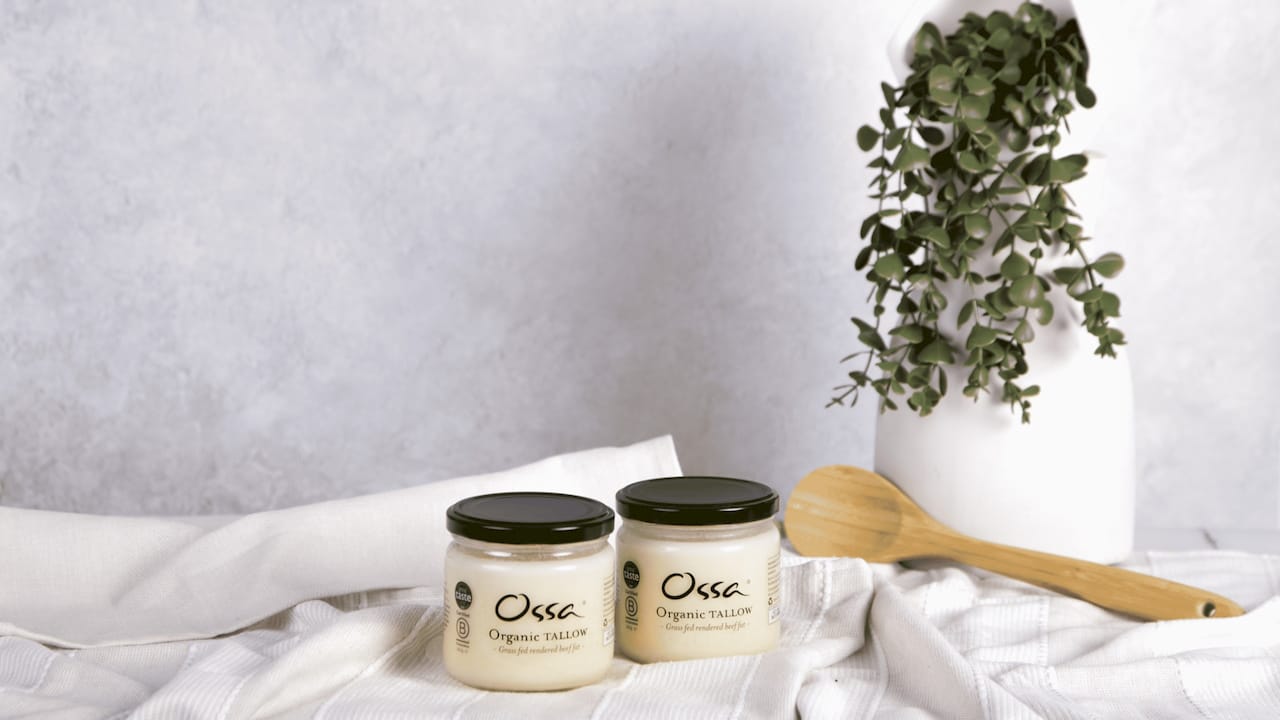
Grass-fed beef tallow is a traditional cooking fat with excellent heat stability. Ossa Organic produces grass-fed beef tallow from British cows raised to organic standards, making it a reliable choice for roasting and frying.
Store all liquid oils away from direct light and heat to slow oxidation. Coconut oil and ghee are shelf-stable at room temperature. Avocado oil and olive oil keep best in a cool, dark cupboard.
Pro Tip: Ghee is the paleo-compliant choice over butter because the milk solids that trigger dairy sensitivities have been removed. Look for certified organic ghee from grass-fed sources for the best nutritional profile.
2. Which organic paleo flours and starches should be stocked?
Grain-free baking requires a different approach to flour. Almond flour and coconut flour are the two core organic paleo flours, but they behave very differently and cannot be swapped in equal measures.
Almond flour is made from blanched, ground almonds and produces a moist, dense crumb. It works well in biscuits, pancakes, and crusts. Almond meal is coarser and less refined, giving a slightly grittier texture. Both are widely available in certified organic versions.
Coconut flour is highly absorbent. It soaks up far more liquid than almond flour, so recipes written for coconut flour are not interchangeable with almond flour recipes on a 1:1 basis. A general guide is to use roughly one quarter of the amount of coconut flour compared to almond flour, and to increase eggs or liquid accordingly.
| Flour | Texture | Liquid absorption | Best uses |
|---|---|---|---|
| Almond flour | Fine, moist | Low | Biscuits, pancakes, tart bases |
| Coconut flour | Light, dry | Very high | Muffins, flatbreads, coatings |
| Arrowroot starch | Smooth | Medium | Sauces, gravies, binding |
| Tapioca starch | Chewy | Medium | Binders, crispy coatings |
Arrowroot starch and tapioca starch serve as binders and thickeners in paleo cooking. They replace cornflour in sauces and gravies and improve the texture of baked goods. Both are naturally gluten-free pantry basics and widely available in organic form.
For leavening, bicarbonate of soda (baking soda) is paleo-compliant. Cream of tartar activates it without the additives found in conventional baking powder. Many commercial baking powders contain cornstarch, which is not paleo, so checking the label is non-negotiable.
Pro Tip: Buy almond flour and coconut flour in sealed organic packs and store them in the fridge or freezer after opening. The high fat content in almond flour makes it prone to going rancid at room temperature.
3. What non-flour organic ingredients enhance flavour in a paleo pantry?
Flavour is where many paleo kitchens fall short. The right organic condiments and spices turn simple ingredients into satisfying meals without relying on soy sauce, refined sugar, or artificial additives.
Coconut aminos is the definitive paleo substitute for soy sauce. It is made from fermented coconut sap and sea salt, delivering an umami flavour that is organic, gluten-free, and lower in sodium than conventional soy sauce. Use it in marinades, stir-fries, and dressings.
Apple cider vinegar is another core staple. It adds acidity to dressings, balances rich meat dishes, and works as a tenderiser in marinades. Choose raw, unfiltered, organic versions with the mother intact for the best quality.
Organic bone broth adds depth and nutrition to soups, stews, and sauces. Ossa Organic’s organic beef bone broth is a certified organic ambient option that supports gut health and brings genuine umami to paleo cooking.
| Flavour staple | Paleo-compliant | Replaces |
|---|---|---|
| Coconut aminos | Yes | Soy sauce, tamari |
| Apple cider vinegar | Yes | White wine vinegar, malt vinegar |
| Organic bone broth | Yes | Stock cubes with additives |
| Raw honey (small amounts) | Yes | Refined sugar in dressings |
Herbs and spices are the most overlooked part of a paleo pantry. Garlic powder, turmeric, cumin, smoked paprika, and cinnamon cover the majority of everyday cooking needs. The caution here is spice blends. Many pre-mixed blends contain maltodextrin, sugar, or anti-caking agents. Buying single certified organic spices and blending them yourself removes that risk entirely.
Pro Tip: Certified organic spices are not just a purity choice. Organic certification also limits the use of irradiation in processing, which is commonly applied to conventional spices and can reduce their volatile oil content and flavour intensity.
4. Which organic nuts, seeds, and nut butters are paleo pantry essentials?
Organic nuts and seeds provide fat, protein, and texture across snacks, breakfasts, and main meals. The key paleo-compliant options are almonds, walnuts, chia seeds, and pumpkin seeds, all available in certified organic form.
The organic certification matters here because conventional nuts are frequently treated with fumigants and pesticide residues that concentrate in the fat-rich flesh. Buying raw or dry-roasted without added oils, salt, or sugar is the standard to hold.
Core nuts and seeds for a paleo pantry:
-
Almonds: Versatile for snacking, baking, and making almond milk. High in vitamin E and magnesium.
-
Walnuts: Rich in omega-3 fatty acids. Best eaten raw to preserve their fat quality.
-
Chia seeds: Absorb liquid to form a gel, making them useful as egg replacers in some paleo baking and as a base for overnight puddings.
-
Pumpkin seeds: High in zinc and magnesium. Work well toasted and scattered over salads or soups.
Almond butter and cashew butter are the paleo-compliant nut butter choices. Both should contain only nuts and possibly a small amount of salt. Avoid versions with added palm oil, sugar, or emulsifiers.
Peanuts and peanut butter are not paleo. Peanuts are legumes, not nuts, and the paleo framework excludes legumes entirely. This catches many people out when they first transition to paleo eating.
Pro Tip: Store organic nut butters upside down in the fridge after opening. This slows oil separation and keeps the texture consistent for longer without stirring.
5. How to build your organic paleo pantry without overcomplicating it
Paleo pantry success depends on a small number of repeatable bases, not an exhaustive list of specialist ingredients. The practical approach is to stock in two passes: flavour bases and cooking fats first, then baking ingredients once you have identified the recipes you actually cook.
The first pass covers extra virgin olive oil, avocado oil, ghee or tallow, coconut aminos, apple cider vinegar, organic bone broth, and a core set of single-ingredient spices. These items cover the majority of everyday paleo meals without requiring any specialist knowledge.
The second pass adds almond flour, coconut flour, arrowroot starch, bicarbonate of soda, and cream of tartar. These are only worth buying in quantity once you know which baked goods you will make regularly. Coconut flour in particular has a long shelf life when sealed, but almond flour turns over quickly in an active baking kitchen.
Retail sales of organic fruit and vegetables topped $21.5 billion in 2021, reflecting the scale of consumer demand for certified organic products. That demand has driven wider availability of organic paleo staples in mainstream supermarkets, not just specialist health food shops.
Reading labels carefully remains the most important habit. The USDA organic seal is federally regulated and legally enforceable. Terms like “natural,” “clean,” or “free from” carry no equivalent legal weight and should not be treated as equivalent to certified organic.
6. Organic paleo pantry staples: a quick-reference checklist
A well-stocked paleo pantry covers four functional categories. The list below covers the core items across each one.
Fats and oils:
-
Extra virgin olive oil (certified organic)
-
Organic coconut oil (unrefined)
-
Avocado oil (certified organic)
-
Ghee (grass-fed, organic)
-
Beef tallow (grass-fed, organic)
Grain-free flours and starches:
-
Blanched almond flour (certified organic)
-
Coconut flour (certified organic)
-
Arrowroot starch
-
Tapioca starch
-
Bicarbonate of soda
-
Cream of tartar
Flavour enhancers and condiments:
-
Coconut aminos
-
Apple cider vinegar (raw, unfiltered, organic)
-
Organic bone broth (beef or chicken)
-
Single-ingredient organic spices: garlic powder, turmeric, cumin, smoked paprika, cinnamon
Nuts, seeds, and nut butters:
-
Organic almonds (raw)
-
Organic walnuts (raw)
-
Organic chia seeds
-
Organic pumpkin seeds
-
Almond butter (organic, no additives)
-
Cashew butter (organic, no additives)
This list covers the gluten-free pantry basics that support the widest range of paleo recipes. It is not exhaustive, but it is the set of ingredients that appears most consistently across paleo meal prep guides and everyday cooking.
Key takeaways
A well-stocked organic paleo pantry requires certified organic fats, grain-free flours, clean flavour enhancers, and additive-free nuts and seeds, all verified by the USDA organic seal rather than unregulated marketing terms.
| Point | Details |
|---|---|
| Prioritise certified organic | The USDA organic seal is legally regulated; “natural” and “clean” labels are not equivalent. |
| Stock fats by smoke point | Match each fat to its cooking method: avocado oil for high heat, olive oil for low heat and dressings. |
| Coconut flour is not a 1:1 swap | Use roughly one quarter the amount of coconut flour compared to almond flour and adjust liquid accordingly. |
| Coconut aminos replaces soy sauce | It is organic, gluten-free, and lower in sodium, making it the standard paleo seasoning substitute. |
| Two-pass stocking method | Buy flavour bases and cooking fats first, then add baking ingredients once you know your recipes. |
Ossa Organic’s view on building a paleo pantry that lasts
The most common mistake I see is treating a paleo pantry as a one-time project. People buy everything at once, half of it goes stale, and the cost puts them off continuing. The two-pass method changes that entirely. Start with the fats, the bone broth, the coconut aminos, and the spices. Cook with those for a few weeks. Then add the baking ingredients once you know which recipes you will actually repeat.
The second thing I feel strongly about is the organic certification question. Ossa Organic was built on the principle that the ingredients in your food should be exactly what the label says they are. The USDA organic seal is the only standard that carries legal weight. “Natural” means nothing in regulatory terms. When you are buying almond flour or coconut oil, the certified organic label is the only one worth trusting.
Bone broth sits at the centre of our pantry at Ossa Organic. It is not just a flavour enhancer. It supports gut health, adds genuine depth to paleo soups and stews, and replaces the additive-laden stock cubes that most kitchens rely on. If there is one organic pantry item that earns its shelf space every single week, it is a good certified organic bone broth.
Rotate your spices every six months. Single-ingredient certified organic spices lose potency faster than you expect, and stale spices are one of the main reasons paleo meals feel flat. Buy smaller quantities more frequently rather than large jars that sit unused.
— Ossa Organic
Ossa Organic’s organic paleo range
Ossa Organic produces certified organic bone broths that fit directly into the paleo pantry framework described above. The organic beef bone broth is an ambient 515ml option made from grass-fed British cattle, carrying full organic certification and no additives. For chicken-based cooking, the organic chicken bone broth is available in a convenient bulk format. Both products replace conventional stock in soups, stews, sauces, and marinades. The Ossa Organic chilled essentials bundle brings together bone broths and cooking staples for those building a paleo kitchen from scratch. Every product in the range is made without preservatives, artificial flavourings, or unnatural ingredients.
FAQ
What are organic paleo pantry staples?
Organic paleo pantry staples are certified organic, grain-free, additive-free ingredients that support paleo cooking. They include fats and oils, grain-free flours, flavour enhancers like coconut aminos, and raw nuts and seeds.
Is coconut flour the same as almond flour in paleo baking?
No. Coconut flour absorbs far more liquid than almond flour and cannot be substituted on a 1:1 basis. Use roughly one quarter the amount of coconut flour and increase eggs or liquid in the recipe.
Why are peanuts excluded from a paleo pantry?
Peanuts are legumes, not nuts, and the paleo framework excludes all legumes. Almond butter and cashew butter are the paleo-compliant nut butter alternatives.
What does USDA organic certification mean for pantry ingredients?
The USDA organic seal means a product contains at least 95% certified organic ingredients, verified under the National Organic Programme. Terms like “natural” or “clean” carry no equivalent legal standard.
Is bone broth a paleo pantry staple?
Yes. Organic bone broth is a core paleo pantry item that supports gut health and replaces additive-laden stock cubes in soups, stews, and sauces.