

Cart
0
TL;DR:
- Bone broth contains collagen, but the amount varies based on preparation and ingredients. Simmering bones with acid for at least 24 hours releases more collagen, which can be checked by the broth’s gel consistency when refrigerated. Collagen supplements offer more consistent and higher doses for targeted health benefits than homemade or commercial bone broth.
Bone broth is a collagen-rich liquid made by simmering animal bones and connective tissue for an extended period. The process extracts collagen proteins directly from the bones, cartilage, and tendons, converting them into gelatin and collagen peptides. Does bone broth have collagen? Yes, but the amount varies considerably depending on how it is made, which bones are used, and how long it simmers. Understanding this variability is the key to using bone broth effectively for skin, joint, and gut health.
How is collagen extracted from bone broth?
Collagen extraction in bone broth depends on time, temperature, acidity, and the type of bones used. BBC Food confirms that bone broth is made by simmering animal bones for 24 hours or more with an acidic ingredient, typically apple cider vinegar, to break down connective tissue collagen into gelatin and peptides. The acid weakens the protein bonds in collagen, releasing it into the liquid. Without acid and sufficient time, the yield drops significantly.

The type of bones matters as much as the method. Knuckle bones, feet, trotters, and oxtail are rich in cartilage and connective tissue, which means they release more collagen than marrow bones alone. Beef bones generally produce a thicker, more gelatinous broth than chicken bones, though chicken feet are exceptionally high in collagen relative to their size. Mixing bone types gives a broader amino acid profile and a higher overall collagen yield.
The most reliable sign of good collagen extraction is simple: the broth gels when refrigerated. If your broth sets like loose jelly in the fridge, it contains a meaningful amount of gelatin, which is the cooked form of collagen. A watery broth that stays liquid when cold has extracted far less. This gel test is the most practical quality check available without laboratory analysis.
Collagen content by broth type and simmer time
| Broth type | Simmer time | Approximate collagen content | Gels when cold? |
|---|---|---|---|
| Homemade beef bone broth | 24+ hours | Up to 12 g per cup | Yes |
| Homemade chicken bone broth | 12–24 hours | 4–8 g per cup | Usually |
| Store-bought bone broth | Varies | 1–6 g per cup | Sometimes |
| Regular chicken stock | Under 4 hours | Under 2 g per cup | Rarely |
| Vegetable stock | N/A | 0 g per cup | No |
Pro Tip: Add a tablespoon of apple cider vinegar per litre of water at the start of simmering. It costs almost nothing and measurably improves collagen extraction from the bones.
How much collagen is in bone broth vs collagen supplements?
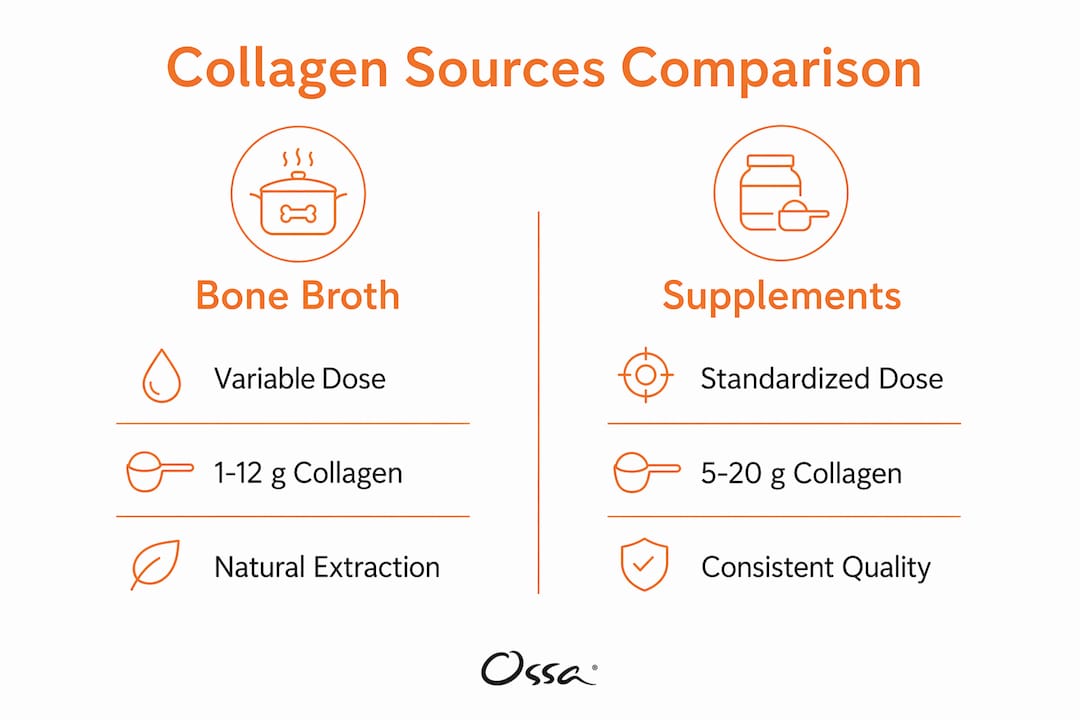
Collagen content in bone broth varies widely, and that variability is the central challenge for anyone using it for therapeutic purposes. Verywell Health reports that a typical cup of bone broth contains roughly 1–6 grams of collagen, while collagen supplements offer more consistent dosing, often 5–10 grams or more per serving. The range in bone broth reflects differences in preparation, bone quality, and simmer time. A carefully made homemade broth can reach the higher end; many commercial products sit at the lower end.
Store-bought bone broths present a particular challenge. ConsumerLab testing of commercial bone broths found collagen per cup ranged from 1 to 6 grams, with only some products meeting quality standards. Labelling in this category is inconsistent, and the word “bone broth” on a carton does not guarantee a high collagen content. ZOE notes that many commercial bone broths lack sufficient collagen to deliver the therapeutic skin or joint benefits often associated with the product.
Collagen supplements, by contrast, provide a standardised dose in every serving. Verywell Health confirms that this standardisation makes supplements more predictable for specific health outcomes. That said, bone broth offers nutritional value beyond collagen alone. Verywell Health also reports that bone broth contains around 9 grams of protein per cup, higher than chicken stock at 6 grams, with much of that protein coming from collagen and gelatin. Bone broth also contains glucosamine, chondroitin, and minerals that supplements do not provide.
Bone broth vs collagen supplements: a direct comparison
| Factor | Bone broth | Collagen supplement |
|---|---|---|
| Collagen per serving | 1–12 g (variable) | 5–20 g (consistent) |
| Protein per cup | ~9 g | Varies by product |
| Additional nutrients | Glucosamine, chondroitin, minerals | Typically collagen only |
| Dose consistency | Low | High |
| Preparation required | Yes (or purchase) | No |
| Whole food source | Yes | No |
Pro Tip: If you are using bone broth specifically for skin or joint support, track how much you consume daily. Consistency of intake matters more than any single large serving.
What happens to collagen after you drink bone broth?
Collagen from bone broth does not travel intact to your skin or joints. The digestive system breaks it down first. ZOE explains that collagen peptides are digested into individual amino acids, primarily glycine, proline, and hydroxyproline, which the body then uses to synthesise its own collagen where it is needed. The body reassembles these amino acids based on its current nutritional status and repair priorities. Collagen intake alone does not guarantee direct rebuilding of any specific tissue.
This process has important implications for how you think about bone broth collagen benefits:
-
Glycine supports collagen synthesis and also plays a role in sleep quality and liver detoxification.
-
Proline is a key structural component of collagen fibres in skin and cartilage. You can read more about proline and collagen synthesis and how it supports connective tissue health.
-
Hydroxyproline is found almost exclusively in collagen and is used as a marker of collagen breakdown and synthesis in the body.
-
Vitamin C is required for the enzyme that converts proline into hydroxyproline. Without adequate vitamin C, collagen synthesis stalls regardless of amino acid availability.
-
Overall protein intake determines whether the body has sufficient building blocks. Bone broth alone, at 9 grams of protein per cup, is not a complete protein source and works best as part of a varied diet.
The role of amino acids in bone broth extends beyond collagen synthesis. Glycine supports gut lining integrity, which is why bone broth is frequently discussed in the context of gut health as well as skin and joint support. The nutritional value of bone broth is therefore broader than its collagen content alone suggests.
ZOE also highlights that dose is a key factor in outcomes. People regularly underestimate how much collagen peptide intake is needed for a measurable therapeutic effect, and the variable content of bone broth makes consistent dosing difficult to achieve. This is the primary reason collagen supplements outperform bone broth in clinical studies targeting skin elasticity or joint pain specifically.
How to get more collagen from bone broth
Getting meaningful collagen from bone broth requires deliberate choices at every stage, from selecting bones to choosing a product off the shelf.
-
Choose the right bones. Knuckle bones, feet, trotters, and necks contain the most connective tissue. Ask your butcher specifically for collagen-rich cuts. Marrow bones add flavour and fat but contribute less collagen than joint bones.
-
Add acid before simmering. A tablespoon of apple cider vinegar per litre of water helps break down collagen during the cooking process. Add it at the start, not partway through.
-
Simmer for at least 24 hours. Short-simmered stock extracts a fraction of the available collagen. A slow cooker set on low overnight is a practical way to achieve this without supervision.
-
Check for the gel test. Refrigerate a small amount of finished broth. If it sets to a jelly-like consistency, collagen extraction has been successful. If it stays liquid, the yield is low.
-
Pair with vitamin C. Serve bone broth alongside foods rich in vitamin C, such as bell peppers, broccoli, or a squeeze of lemon. Verywell Health confirms that collagen synthesis requires adequate vitamin C to proceed efficiently.
-
Evaluate store-bought options carefully. Look for products that list simmering time, specify the bone types used, and ideally confirm the broth gels when cold. Organic and grass-fed sources tend to produce higher-quality collagen due to the animal’s diet and bone density.
-
Consider supplements for specific goals. If your primary aim is skin elasticity or joint pain reduction, a standardised collagen supplement provides a more reliable dose. Bone broth and supplements are not mutually exclusive. Many people use both, treating broth as a nutritious whole food and supplements as a targeted intervention.
Pro Tip: Collagen in homemade bone broth is almost always higher than in commercial products. If you make it at home, freeze portions in ice cube trays so you always have a concentrated source ready to add to soups, sauces, or rice.
Key takeaways
Bone broth does contain collagen, but preparation method and product quality determine whether the amount is nutritionally meaningful.
| Point | Details |
|---|---|
| Collagen is present in bone broth | Long simmering with acid extracts collagen from connective tissue into gelatin and peptides. |
| Content varies widely | A cup of bone broth contains 1–12 g of collagen depending on bones used and simmer time. |
| Supplements offer more consistency | Collagen supplements provide 5–20 g per serving with standardised dosing for therapeutic goals. |
| Digestion determines benefit | Collagen is broken down into amino acids; vitamin C and overall protein intake govern how much the body reassembles. |
| The gel test is your quality check | Broth that sets like jelly when refrigerated has extracted meaningful collagen; watery broth has not. |
Ossa Organic’s view on bone broth and collagen
The conversation around bone broth and collagen has become noisier in recent years, and much of it oversimplifies what is actually a nuanced nutritional topic. At Ossa Organic, we started making bone broth because we experienced its benefits directly, not because a trend told us to. That experience has given us a clear-eyed view of what it does well and where expectations need to be managed.
The biggest misconception we encounter is that a single daily cup of commercial bone broth will visibly improve skin or resolve joint pain within weeks. The science does not support that claim at those doses. What bone broth does offer is a genuinely nourishing whole food that contributes collagen-derived amino acids, gut-supportive glycine, and minerals in a form the body recognises and uses efficiently. That is worth a great deal, but it is not the same as a therapeutic collagen supplement.
Where we think bone broth earns its place is in the daily nutritional foundation. Consumed consistently, as part of a diet that includes adequate protein, vegetables, and vitamin C-rich foods, it supports the body’s own collagen production rather than replacing it. The distinction matters. You are not delivering collagen to your skin. You are giving your body the raw materials to make its own.
The other point we feel strongly about is quality. A watery, pale commercial broth simmered for two hours bears little resemblance to a properly made bone broth that gels in the fridge. If you are buying rather than making, choose products that are transparent about their process and ingredients. At Ossa Organic, slow cooking and organic sourcing are non-negotiable because they directly affect the nutritional outcome in the cup.
— Ossa Organic
Ossa Organic bone broth for daily collagen support
Ossa Organic produces organic beef and chicken bone broths using slow-simmered, grass-fed and free-range bones. Both broths are made to gel, which confirms meaningful collagen extraction in every batch. The organic beef bone broth comes in a convenient 515ml ambient carton, ready to heat and drink or use in cooking. The organic chicken bone broth offers a lighter option with the same commitment to quality sourcing and preparation. Both are free from preservatives, additives, and anything that does not belong in a traditional broth. For guidance on how to incorporate bone broth into your daily routine, visit the Ossa Organic how-to page.
FAQ
Does bone broth have collagen in it?
Yes. Bone broth contains collagen extracted from animal bones and connective tissue during long simmering. The collagen converts to gelatin and peptides, which are present in the finished broth.
Does beef broth have collagen?
Regular beef broth simmered briefly contains very little collagen. Beef bone broth, made with collagen-rich bones simmered for 24 hours or more with acid, contains a meaningful amount, up to 12 grams per cup when well made.
Is bone broth good for skin?
Bone broth provides amino acids including glycine, proline, and hydroxyproline that the body uses to synthesise collagen in skin. The effect depends on consistent intake, adequate vitamin C, and overall diet quality rather than bone broth alone.
How does collagen come from bone broth?
Collagen is released from bones, cartilage, and connective tissue during extended simmering. Acidic ingredients such as apple cider vinegar accelerate this breakdown, converting structural collagen into gelatin and soluble collagen peptides that remain in the liquid.
Is homemade bone broth higher in collagen than shop-bought?
Homemade bone broth made with collagen-rich bones and simmered for 24 hours or more typically contains more collagen than most commercial products. Store-bought broths range from 1 to 6 grams per cup, while a well-made homemade broth can exceed that range considerably.