
Cart
0
For a broth that gels and nourishes, choose knuckle and joint bones, beef neck, oxtail, and chicken backs or feet. These cartilage-heavy cuts set into a soft jelly once cooled, which is the clearest sign of a mineral and collagen-rich stock. Marrow bones add richness but won’t gel on their own, so pair them rather than rely on them alone.
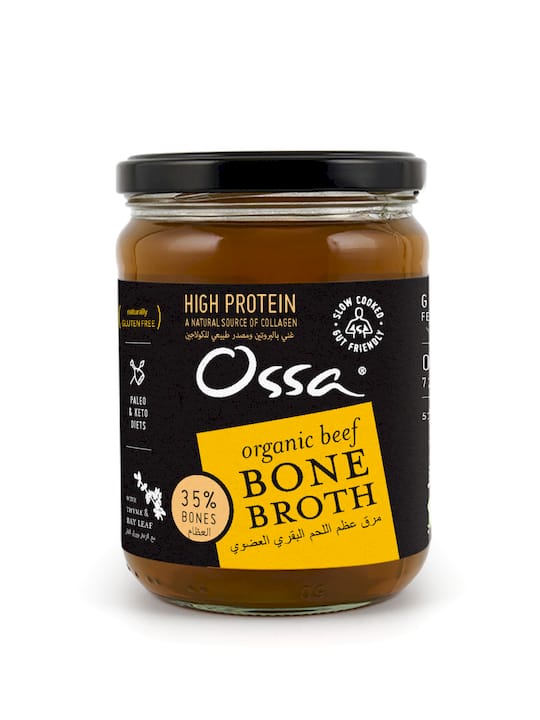
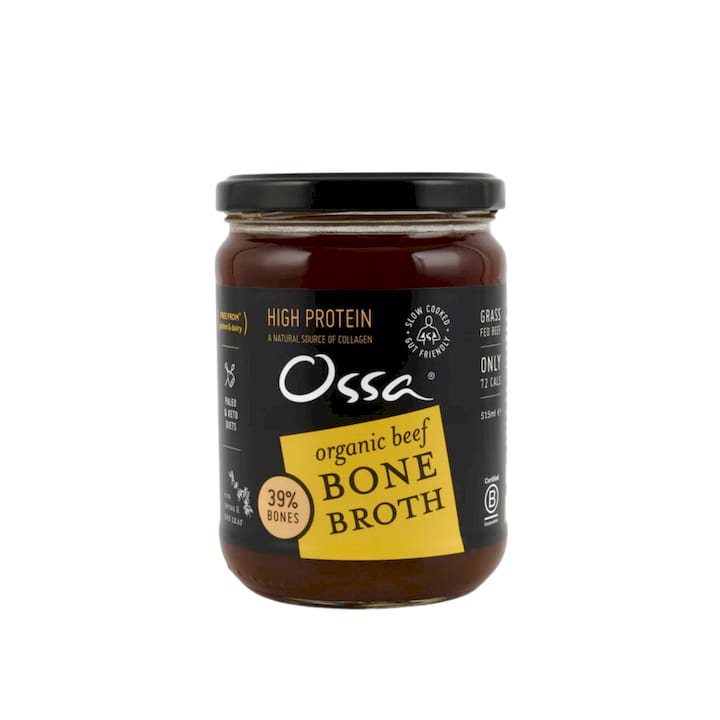
Short on time or bones? A ready-made 1x Organic Beef Bone Broth Ambient 515ml delivers the same gelatin-forward depth without a 24 hour simmer.
-
For gel: knuckles, joints, feet, oxtail
-
For flavour and minerals: marrow, neck, short ribs
-
For a quicker win: chicken backs and carcasses, or a packaged organic broth
A broth that sets like jelly in the fridge has done its job of extracting collagen and minerals properly; a broth that stays liquid usually means too much marrow and not enough cartilage went into the pot.
Key Takeaways
Choosing organic meat cuts for broth comes down to matching cartilage-rich bones with your gel goal and mineral-rich cuts with your flavour goal.
| Point | Details |
|---|---|
| Prioritise cartilage for gel | Knuckle, joint, and feet bones set into a jelly; marrow alone won’t. |
| Match animal to nutrient goal | Chicken leans towards Type II collagen; beef towards iron and zinc. |
| Follow simmer time ranges | Chicken needs several hours and beef needs a longer simmer period for full extraction. |
| Check labels for short ingredient lists | Organic certification and low sodium matter more than marketing claims. |
| Choose Ossa Organic when short on time | Its organic beef and chicken broths replicate the gel and depth of a proper simmer. |
Table of Contents
-
Why the cut you pick changes gel, flavour and nutrient profile
-
How to choose organic bones or a store-bought organic bone broth
-
Reliable quick method and proportions for a gelatinous, nourishing broth
Why the cut you pick changes gel, flavour and nutrient profile
Cartilage and connective tissue break down into gelatin, which sets your broth into that wobbly, spoonable texture; marrow and fat contribute richness and minerals but don’t gel. That single distinction explains most of the confusion first-time broth makers run into. Someone buys a bag of marrow bones expecting a thick, jiggly stock, simmers for a day, and ends up with something glossy but thin. The bones simply weren’t the right kind.
Gelatin, the cooked form of collagen, is what traditional cooks have prized for centuries in slow-cooked stocks, valued for its role in gut lining support and joint comfort. Chicken bones tend to concentrate Type II collagen, which is why chicken broth has long been associated with joint-focused recipes, while beef bones typically run richer in iron and zinc, giving a deeper, more grounding flavour suited to family meals and recovery cooking. Neither is “better.” They do different jobs.
For a child’s soup or a light lunchtime broth, chicken carries flavour without heaviness. For a base you’ll use in stews or a daily gut-support ritual, beef’s mineral density earns its place.
Pro Tip: Mix roughly three parts joint or knuckle bones to one part marrow bone. You get a broth that gels reliably while still carrying that silky, rich mouthfeel marrow is known for.
-
Cartilage/connective tissue (knuckles, feet, necks) → gel
-
Marrow and fat → richness, minerals, mouthfeel
-
Combining both gives structure and depth in one pot
Collagen’s contribution to joint and gut tissue is well established in nutrition circles, and you can read more on collagen’s role in bone health if you want the underlying science.
Cut-by-cut quick guide: what to buy and why
Knuckle and joint bones: best for gel. These are the anchor of any serious broth. High in cartilage, low in meat, they’re what turns a pot of simmering water into something that sets firm once chilled. Ask your butcher for “soup bones” or “joint bones” if knuckles aren’t labelled clearly.
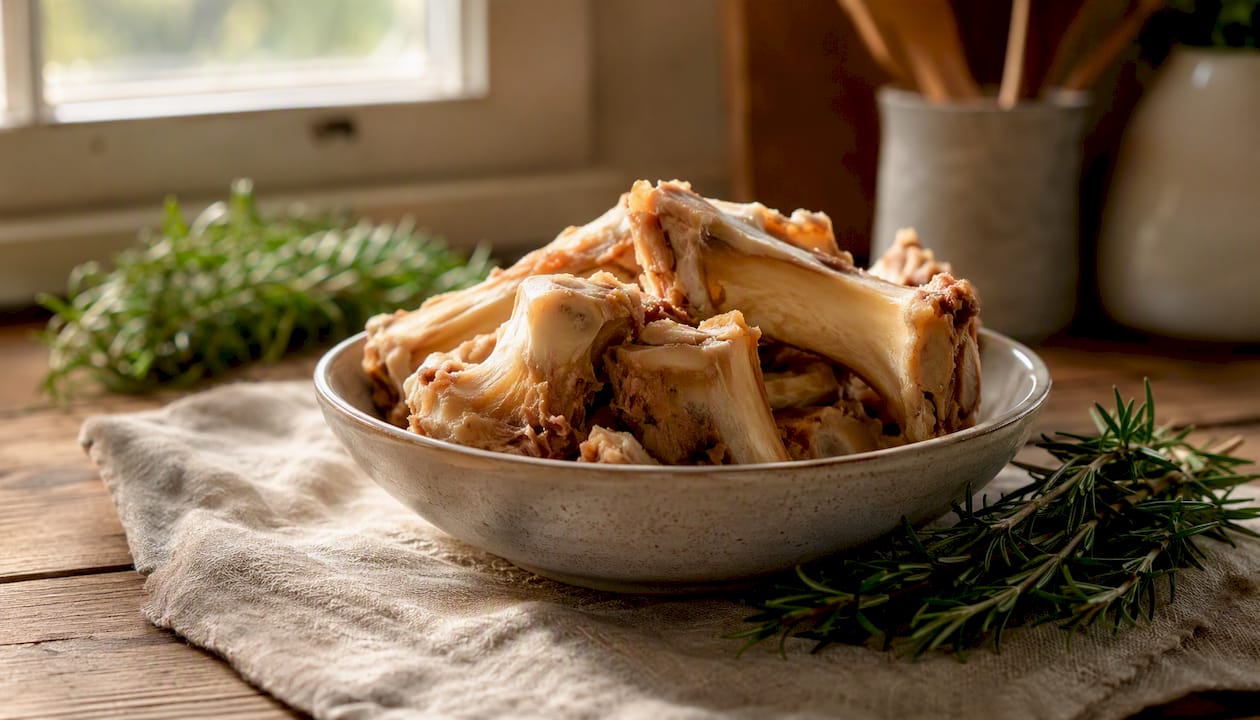
Marrow bones: best for richness, not gel. Split or whole, these add a buttery depth and mineral content but need pairing with cartilage-heavy bones to set properly.
Neck and oxtail: best for combined flavour and gel. Both carry meat, joint tissue, and marrow in one cut, making them a shortcut to a well-rounded broth without needing three separate bags.
Short ribs: best for deep flavour. More meat than joint, short ribs add savoury depth rather than gelatin. Use sparingly alongside knuckle bones.
Chicken backs and carcasses: best for a quick, lighter broth. Roast chicken carcasses saved from Sunday dinner make a genuinely good stock in under half the time beef requires.
Chicken feet: best for gel in poultry broth. Often overlooked, feet are almost pure cartilage and skin, giving chicken broth the same jelly-set that knuckle bones give beef.
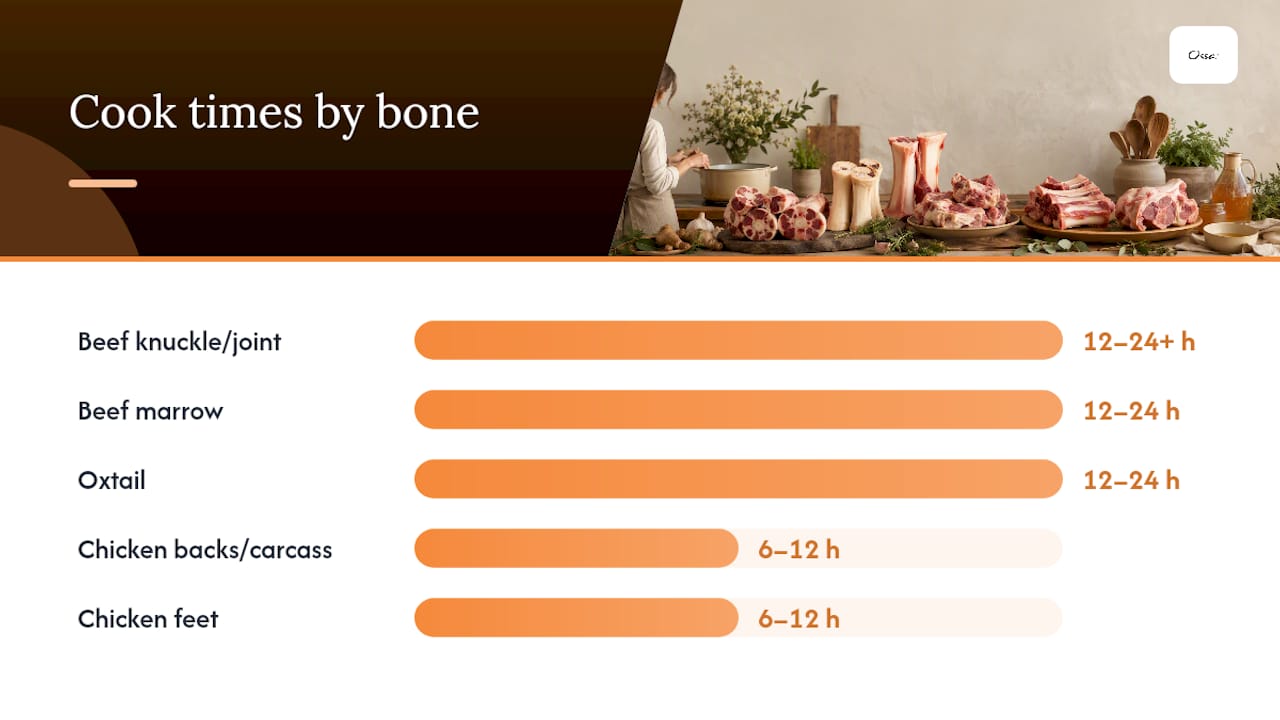
| Comparison | Best for gelling | Best for flavour | Cook time | Practicality |
|---|---|---|---|---|
| Beef knuckle/joint | Excellent | Mild | 12–24+ hours | Widely available, low cost |
| Beef marrow | Poor alone | Rich, buttery | 12–24 hours | Pricier, best combined |
| Oxtail | Good | Very rich | 12–24 hours | Higher cost, worth it occasionally |
| Chicken backs/carcass | Moderate | Light, clean | 6–12 hours | Cheap, often free from roast dinners |
| Chicken feet | Excellent | Neutral | 6–12 hours | Less common, ask your butcher |
Roasting bones before simmering, particularly beef bones, deepens flavour noticeably. It’s an extra 30 minutes that pays off in the final taste. Frozen bones work perfectly well if fresh isn’t available; just add an extra hour or two to your simmer time to account for the lower starting temperature.
How to choose organic bones or a store-bought organic bone broth
The single most important test, whether you’re at a butcher’s counter or reading a label, is organic certification paired with a genuinely short, transparent ingredient list. Anything vague about sourcing is worth walking past.
Buying raw bones:
-
Ask directly: “Are these bones from grass-fed, organic, or regenerative farms?” A butcher who can’t answer is often working from a supply chain they don’t control.
-
Fresh bones should smell clean and faintly mineral, never sour or ammonia-like.
-
Bone colour should be pale to off-white with a moist, slightly translucent cut surface, not grey or dried out.
-
Buying a quarter share from a local farm, or asking for bagged soup bones, often works out cheaper and more transparent than small counter purchases.
Buying packaged broth:
-
Confirm organic certification on the label, not just “natural” or “grass-fed” claims.
-
Check for a short ingredient list: bones, water, vegetables, herbs, salt. Anything with flavourings, gums, or preservatives isn’t the real thing.
-
Choose low or reduced sodium where possible; you can always add salt at home, but you can’t take it out.
-
Note whether it’s ambient (shelf-stable) or refrigerated, and store accordingly.
Pro Tip: If your butcher sells whole animals or shares, ask what happens to the bones from customers who only want the meat. Many will bag and sell them cheaply rather than binning them.
Farms that finish animals on grass rather than grain finishing tend to produce broth with a more rounded, less greasy flavour, something specialist regenerative producers highlight consistently in how they market their beef bones.
Reliable quick method and proportions for a gelatinous, nourishing broth
The simplest ratio to remember: roughly one kilogram of bones to two to three litres of water, simmered for 12 to 24 hours for beef or 6 to 12 hours for chicken.
-
Roast beef bones at 200°C for 30 to 40 minutes for deeper flavour (optional for chicken).
-
Place bones in a large pot or slow cooker and cover with cold water, leaving a couple of centimetres of headroom.
-
Add two tablespoons of apple cider vinegar before heating. The acid helps draw minerals out of the bone during the long simmer.
-
Bring to a gentle simmer, never a rolling boil, and skim off any foam in the first hour.
-
Simmer beef bones 12 to 24 hours, chicken bones 6 to 12 hours, topping up water if it drops below the bones.
-
Strain through a fine sieve, discard the spent bones (or reserve for a second, lighter batch), and cool quickly.
-
Refrigerate for up to five days or freeze in portions for up to six months.
A good batch of beef knuckle bones will often stretch to a second, slightly lighter simmer. It’s a genuinely useful way to get more from a single butcher’s bag.
What most broth advice gets backwards
Most guides treat “bone broth” as one product with one method, when the honest answer is that beef and chicken broths solve different problems and deserve different bones. The conventional advice to just “throw bones in a pot” ignores the single variable that determines whether you get jelly or dishwater: the ratio of cartilage to marrow.
What’s overrated is chasing the priciest cut in the shop, oxtail included, when a mundane bag of knuckle bones will out-gel it every time. What’s underrated is asking your butcher a direct question about sourcing. Most home cooks never do, yet it’s the fastest way to separate a genuinely organic, well-finished animal from marketing language on a label.
If you’re prioritising anything, prioritise the cartilage-to-marrow ratio first and the flavour extras second. Gel is the honest signal that your broth actually did what slow cooking is supposed to do. Everything else, from herbs to roasting, is refinement on top of that foundation.
Ready-made organic broths for when you’re short on time
Not every week allows for a 24 hour simmer, and that’s exactly the gap Ossa Organic’s range was built to fill. The 1x Organic Beef Bone Broth Ambient 515ml carries the same deep, mineral-rich profile you’d get from knuckle and marrow bones simmered properly, without the wait or the washing up. It’s the one to reach for on gut-focused daily rituals or as a stew base.
For a lighter option, or when Type II collagen is the priority, the Organic Free Range Chicken Bone Broth 500ml cooks up quicker in character, ideal for family soups and children’s meals. Prefer ambient storage over fridge space? The 1 x Organic Chicken Bone Broth Ambient 515ml gives you the same chicken profile shelf-stable until you need it.
Every batch is organic certified with a transparent ingredient list, and Ossa Organic is B Corp certified, a commitment founder Catherine Farrant built the business around after discovering bone broth’s benefits during her own pregnancy. Head to the how-to-use guide for ways to work these broths into daily meals.
Useful further reading
-
Types of organic broths: a complete guide for comparing homemade versus packaged options
-
Why real bone broth matters for your health for ingredient transparency insights
-
Local sourcing benefits and challenges for sourcing bones responsibly
-
Product pages: Beef Bone Broth 515ml, Chicken Bone Broth 500ml, Chicken Bone Broth Ambient 515ml
FAQ
What are the best organic cuts for gelatinous broth?
Knuckle bones, joints, oxtail, and chicken feet are the top choices, since their high cartilage content is what makes broth set into a jelly once cooled.
Does marrow make broth gel?
No. Marrow adds richness and minerals but doesn’t contribute gelatin, so it needs pairing with cartilage-rich bones like knuckles for a proper set.
How long should I simmer organic bones for broth?
Beef bones need roughly 12 to 24 hours, while chicken bones typically need 6 to 12 hours for full extraction.
What should I check when buying packaged organic bone broth?
Look for organic certification, a short ingredient list, and low or reduced sodium; Ossa Organic’s beef and chicken broths meet all three without additives.
Can I reuse bones for a second batch of broth?
Yes, good-quality knuckle and joint bones often produce a second, slightly lighter batch, making them excellent value for a family kitchen.