You can bake with collagen peptides, and they survive normal oven temperatures. They are best treated as a small protein add-in, not a flour replacement. Stir about 5 to 15% of the flour weight into the wet ingredients, expect a softer, moister crumb, and keep gelatine and peptides apart in your mind, because they behave very differently.
This guide covers what collagen does in a batter, how much to use, how to mix it without lumps, and how it changes brownies, pancakes, cakes and baked oats. It also covers what you can sensibly expect from eating it.
Ossa Organic
Choose More Natural Ingredients
Ossa Organic makes food with organic ingredients and slow cooking techniques, inspired by tradition rather than trends.
TL;DR
-
Collagen peptides (hydrolysed collagen) dissolve and do not gel. Gelatine sets. Use peptides to add protein and moisture, and gelatine only when you want a set or chewy texture.
-
Start at 5% of flour weight and stay under about 15%. Beyond roughly 20% bakes turn gummy and dense.
-
Whisk the powder into eggs, oil, milk or other wet ingredients first, never straight into dry flour.
-
Brownies, fudgy bakes, pancakes and baked oats suit collagen. Crisp biscuits and crusty bread do not.
-
Collagen is not a complete protein, and the evidence for benefits is modest, so see it as an extra, not a cure.
Table of Contents
Peptides, gelatine and “collagen powder”: know which one you have
Much of the confusion about baking with collagen comes from the word itself. Three different things are sold under similar names, and they do not behave the same way in a mixing bowl.
Collagen peptides are also called hydrolysed collagen or collagen hydrolysate. The collagen has been broken into small protein fragments, which is why the powder dissolves in cold or hot liquid without setting. In a batter it disappears. It adds protein, holds on to moisture and has little effect on how the bake rises.
Gelatine is partly broken-down collagen that has not been taken as far. It dissolves in hot liquid and then sets as it cools. That is useful for set desserts, marshmallows, gummies and some fillings, but it is the wrong choice if you only want to sneak extra protein into a muffin.
Collagen “creamers”, blends and flavoured powders often contain sweeteners, fats or flavours. These change the sweetness and the fat content of a recipe, so read the label before you swap them in.
A quick test: stir a teaspoon of the powder into a little cold water. If it dissolves with no clumping or thickening, it is peptides. If it swells into a lumpy mass and sets after chilling, it is gelatine.

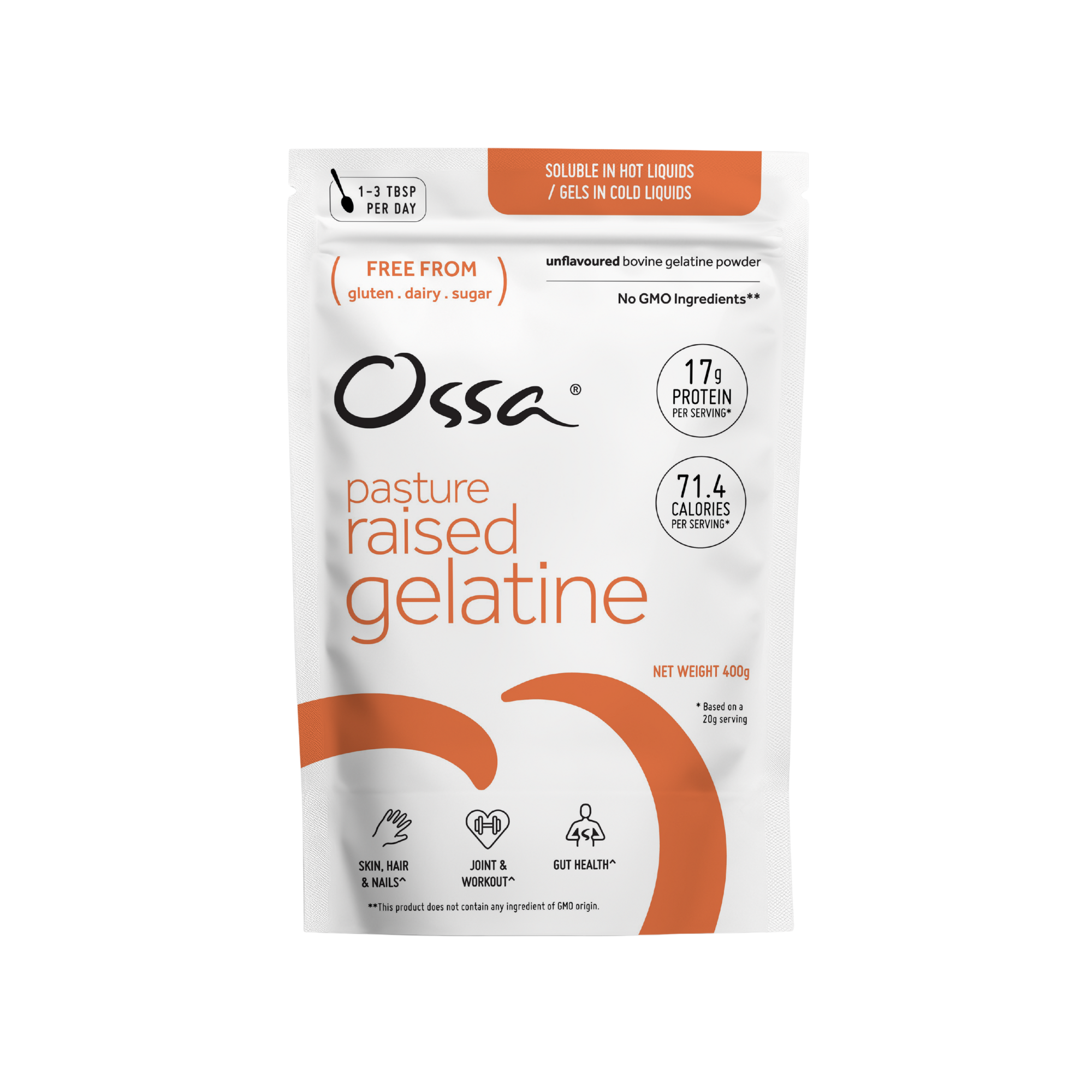
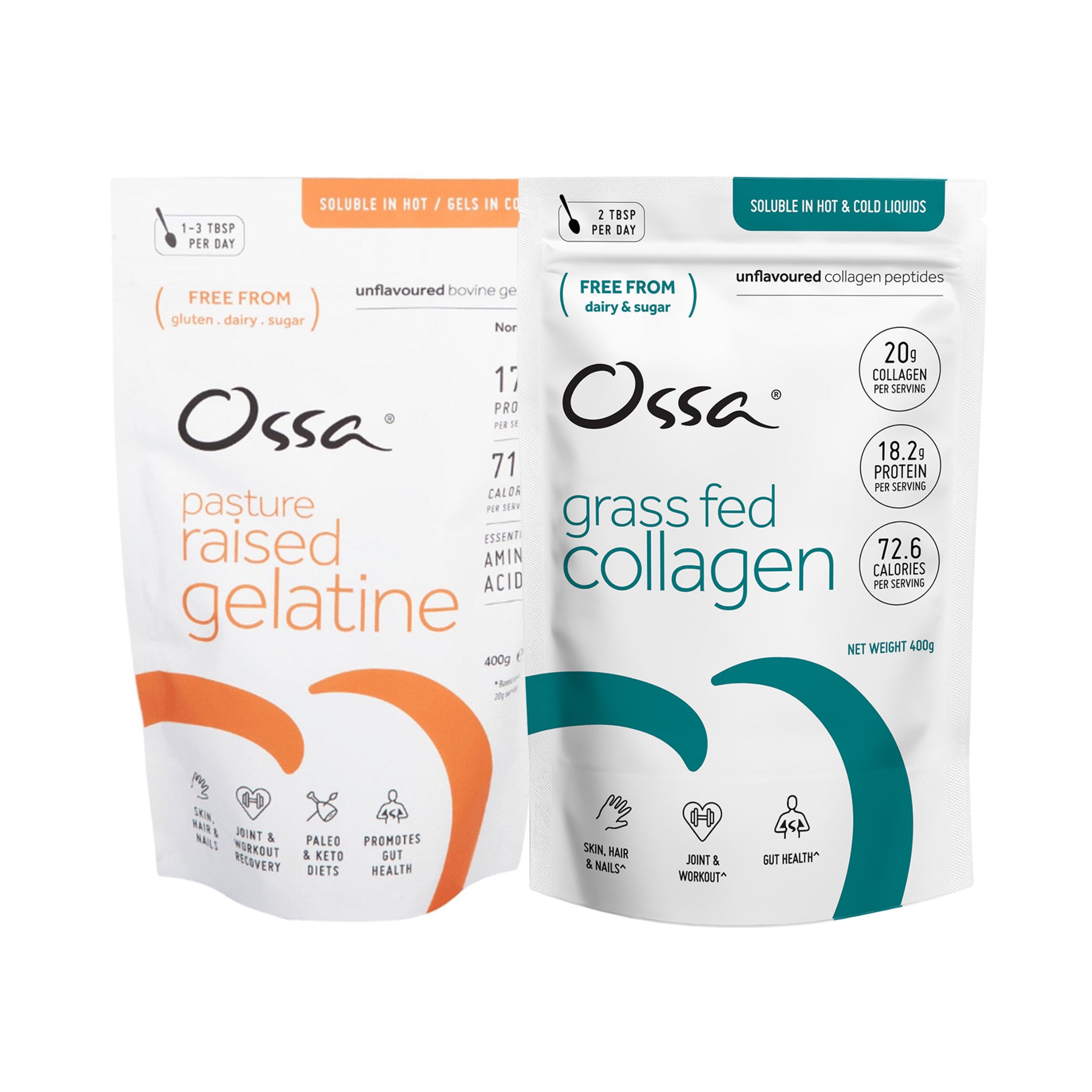
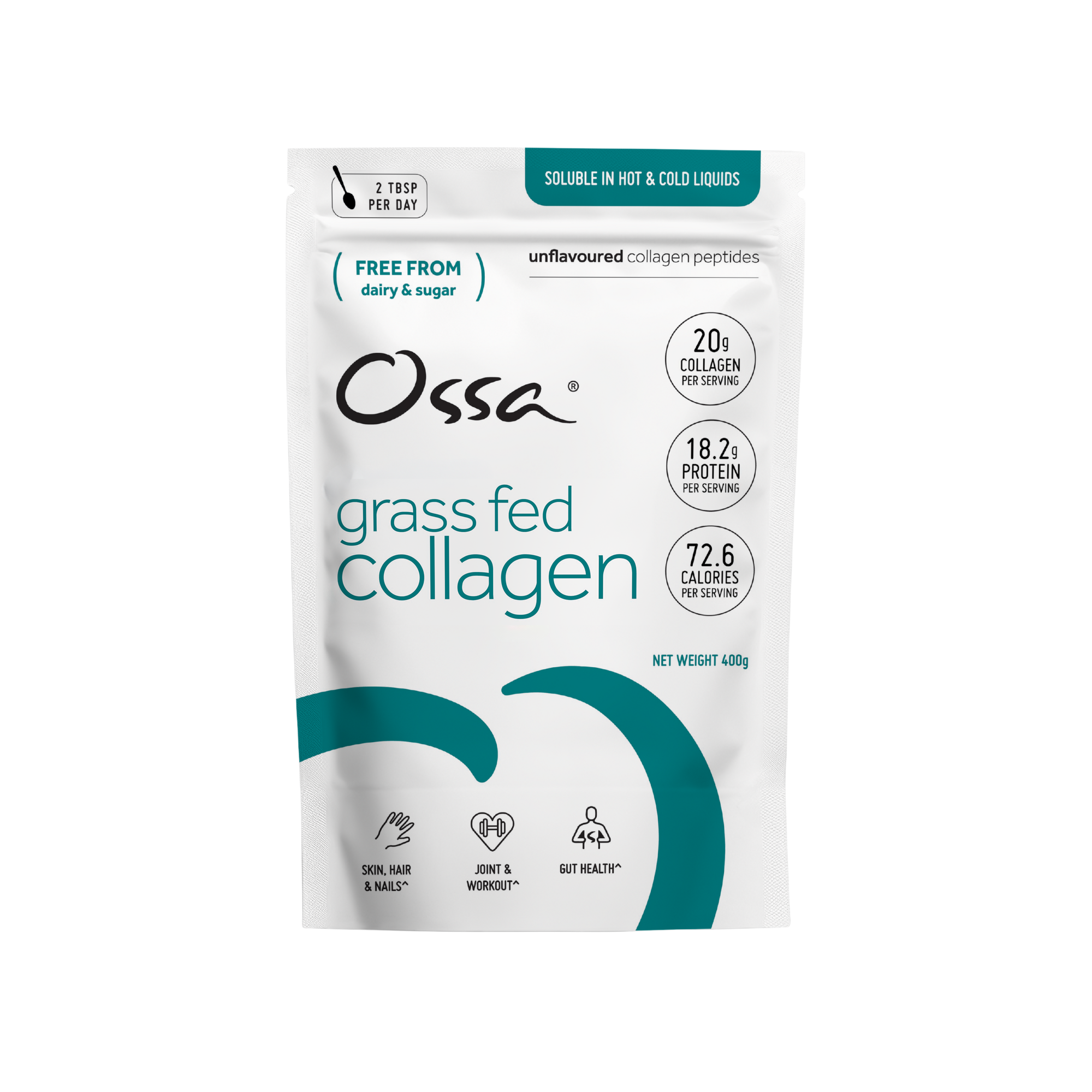
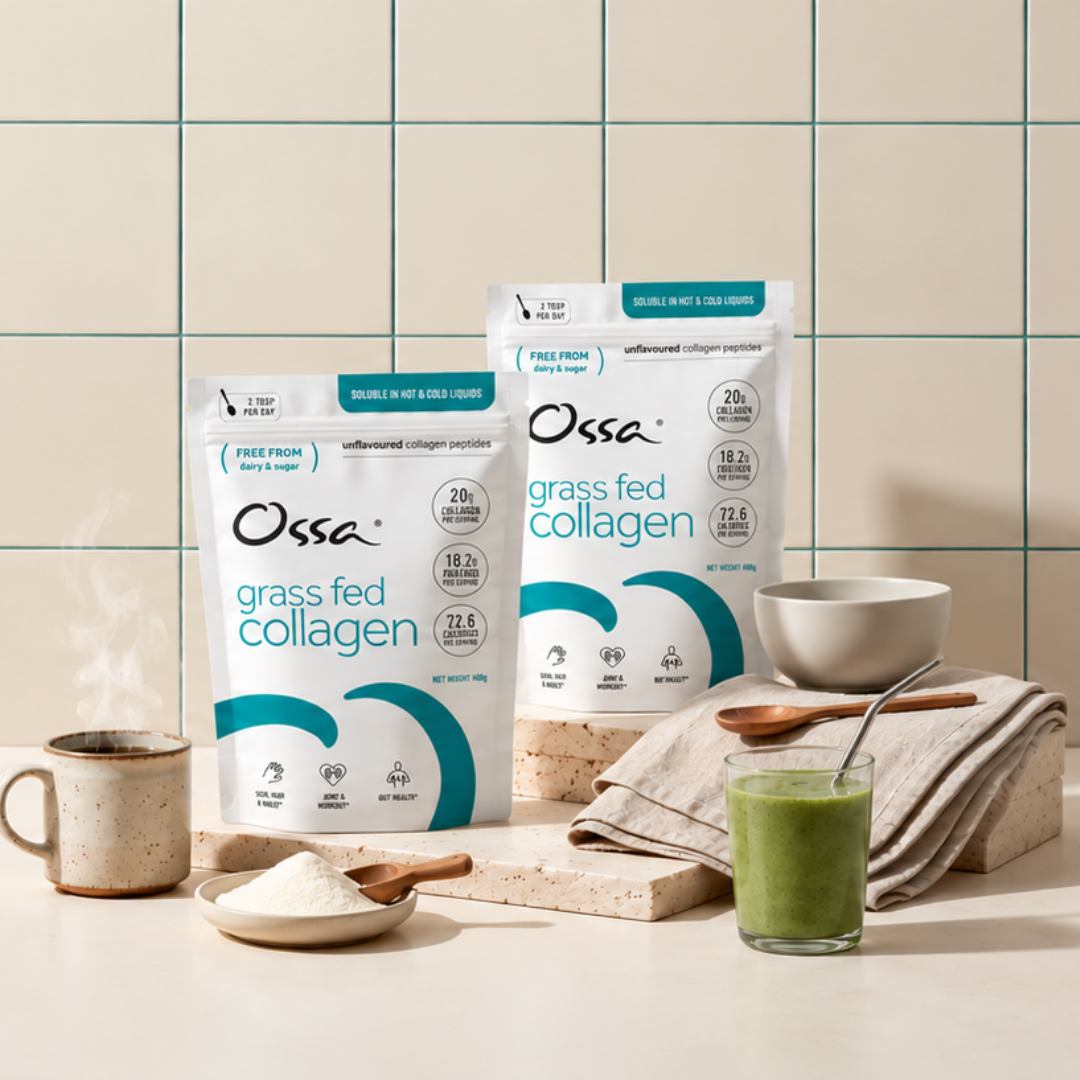
Ossa Organic sells both ingredients, grass fed collagen peptides and pasture raised gelatine, so we get asked regularly which to put in what. The short answer is peptides for adding protein to a bake and gelatine for anything that needs to set.
Does heat destroy collagen?
It is a common worry, and the answer is reassuring for ordinary home baking. Collagen peptides are already broken down into small fragments, and they are described as stable at temperatures well above those used in a domestic oven. Most cakes, brownies and pancakes bake between about 160°C and 200°C (fan ovens a little lower), and a peptide powder in that range stays intact.
Two practical points follow from this.
-
You do not need to add collagen after baking. Stirring it in at the start is fine.
-
Heat will not make the powder “toxic” or useless, but nor does baking make it more effective. The protein you eat is the same whether it went into a smoothie or a loaf.
What heat does change is the texture. Collagen attracts and holds water, so it behaves like a mild moisture keeper. In a long bake that can mean a softer, slightly denser crumb. In a short, hot bake the effect is smaller.
What collagen does to a batter
Flour provides structure through gluten and starch. Eggs provide structure through coagulating protein. Collagen peptides provide neither. They sit in the mix, take up water, and add protein weight.
That has four consequences.
-
Moisture goes up. Collagen binds water as it hydrates, so the crumb feels moister and stays soft for longer. This suits brownies, blondies, banana bread and soft cakes.
-
Crispness goes down. Biscuits, shortbread, crackers and crusty bread rely on dry, low-water structures. Collagen softens them.
-
Structure thins out. Because collagen has no gluten or starch, replacing flour with it weakens the bake. Replace a little and you will not notice. Replace a lot and the result is gummy or heavy.
-
Flavour stays quiet. Unflavoured peptides are close to neutral in most batters, though chocolate, cinnamon, vanilla and banana are good at covering any trace of savoury note.
This is why most guidance calls collagen a supplement to a recipe rather than a substitute for any of its core ingredients.
How much collagen to use

A workable rule of thumb is to treat collagen peptides as 5 to 15% of the flour weight, and never to let them reach 20% or more. Above that, the bake loses the gluten and starch it needs, and you get a gummy or overly dense result.
Weigh the powder if you can. A level tablespoon of peptides is usually close to 10 g, but brands vary, so use the weight on the tub’s serving guide rather than trusting a spoon.
| Flour in the recipe |
5% collagen |
10% collagen |
15% collagen (upper end) |
| 100 g |
5 g |
10 g |
15 g |
| 150 g |
7.5 g |
15 g |
22.5 g |
| 200 g |
10 g |
20 g |
30 g |
| 250 g |
12.5 g |
25 g |
37.5 g |
| 300 g |
15 g |
30 g |
45 g |
Some notes on using the table.
-
Start low. Make the recipe once at 5%, note the texture, then move up if you want more protein and the crumb is still good.
-
Flourless or low-flour recipes. For brownies made mostly from chocolate, butter, eggs and sugar, there is no flour weight to work from. A sensible start is one tablespoon (about 10 g) for a standard tray bake, and you can go to two if the batter stays glossy and pourable.
-
Add a splash of liquid at higher levels. If the batter looks stiffer than usual after adding collagen, loosen it with a tablespoon or two of milk or water.
-
Do not also remove the flour. The ratio assumes the original flour stays. Taking out flour and putting collagen in is where recipes fail.
The method that avoids clumps
Collagen attracts moisture quickly. Tip it into dry flour and then add liquid, and the powder can form stubborn, gummy pockets that never fully dissolve. The fix is simple: dissolve it in the wet ingredients first.
-
Weigh everything. Scales make the ratio accurate and repeatable.
-
Whisk the collagen into the wet mix. Add it to the beaten eggs, oil, melted butter, milk or mashed banana and whisk until no specks remain. If the liquid is cold, give it a minute to hydrate.
-
Sift the dry ingredients separately. Flour, raising agent, cocoa and salt go in their own bowl.
-
Combine gently. Fold the wet into the dry until just mixed, as you would for any cake or muffin.
-
Rest pancake and muffin batters for a few minutes. This lets the flour and collagen hydrate evenly.
-
Check early. Collagen-enriched bakes can look done before the centre is set. Start testing a few minutes before the recipe says, and use a skewer.
If you do get lumps, a stick blender or a whisk in a small jug of warm liquid will usually rescue the wet mix before you add the flour.
Which bakes work and which do not
| Bake |
Suits collagen? |
Why |
Suggested level |
| Brownies, blondies |
Yes |
Fudgy texture benefits from extra moisture retention |
1 to 2 tbsp per tray |
| Pancakes, waffles |
Yes |
Soft texture, easy to whisk into wet mix |
5 to 10% of flour |
| Banana bread, muffins |
Yes |
Moist crumb, strong flavours mask any note |
5 to 10% of flour |
| Baked oats, porridge bakes |
Yes |
Oats absorb liquid well and carry protein nicely |
1 to 2 tbsp per serving |
| Sponge cakes |
With care |
Lighter structure, easy to overdo |
5% of flour |
| Biscuits, shortbread |
Rarely |
Softens crisp texture |
Avoid or 5% |
| Bread, pizza dough |
No |
Needs gluten for structure |
Avoid |
| Meringues, choux |
No |
Depend on egg protein and steam |
Avoid |
Three worked examples
These are starting points to adjust in your own kitchen, not fixed recipes. Oven temperatures are for a conventional oven; reduce by about 20°C for a fan oven.
Collagen brownies
Brownies are the most forgiving place to start, because they are already dense and moist.
-
Use your usual brownie recipe, one that has little flour or a modest amount.
-
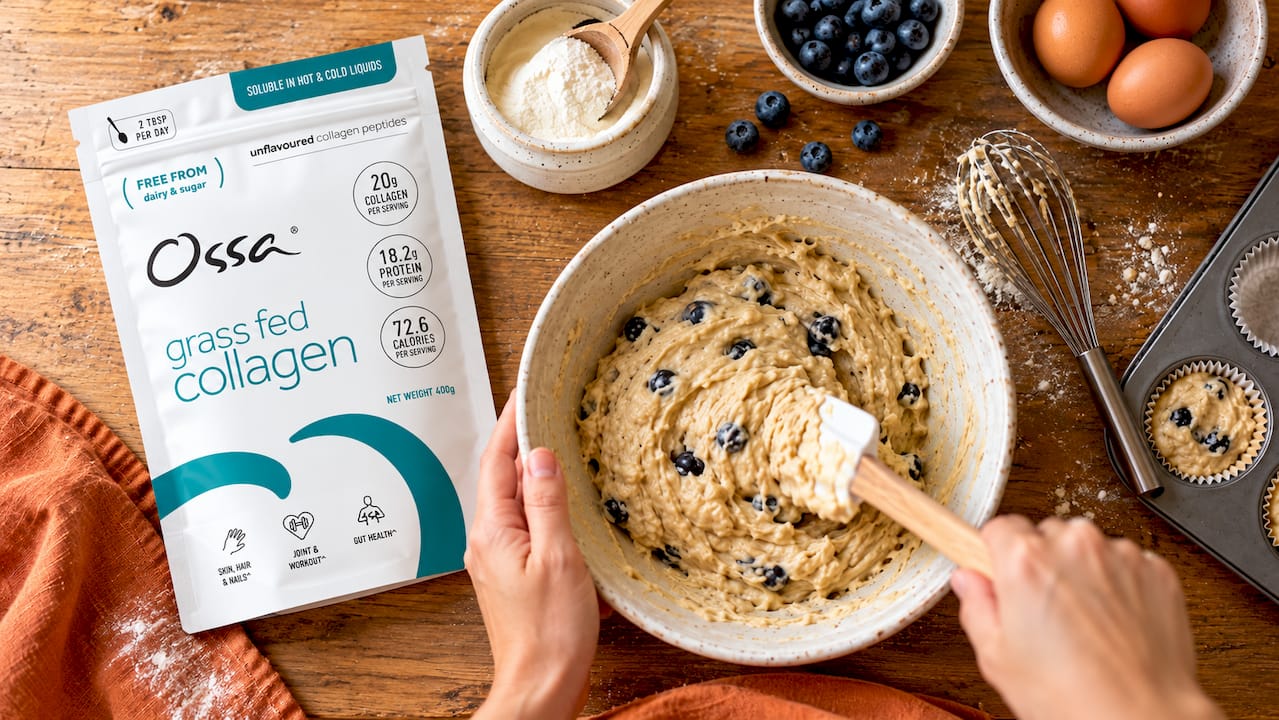
Whisk 10 g (one level tablespoon) of collagen peptides into the eggs and sugar until fully dissolved, before adding melted chocolate and butter.
-
Fold in the flour and cocoa last.
-
Bake as normal, but check a few minutes early. Pull them out while the middle still has a slight wobble, because they firm up as they cool.
If you want the brownies chewier and more set, a small amount of gelatine is a different technique, and is better kept for another recipe. For brownies, peptides are the simple choice.
Collagen pancakes
Pancakes show you quickly whether you have overdone it, because the batter thickens as you add powder.
-
For a batter using 150 g flour, try 7.5 g to 15 g of peptides (5 to 10%).
-
Whisk the powder into the eggs and milk first, then add to the flour and raising agent.
-
Let the batter sit for five minutes. If it has gone too thick to pour, loosen it with a splash of milk.
-
Cook on a medium heat. Collagen can encourage browning a little, so keep the pan from running too hot.
The result is a soft, slightly more tender pancake. If the edges lose their lacy crispness, reduce the amount next time.
Collagen baked oats or banana bread
Both bakes are wet, sweet and strongly flavoured, which makes them ideal for beginners.
-
For baked oats, stir one tablespoon of peptides into the milk and egg before pouring over the oats. A single portion bakes in about 20 to 25 minutes at 180°C.
-
For banana bread, whisk the powder into the mashed banana, eggs and oil. With 250 g flour, 12.5 g to 25 g sits within the 5 to 10% range.
-
Both can stay slightly more moist for longer than a standard recipe, so store them airtight and refrigerate if your kitchen is warm.
Common mistakes
-
Using gelatine when you meant peptides. The batter will thicken and set oddly, and the cake will be rubbery.
-
Adding too much too soon. A heaped quarter of the flour weight gives you a brick. Stay in the 5 to 15% range.
-
Mixing into dry flour. This is the main cause of gummy pockets.
-
Expecting a rise. Collagen does nothing for leavening. Keep your usual baking powder, bicarbonate or whipped eggs.
-
Treating it as a protein shortcut for everything. A protein-enriched bake is still cake. Collagen does not make a sugary dessert a health food.
Our view: tradition in the kitchen
We founded Ossa Organic on the belief that natural food is restorative, and that slow, traditional methods beat processed shortcuts. Collagen is part of that tradition in a straightforward way: bone broths and gelatine-rich cooking have long been how families have eaten collagen-rich foods. Peptides and gelatine powders are a convenient modern form of the same idea.
Our approach to baking with them is plain. Use a clean ingredient, keep the recipe simple, and add it to food your family already eats. A spoonful in pancakes or brownies fits easily into a normal day, and that matters more than any single ingredient. Consistency, not heroic doses, is what makes a food habit stick.
We also think honesty serves people better than hype. Collagen is a useful addition to a varied diet, not a substitute for meals, sleep or movement. If you cook mostly paleo or want to move away from preservatives and artificial ingredients, adding collagen to home baking is an easy way to do it without changing how you eat.
— Ossa Organic
What to expect from eating collagen
Baking with collagen is easy. Whether it does something for you is a separate question, and it deserves a realistic answer.
As of 2026, there are no authorised health claims for collagen on the UK’s nutrition and health claims register, according to Which?. Some clinical research points to modest improvements in skin hydration and elasticity, and possibly some relief of joint pain in people with osteoarthritis. Those results tend to appear only after weeks or months of daily use, and they are often subtle. Collagen is not a cure for joint disease and not a guaranteed skin treatment.
It is also not a complete protein. It lacks enough of some essential amino acids, tryptophan among them, so it cannot replace eggs, meat, fish, dairy or legumes. Think of it as a supplement to a balanced diet.
A few sensible cautions where you are likely to act on this.
-
If you have osteoarthritis, osteoporosis or any other joint or bone condition, talk to your GP before relying on collagen, and do not stop prescribed treatment.
-
If you are pregnant, breastfeeding, taking medicines or managing a long-term condition, ask your GP or a registered dietitian before adding supplements.
-
If you have a food allergy, check the source. Collagen can come from bovine, marine or other animals, and the label should say which.
Baking does not make any of these considerations different. It simply gives you another way to take the powder.
Buying collagen for the kitchen in the UK
What should you look for on the tub?
-
The type. Peptides or hydrolysed collagen for batters. Gelatine for setting.
-
The animal source. Bovine, marine or porcine, and ideally how the animals were raised. Grass-fed and pasture-raised are the terms to look for.
-
The ingredients list. Plain collagen should list collagen and nothing else. Flavoured blends add sweeteners and other ingredients.
-
Food-grade status. Collagen for human consumption has to meet specific rules. UK government import guidance sets out that it must be produced under Regulation (EC) 853/2004 requirements, with identification marks and the wording “collagen fit for human consumption” on the packaging.
-
The serving guide. It tells you the weight of a scoop, which makes the ratios above easy to follow.
Cost matters too. Daily use adds up over a year, so a tub you will actually finish in the kitchen is better value than a large one that sits in the cupboard.
Baking with Ossa collagen and gelatine
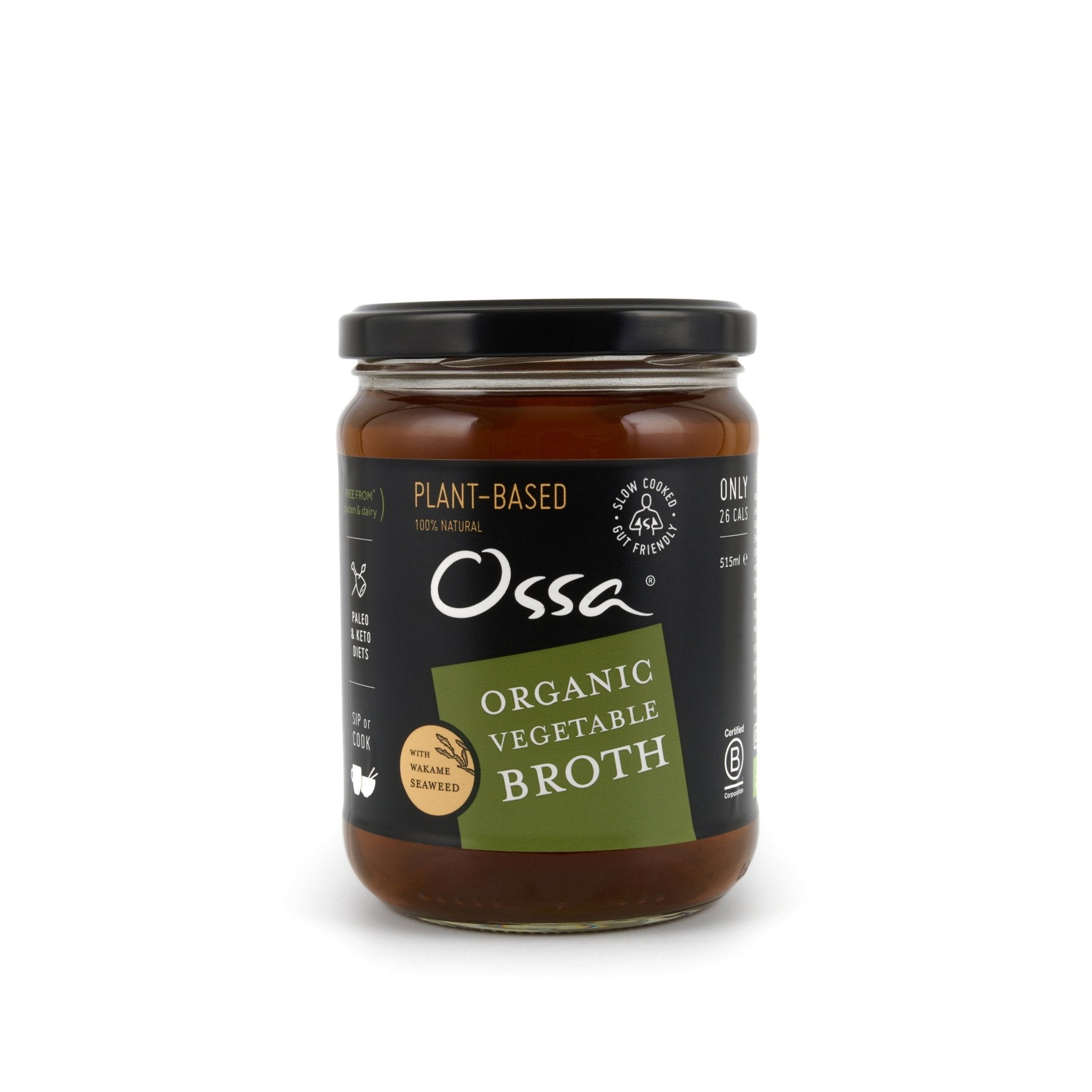
If you want to try the methods above, we make the ingredients for it. Our grass fed collagen peptides are the one for brownies, pancakes, muffins and baked oats. If you also want to make set desserts or gummies, the collagen peptides and pasture raised gelatine pairing puts both in one order. You can see the rest of the range, including organic bone broths, grass fed fats and snacks, on our shop page.
For more ideas, our collagen baking recipes collect ways to use the powders in the kitchen, and there are also paleo collagen recipes and low-carb collagen recipes if you cook that way.
FAQ
Can you put collagen powder in brownies?
Yes. Brownies are one of the best bakes for it, because their dense, fudgy texture copes well with the extra moisture retention. Whisk about one tablespoon of peptides into the eggs and sugar before adding the chocolate, and check the tray a few minutes early. Do not use gelatine unless you want a chewier, more set result.
Can you add collagen to pancakes?
Yes. Whisk 5 to 10% of the flour weight into the milk and eggs, then combine with the flour. Rest the batter for a few minutes and loosen it with a little milk if it thickens. The pancakes come out softer and a little more tender, but they may lose some crispness at the edges.
What is the difference between collagen peptides and gelatine in baking?
Peptides dissolve in hot or cold liquid and do not set, so they add protein and moisture without changing the structure. Gelatine dissolves in hot liquid and sets as it cools, which suits mousses, marshmallows and gummies. For cakes, brownies and pancakes, peptides are the usual choice.
How much collagen can you add before a bake goes wrong?
As a guide, keep it between 5 and 15% of the flour weight. Past about 20%, bakes tend to turn gummy or dense, because collagen has none of the gluten or starch that gives flour its structure. If your recipe has little or no flour, start with a tablespoon and go up only if the texture holds.
Does baking destroy collagen?
No. Collagen peptides are already broken into small fragments and remain stable at normal oven temperatures of roughly 160°C to 200°C. Baking does not make them more or less effective. The main change is in the texture of the bake, not in the protein itself.
Recommended