

Cart
0
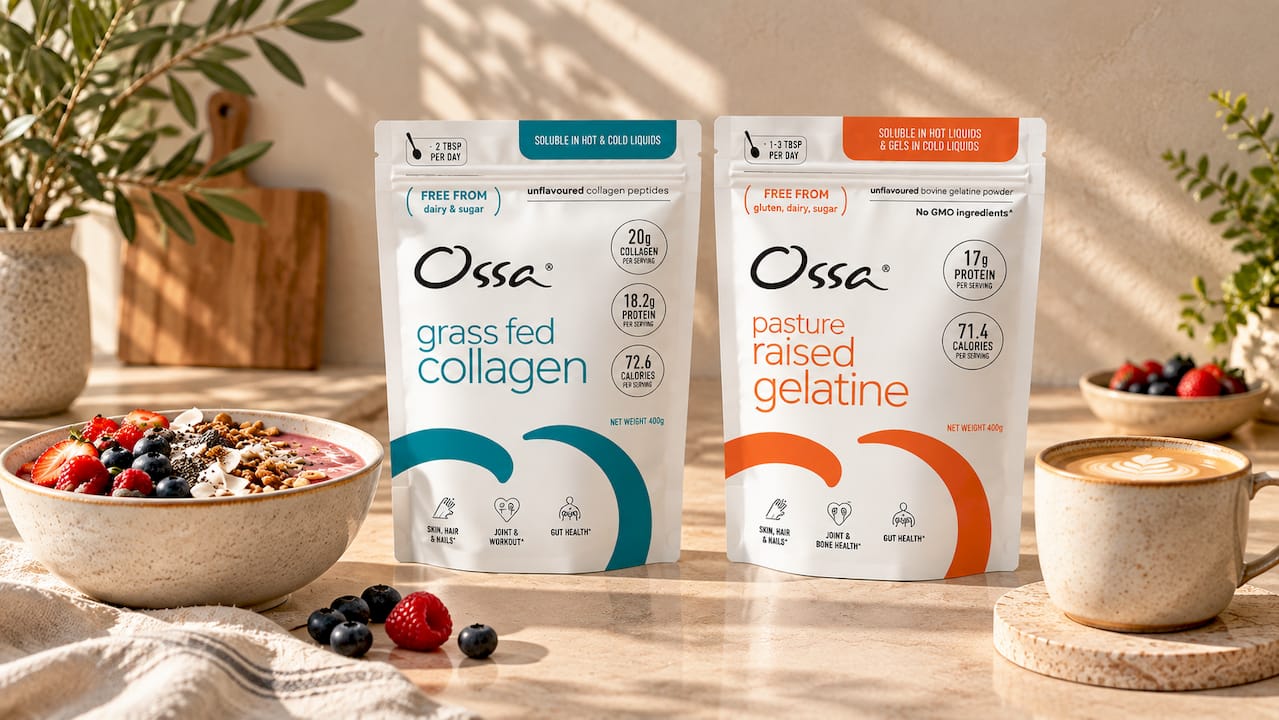
Collagen will not stop hormonal shedding that follows childbirth, but it can support the quality and speed of what grows back. If you’re watching clumps come out in the shower, the more urgent step is checking your iron, ferritin, vitamin D, and thyroid levels rather than reaching straight for a supplement pot. Nutrition and patience do more here than any single ingredient.
TL;DR:
Collagen supports the quality and texture of hair regrowth but does not prevent or stop hormonal shedding caused by childbirth.
Postpartum shedding typically begins around three months after birth, peaks at four months, and resolves within six to twelve months, with longer breastfeeding potentially extending this period.
Nutrient deficiencies in iron, ferritin, vitamin D, and thyroid function can prolong hair shedding, making correction of these deficiencies more impactful than collagen alone.
A hydrolyzed collagen supplement, ideally plain and sourced from grass-fed bovine or marine origins, is safe during breastfeeding if it contains no additives or allergens.
Consistency in daily intake of 5 to 20 grams of collagen, paired with vitamin C and balanced nutrition, enhances hair regrowth support over several months.
Table of Contents
-
Does collagen help postpartum hair thinning? What the research shows
-
Why we back a food-first approach to postpartum hair recovery
-
Ossa Grass Fed Collagen Peptides: how to use them postpartum
What is postpartum hair loss (telogen effluvium)?
Postpartum hair loss is a form of telogen effluvium, a temporary shift in your hair’s growth cycle rather than a disorder. During pregnancy, high oestrogen keeps a larger proportion of hair follicles in the growth (anagen) phase than usual, which is why so many women notice thicker hair while pregnant. Once oestrogen drops sharply after delivery, all those follicles that were “held back” enter the resting (telogen) phase at once and shed together a few months later.
The timeline generally follows a predictable pattern. Shedding typically starts a few months after birth, peaks within a few weeks, and usually resolves within several months for most women. If your hair hasn’t returned to its usual thickness within about a year, dermatology guidance suggests seeking a medical evaluation rather than simply waiting.
Not every postpartum experience looks the same, though. A few factors can stretch out the timeline or make shedding feel heavier:
-
Breastfeeding duration: research on postpartum hair loss found that longer breastfeeding was linked to a higher incidence and longer duration of shedding, likely because prolactin keeps oestrogen suppressed for longer.
-
Preterm labour: the same research associated preterm delivery with a greater likelihood of noticeable postpartum shedding.
-
Multiple pregnancies close together: less recovery time between pregnancies can mean your follicle cycle never fully resets.
-
Stress and sleep deprivation: these don’t cause telogen effluvium on their own but can compound the visible effect.
None of this means something has gone wrong. It means your biology is recalibrating, and the calendar, not a cream or capsule, is doing most of the work.
Does collagen help postpartum hair thinning? What the research shows
Collagen’s role here is genuinely supportive, not curative. A study on a hydrolysed collagen, vitamin, and zinc supplement in people experiencing telogen effluvium reported improvements in hair growth markers and hair thickness after use. That’s a meaningful finding, and it’s the closest thing to solid evidence connecting collagen supplementation to visible hair changes in a shedding condition.
It’s worth being precise about what that trial did and didn’t test. It looked at a combined formula (collagen plus vitamins and zinc), not collagen in isolation, and it wasn’t conducted specifically on postpartum women. Telogen effluvium has several triggers, from illness to crash dieting to childbirth, and a trial population built around general telogen effluvium can’t be assumed to behave identically to someone six months postpartum and breastfeeding. That distinction matters for how much confidence you should place in the result.
There’s also no large randomised controlled trial testing plain hydrolysed collagen, on its own, in postpartum women specifically. That’s a real gap in the evidence, and any product or article that implies otherwise is overstating what’s known.
What the biology plausibly explains: Hydrolysed collagen breaks down into amino acids, chiefly glycine and proline, which are structural building blocks for keratin and the dermal extracellular matrix that surrounds each hair follicle. Supplying more of these raw materials doesn’t override the hormonal signal telling follicles to shed, but it may give the follicles that are re-entering the growth phase better material to work with. Think of it less as a switch that stops shedding and more as decent scaffolding for whatever your body is already trying to rebuild.
Statistic Callout: Postpartum hair loss typically begins around three months after birth, peaks at roughly four months, and resolves within six to twelve months for most women. Collagen supplementation doesn’t change that timeline. It may influence how the regrowth looks and feels once it arrives.
Consumer and practitioner guidance broadly echoes this caution: collagen evidence is supportive, not definitive, and the primary actionable items remain adequate total protein intake and correcting any nutrient deficiencies. In practice, that means:
-
Collagen is a reasonable addition to a nutrition-first routine, not a replacement for one.
-
Expect it to influence thickness and texture over months, not to reduce the volume of daily shedding within weeks.
-
Pairing collagen with vitamin C matters biochemically, since vitamin C is an essential cofactor your body needs to synthesise its own collagen. A supplement without it is working with one hand tied.
-
Marine collagen tends to carry more Type I collagen per gram, the type most relevant to skin and hair structure, though bovine sources remain a solid, well-studied option.
If you came here hoping for a supplement that halts postpartum shedding outright, the honest answer is that nothing currently does, because the shedding is hormonally driven and time-limited by nature. What collagen can reasonably claim is a supporting role in the regrowth phase that follows.
How to use collagen and nutrition to support regrowth
Consistency matters more than dose precision here. Most practical guidance on hydrolysed collagen settles on a daily range of roughly 5 to 20 grams, taken regularly over a period of months rather than in occasional large amounts. If you’re newly postpartum or still breastfeeding, staying towards the lower end, around 5 to 10 grams a day of a plain hydrolysed formula, is the more cautious starting point.
A simple routine looks like this:
-
Pick one time of day and stick to it. Morning coffee, a smoothie, or your evening cup of tea all work as a mixing vehicle, since plain hydrolysed collagen dissolves without changing flavour.
-
Pair it with a vitamin C source. Citrus fruit, peppers, or a squeeze of lemon in water alongside your dose supports your body’s own collagen synthesis, not just what you’re supplementing.
-
Prioritise total protein across the day, not just the collagen serving. Regrowing hair needs a broad amino acid profile, and collagen alone is an incomplete protein.
-
Get iron-rich foods on the plate regularly if you’re not already supplementing, since iron deficiency is one of the most common, and most fixable, contributors to prolonged shedding.
-
Reassess in three-month blocks. Hair growth is slow enough that judging any intervention after two weeks tells you nothing useful.
Food-first options work alongside a powder just as well as instead of one. A daily mug of bone broth delivers collagen alongside amino acids and minerals in a form your body has processed for generations, and it fits easily into soups, risottos, or simply sipped on its own. Gelatin-based recipes, from set puddings to homemade gummies, are another practical route if capsules and powders aren’t your preference. For a broader look at where collagen sits in a natural diet, this guide to collagen’s role in nutrition covers the wider picture beyond hair.
Pro Tip: Mix your collagen powder into something you’re drinking cold rather than boiling hot. Very high heat can affect texture and some collagen brands recommend avoiding a rolling boil, so stirring into a warm (not scalding) drink is the safer habit.

Beyond diet, a few gentle hair-care adjustments make regrowth look better while it’s happening. Dermatology guidance suggests volumising shampoos and lighter conditioning habits, avoiding heavy conditioner directly on the scalp, since it can weigh down finer regrowth and make thinning more obvious. Loose hairstyles beat tight ponytails or buns for this period too. Tension on regrowing follicles at the hairline is an easily avoidable extra stressor.
Is collagen safe while breastfeeding?
Current evidence suggests hydrolysed collagen peptides are generally well tolerated, including during breastfeeding, but “generally well tolerated” isn’t the same as “check nothing.” The bigger safety questions usually sit with what’s added to the collagen, not the collagen itself.
Before starting, run through this checklist:
-
Check the ingredient list for additives. Some flavoured or “beauty” collagen blends include artificial sweeteners, added vitamins at high doses, or herbal extracts that haven’t been studied in breastfeeding, so plain, unflavoured hydrolysed collagen is the lower-risk choice.
-
Confirm the source. Bovine (grass-fed) and marine collagen are the two common bases; marine is worth avoiding if you have a fish or shellfish allergy, and bovine sourcing quality varies widely between brands.
-
Look for third-party purity testing or transparent sourcing, particularly around heavy metals, which can be a concern with some marine collagen products.
-
Ask your GP or lactation consultant these specific questions: Does this interact with anything I’m currently taking or any condition I have? Is there a dose you’d recommend for my situation? Are there signs that mean I should pause it?
If you want a fuller breakdown of what’s considered safe while nursing, this guide to collagen during postpartum recovery walks through the detail. The short version: plain, transparently sourced hydrolysed collagen from a reputable producer carries low risk for most breastfeeding women, but a five-minute conversation with your GP costs you nothing and settles any doubt.
When postpartum hair loss needs a GP or dermatologist
Ordinary postpartum shedding, however alarming it looks in the plughole, follows the pattern described above and resolves on its own. A few signs point to something else going on and warrant a proper medical look rather than more patience:
-
Shedding that continues beyond 12 months without meaningful improvement.
-
Patchy loss rather than diffuse thinning across the whole scalp, which can indicate a different condition entirely.
-
Visible scalp inflammation, redness, or scaling.
-
Rapid, dramatic progression rather than the gradual pattern typical of telogen effluvium.
-
Other symptoms alongside the hair loss, such as extreme fatigue, unexplained weight change, or cold intolerance, which can point towards thyroid dysfunction.
If you see your GP, expect blood tests covering ferritin, a full blood count, thyroid function, and vitamin D, since deficiencies or thyroid disorders can mimic or extend postpartum shedding well past the usual window. Depending on what those tests show, treatment might mean iron supplementation, thyroid medication, or a referral to a dermatologist for topical treatment options. Getting the bloodwork done is usually quicker and more useful than trialling another supplement first.
Why we back a food-first approach to postpartum hair recovery
The founder discovered slow-cooked bone broth’s benefits during pregnancy, shaping a business built on the belief that traditional, minimally processed food supports the body. Postpartum hair loss is a good example of where that philosophy earns its keep: the research consistently points to nutrition fundamentals, protein, iron, vitamin D, and collagen-supportive cofactors like vitamin C, ahead of any single miracle ingredient.
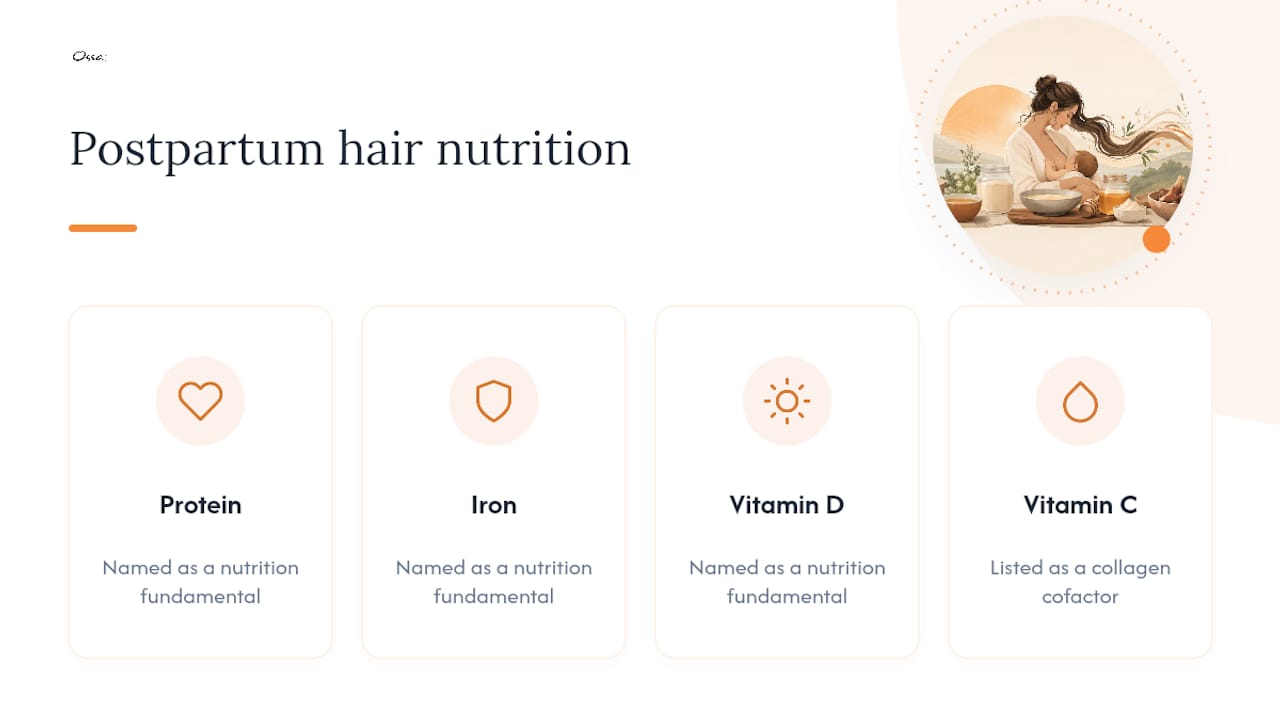
That’s why our approach leans on real food sources of collagen alongside a clean supplement, rather than treating a powder as the whole answer. A collagen peptide made with one ingredient and no additives fits the dosing and purity expectations covered earlier in this article, plain, transparent, and easy to slot into a broader nutrition routine rather than a stand-alone fix.
We’d rather tell you honestly that collagen supports regrowth quality than oversell it as a cure for hormonal shedding. New mothers get enough noise already.
— Ossa Organic
Ossa Grass Fed Collagen Peptides: how to use them postpartum
Ossa Grass Fed Collagen Peptides is a single-ingredient, hydrolysed bovine collagen powder, sourced from grass-fed animals with nothing added, no flavourings, sweeteners, or fillers to complicate what you’re putting in your body during a period when purity matters most. That simplicity matters if you’re breastfeeding and trying to keep additive exposure low, exactly the concern raised in the safety checklist above.
A typical serving mixes straight into coffee, tea, a smoothie, or a glass of water without altering the taste, which makes it easy to build into a morning routine and stick with it consistently, the single biggest factor in seeing any benefit. Many women find a warm (not boiling) drink first thing works well, paired with a vitamin C rich breakfast to support your body’s own synthesis alongside the supplement.
For the wider range of bone broths, ghee, and gut health bundles that support the same food-first philosophy, browse the full Ossa Organic collection. If you’re pregnant, breastfeeding, or managing any health condition, check with your GP or lactation consultant before starting any new supplement, then order your first tub and give it a proper three-month run.
Primary sources and further reading
This article draws on peer-reviewed and clinical guidance, including a nutritional supplement trial on telogen effluvium, a cross-sectional study on postpartum hair loss risk factors, and postpartum hair loss guidance from Johns Hopkins Medicine, the American Academy of Dermatology, and Cleveland Clinic. For related reading on the Ossa Organic site, see the guides on postpartum collagen safety, collagen dosing in pregnancy, and natural collagen food sources.
This article is general information, not a substitute for advice from a qualified doctor. Consult a qualified healthcare professional about your own circumstances before acting on anything here.
FAQ
Can too much collagen cause your hair to fall out?
There’s no good evidence that collagen itself causes hair loss at typical doses of 5 to 20 grams a day. If shedding worsens after starting a supplement, look at the other ingredients in that specific product, or consider whether it coincided with an unrelated cause like illness or a new medication.
Is it normal to lose hair three months after giving birth?
Yes, this is the most typical onset point for postpartum telogen effluvium, with shedding peaking around four months and resolving within six to twelve months for most women. Longer breastfeeding duration can extend this timeline slightly.
What helps the most with postpartum hair loss?
Correcting nutrient deficiencies, particularly iron, ferritin, vitamin D, and thyroid function, does more for recovery than any single supplement, since these deficiencies can independently prolong shedding. Alongside that, adequate total protein and a hydrolysed collagen supplement paired with vitamin C can support regrowth quality once your follicles re-enter the growth phase.
What is the best collagen product for postpartum hair loss?
A plain, single-ingredient hydrolysed collagen with no added sweeteners or fillers is the safer and more transparent choice while breastfeeding. Ossa Grass Fed Collagen Peptides fits that description, sourced from grass-fed animals with nothing else added, though your GP should confirm it suits your individual situation first.