Organic ingredients
•
Naturally nourishing
•
Made with care
We've sent you an email with a link to update your password.
Reset your password
We will send you an email to reset your password.
Is Ghee Dairy Free? What UK Buyers Should Know
Ralph Barrozo
0 comments
Ghee is not dairy free. It is made from butter, so it is a dairy product. Making it removes the water and the milk solids, which leaves a fat with only trace amounts of lactose and casein. That is why many people with lactose intolerance use it. It is also why anyone with a diagnosed milk protein allergy should not use it without medical advice.
This guide explains where ghee sits between butter and dairy-free fats, how UK labelling treats it, who can reasonably use it and who should not. It also covers how to cook with it and how to replace butter with it.
Ossa Organic
Choose Natural Ingredients for Cooking
Ossa Organic makes natural foods using organic ingredients and slow cooking techniques, rooted in tradition rather than trend.
Ghee is clarified butter, so it counts as dairy and UK labels must show milk as an allergen.
It contains only trace lactose and casein, because the milk solids are removed during cooking.
It is often tolerated by people with lactose intolerance. It is not suitable for a confirmed milk protein allergy unless a doctor or dietitian says so.
It handles high heat well, keeps for months and works as a one-to-one style swap for butter in most savoury cooking.
If you need a fully dairy-free fat, look at tallow, olive oil or coconut oil instead.
No. Ghee starts as butter, and butter is made from milk or cream. The fat is churned out of the liquid and set as a solid. To make ghee, that butter is simmered slowly until the water has evaporated and the milk solids have separated and browned. The clear golden fat is strained off and the solids are left behind.
So the starting ingredient is dairy, and the finished product is a milk fat. Some web pages call ghee “dairy free” because it is lactose free in practice. That label blurs two different questions:
Does it come from milk? Yes.
Does it contain enough of the components that cause problems for people avoiding dairy? Very little lactose, and a very small amount of milk protein.
The first answer is why ghee cannot honestly be sold as dairy free. The second is why it still suits some people who avoid milk, butter and cream.
What the clarifying step removes
Butter is roughly 80% fat, with the rest mostly water and milk solids. Ghee and butter oil are about 99.3% fat. The solids are where most of the lactose (milk sugar) and the milk proteins, casein and whey, are found. Skimming and straining removes most of them. It does not remove all of them, which is the point that matters for allergies.
Lactose and casein: the difference that decides it
People search for “dairy free” for several different reasons, and the answer changes with the reason.
Lactose intolerance
Lactose intolerance is a digestive sensitivity to milk sugar. Analyses of ghee samples have found lactose levels from below 0.05 up to 2.9 mg per 100 g. Butter in the same analysis came in at around 685 to 688 mg per 100 g. That is a drop of more than 99%, which explains why ghee is widely considered suitable for people who cannot tolerate much lactose. The figures come from a published analysis of lactose and galactose in milk fats, which looked at suitability for galactosaemia.
Sensitivity varies from person to person, and a small number of people react even to traces. Start with a small amount and see how you feel.
Casein and whey
Casein is a milk protein. A milk protein allergy is an immune response, not a digestive one, so it behaves differently from lactose intolerance. Ghee is very low in casein, but it is not certified casein free. Some marketing says ghee is “casein free”, and that goes further than the evidence. The residue is small, but a person with a true allergy can react to small amounts of the protein.
If you or your child has a diagnosed milk allergy, speak to your GP, allergist or dietitian before bringing ghee into the diet. Do not test it at home to see what happens.
A quick comparison
Fat
Made from milk?
Lactose
Milk protein
Typical use
Butter
Yes
Present (around 685 to 688 mg per 100 g in one analysis)
Present
Spreading, baking, sauces
Ghee
Yes
Trace (below 0.05 to 2.9 mg per 100 g in the same analysis)
Trace
High-heat cooking, roasting, curries
Tallow
No, it is rendered animal fat
None
None
Roasting, frying, pastry
Olive or coconut oil
No
None
None
Dressings, frying, baking
Tallow, olive oil and coconut oil are not dairy products, so they are the options for a strict dairy-free diet.
What UK labelling says
In the UK, milk is one of the 14 regulated allergens that must be emphasised on prepacked food labels when it is an ingredient. Ghee falls under that rule because it is made from butter. A jar of ghee should therefore show milk clearly in the ingredients list, usually in bold.
The Food Standards Agency sets out the requirements for prepacked food, including that labelling must be accurate and not misleading. In practice, read three things on any jar:
The ingredients list. Look for milk or butter, with the allergen emphasised.
Any “free from” claim. Be cautious about “dairy free” or “casein free” on a ghee label. A clarified butter cannot honestly carry the first, and the second needs evidence behind it.
The origin of the milk. Some jars state the cows’ breed, feed or farming standard. That tells you about quality, not about allergen content.
If you buy from a restaurant or takeaway, ask directly. Many curries and rice dishes are finished with ghee, and it will not always appear by name on a menu.
Who can use ghee, and who should not
Often suitable, with care:
People with lactose intolerance who react to butter, milk and cream but not to trace amounts.
People following a paleo or similar pattern who include traditional animal fats. Many such diets accept ghee but exclude other dairy.
Cooks who want a stable fat for high-heat cooking without the browning and spitting that butter’s water and solids cause.
Not suitable without medical advice:
Anyone with a diagnosed cow’s milk protein allergy, including babies and children.
Anyone told by a clinician to avoid all dairy, including for conditions such as galactosaemia, unless the clinician has approved it.
Vegans, since ghee is an animal product.
Cleveland Clinic’s guidance makes the same point: ghee is not dairy free, it may suit people who are lactose intolerant, and butter also contains very little lactose in some people’s experience. The practical rule is simple. Lactose intolerance is a digestive matter and ghee is often manageable. A milk allergy is an immune matter and ghee is a risk.
A note on health claims
Ghee is a traditional, stable cooking fat. Larger claims, such as weight loss or immune support, lack evidence from human clinical trials and often extrapolate from lab work on individual fatty acids. It is still a saturated fat, so treat it like other cooking fats and use it in sensible amounts. Its case rests on cooking performance and flavour.
How to use ghee in the kitchen
Ghee’s strengths are heat tolerance, flavour and shelf life. It has no water and no milk solids to burn. Its smoke point is around 250°C, against roughly 175°C for butter. That makes it a good choice for searing, stir-frying and roasting.
Everyday uses
Frying eggs. A small spoon in a hot pan gives a nutty flavour without butter’s browning too quickly.
Roasting vegetables. Toss root vegetables, cauliflower or squash in melted ghee before they go in a hot oven.
Searing meat and fish. Ghee copes with the high heat that a good crust needs.
Curries, dals and rice. This is the traditional use. Ghee is often used to temper spices at the start, or stirred in at the end for richness.
Finishing. A spoonful over cooked rice, lentils, porridge or steamed greens.
Spreading. At room temperature it is soft and spreadable, so it can go on toast, though it tastes richer than it looks.
Popcorn. Melted ghee gives a crisp, nutty finish. We have a worked example in our ghee popcorn method, which uses half a tablespoon to pop and a tablespoon and a half to finish.
Replacing butter with ghee
Ghee works as a butter substitute in most cooking, with a few adjustments:
Use slightly less. Ghee is about 99% fat and butter about 80%, so a little less ghee gives the same amount of fat. Around three quarters to four fifths of the butter weight is a reasonable start.
Expect less water. Butter contributes moisture and steam. In baking, this can change the texture of cakes and pastry, so test a small batch first.
Keep the heat as it is. In sauces and sautés you can swap without changing anything, and you can raise the heat if you want more colour.
Adjust the salt. Many butters are salted and most ghee is not, so season to taste.
Do not expect a milky flavour. Ghee tastes nutty and rounded, not creamy.
For baking where butter’s flavour matters, such as shortbread or buttercream, ghee will taste different. For roasting, frying and savoury cooking the swap is usually seamless.
Storing it
Because there is no water or milk solids left, ghee keeps for weeks at room temperature and for months in the fridge. Keep it in a clean, dry jar with the lid on, and use a clean spoon each time. Water or crumbs in the jar shorten its life.
Do not throw away the browned solids
If you make ghee at home, the browned milk solids left in the strainer are edible. Cooks use them on toast, rice or dal for a nutty, caramelised note. Taste first, because over-browned solids turn bitter. Remember that they are pure milk solids, so they are not suitable for anyone avoiding lactose or casein.
Making your own
Homemade ghee needs only unsalted butter and patience. Simmer the butter gently until it stops bubbling noisily, the foam clears and the solids turn golden brown. The step from golden to burnt is quick, so stay by the pan. Strain through a fine sieve or muslin while warm. It will not be any more dairy free than shop-bought ghee, and a careless job can leave more solids in the fat.
Our perspective
We started Ossa Organic from a belief in slow, traditional food, and ghee fits that belief. It is one of the oldest cooking fats, made with a simple process and no additives. We do not describe it as dairy free. It is a clarified butter, and people choosing it should know that.
What we can say is practical. Many families who avoid inflammatory foods and highly processed ingredients use ghee as their everyday cooking fat, and our own family cooks with it in the same way. We also keep tallow in our range for people who want a cooking fat with no dairy origin at all. The right choice depends on the person, and a clear label matters more than a clever claim.
Our view is that the best advice is plain. If you tolerate lactose in small amounts, ghee is worth trying. If you have a milk allergy, ask a clinician first. Whatever you pick, choose a fat from animals that were well kept, and cook it with care.
— Ossa Organic
Our ghee
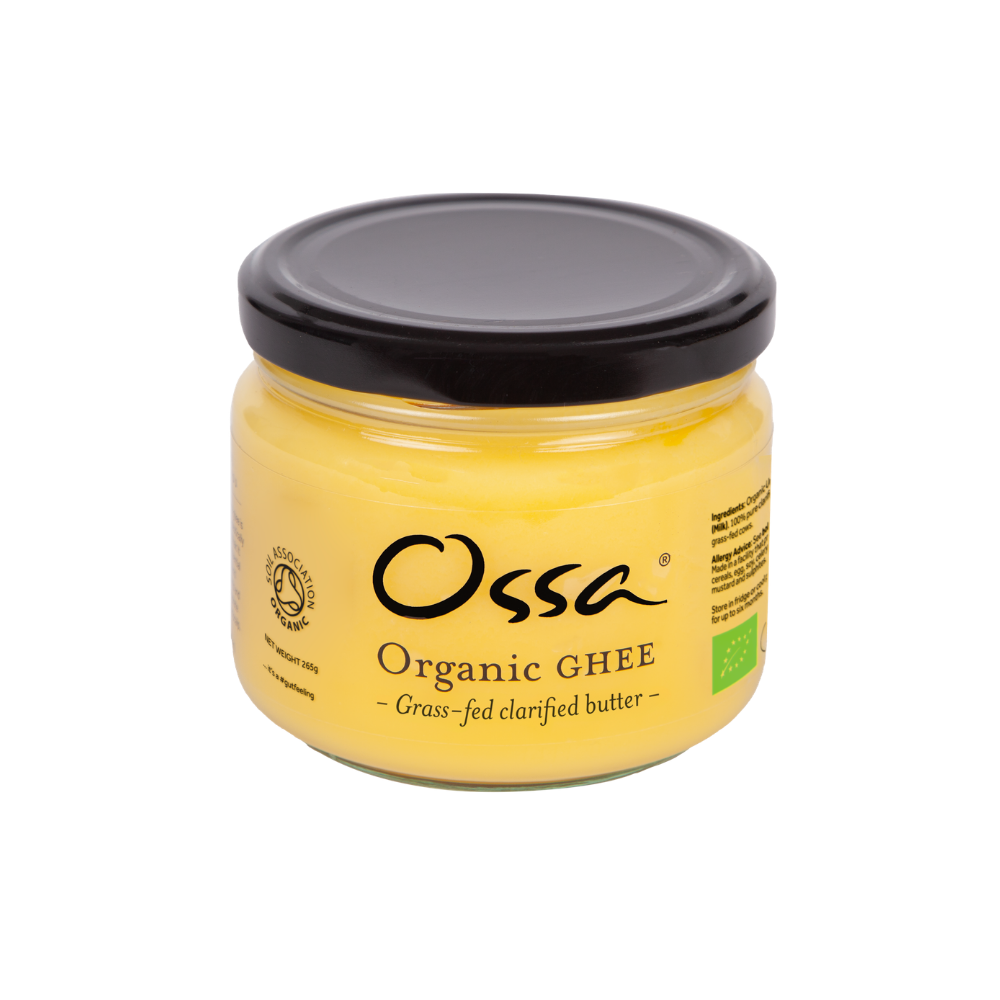
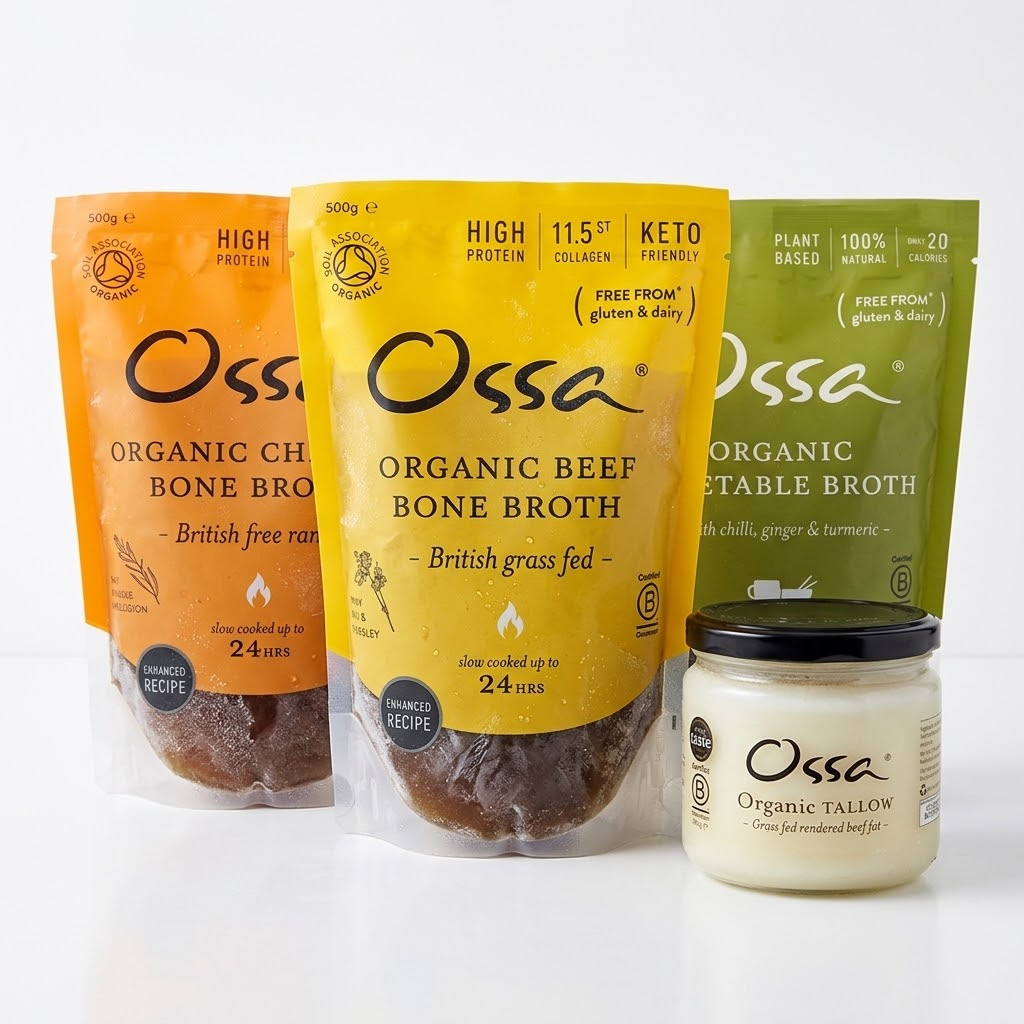
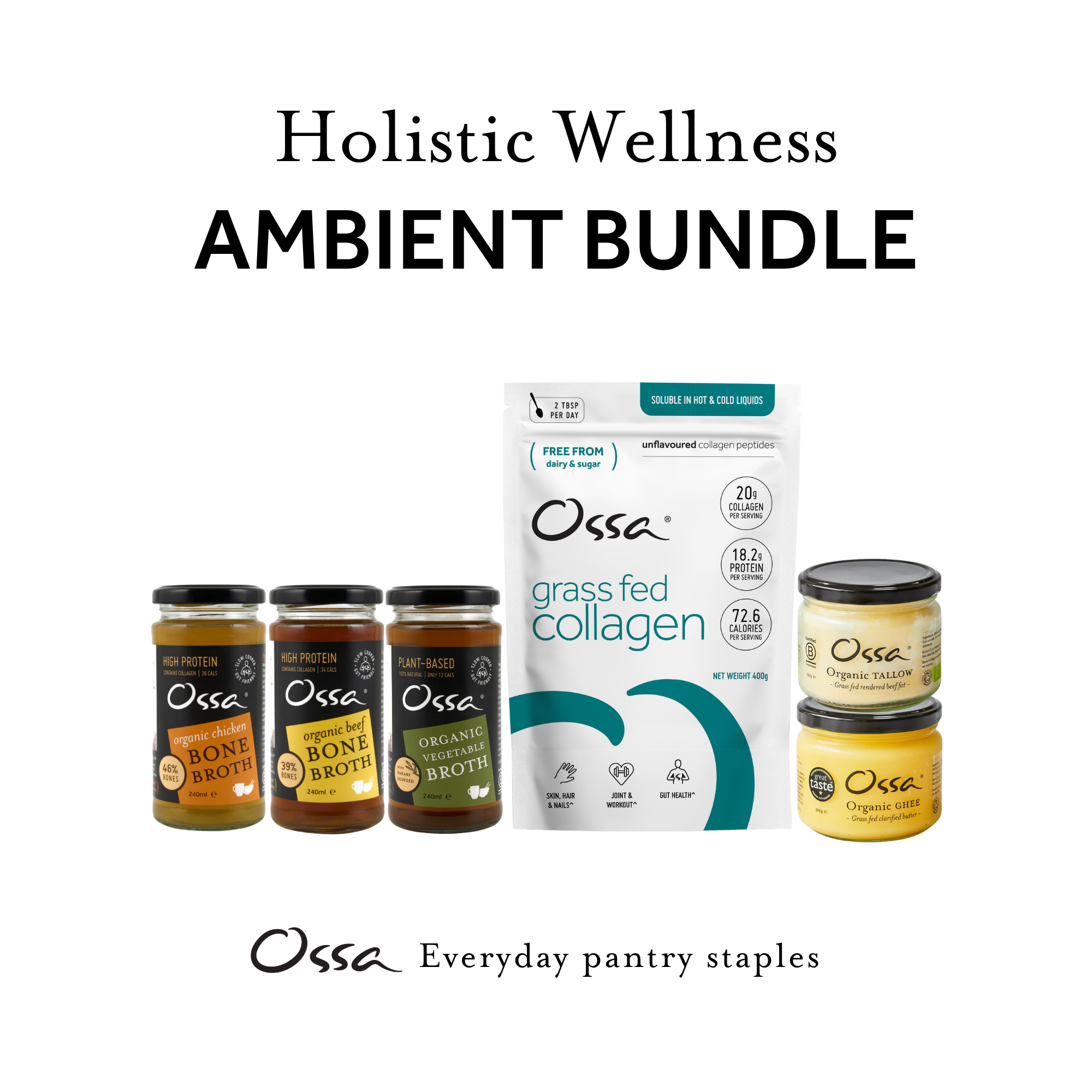
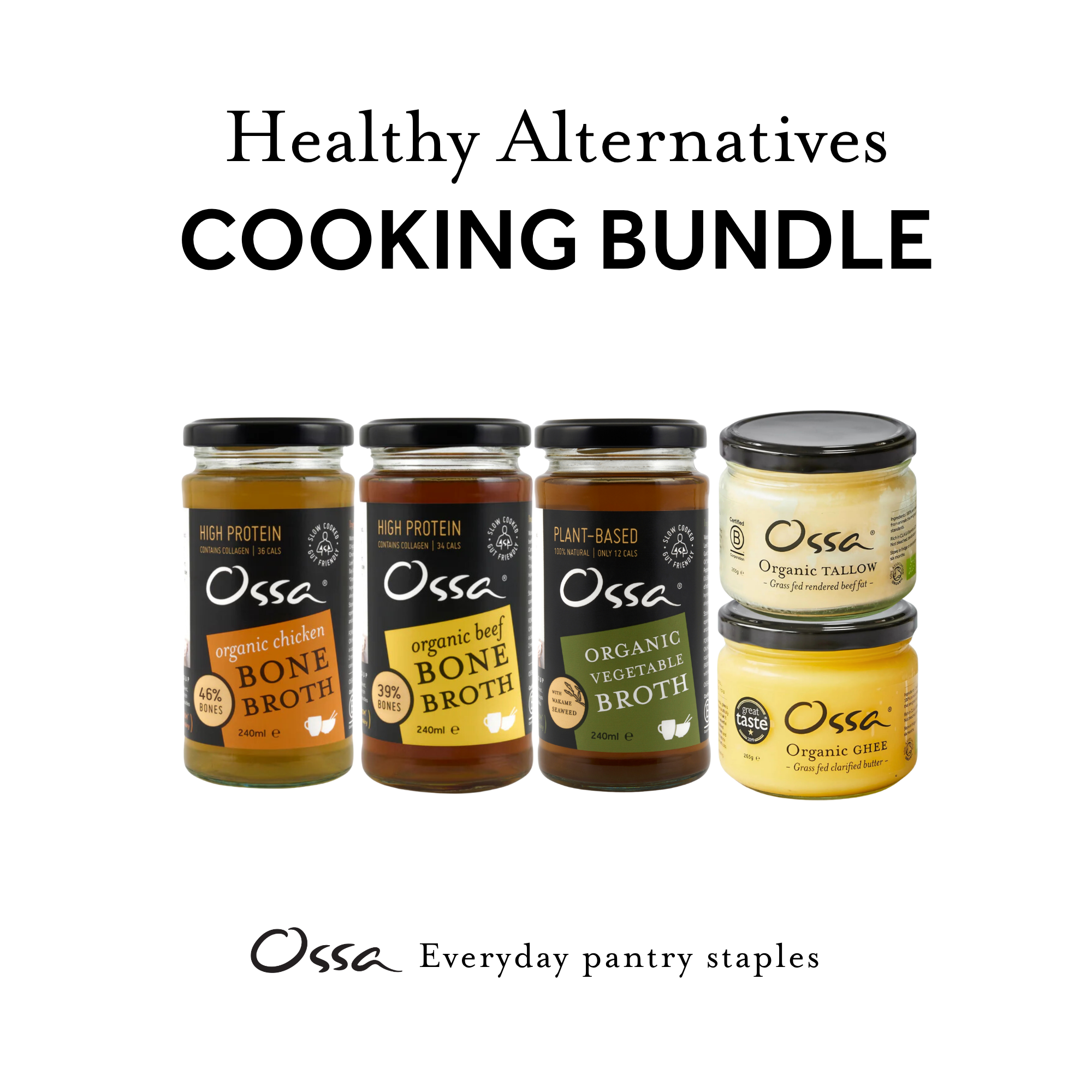
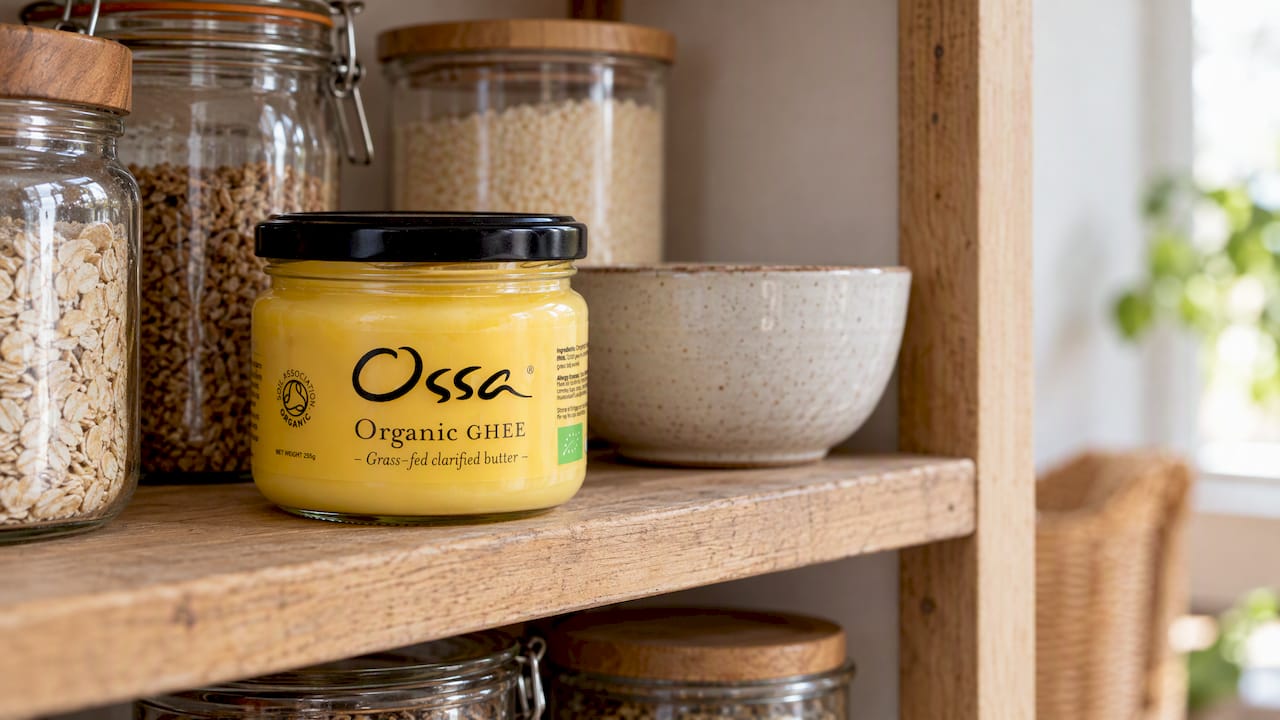
Our organic grass-fed ghee is traditional clarified butter from British cows grass fed to organic standards, free from preservatives and artificial ingredients. It is made for the everyday jobs above: roasting, frying, finishing and spreading. For other cooking fats, bone broths and gut health bundles, see the full Ossa Organic range.
Choosing a ghee
When you compare jars, use these criteria:
Ingredients. One ingredient is the standard: butter, or cream, from milk. Anything else needs a reason.
The farming standard. Organic and grass-fed claims tell you how the cows were kept and fed. Check that the label says which standard applies.
Origin. A jar that names the country of the milk is easier to judge than one that does not.
Colour and aroma. Good ghee is golden and smells nutty, not burnt or sour.
Allergen statement. Milk should be emphasised. If it is not, be cautious about the product.
Packaging. Glass jars suit a fat you will keep for months.
Cost per jar is not the whole picture. A good ghee goes a long way because you use less of it than you would of butter.
Ghee or tallow?
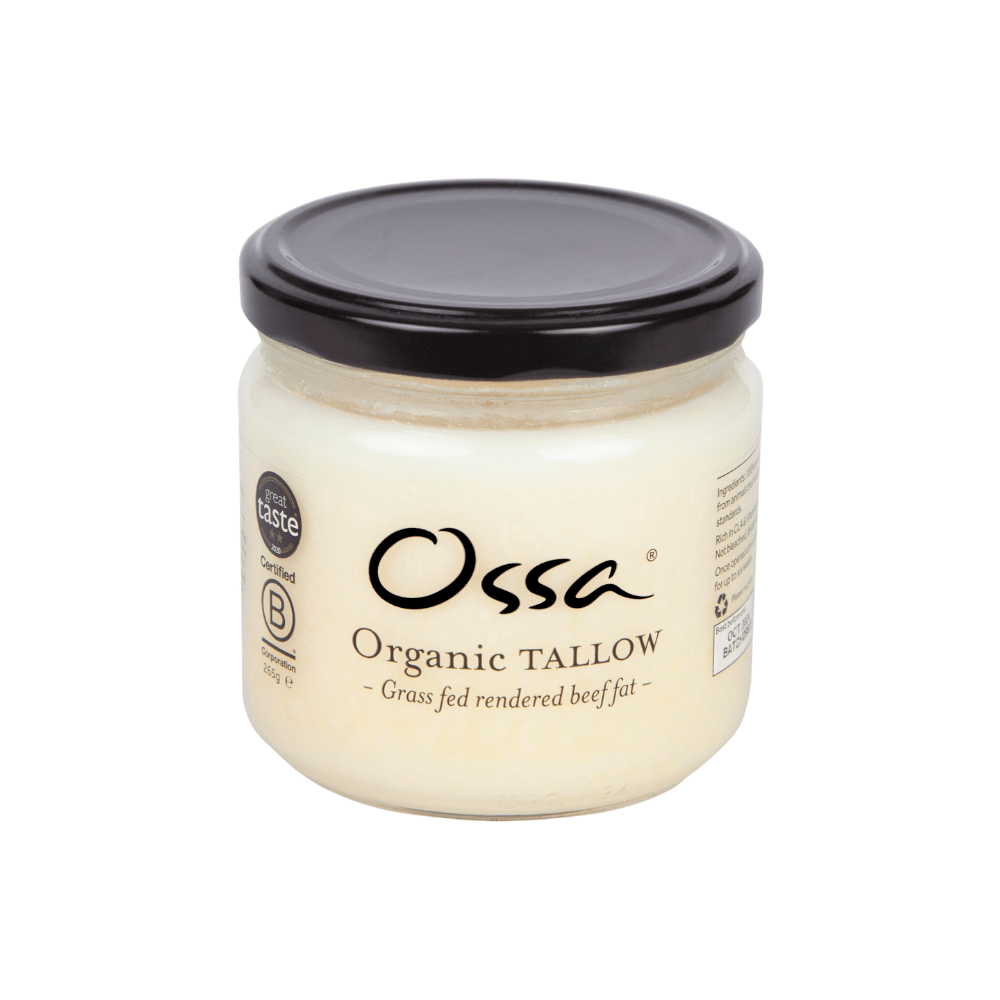
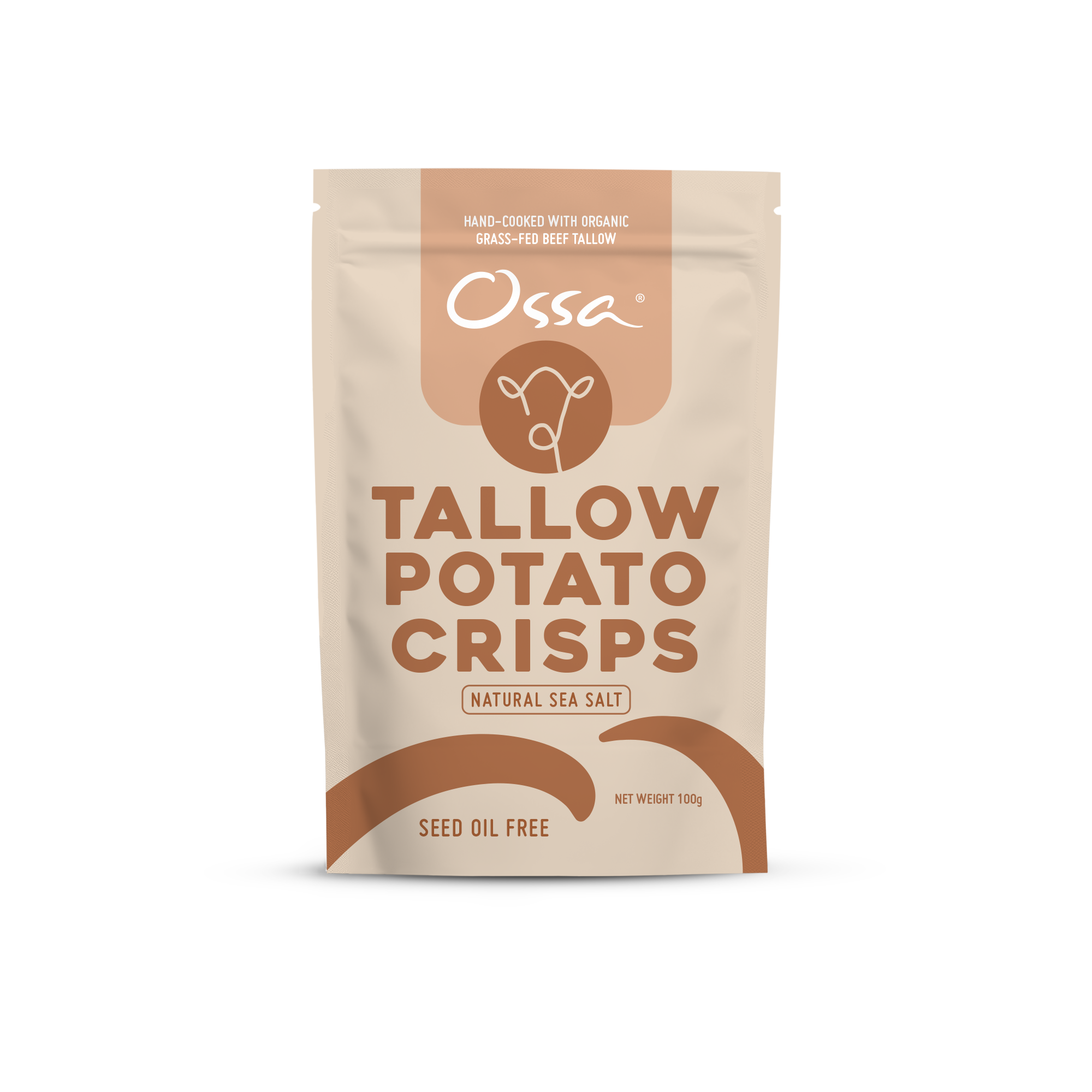
Both are traditional cooking fats and both cope with high heat. Ghee comes from milk and has a buttery, nutty flavour. Tallow is rendered from beef fat, has no dairy origin and has a more savoury taste, which suits roasting potatoes and frying. If you avoid dairy entirely, tallow is the one to pick. Our article on why pasture diversity matters for tallow explains how we think about sourcing.
Common mistakes
Treating “lactose free” as “dairy free”. They are different claims, and ghee is only the first.
Giving ghee to a child with a milk allergy. This needs clinical advice, not a trial.
Overheating homemade ghee. The solids burn fast and make the fat bitter.
Adding wet utensils to the jar. Water in the jar shortens its life.
Expecting a health transformation. Ghee is a useful cooking fat, not a supplement.
FAQ
Is ghee dairy free?
No. Ghee is made from butter, so it is a dairy product, and UK labels must show milk as an allergen. It is very low in lactose and casein because the milk solids are removed. For strict dairy-free cooking, use tallow or a plant oil.
Is ghee casein free?
Not completely. Ghee is very low in casein, but it is not certified casein free, and traces can remain. People with a confirmed milk protein allergy should speak to their doctor or dietitian before using it.
Does ghee contain dairy?
Yes, it is a milk fat. It contains none of the water and almost none of the milk solids that butter has. In published analysis, lactose in ghee measured at no more than 2.9 mg per 100 g, compared with around 685 to 688 mg per 100 g in butter.
Can I swap butter for ghee?
In most savoury cooking, yes. Use slightly less ghee than butter, as it is almost pure fat, and expect a nuttier flavour. In baking, test a small batch first because ghee adds no water.
What is the best way to use ghee?
Use it where heat matters: roasting vegetables, searing meat, frying eggs and tempering spices for curries and dals. It also works as a finishing spoonful on rice, lentils or popcorn. Store it in a clean, dry jar.