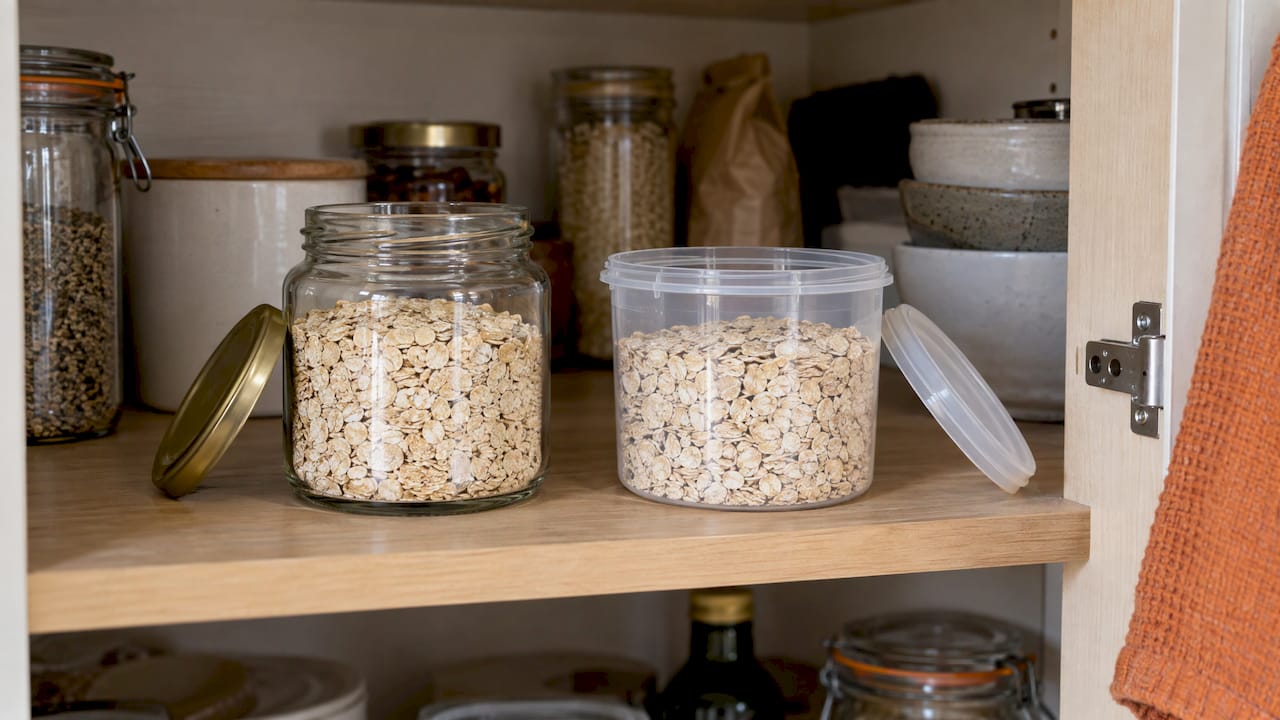
Glass is the better choice for food you want to keep pure, store for a long time or reuse at home. Plastic is lighter, tougher and cheaper to make and move, so it has a lower carbon cost per trip. If you buy organic and minimally processed food, the deciding factors are usually what touches your food, how long it sits there and what happens to the container afterwards. This guide sets out what UK food and recycling bodies say on each point, so you can choose with figures rather than slogans.
We make organic, slow-cooked bone broths and cook with grass-fed fats, so what surrounds food matters to us as much as what is in it. The aim here is practical: how to read packaging, how to store food at home, and which material suits which job.
Ossa Organic
Choose Food Made with Care
Ossa Organic makes organic, slow-cooked bone broths and cooks with grass-fed fats for a natural approach to everyday food.
TL;DR
- Glass is impermeable and inert: it blocks oxygen, moisture and UV light, and it does not pass chemicals into food, which is why it suits long storage and reuse.
- Plastic is lighter and shatter-resistant. Additives in some plastics can migrate into food on contact, a point food-safety researchers flag.
- Glass is heavier, so it costs more carbon to transport, but it is recycled at a higher rate in the UK (about 74% of glass packaging in 2022, against 51% for plastic) and can be remelted again and again.
- Reuse is where glass pulls ahead: a glass container can be reused many times, and recycled glass is considered safe for food contact again.
- At home, keep leftovers and dry goods in glass jars with tight lids, and use plastic where weight and breakage matter, such as lunchboxes and travel.
Table of Contents
What packaging has to do for food
Packaging has four jobs: keep food safe, keep it fresh, survive transport and tell you what is inside. Every material does these jobs differently, and the differences explain most of the glass versus plastic debate.
The UK Food Standards Agency, in its 2023 report on alternatives to single-use plastics, describes glass as impermeable, transparent and sealable. It gives strong physical protection and can extend shelf life because it acts as a barrier to oxygen, moisture and UV light. Those three matter for food in different ways. Oxygen drives rancidity in fats and oils. Moisture lets dry foods clump and spoil. Light degrades some nutrients and flavours.
The Institute of Food Science and Technology (IFST), the UK professional body for food science, describes glass in its packaging fact sheet as transparent, reusable and heat stable, but heavy and fragile. It describes plastic as rigid or flexible, transparent and available in many shapes and colours, but slow to biodegrade.
So the trade-off is simple. Glass protects better and lasts longer in your cupboard. Plastic is lighter, harder to break and more flexible in form. Neither is perfect, and the right pick depends on the food and on how you use it.

Taste, smell and what can move into food
This is the question most natural-food buyers actually care about: does the container change the food?
Glass stays neutral
A peer-reviewed 2021 review of food packaging materials from a food-safety perspective (Alamri and colleagues, published in the PMC database) notes that chemical-grade glass resists water, water-based solutions and organic substances. Any chemical migration from glass into food is very low, with almost no effect on how the food tastes or smells. That is why glass is traditionally seen as the premium, hygienic option: it does not absorb odours, and its smooth surface washes clean.
Jane Muncke of the Food Packaging Forum, quoted by edie in 2026, makes the same point from the reuse angle. Glass is inorganic, so it does not interact with what it contains or release chemicals into it. She argues that where packaging is reused, inert materials should be prioritised to prevent harm to human health that cannot be measured.
Plastic can transfer additives
The same 2021 review explains that additives in plastic packaging, such as plasticisers, monomers and oligomers, can transfer to food on contact. The process is called migration. It can change the quality and safety of the food. Regulation exists to limit this, and plastics approved for food contact are tested, but the point stands: with plastic, the container is a variable. With glass, it largely is not.
Migration tends to matter more with fatty foods, acidic foods and heat, because these draw more out of a material. If you cook with ghee, tallow or a rich broth, or reheat food in its container, that is the situation where an inert material makes most sense.
A practical rule for heat
Do not heat food in a container that is not labelled as suitable for it. With glass, check that the jar or dish is heat-resistant, since sudden temperature changes can crack ordinary jars. With plastic, look for a microwave-safe mark, and never reheat in packaging designed only for cold storage. When in doubt, move the food to a heat-proof glass or ceramic dish.
Weight, breakage and carbon
Here plastic has the stronger case, and it is worth being straight about it.
Waste Managed states that glass is about three times as heavy as plastic, so moving it has a much higher carbon footprint. Ethical Consumer, reviewing drinks packaging in 2020, says glass bottles take a lot of energy to make and transport because of their weight, and glass came out with the highest carbon emissions of the packaging types even when likely recycling was counted. Green Alliance estimates glass production at 600 kg of CO2e per tonne. In its methodology for comparing water containers, it used a 360 g glass bottle for 500 ml of water and shipping distances from a bottling site to London.
A 2024 Wine Society article, citing a study by Gaia, reports that a PET bottle had just under half the CO2 emissions of a similarly sized glass bottle. It also notes that about 75% of PET drinks bottles are recycled in the UK, according to the British Plastics Federation.
These figures are for single-use, one-way journeys. That is the key to reading them. A glass container that is used once and recycled carries a heavy footprint. A glass container that is used many times spreads that footprint across every use.
Why reuse changes the sums
A 2022 life cycle analysis by the Modern Milkman, a UK home delivery service, found its returnable glass bottles had a lower carbon footprint than equivalent 1-pint plastic cartons after just one delivery, return and reuse, so two uses. Its return rate was 81%, meaning each bottle is reused just over five times. That is one company’s own analysis of its own system, so treat it as an illustration of the principle rather than a universal figure.
BBC Future reported in April 2023 that glass containers can be reused an average of 12 to 20 times. At that point the extra weight is a small part of the lifetime impact.
For you at home, the lesson is direct: a glass jar you keep and refill for years does far better than one you buy and bin. The reverse is also true, a heavy jar used once is the worst case.
Breakage
Glass breaks. It is less durable than plastic, and that is a genuine consideration around children, in lunchboxes, in a gym bag or on a boat. For those uses, a sturdy plastic or stainless steel container is the sensible tool. In the kitchen, on a shelf or in the fridge, breakage matters much less.
Recycling in the UK
The recycling record is where glass is strongest, though the full picture has some nuance.
The headline rates
-
Glass: WRAP, the UK waste and resources body, estimates the UK glass packaging recycling rate for 2022 at 74.1%. That is 1,898 thousand tonnes recycled out of 2,562 thousand tonnes placed on the market. The Food Standards Agency’s 2023 report gives 72.5%.
-
Plastic: RECOUP, the plastics recycling charity, reports a 51% UK plastic packaging recycling rate for 2022. That is 1,154 thousand tonnes recycled out of 2,264 thousand tonnes placed on the market.
BBC Future gives a European view: an average recycling rate of 76% for glass, 41% for plastic packaging and 31% for wooden packaging.
For plastic, location matters too. RECOUP reports that 54% of recycled plastic packaging was reprocessed in the UK in 2022. Ethical Consumer, in 2020, reported that roughly two-thirds of UK plastic waste was sent overseas for recycling, partly to cut costs. For glass, WRAP reports that 82% of recorded recycling in 2022 took place in the UK and 18% overseas.
Glass can be recycled again and again
British Glass, quoted by edie in 2026, states that glass is 100% and infinitely recyclable without loss of quality. Plastic generally degrades through recycling, so it tends to be turned into lower-grade products rather than the same item again. The Wine Society notes that each tonne of recycled glass saves 250 kg of CO2 in making new bottles.
The IFST adds a food-safety point: recycled glass and metal are considered safe for food contact again, because the very high temperatures needed to rework them. Plastics and paper-based materials are not generally reused in food contact applications in the same way.
Where glass recycling still falls short
Not all recycled glass becomes new jars. WRAP’s Glass Roadmap reports that the UK’s closed-loop rate, where glass becomes new bottles and jars, is 43%, compared with 61% in France and 77% in Germany, based on 2019 data from Zero Waste Europe. Of the 664 thousand tonnes of glass packaging not recycled in 2022, WRAP says 531 thousand tonnes went to energy from waste and 133 thousand tonnes to landfill. Glass that goes into aggregate or insulation is still recycled, but the best outcome is bottle-to-bottle.

One practical tip from this: drinking glasses, ovenware and window glass are not accepted with bottle and jar glass. They melt at different temperatures and can contaminate a batch, so keep them out of the glass bin.
What you put in the bin
Across England, the government’s Simpler Recycling rules mean households and workplaces will be able to recycle the same core materials: metal, glass, plastic, paper and card, plus food waste. Local authorities may collect plastic, metal and glass together in one container. Collection arrangements still differ between councils and between the four nations, so check your own council’s guidance. Rinse jars, remove lids if your council asks, and keep food residue out, since contamination is a major reason otherwise recyclable material is rejected.
Storing food at home: glass or plastic containers
The second query behind this topic is about storage rather than shopping, and the answer follows the evidence above.
Use glass for:
- Leftovers, soups and broths you will reheat, since you can store, warm and serve in one heat-safe container.
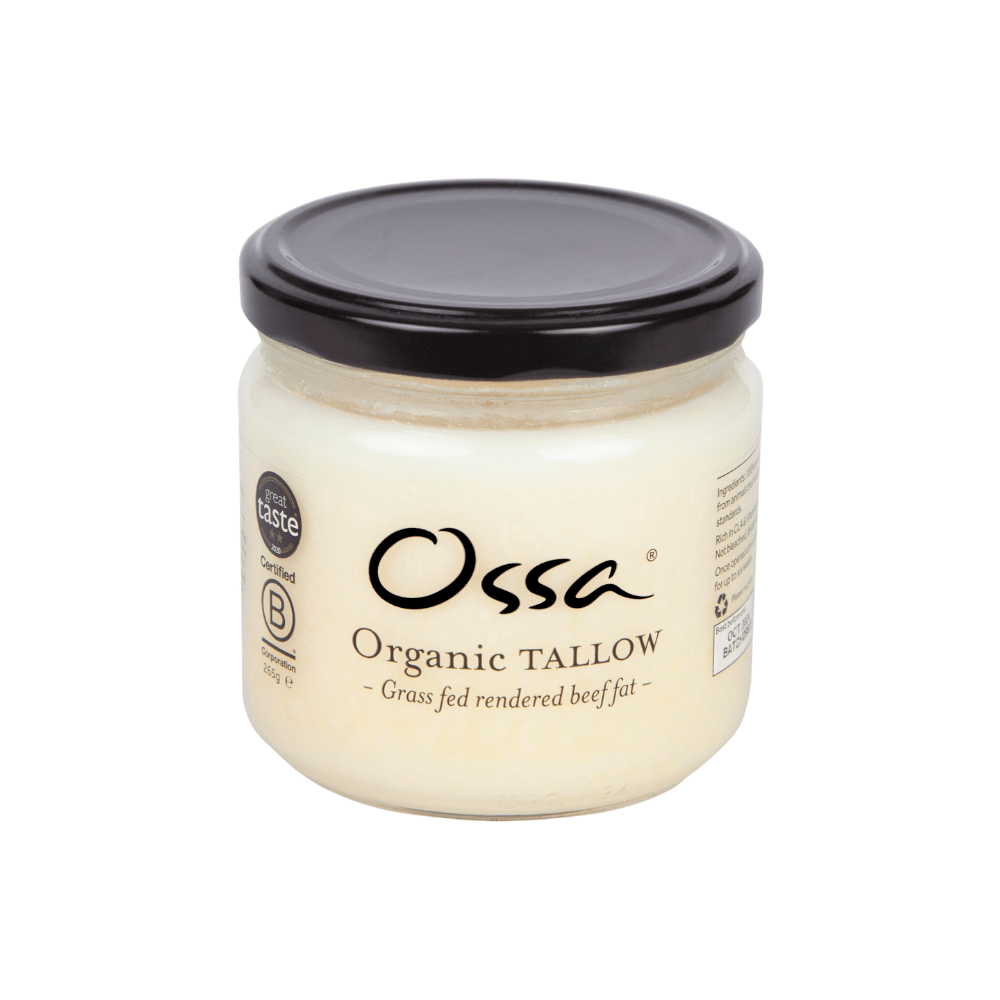
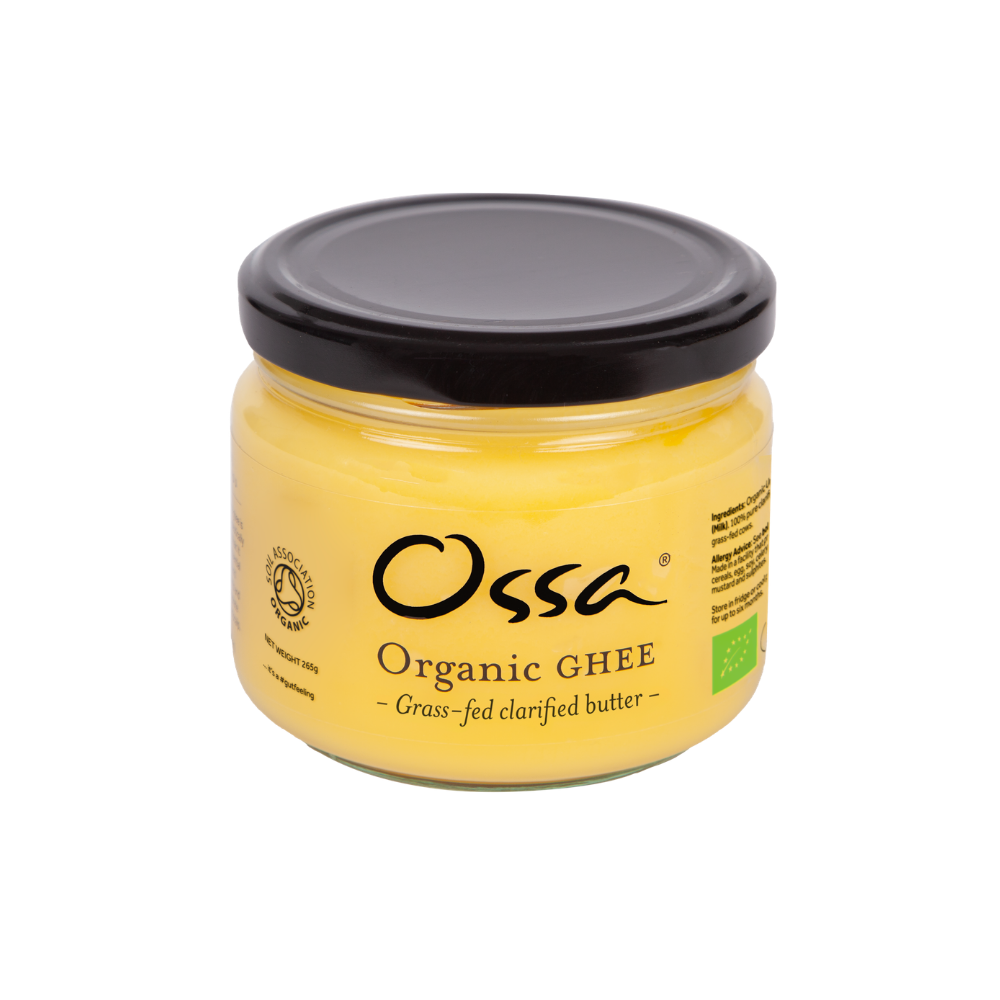
- Fats such as ghee and tallow, which can pick up flavours and are sensitive to oxygen.
- Dry goods and powders kept for months, where an airtight seal and a non-porous surface keep moisture out.
- Acidic foods, such as tomato-based sauces and pickles, which can stain and mark plastic.
Use plastic for:
- Food you carry: lunchboxes, picnic items and anything going into a bag or a child’s hands.
- Freezing in awkward spaces, though if you freeze in glass, leave room for the food to expand and use jars made for freezing.
- Cases where a fall would be a real hazard.
Habits that make either last
- Cool hot food before sealing it in any container, then refrigerate promptly.
- Replace plastic containers that are scratched, cloudy, warped or stained, because worn surfaces are harder to clean properly.
- Wash glass lids and seals well, as rubber and silicone seals can hold odours.
- Label with the date. Follow the storage and use-by guidance printed on the pack for any shop-bought product, including once opened.
Glass and plastic compared
| Question |
Glass |
Plastic |
| Barrier to oxygen, moisture and light |
Strong, impermeable |
Varies with the type of plastic |
| Chemical transfer to food |
Very low |
Additives can migrate in some conditions |
| Taste and odour |
Neutral |
Can absorb or pass on odours |
| Weight and transport carbon |
Heavier, higher per trip |
Lighter, lower per trip |
| Breakage |
Fragile |
Shatter-resistant |
| UK packaging recycling rate, 2022 |
About 74% (WRAP) |
51% (RECOUP) |
| Recycled into the same item |
Yes, repeatedly |
Usually into lower-grade products |
| Reuse |
Many times, 12 to 20 on average in refill systems |
Limited |
Choosing packaging for a natural kitchen
If you are building a pantry around organic, minimally processed food, three questions give you the answer quickly.
-
How long will the food sit in the container? The longer, the more an impermeable, inert material matters. Short trips favour lighter materials.
-
Will I reuse it? Reuse is what turns glass’s weight into a fair trade. Plan to keep jars and refill them.
-
Where does it end up? Check your council’s collection rules and put clean, empty packaging in the right bin.
A final point: packaging is only part of food’s footprint. Food itself usually carries a far larger environmental cost than its container, so wasting less food is a good reason to choose packaging that keeps it fresh and well stored.
Ossa Organic for a gut-friendly pantry
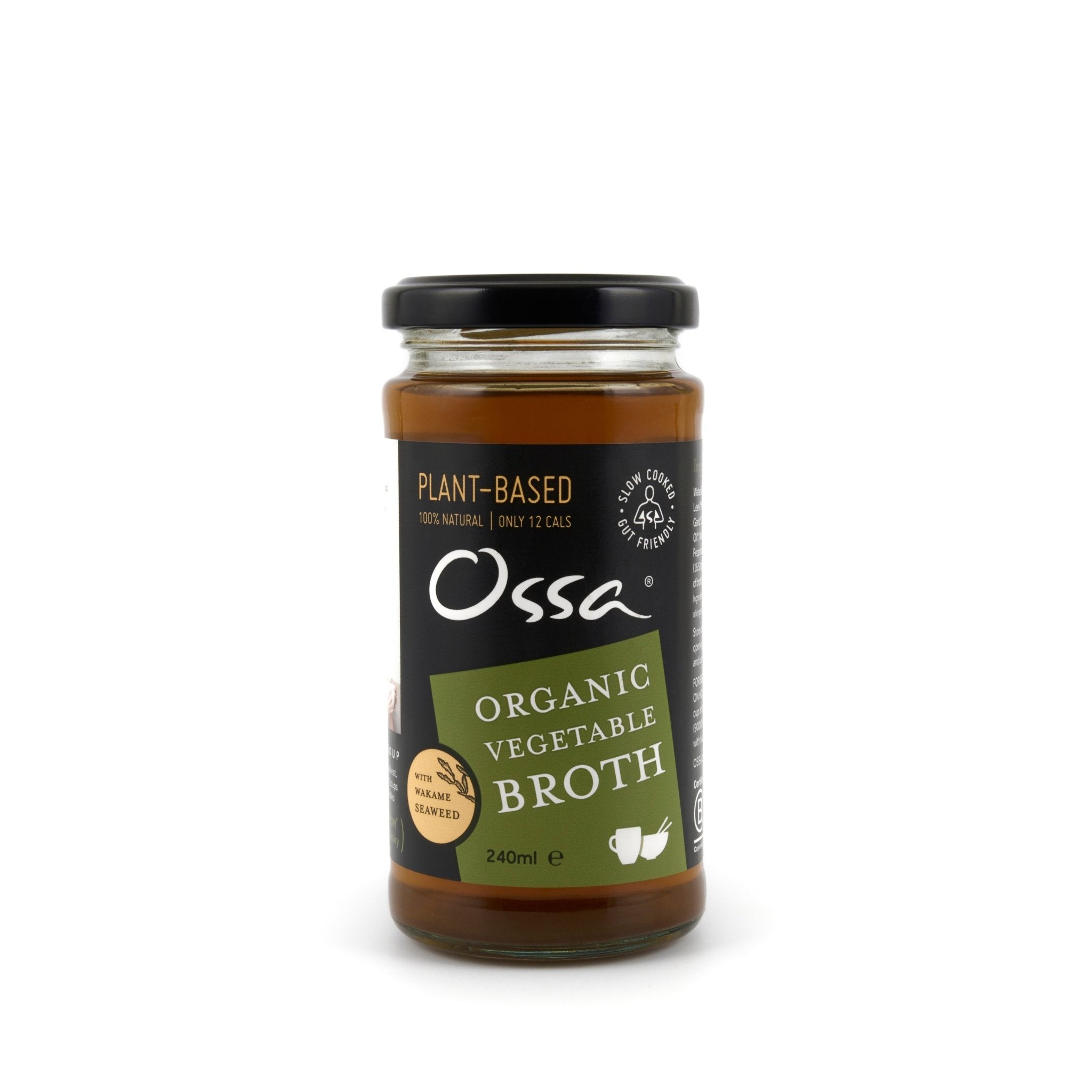
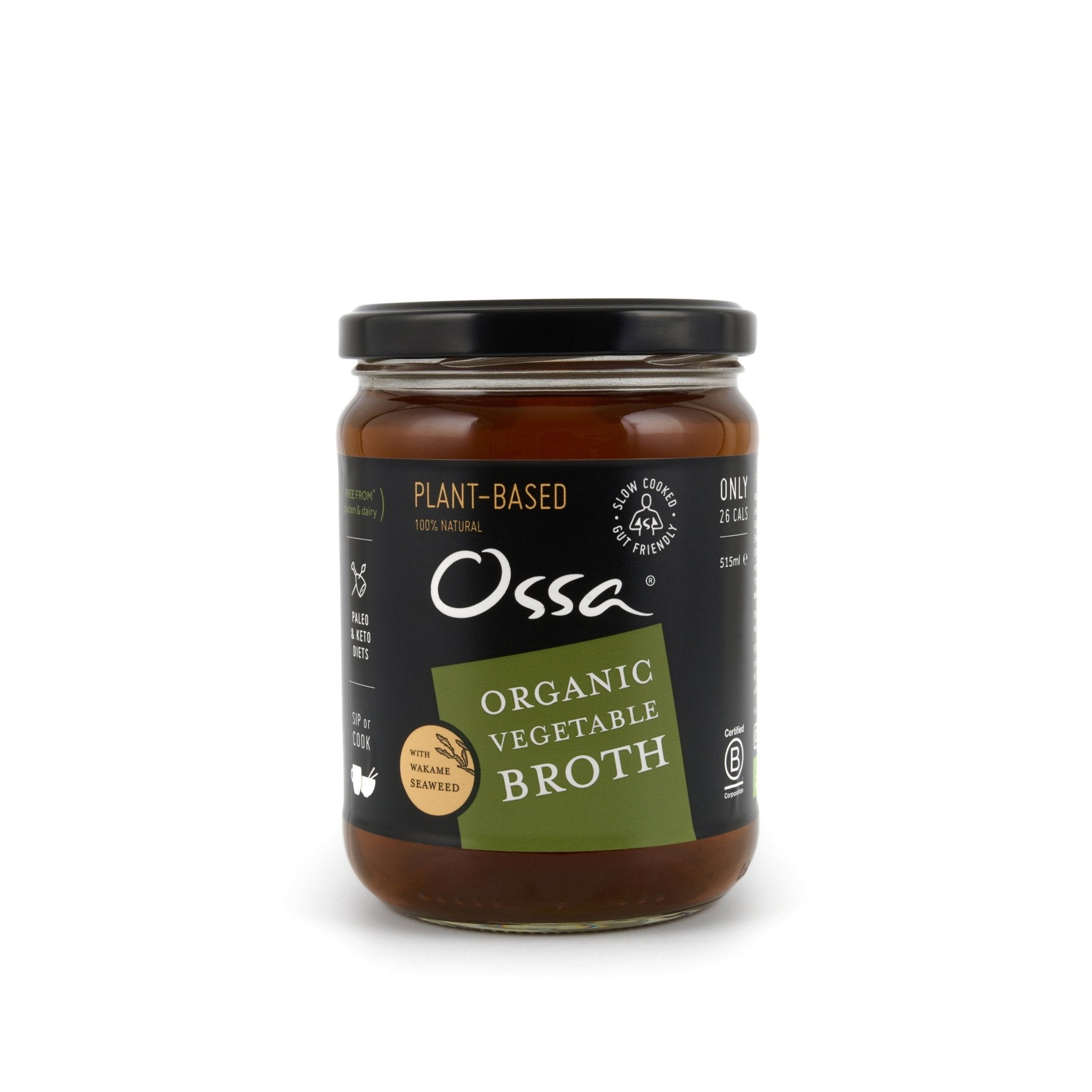
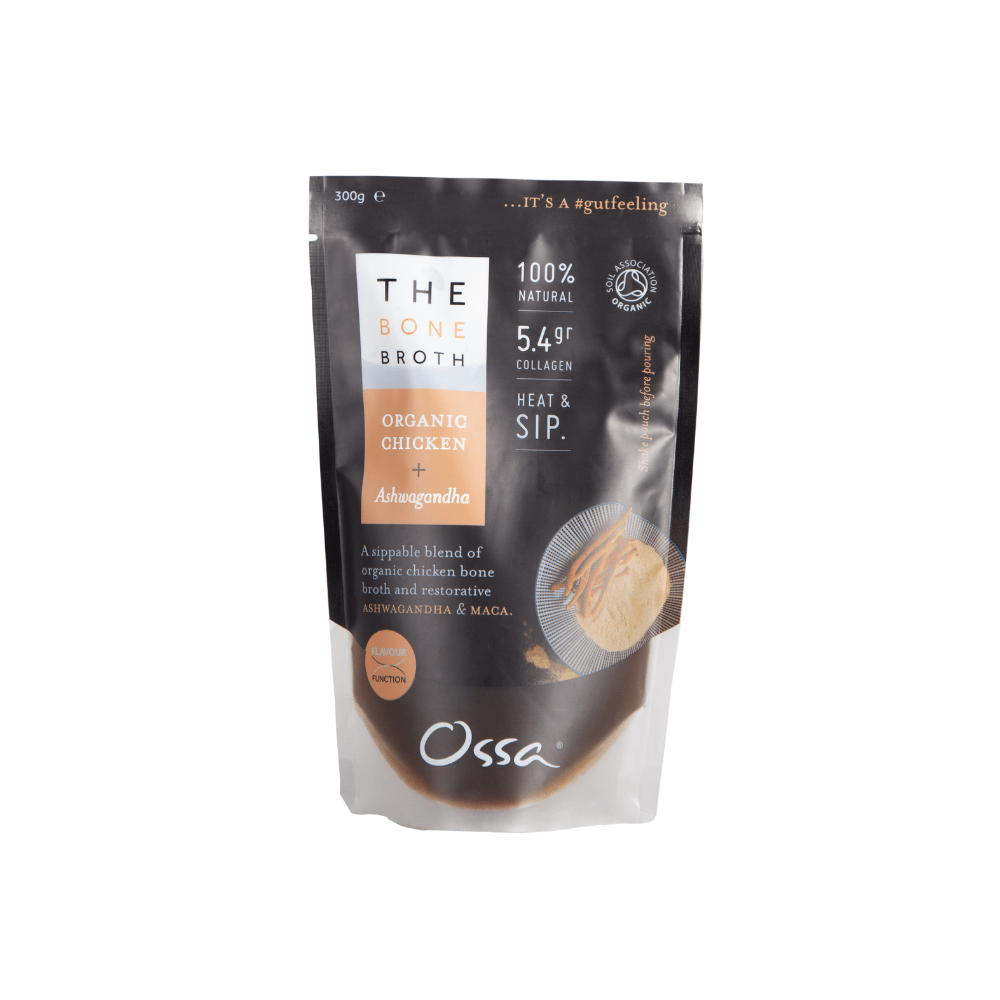
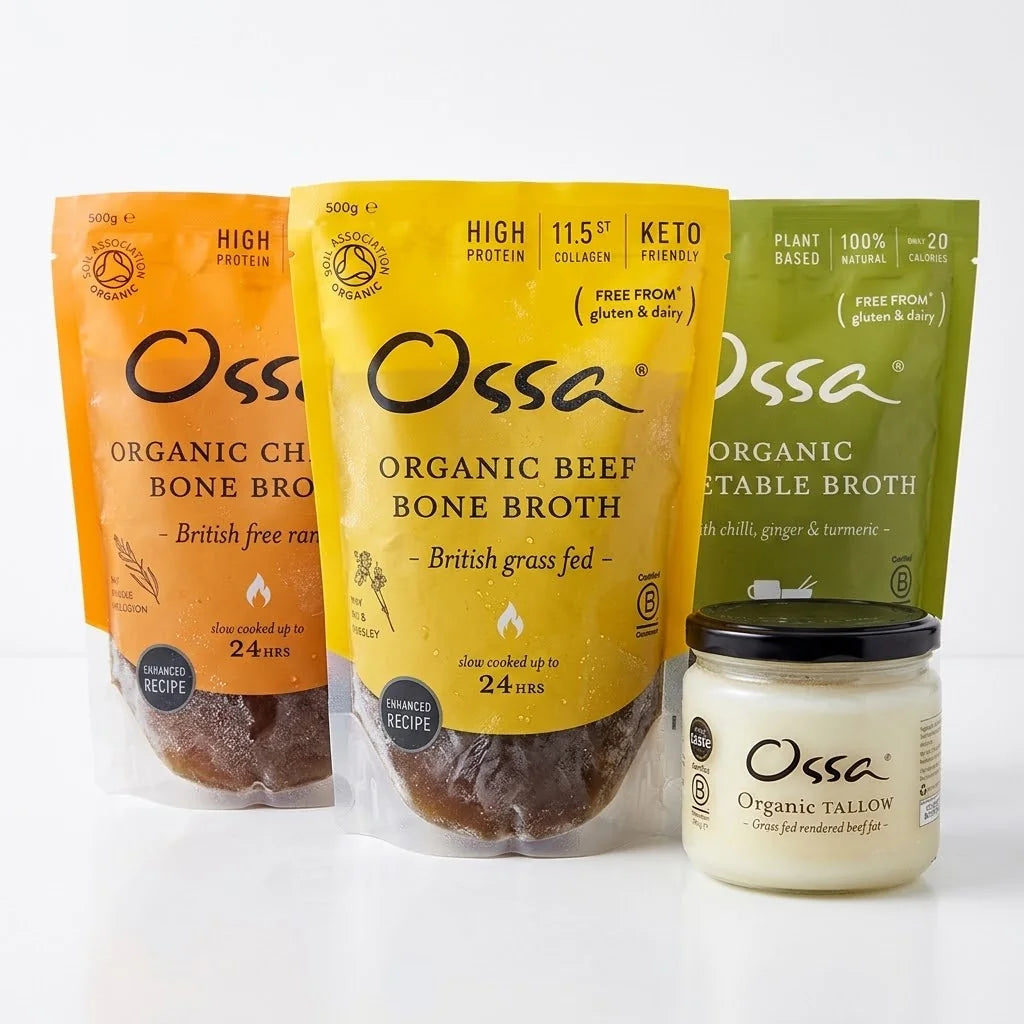
If you are moving towards food without preservatives or artificial ingredients, our range covers the staples: organic bone broths, collagen and gelatine powders and grass-fed fats. For a first order, the Ultimate Starter Kit brings products together in one purchase, and our grass-fed gelatine page explains the powder in detail.
Our view on packaging and pure food
We started Ossa Organic because bone broth changed how our own family eats. Since then we have eaten mostly paleo and avoided inflammatory foods, and we cook slowly, with organic, grass-fed ingredients.
That way of cooking leads us to the same question this article asks: what touches your food matters. Our products are free from preservatives and artificial ingredients, and we think the way you keep them at home should follow the same principle. Fats, broths and powders are some of the most nourishing things in a pantry, and they deserve a clean, neutral, airtight home. For most households that means glass jars that you keep, refill and recycle at the end of their life.
Tradition, not trend, is how we describe our range, and the same goes for storage. Jars have kept food for generations, and the evidence from UK food bodies supports why: glass is impermeable, inert and endlessly recyclable.
Ossa Organic
FAQ
Is glass better than plastic for storing food?
For most home storage, yes. Glass is impermeable, does not absorb odours and transfers very little to food, according to the Food Standards Agency and a 2021 peer-reviewed review. It suits fats, broths, leftovers and dry goods kept for a long time. Plastic remains the practical choice for anything you carry or that might be dropped.
How many times can glass be recycled?
Indefinitely, according to British Glass, because it can be remelted without losing quality. In practice, the limit is what happens to it after collection: UK bottle-to-bottle recycling was 43% in WRAP’s roadmap, so much glass is used for other products. Putting clean bottles and jars in the right bin gives them the best chance of becoming new ones.
Why are drinking glasses not recycled with bottles and jars?
Drinking glasses, ovenware and window glass are made with different compositions and melt at different temperatures from packaging glass. Mixed into a batch, they can spoil the new glass. Keep them out of your glass recycling and ask your council or household waste recycling centre what it accepts.
Is glass packaging worse for the environment because it is heavy?
Per single journey, yes: glass weighs about three times as much as plastic, so transport emissions are higher, and a Gaia study found PET bottles had just under half the emissions of glass ones. Reuse changes this. One UK returnable bottle system found its glass bottles beat plastic cartons after just two uses, and glass can be reused many times at home.
Can I microwave food in glass?
Only in glass labelled as heat-resistant or microwave-safe, with the lid removed or vented. Ordinary jars can crack with sudden temperature changes. Let food cool a little first and avoid moving a container straight from the freezer to heat.
Recommended