

Cart
0
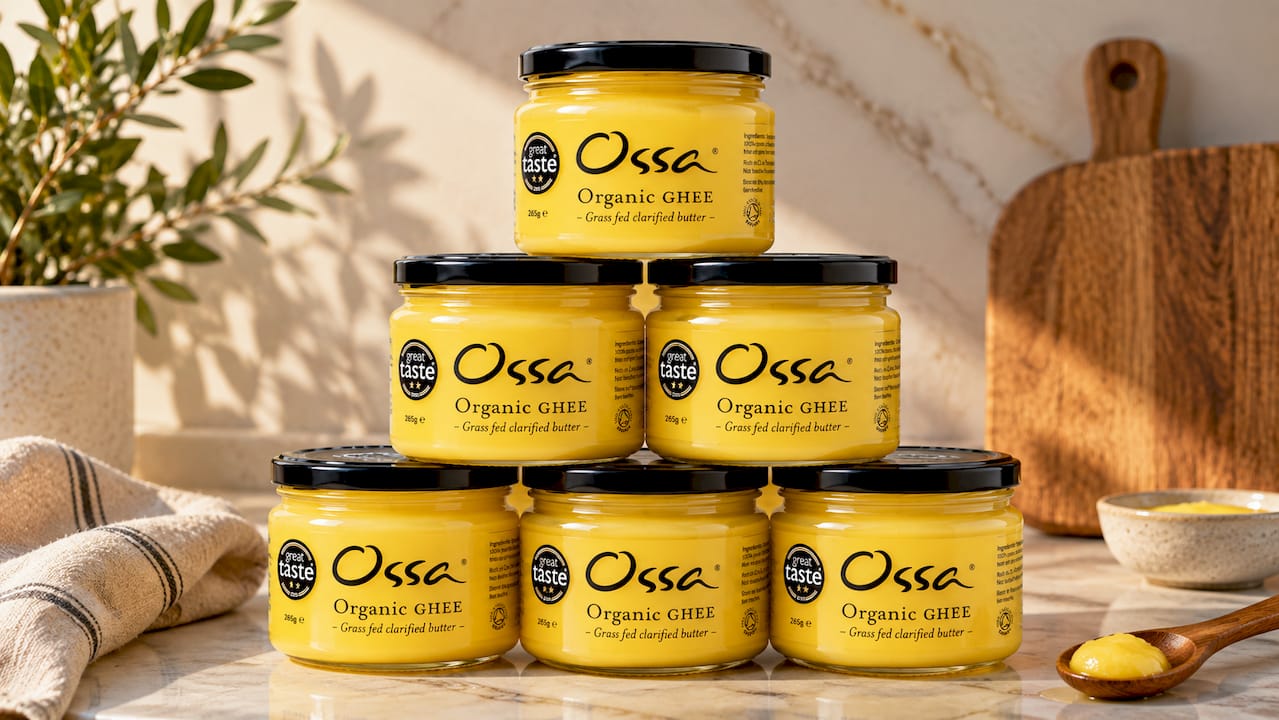
Ghee is usually so low in lactose that laboratory tests struggle to find any, but it is not a certified lactose-free food. Most people with lactose intolerance tolerate it well, since traditional clarification strips out almost all the milk solids that cause symptoms. Anyone with a diagnosed milk-protein allergy should still avoid it, because trace casein can remain. The detail, including the actual lab figures and NHS guidance, follows below.
TL;DR:
Ghee contains less than 3 milligrams of lactose per 100 grams, making it far below the threshold typically provoking symptoms in most lactose intolerant individuals.
The traditional slow clarification process removes nearly all milk solids, but small amounts of protein like casein can remain, posing risks for milk-protein allergies.
Variability in lactose content exists between brands and homemade preparations, especially if clarification is rushed or less thorough, so caution is advised.
For those with lactose intolerance, starting with small, measured ghee servings and monitoring symptoms can determine individual tolerance.
Ghee is not guaranteed casein-free, so people with milk-protein allergies should avoid it unless confirmed safe by allergy testing.
Table of Contents
Is ghee lactose free? What clarification actually removes
Ghee starts life as butter, and butter is roughly 80% milk fat with the rest made up of water, lactose, and milk proteins like casein and whey. Making ghee means simmering that butter slowly until the water evaporates and the milk solids separate out as foam and sediment, which get skimmed or strained away. What is left behind is almost pure fat.

That process is why ghee behaves so differently from butter in the gut. The typical finished product runs at around 99% milk fat, leaving very little room for lactose or protein residue. Butter, by contrast, keeps most of its original water and milk-solid content, which is exactly where lactose lives.
A few things worth knowing about the clarification step:
-
It is a heat-based physical separation, not a chemical or enzymatic process.
-
Longer, slower simmering tends to remove more of the milk solids than a quick clarification.
-
Small amounts of protein can still cling to the fat even after straining, which matters more for allergy than intolerance.
-
Traditional ghee-making methods, the kind Ossa Organic explains in its comparison of ghee and butter, aim to maximise that separation rather than rush it.
This is the mechanical reason ghee sits so far below butter on lactose content, and it sets up the laboratory numbers in the next section.
Lactose content in ghee: what the lab data shows
Peer-reviewed measurements put ghee’s lactose content at extremely low levels, less than a few milligrams per 100 grams, with the fat content of the samples running at roughly 99.3%. That is not a rounding error. It is a genuinely tiny amount, especially set against butter.
The numbers: Ghee measured extremely low amounts of lactose per 100 g, while butter measured several hundred milligrams of lactose per 100 g in the same research. That is a gap of two to three orders of magnitude between the two fats.
To put that in context, most adults with lactose intolerance start noticing symptoms somewhere around 12 grams of lactose in one sitting, according to NHS-linked pharmacy guidance on lactose in medicines. A 100 gram serving of ghee delivers a few thousandths of a gram at most. You would need to eat an implausible quantity of ghee in one meal to approach a symptomatic dose from lactose alone.
That does not make ghee bulletproof, though. A few caveats are worth holding onto:
-
The study behind these figures worked with a small number of samples, not an industry-wide survey.
-
Lactose content can vary between manufacturers depending on how long and how thoroughly the butter is clarified.
-
Home-made or less rigorously strained ghee may retain more milk solids than commercially produced versions.
-
Cross-contact during production, such as shared equipment with other dairy products, could theoretically introduce trace amounts not reflected in a controlled lab sample.
None of that undermines the core finding. It just means “extremely low” is a more honest description than “guaranteed zero,” which matters when you are deciding whether to trust a jar of ghee with a sensitive gut.
Can people with lactose intolerance eat ghee?
NHS guidance on lactose intolerance is clear that tolerance is individual. Some people can manage small amounts of lactose without any trouble, while others react to far less. Symptoms typically include bloating, wind, stomach pain, and diarrhoea, and they tend to scale with the dose rather than appearing as an all-or-nothing switch.
Given how little lactose ghee actually contains, it sits at the very low-risk end of the dairy spectrum. North Bristol NHS Trust’s dietary advice for people avoiding lactose lists ghee among the fats generally considered suitable, with the standard recommendation to introduce it gradually rather than assuming it will suit everyone equally.
A sensible approach looks like this:
-
Start with a small, clearly measured portion rather than cooking a full meal in ghee straight away.
-
Wait several hours and note any digestive symptoms before increasing the amount.
-
If symptoms appear, consider whether a lactase enzyme supplement helps, since these are designed for exactly this kind of borderline tolerance.
-
Keep a simple note of what else you ate, since mixed dishes make it harder to isolate the cause.
Pro Tip: If a meal that includes ghee also contains onions, garlic, or a large amount of fat, don’t blame the ghee automatically. High-fat meals and certain fibres can trigger bloating on their own, and it’s easy to misattribute the culprit if ghee is the newest ingredient in the dish.
It is also worth remembering that other digestive conditions, from irritable bowel syndrome to fructose malabsorption, produce symptoms that overlap heavily with lactose intolerance. If reactions persist even with very low-lactose foods like ghee, that is a reason to speak with a GP rather than simply avoiding more foods by trial and error.
Milk allergy is not the same as lactose intolerance
Lactose intolerance and milk-protein allergy are frequently confused, but they involve entirely different body systems. Intolerance is a digestive issue caused by insufficient lactase enzyme to break down milk sugar. Allergy is an immune response, either IgE-mediated (producing rapid reactions like hives or swelling) or non-IgE-mediated (causing delayed symptoms such as eczema flares or gut inflammation), triggered by milk proteins like casein and whey.
This distinction is the reason ghee is not automatically safe for everyone who avoids dairy. Clinical commentary from the Cleveland Clinic points out that ghee is not a dairy-free food. Even though clarification removes almost all lactose, it does not guarantee the complete removal of casein, and immune systems can react to protein traces that would never trouble someone with straightforward lactose intolerance.
The practical takeaway splits cleanly in two:
-
If your issue is lactose intolerance, ghee’s near-zero lactose content makes it one of the more forgiving dairy-derived fats available.
-
If your issue is a diagnosed milk-protein allergy, ghee should be avoided or discussed with an allergy specialist before trying it, since even trace casein can trigger a reaction in sensitised individuals.
-
Anyone experiencing swelling, hives, or breathing difficulty after eating dairy products, including ghee, needs urgent medical attention rather than a home trial.
-
Allergy testing through a GP or allergist is the only reliable way to confirm which category you fall into, rather than guessing from symptoms alone.
“Lactose-free” and “dairy-free” are not interchangeable terms, and mixing them up is where most confusion about ghee starts.
How to test your own tolerance safely
A staged trial beats guessing, and it does not need to be complicated. This structure mirrors the graduated approach North Bristol NHS Trust recommends for introducing lactose-avoiding foods back into a diet.
-
Micro-test: Cook one egg or a small piece of toast with a single teaspoon of ghee. Eat it alone, away from other new foods, and wait 24 hours.
-
Small portion: If nothing happens, move up to a tablespoon used in a simple dish, such as sautéed vegetables, and again monitor for a full day.
-
Normal portion: Once two clean trials have passed, use ghee as you normally would in cooking and continue noting how you feel.
-
Record everything: Symptom type, timing after eating, and anything else consumed alongside the ghee, so patterns are easy to spot later.
Stop the trial and speak to a GP or dietitian if you notice worsening symptoms at any stage, or if reactions appear even at the micro-test level. That pattern suggests something beyond simple lactose sensitivity is at play. For meal ideas to use during the small-portion stage, Ossa Organic’s ghee recipe collection is a reasonable place to start, and readers wanting broader lactose-free cooking inspiration can also look at lactose-free meal options from Wild Foodz.
Checking labels: what UK allergen rules actually require
UK food allergen labelling rules require manufacturers to clearly declare milk as an ingredient whenever it is present, even in small amounts, and this is a legal requirement rather than a courtesy. Government guidance on allergen labelling also makes clear that precautionary statements like “may contain milk” are about cross-contact risk during manufacturing, not a measure of how much lactose or protein a food actually contains.
That distinction matters when you are standing in a supermarket aisle. Food Standards Agency guidance is explicit that precautionary allergen labelling should reflect a genuine risk assessment, not be applied as a blanket disclaimer, and that it should never appear alongside a “free-from” claim for the same allergen.
A few habits make label-reading faster and more reliable:
-
Look for an explicit ingredients statement rather than relying on marketing claims on the front of the pack.
-
Treat “may contain milk” as a genuine cross-contact warning, not evidence about how much lactose is inside.
-
Buy sealed, prepacked ghee from producers who state their sourcing and production process clearly.
-
Contact the manufacturer directly if labelling is ambiguous, especially if you have a diagnosed allergy rather than intolerance.
Pro Tip: If a product carries no allergen statement about milk at all, that is not automatically reassuring. It may simply mean the manufacturer has not completed a formal risk assessment. Clear labelling, not silence, is the sign of a well-managed supply chain.
Ossa Organic’s approach to ghee production
The brand was founded after discovering how much difference nourishing, minimally processed food made during pregnancy, a principle which continues to shape its product approach with an emphasis on organic, grass-fed sourcing and traditional slow methods rather than shortcuts.
That matters for anyone reading this article with a genuine interest in low-residue ghee, because production method is exactly what determines how thoroughly milk solids are separated out.
-
Ghee is produced using a traditional clarification method rather than rapid industrial processing.
-
Slow, deliberate simmering is the same mechanism laboratory studies point to when explaining why ghee carries far less lactose than butter.
-
No claim here amounts to a medical guarantee. Ghee’s suitability for lactose intolerance rests on general lab evidence, not testing of any specific batch.
-
Readers wanting more on how ghee fits a gut-focused diet can read Ossa Organic’s explainer on ghee as a gut-friendly alternative to butter.
Why the “just avoid all dairy” advice misses the point
Blanket dairy avoidance is the easiest advice to give and often the least useful one to follow. Lactose intolerance is a spectrum, not a switch, and treating ghee the same as a glass of milk ignores what the clarification process actually does to milk sugar and protein content.
The more useful mindset is matching the food to the actual mechanism causing your symptoms. Ghee earns its place in a gut-focused diet, not because it is trendy, but because slow, traditional clarification does what it has always done: strip out the parts of milk that cause the most trouble for the most people. Cautious, staged testing beats either extreme, whether that is nervously avoiding a food with negligible lactose or assuming any dairy-derived product is automatically fine. A GP or dietitian should always be the tie-breaker when symptoms are unclear or persistent.
— Ossa Organic
Try Ossa Organic’s grass-fed ghee for yourself
Ossa Organic makes the alternative to guessing whether your ghee jar was rushed through production: buy from a producer that states exactly how its ghee is made, from British grass-fed cows, using traditional slow clarification rather than industrial shortcuts. The Organic Ghee - Grass Fed Clarified Butter is built around that same low-residue principle described throughout this article. For a wider gut-health pantry, the Daily Essentials Chilled Bundle pairs ghee with complementary staples, and the Pasture Raised Gelatine suits anyone building out restorative, gut-focused cooking. Browse the full range of organic bone broths, collagen, and grass-fed fats, or explore the gut health bundles, honey, and healthy snacks collection. Got a specific allergen question about a batch or ingredient? Contact Ossa Organic’s customer service team before you buy, particularly if you are managing a diagnosed milk allergy rather than intolerance.
FAQ
Is ghee okay for lactose intolerance?
For most people with lactose intolerance, yes. Laboratory measurements found ghee contains less than 0.05 to 2.9 milligrams of lactose per 100 grams, far below the roughly 12 gram threshold that typically triggers symptoms in adults. Individual tolerance still varies, so a small trial portion is the safest way to confirm it works for you.
Is ghee inflammatory like dairy?
Ghee is not classed as inflammatory in the way high-lactose dairy products can be for people who react to milk sugar, since clarification removes most of the lactose and much of the protein. It is not a guaranteed anti-inflammatory food either, and anyone with a milk-protein allergy should still avoid it because trace casein can persist.
What are the top worst foods for lactose intolerance?
The foods that tend to cause the most trouble are those with the highest lactose concentration and the least processing, such as milk, soft cheeses, ice cream, and butter, which measured 685 to 688 milligrams of lactose per 100 grams in laboratory testing. Ghee sits at the opposite end of that scale because clarification removes almost all of the lactose butter contains.
Can ghee upset your stomach?
Ghee can occasionally cause digestive discomfort, but this is more often linked to its high fat content than to lactose, since a rich, fatty meal can slow digestion and cause bloating on its own. If symptoms appear even with very small portions of ghee, that points toward a different digestive issue, and a GP or dietitian can help identify the actual cause.
Is ghee casein free?
Ghee is not guaranteed to be casein free, even though clarification removes the vast majority of milk protein along with the lactose. Trace amounts of casein can remain, which is why anyone with a diagnosed milk-protein allergy, rather than lactose intolerance, should avoid ghee or seek specialist advice first.