

Cart
0
TL;DR:
- Low FODMAP bone broth avoids high-FODMAP ingredients like onion and garlic, providing amino acids that support gut health. Commercial broths often contain hidden allium derivatives, so checking for Monash University certification or full ingredient disclosure is essential. Making homemade broth with safe bones and ingredients ensures a therapeutic, gut-friendly stock.
Low FODMAP bone broth is a nourishing stock made strictly without high-FODMAP ingredients such as onion and garlic, delivering essential amino acids that support gut health and remain safe for people with IBS or sensitive digestion. The standard dietary framework for this approach comes from Monash University, whose research defines which foods trigger fermentation and bloating in the gut. Bone broth provides key amino acids like glutamine, glycine, and proline that support gut lining integrity and digestive repair. These nutrients make it a genuinely therapeutic food, not simply a trend. Ossa Organic has built its entire range on this principle, sourcing organic, pasture-raised bones and slow-simmering them without any allium additives.
Is bone broth low FODMAP? What ingredients must be avoided
Most standard bone broths are not low FODMAP. The problem is not the bones themselves. It is the vegetables and flavourings added during cooking.
Onions and garlic contain fructans that leach directly into broth during boiling. Fructans are water-soluble, which means they cannot be removed once they have dissolved into the liquid. A broth simmered with even a small amount of onion or garlic becomes a FODMAP trigger, regardless of how long it cooks or how much it is strained.
Most commercial bone broths contain onion or garlic derivatives listed under broad terms like “natural flavours” or “yeast extract.” This labelling makes it genuinely difficult to identify safe products without reading every ingredient carefully. The term “natural flavours” is a common hiding place for allium extracts that will provoke IBS symptoms.
Ingredients to avoid
-
Onion (all forms: white, brown, red, dried, powdered)
-
Garlic (fresh, dried, powdered, or as part of “natural flavours”)
-
Leeks (the white and light green parts)
-
Shallots
-
Celery in quantities above 10 g per serving
-
“Natural flavours,” “yeast extract,” or “vegetable extract” without full disclosure
Safe ingredients for a gut-friendly bone broth
-
Carrots (in moderate amounts)
-
Celery, strictly limited to 10 g per serving for Monash University compliance
-
Green tops of scallions, which are Monash University verified as safe (the white bulb must be discarded)
-
Fresh thyme and rosemary
-
Bay leaves
-
Black peppercorns
-
Fresh parsley
The distinction between the green scallion top and the white bulb is one of the most commonly overlooked details in low FODMAP cooking. The fructans concentrate in the bulb, not the leaf. Using only the green tops gives you allium flavour without the FODMAP load.
How to make homemade low FODMAP bone broth
Homemade broth gives you complete control over every ingredient. That control is the single biggest advantage over any commercial product. Follow this method for a clear, collagen-rich result.
Choosing the right bones
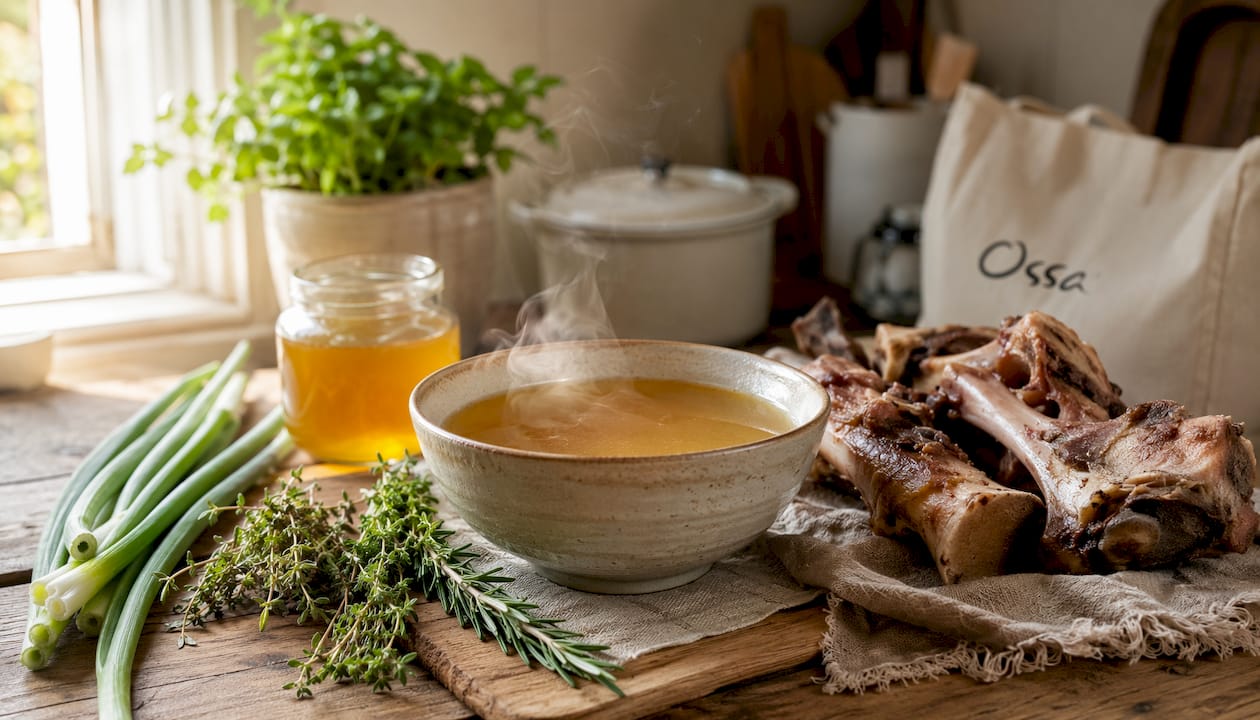
Joint-rich bones such as knuckles, wings, and backs deliver higher gelatin content and better collagen extraction than meaty bones alone. Collagen-rich bones produce the characteristic gelatinous texture that sets a good broth apart from a thin stock. For chicken broth, use a combination of carcasses, wings, and feet if available. For beef broth, knuckle bones and oxtail work well together. You can read more about why bone selection matters in this guide to chicken bone broth benefits.
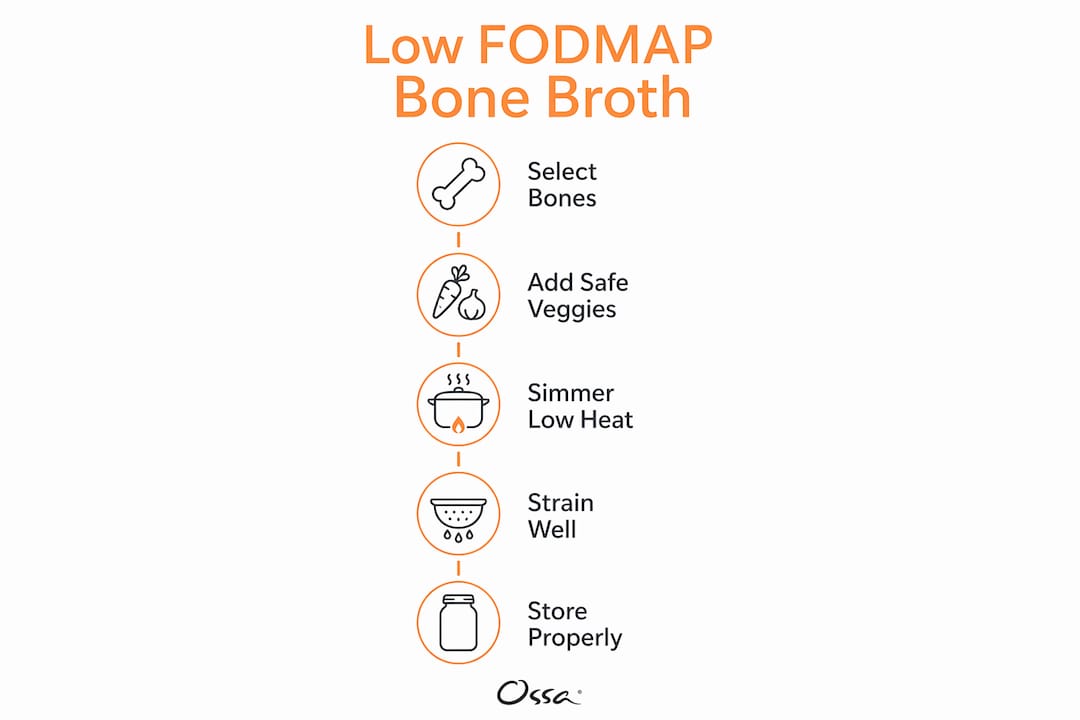
Step-by-step method
-
Blanch the bones (optional but recommended). Place raw bones in a large pot, cover with cold water, and bring to a boil. Drain and rinse under cold water. This removes blood and impurities that cause cloudiness and off-flavours.
-
Add bones to a large pot or slow cooker. Place blanched bones in the vessel. Add your safe vegetables: carrots, no more than 10 g of celery, green scallion tops, thyme, rosemary, and bay leaves.
-
Add apple cider vinegar. Pour in one to two tablespoons of apple cider vinegar. Apple cider vinegar helps leach minerals from the bones during cooking. Allow the mixture to sit for 20–30 minutes before applying heat.
-
Cover with cold water. Water volume should barely cover the bones to concentrate collagen and mineral extraction. Too much water dilutes the final broth significantly.
-
Bring to a gentle simmer. On the stovetop, bring the pot to a boil, then immediately reduce to the lowest possible simmer. On a slow cooker, set to low.
-
Skim the foam. Skimming the foam that forms during the first 30 minutes removes oxidised fats and impurities. This step directly improves broth clarity and taste.
-
Cook low and slow. Slow cooking for 8–12 hours, or up to 24 hours, yields rich flavour and maximum collagen. High heat degrades amino acids and produces a bitter, cloudy result.
-
Strain and cool. Pour the broth through a fine mesh sieve. Discard solids. Cool rapidly and refrigerate. Skim any solidified fat from the surface before use.
-
Store correctly. Refrigerate for up to five days or freeze in portions for up to three months.
Pro Tip: Garlic-infused oil is a safe way to add garlic flavour to your broth without any FODMAP risk. Fructans are not soluble in oil, so the oil carries the flavour without the trigger. Drizzle a small amount into the finished broth or use it as a base for low FODMAP soup ideas built on your broth.
A note on histamine intolerance
People who are sensitive to histamine as well as FODMAPs should be aware that long-simmered bone broth is naturally high in histamine. If you react to aged or fermented foods, start with a shorter cook time of around four to six hours and monitor your response before extending to a full 24-hour simmer.
What are the nutritional benefits of bone broth for gut health?
The benefits of bone broth on gut health come primarily from three amino acids: glutamine, glycine, and proline. Each plays a distinct role in maintaining and repairing the gut lining.
Glutamine is the primary fuel source for enterocytes, the cells that line the intestinal wall. When the gut lining is damaged or inflamed, glutamine supports cellular repair and helps restore barrier function. Glycine has anti-inflammatory properties and supports the production of stomach acid, which is necessary for proper digestion. Proline is a precursor to collagen synthesis, contributing to the structural integrity of connective tissue throughout the digestive tract.
Bone broth is rich in collagen and amino acids that support gut lining integrity and digestive repair. For people managing IBS or recovering from gut inflammation, removing high-FODMAP ingredients from broth is not optional. It is the difference between a therapeutic food and a symptom trigger.
Collagen itself contributes to both gut and joint health. As broth cools and sets into a gel, that gel is a visible sign of high collagen content. A broth that does not gel has lower collagen concentration and delivers fewer structural benefits. The collagen and amino acid content in a well-made broth supports not just the gut lining but also cartilage, tendons, and skin.
Gut health experts focus on minimal plant additives in broth during the elimination phase of a low FODMAP diet, prioritising high-quality bones over a long list of vegetables. The reasoning is straightforward: every plant ingredient introduces a potential FODMAP risk. A broth built on excellent bones with only a handful of verified safe additions is both safer and more nutritionally concentrated.
How to choose a low FODMAP bone broth product
Selecting a safe commercial broth requires more than checking whether the label says “bone broth.” The ingredient list is the only reliable guide.
What Monash University certification means
Monash-certified low FODMAP products have undergone laboratory testing to measure specific FODMAP concentrations, including fructose, lactose, sorbitol, mannitol, and galacto-oligosaccharides. Certification confirms that the product is safe at the stated serving size. Without this certification, a product labelled “natural” or “clean” may still contain fructan-rich ingredients. The Monash University app is a practical reference tool for checking individual ingredients when certification is not available on a product.
What to look for on the label
-
No onion, garlic, shallot, or leek in any form
-
No “natural flavours,” “vegetable extract,” or “yeast extract” without full ingredient disclosure
-
Organic, pasture-raised bones as the primary ingredient
-
No added sugar or maltodextrin
-
Monash University certification where available
Homemade versus commercial broth
| Factor | Homemade broth | Commercial broth |
|---|---|---|
| Ingredient control | Complete | Dependent on label accuracy |
| Convenience | Low | High |
| Certification | None | Available from certified brands |
| Cost | Lower per litre | Higher per litre |
| Collagen content | Variable by method | Consistent if quality-controlled |
Homemade broth wins on ingredient control. Commercial broth wins on convenience. The best approach for many people on a low FODMAP diet is to keep a certified commercial broth on hand for daily use while making homemade batches at weekends for cooking and low FODMAP soup ideas. Current gastronomy trends for 2026 show growing demand for clean-label, gut-friendly broths, which is pushing more producers to seek Monash certification.
Key takeaways
Low FODMAP bone broth is only therapeutic when made without fructan-containing ingredients like onion and garlic, and with collagen-rich bones slow-simmered for 8–24 hours.
| Point | Details |
|---|---|
| Exclude all alliums | Onion and garlic leach fructans into broth and cannot be removed once dissolved. |
| Use joint-rich bones | Knuckles, wings, and backs deliver higher gelatin and collagen than meaty bones alone. |
| Limit celery strictly | Use no more than 10 g of celery per serving to stay within Monash University guidelines. |
| Check commercial labels | “Natural flavours” and “yeast extract” frequently contain hidden allium derivatives. |
| Garlic-infused oil is safe | Fructans do not dissolve in oil, making garlic-infused oil a reliable flavour alternative. |
What working with bone broth has taught us at Ossa Organic
The most common mistake people make when preparing bone broth on a low FODMAP diet is assuming that a small amount of onion or garlic will not matter. It does matter. Fructans are water-soluble and they leach fully into the liquid during simmering. There is no threshold below which they become safe for a sensitive gut.
The second mistake is using too much water. A diluted broth lacks the collagen concentration that makes this food genuinely useful for gut repair. The water should barely cover the bones. The broth should set to a gel in the fridge. If it stays liquid, the bones were either too meaty or the water volume was too high.
Quality of bones is the variable that most people underestimate. Pasture-raised, organic bones from animals that moved freely produce a richer, more nutritious broth than intensively farmed alternatives. At Ossa Organic, this is not a marketing claim. It is the foundation of every product. The difference shows up in the gel, the colour, and the flavour.
For people who want to personalise their broth within low FODMAP limits, the green tops of scallions, fresh thyme, and rosemary offer real flavour without any risk. Garlic-infused oil added at the end brings depth. These small adjustments make a broth you will actually want to drink daily, which is the only way it delivers consistent benefit. Store broth in glass jars in the fridge and use it as a base for soups, to cook grains, or to sip warm between meals as part of a 14-day gut reset.
— Ossa Organic
Ossa Organic’s certified low FODMAP bone broths
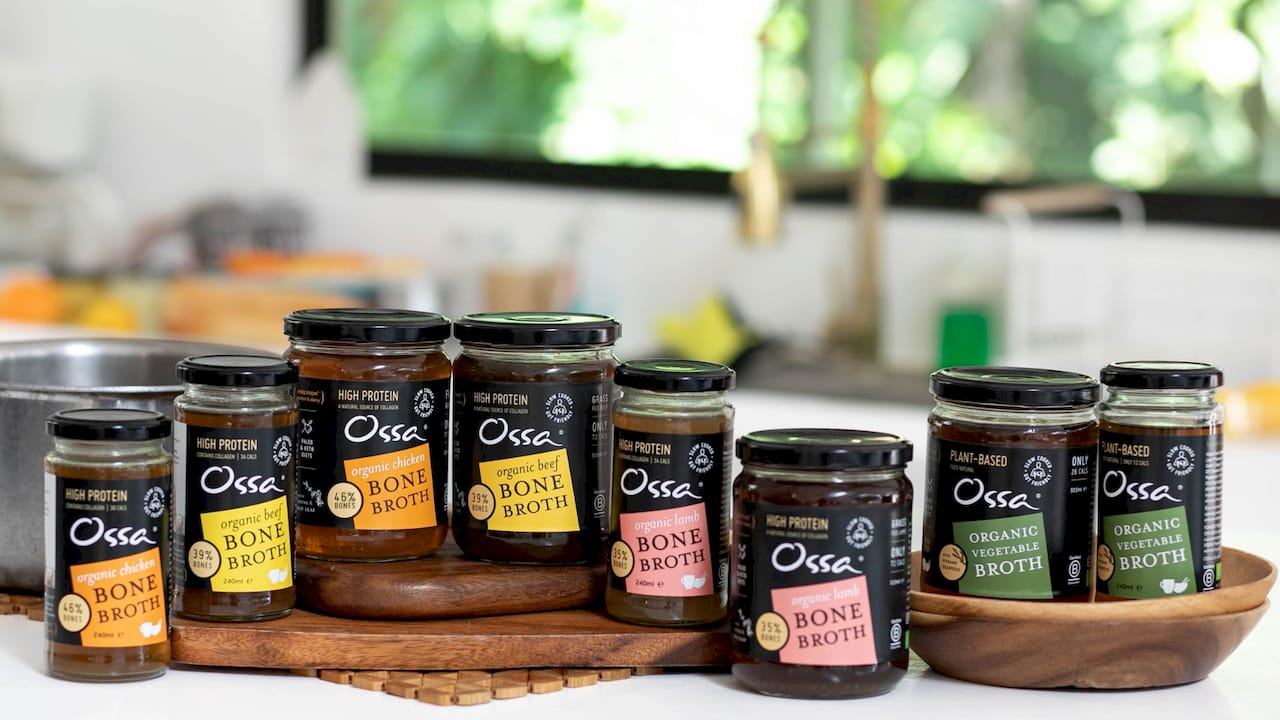
Ossa Organic produces organic bone broths made from pasture-raised bones, slow-simmered without any allium ingredients. Both the organic beef bone broth and the organic chicken bone broth are made with full ingredient transparency, giving people on a low FODMAP diet a reliable, convenient option. The ambient formats are practical for keeping in a cupboard and using whenever a homemade batch runs out. Both products complement a homemade broth routine and are suitable as a daily gut-supporting drink or as a base for low FODMAP soup recipes. Ossa Organic’s sourcing and slow-cooking methods are consistent with the principles outlined throughout this guide.
FAQ
Is bone broth low FODMAP?
Plain bone broth made from bones and water is low FODMAP. Most commercial broths are not, because they contain onion, garlic, or “natural flavours” derived from alliums.
Can I use celery in low FODMAP bone broth?
Yes, but strictly limited to 10 g per serving. Larger amounts of celery exceed Monash University’s safe threshold and can trigger IBS symptoms.
What can I use instead of garlic in bone broth?
Garlic-infused oil is the recommended alternative. Fructans do not dissolve in oil, so the oil delivers garlic flavour without any FODMAP content.
How long should I simmer low FODMAP bone broth?
Simmer on a low heat for 8–12 hours for chicken broth and up to 24 hours for beef broth. High heat degrades amino acids and produces a bitter result.
How do I know if a commercial bone broth is low FODMAP?
Look for Monash University certification on the label. If certification is absent, check that the ingredient list contains no onion, garlic, shallots, leeks, or unspecified “natural flavours.”