

Cart
0
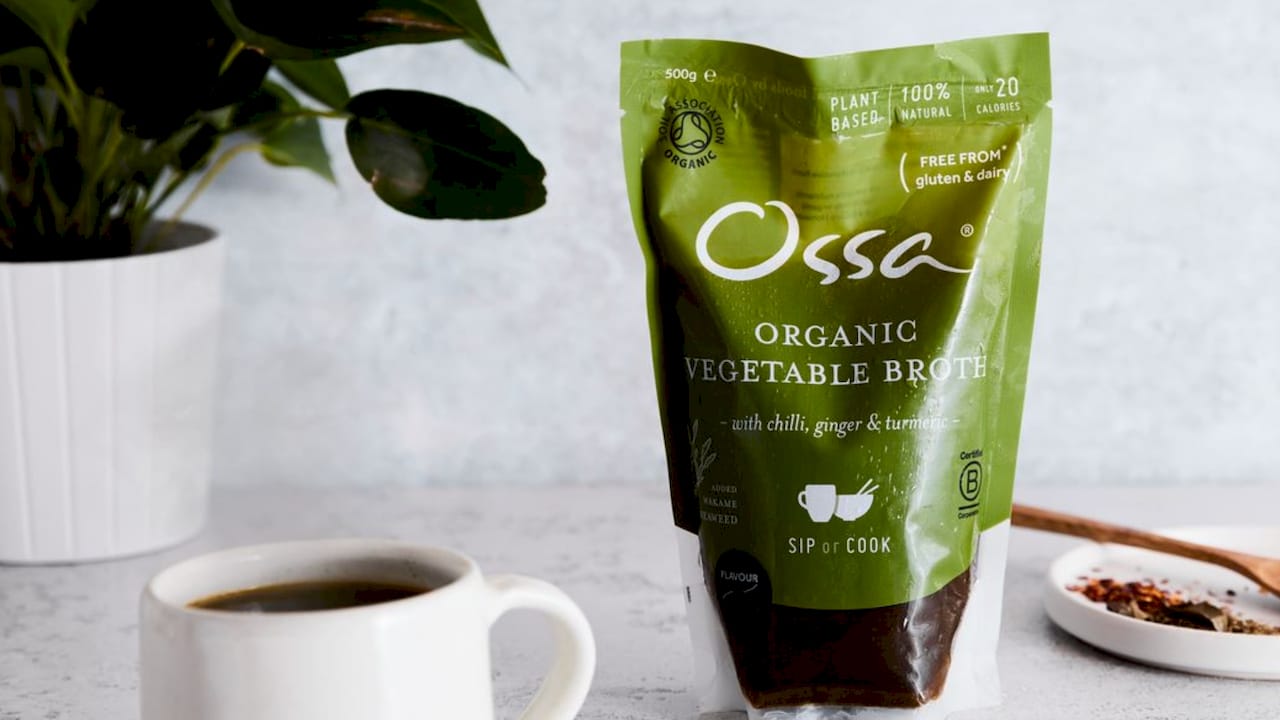
Safe, natural first foods for babies starting weaning are vegetables, fruit, starchy foods, iron-rich proteins and pasteurised full-fat dairy. NHS and Best Start in Life guidance recommends starting solids at around six months, keeping breastmilk or formula as the main drink until about one year, and prioritising iron-rich foods from the very first feeds. Ossa Organic’s range of organic bone broths fits naturally into family weaning recipes as a low-salt, nutrient-dense flavour base.
Best first foods to offer from around six months:
-
Steamed or mashed broccoli, cauliflower, courgette, butternut squash
-
Soft ripe banana, cooked pear, cooked apple, mango
-
Smooth porridge or iron-fortified baby cereal mixed with milk
-
Mashed potato or sweet potato
-
Soft-cooked red lentils or mashed chickpeas
-
Flaked well-cooked salmon (bones removed)
-
Scrambled egg
-
Soft-cooked chicken or beef, finely minced or pureed
-
Full-fat plain pasteurised yoghurt
-
Soft toast fingers with a thin spread of nut butter (no added salt or sugar)
Two quick rules to follow:
-
Do: introduce common allergens (peanut, egg, dairy, wheat, fish) from around six months, one at a time, in small amounts, several days apart.
-
Don’t: add honey before 12 months, and avoid added salt or sugar in any food you prepare or buy for your baby.
Key takeaways
Starting weaning around six months with iron-rich natural foods, progressing textures steadily, and keeping breastmilk or formula as the main drink until 12 months covers the core of safe, nutritious early feeding.
Seek personalised advice from your GP or a registered paediatric dietitian if your baby has a complex allergy history, growth concerns, or was born prematurely. Follow current NHS guidance as the primary reference for all weaning decisions.
Table of Contents
What belongs on your natural baby weaning food list
A natural baby weaning food list covers six broad groups. Each group serves a different nutritional purpose, and rotating across all of them from early on builds a varied palate and reduces the risk of nutritional gaps.
Vegetables
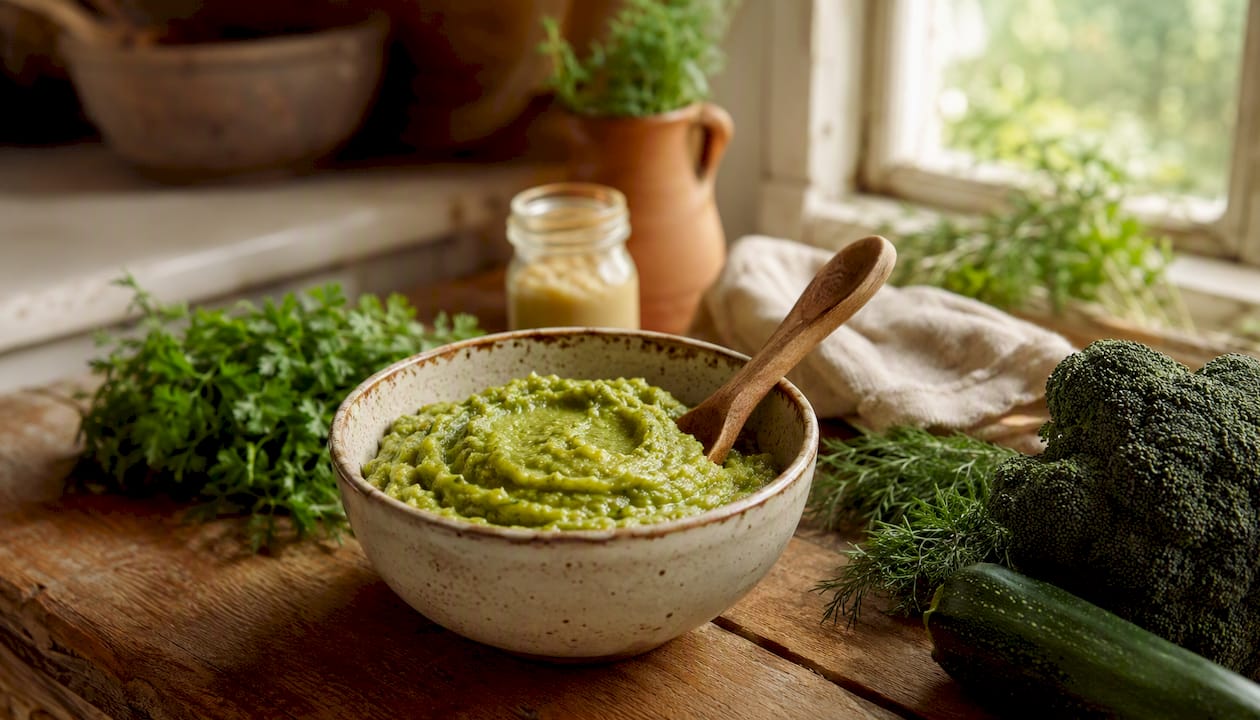
Start with lower-sugar, slightly bitter vegetables rather than going straight to sweet potato or carrot every time. Broccoli, cauliflower, spinach, courgette and peas all work well from six months. Steam until very soft, then mash or blend to a smooth consistency. As your baby progresses, leave small lumps in the mash or offer steamed sticks they can hold. Peas are in season in the UK in summer; frozen peas are nutritionally equivalent year-round and soften quickly.
Fruit
Ripe banana requires no cooking and mashes in seconds. Pear, apple and mango need brief steaming or poaching to soften safely for younger babies. Berries, which are widely available in UK markets from June to September, can be cooked and mashed at first, then offered whole and squashed once your baby is handling lumpier textures. Avoid adding any sweetener.
Starchy foods
Porridge oats, mashed potato, sweet potato, soft-cooked pasta and toast fingers all provide energy and help babies feel satisfied. Iron-fortified baby cereals are a practical store-cupboard option. NHS guidance recommends checking labels on any packaged cereal: choose options with no added sugar and low salt. Weetabix, which contains a small amount of salt, is generally considered acceptable from around six months in small quantities mixed with milk, but adult cereals with higher salt or sugar content are not suitable.
Proteins and pulses
Iron stores from birth begin to deplete at around six months, so protein-rich, iron-containing foods belong at every meal from the start. Meat (chicken, beef, lamb), well-cooked fish with all bones removed, eggs, red lentils, chickpeas, kidney beans and tofu are all appropriate. Liver is a concentrated source of iron but should be offered no more than once a week due to its high vitamin A content. Mince or blend meat finely for younger babies; older babies can manage soft shredded pieces.
Dairy
Full-fat pasteurised yoghurt and soft cheese (such as cream cheese or mild cheddar) can be introduced from six months. Cow’s milk works well in cooking and as a mixing liquid for cereals from six months, but should not replace breastmilk or formula as the main drink until 12 months.
Pulses and plant-based options
Red lentils cook down to a naturally smooth consistency without blending. Chickpeas and butter beans mash easily. Tofu, cut into soft cubes, is a useful plant-based protein for families following a plant-based baby food approach. Pair all plant-based iron sources with a vitamin C-rich food to improve absorption.
Pro Tip: Serve iron-rich foods alongside a small portion of vitamin C-rich fruit or vegetable at the same meal. Mashed red lentils with a spoonful of soft cooked pepper, or iron-fortified cereal with mashed kiwi, both improve non-haem iron absorption noticeably.
Organic vs non-organic: Organic produce reduces pesticide exposure, which many parents prioritise for young babies. In the UK, the Soil Association certifies organic produce. Where budget is a factor, prioritising organic for thin-skinned produce (strawberries, spinach, apples) and choosing conventional for thicker-skinned items (avocado, banana, sweet potato) is a practical middle ground.
How textures progress from purees to finger foods
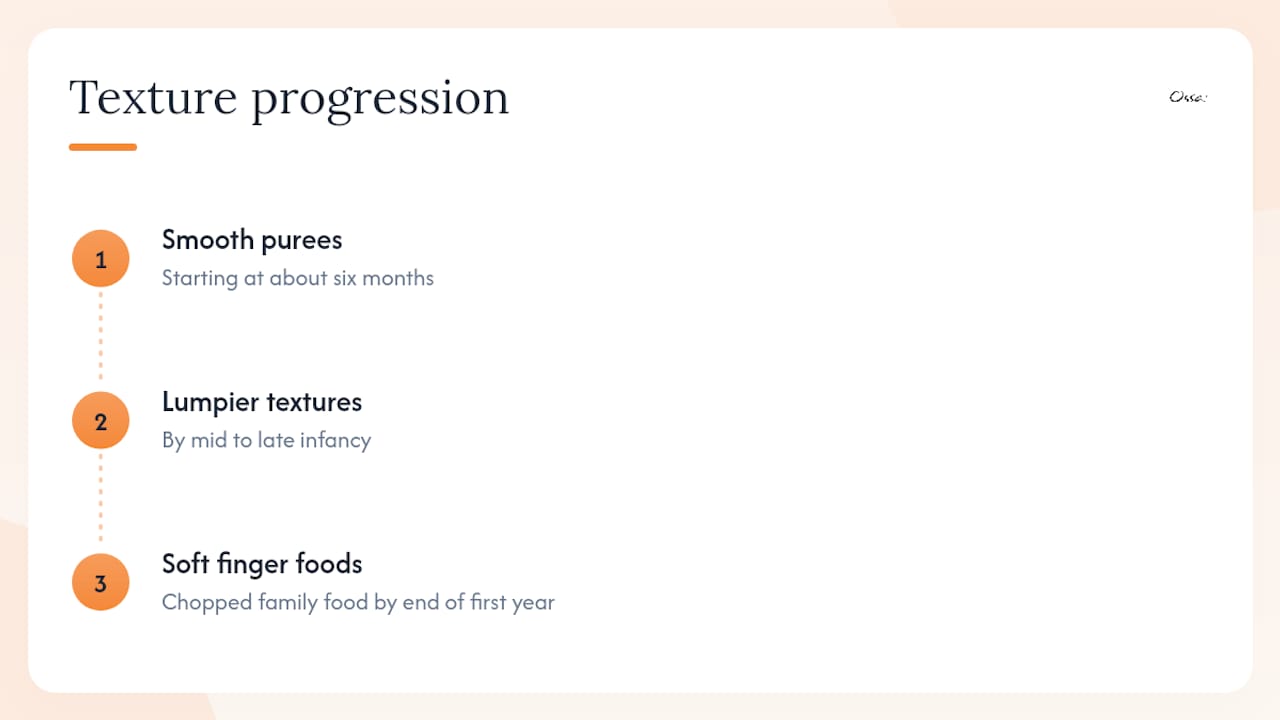
The texture progression during the first year typically moves from smooth purees starting at about six months, to lumpier textures by mid to late infancy, then soft finger foods and chopped family food towards the end of the first year.
Stage 1: smooth purees (around 6 months)
Single-ingredient smooth purees are the starting point. Steam broccoli or courgette until very soft, blend with a little cooled boiled water or breastmilk, and offer on a soft spoon. Consistency should be thin enough to fall off the spoon easily. Most babies take only a few teaspoons at first; that is normal and expected.
Stage 2: lumpier textures (around 7–9 months)
Staying on smooth purees beyond this window can delay those motor patterns. Mash rather than blend, leaving small soft lumps. Offer mashed banana with visible texture, or lentil soup with soft pieces of vegetable.
Stage 3: soft finger foods and chopped family food (around 9–12 months)
Steamed vegetable sticks (broccoli florets, courgette batons, carrot cooked until very soft), soft toast fingers, ripe banana pieces and flaked fish are all appropriate. Cut food into pieces no larger than 1–2 cm. Avoid round shapes: quarter grapes and cherry tomatoes lengthways, not across.
Gagging vs choking: Gagging is a normal reflex in young babies learning to manage food. It looks dramatic but is the baby’s airway protection working correctly. Choking is silent, with no coughing or crying, and requires immediate action. If your baby is choking, follow NHS first aid guidance and call 999 if needed.
Baby-led weaning versus spoon-feeding: which works better?
Both methods are safe and effective when foods are prepared correctly and a baby is supervised throughout. Many families find a hybrid approach most practical.
Spoon-feeding gives you direct control over portion size and makes it easier to monitor iron-rich purees. It suits parents who want to track intake closely in the early weeks.
Baby-led weaning (BLW) offers soft finger foods from the start, encouraging self-feeding skills and independent eating from six months. Systematic reviews note that BLW can support self-feeding development, though safety and choking risk remain subjects of ongoing debate; careful food preparation and constant supervision are non-negotiable.
A hybrid approach works well for most families: offer iron-rich purees on a spoon alongside soft finger foods the baby can pick up independently. This covers nutritional bases while building self-feeding confidence.
Safety checklist for both methods:
-
Baby sits upright and well-supported in a highchair at every meal.
-
Never leave a baby alone with food.
-
Cut all finger foods into safe shapes (sticks, not rounds; quarters, not whole pieces).
-
Avoid hard, raw vegetables (raw carrot rounds are a choking risk).
-
Offer foods at room temperature or slightly warm, never hot.
-
For BLW specifically: food pieces should be large enough for a baby to hold in a fist with some sticking out, not small enough to swallow whole.
Allergen introduction, choking hazards and foods to avoid
Introduce the 14 major allergens from around six months, one at a time, in small amounts. Current UK guidance, supported by evidence from the LEAP trial published in the New England Journal of Medicine, shows that early introduction of allergens such as peanut reduces allergy risk rather than increasing it. Delaying introduction beyond six months offers no protective benefit and may increase risk.
How to introduce allergens step by step
-
Offer a small amount of the new allergen (for example, a small amount of smooth peanut butter mixed into porridge, or a small piece of well-cooked egg).
-
Wait two to three days before introducing the next new allergen.
-
Watch for signs of a reaction: hives, swelling around the mouth, vomiting, or difficulty breathing.
-
If your baby has severe eczema or a known food allergy, speak to your GP or a paediatric dietitian before introducing high-risk allergens at home.
The The 14 major allergens to introduce include peanuts, tree nuts, eggs, cow’s milk, wheat, soya, fish, shellfish, sesame, celery, mustard, lupin, molluscs and sulphites.
Choking hazards to avoid or modify
-
Whole grapes, cherry tomatoes, blueberries: quarter lengthways.
-
Whole nuts: never offer to under-fives.
-
Hard raw vegetables (carrot rounds, raw apple slices): cook until soft or grate finely.
-
Hard sweets, marshmallows, popcorn: not appropriate under 12 months.
-
Large chunks of meat or cheese: cut into small, thin pieces.
Foods to avoid entirely under 12 months
-
Honey: risk of infant botulism; avoid until after the first birthday.
-
Added salt: babies’ kidneys cannot process adult salt levels; do not add salt to any food and check labels on packaged foods.
-
Added sugar: unnecessary and harmful to developing teeth.
-
Unpasteurised dairy and raw shellfish: infection risk.
-
Shark, swordfish and marlin: high mercury content.
Signs of a serious allergic reaction include sudden swelling of the lips, tongue or throat, difficulty breathing, or collapse. Call 999 immediately if these occur.
Breastmilk, formula and water during weaning
Breastmilk or formula remains the main source of energy and nutrition until around 12 months. Solids in the early months are primarily for skill building and iron supplementation, not calorie replacement.
Safe drink options during weaning:
-
Breastmilk or formula: continue as usual alongside solids; do not reduce feeds significantly before 9–10 months.
-
Cooled boiled tap water: offer small sips from an open cup or free-flow beaker from around six months, particularly with meals.
-
Whole pasteurised cow’s milk: suitable as a cooking ingredient and mixer for cereals from six months, but not as a main drink until 12 months.
-
Avoid: fruit juice, squash, sugary drinks, herbal teas and unpasteurised dairy drinks.
Practical tip: Introduce water from an open cup rather than a bottle from the start. Open cups and free-flow beakers support oral development and make the transition away from bottles easier later on.
Shop-bought pouches versus homemade baby food
Shop-bought jars and pouches are convenient and safe when labelled appropriately, but homemade food gives you direct control over salt, sugar and texture progression.
What to check on packaged baby food labels:
-
No added sugar or salt.
-
Ingredient list led by vegetables, fruit or protein, not fruit juice concentrate.
-
Age-appropriate texture labelling (Stage 1, Stage 2).
-
Iron-fortified options where available.
-
Single-ingredient pouches for early weaning.
Pouches can encourage babies to suck rather than chew, which may slow texture progression if used exclusively. Squeezing food from a pouch also removes the sensory experience of eating from a spoon or picking up food. Use them as a convenience option rather than a default.
Quick homemade batch-cooking ideas:
-
Steamed and blended butternut squash, portioned into ice cube trays and frozen.
-
Red lentil and vegetable soup, blended to stage-appropriate texture and frozen in small pots.
-
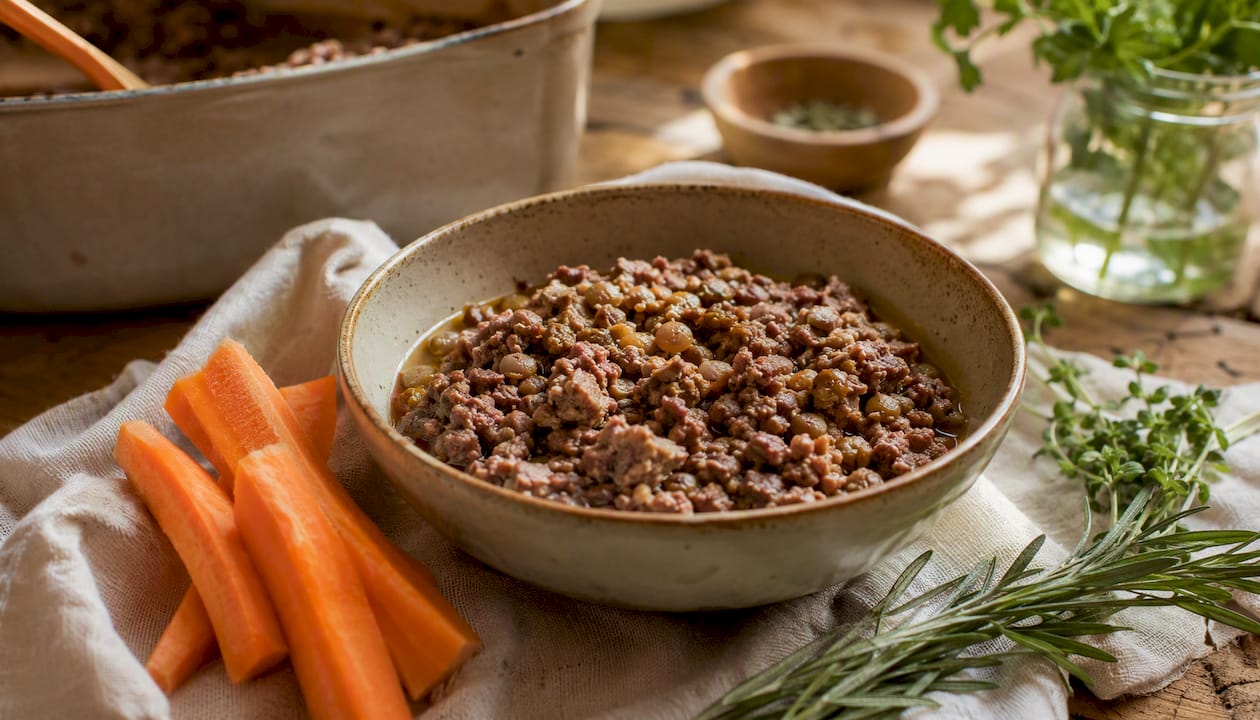
Soft-cooked chicken or beef, blended with a small amount of low-salt stock or organic bone broth for flavour and a gentle nutrient boost.
-
Porridge made with full-fat milk, cooled and portioned.
Pro Tip: When using bone broth in weaning recipes, choose a low-sodium, organic variety and use it as a cooking liquid rather than a drink. A small amount added to lentil or vegetable purees adds depth of flavour without the salt load of adult stock cubes.
Storage and reheating rules: Cool homemade food quickly and refrigerate within two hours. Use refrigerated portions within 24–48 hours. Reheat to steaming point throughout, then cool to a safe temperature before serving. Discard any reheated food left at room temperature. Never reheat the same portion twice.
A simple first-week weaning plan
A seven-day starter plan works best when built around iron-rich breakfasts, vegetable or fruit lunches and small protein portions in the evening, with milk feeds continuing as usual throughout.
| Age range | Solids frequency | Approximate portion |
|---|---|---|
| 6 months | Once daily, small tastes | 1–2 teaspoons per sitting |
| 7–9 months | Two to three times daily | 2–4 tablespoons per meal |
| 10–12 months | Three times daily plus snacks | Small portions of family food |
Sample first week (adapt for BLW or spoon-feeding):
-
Day 1: Smooth broccoli puree, one to two teaspoons. Continue all milk feeds.
-
Day 2: Smooth sweet potato puree.
-
Day 3: Mashed ripe banana.
-
Day 4: Smooth courgette puree.
-
Day 5: Iron-fortified baby cereal mixed with breastmilk or formula.
-
Day 6: Smooth red lentil puree (a small amount, well-cooked and blended).
-
Day 7: Soft scrambled egg (well-cooked, no salt).
From week two, begin combining foods and gradually increase texture. For BLW, offer the same foods as soft sticks or mashed portions the baby can pick up. For spoon-feeding, progress from thin purees to slightly thicker mash by the end of the second week.
Key nutrients to prioritise during weaning
Iron is the priority nutrient from around six months. Vitamin C supports iron absorption, and healthy fats support brain development during a period of rapid growth.
Iron stores from birth begin to deplete at around six months, making iron-rich foods at first feeds a practical necessity rather than a preference. BBC Tiny Happy People and NHS guidance both identify meat, chickpeas, lentils and iron-fortified cereals as practical daily sources.
Practical food pairings for better nutrient absorption:
-
Red meat with mashed peas or soft cooked pepper (iron + vitamin C).
-
Red lentils with mashed soft red pepper or cooked tomato.
-
Iron-fortified cereal with mashed kiwi or soft cooked mango.
-
Flaked salmon with steamed broccoli (omega-3 fats + iron).
-
Eggs with soft cooked spinach.
Healthy fats from oily fish (salmon, mackerel, sardines), avocado and full-fat dairy support brain growth. Aim to include oily fish a few times per week, noting NHS guidance recommends limiting servings for girls due to low-level pollutants.
One practitioner-level point worth knowing: moving textures forward quickly enough matters as much as the food choices themselves. Prolonged use of only smooth purees beyond the first months can delay chewing muscle development and the oral motor patterns that support early speech. Lumpier textures by eight months is a reasonable target for most babies.
Ossa Organic’s perspective on natural weaning
At Ossa Organic, whole, unprocessed ingredients and practical batch cooking sit at the centre of how we think about family nutrition. Bone broth used sparingly in weaning recipes adds natural depth of flavour and a gentle nutrient contribution without the salt load of commercial stock. Our recipe collection includes family meals that adapt easily into weaning portions, and our gut-friendly meal ideas for kids offer a practical starting point for parents building a natural, varied diet from the beginning.
Ossa Organic bone broths for natural family cooking
For parents who want a natural, ready-to-use flavour base in homemade weaning recipes, Ossa Organic’s organic bone broths offer a low-salt, preservative-free option made from grass-fed and free-range animals. A small amount of organic beef bone broth or organic chicken bone broth stirred into lentil purees, vegetable soups or soft-cooked grains adds natural flavour without the additives found in adult stock cubes. All Ossa Organic broths are free from preservatives and artificial ingredients, which makes them a practical fit for families prioritising natural foods from the start. For clinical questions about your baby’s nutrition or allergy history, always consult your GP or a registered paediatric dietitian. Browse the full ambient broth range to find the option that fits your family’s cooking.
Useful sources
-
NHS — Your baby’s first solid foods: — practical guidance on when and how to start weaning, textures and foods to avoid.
-
Best Start in Life (NHS): — stage-by-stage feeding guidance from six months through to toddlerhood.
This article is general information, not a substitute for advice from a qualified doctor. Consult a qualified healthcare professional about your own circumstances before acting on anything here.
FAQ
What are the best natural first foods for a baby starting weaning?
Steamed or mashed vegetables (broccoli, courgette, butternut squash), soft ripe fruit (banana, cooked pear), smooth porridge and iron-rich foods such as red lentils or well-cooked egg are among the best natural first foods. NHS guidance recommends starting with single ingredients and progressing textures gradually.
Can I give Weetabix to a six-month-old?
Yes, Weetabix mixed with breastmilk or formula is generally considered suitable from around six months in small amounts. It contains a modest amount of salt, so it should be one option among many rather than a daily staple; avoid adult cereals with higher salt or added sugar.
How many times a day should I offer solids to a six-month-old?
Start with one small tasting per day, around one to two teaspoons, and continue all usual milk feeds. By seven to nine months, most babies are ready for two to three solid meals daily, increasing to three meals plus small snacks by ten to twelve months.
What foods should I avoid giving my baby under 12 months?
Avoid honey entirely until after the first birthday due to the risk of infant botulism. Do not add salt or sugar to any food, and avoid whole nuts, hard raw vegetables, whole grapes and sugary drinks. Shark, swordfish and marlin should also be avoided due to mercury content.
How does bone broth fit into baby weaning recipes?
A small amount of low-sodium organic bone broth, such as Ossa Organic’s organic beef or chicken bone broth, can be used as a cooking liquid in lentil purees, vegetable soups and soft-cooked grains to add natural flavour without salt or additives. It should be used as an ingredient in cooking, not offered as a drink.