

Cart
0
TL;DR:
- Natural collagen sources include bone broth, skin-on poultry, and fish skin, which supply key amino acids. Plants do not contain collagen but provide micronutrients like vitamin C, zinc, and copper that support collagen synthesis. Consistently combining collagen-rich foods with micronutrient sources enhances the body’s ability to produce healthy collagen.
Collagen is the most abundant structural protein in the human body, forming the framework of skin, joints, tendons, and gut lining. Natural collagen food sources are primarily animal-based, with bone broth, skin-on poultry, and fish skin delivering the richest supply of collagen amino acids. Plants do not contain collagen, but they provide the micronutrients, particularly vitamin C, zinc, and copper, that the body needs to synthesise collagen effectively. Understanding both sides of this equation is what separates a genuinely collagen-supporting diet from one that simply sounds good on paper.
1. What are the richest natural collagen food sources?
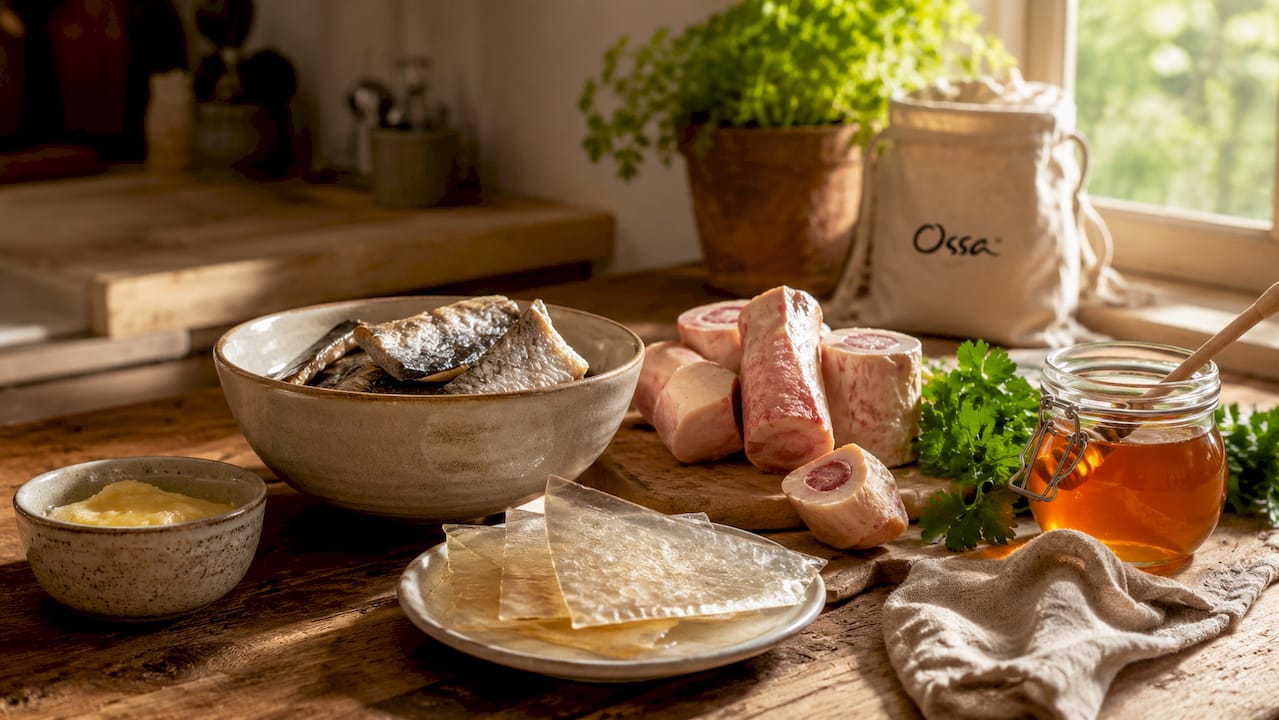
Bone broth, chicken skin, and fish skin are the primary animal-based natural sources of collagen protein. These foods supply glycine, proline, and hydroxyproline, the three amino acids that form collagen’s triple-helix structure. No plant food replicates this amino acid profile in meaningful quantities.
The reason these cuts outperform standard muscle meat is straightforward. Muscle meat contains minimal collagen; it is connective tissue, skin, cartilage, and marrow bones that hold the real supply. A chicken breast delivers protein, but a slow-simmered chicken carcass with skin delivers collagen.
The top animal-based collagen foods, ranked by collagen concentration, are:
-
Bone broth (beef or chicken, slow-simmered from bones and connective tissue)
-
Chicken feet and chicken skin (exceptionally high in collagen-rich cartilage)
-
Fish skin and fish bones (marine collagen with strong bioavailability)
-
Pork skin and trotters (traditional sources used across many food cultures)
-
Beef tendons, oxtail, and marrow bones (nose-to-tail cuts rich in glycine and proline)
-
Gelatin (derived from collagen; dissolves in warm liquid and sets when cooled)
-
Egg whites (supply proline, a key collagen amino acid, though not collagen itself)
Pro Tip: When making bone broth at home, add a small splash of apple cider vinegar to the water before simmering. The mild acidity helps draw minerals and collagen compounds out of the bones more efficiently.
Nose-to-tail eating is the most direct way to increase dietary collagen from food. Chicken feet, marrow bones, and skin-on fish deliver the highest collagen concentrations of any whole food. Gelatin in bone broth provides amino acids rather than intact collagen peptides, but the body uses those amino acids as building blocks for its own collagen production. The bioavailability of collagen depends on its source and preparation; slow simmering over many hours extracts the most from bones and connective tissue.
2. How do plant-based foods support collagen synthesis?
Plants do not contain collagen, but they are not irrelevant to collagen health. Plants support collagen production by supplying the micronutrients the body needs to assemble collagen from amino acids. Without these co-factors, even a diet rich in collagen protein cannot produce collagen efficiently.
The key plant-based contributors are:
-
Bell peppers — Red and yellow bell peppers exceed oranges in vitamin C content per gram. Vitamin C is non-negotiable for collagen fibre cross-linking.
-
Citrus fruits — Oranges, lemons, and grapefruit provide readily available vitamin C alongside flavonoids that protect existing collagen from oxidative damage.
-
Beans and legumes — Supply copper and essential amino acids, both required for collagen enzyme activity.
-
Sweet potatoes — Rich in beta-carotene, which converts to vitamin A. Vitamin A supports collagen gene expression and skin cell turnover.
-
Leafy greens — Spinach, kale, and Swiss chard provide chlorophyll, which some research links to increased procollagen production in skin cells.
-
Berries — Strawberries, blueberries, and raspberries deliver antioxidants that slow collagen degradation caused by free radicals.
-
Garlic — Contains sulfur compounds that may prevent collagen breakdown and support the structural stability of collagen fibres.
Pro Tip: Pair a collagen-rich food like bone broth with a vitamin C source at the same meal. Squeeze lemon into your broth or serve it alongside a dish containing bell peppers. Integrating vitamin C-rich foods simultaneously with collagen sources maximises the body’s ability to synthesise collagen effectively.
For people following a vegetarian or plant-forward diet, the focus shifts entirely to these co-factors. A vegetarian collagen-supporting approach prioritises vitamin C, zinc, copper, and amino acid diversity rather than direct collagen ingestion.
3. What role do amino acids and co-factors play in collagen production?
Collagen consists mainly of three amino acids: glycine, proline, and hydroxyproline. Glycine is the most abundant, making up roughly one third of collagen’s total amino acid content. The body can produce some glycine on its own, but dietary intake from connective tissue foods significantly increases the available supply.
Vitamin C is critical for collagen fibre cross-linking. Without adequate vitamin C, the body cannot properly assemble collagen, regardless of how much collagen protein you consume. Vitamin C enables the enzyme prolyl hydroxylase to stabilise the collagen triple helix, which is what gives skin its firmness and joints their resilience.
Zinc and copper act as enzymatic cofactors for collagen formation and repair. Zinc activates the enzymes that build and break down collagen during tissue remodelling. Copper is required by lysyl oxidase, the enzyme that cross-links collagen and elastin fibres. Both minerals are found in shellfish, seeds, nuts, and legumes.
| Nutrient | Role in collagen production | Key food sources |
|---|---|---|
| Glycine | Primary structural amino acid in collagen | Bone broth, chicken skin, gelatin |
| Proline | Stabilises collagen triple helix | Egg whites, dairy, meat |
| Vitamin C | Enables enzymatic cross-linking of collagen fibres | Bell peppers, citrus, berries |
| Zinc | Activates collagen-building and remodelling enzymes | Shellfish, pumpkin seeds, legumes |
| Copper | Required by lysyl oxidase for fibre cross-linking | Liver, cashews, dark chocolate |
No specific daily intake for collagen has been established by health institutions. The evidence points to a consistent, varied dietary approach rather than a fixed dose. Eating a range of collagen-rich and collagen-supporting foods across the week is more effective than targeting any single food or supplement.
4. Which collagen foods offer additional wellness benefits?
Several collagen-rich foods deliver meaningful health benefits beyond their amino acid content. These are the foods worth prioritising if you want collagen support and broader nutritional value from the same meal.
-
Fish skin and marine collagen supply omega-3 fatty acids alongside collagen amino acids. Fish collagen offers high bioavailability compared to other animal sources, and the omega-3 fats help reduce inflammation, which directly protects existing collagen from degradation.
-
Bone broth provides glycine, which supports liver detoxification and sleep quality, as well as gut-lining repair. The collagen benefits of bone broth extend well beyond skin and joints.
-
Berries and leafy greens deliver antioxidants, particularly vitamin C and polyphenols, that combat the oxidative stress responsible for accelerated collagen breakdown. Antioxidants do not add collagen; they protect the collagen you already have.
-
Garlic provides sulfur compounds that support collagen stability and skin health beyond simply providing amino acids. Including garlic regularly in cooking is a low-effort way to add this protective effect.
-
Dairy products such as milk, cheese, and yogurt supply proline and glycine, the amino acids that assist natural collagen formation. Dairy does not contain collagen itself, but it contributes meaningfully to the amino acid pool the body draws from.
The practical implication is clear. A diet built around bone broth, skin-on fish, berries, leafy greens, and garlic does not just support collagen. It also addresses inflammation, gut health, and oxidative stress simultaneously.
5. How to include collagen-boosting foods in your daily diet
Building a collagen-supporting diet does not require a complete overhaul of how you eat. The most effective approach is consistent inclusion of a small number of high-impact foods across the week.
-
Start with bone broth as a base. Use it in place of water when cooking grains, pulses, or soups. Drink a mug of warm broth as a morning or evening ritual. This is the single highest-return habit for increasing dietary collagen.
-
Choose skin-on cuts of poultry and fish. Leaving the skin on chicken thighs or salmon fillets when cooking adds collagen directly to the meal with no extra effort.
-
Add bell peppers or citrus to every collagen-rich meal. Sliced red pepper alongside a bowl of broth, or lemon juice squeezed over fish, provides the vitamin C needed to use the collagen amino acids effectively.
-
Include gelatin-rich foods weekly. Slow-cooked oxtail, braised pork trotters, or a simple gelatin-set dessert all contribute meaningfully to collagen intake.
-
Rotate your greens and berries. Spinach, kale, blueberries, and strawberries each offer slightly different antioxidant profiles. Rotating them across the week provides broader collagen protection than eating the same green daily.
-
For vegetarian diets, build around the co-factors. Prioritise bell peppers, beans, sweet potatoes, and seeds. Explore plant-based collagen support through nutrient-dense whole foods rather than isolated supplements.
Frequency matters more than quantity at any single meal. A small amount of bone broth daily, combined with vitamin C-rich vegetables at most meals, outperforms a large collagen-focused meal once a week.
Key takeaways
The most effective approach to collagen nutrition combines direct collagen protein from animal connective tissues with vitamin C, zinc, and copper from whole foods, consumed consistently across the week.
| Point | Details |
|---|---|
| Bone broth is the richest source | Slow-simmered bones and connective tissue deliver the highest concentration of collagen amino acids. |
| Muscle meat is low in collagen | Prioritise skin, cartilage, tendons, and marrow bones over standard cuts for meaningful collagen intake. |
| Vitamin C is non-negotiable | Without it, the body cannot cross-link collagen fibres, regardless of protein intake. |
| Plants boost, not provide | Bell peppers, berries, and beans support collagen synthesis through micronutrients, not direct collagen. |
| Consistency beats quantity | Daily small servings of collagen-rich and collagen-supporting foods outperform occasional large doses. |
Ossa Organic’s perspective on collagen and real food
The most common mistake people make with collagen is treating it like a supplement problem. They reach for a powder or a capsule and expect visible results within weeks. The reality is that collagen is digested into amino acids before the body uses it. What you eat provides raw materials, not finished collagen.
At Ossa Organic, we have seen this play out repeatedly. People who shift from collagen powders to bone broth, skin-on poultry, and connective tissue cuts report better results over time, not because broth is magic, but because it delivers the right amino acids in a form the body recognises and uses efficiently. The slow-simmering process matters. It is not a shortcut you can replicate with a flavoured sachet.
The second thing most articles get wrong is treating collagen foods and collagen-boosting foods as separate categories. They are not. A meal of slow-cooked chicken thighs with roasted red peppers and a squeeze of lemon is doing both jobs at once. You are getting glycine and proline from the skin and connective tissue, and vitamin C from the peppers to cross-link those amino acids into stable collagen fibres. That is the synergy that actually moves the needle.
Nose-to-tail eating is not a trend. It is how people ate before convenience food made muscle meat the default. Chicken feet, oxtail, and fish skin were not discarded; they were the most valued parts of the animal. Returning to that approach, even partially, is one of the most practical things you can do for long-term skin and joint health. Manage your expectations about timelines, focus on variety and consistency, and let the food do the work.
— Ossa Organic
Collagen-rich foods and Ossa Organic’s bone broth range
Ossa Organic produces organic beef and chicken bone broths slow-simmered from high-quality connective tissue and bones, making them among the most direct collagen food sources available in ready-to-use form. The organic beef bone broth and organic chicken bone broth are both ambient and convenient for daily use, whether drunk warm or used as a cooking base. For those new to bone broth, the how to use guide covers practical ways to incorporate it into everyday meals. If you want a structured approach to improving gut health alongside collagen intake, the 14 Day Gut Reset programme offers a clear, food-first framework.
FAQ
What is the single best food source of collagen?
Bone broth is the richest natural source of collagen amino acids, derived from slow-simmering bones and connective tissue over many hours. Chicken feet, fish skin, and gelatin-rich cuts follow closely behind.
Do plants contain collagen?
No plant food contains collagen. Plants support collagen production by supplying vitamin C, zinc, copper, and amino acids that the body uses to synthesise its own collagen.
How long does it take to see results from a collagen-rich diet?
No established timeline exists, as results depend on age, overall diet, and individual health status. Consistent daily intake of collagen-rich and collagen-supporting foods over several months is the approach supported by current dietary guidance.
Is marine collagen better than beef collagen?
Marine collagen offers high bioavailability compared to other animal sources, making it an efficient option. Beef collagen from bone broth and connective tissue provides a broader amino acid profile, so both have a place in a varied diet.
Can vegetarians get enough collagen support from food?
Vegetarians cannot obtain collagen directly from plant foods, but they can support the body’s collagen synthesis through consistent intake of vitamin C, zinc, copper, and amino acids from bell peppers, beans, seeds, and dairy products.