

Cart
0

TL;DR:
- Organic broth contains variable amounts of collagen, mainly as gelatin and amino acids, depending on bones and cooking practices. Regular consumption of two to three cups daily can provide around 10 to 15 grams of collagen, supporting joint and skin health. Because of its variability, broth is best used as a consistent food source alongside other collagen-rich foods and supplements.
Organic broth collagen content refers to the amount of collagen protein extracted when animal bones and connective tissue are simmered slowly in water, releasing gelatin and key amino acids into the liquid. A typical 240 ml serving of bone broth provides roughly 6–10 g of total protein, with collagen accounting for 40–80% of that figure. That means a single cup can yield anywhere from 2.5 g to 8 g of collagen, depending on bone type, cook time, and recipe. Understanding these variables helps you make genuinely informed choices about using organic broth as part of a wellness routine, rather than relying on front-of-pack claims alone.
How is collagen extracted in organic broth?
Collagen extraction is a straightforward process governed by heat, time, and the quality of the bones used. When bones and connective tissue are simmered in water, the collagen within them breaks down into gelatin, a form of denatured collagen that carries the same core amino acids. The resulting liquid is what nutritionists refer to as bone broth, and its collagen content is the direct product of that cooking process.
Simmering time and its effect on collagen yield
Long simmering times of 12–48 hours extract significantly more collagen than shorter cooking periods. Most cooking guides recommend 24–36 hours for a gelatinous texture, which is the clearest practical sign of high collagen extraction. A broth that sets firmly when chilled has released more gelatin into the liquid. One that stays watery when cold has extracted comparatively little.
Bone type and connective tissue
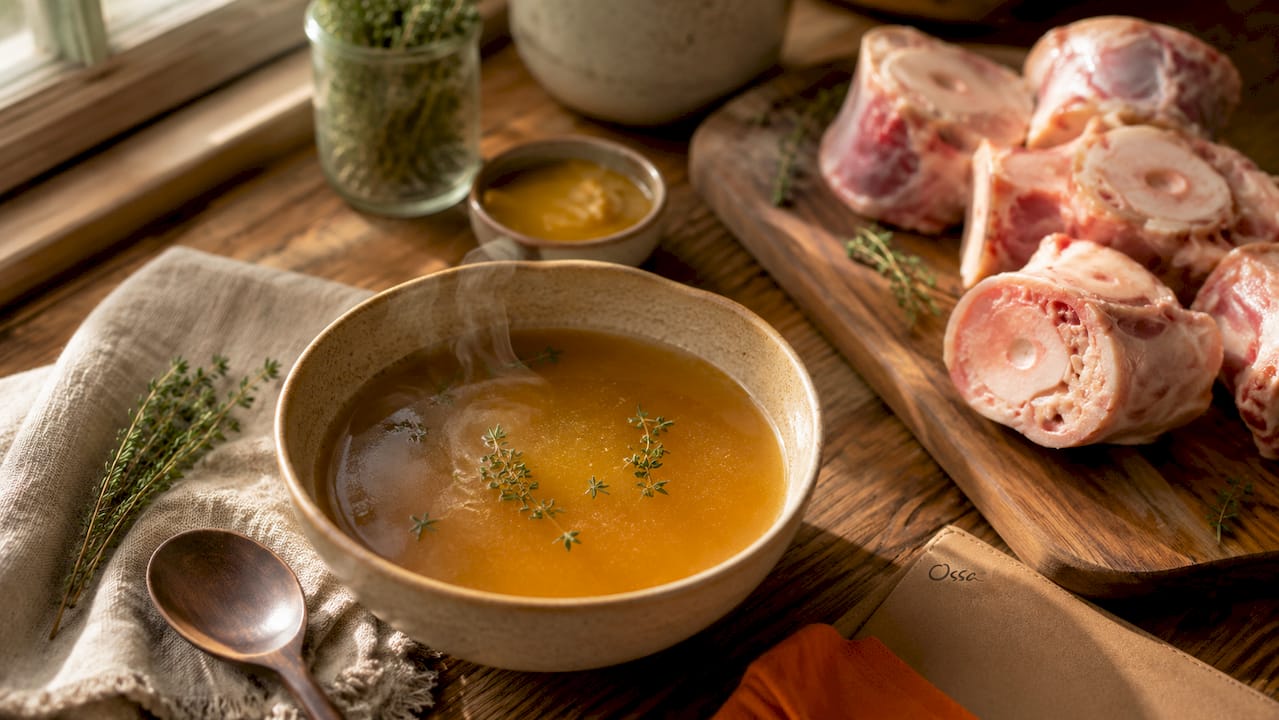
Bone type is the single biggest variable in collagen yield. Beef bones, particularly knuckles, feet, and marrow bones, sit at the higher end of the collagen range because they carry dense connective tissue. Chicken carcasses and feet produce a lighter broth with a slightly lower collagen concentration but a higher proportion of certain amino acids. Fish bones extract collagen more quickly, typically within 4–6 hours, but yield smaller absolute amounts per serving.
The more connective tissue attached to the bones, the more collagen the broth will contain. Joints, cartilage, and skin are all rich sources. Bare marrow bones alone produce less collagen than bones with cartilage still attached.
Recipe factors that influence the final broth
Several preparation steps affect how much collagen ends up in the finished liquid.
- Roasting bones first improves flavour and supports effective collagen extraction by opening up the bone structure before simmering begins. Roasting before simmering is considered best practice by food experts.
- Skimming impurities in the first hour of cooking removes proteins that cloud the broth and can interfere with clean extraction.
- Adding an acid, such as apple cider vinegar, at the start helps draw minerals and collagen from the bones into the water.
- Vegetable and herb additions contribute minerals and flavour but do not meaningfully increase collagen content.
- Water volume matters. Too much water dilutes the collagen concentration per serving.
Pro Tip: Chill a small amount of your finished broth in a cup. If it sets to a firm jelly within two hours, the collagen extraction has been successful. If it stays liquid, simmer for longer or add more connective tissue bones next time.
Organic broth versus collagen supplements: what does the evidence say?
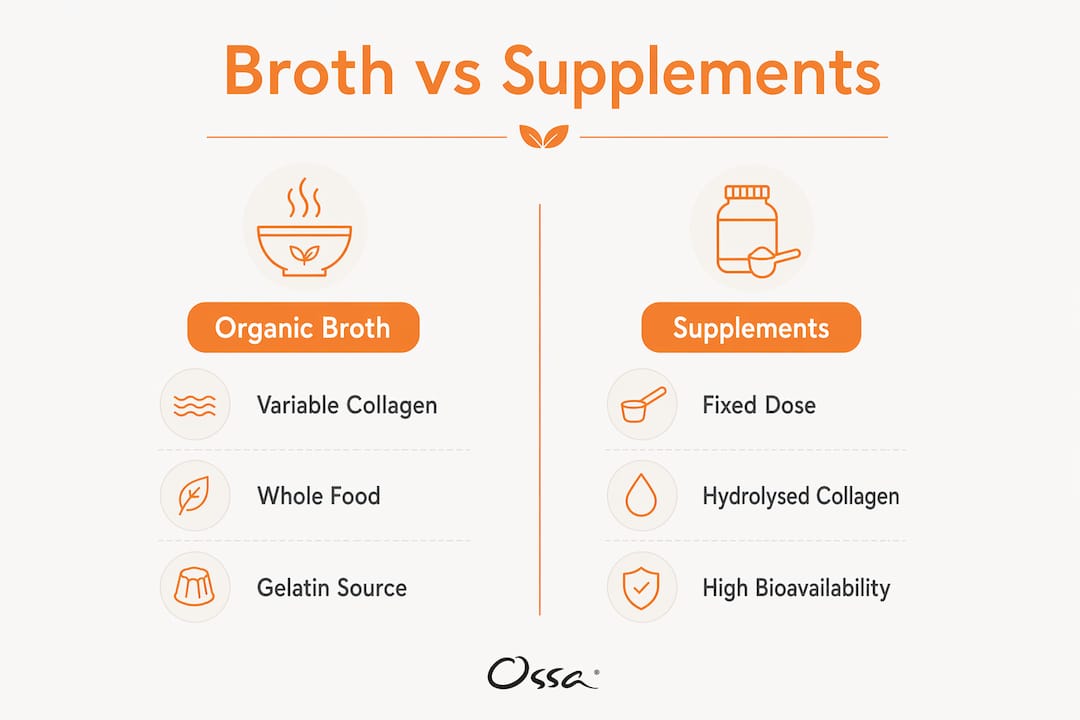
Collagen content in bone broth is variable and cannot be standardised in the way that supplement doses can. This is the central distinction between the two sources, and it matters when you are trying to achieve a specific daily intake.
Variability versus standardised dosing
Collagen supplements, specifically hydrolysed collagen or collagen peptides, deliver a fixed, measured dose per serving. Clinical trials have used daily doses of around 10 g of hydrolysed collagen over several months and shown joint pain reduction in participants. Bone broth cannot replicate that consistency because the collagen content shifts with every batch, every brand, and every recipe.
Organic broth is better understood as a nutritious whole food with collagen present as one of several beneficial components, rather than a precise therapeutic delivery system.
Bioavailability and amino acid profiles
Hydrolysed collagen is broken down into short peptide chains that the body absorbs quickly. The collagen in broth is present as gelatin, a larger protein that the digestive system must break down further before the amino acids become available. Both sources ultimately deliver glycine, proline, hydroxyproline, and arginine, the amino acids most relevant to connective tissue repair. The difference lies in absorption speed and dose reliability, not in the amino acids themselves.
A practical comparison
| Factor | Organic bone broth | Collagen supplement |
|---|---|---|
| Collagen amount per serving | 2.5–8 g (variable) | Fixed dose, typically 5–15 g |
| Bioavailability | Moderate (gelatin form) | High (hydrolysed peptides) |
| Consistency across batches | Low to moderate | High |
| Additional nutrients | Minerals, glycine, proline, sodium | Collagen peptides only |
| Convenience | Requires preparation or purchase | Ready to mix |
| Clinical evidence | Limited direct broth trials | Stronger trial evidence |
Pro Tip: If you are using broth specifically to hit a collagen target, check the protein content per serving on the label. Since collagen typically makes up 40–80% of broth protein, a 10 g protein serving gives you a working estimate of 4–8 g collagen, which is more reliable than any front-of-pack collagen claim.
What are the health benefits of collagen in organic broth?
The benefits of collagen broth are tied primarily to the amino acids it delivers rather than to collagen as a fixed quantity. Glycine, proline, hydroxyproline, and arginine are the four amino acids most associated with connective tissue maintenance, and all four are present in well-made organic broth.
Joint and skin support
Glycine and proline are the primary building blocks of collagen fibres in cartilage, tendons, and skin. Regular intake of these amino acids supports the body’s own collagen synthesis, which slows naturally with age. Skin elasticity and joint cushioning both depend on adequate collagen turnover, and dietary sources of glycine and proline contribute to that process.
Vitamin C is a necessary co-factor for collagen synthesis. Broth alone does not supply it in meaningful amounts, so pairing broth consumption with vitamin C-rich foods, such as bell peppers or citrus, supports the full collagen production pathway.
Gut health and the role of gelatin
Gelatin, the cooked form of collagen found in broth, has a long history of use in supporting gut lining integrity. The gut health benefits of organic bone broth are well documented within functional nutrition, with glycine in particular playing a role in reducing intestinal inflammation. Arginine also supports tissue repair, which is relevant to gut wall maintenance.
Practical daily intake targets
To reach the 10–15 g collagen per day associated with clinical trial dosing, the following daily consumption pattern applies:
- Two to three cups of bone broth per day provides an estimated 10–15 g collagen, based on typical collagen ranges per cup. This is an estimate, not a guarantee.
- Choose broths with verified protein content on the label. A 10 g protein serving from a well-made organic broth delivers a meaningful collagen contribution.
- Pair broth with a collagen supplement on days when intake from food is uncertain, to maintain consistency.
- Monitor sodium intake. A store-bought bone broth serving can contain around 451 mg of sodium. People managing blood pressure should factor this into their daily totals.
- Include vitamin C daily from whole food sources to support the collagen synthesis that dietary amino acids enable.
The variability in collagen content means broth is most effective as a consistent daily habit rather than an occasional addition. Frequency matters more than precision when the source is a whole food rather than a supplement.
How to maximise collagen content in homemade and shop-bought organic broth
Getting the most collagen from organic broth requires attention at both the sourcing and cooking stages. The following steps apply whether you are making broth at home or selecting a product from a shelf.
For homemade broth
- Source bones with connective tissue. Ask your butcher for knuckle bones, feet, or carcasses with cartilage attached. These yield far more collagen than bare marrow bones.
- Roast bones at 200°C for 30–40 minutes before adding them to the pot. This step improves flavour and supports better extraction.
- Simmer for 12–36 hours at a low, steady temperature. A rolling boil clouds the broth and can break down some proteins. A gentle simmer is more effective.
- Add a tablespoon of apple cider vinegar at the start to help draw collagen and minerals from the bones.
- Test for gelation. Pour a small amount into a cup and refrigerate. A firm set confirms successful collagen extraction. Use this as your quality check before every batch.
- Skim the surface during the first hour to remove grey foam, which improves clarity and taste without affecting collagen content.
For recipe ideas that put these principles into practice, the bone broth recipes section at Ossa Organic covers a range of approaches from simple stocks to full meals.
For shop-bought organic broth
- Read the protein content per serving, not just the collagen claim on the front of the pack. A higher protein figure generally indicates more collagen present.
- Look for organic certification, which signals that the bones come from animals raised without synthetic hormones or antibiotics, factors that affect the overall quality of the connective tissue.
- Check for a short ingredient list. Quality organic broth contains bones, water, vegetables, and seasoning. Long ingredient lists with additives suggest a product that has been extended rather than properly extracted.
- Expect variability between batches. Even the best organic broth will not deliver an identical collagen figure every time. This is normal and not a sign of poor quality.
Combining a reliable shop-bought organic broth with occasional homemade batches gives you the best balance of convenience and control over your collagen intake.
Key takeaways
Organic bone broth delivers collagen as gelatin and amino acids, with actual content varying by bone type, cook time, and recipe, making it a nutritious food rather than a precise supplement.
| Point | Details |
|---|---|
| Collagen range per cup | A 240 ml serving typically provides 2.5–8 g collagen, depending on bones and cook time. |
| Simmering time is critical | Cooking for 12–36 hours and achieving gelation when chilled confirms effective collagen extraction. |
| Broth versus supplements | Supplements deliver fixed, clinically tested doses; broth provides variable collagen alongside broader nutrients. |
| Daily intake estimate | Two to three cups per day approximates the 10–15 g collagen target used in clinical trials, with variability. |
| Sodium awareness | Shop-bought broth can contain around 451 mg sodium per serving; factor this in when planning daily intake. |
Ossa Organic’s view on broth as a collagen source
The question we hear most often is whether organic broth can replace a collagen supplement. After years of making and consuming bone broth, the honest answer is that it depends on what you are asking broth to do.
Broth is not a supplement. It does not deliver a fixed dose, and no amount of careful cooking will change that. What it does deliver is a genuinely nourishing food that contains collagen alongside glycine, proline, minerals, and gelatin in a form the body recognises and uses well. That broader nutritional profile is something a collagen powder cannot replicate.
The people who benefit most from broth are those who drink it consistently, not those who treat it as an occasional therapeutic dose. Two to three cups a day, made from quality organic bones or sourced from a trusted producer, builds a meaningful cumulative intake over time. Pairing that with a collagen supplement on days when intake is uncertain removes the variability problem without abandoning broth altogether.
What concerns us at Ossa Organic is the tendency to reduce broth to a single number on a label. The collagen figure matters, but so does the quality of the bones, the length of the simmer, and the absence of additives. A well-made organic broth that gels when chilled is telling you something important about its quality. That is the standard worth looking for.
— Ossa Organic
Ossa Organic’s organic bone broth range
Ossa Organic produces organic beef bone broth and organic chicken bone broth using slow simmering methods and certified organic bones, delivering the protein and amino acid content that makes broth a worthwhile addition to a daily wellness routine. Both products are made without additives or preservatives, with a short ingredient list that reflects the traditional approach to broth making. If you are new to bone broth or want to understand how to get the most from it, the how to use section on the Ossa Organic website covers practical guidance on daily consumption, serving suggestions, and pairing ideas.
FAQ
What is collagen in organic broth?
Collagen in organic broth is gelatin and amino acids extracted from simmered animal bones and connective tissue. It is not the same structural form as collagen in the body, but it provides the same core amino acids, including glycine and proline.
How much collagen is in a cup of bone broth?
A typical 240 ml serving contains roughly 2.5–8 g of collagen, depending on bone type, cook time, and recipe. Beef broths made with knuckle bones and long simmering times sit at the higher end of that range.
Does organic broth have the same collagen benefits as supplements?
Organic broth provides collagen-related amino acids but with variable content and lower bioavailability than hydrolysed collagen supplements. Clinical evidence for specific collagen benefits, such as joint pain reduction, comes primarily from supplement trials rather than broth studies.
How can I tell if my broth is high in collagen?
Chill your broth after cooking. A broth that sets to a firm gel when cold has extracted a meaningful amount of collagen. A broth that stays liquid has extracted comparatively little, regardless of how long it was cooked.
How much bone broth should I drink daily for collagen benefits?
Drinking two to three cups per day provides an estimated 10–15 g of collagen, which aligns with the dosing used in clinical trials. This is an estimate based on typical collagen ranges and will vary between products and batches.