Organic ingredients
•
Naturally nourishing
•
Made with care
We've sent you an email with a link to update your password.
Reset your password
We will send you an email to reset your password.
Stay crisp ghee popcorn: 1/2 tbsp to pop, 1 1/2 tbsp to finish
Ralph Barrozo
0 comments
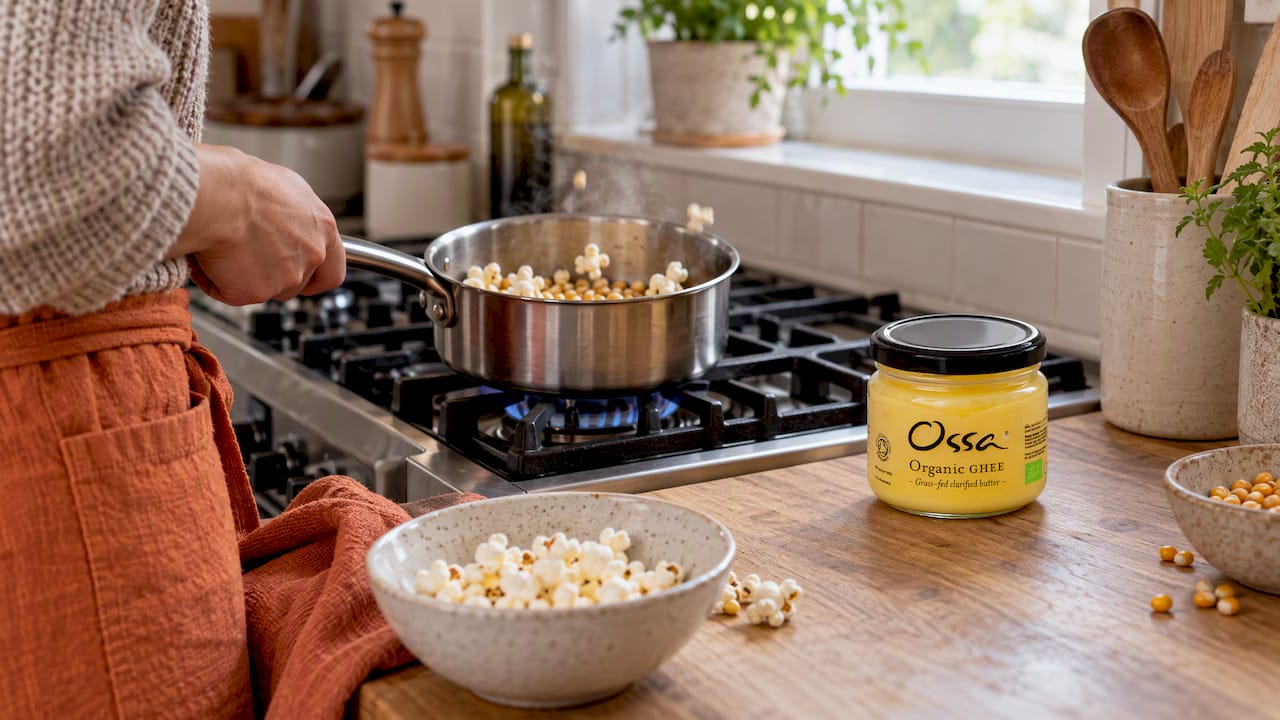
Pop your kernels in ghee for buttery, stay-crisp popcorn: here is the exact stovetop method and ratios. Melt the ghee, drop in tester kernels, wait for them to pop, then add the rest and reduce the heat once popping speeds up. For a standard batch, use a moderate amount of kernels with a suitable portion of ghee, such as a small fraction of a cup divided between initial popping and drizzling at the end.
TL;DR:
Using a moderate amount of ghee, either fully or divided between popping and drizzling, ensures crisp popcorn without sogginess.
Lowering heat and shaking the pot frequently prevent scorching and promote even popping, with the best results achieved when popping slows significantly.
Ghee’s high smoke point and thermal stability support consistent popping temperature without smoking or breaking down, unlike butter.
Seasonings like fine ground salt or spices adhere best if added immediately after popping while the popcorn is still hot and glossy.
Storing popcorn in an airtight container in a cool, dry place preserves crunch, and reheating in a low oven helps restore crispness better than microwave reheating.
Ossa Organic
ossaorganic.com
Make Crisp Popcorn With Natural Ghee
Ossa Organic makes natural foods rooted in tradition, including ghee for nourishing everyday cooking without unnecessary processed ingredients.
A standard batch starts with a moderate amount of popcorn kernels, enough for sharing. Ghee quantity depends on your method: use enough ghee to coat and pop the kernels fully, or split it as a small spoonful for popping and an additional drizzle after popping. Choose fine sea salt or dedicated popcorn salt rather than coarse flakes, which slide off instead of sticking.
A moderate portion of popcorn kernels (one standard batch).
An appropriate amount of ghee, either enough to pop the kernels fully or divided between a small amount for popping and some to drizzle later.
Fine sea salt or popcorn-grade salt, plus any optional seasonings.
A heavy-bottomed pot with a lid, a large bowl, and a splatter screen if you have one.
Clarified ghee works well here. Jarred ghee provides consistency and is ready to use straight from the cupboard, while homemade ghee can vary from batch to batch depending on simmering time.
How to pop popcorn in ghee on the stovetop
Getting a consistently crisp batch comes down to timing and heat control, not luck.
Melt your ghee in a heavy-bottomed pot over medium heat, then add a few tester kernels and cover.
Wait until the tester kernels pop. This confirms the fat is hot enough for the full batch to pop quickly rather than sitting and absorbing heat.
Add the remaining kernels in a single layer, cover, and leave the lid slightly ajar or set a splatter screen on top to let steam escape.
Once popping becomes steady and rapid, lower the heat slightly and shake the pot every few seconds to stop the bottom layer scorching.
When the popping slows significantly, take the pot off the heat immediately.
Tip the popcorn straight into a large bowl rather than leaving it in the covered pot, where trapped steam will soften it.
Pro Tip:Shake the pot in a steady back-and-forth motion on the burner rather than lifting it, which keeps the heat even and stops kernels flying out.
Skipping the tester kernels is the most common reason a batch turns out patchy, with burnt pieces at the bottom and unpopped kernels at the top.
Why ghee gives you crisper popcorn than butter
Butter contains water, and that water turns to steam when it meets hot popcorn, which makes butter-tossed popcorn go soggy within minutes. Ghee has had the milk solids and water removed through clarification, so it behaves more like a light frying oil than a wet topping once it is in the pot.
Ghee has a higher smoke point, around 250°C, and greater thermal stability than many conventional oils, which supports its use for high-heat cooking such as stovetop popping.
That stability matters for two reasons. It means the fat can sit at popping temperature without smoking or breaking down, and it carries the nutty, buttery flavour compounds through the whole batch rather than scorching on contact. For more detail on how that smoke point holds up in home kitchens, our science backed ghee rules for home cooks cover the practical side of high-heat cooking with ghee.
Getting seasoning to stick without softening the popcorn
Salt and spice powders cling best to popcorn while it is still hot and glossy from the ghee, so season within seconds of tipping it into the bowl rather than waiting for it to cool. Fine sea salt or popcorn-grade salt, ground finer still if you only have coarse grains, spreads far more evenly than flakes that sit on top of a few pieces and miss the rest.
Toss the popcorn while it is hot, straight after popping, for the best adhesion.
Grind coarse salt to a fine powder before adding it.
Add a small extra drizzle of ghee, around a teaspoon, when using a heavier topping like nutritional yeast or cocoa powder.
Season in a large lidded bowl or jar and shake rather than stirring with a spoon, which coats every piece.
Finely ground salt and immediate tossing are small steps with outsized impact on flavour distribution: a mechanical fix rather than more fat. Grinding salt to a fine powder and seasoning while the popcorn is still hot helps it adhere and avoids salt settling at the bottom of the bowl.
Flavour variations to try with ghee popcorn
Once the base method is solid, swapping toppings takes a batch in a completely different direction without changing the core technique.
Movie theatre classic: ghee and fine salt only, tossed hot, for the buttery flavour and glossy look you get at the cinema.
Cheesy: stir in nutritional yeast once popped, with an extra teaspoon of ghee drizzled first so the powder clings instead of falling to the bottom.
Indian-inspired: add curry powder, a pinch of chilli, and toasted cumin, stirring robust spices in early but holding back anything delicate until after popping so it does not scorch. For more detail on handling spice timing, our Essential Indian food tips for beginners guide covers toasting and layering flavours without burning them.
Sweet: melt a little sugar with the ghee until just golden, then toss through popped corn with a dusting of cinnamon, working quickly since melted sugar hardens fast and can burn if left over direct heat too long.
For more combinations, our ghee recipes collection has further ideas for everyday cooking with ghee beyond popcorn.
Troubleshooting, storage and reheating
Most popcorn problems trace back to heat or moisture, and both are easy to fix once you know the cause.
Lots of unpopped kernels means the heat was too low: raise it slightly and test again with fresh tester kernels next time.
Burnt pieces at the bottom mean the heat was too high or the pot was not shaken enough: lower the heat a notch and shake continuously once popping starts.
Soggy popcorn usually comes from a wet topping added too early or steam trapped under a fully closed lid: vent the lid and add liquid toppings sparingly.
To re-crisp a batch that has gone soft, spread it on a tray and warm it in a low oven for a few minutes rather than using a microwave, which adds moisture instead of removing it.
Store cooled popcorn in an airtight container in a cool, dry place, where it keeps its crunch for a few days, and add any extra toppings just before serving rather than in advance.
For more on how long ghee itself keeps once opened, see our note on ghee shelf life.
Why our kitchens reach for ghee over butter for popcorn
Family cooking is at the centre of how we approach food, and popcorn is one of the simplest places that shows up. Ghee gives a reliably buttery flavour without the sogginess that plain butter brings, which is why it has become a standard in our own kitchens. One trick we rely on: keep tester kernels in the pot lid at arm’s reach, so you never guess when the fat is ready.
— Ossa Organic
Pick up the ghee that makes this recipe work
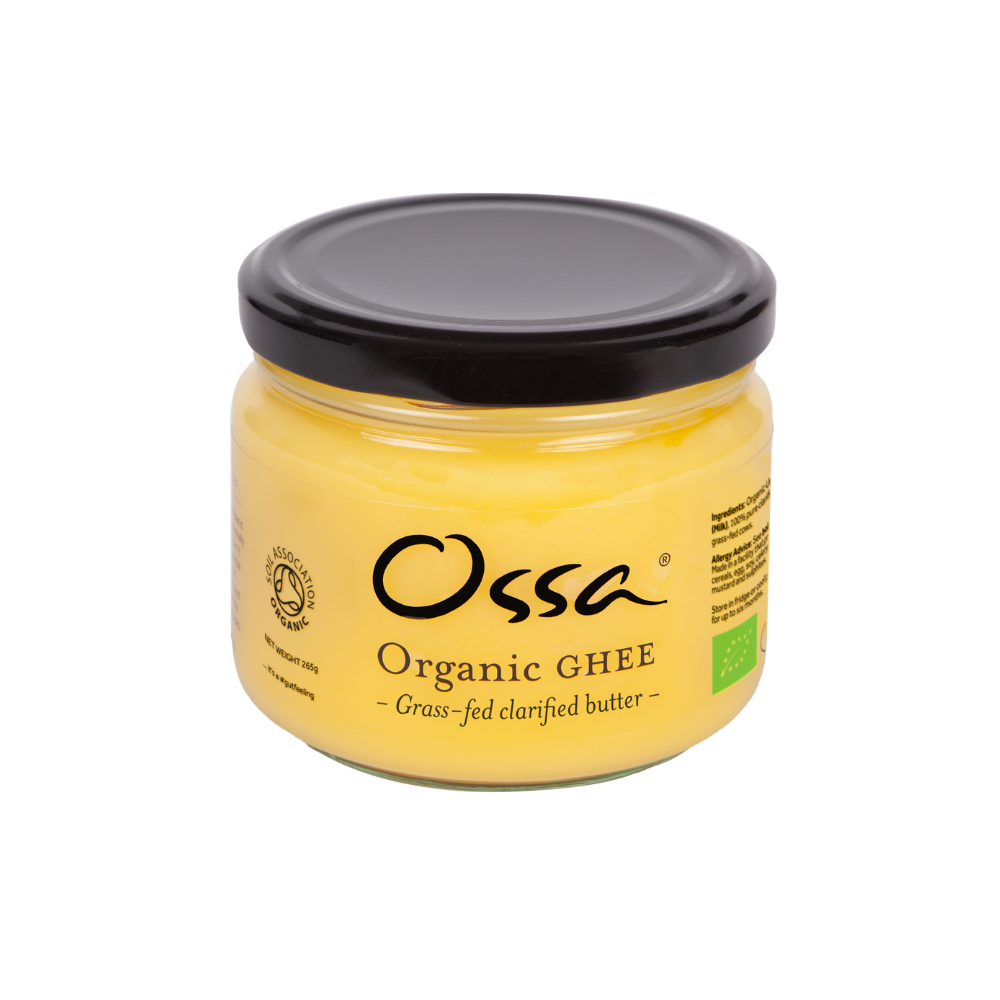
The method above depends on a ghee that stays stable at popping temperature and tastes clean enough to let the corn come through, which is exactly what our Organic Ghee - Grass Fed Clarified Butter is made for. It is clarified from grass-fed British cows to organic standards, so it carries none of the water content that causes sogginess and holds up well at the heat a popping pot needs.
Clarified and water-free, which keeps popcorn crisp rather than steamed.
Grass-fed sourcing from British cows, made to organic standards.
A jar lasts through several batches, so a single order covers regular popcorn nights rather than one-off use.
If popcorn becomes a weekly habit in your kitchen, a larger jar works out more practical than buying smaller pots repeatedly. You can also browse our wider bone broths, collagen and grass-fed fats if ghee leads you toward other traditional, minimally processed staples for daily cooking.
FAQ
Is ghee good for popping popcorn?
Yes, ghee works well for popping popcorn because it has a higher smoke point and greater thermal stability than many conventional oils, so it holds up at popping temperature without breaking down. It is also free of the water content found in butter, which is what keeps popped corn crisp rather than soggy.
How much ghee should I use for popcorn?
A common ratio for a standard batch is half a cup of popcorn kernels to a quarter or a third of a cup of ghee. An alternative method uses around half a tablespoon of ghee to pop the kernels, then one and a half tablespoons drizzled over the popped corn for extra flavour and sheen.
What is the healthiest oil for popping popcorn?
There is no single agreed answer, since it depends on heat tolerance and how the fat is used rather than one fixed property. Oils with higher smoke points, including ghee, tend to hold up better under the high heat popcorn needs without breaking down or tasting burnt.
Why use ghee instead of butter for popcorn?
Ghee has had that water removed through clarification, so it coats the kernels with buttery flavour while keeping the texture crisp for longer.