Organic ingredients
•
Naturally nourishing
•
Made with care
We've sent you an email with a link to update your password.
Reset your password
We will send you an email to reset your password.
Crispy Fries at 175–190°C: Fry Safely in Beef Tallow
Ralph Barrozo
0 comments
Yes, beef tallow is a suitable and flavourful fat for deep frying when you keep it within the right temperature window and handle reuse with care. Aim for 175 to 190°C (350 to 375°F) depending on what you are cooking, check that range with a thermometer rather than guesswork, and filter and store the fat properly between batches. Discard it once it smokes, foams or smells off.
TL;DR:
Keep beef tallow temperature between 175 and 190°C and avoid reheating once it starts smoking or develops an off smell.
Render and filter tallow carefully, then store it cold or frozen in labeled containers to extend its usable life.
Use a thermometer to monitor temperature accurately, especially during multitranche frying with small batches for optimal crispness.
Blending moderate amounts of tallow with vegetable oils can improve stability, but flavor may shift if the tallow share becomes too high.
Discard the fat when it smokes, foams excessively, darkens, or smells rancid, regardless of the number of uses.
Ossa Organic
Bring Traditional Tallow Into Your Kitchen
Ossa Organic creates natural foods with organic ingredients and slow cooking techniques, rooted in tradition rather than trend.
What is beef tallow and why do cooks choose it for frying?
Tallow is rendered, trimmed beef fat, firmer and more neutral in character than dripping, and distinct from lard, which comes from pigs. Its appeal for the fryer comes down to a few practical points.
A smoke point typically cited in the 200°C region, comfortably above the working range needed for crisp frying.
A stable, mostly saturated fat structure that resists breakdown better than many liquid vegetable oils during repeated heating.
A savoury depth that gives fries and battered foods a crunch and flavour closer to old-fashioned fried food than neutral oils deliver.
The trade-off is a saturated fat profile, and tallow that is poorly rendered or reused too long can pick up a “cowy” note that puts some cooks off. Factors like rendering method and storage conditions change how high that smoke point actually runs in practice, so starting with well-clarified fat matters more than the fat’s reputation alone.
How do you render, filter and store tallow for frying?
Good frying starts with clean fat, and getting there takes a few deliberate steps.
Choose a rendering method. Dry rendering (low oven heat, no water) is slower but gives a cleaner-tasting result; wet rendering (simmering fat in water, then skimming) is faster but needs more attention to avoid scorching.
Strain while warm. Pour the melted fat through a fine mesh sieve, then again through cheesecloth, to remove connective tissue and browned bits that would otherwise burn on reuse.
Let it settle. A short cool-down in a jar lets any remaining sediment drop to the bottom before you pour off the clear fat on top.
Store cold and labelled. Refrigerated tallow keeps for weeks; frozen in a sealed container it holds for months. Label the date, since fat that looks fine can still be past its reliable best.
Clarity at this stage is what decides how many frying sessions the fat will survive before it turns. For a fuller walkthrough, our step-by-step guide to using beef tallow covers the finer points of each stage.
Getting the deep-frying technique right
A heavy pot or a dedicated fryer both work, but either needs a reliable thermometer, clipped to the side or held mid-depth, never resting on the base where readings run hot. Calibrate it against boiling water occasionally so you can trust what it tells you.
Target ranges differ slightly by food:
Fries: around 175 to 180°C (350 to 355°F), often with a par-fry at a lower temperature followed by a hotter finish to drive off moisture and crisp the outside.
Battered chicken: closer to 175°C (350°F), held steady for longer to cook the centre without scorching the coating.
Small battered items, such as fritters or onion rings, can run slightly hotter, towards 190°C (375°F), since they spend less time in the fat.
Keep batches small relative to the volume of fat. Overcrowding drops the temperature fast, and food absorbs more grease while it waits for the fat to recover. Watch for a slow creep upward too: fat left unattended between batches can overshoot and start to smoke, at which point it needs to come off the heat and cool before you continue.
Pro Tip:Fry a single test piece first and time it: if it browns faster or slower than expected, adjust the burner before committing the full batch.
Our tallow fries recipe works through this par-fry and finish-fry sequence from start to end.
Food safety, reuse and when to bin the fat
Food safety guidance from the Food Standards Agency sets the baseline: reheated food should be steaming hot throughout, reheated only once, and cooked to safe core temperatures rather than judged by colour alone. Translated into frying practice:
Check doneness with a probe in the food itself, not just the oil temperature.
Filter out crumbs and debris after every session; they burn on reheating and speed up fat breakdown.
Cool the fat before storing, and keep it in a sealed, labelled container between uses.
Discard it once the smoke point seems to drop, it foams more than usual, it darkens noticeably or it smells rancid or distinctly “off”.
Tallow that passes these checks can typically go through several frying sessions before it degrades, though protein-heavy foods such as chicken tend to push degradation markers up faster than something like potato. Treat each discard decision on the fat’s condition, not a fixed number of uses.
Blending and repeated frying: what the research suggests
Laboratory work on frying with tallow has looked at how well it holds up under repeated heating, including blended with vegetable oils. Moderate tallow added to vegetable oil has been shown to improve oxidative stability across repeated frying cycles while reducing some harmful compound formation, though flavour shifts once the tallow proportion rises much beyond a modest share.
Moderate beef tallow blends with vegetable oil have shown improved oxidative stability over repeated frying cycles in lab testing, with flavour trade-offs appearing once the tallow share increases.
For home cooks the practical lessons are narrower than the lab conditions:
Lab blends are measured and controlled; a rough home mix will not behave identically.
If you want a blend, start with a small tallow proportion and taste as you go rather than following a fixed ratio.
If flavour is the priority, pure, well-rendered tallow, refreshed regularly, beats a blend chasing shelf life.
Cooks exploring how fat choice affects both flavour and stability across different oils may find the broader discussion of seasoning oils and fat balance a useful comparison point.
Common mistakes and quick fixes
Greasy results: usually means the fat was too cool. Raise the temperature, fry smaller batches, and pat ingredients dry before they go in.
Smoking or scorched smell: the fat has overheated or picked up burnt debris. Lower the heat, skim out crumbs, and filter before the next session.
Off or cowy flavour: often traces back to poor rendering or fat used too many times. Render more carefully next time, avoid mixing tallow with very unsaturated oils, and retire the fat once the flavour turns.
Ossa Organic and frying with grass-fed tallow
We have spent years working with grass-fed tallow and slow-cooking traditions, emphasizing sourcing from British cows raised to organic standards. Our tallow is rendered and packaged with frying in mind to provide clean, well-clarified fat that holds up to the heat a proper fry demands. For more on how we see tallow fitting into a kitchen built around natural fats rather than seed oils, we set out the comparison in our piece on moving away from seed oils.
A cook’s view: when tallow earns its place in the fryer
Tallow is preferred when flavour matters and it can be filtered and stored properly between uses. For very high-volume frying, allergy-sensitive kitchens or anything needing a completely neutral taste, a high-smoke-point neutral oil remains the better call.
— Ossa Organic
Bring tallow into your own kitchen
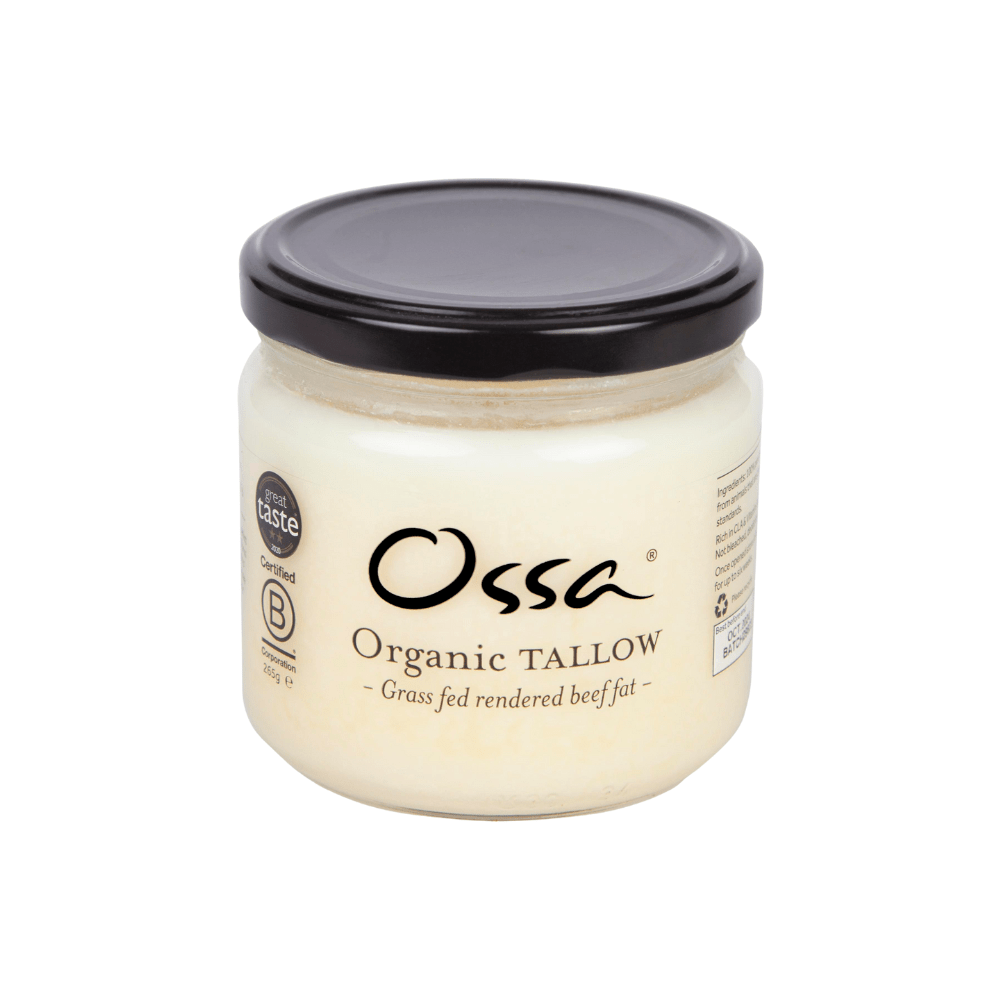
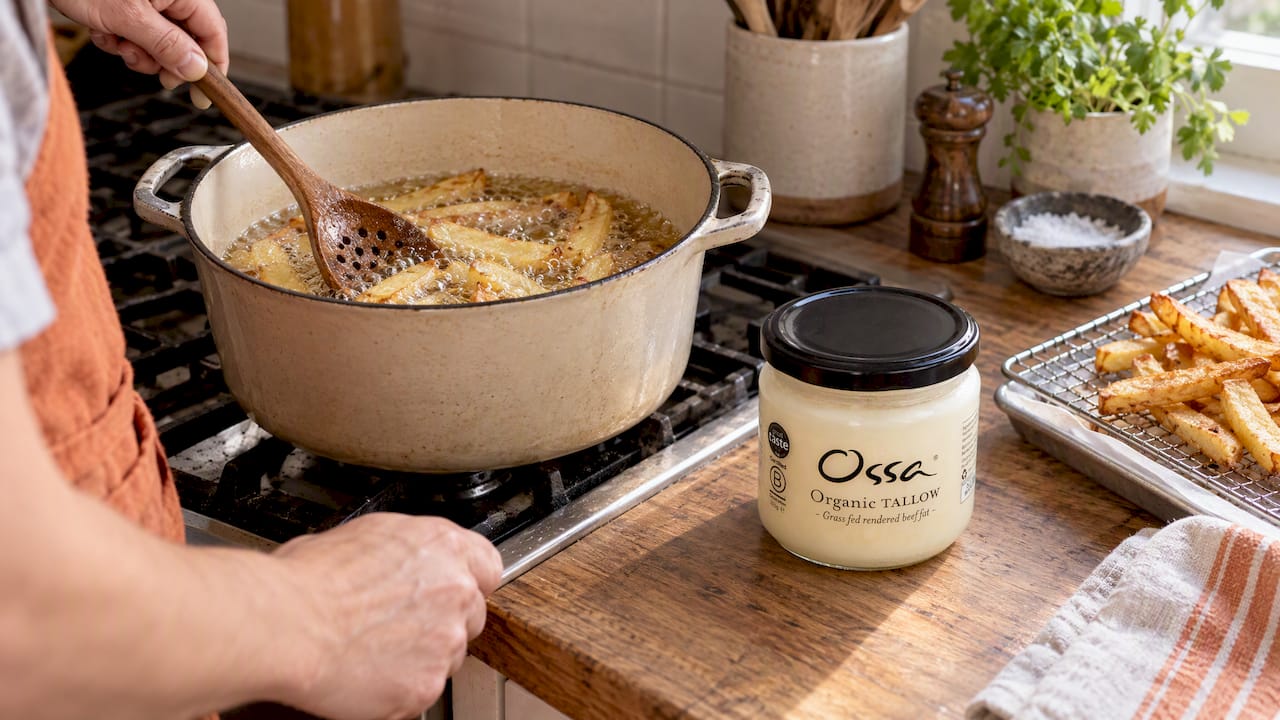
Starting with a small batch of well-rendered fat makes the whole process easier to judge, and that is exactly what our Organic Tallow, Grass Fed Beef Fat is built for: clean, traditional beef fat from British cows raised to organic standards, ready to melt down and fry with straight from the tub.
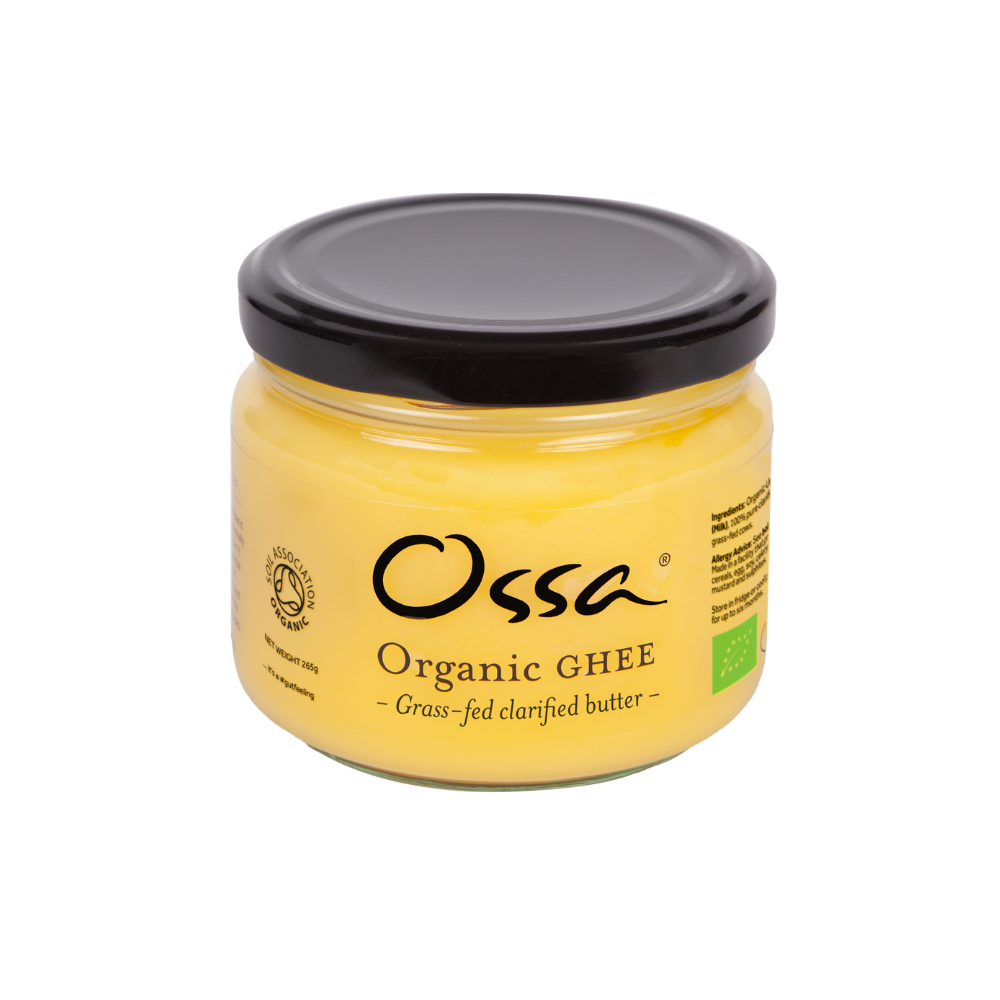
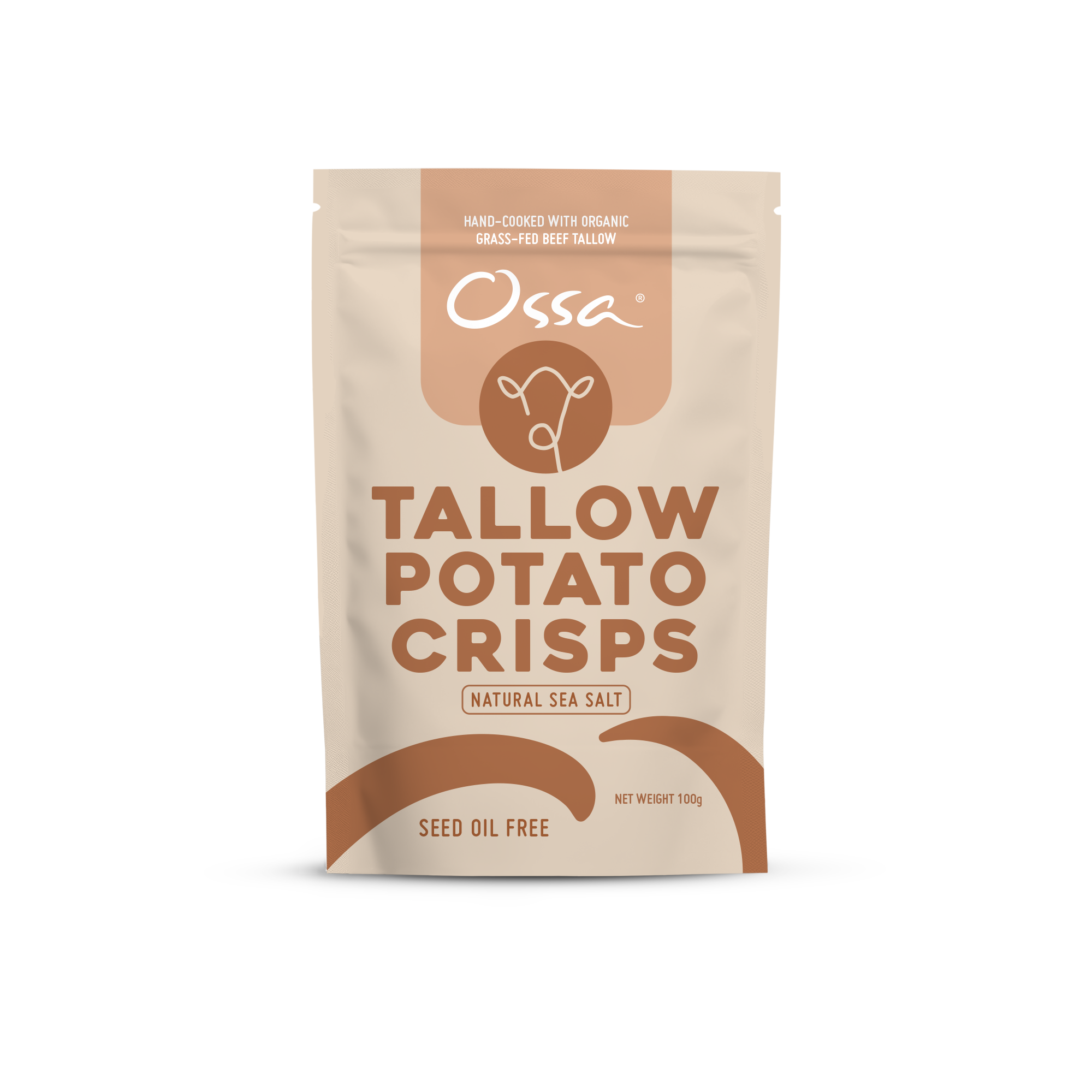
If you want a sense of what properly fried tallow tastes like before committing to your own batch, our Tallow Potato Crisps show the flavour and crunch this fat gives fried potato. For lower-temperature cooking, our Organic Ghee, Grass Fed Clarified Butter offers a complementary option that suits gentler pan work rather than deep frying.
First time buying tallow for frying? Start with a modest quantity, strain it again at home if you want extra clarity, and keep it cold between uses. Browse our full range of organic fats and bone broths or the full collection to build out a natural-fat kitchen from there.
FAQ
Does KFC fry its chicken in beef tallow?
Commercial fried chicken chains generally use blended vegetable oils rather than beef tallow for large-scale frying, chosen for cost and consistency across many outlets. Beef tallow is more associated with artisan and home frying for its flavour than with large fast-food chicken operations.
Can you use beef tallow in a deep fryer?
Yes, tallow works well in both dedicated deep fryers and a heavy pot on the hob, as long as you can melt it fully and monitor the temperature with a thermometer. Keep it within the recommended frying temperature range depending on the food, since too low makes food greasy and too high risks scorching the fat.
Does McDonald’s fry its fries in beef tallow?
McDonald’s historically used a beef tallow blend for its fries, which is part of why tallow carries an association with classic fast-food flavour. Current global frying practice has largely moved to vegetable oil blends, so this is a point of food history rather than a description of today’s standard.
How long can you deep fry in beef tallow?
There is no fixed number of uses: well-rendered, properly filtered tallow can go through several frying sessions before it needs replacing, while fat used for protein-heavy foods such as chicken tends to degrade faster than fat used mainly for potatoes. Discard it once you notice foaming, a dropping smoke point, darkening or an unpleasant smell.