TL;DR:
- Bone broth provides collagen-rich protein that supports gut, joint, and connective tissue health. Drinking two to three cups daily delivers enough collagen to support clinical benefits, but it cannot replace complete proteins for muscle-building. Proper preparation and sourcing are essential for maximizing its nutritional value.
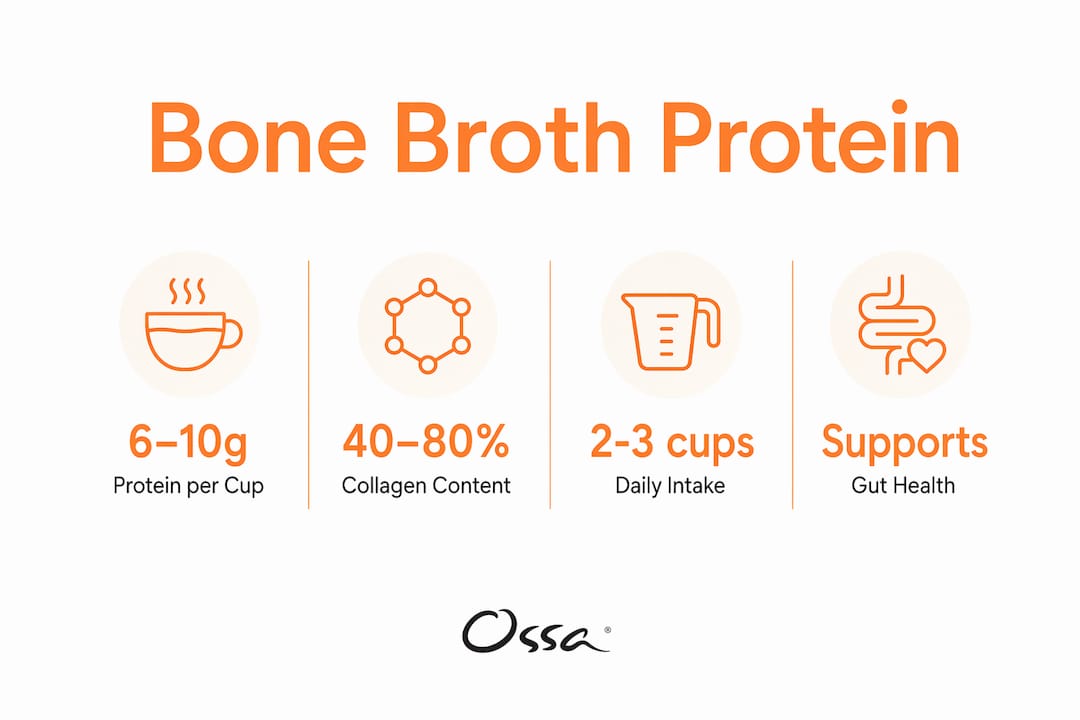
Protein from bone broth is defined as a collagen-rich protein derived from slow-simmering animal bones, connective tissue, and cartilage in water for extended periods. Unlike standard dietary protein, it is composed primarily of collagen and gelatin, delivering key amino acids including glycine, proline, and hydroxyproline that support gut lining integrity, joint health, and connective tissue repair. A typical cup provides 6–10 grams of protein, with 40–80% of that being collagen. To reach the clinically studied daily collagen intake of 10–15 grams, you would need to drink 2–3 cups daily. Ossa Organic produces bone broth using traditional slow-cooking methods to preserve this nutritional profile.
What does protein from bone broth actually contain?
Bone broth protein sits in a category nutritionists call “functional protein.” It is not a complete protein in the conventional sense, but it delivers a specific amino acid profile that whole-food proteins and standard supplements do not replicate. Understanding what is in each cup helps you use it correctly.
Protein and collagen content per serving
Protein content varies significantly depending on simmer time, bone type, and the ratio of bones to water. Longer simmering between 12 and 48 hours extracts more gelatin and amino acids from collagen-rich tissues such as knuckles, feet, and marrow bones. A standard cup typically delivers 7–10 grams of protein alongside meaningful electrolytes including potassium and sodium.
| Nutrient |
Typical range per cup |
Notes |
| Total protein |
6–10 g |
Varies by preparation method |
| Collagen protein |
2.5–8 g |
40–80% of total protein |
| Glycine |
500–1,700 mg |
Key amino acid for gut and anti-inflammatory support |
| Sodium |
200–500 mg |
Higher in commercial products |
| Potassium |
Present |
Supports hydration and metabolic function |
The glycine content alone makes bone broth nutritionally distinct. Glycine supports the production of glutathione, the body’s primary antioxidant, and plays a direct role in soothing the gut lining.
How preparation changes the nutritional value of bone broth
Simmer time and bone selection are the two most critical variables for protein yield. Collagen-rich bones such as chicken feet, beef knuckles, and oxtail release far more gelatin than lean cuts or spine bones. A broth simmered for 24 hours will consistently outperform one simmered for 4 hours in both protein and mineral content.

Bone broth and stock are not the same product. Stock is simmered for a shorter time and contains less collagen. Bone broth is the longer-cooked, gelatin-rich version that gels when chilled. That gel is the visible sign of collagen extraction.
Pro Tip: If your homemade bone broth does not set to a jelly consistency when refrigerated, extend the simmer time or add more collagen-rich bones such as chicken feet or beef knuckles.
Commercial bone broths frequently contain 200–500 mg of sodium per cup, which represents approximately 20% of the recommended daily value. People managing blood pressure should check labels carefully and consider making broth at home with no added salt.
What are the health benefits and limitations of bone broth protein?
The bone broth health benefits most supported by research relate to connective tissue, gut health, and anti-inflammatory function. These benefits come specifically from collagen and its constituent amino acids, not from protein quantity alone.
Gut health and connective tissue support
Glycine and proline are the two amino acids most concentrated in bone broth. Glycine supports connective tissue repair, reduces inflammatory markers, and helps maintain the integrity of the gut lining. Proline contributes to collagen synthesis throughout the body, including in joint cartilage and skin. These effects are well-documented in clinical nutrition research.
The role of amino acids in gut health is particularly relevant for people managing digestive conditions. Bone broth provides a soothing, nutrient-dense liquid that is easy to digest and delivers amino acids directly to the gut lining without the digestive load of solid food.
“Bone broth is best understood as a functional food rather than a primary protein source. Its value lies in the specific amino acids it delivers, particularly glycine and proline, which support gut integrity and connective tissue health in ways that standard protein supplements do not replicate.”
Clinical recommendations suggest a daily collagen intake of 10–15 grams to achieve measurable benefits for joints and skin. Two to three cups of well-made bone broth can meet this target. Consistency matters more than quantity on any single day.
Key benefits supported by research
-
Collagen supports joint cartilage, skin elasticity, and gut lining integrity
-
Glycine delivers anti-inflammatory effects and aids gut healing
-
Potassium and sodium in bone broth support hydration and electrolyte balance
-
Regular consumption may reduce joint discomfort associated with collagen degradation
-
Bone broth is easily digested, making it suitable during periods of digestive distress
Important limitations to understand
Bone broth protein is incomplete. Collagen lacks tryptophan, the essential amino acid required for muscle protein synthesis. This means bone broth cannot replace complete protein sources such as eggs, meat, fish, or legumes for muscle maintenance or growth. It also provides less than 5% of daily requirements for most vitamins and minerals, so it should not be treated as a nutritional cure-all.
Pro Tip: Pair bone broth with a tryptophan-rich food such as eggs, turkey, or Greek yoghurt at the same meal to create a more complete amino acid profile.
How does bone broth protein compare to other protein sources?
Bone broth protein is fundamentally different from complete protein powders and whole-food proteins. Understanding this distinction prevents common mistakes, particularly the assumption that bone broth alone can support muscle building or replace dietary protein.
Bone broth versus complete protein sources
Complete proteins such as whey, eggs, and chicken breast contain all nine essential amino acids including tryptophan, leucine, and lysine. These are the amino acids that drive muscle protein synthesis. Bone broth is rich in non-essential and conditionally essential amino acids, specifically glycine, proline, and hydroxyproline, which the body uses for repair and maintenance rather than muscle building.
| Protein source |
Complete protein |
Primary amino acids |
Best used for |
| Bone broth |
No |
Glycine, proline, hydroxyproline |
Gut health, joint support, connective tissue |
| Whey protein |
Yes |
Leucine, isoleucine, valine |
Muscle building, post-exercise recovery |
| Eggs |
Yes |
All essential amino acids |
General protein intake, muscle maintenance |
| Plant-based protein blends |
Yes (when combined) |
Varies by blend |
Vegan muscle support, general nutrition |
| Collagen powder |
No |
Glycine, proline, hydroxyproline |
Skin, joint, gut support |
Bone broth protein powder products concentrate the collagen content of broth into a convenient format. They offer a higher protein dose per serving than liquid broth but carry the same limitation: they are not complete proteins. They work well as a supplement to a varied diet, not as a standalone protein source.
Where bone broth fits in a balanced diet
Bone broth occupies a specific and valuable niche. It delivers collagen and glycine that most Western diets lack, because modern food preparation rarely uses the nose-to-tail approach that once made these nutrients common. Adding 1–2 cups of bone broth daily fills a genuine nutritional gap without replacing other protein sources.
-
Use bone broth alongside, not instead of, complete protein foods
-
Treat it as a functional supplement for gut and joint health
-
Do not count it toward your daily protein target if muscle maintenance is a goal
-
Choose it over stock when collagen content is the objective
How can you use bone broth protein in your daily diet?
Incorporating bone broth into daily meals is straightforward. The key is consistency and preparation quality. Whether you make it at home or use a ready-made product, the nutritional outcome depends on the bones used and the cooking method applied.
Making high-protein bone broth at home
The foundation of a protein-rich homemade broth is bone selection. Collagen-rich options include:
-
Beef knuckle bones and oxtail for a rich, gelatinous beef broth
-
Chicken feet and carcasses for a lighter broth with strong collagen yield
-
Pork trotters for a high-gelatin broth common in traditional Asian cooking
-
Mixed bones with cartilage and marrow for maximum amino acid extraction
Roast the bones at 200°C for 30 minutes before simmering. This deepens flavour and helps break down the bone matrix. Add a splash of apple cider vinegar to the water before simmering. The acidity helps draw minerals and collagen from the bones more efficiently. Simmer on a low heat for a minimum of 12 hours, and up to 48 hours for beef bones.
Pro Tip: Freeze leftover bones from roasts and whole chickens. Once you have enough, make a batch of broth. This approach reduces waste and gives you a continuous supply of high-quality homemade broth.
Practical ways to use bone broth every day
You do not need to drink bone broth plain to benefit from it. The bone broth recipes available from Ossa Organic show how versatile it is as a cooking ingredient.
-
Replace water with bone broth when cooking grains such as rice, quinoa, or oats
-
Use it as the base for soups, stews, and casseroles to add protein and depth of flavour
-
Warm a cup with a pinch of turmeric and black pepper as a morning drink
-
Deglaze pans with bone broth instead of wine for a nutrient-rich sauce
-
Add it to smoothies in small quantities when using a neutral-flavoured broth
For practical preparation ideas, batch cooking bone broth at the weekend and freezing it in 250ml portions makes daily use simple. One portion added to a weekday meal delivers a meaningful collagen dose without any extra effort.
Consistency is the factor most people underestimate. A single cup of bone broth once a week delivers negligible benefit. Two to three cups daily, maintained over weeks, is where the research-backed benefits for gut health and joint support become measurable.
Key takeaways
Bone broth protein is a collagen-focused, functional protein that supports gut health, joint integrity, and connective tissue repair, but it must complement, not replace, complete dietary protein sources.
| Point |
Details |
| Protein content per cup |
A typical cup provides 6–10 g of protein, with 40–80% being collagen. |
| Collagen is incomplete |
Bone broth lacks tryptophan and cannot replace complete proteins for muscle building. |
| Preparation determines quality |
Simmering collagen-rich bones for 12–48 hours maximises protein and gelatin extraction. |
| Sodium in commercial products |
Store-bought broths can contain 200–500 mg sodium per cup; check labels if managing blood pressure. |
| Daily intake for benefits |
Drinking 2–3 cups daily reaches the clinical collagen target of 10–15 g. |
Ossa Organic’s view on bone broth as a functional food
Bone broth entered our lives before it became a wellness trend. The founder of Ossa Organic discovered its benefits during pregnancy, at a time when gut health was not a mainstream conversation. What we observed then, and what the research now supports, is that bone broth works best when it is treated as a daily habit rather than an occasional remedy.
The most common mistake we see is people expecting bone broth to do everything. It will not build muscle on its own. It will not replace a varied diet. What it does, consistently and reliably, is deliver glycine, proline, and collagen to the gut and connective tissue in a form the body absorbs efficiently. That is a specific and genuinely useful function.
Sourcing matters more than most people realise. Bones from older or lower-quality animals carry a risk of heavy metal contamination, including lead. Organic, grass-fed, or free-range bones significantly reduce this risk. At Ossa Organic, this is not a marketing claim. It is the reason we source the way we do.
Sodium is the other consideration that rarely gets enough attention. A cup of commercial bone broth can account for 20% of your daily sodium allowance. If you drink three cups a day, that adds up quickly. Making broth at home, or choosing a low-sodium product, gives you control over this.
Bone broth belongs in a balanced diet alongside eggs, meat, fish, vegetables, and legumes. Used this way, it fills a nutritional gap that most modern diets leave open. Used in isolation, it falls short of what people hope for.
— Ossa Organic
Ossa Organic bone broth: quality you can use every day
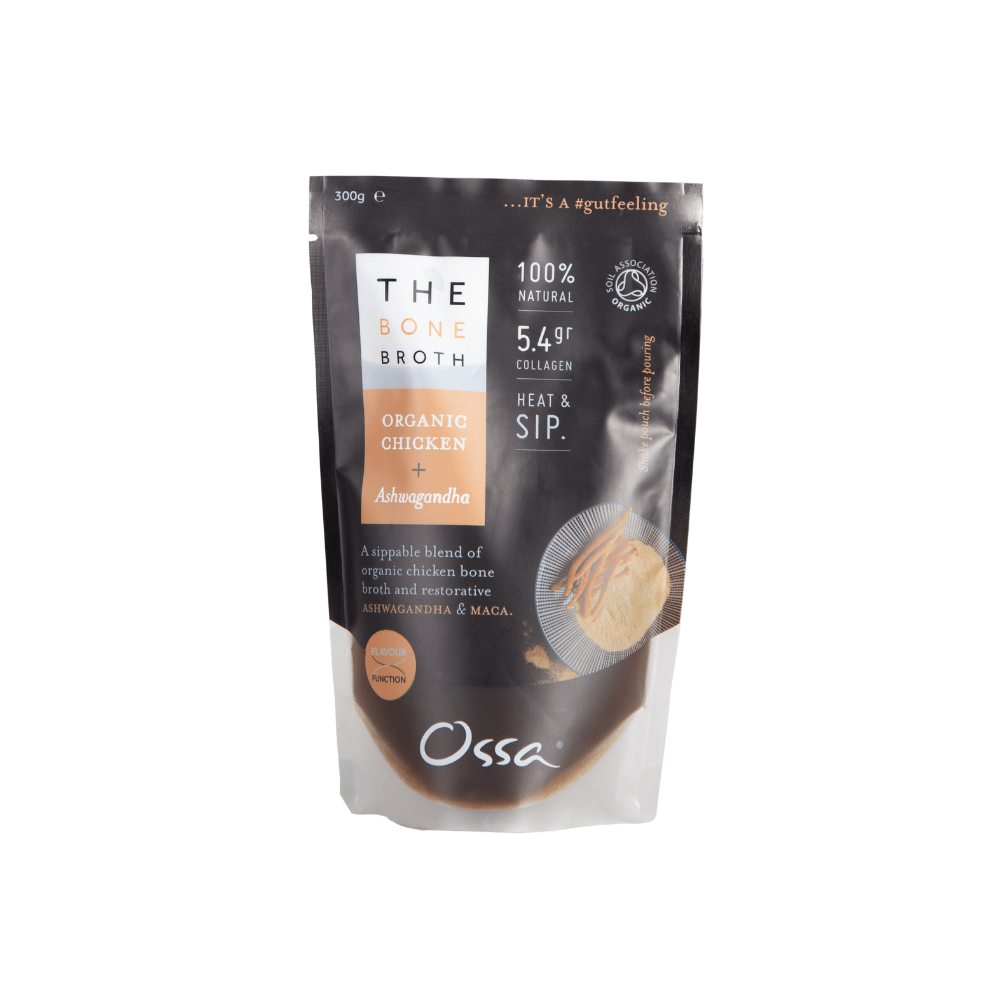
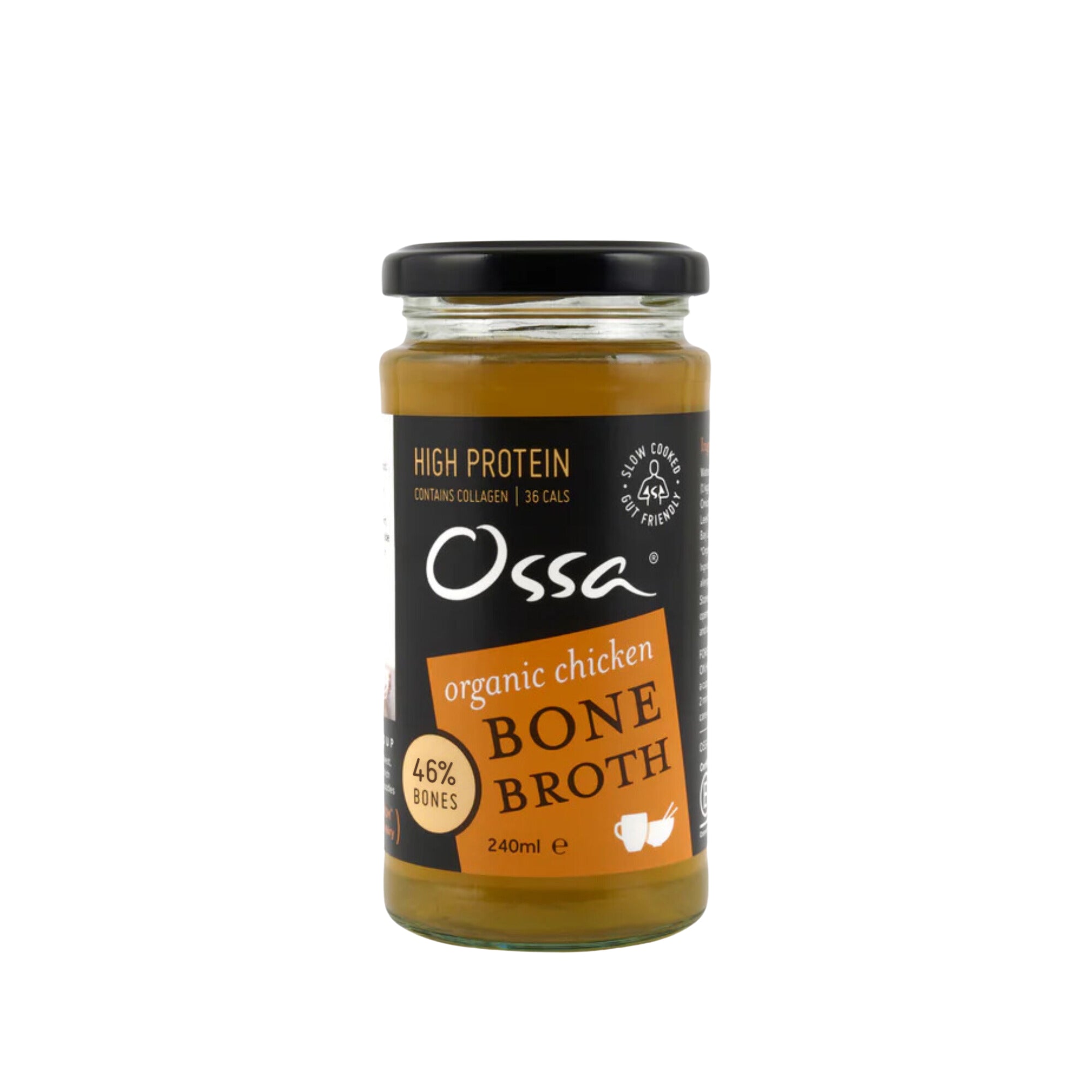
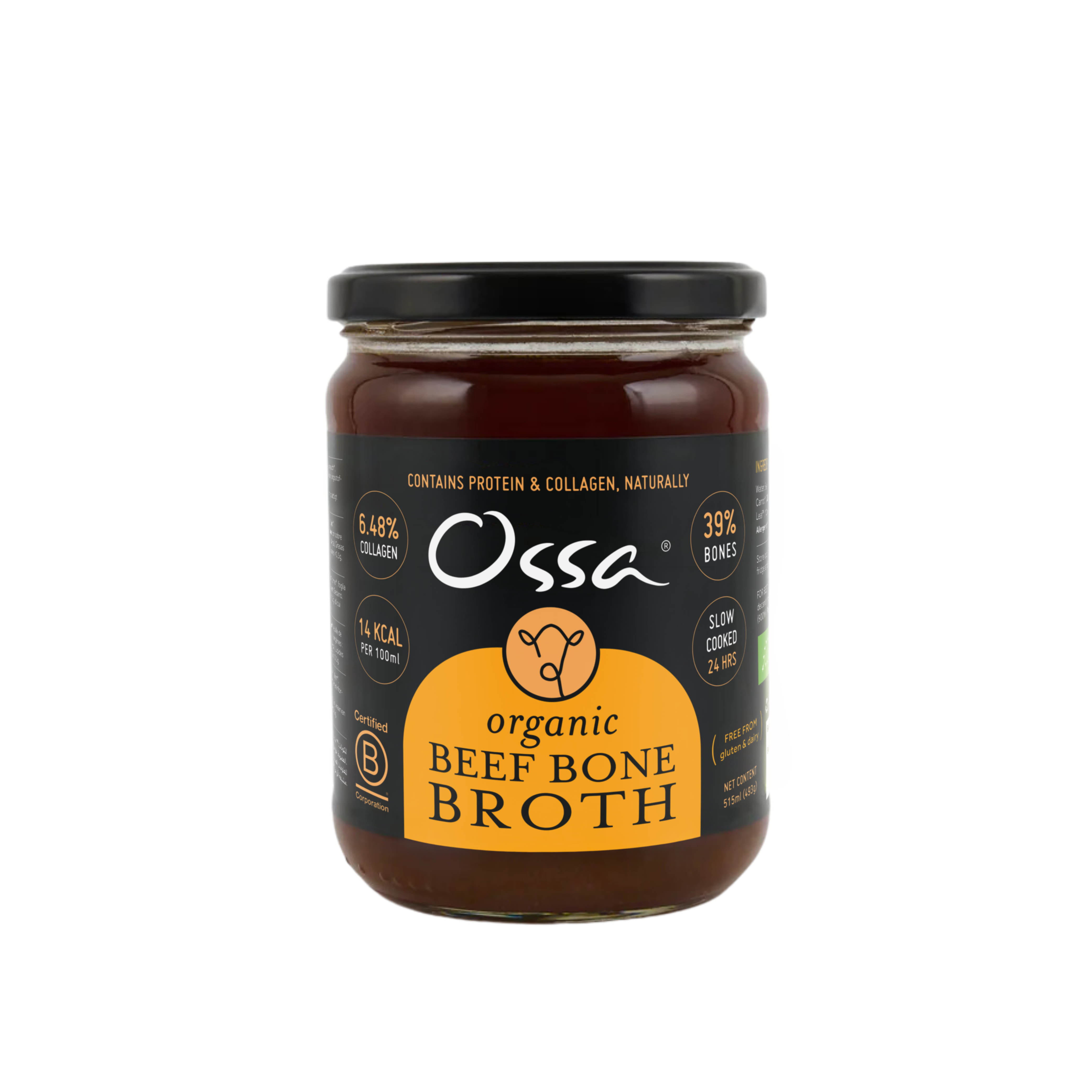
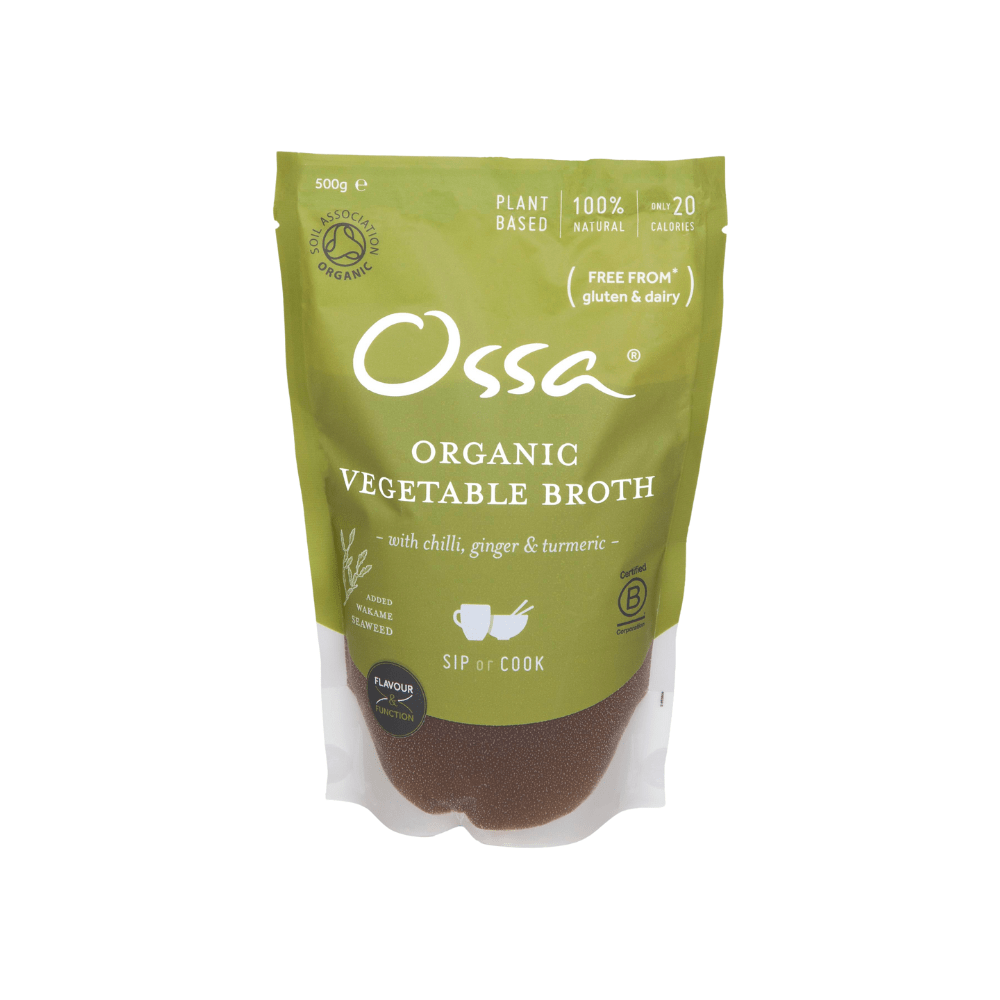
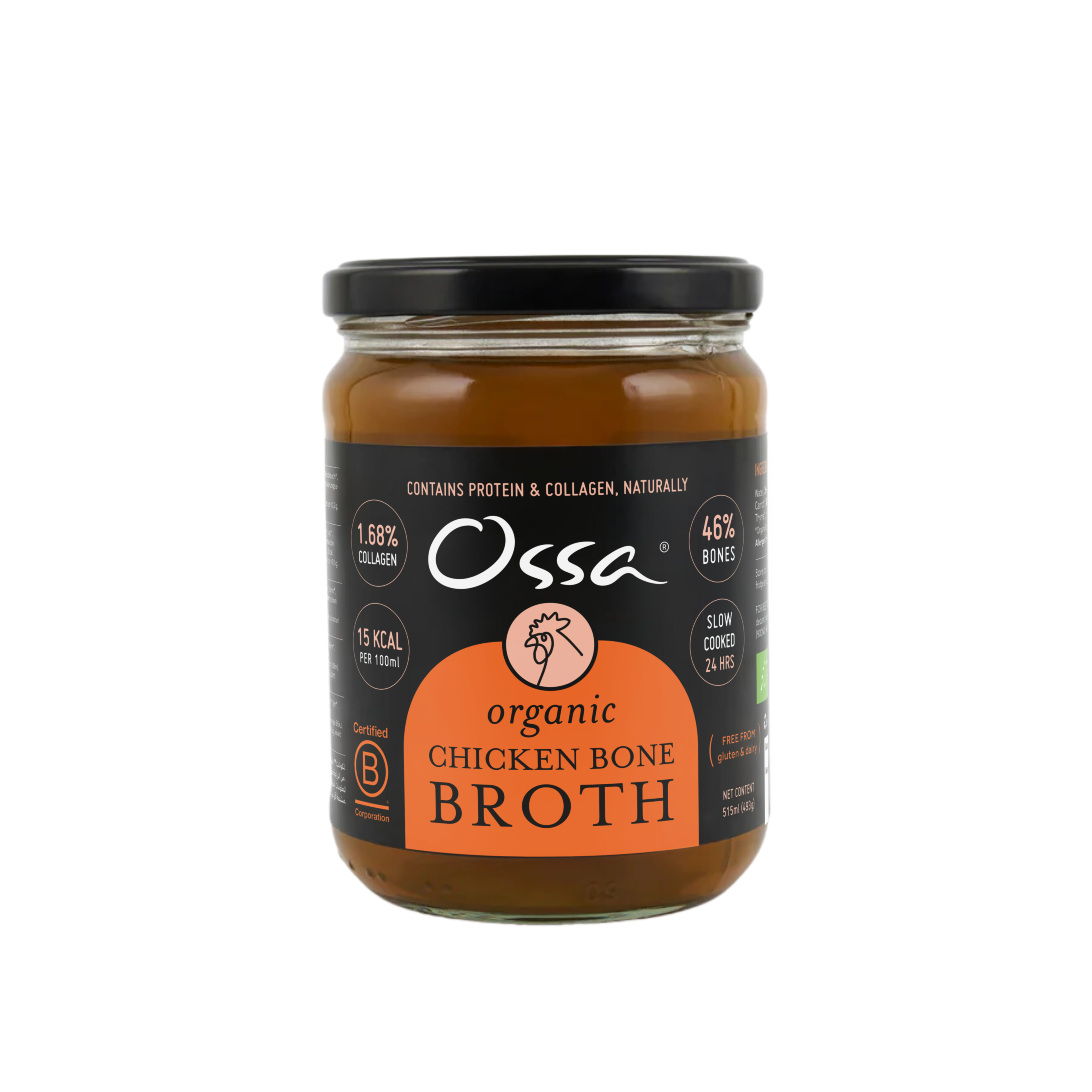
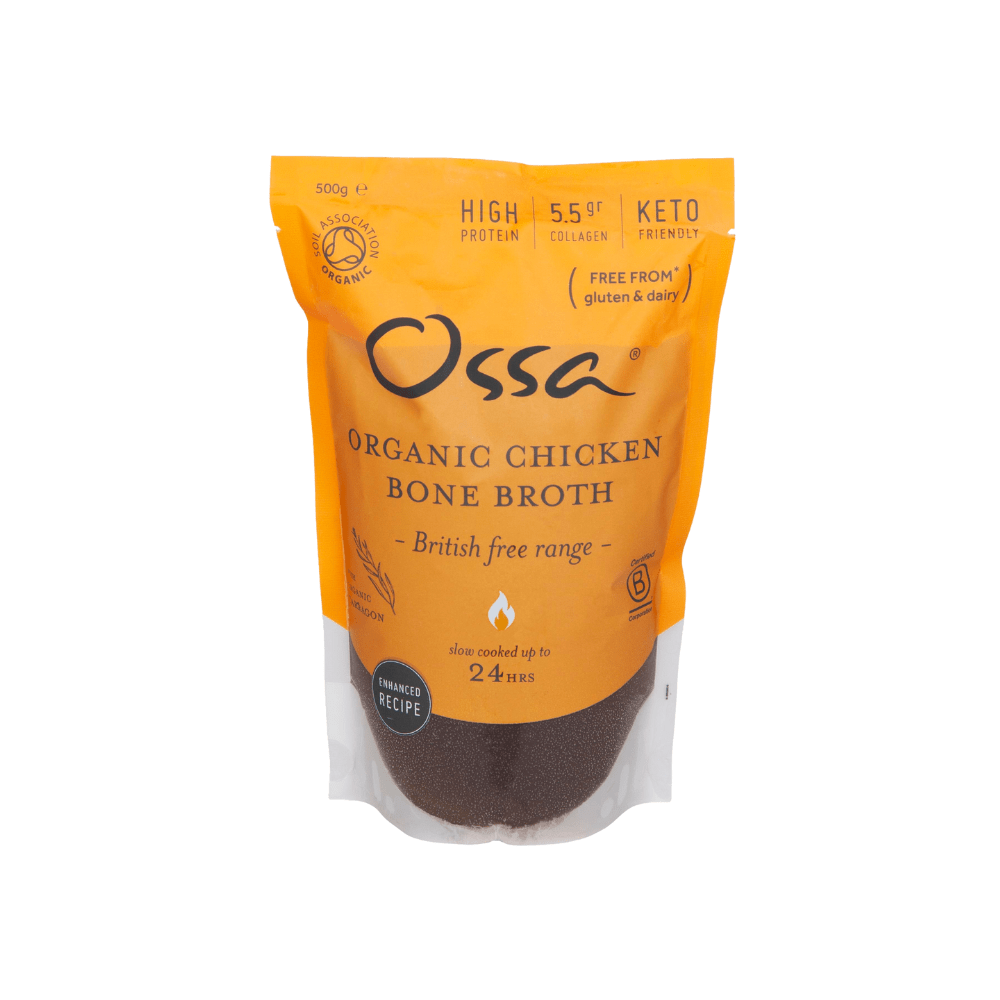
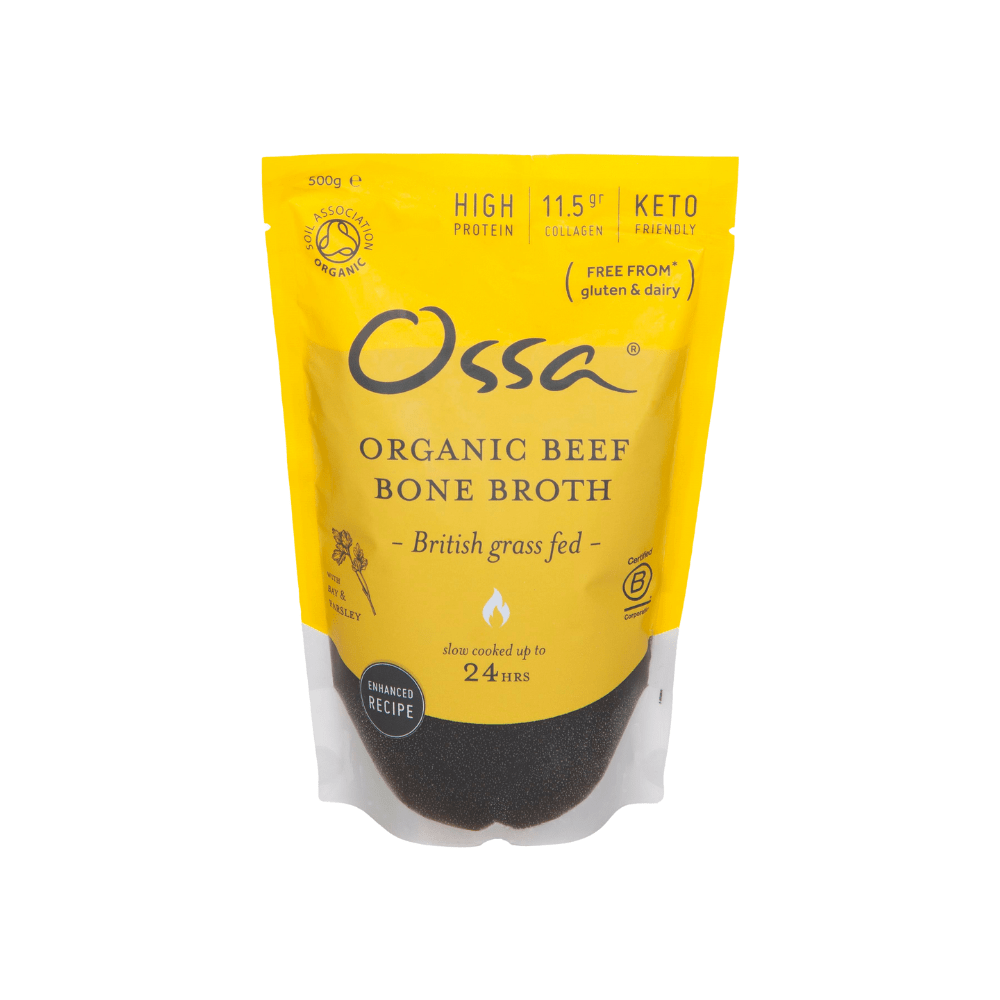
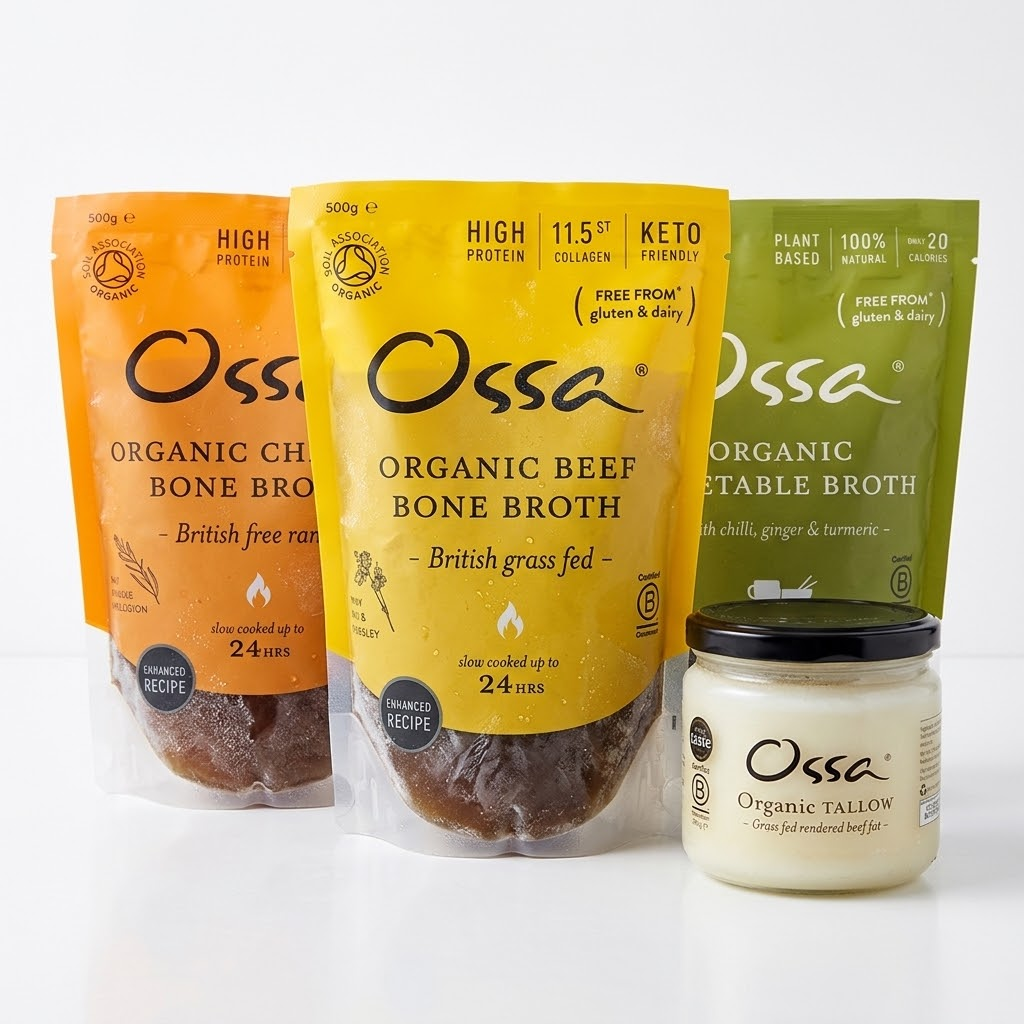
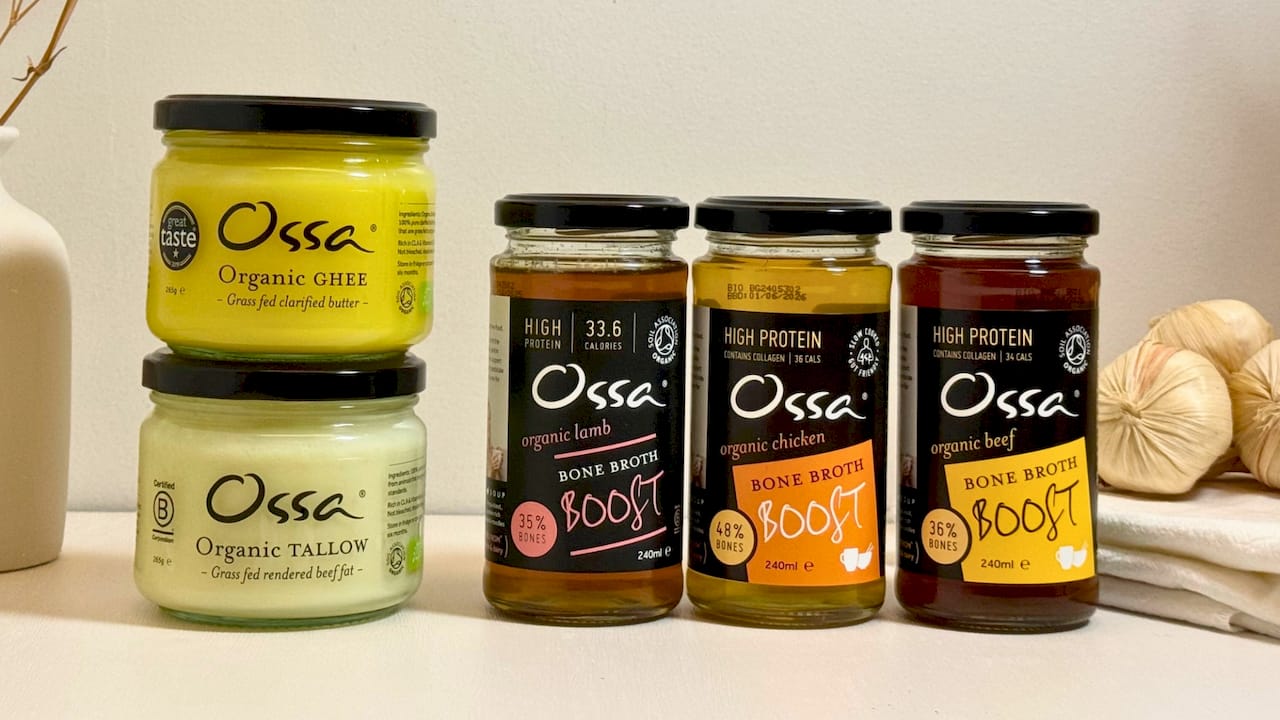
Ossa Organic produces bone broth using slow-cooking methods and organic, traceable ingredients. The range includes organic beef bone broth and organic chicken bone broth, both made to deliver meaningful collagen and amino acid content per serving. Each product is ambient-stable, making it straightforward to keep in the cupboard and use daily without preparation. For those starting out, the 14-day gut reset programme provides a structured way to build bone broth into a daily routine with clear guidance on quantities and timing. The full range and usage guidance are available at Ossa Organic.
FAQ
Is bone broth high in protein?
Bone broth provides 6–10 grams of protein per cup, with 40–80% of that being collagen. It is a moderate protein source, not a high-protein food in the way that meat or eggs are.
Can bone broth help with muscle gain?
Bone broth is not effective as a primary protein source for muscle gain. Collagen lacks tryptophan, the essential amino acid required for muscle protein synthesis, so it must be used alongside complete protein foods.
How much bone broth should you drink daily for gut health?
Drinking 2–3 cups daily reaches the clinically studied collagen intake of 10–15 grams. Consistency over several weeks produces the most measurable benefits for gut lining integrity and joint support.
What is the difference between bone broth and stock?
Stock is simmered for a shorter time and contains less collagen. Bone broth is simmered for 12–48 hours, producing a gelatin-rich liquid that sets when chilled. The gel indicates successful collagen extraction.
Is homemade bone broth better than shop-bought?
Homemade bone broth allows you to control sodium levels, bone quality, and simmer time. Shop-bought products offer convenience but can contain 200–500 mg of sodium per cup. Choosing organic, quality-sourced products reduces the risk of heavy metal contamination from lower-grade bones.
Recommended