

Cart
0

TL;DR:
- Dietary collagen supports skin and joint health, especially when combined with vitamin C, zinc, and copper. Consistent intake from animal foods like bone broth and fish, along with supportive plant foods, enhances collagen synthesis and function. Lifestyle factors such as reducing sugar and protecting skin from sun damage are essential to maintaining collagen levels over time.
Collagen is the body’s most abundant protein, forming the structural backbone of skin, joints, cartilage, and connective tissue. The role of collagen in a natural diet is to supply the amino acids and co-factors the body needs to build and maintain this protein continuously. Natural collagen production declines from your twenties onwards, making dietary choices increasingly important as you age. A review of 113 clinical trials involving nearly 8,000 participants confirms that consistent collagen intake improves skin elasticity, moisture retention, and joint comfort. The British Nutrition Foundation and Cleveland Clinic both recognise that protein, vitamin C, zinc, and copper are the essential co-factors for collagen synthesis.
What natural foods provide collagen and how do they support it?
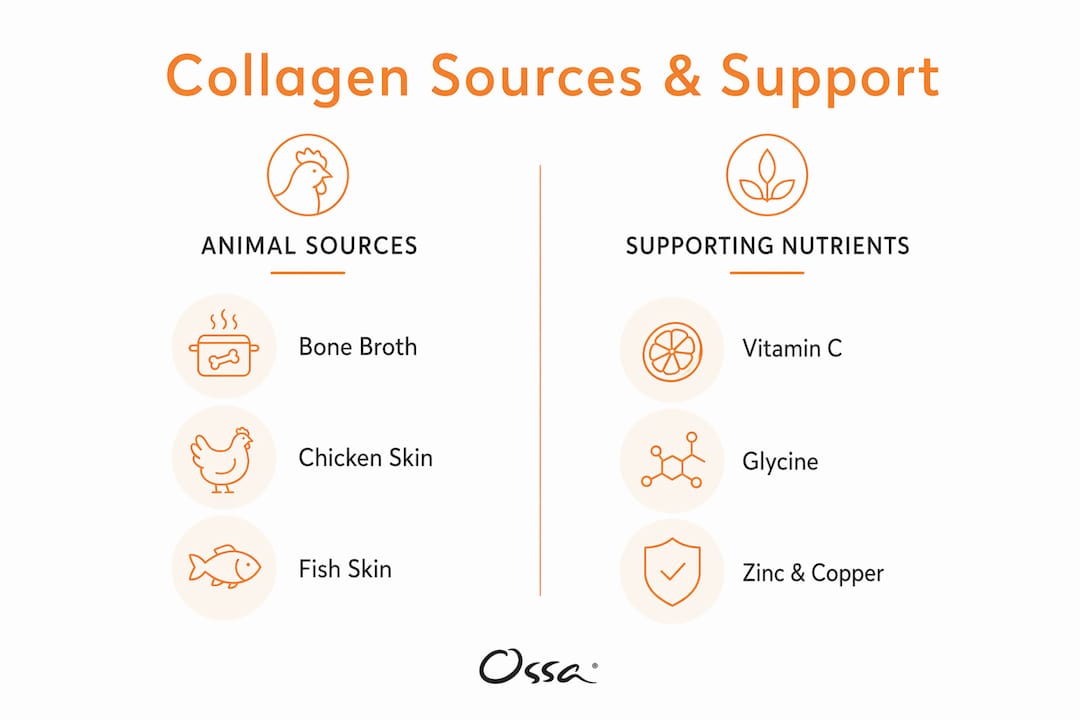
Animal-based foods are the most direct dietary sources of collagen. Bone broth, chicken skin, fish with skin, and collagen-rich cuts of meat such as oxtail and shin all supply collagen directly. Bone broth is particularly valued because slow cooking extracts collagen from connective tissue and bones, releasing it in a form the body can use readily.

Marine collagen from fish skin is more bioavailable than collagen from other animal sources. This means the body absorbs and uses it more efficiently, making oily fish such as salmon and mackerel a strong choice for those prioritising absorption. Sardines eaten with their skin and bones are an especially practical option.
Plant-based foods do not contain collagen directly. They do, however, supply the amino acids proline and glycine, alongside co-factors such as vitamin C and zinc, that the body uses to build its own collagen. Beans, lentils, tofu, and pumpkin seeds are reliable plant-based contributors to collagen synthesis support.
| Food | Collagen type | Key nutrients supplied |
|---|---|---|
| Beef bone broth | Type I, III | Glycine, proline, hydroxyproline |
| Chicken skin | Type II | Proline, glycine |
| Salmon with skin | Type I | Marine collagen, omega-3 |
| Sardines (whole) | Type I | Calcium, marine collagen |
| Lentils | None (supports synthesis) | Proline, zinc, copper |
| Red peppers | None (supports synthesis) | Vitamin C |
| Pumpkin seeds | None (supports synthesis) | Zinc, copper |
Pro Tip: When buying fish, choose varieties sold with the skin on. The skin is where the collagen concentration is highest, and most of it is lost when fish is skinned before sale.
Which nutrients are essential for collagen production in the body?
Vitamin C is the single most critical co-factor in collagen formation. Without it, the body cannot complete the chemical process that converts pro-collagen into stable collagen fibres. Citrus fruits, strawberries, kiwi, red peppers, and broccoli are all rich in vitamin C and should feature regularly in a diet aimed at supporting collagen levels.
The amino acids glycine and proline are the primary building blocks of collagen. The body can produce some glycine on its own, but dietary intake from protein-rich foods fills the gap. Meat, fish, eggs, and dairy all supply these amino acids in meaningful quantities.
Zinc and copper act as enzymatic co-factors in collagen repair and cross-linking. Without adequate zinc and copper, amino acids from the diet are less effective at building new collagen, even when protein intake is sufficient. Shellfish, particularly oysters, are among the richest sources of both minerals. Nuts, seeds, and wholegrains also contribute meaningfully.
Lifestyle factors accelerate collagen breakdown and can undermine even a well-planned diet. High-sugar diets and excessive sun exposure degrade collagen fibres chronically, counteracting the benefits of dietary effort. Reducing refined sugar and using daily sun protection are practical steps that protect existing collagen.
Foods that support collagen production:
-
Citrus fruits, kiwi, and red peppers (vitamin C)
-
Meat, fish, and eggs (glycine and proline)
-
Oysters, crab, and mussels (zinc and copper)
-
Nuts, seeds, and wholegrains (zinc, copper, and trace minerals)
-
Leafy greens such as spinach and kale (vitamin C and antioxidants)
-
Beans and lentils (proline and plant-based protein)
Pro Tip: Pair a collagen-rich food with a vitamin C source at the same meal. For example, add a squeeze of lemon to bone broth or serve salmon alongside a red pepper salad. This combination gives the body both the raw material and the co-factor it needs at the same time.
How does collagen intake affect skin and joint health?
The clinical evidence for collagen’s effects on skin is now substantial. A review of 113 trials with nearly 8,000 participants found consistent improvements in skin elasticity and moisture retention with regular collagen intake. The effect is real, but it is a maintenance benefit rather than a cure. Collagen does not reverse deep wrinkles; it supports the skin’s structural integrity over time.
Joint health is a second well-documented area of benefit. Collagen makes up a significant proportion of cartilage, the tissue that cushions joints. Collagen peptides ease arthritis pain and support joint comfort, though benefits require consistent, long-term intake rather than short-term use. People with osteoarthritis and those engaged in regular physical activity both show measurable improvements in clinical studies.
“Collagen should be seen as part of a long-term dietary commitment rather than a quick fix. The evidence supports sustained intake for skin hydration and joint function, but realistic expectations matter. Collagen keeps skin elastic and joints more comfortable; it does not stop the ageing process.” British Nutrition Foundation, summarising current clinical evidence
Long-term dietary habits determine the measurable benefits of collagen on skin and joints, not short-term changes. This is the most important practical implication of the research.
| Health outcome | Evidence strength | Realistic expectation |
|---|---|---|
| Skin elasticity improvement | Strong (113 trials) | Measurable improvement with consistent intake |
| Skin moisture retention | Strong | Noticeable hydration benefit over weeks |
| Joint pain reduction | Moderate to strong | Gradual reduction in stiffness and discomfort |
| Wrinkle prevention | Limited | Maintenance, not reversal |
| Muscle and ligament support | Emerging | Benefit for active individuals and arthritis patients |
What practical strategies help you boost collagen naturally?
Building a diet that supports collagen production does not require a complete overhaul of your eating habits. The most effective approach combines collagen-rich foods with the co-factors that activate synthesis, eaten consistently over weeks and months rather than in short bursts.
Meal ideas that work
-
Morning: A mug of warm bone broth with a squeeze of lemon. The broth supplies glycine and proline; the lemon provides vitamin C for synthesis.
-
Lunch: Salmon fillet with skin, served with a red pepper and spinach salad. This delivers marine collagen, omega-3 fatty acids, and a strong dose of vitamin C.
-
Snack: A small handful of pumpkin seeds with a kiwi fruit. Seeds supply zinc and copper; kiwi provides vitamin C.
-
Dinner: A slow-cooked beef shin or oxtail stew with root vegetables. Slow cooking releases collagen from connective tissue into the cooking liquid.
-
Dessert or snack: Plain yoghurt with strawberries. Yoghurt provides protein and proline; strawberries add vitamin C.
Habits that protect collagen
-
Reduce refined sugar in your daily diet. Sugar triggers a process called glycation, which stiffens and weakens collagen fibres.
-
Apply broad-spectrum SPF daily. UV radiation is one of the fastest ways to degrade skin collagen.
-
Prioritise sleep. Collagen synthesis peaks during deep sleep, when growth hormone activity is highest.
-
Stay hydrated. Collagen fibres in skin require adequate hydration to maintain their structure and flexibility.
For those who travel frequently, eating healthily on holiday is achievable by choosing grilled fish with skin, ordering vegetable-rich sides, and seeking out bone broth-based soups on local menus. Collagen-supportive eating does not require a home kitchen.
Collagen-rich recipes that combine bone broth with vitamin C-rich vegetables are one of the most practical ways to embed these habits into everyday cooking without additional effort.
Key takeaways
Dietary collagen works best when paired consistently with vitamin C, zinc, and copper, and when lifestyle factors that degrade collagen are actively reduced.
| Point | Details |
|---|---|
| Collagen declines with age | Production falls from your twenties, making dietary support increasingly important over time. |
| Animal foods supply collagen directly | Bone broth, fish with skin, and chicken skin are the most accessible dietary sources. |
| Co-factors are non-negotiable | Vitamin C, zinc, and copper must be present for the body to build and repair collagen effectively. |
| Benefits require consistency | Clinical evidence shows improvements in skin and joints only with sustained, long-term intake. |
| Lifestyle protects your investment | Reducing sugar and daily sun protection preserve the collagen your diet helps build. |
Ossa Organic’s view on collagen and natural nutrition
The conversation around collagen has shifted considerably in recent years. When Ossa Organic was founded, bone broth was considered a niche product. Now the clinical evidence has caught up with what traditional food cultures have known for generations: slow-cooked, collagen-rich foods are genuinely beneficial for skin, joints, and connective tissue.
What the research confirms, and what we have seen reflected in our own experience, is that diet alone is rarely enough if the rest of your lifestyle works against you. High sugar intake and chronic sun exposure degrade collagen faster than any food can replace it. The dietary piece matters, but it sits within a wider picture.
Whole-food diets supply broader nutritional advantages that supplements cannot fully replicate. Supplements may offer more concentrated amino acid delivery, and the clinical data does support their use alongside a good diet. But the foundation should always be food. Bone broth, fish, quality protein, and a plate full of vitamin C-rich vegetables will do more for your collagen levels over a year than any short-term supplement course.
The most common misconception we encounter is that collagen is a cosmetic concern. It is not. Cartilage, tendons, ligaments, and gut lining all depend on it. Thinking about collagen as a structural nutrient, rather than a beauty ingredient, changes how you approach your diet. That shift in perspective is worth more than any single product.
— Ossa Organic
Ossa Organic bone broth for your collagen-rich diet
Ossa Organic produces organic bone broth made from grass-fed beef and free-range chicken, slow-cooked to extract maximum collagen from connective tissue and bones. Both variants supply glycine, proline, and hydroxyproline in a form the body can use directly. The organic beef bone broth is a practical daily source of Type I and Type III collagen, while the organic chicken bone broth provides Type II collagen, which is particularly relevant for joint cartilage. Both are ambient, making them straightforward to keep in the cupboard and use daily. Visit the how to use page for practical guidance on incorporating bone broth into everyday meals.
FAQ
What is the role of collagen in a natural diet?
Collagen supplies the amino acids glycine and proline that the body uses to build and repair connective tissue in skin, joints, and cartilage. A natural diet rich in bone broth, fish with skin, and protein supports this process alongside co-factors such as vitamin C and zinc.
Which foods are the richest natural sources of collagen?
Bone broth, chicken skin, fish with skin (particularly salmon and sardines), and slow-cooked cuts of beef such as oxtail are the most concentrated dietary sources of collagen.
Does eating collagen-rich foods actually improve skin?
A review of 113 clinical trials with nearly 8,000 participants found that consistent collagen intake improves skin elasticity and moisture retention. The benefit is a maintenance effect rather than a reversal of existing wrinkles.
How long does it take to see benefits from a collagen-rich diet?
Clinical evidence shows that measurable improvements in skin hydration and joint comfort require sustained intake over several weeks to months. Short-term dietary changes do not produce the same results.
Can a plant-based diet support collagen production?
Plant-based foods do not contain collagen directly, but beans, lentils, pumpkin seeds, and vitamin C-rich vegetables supply the amino acids and co-factors the body needs to synthesise its own collagen effectively.