TL;DR:
- Bone broth is a collagen-rich stock made by long simmering animal bones, connective tissue, and aromatics. It delivers more nutrients and flavor than standard stock or water and can replace them on a 1:1 basis in recipes. Proper preparation involves roasting bones, adding vinegar, and simmering for 12 to 24 hours to maximize collagen and mineral extraction.
Bone broth is defined as a long-simmered stock made from animal bones, connective tissue, and aromatics, yielding a collagen-rich liquid packed with minerals, amino acids, and gelatin. Recipes with bone broth deliver deeper flavour and greater nutritional value than those made with standard stock or water. The Weston A. Price Foundation recognises bone broth as a nutrient-dense food base best used as a foundation for balanced meals rather than a standalone supplement. Ossa Organic was built on exactly this principle: that slow-cooked, organic bone broth belongs at the centre of everyday home cooking, not on the fringes of a wellness trend.
What makes recipes with bone broth different from regular stock?
Bone broth and stock share a common starting point, but the difference between them is significant. Standard stock simmers for 2–4 hours, extracting flavour but little collagen. Bone broth simmers for far longer, pulling gelatin, minerals, and amino acids from deep within the bone matrix. The result is a liquid that sets to a jelly when chilled. That gel is the marker of a high-quality broth and the reason it performs so differently in recipes.
Commercial bouillon cubes lack collagen and minerals entirely. They deliver salt and flavour compounds but none of the nutritional depth that long-simmered bone broth provides. For home cooks focused on wellness, that distinction matters every time they reach for a stock cube out of convenience.
Bone broth can replace stock or water in every savoury recipe on a 1:1 substitution basis, with no adjustment needed. That single fact makes it one of the most practical upgrades a home cook can make.
Essential ingredients and preparation for high-quality bone broth
Choosing the right bones
The bones you select determine the texture and nutritional profile of your broth. A 2:1 ratio of marrow to knuckle bones by weight produces a gelatinous, body-rich broth with the depth needed for gut-supporting recipes. Marrow bones contribute fat and richness. Knuckle and joint bones supply collagen, which converts to gelatin during the long simmer. Using only marrow bones produces a fatty broth without enough body. Using only knuckle bones produces a firm gel but a thinner flavour.
For a recipe bone broth beef version, ask your butcher for a mix of femur marrow bones and knuckle joints. For chicken, carcasses and feet work well together for the same reason: fat from the carcass, collagen from the feet.
Key ingredients and their roles
| Ingredient |
Role |
Preparation note |
| Marrow bones |
Fat, richness, flavour |
Roast before simmering |
| Knuckle/joint bones |
Collagen and gelatin |
Roast or use raw |
| Apple cider vinegar |
Mineral and collagen extraction |
1–2 tablespoons per batch |
| Onion, carrot, celery |
Aromatics and sweetness |
Halved, unpeeled |
| Bay leaves, peppercorns |
Background flavour |
Added at start |
| Fresh herbs (parsley, thyme) |
Brightness |
Added in final hour |
| Cold filtered water |
Extraction medium |
Cover bones by 5cm |
Roasting bones for flavour
Roasting bones before simmering is non-negotiable for a deeply flavoured broth. Roasting at 400–425°F for 30–45 minutes triggers the Maillard reaction, producing the caramelised colour and complex flavour that separates a great broth from a pale, bland one. Skipping this step produces grey, flat-tasting liquid. The Weston A. Price Foundation notes that roasting at moderate temperatures around 350°F preserves more heat-sensitive nutrients, so a middle ground of 375–400°F balances flavour and nutrient retention well.
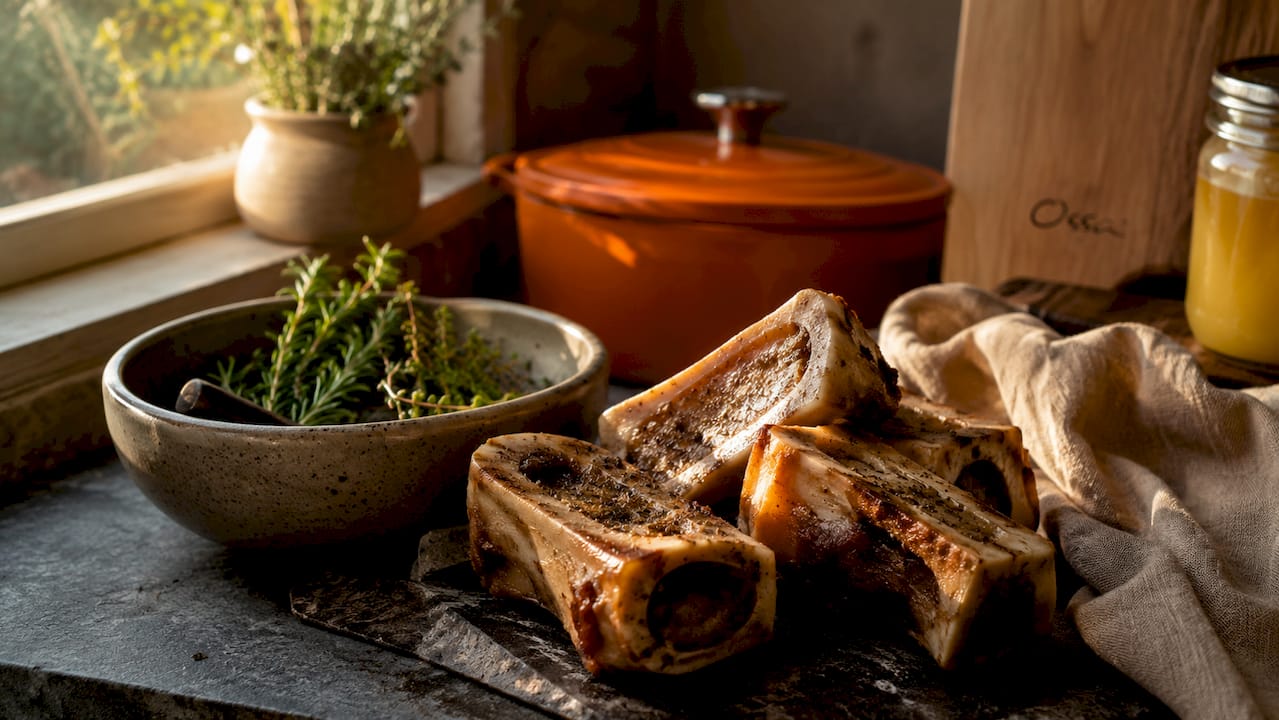
Pro Tip: After roasting, deglaze the roasting tray with a splash of cold water or apple cider vinegar. Scrape up every caramelised residue and add it to your pot. That fond is concentrated flavour you would otherwise leave behind.
How to make marrow bone broth: step by step
The full process
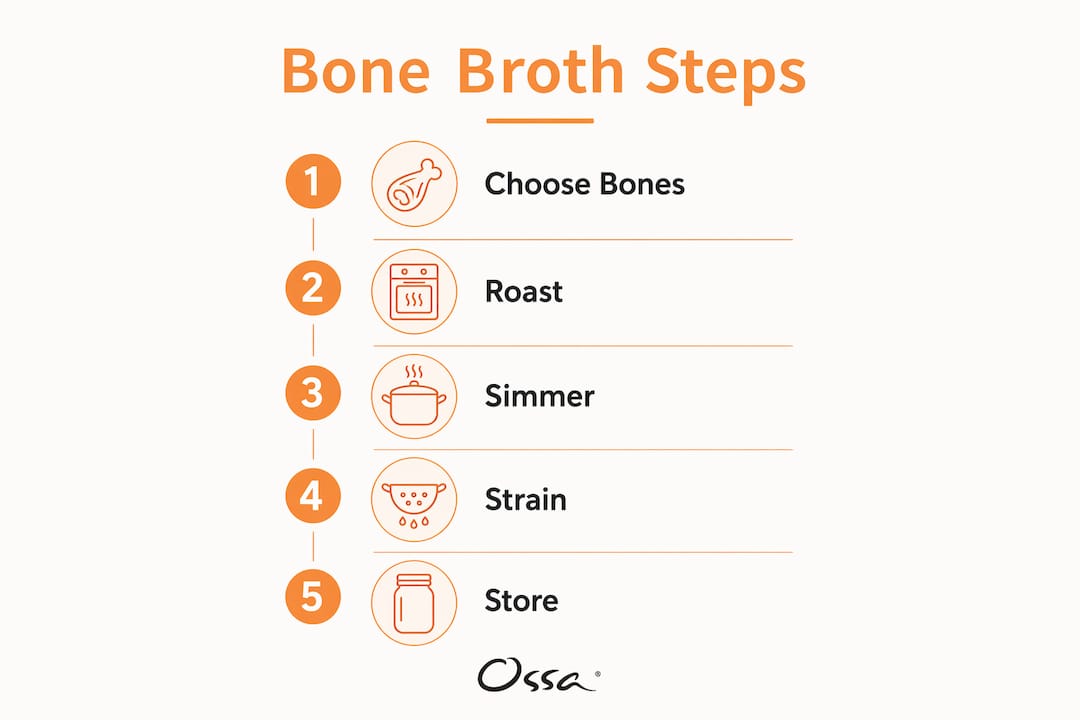
Making a proper marrow bone broth at home takes time but very little active effort. The steps below produce a gelatinous, richly flavoured broth suitable for soups, stews, gravies, and sipping.
-
Preheat your oven to 200°C (400°F). Arrange marrow and knuckle bones in a single layer on a roasting tray.
-
Roast for 30–45 minutes, turning once halfway, until deeply browned.
-
Transfer bones to a large stockpot or slow cooker.
-
Deglaze the roasting tray with 200ml of cold water, scraping up all residue. Pour this liquid into the pot.
-
Add halved onion, carrot, celery, bay leaves, and peppercorns.
-
Add 1–2 tablespoons of apple cider vinegar. This aids mineral extraction from the bones without affecting the final flavour.
-
Cover with cold filtered water, leaving 5cm of headspace.
-
Bring to a bare simmer over medium heat. Do not allow a rolling boil.
-
Skim foam and impurities diligently during the first hour of simmering. This step is what keeps the broth clear.
-
Reduce heat to the lowest setting. Simmer partially covered for 12–24 hours.
-
Add fresh parsley or thyme in the final hour for brightness.
-
Strain through a fine-mesh sieve into a large bowl. Discard solids.
-
Cool to room temperature, then refrigerate overnight. Skim the solidified fat cap before using.
Simmering time and what it means
Optimal simmering time for nutrient extraction runs from 12 to 24 hours for a standard rich broth, with a minimum of 6–8 hours for a basic result and up to 48 hours for maximum density. Longer simmering extracts more gelatin and minerals, but the flavour can become bitter beyond 24 hours for chicken broth. Beef and marrow bone broth handles longer times better. A slow cooker set to low is an excellent alternative to overnight stovetop simmering. It maintains a safe, consistent temperature without any monitoring.
Pro Tip: Cool broth rapidly by placing the strained bowl inside a larger bowl of iced water before refrigerating. This reduces the time the broth spends in the temperature danger zone and preserves both safety and flavour.
How to incorporate bone broth in your diet through everyday recipes
Bone broth belongs in far more dishes than soup alone. Its uses for bone broth extend across the full range of savoury cooking, and the substitution is almost always invisible to anyone eating the meal.
Soups and stews
Chicken noodle soup bone broth is the most familiar application, and for good reason. A bone broth chicken noodle soup recipe produces a richer, more nourishing bowl than one made with water or standard stock. The gelatin in the broth gives the soup a body that coats the noodles and carries flavour more effectively. Soup recipes with bone broth follow the same logic: the broth is the foundation, and everything else builds on it.
Grains, risotto, and pasta
Replace the water when cooking rice, quinoa, or barley with bone broth. The grains absorb the liquid and its flavour, turning a plain side dish into something worth eating on its own. Risotto made with bone broth for gravy-like consistency is a particular standout. The starch from the rice and the gelatin from the broth combine to produce a sauce that clings to every grain.
Bone broth for gravy
Bone broth for gravy is one of its best uses. Deglaze a roasting pan with broth instead of water, reduce it by half, and whisk in a small amount of arrowroot or plain flour. The result is a gravy with genuine depth, not the flat, salty version that comes from a packet.
Recipe ideas at a glance
-
Sipping broth: warm a mug of bone broth with a pinch of sea salt and a squeeze of lemon as a morning or evening drink
-
Braised vegetables: use bone broth as the braising liquid for leeks, fennel, or cabbage
-
Mashed potato: replace the milk or water with warm bone broth for a richer result
-
Pasta sauce base: reduce bone broth with garlic and tomatoes for a concentrated pasta sauce
-
Lentil soup: simmer red lentils in bone broth with cumin and coriander for a complete meal
-
Poached eggs: poach eggs directly in gently simmering bone broth for a restorative breakfast
Pro Tip: Bone broth stores refrigerated for up to 7 days and frozen for up to 6 months. Freeze in ice cube trays for small portions that drop straight into sauces and gravies without thawing a full batch.
For a wider range of ideas, the 50 ways to use bone broth guide from Ossa Organic covers applications from breakfast to dessert. If you are planning ahead, holiday meal prep tips for busy home cooks offer practical guidance on batching broth-based dishes efficiently.
Common problems and how to fix them
Even experienced cooks run into issues with bone broth. Most problems have straightforward solutions.
Troubleshooting guide
-
Broth does not gel: The most common cause is insufficient collagen-rich bones. Add more knuckle or joint bones next time, and check that you used apple cider vinegar to aid extraction. Simmering for fewer than 8 hours also reduces gel formation.
-
Cloudy or greasy broth: A rolling boil emulsifies fat and proteins, making the broth permanently cloudy. Keep the heat at a bare simmer with occasional bubbles only. Skim the fat cap after chilling rather than trying to remove fat during cooking.
-
Weak or flat flavour: Roasting bones is the most likely step that was skipped or rushed. Pale bones produce pale flavour. Roast until deeply browned, and always deglaze the tray.
-
Bitter or overpowering taste: Extended simmering beyond 24 hours can turn chicken broth bitter. Reduce time or switch to a beef or marrow bone broth for longer cooks.
-
Too salty: Season only after straining and reducing. Adding salt during the long simmer concentrates it unpredictably as the liquid reduces.
Pro Tip: If your finished broth is too concentrated, dilute it with hot water rather than discarding it. A very concentrated broth is an asset in sauces and gravies, where a small amount delivers significant flavour.
Bone broth is most effective as a foundation for balanced meals rather than a cure-all. Treating it as a quality ingredient rather than a supplement keeps expectations realistic and cooking enjoyable.
Key takeaways
Bone broth delivers collagen, minerals, and gelatin that standard stock cannot replicate, making it the most nutritionally complete liquid base for home cooking.
| Point |
Details |
| Bone ratio matters |
Use a 2:1 marrow to knuckle bone ratio by weight for a gelatinous, flavourful broth. |
| Roasting is non-negotiable |
Roast bones at 200°C for 30–45 minutes to trigger the Maillard reaction and build deep flavour. |
| Simmer time drives nutrition |
Aim for 12–24 hours for a rich, nutrient-dense result; 6–8 hours produces a basic broth only. |
| Use it everywhere |
Bone broth replaces stock or water 1:1 in soups, grains, gravies, braises, and sauces. |
| Store it properly |
Refrigerate for up to 7 days or freeze for up to 6 months in portion-sized containers. |
What five years of cooking with bone broth has taught us
The single biggest mistake home cooks make is treating bone broth as a weekend project rather than a weekly staple. When we started making broth at Ossa Organic, the shift was not just nutritional. It changed the baseline quality of everything we cooked. Soups became richer without extra effort. Gravies stopped needing thickeners. Grains tasted finished rather than plain.
Roasting the bones is where most people cut corners, and it shows immediately in the colour and flavour of the finished broth. A pale broth is a missed opportunity. Thirty minutes in a hot oven costs nothing but time, and it is the difference between a broth you want to sip and one you use only because it is there.
The other lesson is that concentration is your friend. A deeply reduced bone broth, frozen in small portions, gives you a flavour tool that no shop-bought product can match. Two cubes of frozen broth dropped into a pan sauce will do more than a full carton of standard stock. That is the practical reality of quality ingredients and slow cooking.
We also believe that bone broth should not carry the weight of being a miracle food. It is a genuinely nutritious ingredient with a long culinary history. Used consistently as a base for everyday cooking, it contributes to better meals and better health over time. That is enough. It does not need to be more than that.
— Ossa Organic
Ossa Organic bone broth for your kitchen
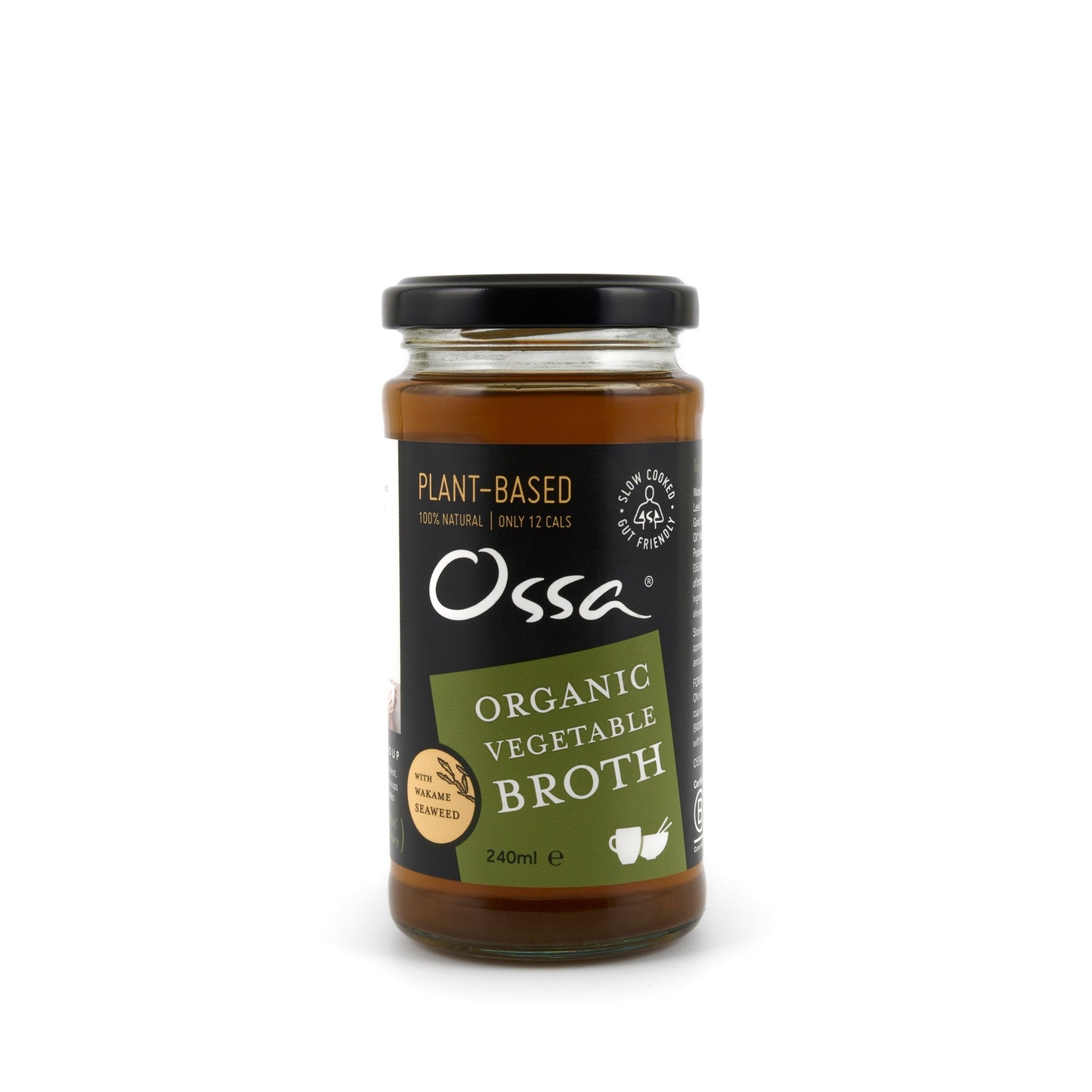
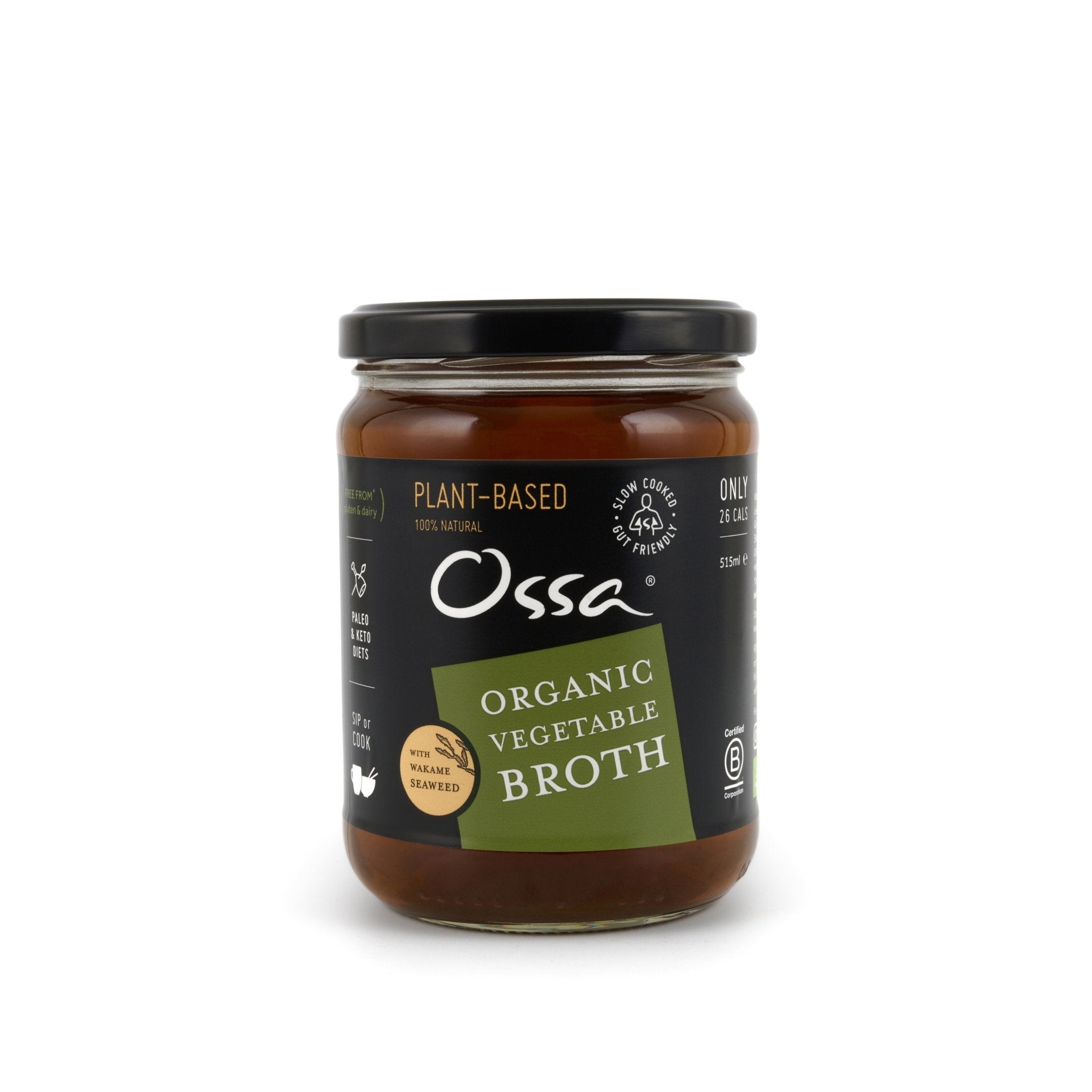
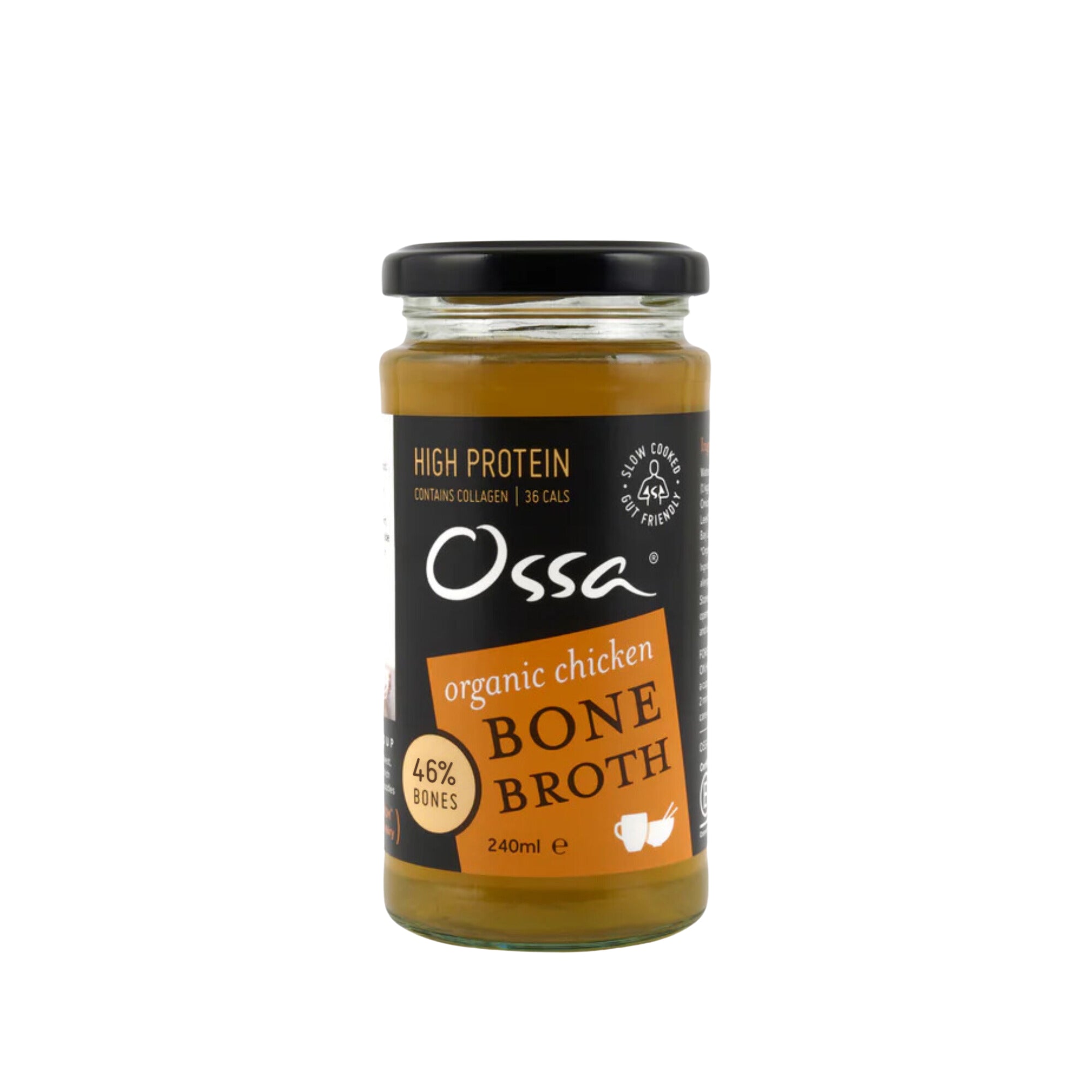
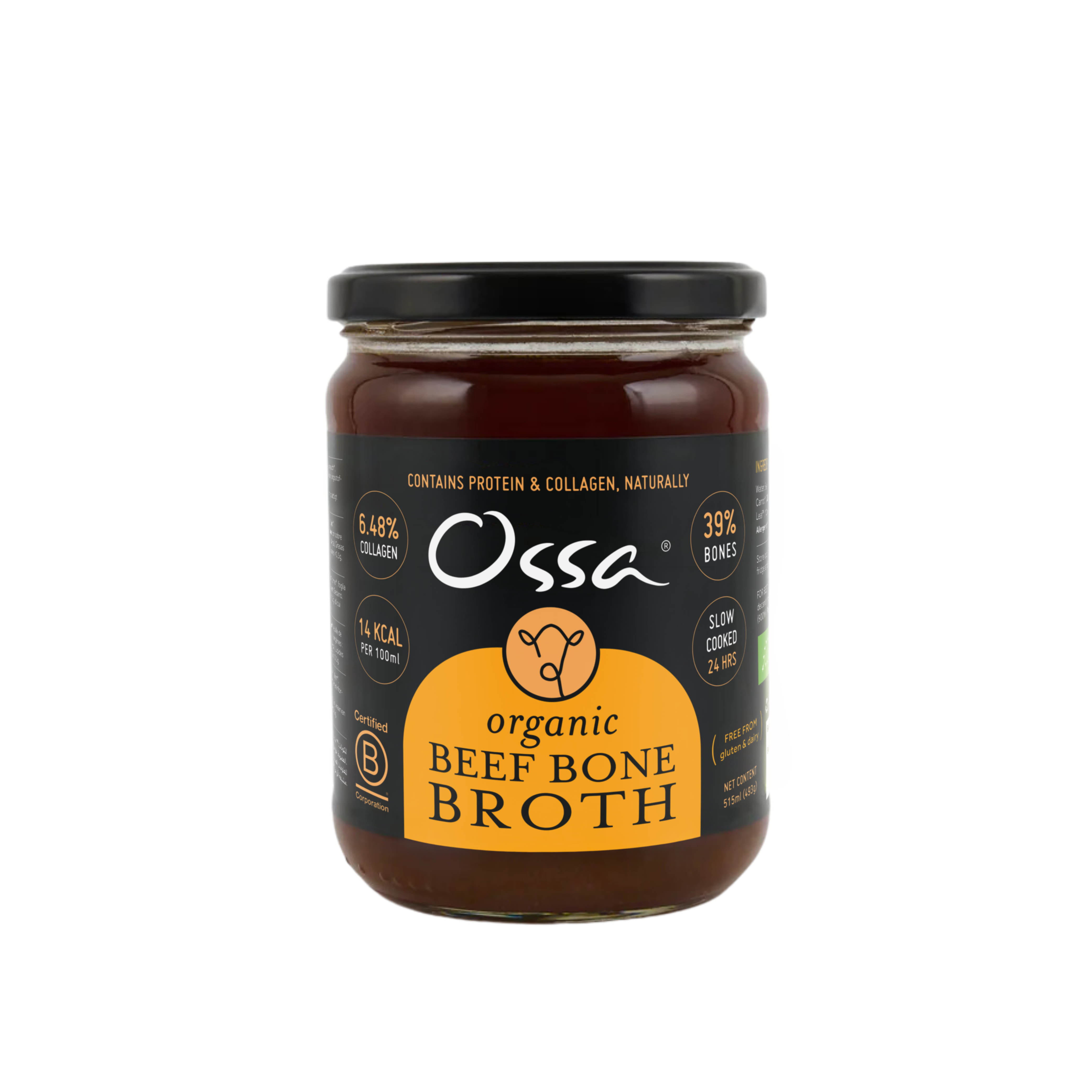
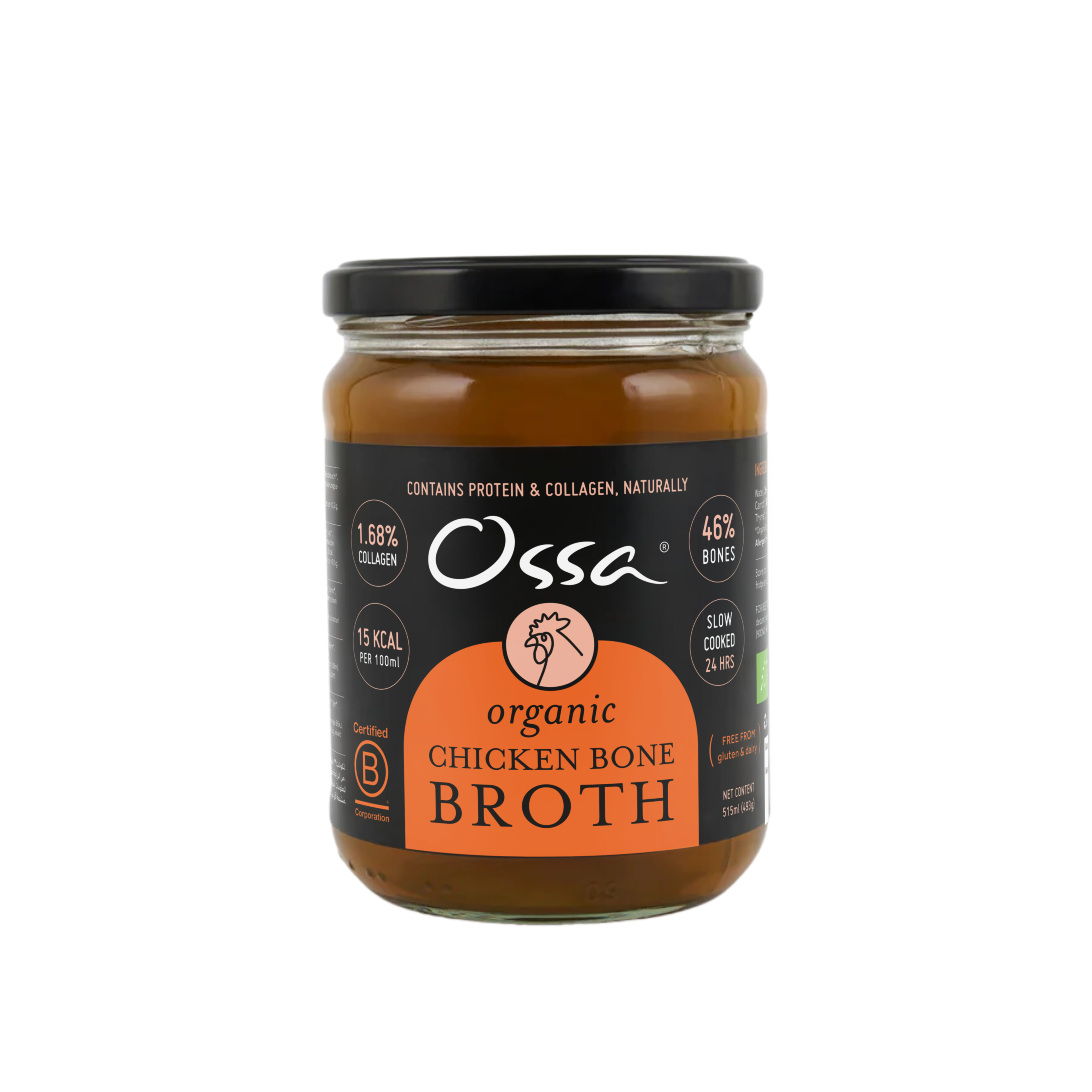
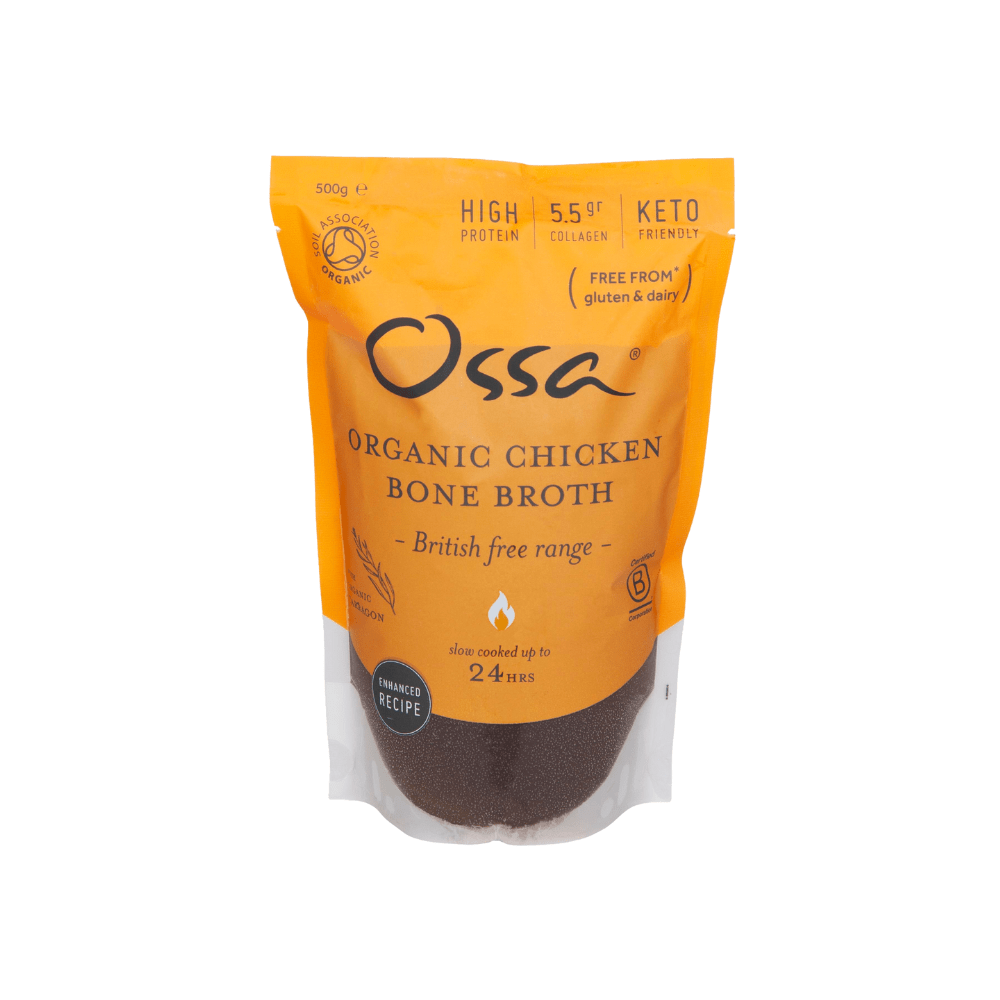
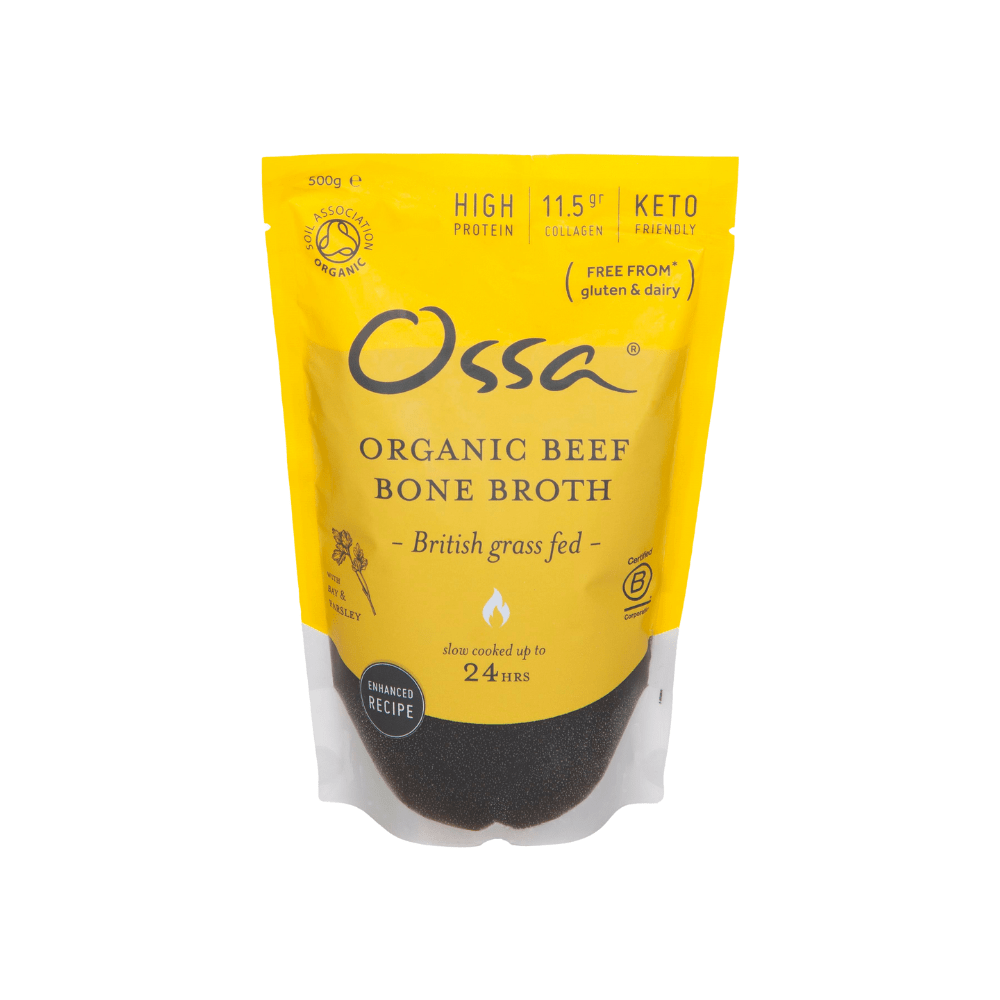
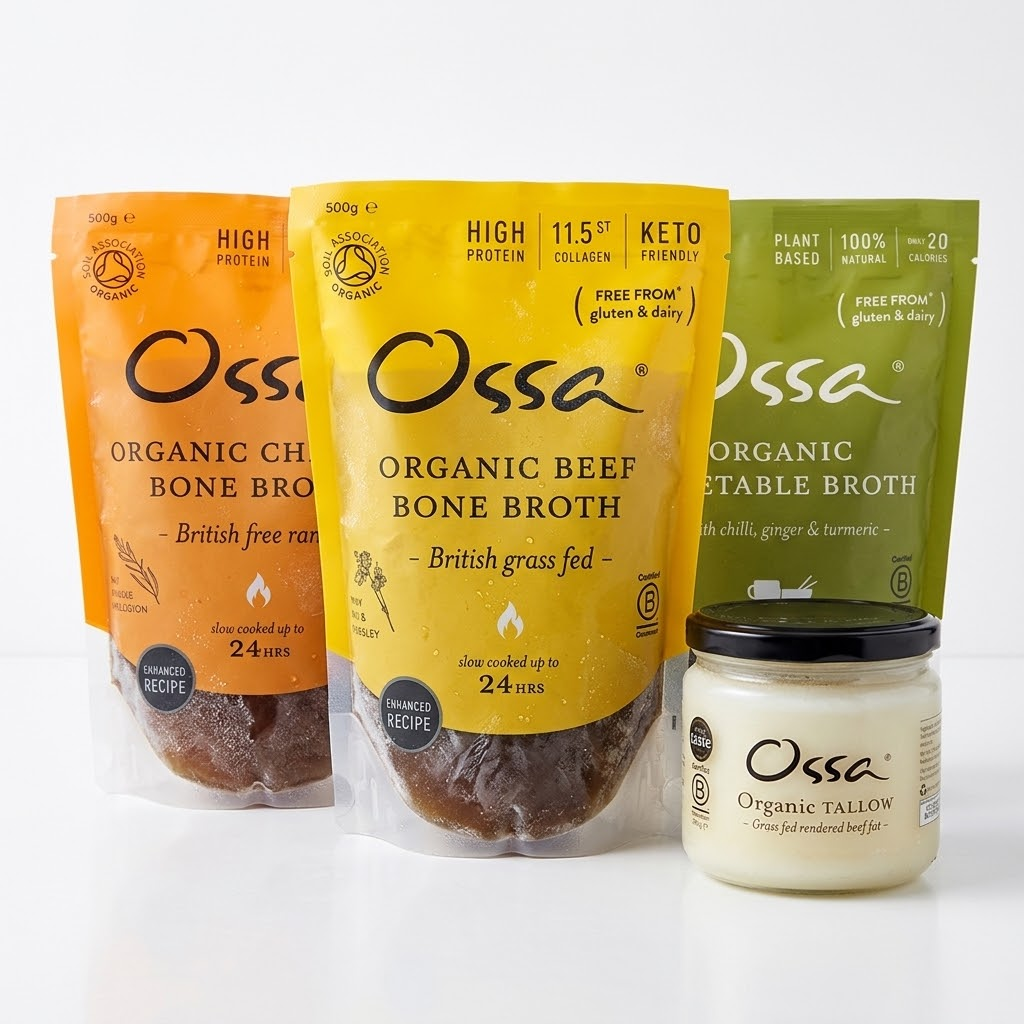
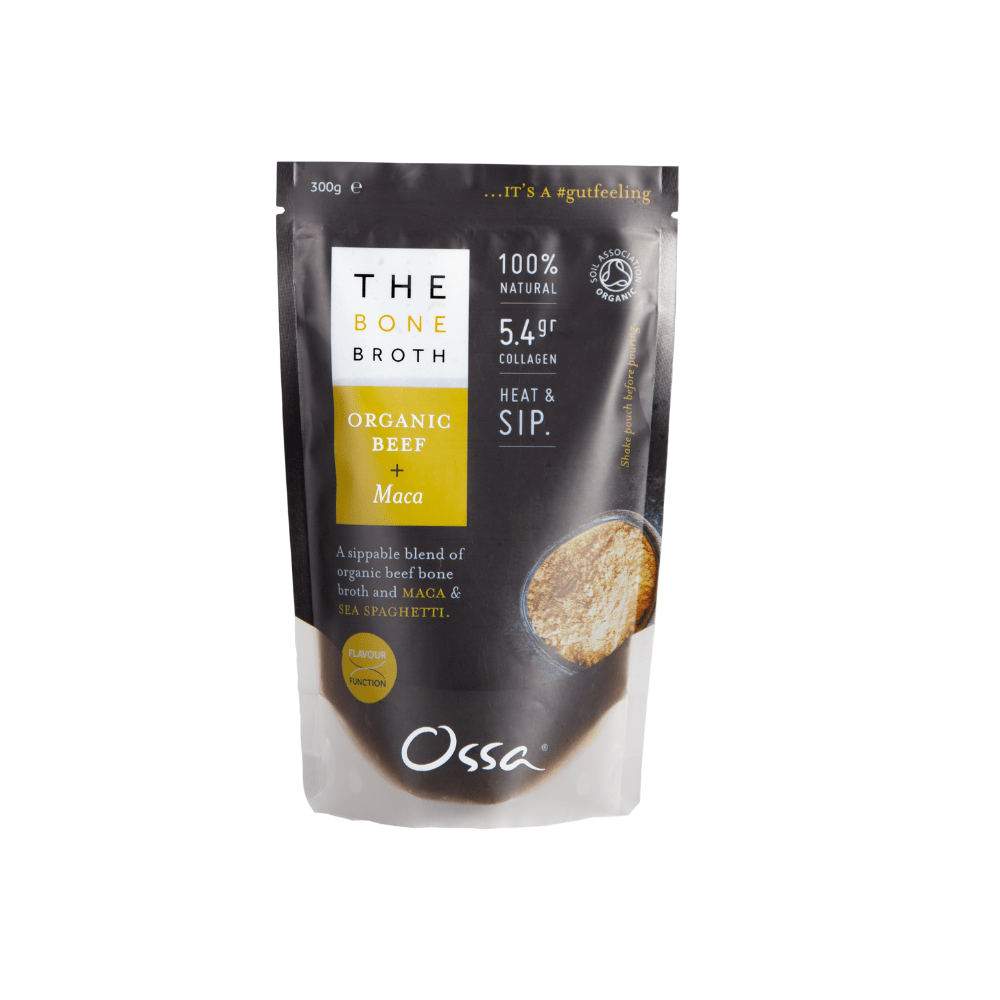
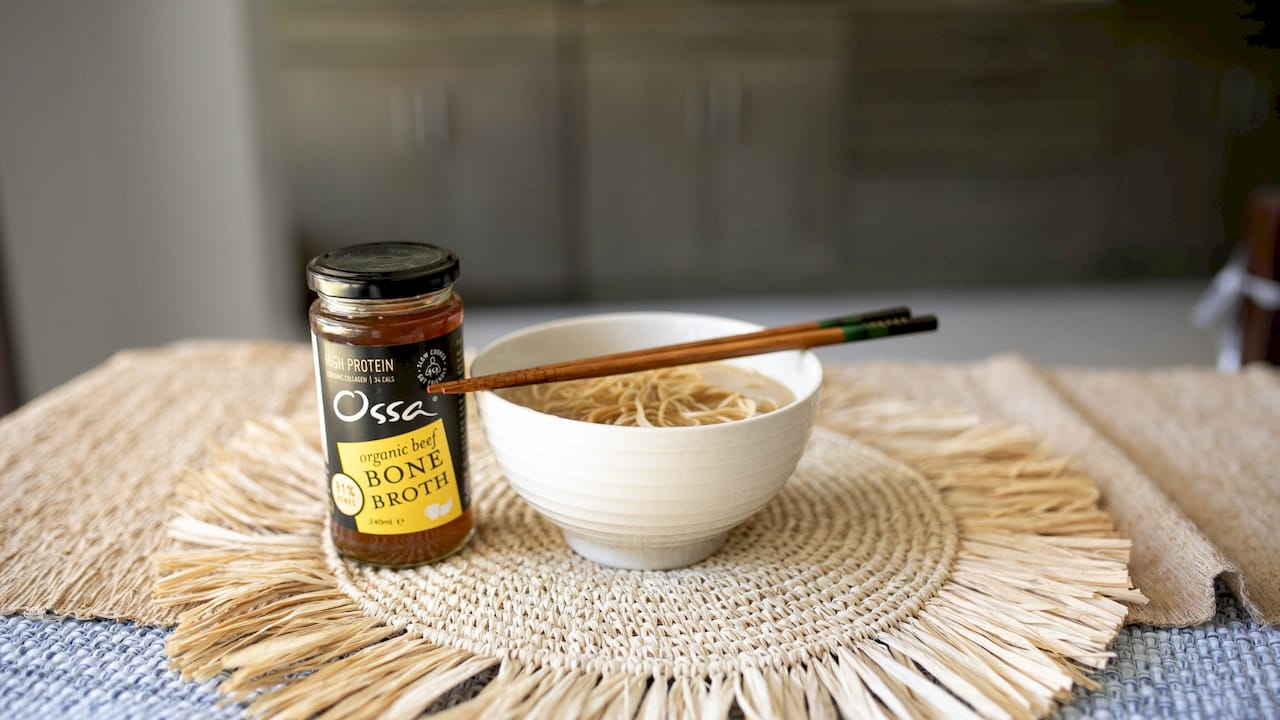
Ossa Organic produces organic bone broth made from grass-fed and free-range animals, slow-simmered using traditional methods with no additives or preservatives. The 1x Organic Beef Bone Broth Ambient 515ml is a ready-to-use option that delivers the same collagen-rich depth as a home-made batch, without the 24-hour simmer. It works directly in soups, gravies, braises, and grain dishes. Ossa Organic also offers an organic chicken bone broth for lighter recipes and chicken noodle soups. Both products are ambient-stable until opened, making them practical for everyday cooking. Visit the Ossa Organic bone broth recipes page for meal ideas built around each variety.
FAQ
What is the difference between stock and bone broth?
Stock simmers for 2–4 hours and extracts flavour but little collagen. Bone broth simmers for 12–48 hours, producing a gelatin-rich liquid that sets when chilled and delivers significantly more minerals and amino acids.
How long should I simmer bone broth?
Simmer for a minimum of 6–8 hours for a basic broth, 12–24 hours for a rich, nutrient-dense result, and up to 48 hours for maximum extraction from beef and marrow bones.
Why is my bone broth not gelling?
Insufficient collagen-rich bones is the most common cause. Use a 2:1 ratio of marrow to knuckle bones, add 1–2 tablespoons of apple cider vinegar, and simmer for at least 12 hours.
Can I use bone broth instead of stock in any recipe?
Bone broth replaces stock or water on a 1:1 basis in every savoury recipe, including soups, stews, risottos, gravies, and braised dishes, with no adjustment needed.
How do I store bone broth safely?
Refrigerate bone broth for up to 7 days in a sealed container. Freeze for up to 6 months. Freeze in ice cube trays for small portions that are easy to add to sauces and gravies without thawing a full batch.
Recommended